
A family room that actually works for your family — what a concept. So many family rooms look fine in photographs and fall apart completely in real daily life because someone prioritized aesthetics over the reality of how families actually use space.
The best family rooms do both simultaneously. They look warm, inviting, and intentionally designed — and they also handle movie nights, homework sessions, board games, and the occasional pillow fort without collapsing under the weight of real life. I’ve redesigned my own family room twice chasing exactly this balance, and I finally found it.
These 11 family room ideas prioritize cozy and functional in equal measure — because a room that only looks good but doesn’t work well isn’t really serving your family at all.
1. Choose a Large, Deep-Seated Sectional Sofa
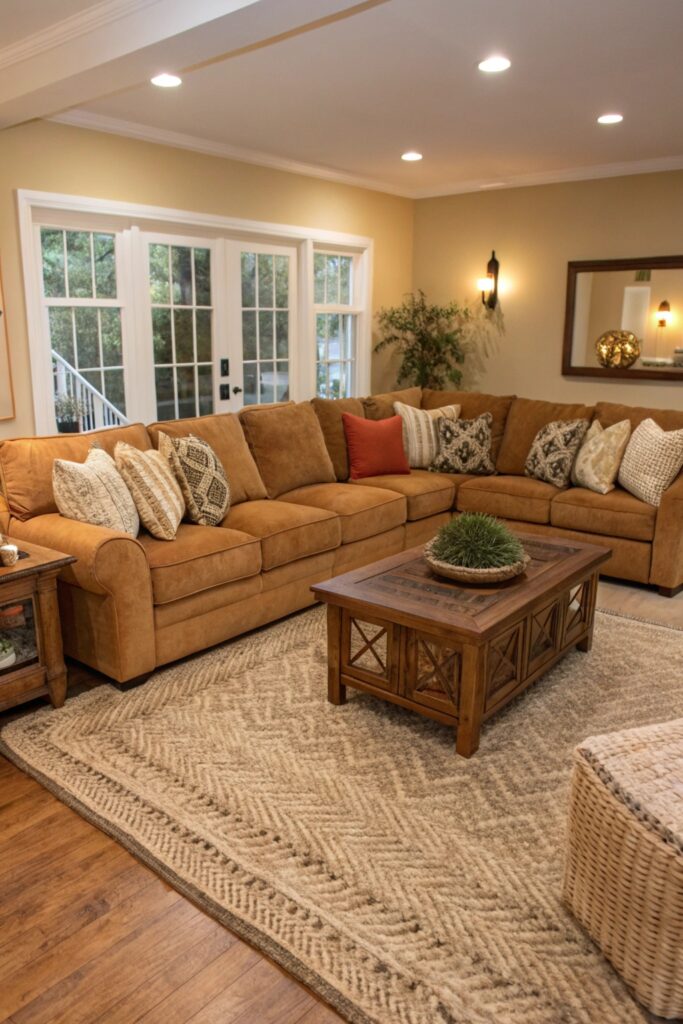
A large sectional sofa is the foundation of every truly functional family room — it seats everyone simultaneously, defines the main gathering zone, and communicates immediately that this is a space built for real use rather than occasional admiring.
Sectional sofa features that matter for families:
- Performance fabric — microfiber, bouclé, or indoor-outdoor weave that resists stains and cleans easily
- Deep seats of at least 24 inches for genuine lounging comfort
- A chaise configuration so at least one person always gets to fully stretch out
- Modular design that allows reconfiguration as your family’s needs change over time
Avoid white or cream upholstery in a family room unless you truly enjoy anxiety. IMO, a warm gray, camel, or forest green sectional in performance fabric gives you the aesthetic quality of a designed room with the practical durability that families actually need. A deep-seated sectional where everyone can sprawl comfortably is the difference between a family room people use and one they avoid.
2. Install Built-In Storage and Shelving
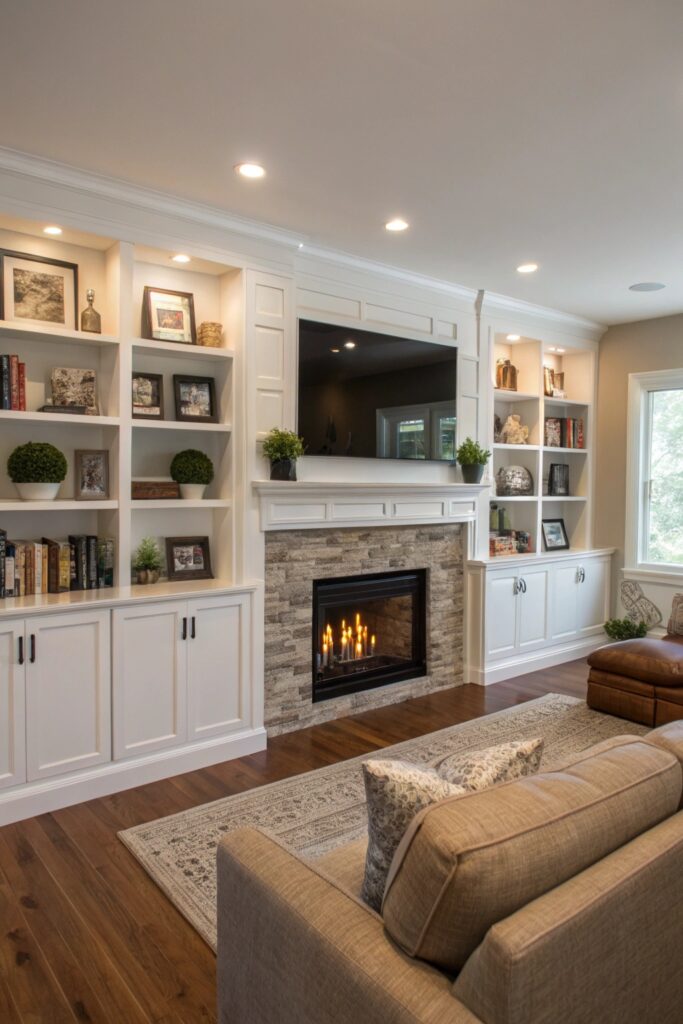
Built-in storage transforms a family room from cluttered chaos into an organized, functional space where everything has a home and the room actually stays looking good between cleaning sessions.
Built-in storage opportunities for family rooms:
- Floor-to-ceiling built-ins flanking the fireplace or TV wall for maximum storage capacity
- Lower cabinets with closed doors hiding toys, games, remote controls, and the general debris of family life
- Open upper shelves for books, plants, and decorative objects that elevate the room’s appearance
- A built-in window seat with hidden storage underneath along any window wall
The combination of open upper display shelving and closed lower storage is the key — open shelves keep the room feeling airy and designed, while closed lower cabinets contain the reality of family life behind clean doors. Built-ins also add genuine property value, making them one of the few family room upgrades that pays back financially as well as functionally. 🙂
3. Create a Dedicated Kids’ Corner
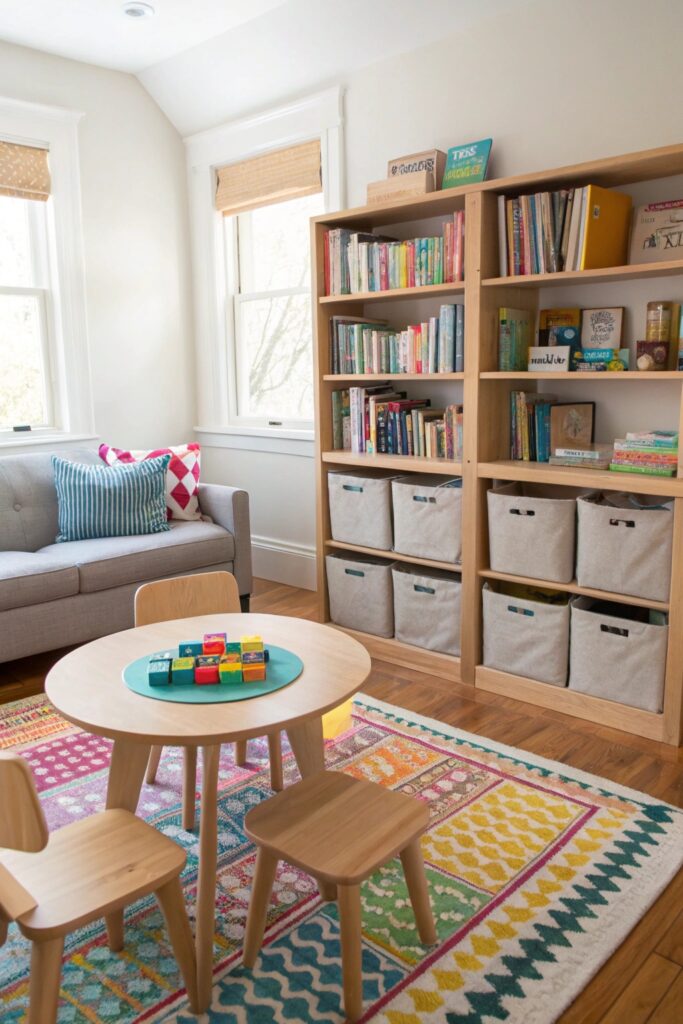
Giving children their own designated zone within the family room is one of the most effective strategies for keeping the rest of the space functional and maintaining your own sanity during shared family time.
Kids’ corner elements that actually work:
- A low bookshelf at child height with accessible books and games
- A small table and chairs for drawing, puzzles, and activities that need a surface
- A defined rug that marks the boundary of the kids’ area within the larger room
- Closed storage bins with labels so children can find and return items independently
The kids’ corner works best when it’s actually equipped for children’s activities — not just a token gesture of a toy basket in the corner. When children have a properly set-up activity space within the family room, they stay in it rather than migrating to every other surface in the room with their projects. That containment is worth every bit of planning it takes to create.
4. Layer Your Lighting for Every Mood
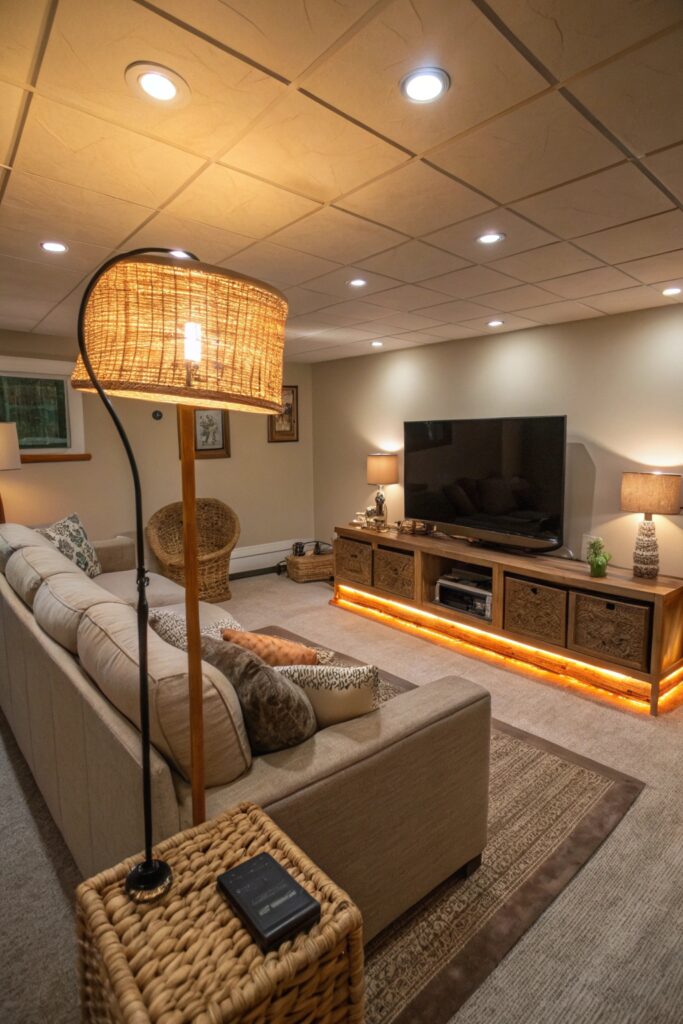
Family rooms need to perform at radically different light levels throughout the day — bright for homework and activities, dimmed and warm for movie nights, and everything in between for different family moments.
Layered lighting plan for a family room:
- A dimmer switch on all overhead lighting for complete intensity control
- Floor lamps beside seating areas for warm reading and task light at individual seats
- Table lamps on side tables and consoles for low ambient glow
- Recessed lighting in a grid for even, functional overhead illumination
The single most impactful lighting upgrade in any family room is installing dimmer switches on existing fixtures — it costs very little and immediately gives the room the atmospheric flexibility it needs. FYI, a family room that can shift from bright and functional to warm and cinematic with a single adjustment serves every family activity equally well without compromise.
5. Anchor the Room with a Durable Area Rug
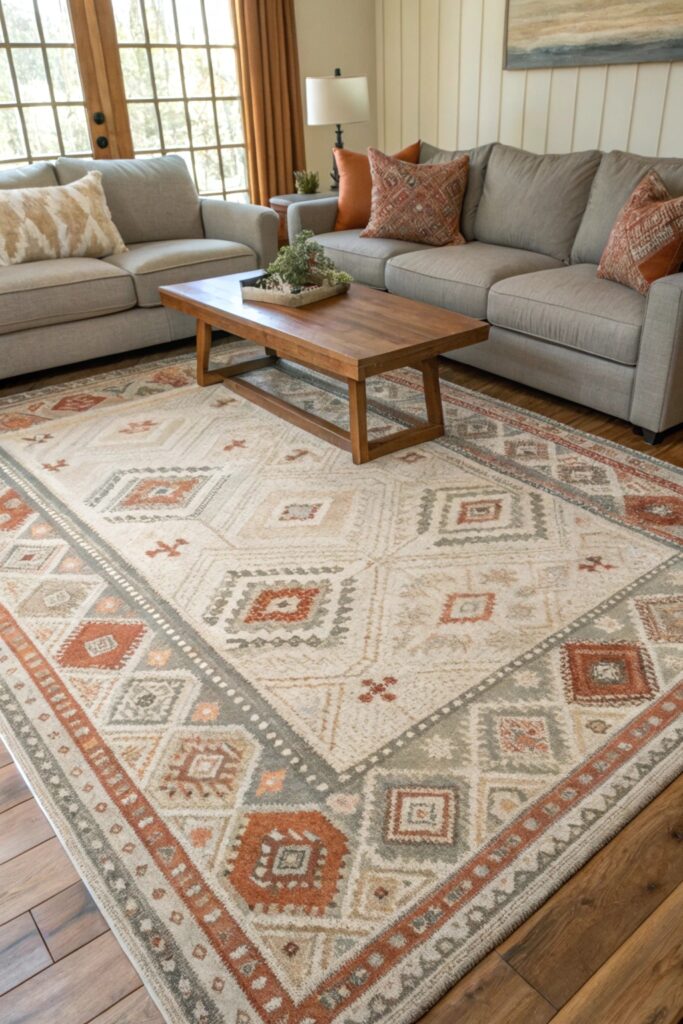
The right area rug does three things simultaneously — it defines the seating zone, adds warmth and texture, and protects your floors from the inevitable intensity of family foot traffic.
Rug selection criteria for family rooms:
- Low pile construction that vacuums easily and doesn’t trap crumbs and debris
- Dark or patterned designs that camouflage the inevitable spills and marks between cleanings
- Polypropylene or wool-polypropylene blend for durability without sacrificing softness
- Size up — all front furniture legs should sit on the rug for proper visual proportion
A 9×12 or 10×14 rug works for most family room configurations. A rug that’s too small for the seating arrangement makes the entire room look proportionally wrong and visually unanchored. Add a quality rug pad underneath — it extends the rug’s life, prevents slipping, and adds a cushioning layer underfoot that makes a meaningful difference during hours of barefoot family use. :/
6. Design a Functional Media Wall
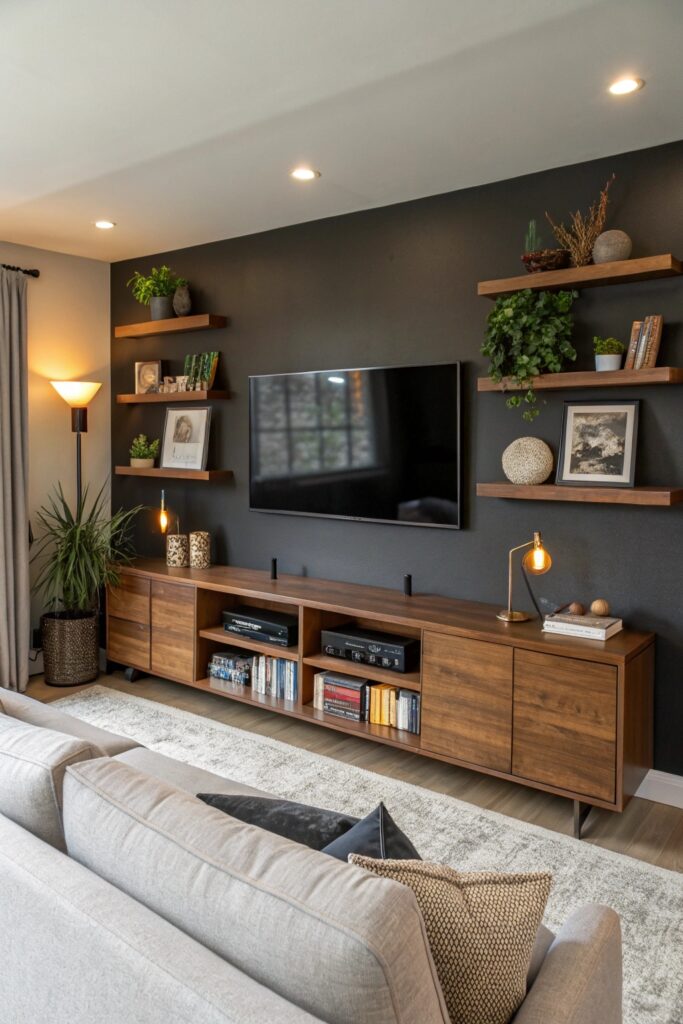
A properly designed media wall keeps technology organized, visually contained, and truly easy to use — which matters in a family room where multiple people operate the same equipment with wildly varying levels of technical confidence.
Media wall design essentials for family rooms:
- TV mounted at seated eye level — typically 42 to 48 inches from floor to screen center
- A floating media console below with enough depth for current components and future additions
- Cable management built into the wall or console — hidden cables make the entire wall look dramatically cleaner
- Gallery art or shelving flanking the TV to integrate it into the room’s design
Paint the wall behind the TV a slightly deeper tone than surrounding walls — this frames the screen intentionally and makes the TV feel like a design choice rather than a black rectangle mounted on a wall for want of a better idea. A well-designed media wall makes the technology feel like part of the room rather than the room’s awkward afterthought.
7. Add a Coffee Table That Works Hard
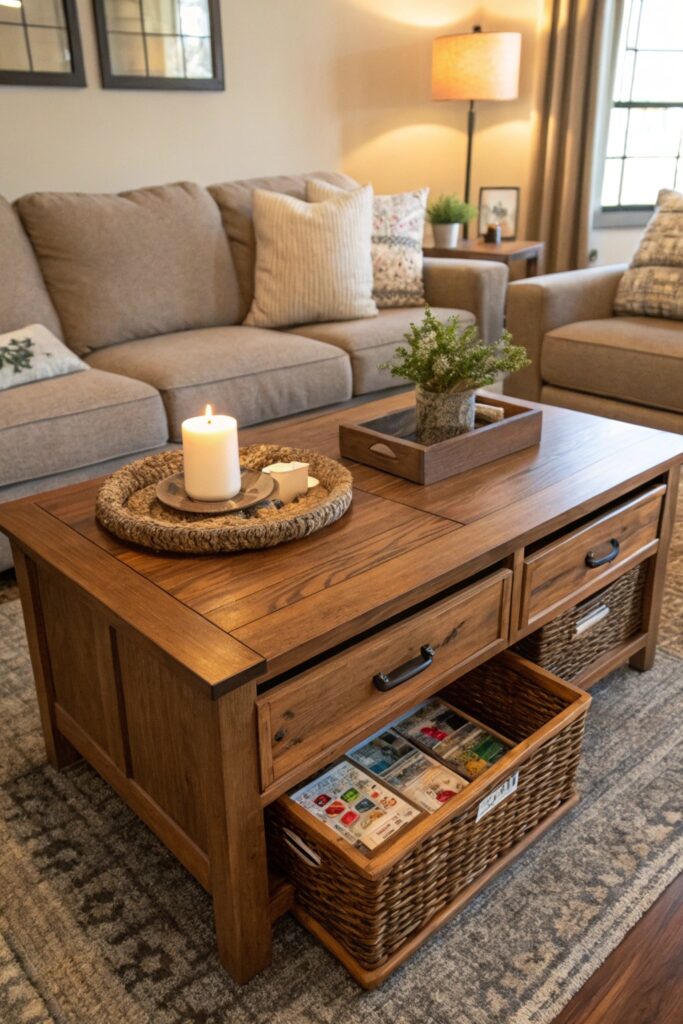
The coffee table in a family room needs to handle remote controls, drinks, books, board games, homework, and the occasional foot — which is a surprisingly demanding job description that most beautiful coffee tables fail spectacularly.
Coffee table options that work for families:
- A solid wood table with storage drawers for remotes, coasters, and small items
- An upholstered ottoman with a tray — soft enough for feet, sturdy enough for drinks with a tray, and no sharp corners
- Two smaller tables used together for flexible arrangement during different activities
- A coffee table with lower shelf storage for books, baskets, and games within easy reach
Leave 18 inches of clearance between the coffee table and the sofa — this provides comfortable legroom and space to navigate around the table during busy family moments. A round or oval coffee table works particularly well in family rooms with children — eliminating sharp corners removes the single most reliable source of minor injuries in a room that sees significant physical activity.
8. Use Warm, Earthy Tones Throughout
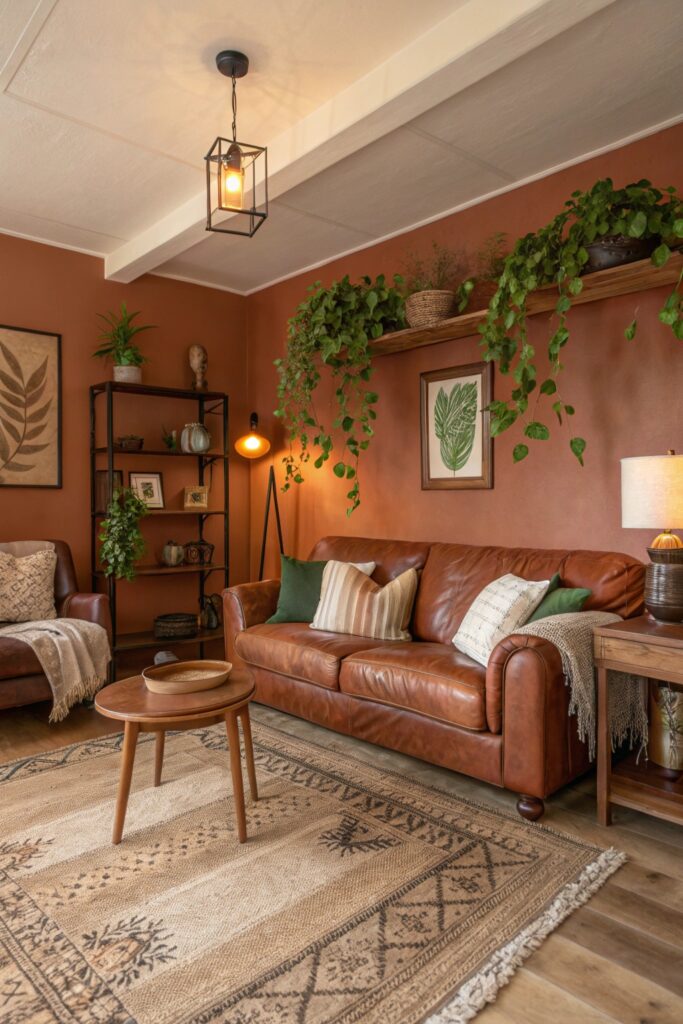
Color temperature determines how a family room feels — and warm, earthy tones create the psychological sense of comfort and relaxation that makes a family room truly restorative rather than just visually pleasant.
Warm color palette approaches for family rooms:
- Terracotta or warm clay as a wall color or significant accent
- Camel and cognac in leather or upholstery pieces
- Olive green or forest green in throw pillows, plants, or a reading chair
- Cream and warm white as a neutral base that keeps the room from feeling heavy
You don’t need to repaint everything to shift the palette toward warmth. New throw pillows, a different area rug, and a few new accessories can move a room’s color story significantly. A consistent warm palette throughout the family room creates an atmosphere that people describe as “cozy” — which is precisely the quality a family room needs to deliver above all others.
9. Maximize Natural Light While Managing Glare
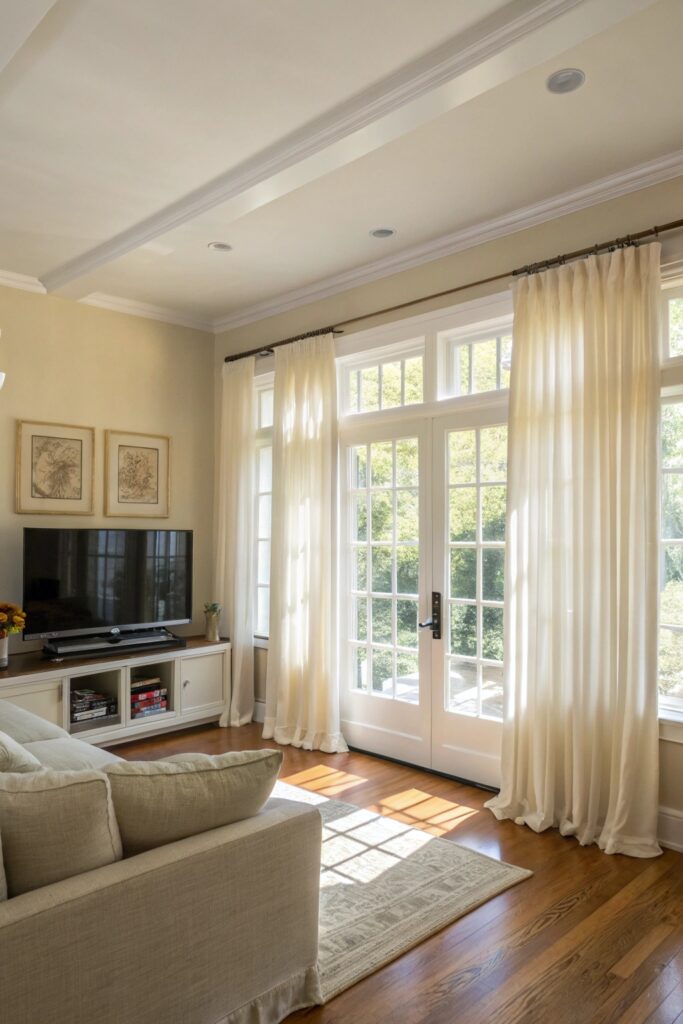
Natural light transforms a family room — but unmanaged natural light creates screen glare during movie time and uncomfortable afternoon heat that drives everyone to other rooms.
Natural light management strategies for family rooms:
- Position the TV perpendicular to windows rather than directly opposite them to minimize glare
- Install adjustable window treatments — sheer panels for daytime diffusion and blackout panels for movie nights
- Use light-reflective surfaces — pale walls, mirrors, and glossy accents — to spread natural light through the room
- Add a skylight if the room is chronically dark despite the best window arrangement
Layered window treatments — sheer linen panels for daytime use with blackout panels behind for when the family needs full darkness — give a family room complete light flexibility without requiring the permanent blackout conditions that make a room feel like a bunker during daylight hours.
10. Incorporate Smart Storage for Toy and Game Organization
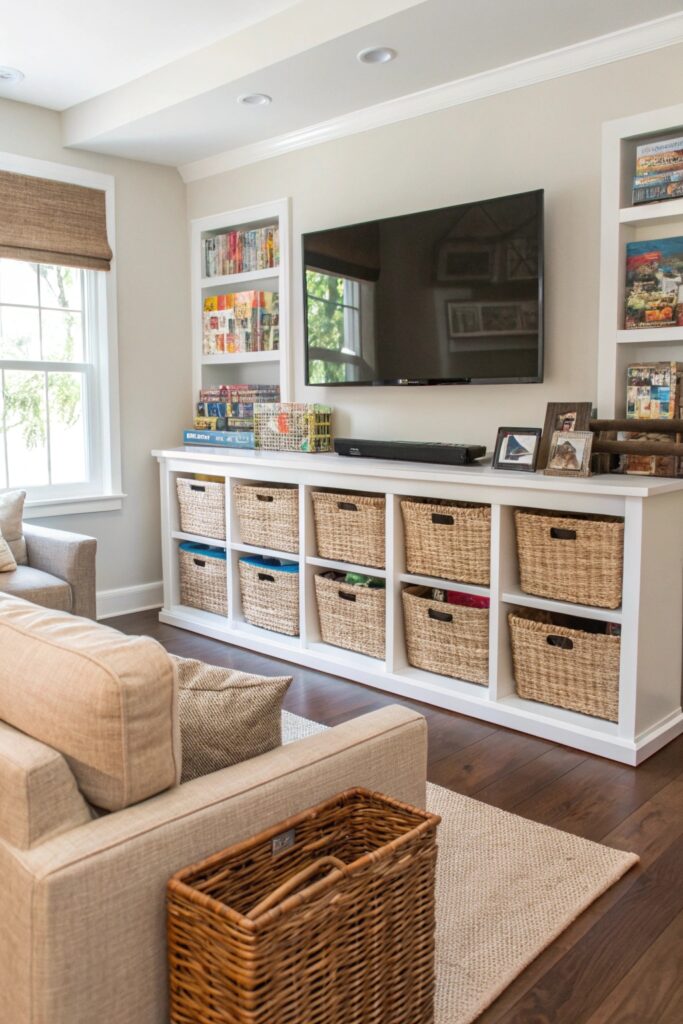
Toy and game organization in a family room is the daily battleground that determines whether the space functions smoothly or deteriorates into a floor hazard by mid-afternoon. Smart storage systems win this battle consistently.
Storage solutions that actually work for family rooms:
- Large woven baskets for quick toy roundup when guests arrive unexpectedly
- A dedicated board game cabinet with games stored vertically for easy identification
- A console table with baskets underneath for larger toys that don’t fit in cabinets
- A toy rotation system — keeping only current favorites accessible and storing the rest
Label every basket, bin, and drawer clearly — labels are what transform a storage system from decorative to truly functional. When every family member knows exactly where things belong, the return rate of items to their proper locations increases dramatically. Smart storage converts daily cleanup from a significant effort into a five-minute reset that actually gets done.
11. Add Plants for Life and Texture
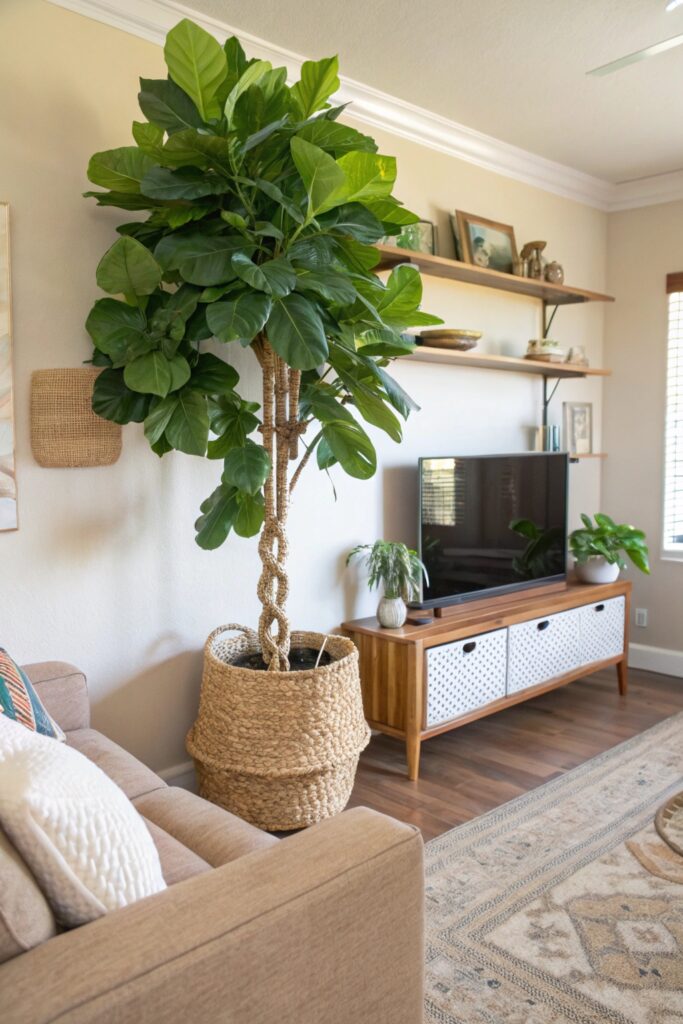
Plants make a family room feel noticeably alive — and the visual difference between a plant-filled family room and an identical room without greenery is immediately apparent and surprisingly significant.
Best plants for a busy family room environment:
- Pothos — trailing beautifully from high shelves, essentially impossible to kill, child-safe
- Snake plant — architectural, low-light tolerant, extremely forgiving of irregular watering
- ZZ plant — waxy, dark, dramatic, survives neglect that would end most plants
- Fiddle leaf fig — dramatic floor plant for corners with good indirect light
Choose plants that actually thrive with the light conditions and maintenance commitment your family actually provides — an aspirationally watered plant that lives in inadequate light and slowly declines is not a design feature. Position large floor plants in empty corners to fill vertical space without adding furniture, and use smaller plants on shelves and side tables to add organic texture at multiple heights throughout the room.
Build the Family Room Your Family Actually Deserves
For more design-forward inspiration beyond the kid-focused practicalities covered here, see our companion guide to family room design ideas.
A cozy, functional family room doesn’t happen by accident — but it also doesn’t require a professional designer or an unlimited renovation budget. A great sectional, smart storage, layered lighting, a durable rug, and warm colors deliver the foundation of every family room that actually works.
Start with the biggest pain point in your current space. Not enough seating? Address the sectional first. Constant clutter? Build or buy better storage. The room feels dark and cold? Fix the lighting and add warm color. Single improvements compound quickly.
Your family deserves a room that works as hard as they do — and enjoys it just as much. Start building that room today.