
A pool fence needs to meet your local safety code requirements first, and choosing a style within that framework second, since compliance isn’t optional regardless of how a fence looks.
Below are 12 fence styles worth considering, with practical notes for each. Always confirm the specific height, gate, and spacing requirements with your local building department before installation, since these rules vary by location.
1. Classic Aluminum Fence
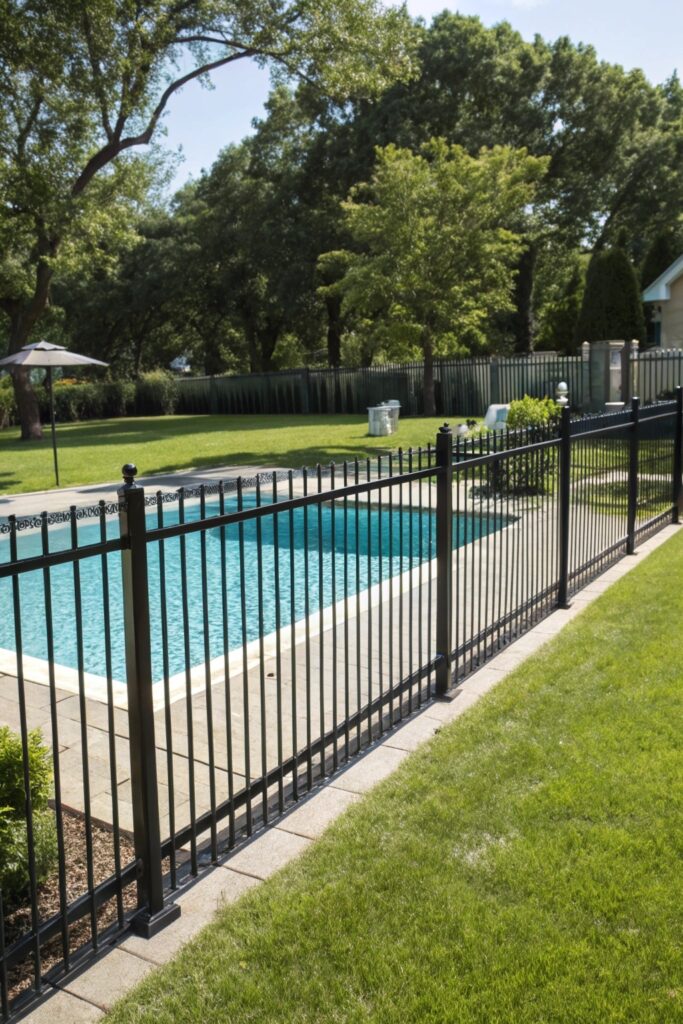
Aluminum resists rust and corrosion better than steel in a poolside environment, where constant moisture and chemical exposure wear down less resistant metals faster.
Choose a powder-coated finish specifically, which adds another layer of protection against the elements beyond the material’s natural resistance.
2. Glass Panel Fence
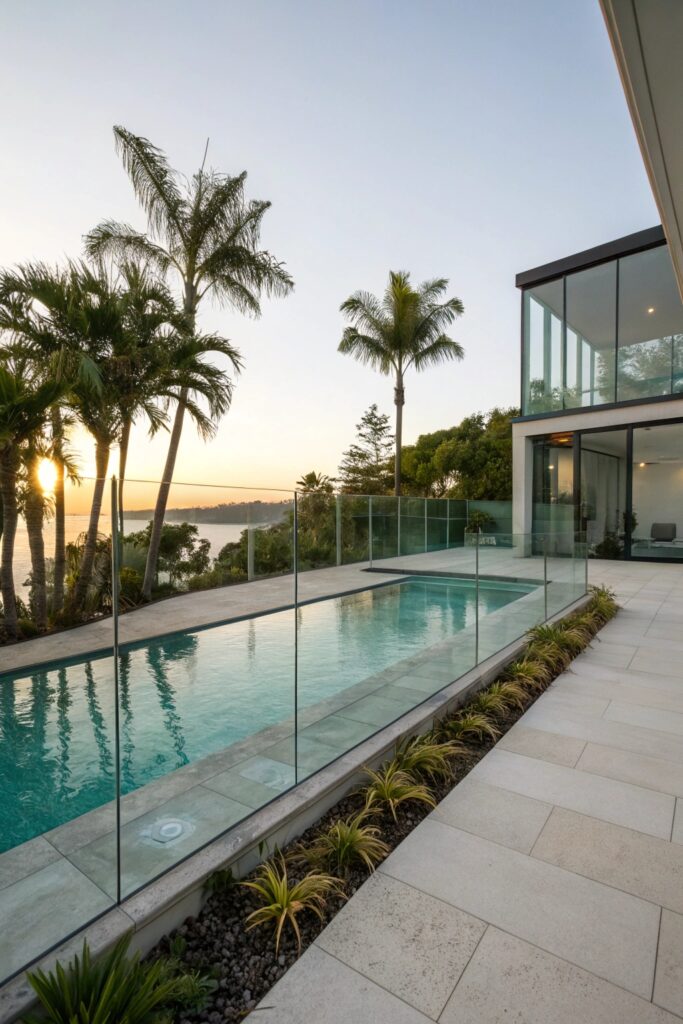
A glass fence preserves sightlines to the water, which matters both for supervising swimmers and for keeping the yard feeling open rather than closed in.
Choose tempered safety glass specifically, and confirm the specific panel thickness meets your local code requirements for pool barriers.
3. Wrought Iron Fence
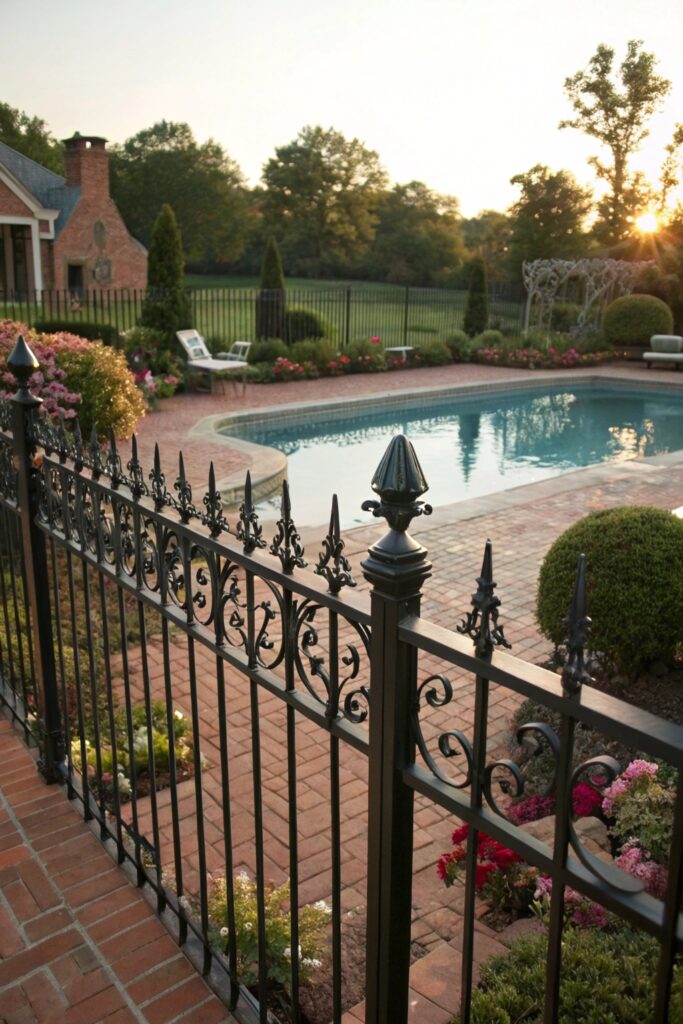
Iron needs more regular maintenance than aluminum to prevent rust, so factor in periodic repainting or sealing if you choose this material.
Choose a rust-resistant coating and plan for annual touch-ups in areas exposed to constant splashing or humidity.
4. Vinyl Privacy Fence
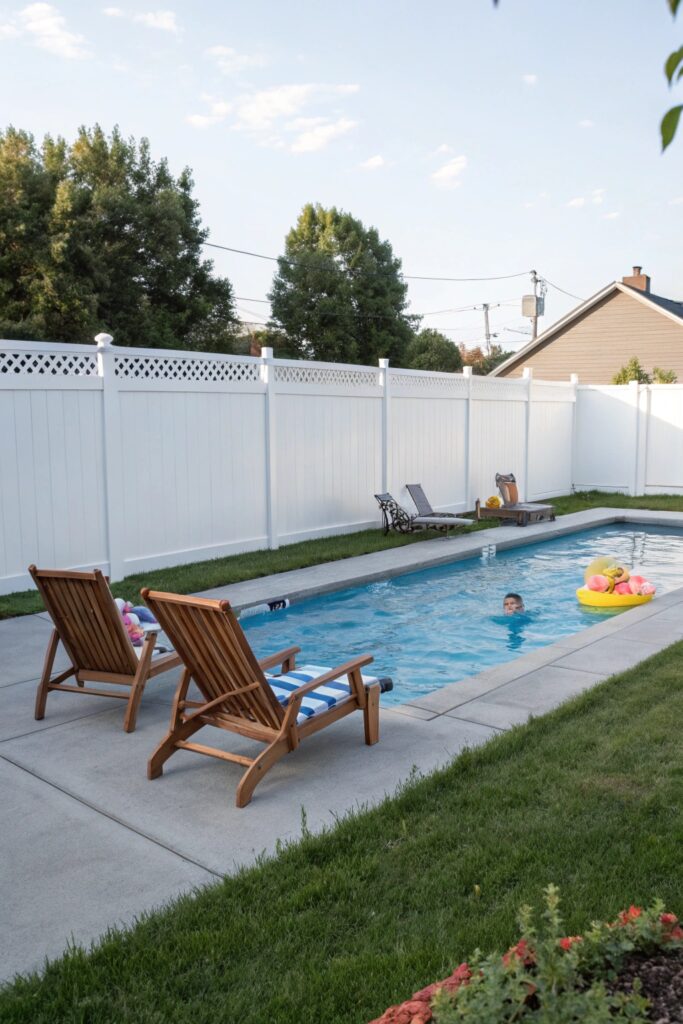
Vinyl blocks sightlines completely, which suits homeowners who want visual privacy but works against being able to see the pool from inside the house.
Vinyl requires very little ongoing maintenance beyond occasional cleaning, which is a genuine advantage over materials that need regular sealing or painting.
5. Mesh Removable Pool Fence
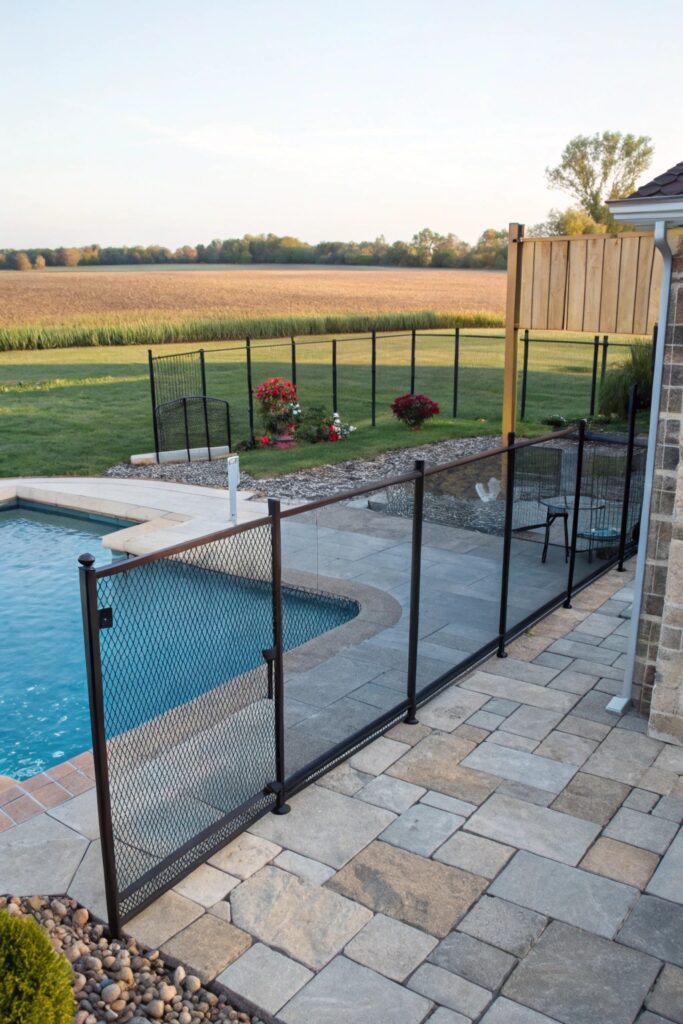
This style works well for temporary installations, like a rental property or a pool used seasonally, since it can be taken down without permanent structural changes.
Confirm the mesh fabric is rated for pool safety use specifically, since not all mesh products meet the same barrier standards.
6. Wooden Fence
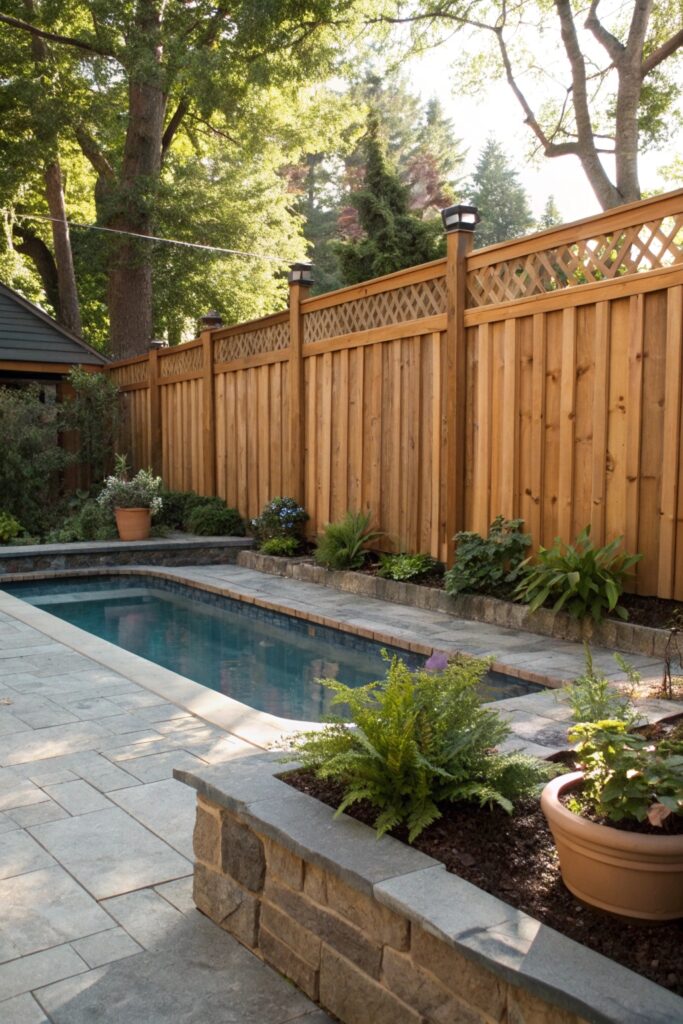
Wood needs the most ongoing maintenance of these options, requiring regular sealing to hold up against constant pool-area moisture.
Choose a rot-resistant wood species, like cedar or redwood, and commit to resealing on a regular schedule to extend its lifespan.
7. Bamboo Fence
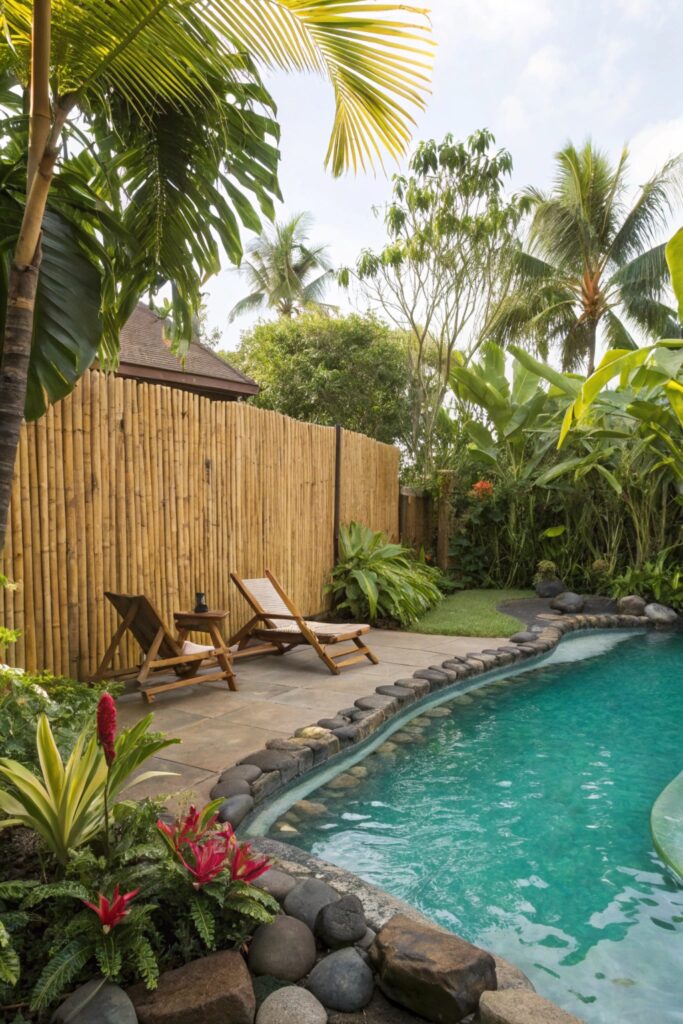
Genuine bamboo needs a quality sealant specifically to hold up in a wet environment, since untreated bamboo degrades faster than more traditional fencing materials.
Choose bamboo sourced specifically for outdoor structural use rather than decorative bamboo, which isn’t built to handle constant weather exposure.
8. Steel Cable Fence
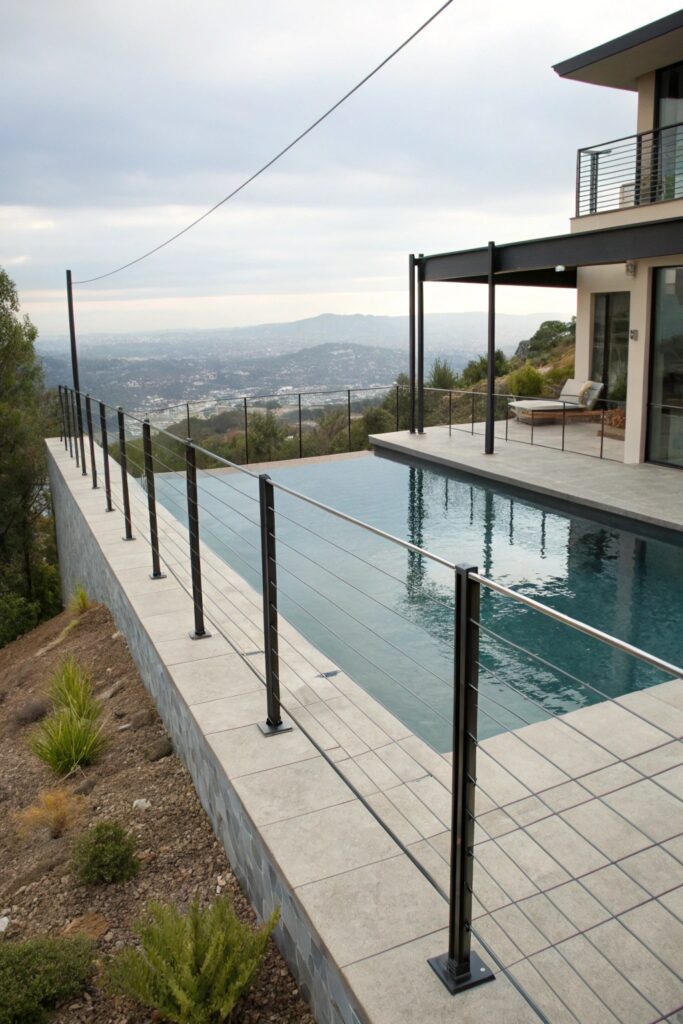
Cable fencing offers minimal visual obstruction while still providing a physical barrier, working well for a modern-looking yard that wants openness without sacrificing safety.
Confirm the cable spacing and tension meet your local safety code specifically, since cable systems have different requirements than solid panel fencing.
9. Ornamental Iron with Horizontal Rails
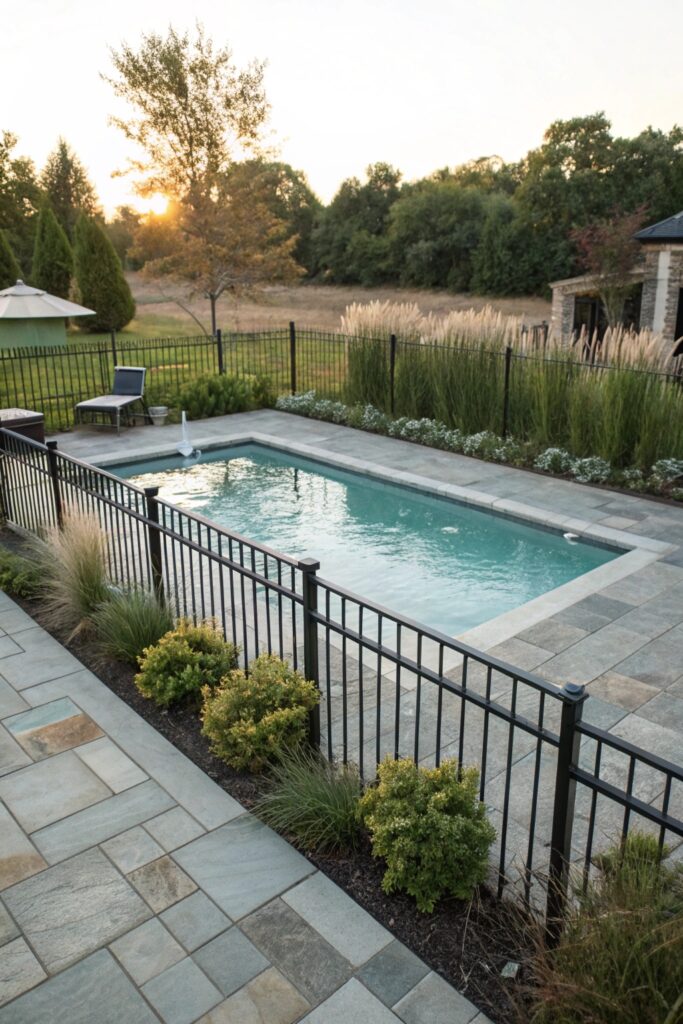
Confirm horizontal rail spacing meets your local safety requirements specifically, since horizontal elements can be easier for children to climb than vertical pickets.
This style works well when the horizontal rails are spaced tightly enough to prevent both climbing and any code violation.
10. Composite Fence
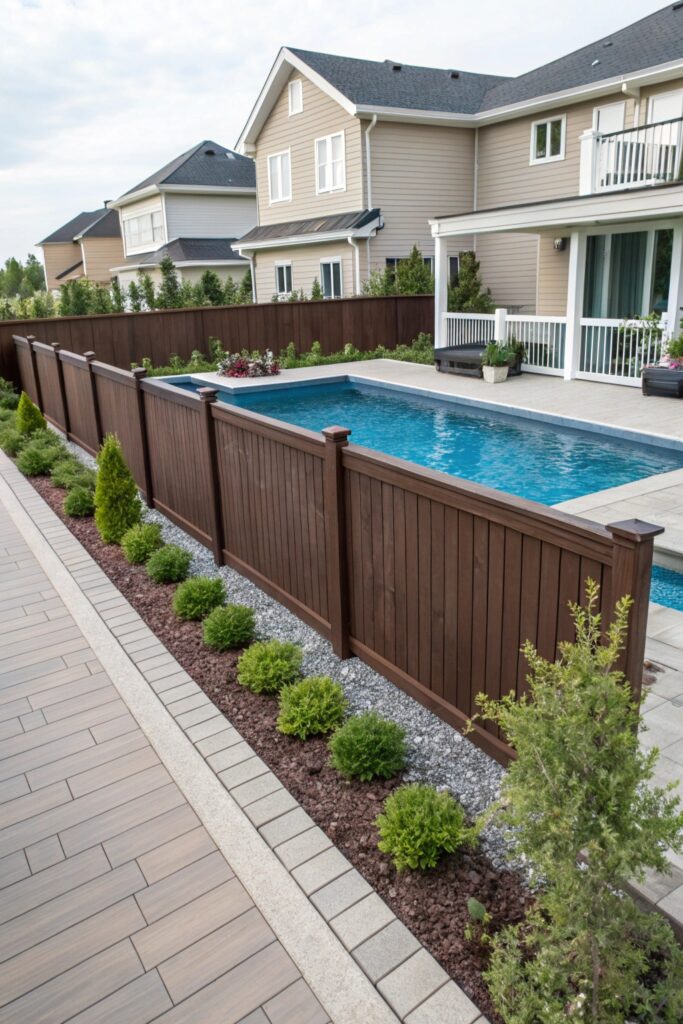
Composite combines wood’s appearance with considerably lower maintenance, resisting the rot and warping that affects real wood in a pool environment.
Composite typically costs more upfront than wood but consistently saves money over time by avoiding repeated staining and sealing.
11. Living Fence (Hedge or Plant Barrier)
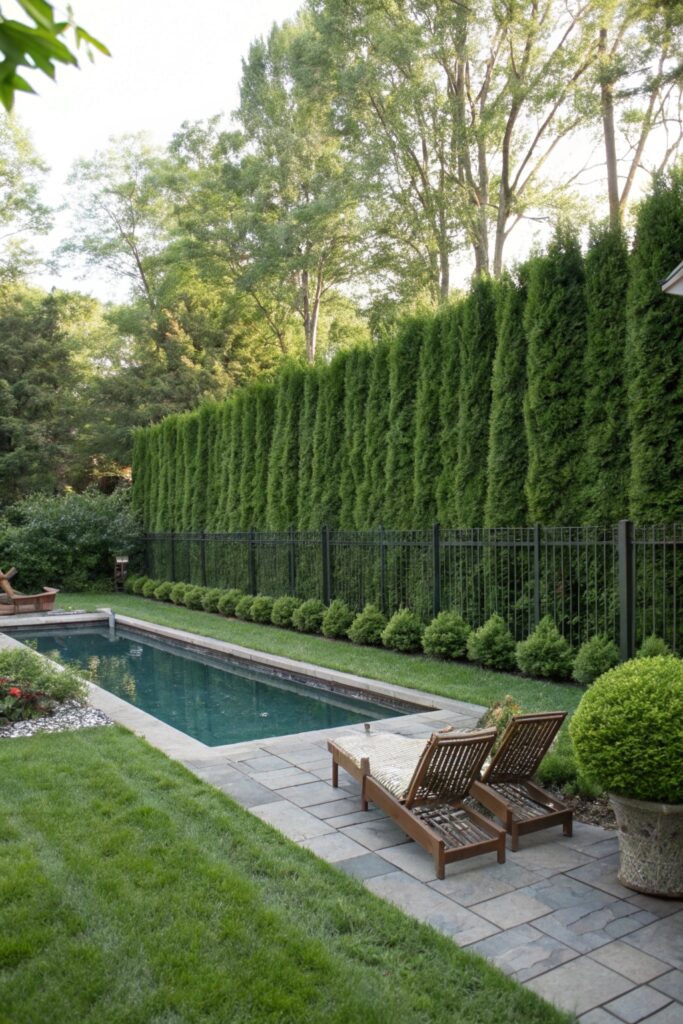
A hedge alone typically doesn’t meet safety code requirements on its own, so this option usually needs to be paired with a genuine physical barrier underneath or behind the greenery.
Choose a dense, fast-growing hedge variety if you want this barrier to reach full height sooner rather than waiting years for a slower-growing option.
12. Frameless Glass Spigot Fence
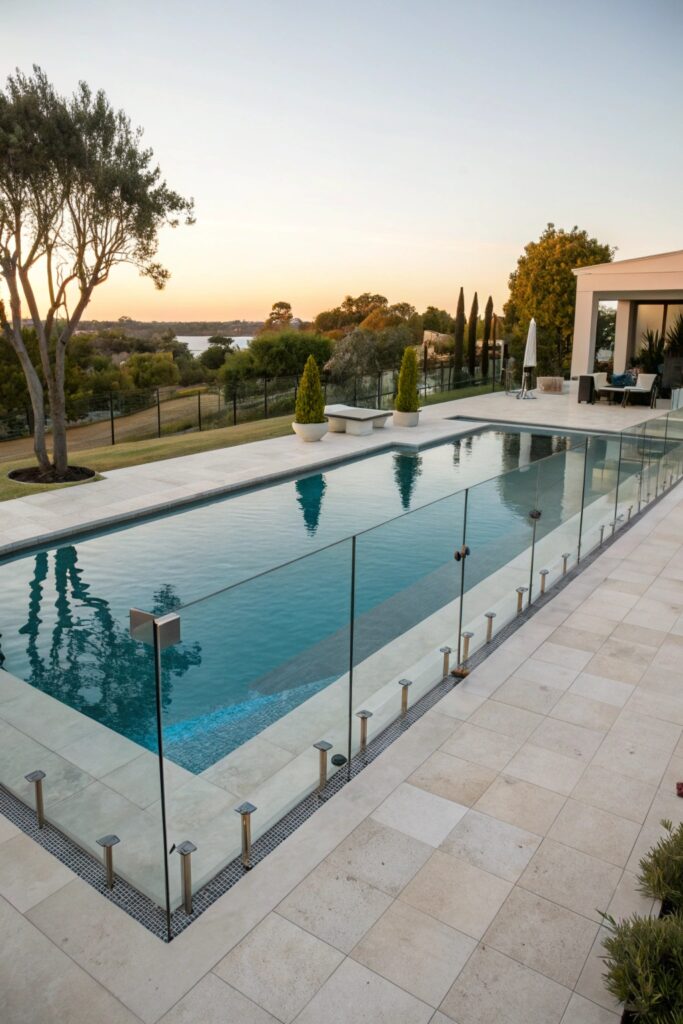
This style creates the most unobstructed view of any option here, though the exposed glass edges need more careful cleaning to avoid visible water spots.
Choosing a Self-Latching Gate
Most pool safety codes require a self-closing, self-latching gate with the latch mechanism positioned high enough that young children can’t easily reach it, typically at least 54 inches from the ground.
Testing the gate regularly to confirm it closes and latches fully on its own, especially after seasonal weather shifts that can warp wood or loosen hardware, keeps the barrier functioning the way it’s meant to year-round.
A fence that meets code and still looks good is entirely achievable — safety and style don’t have to compete with each other when you plan for both from the start.
Checking Your Local Code Before You Choose
Pool fence requirements vary considerably by location, covering specifics like minimum height, maximum gap between pickets, gate self-closing mechanisms, and distance from the fence to any climbable object nearby.
Contact your local building or permits department before finalizing a fence choice, since a beautiful fence that doesn’t meet code will likely need to be modified or replaced, adding genuine cost and delay to the project.
What These Fences Cost
Material and installation costs vary widely, with mesh removable fencing often the most affordable option at $15 to $30 per linear foot.
Glass and frameless glass systems sit at the higher end, often $100 to $250 per linear foot, given the material and installation precision required.
Get quotes from at least two licensed installers before committing to a specific material, since labor costs for pool fencing can vary considerably based on terrain, ground type, and the complexity of the specific gate mechanism required.
Inspect the fence and gate hardware periodically after installation, since latches and hinges gradually wear down over years of use, and a barrier that no longer closes and locks reliably needs prompt repair rather than being left as-is.
Consider how the fence integrates with the rest of your yard’s existing landscaping and hardscaping, since a barrier chosen purely for compliance without regard to the surrounding design can end up looking disconnected from the rest of the outdoor space.
If you’re purchasing a home with an existing pool, have the fence and gate inspected specifically as part of the process, since a barrier installed years earlier under older code standards may no longer meet current safety requirements.
A well-chosen and properly maintained pool fence is a truly worthwhile investment beyond code compliance alone, since it offers real peace of mind for anyone with young children or pets who might access the yard unsupervised.
The Bottom Line
Self-closing, self-latching gates are a genuine safety essential regardless of which fence style you choose, and it’s worth confirming this feature works reliably rather than assuming it does after installation. Material maintenance varies considerably between these options, so factor in your genuine willingness to handle upkeep before choosing based on appearance alone.