
Bees are out here working harder than most of us ever will, and the least we can do is leave them a decent drink of water. Seriously though — most gardeners obsess over flowers and plants to attract pollinators but completely forget that bees need fresh water just as much as nectar.
I started adding bee baths to my garden a few years back, and the difference in pollinator activity was noticeable within weeks. More bees, more butterflies, more of everything that makes a garden actually feel alive.
The good news? You don’t need to spend much. Some of the best bee bath ideas cost next to nothing and look truly beautiful in the garden.
1. Shallow Terracotta Saucer Bee Bath
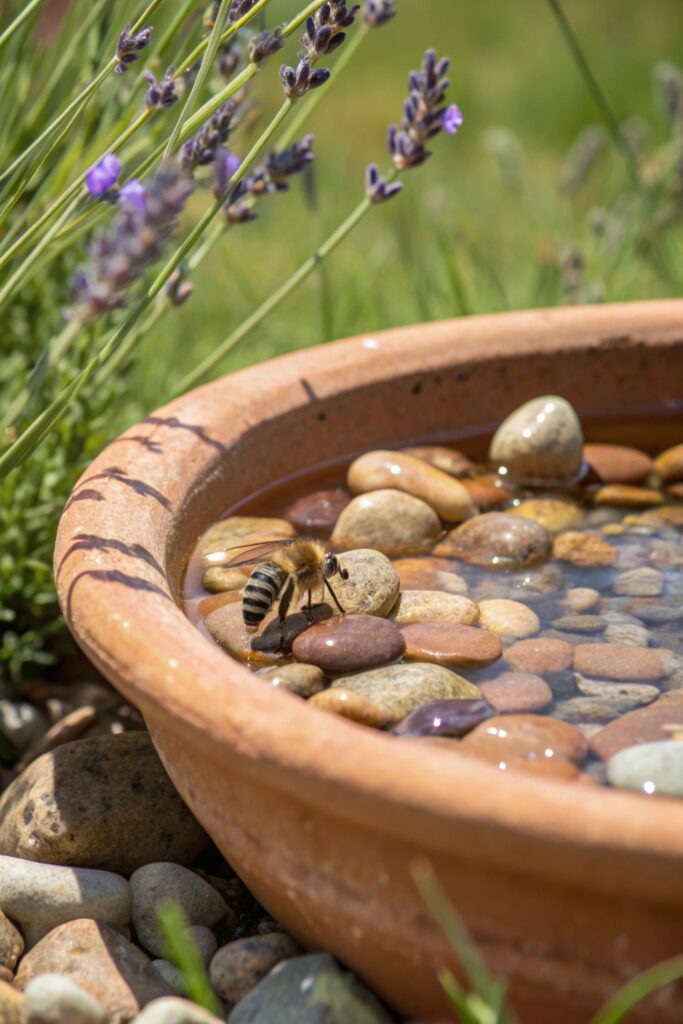
The classic terracotta saucer is honestly the most underrated bee bath option out there. It’s cheap, widely available, naturally porous, and bees absolutely love it. The rough terracotta texture gives bees secure landing spots while they drink — which matters more than most people realize, since bees can’t swim and need something to grip.
- Depth: Keep water no deeper than 1–2 inches
- Add landing spots: Place a few pebbles or marbles inside for bees to perch on
- Placement: Set it near flowering plants in a sunny but sheltered spot
Fill it with fresh water every couple of days to prevent mosquito breeding. IMO, this is the perfect starting point if you’ve never set up a bee bath before — simple, effective, and truly pretty in a garden setting. 🙂
2. Mossy Stone Bee Bath
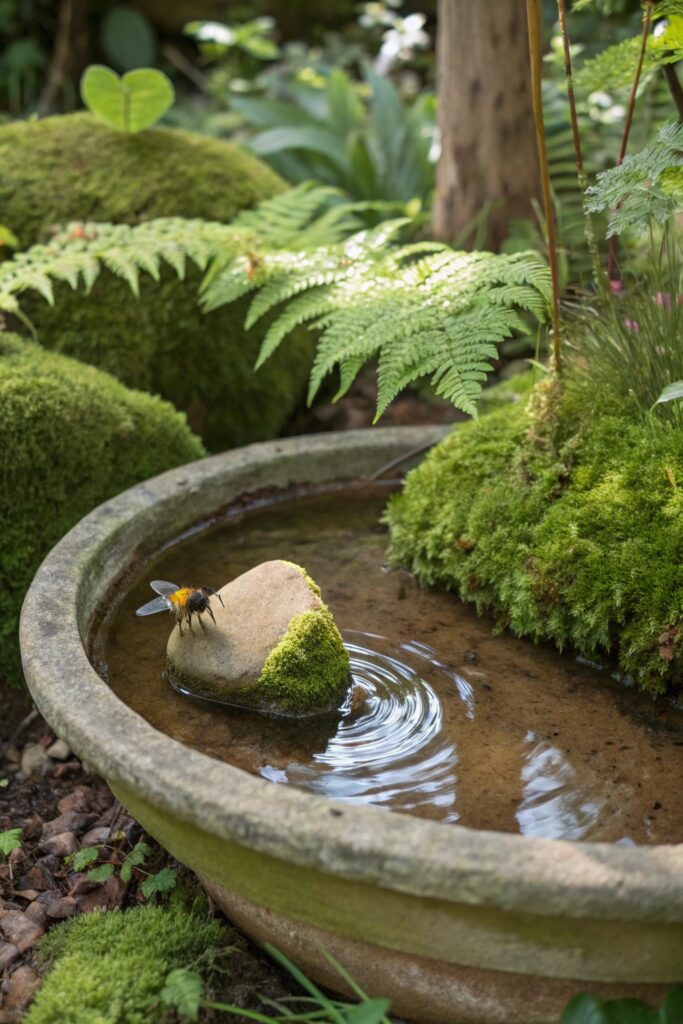
A flat mossy stone sitting in a shallow dish of water creates one of the most natural-looking bee baths you can make. Bees respond well to natural materials, and the moss adds humidity around the water source that many pollinators find attractive. It blends seamlessly into a cottage or wildlife garden aesthetic.
- How to set it up: Place a large flat river stone in a shallow ceramic or stone dish
- Encourage moss growth: Keep the stone damp and in partial shade
- Water level: Just enough to surround the stone base without submerging it
This setup works especially well near a shaded garden border. The moss retains moisture and keeps the surrounding area slightly cooler, which bees appreciate on hot summer days. It looks like it grew there naturally — which is always the goal.
3. Colorful Glass Gem Bee Bath
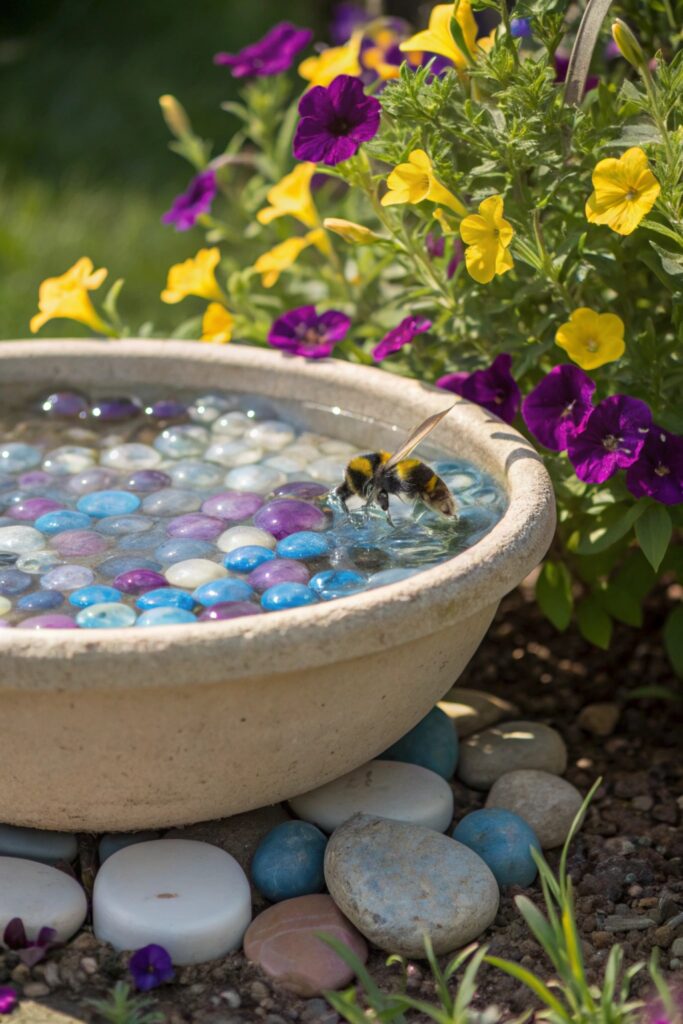
Adding glass gems or colorful marbles to a shallow dish creates a bee bath that looks as good as it functions. The smooth glass surfaces aren’t ideal landing spots on their own, so combine them with a few flat pebbles for grip. The colors attract bees visually — research suggests bees respond particularly well to blue, purple, and yellow tones.
- Best container: Wide, shallow ceramic bowl or garden dish
- Color choices: Blue, purple, and clear glass gems work best for attracting bees
- Maintenance: Rinse and refill every two days to keep water clean
This style works beautifully as a decorative garden accent that actually serves a functional purpose. Place it near your pollinator garden beds where foraging bees already spend time, and you’ll see visitors almost immediately.
4. Upcycled Vintage Birdbath Converted for Bees
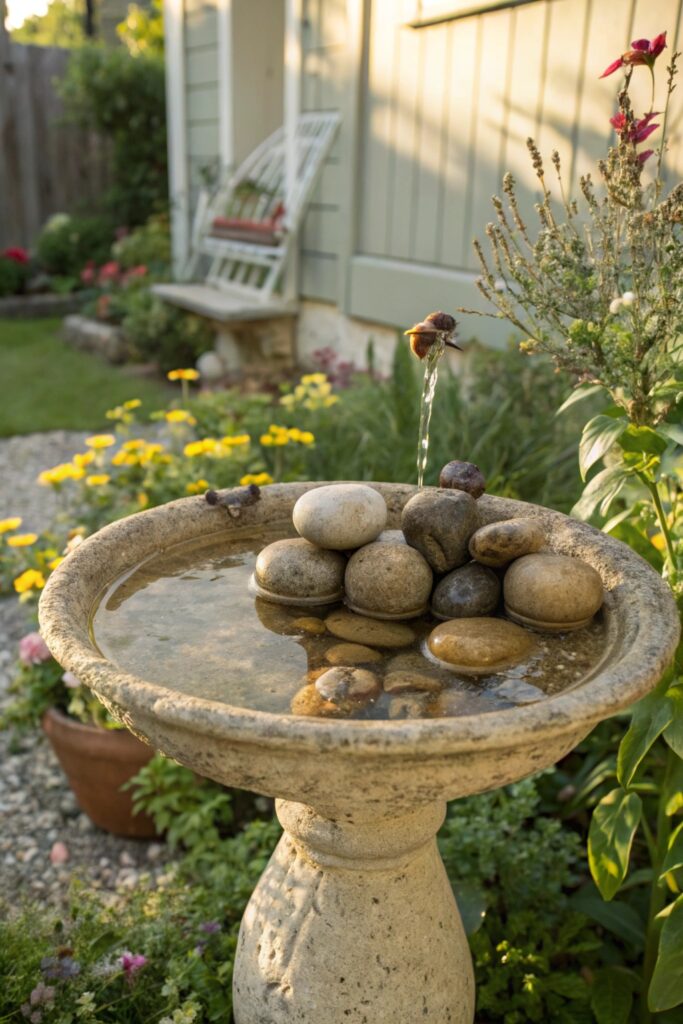
Most traditional birdbaths are actually too deep for bees — but a quick fix turns them into excellent pollinator watering stations. If you have an old birdbath sitting around (or spot one at a thrift store), fill the basin with smooth river pebbles until the water level sits shallow enough for safe bee access. Done.
- Pebble depth trick: Stack pebbles until water sits just 1 inch deep at the surface
- Stone variety: Mix flat and rounded stones for varied landing heights
- Style bonus: Vintage birdbaths add serious charm to any garden space
This approach gives new life to something that might otherwise collect leaves in a corner. The elevated height also keeps the water slightly warmer, which bees prefer during cooler mornings when they’re most actively foraging.
5. Wooden Log Slice Bee Bath
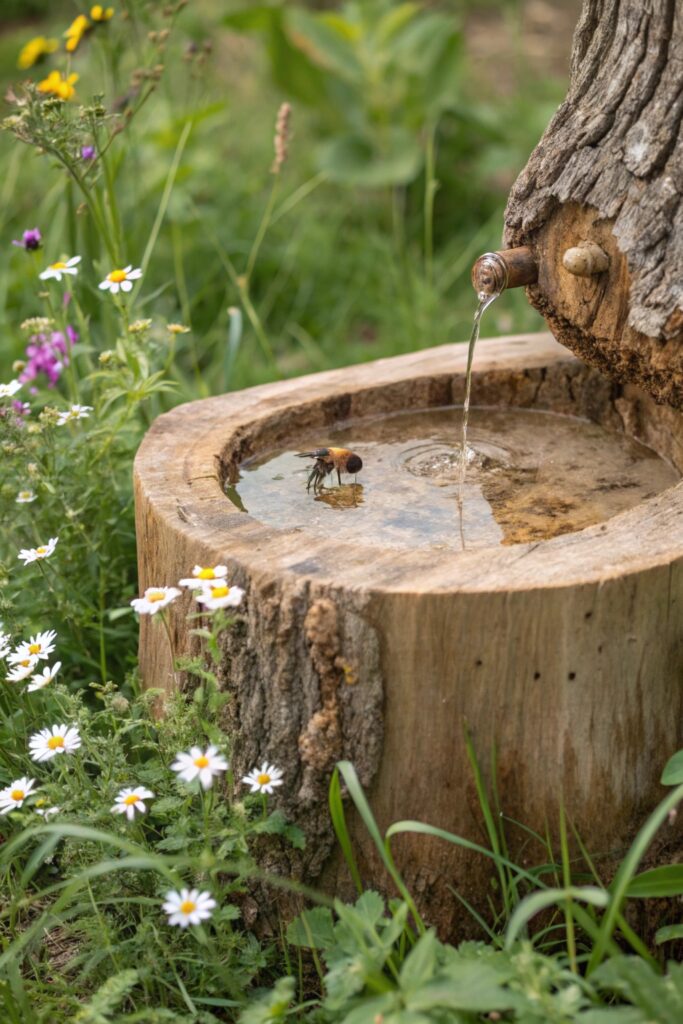
A thick wooden log slice with a natural hollow — or a shallow carved depression — makes a beautifully rustic bee bath. The natural wood texture gives bees excellent grip, and the organic look fits perfectly into woodland, cottage, or naturalistic garden styles. You can find pre-cut log slices at craft stores or simply cut your own.
- Natural hollows: Look for logs with existing shallow depressions that hold water
- Carved option: Use a chisel to create a shallow bowl shape in a flat log slice
- Sealing tip: Seal the wood with beeswax to help it hold water longer
Place it directly on the ground near ground-foraging bees, or elevate it on a stump for better visibility. Refresh the water daily since wood absorbs moisture quickly. The natural aesthetic makes this one of the most visually appealing bee bath options for a wildlife-friendly garden.
6. Hanging Coconut Shell Bee Bath
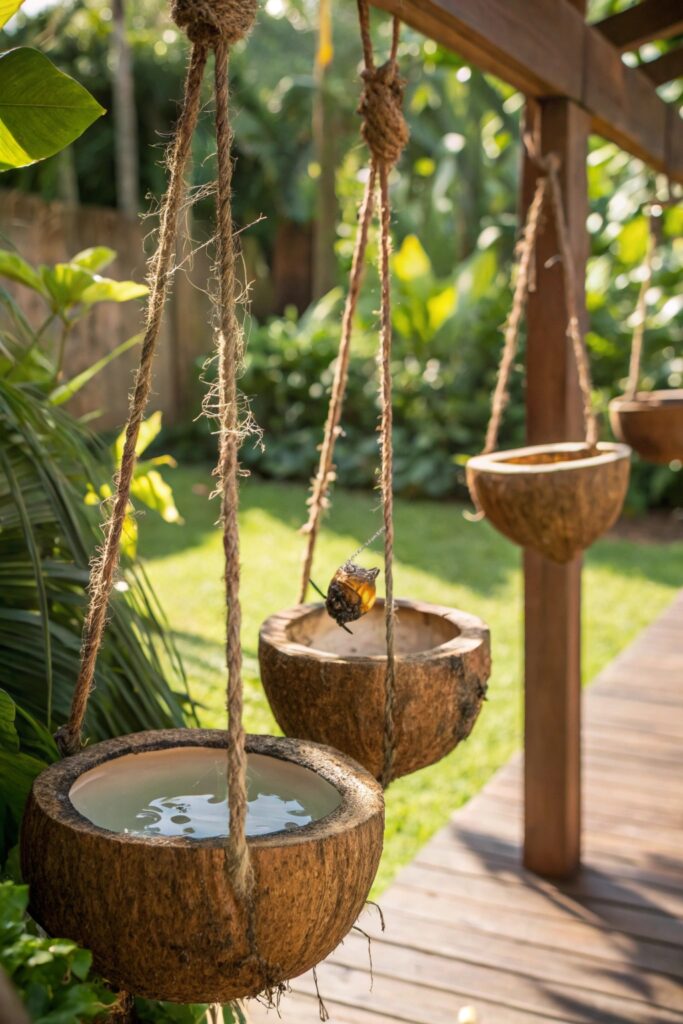
A halved coconut shell makes a surprisingly effective and charming small bee bath. The rough natural interior gives bees perfect grip, the curved shape holds water well, and it adds a fun tropical touch to a garden fence or pergola. Hang several at different heights to attract more visitors.
- Hanging method: Drill two small holes near the rim and thread with jute twine
- Water capacity: Small but effective — refill daily in warm weather
- Grouping idea: Hang three or four at varying heights for a decorative cluster
FYI — coconut shells dry out and crack over time, so swap them out seasonally. They’re inexpensive enough that replacing them annually isn’t a burden. Bees seem to particularly enjoy the rough natural texture, which gives them confident footing while drinking.
7. Terracotta Pot Saucer Tower Bee Bath
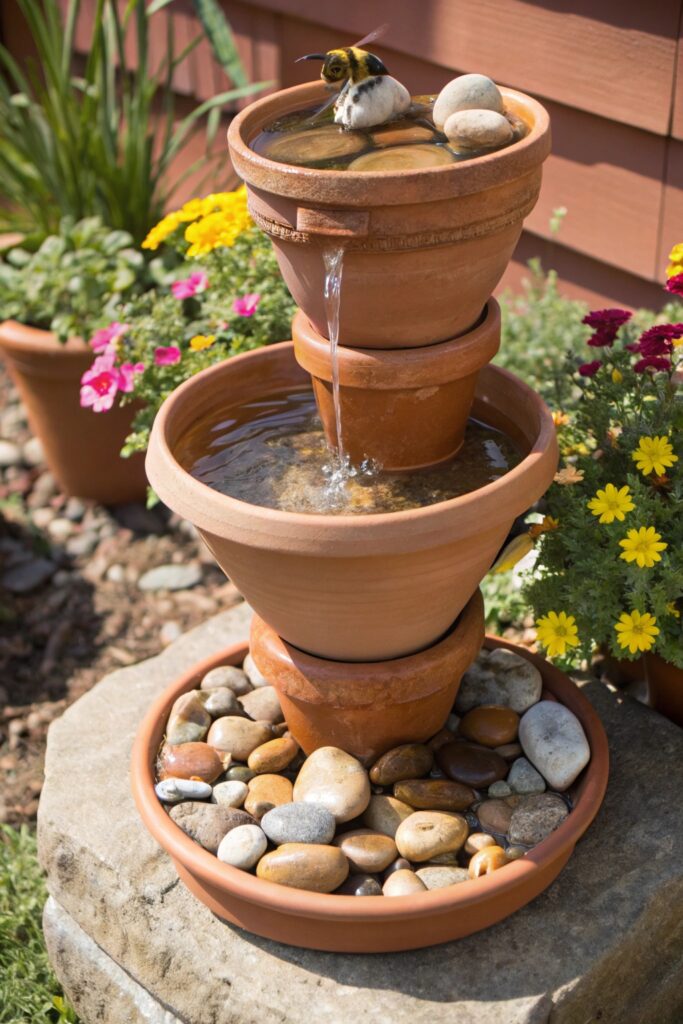
Stack two or three terracotta pots of decreasing size, place a large saucer on top, and you’ve built a stylish elevated bee bath in about five minutes. The stacked pot design adds height and visual interest while keeping the water accessible and visible to passing pollinators. It looks far more intentional than a dish sitting on the ground.
- Stability tip: Fill the base pot with sand or gravel for weight
- Saucer size: Choose the widest saucer that balances proportionally on top
- Decoration: Paint the pots with non-toxic outdoor paint for added color
Add pebbles inside the top saucer for bee landing spots and place it near your most productive flowering plants. This DIY bee bath idea costs under $15 to build and convincingly looks like something you’d find in a garden center for three times the price.
8. Solar Fountain Bee Bath
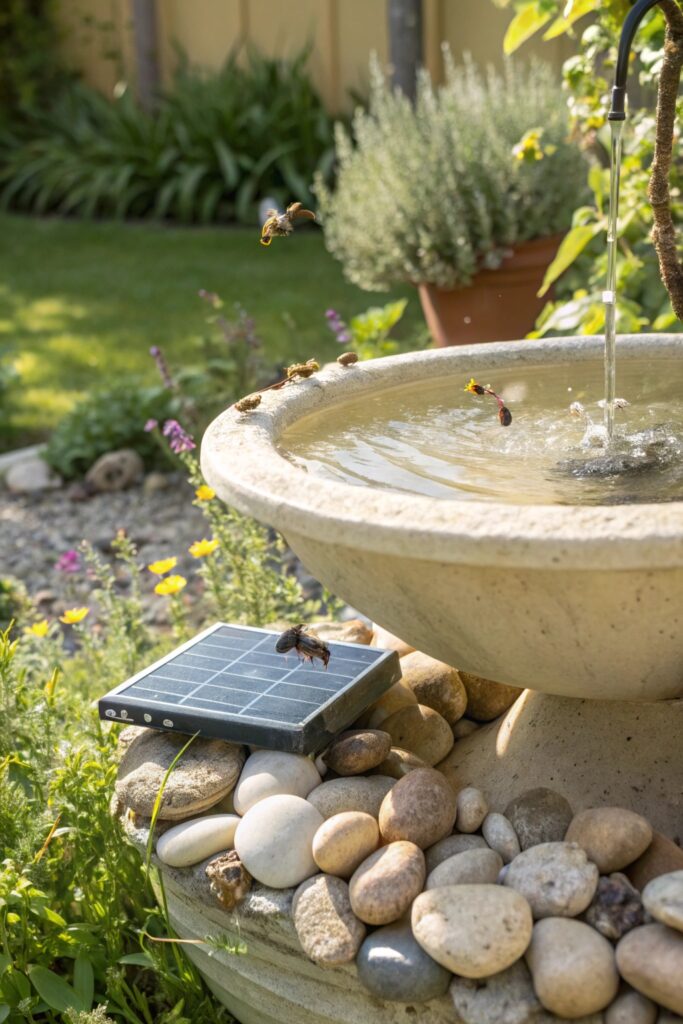
A shallow basin with a small solar-powered fountain creates a moving water source that bees find irresistible. Bees locate water partly through sound and movement, and even a gentle trickle significantly increases how quickly they discover and return to a water source. Moving water also stays fresher and discourages mosquito breeding.
- Solar fountain size: Small submersible solar fountains work perfectly in shallow dishes
- Basin choice: Wide, shallow ceramic or resin basin works best
- Sun requirement: Place in full sun for consistent solar power
The gentle sound of moving water also adds a lovely sensory element to the garden. This option requires slightly more investment than a simple dish and pebbles, but the increased pollinator activity makes it absolutely worth it.
9. Wildflower Saucer Bee Bath
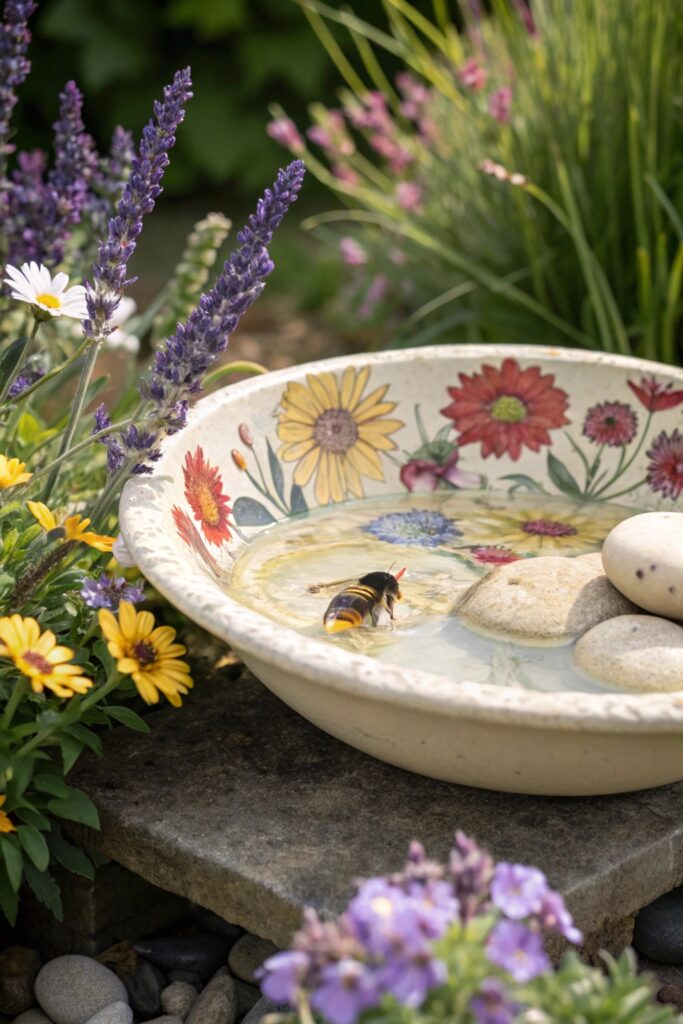
Painting wildflower designs on a plain ceramic saucer transforms a basic bee bath into a genuine garden art piece. Use outdoor-rated non-toxic ceramic paint and seal it with waterproof varnish. The bright floral patterns visually attract bees and butterflies while making the bath a decorative focal point.
- Paint safety: Always use non-toxic, lead-free outdoor ceramic paint
- Design ideas: Sunflowers, lavender sprigs, daisies, and clover work beautifully
- Sealing: Two coats of outdoor waterproof varnish protect the design
This makes a wonderful weekend DIY project and a thoughtful handmade garden gift. Even simple, imperfect designs look charming when filled with water and pebbles. The combination of bright color and fresh water makes this one of the most effective bee attractors on this list.
10. Cork Float Bee Bath
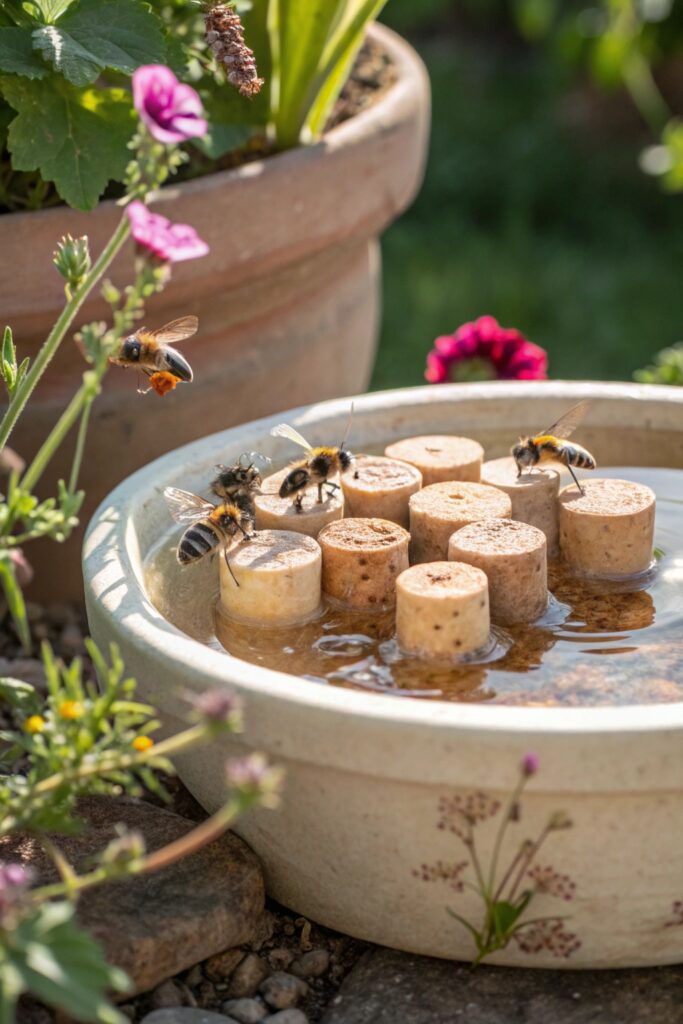
Floating wine corks in a shallow dish of water creates natural landing platforms that bees use confidently. Corks bob gently on the surface, giving bees stable but slightly moving perches while they drink. It’s one of those brilliantly simple solutions that works better than it has any right to.
- Number of corks: Fill the dish generously — 8 to 10 corks per medium dish
- Container choice: Any shallow bowl, dish, or tray works well
- Cork source: Save them from wine bottles or buy in bulk inexpensively
The natural cork material seems to appeal to bees — possibly because it mimics the texture of natural wood. :/ Whatever the reason, bees take to cork float baths very quickly. This is probably the fastest, cheapest bee bath setup on the entire list.
11. Garden Stone Bee Watering Station
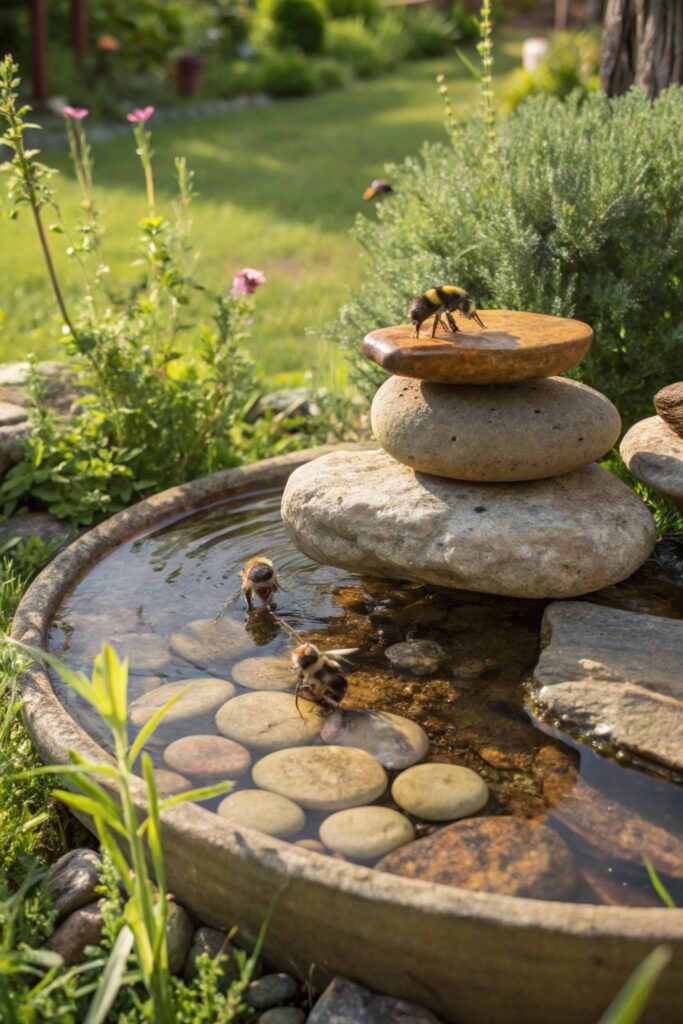
A cluster of flat garden stepping stones arranged in a shallow tray of water creates a multi-level bee watering station that serves dozens of bees simultaneously. Different stone heights mean bees of different sizes all find comfortable perches. It looks naturalistic and fits beautifully into any garden style.
- Stone types: Flat slate, smooth river stones, or sandstone all work well
- Tray options: A wide plastic plant tray, shallow terracotta dish, or garden basin
- Arrangement: Vary heights so some stones sit above water and some just at the surface
Position the station where you already see bee activity in your garden. Bees communicate water sources to their hive, so once one bee discovers your station, others follow quickly. A well-placed stone watering station can become a truly busy pollinator hub within days.
12. Herb Garden Integrated Bee Bath
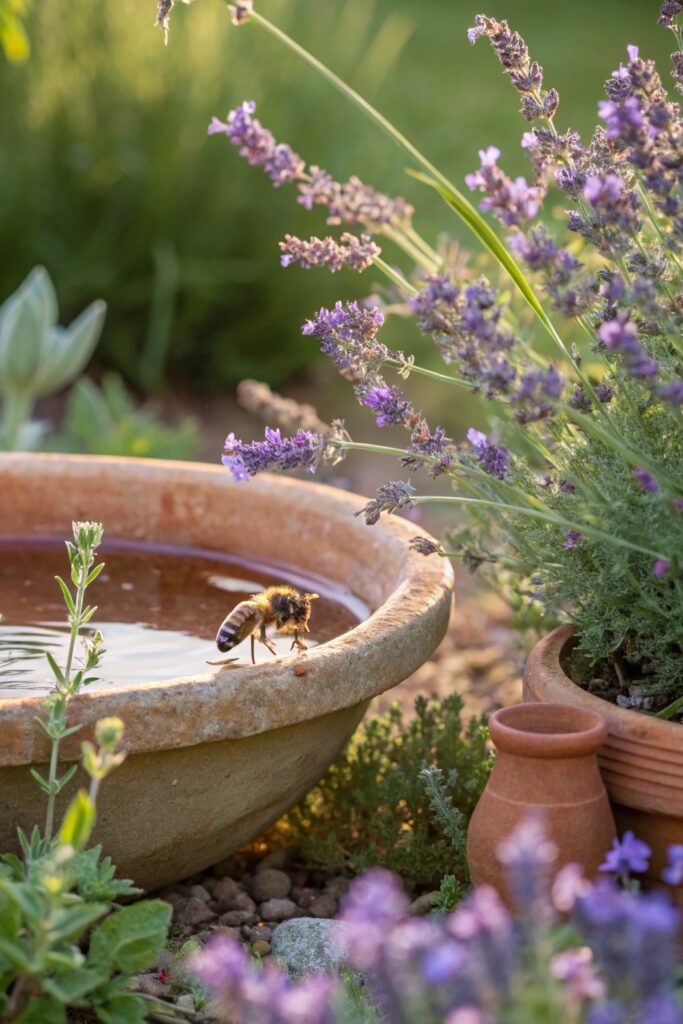
Placing a bee bath directly inside or beside your herb garden creates a complete pollinator support system in one spot. Herbs like lavender, thyme, rosemary, and borage already attract heavy bee traffic — adding water right where bees already forage makes the whole setup incredibly efficient. Bees appreciate not having to travel far between food and water.
- Best herb companions: Lavender, borage, thyme, oregano, and catmint
- Bath placement: Center of the herb bed or at the nearest corner to flowering plants
- Container style: Terracotta or stone containers complement herb garden aesthetics
This integrated approach turns your herb garden into a complete bee habitat rather than just a food source. You grow better herbs, support more pollinators, and create a more biodiverse garden corner — truly a win on every level.
13. DIY Pebble Mosaic Bee Bath
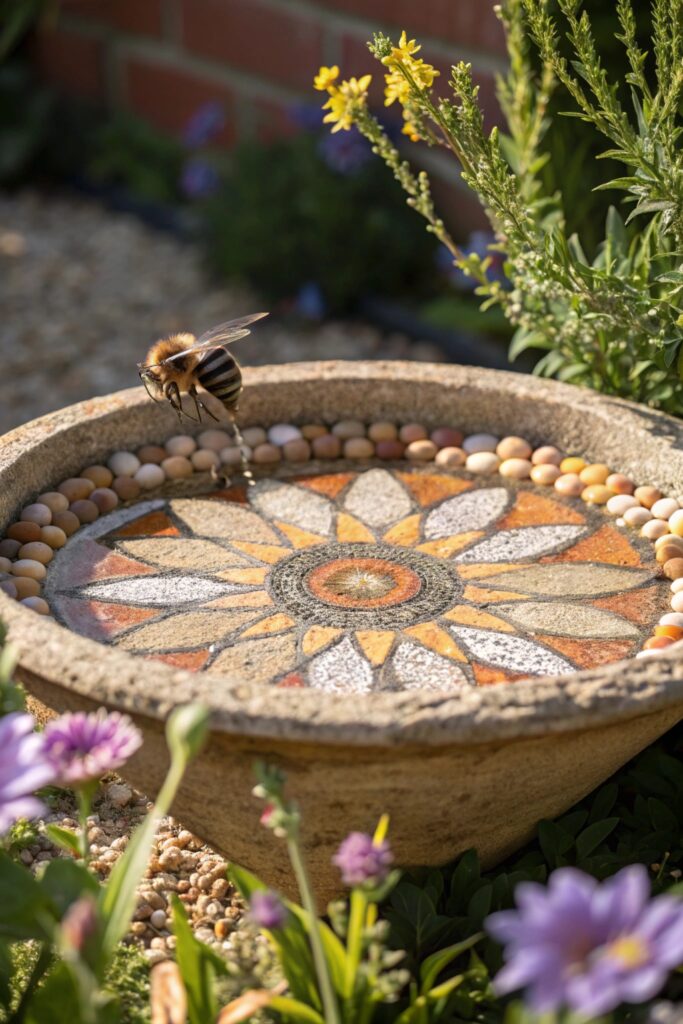
A hand-laid pebble mosaic on the interior of a shallow garden dish creates the most beautiful bee bath on this entire list. Arrange small smooth pebbles in geometric or floral patterns using waterproof tile adhesive, grout the gaps, and seal with waterproof sealant. The result looks truly stunning and the textured surface gives bees perfect footing.
- Pebble sources: Garden centers, craft stores, or collected from beaches and riverbanks
- Adhesive: Use waterproof tile adhesive rated for outdoor use
- Grout choice: Unsanded waterproof grout in a contrasting or complementary color
This project takes an afternoon but produces a bee bath that looks like genuine garden art. Pattern ideas include sunburst designs, simple geometric grids, or freeform natural arrangements. It’s the kind of garden feature that makes visitors stop and actually ask where you bought it — and you get to say you made it yourself.
Final Thoughts
For more on attracting wildlife, see our guides to bird bath ideas and pollinator garden ideas.
Supporting pollinators doesn’t require a complete garden overhaul. A shallow dish, some pebbles, and fresh water — that’s truly all it takes to start making a difference for the bees working your garden every single day.
Pick two or three ideas from this list that match your garden style and give them a try this season. Start simple with a terracotta saucer and build from there. Once you see how quickly bees discover and return to a reliable water source, you’ll want bee baths in every corner of your yard.
The bees are already visiting your garden — now give them a reason to stay. 🙂