
A well-planned transition between a deck and patio makes two separate outdoor structures feel like one cohesive living space, rather than two disconnected areas.
Below are 12 ways to create this connection, with practical notes for each.
1. Matching Material Palette
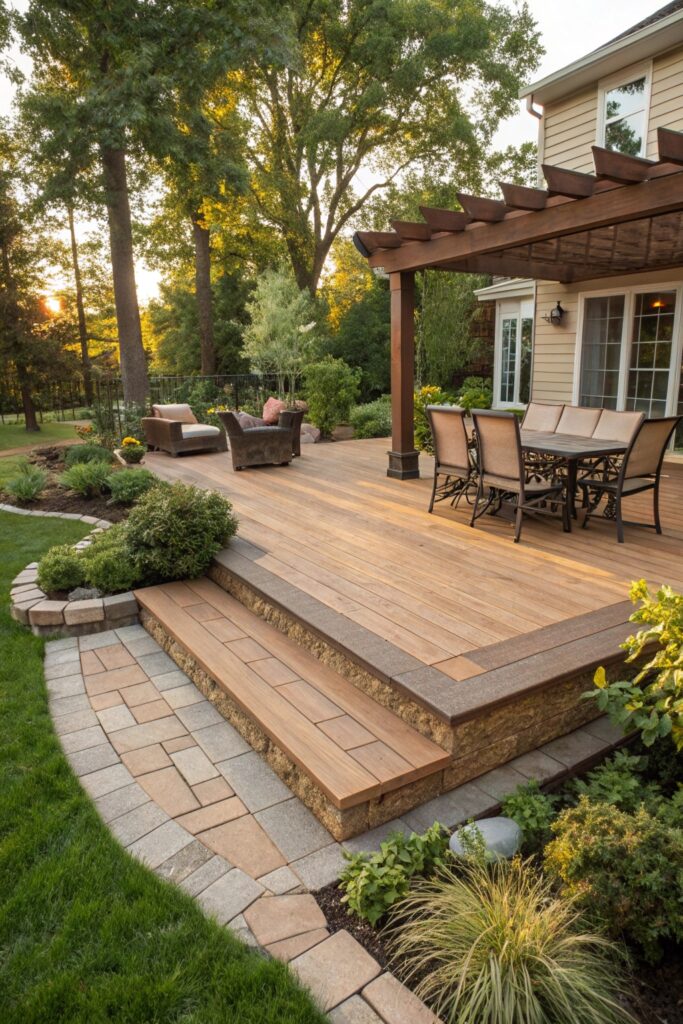
Coordinating tones between the deck’s wood and the patio’s stone or concrete, even without identical materials, creates a more cohesive overall look.
Choose weather-sealed wood or composite decking specifically, since this material will need to hold up alongside the patio’s more durable stone or concrete over time.
2. Staircase as a Design Feature
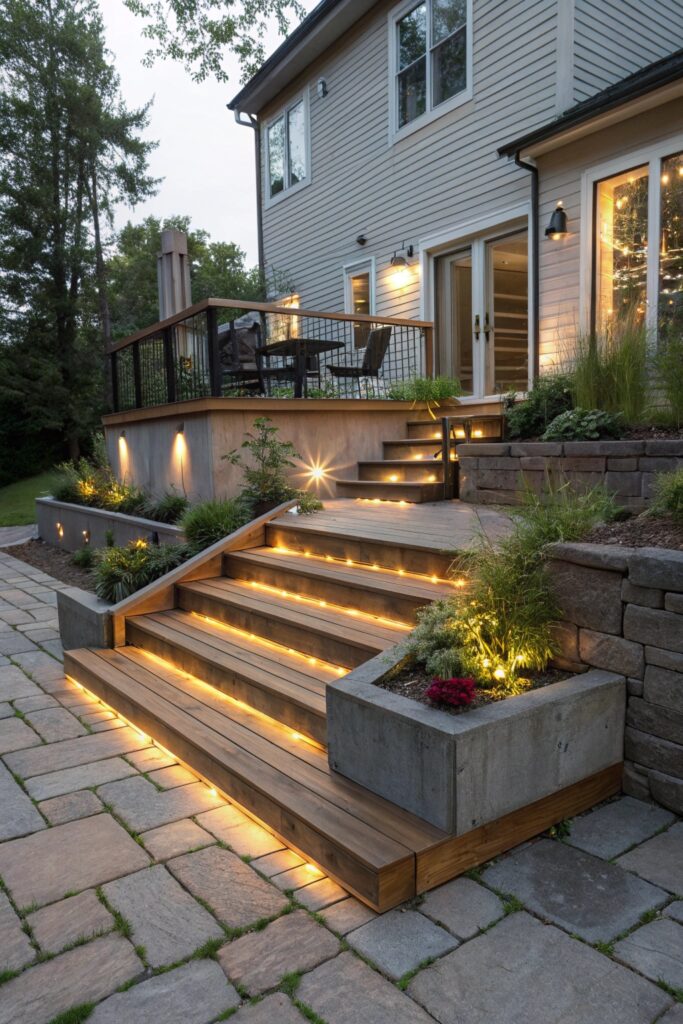
A well-designed staircase can serve as an intentional transition element rather than just a functional necessity between two different levels.
Choose non-slip stair tread material specifically, which matters more here than in most other outdoor applications given the elevation change involved.
3. Seamless Concrete with Wood Inlays
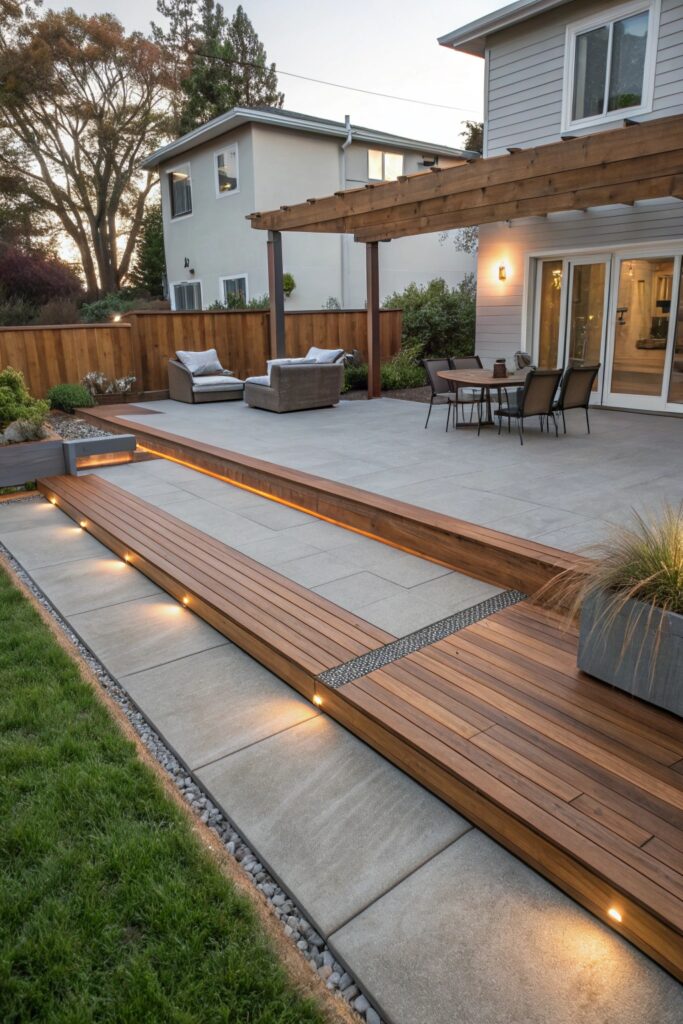
Incorporating small wood inlay strips into a concrete patio echoes the deck’s material, tying the two surfaces together visually.
Choose UV-stable sealant for the wood inlays, since untreated wood embedded in concrete can degrade faster than the surrounding material.
4. Transitional Landing Pad
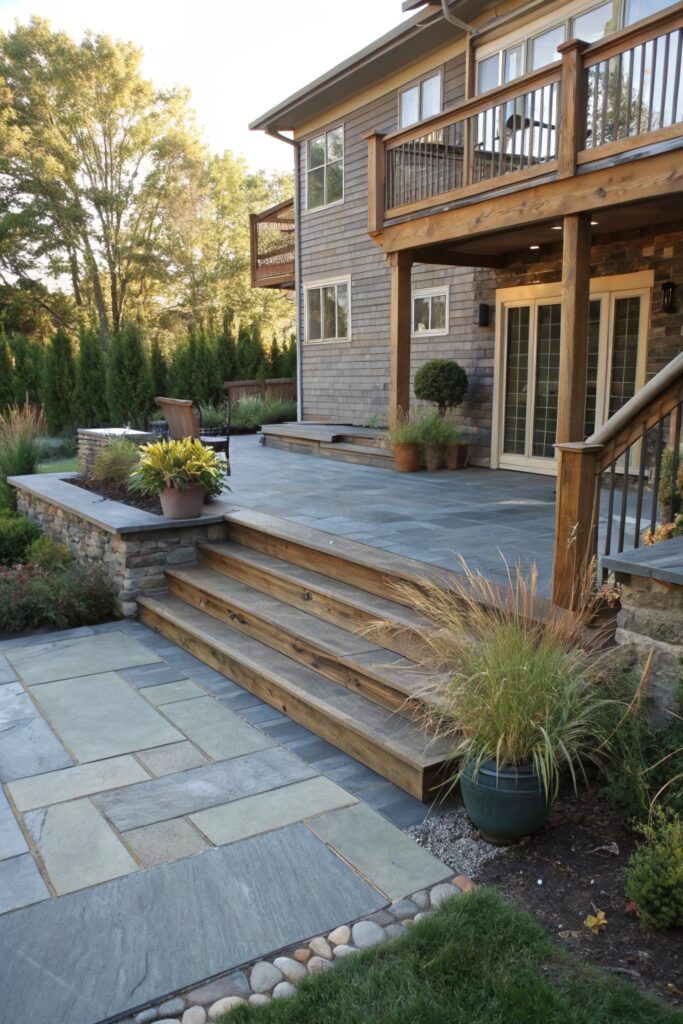
A sized landing pad between the two levels gives the transition a clear, intentional pause rather than an abrupt shift.
Choose durable paving material for this landing specifically, since it sees concentrated foot traffic as the primary pathway between levels.
5. Built-In Bench Along the Transition Edge
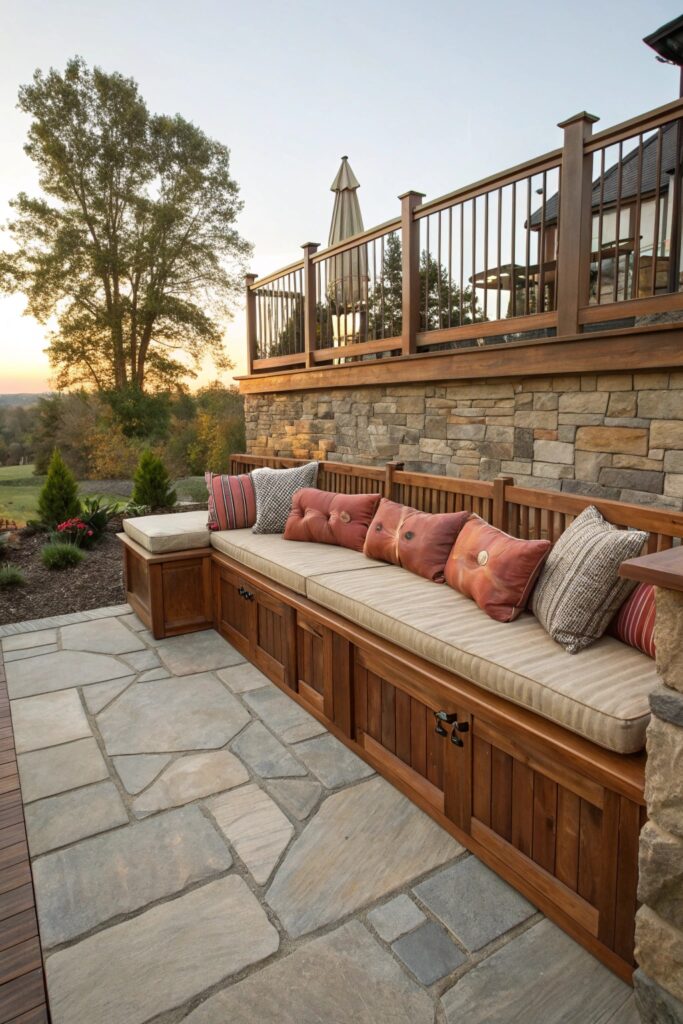
Positioning a bench along the edge where deck meets patio adds function while visually softening the boundary between the two spaces.
Choose weather-resistant cushions for this bench if adding seating, since built-in furniture faces the same exposure as the rest of the outdoor structure.
6. Pergola Spanning Both Spaces
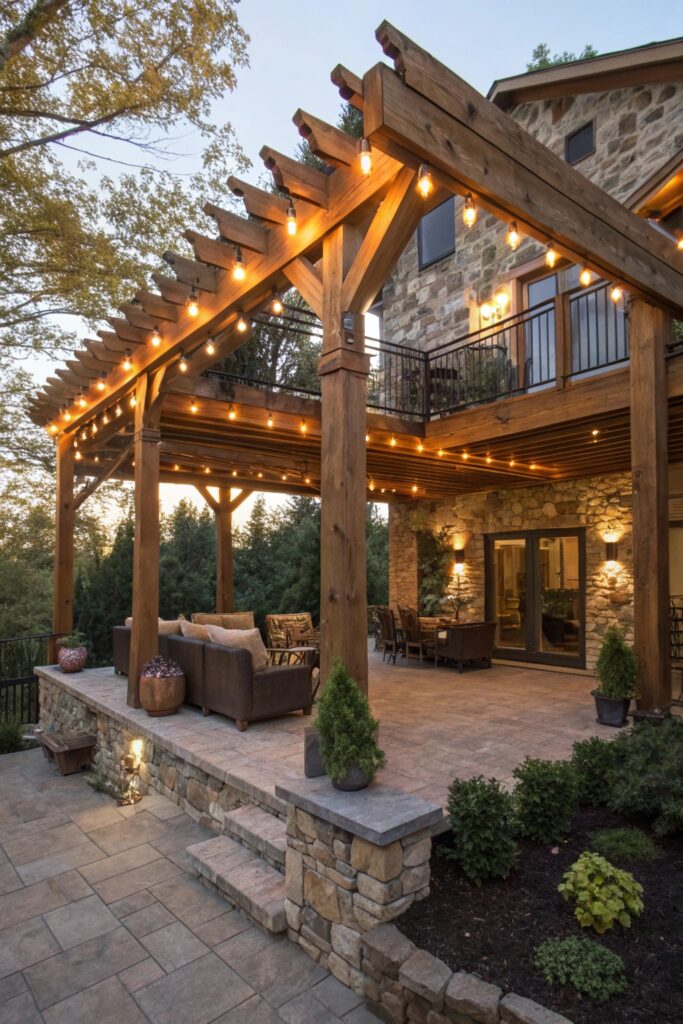
A continuous pergola structure over both the deck and patio areas visually unifies them under one shared architectural element.
Confirm structural support requirements with a professional before installing a pergola spanning two different elevation levels.
7. Sunken Patio Design
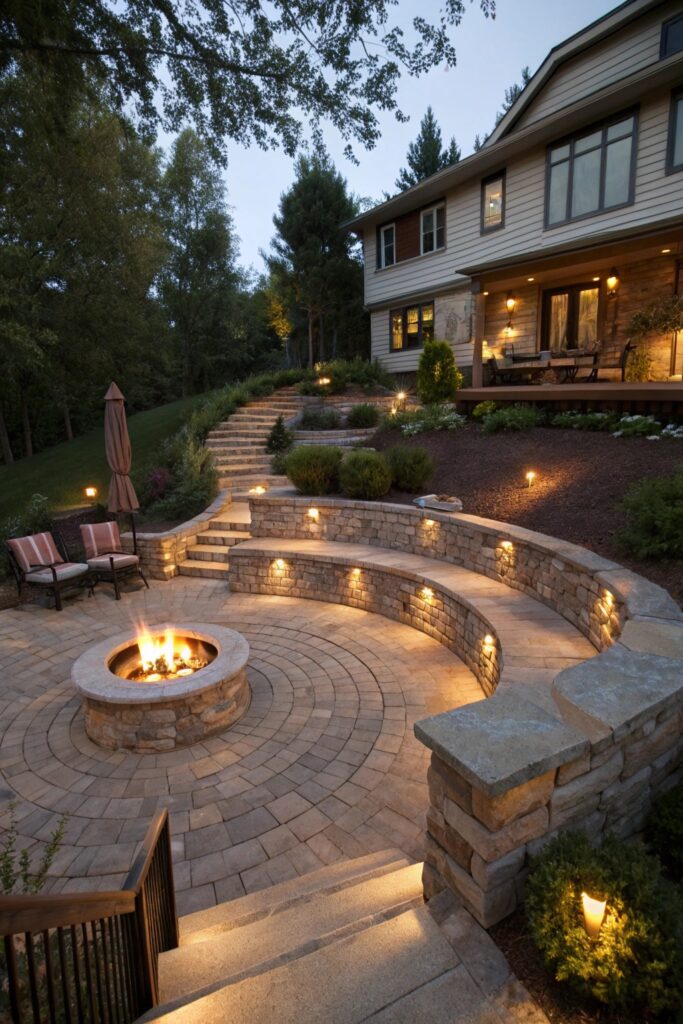
Confirm drainage planning before this project, since a sunken patio needs proper grading to avoid water pooling in the lower area.
Confirm local code requirements for guardrails or barriers around a sunken area, since safety regulations often apply to elevation changes.
8. Coordinated Outdoor Rugs Across Both Levels
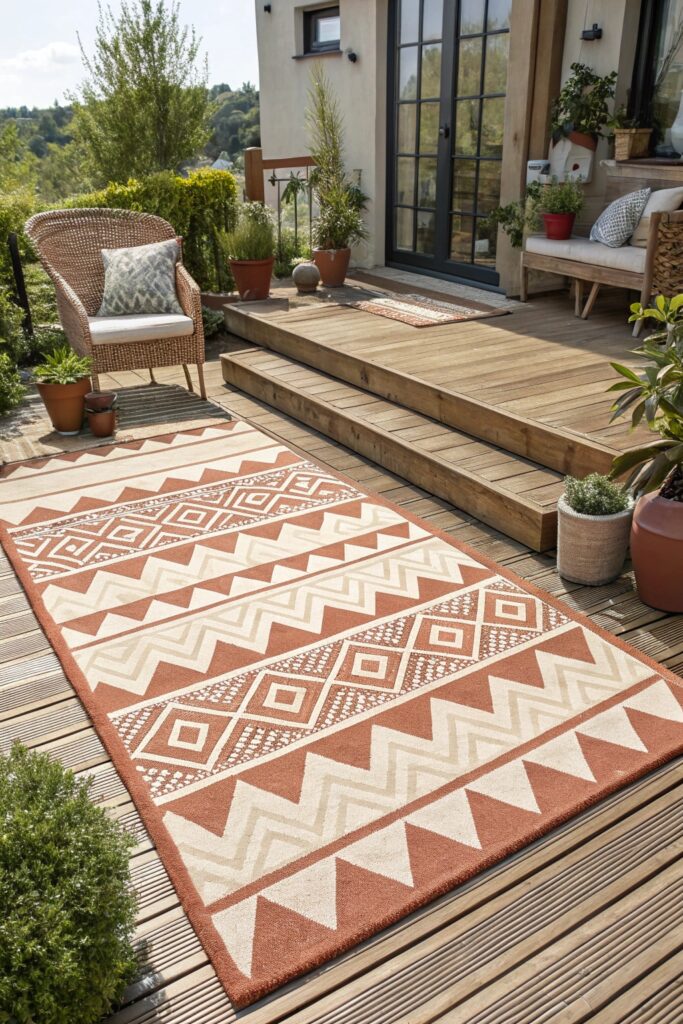
Choosing rugs in a matching or complementary pattern for both spaces creates visual continuity even across different flooring materials.
Choose outdoor-rated rugs specifically, since standard indoor rugs deteriorate quickly with direct sun and moisture exposure.
9. Continuous Planting Beds Along the Transition
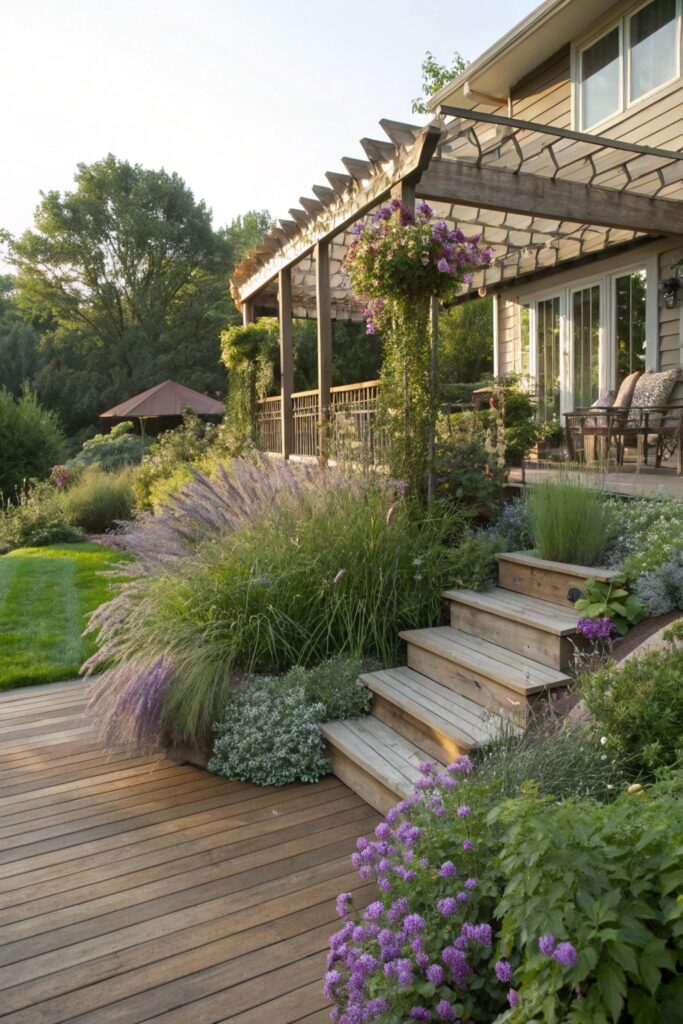
A uninterrupted planting bed running alongside both the deck and patio creates a natural visual thread connecting the two areas.
Choose low-maintenance plants suited to your specific climate for this continuous bed, since a longer planting run means more area to maintain consistently.
10. Pavers That Echo Deck Board Direction
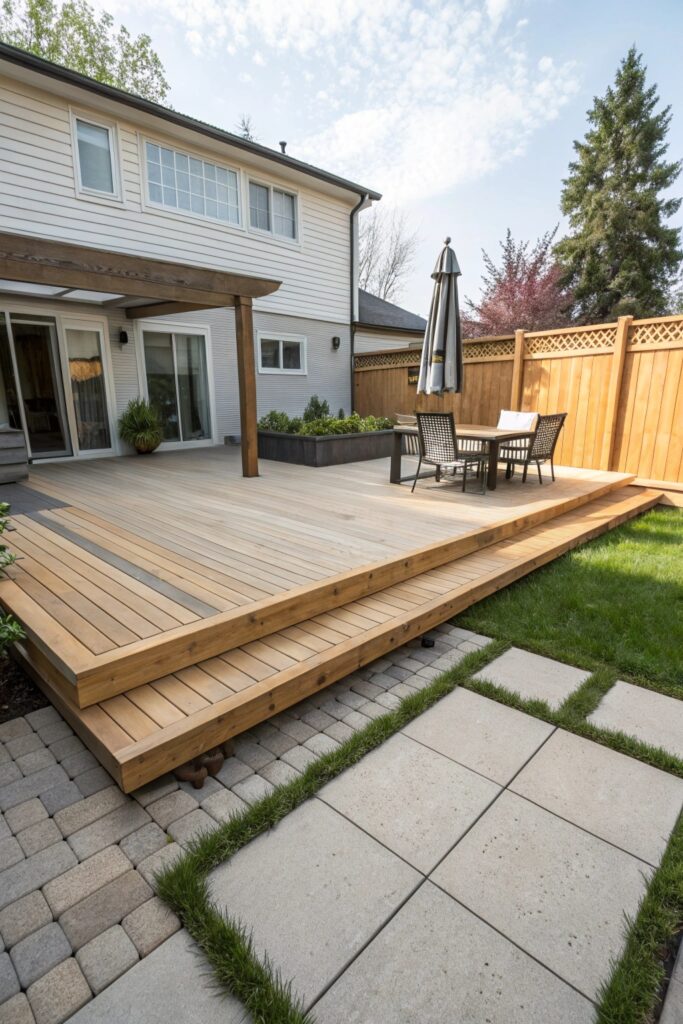
Laying patio pavers in the same directional pattern as the deck boards creates a subtle but effective visual continuity.
Measure carefully before ordering pavers, since matching an exact directional pattern requires more precise planning than a random layout.
11. Fire Pit as the Central Transition Feature
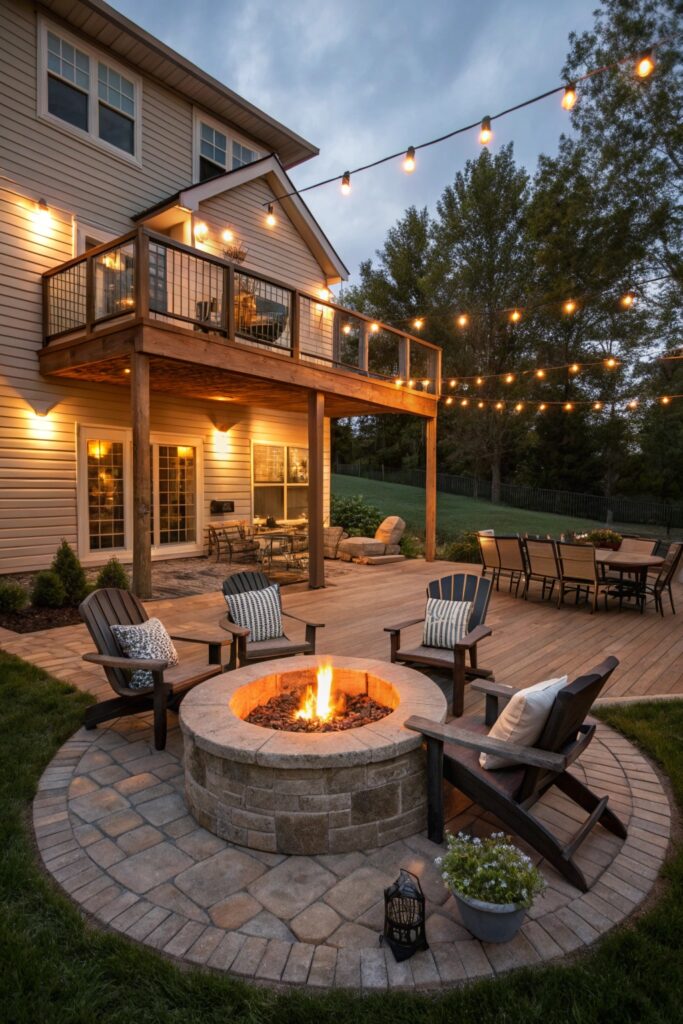
Confirm clearance requirements and any local fire code restrictions before placing a fire feature near a wood deck structure specifically.
Choose spark-resistant materials for any surface near the fire pit specifically, which matters more here given the proximity to a wood deck structure.
12. Consistent Color Story Through Furniture and Decor
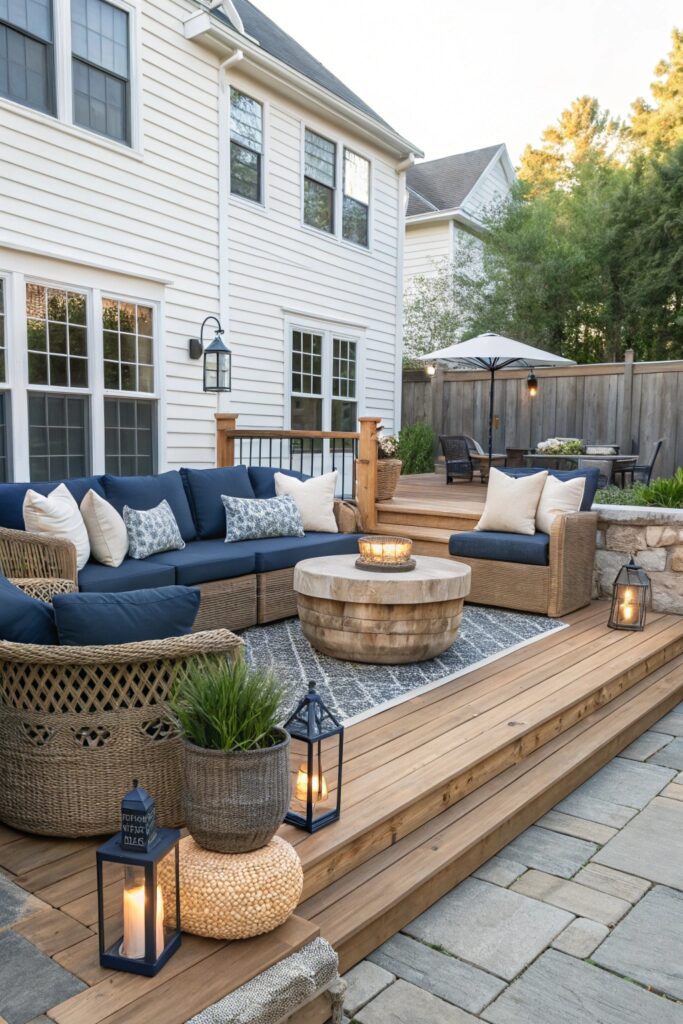
Using the same color palette for furniture and accessories across both spaces ties them together even when the underlying materials differ.
Planning the Elevation Change
A gradual transition, whether through a few wide steps or a sloped landing, feels more intentional than an abrupt single-step drop between the two levels.
Consider your household’s actual mobility needs when planning this transition, since stairs that work fine for some users may present challenges for others, including young children or guests with mobility limitations.
What This Project Costs
Smaller updates — rugs, planting, furniture coordination — typically cost $200 to $600.
A fuller structural transition involving new stairs, a pergola, or elevation changes runs considerably higher, often $2,000 to $8,000 or more depending on the scope of construction.
Get quotes from at least two contractors before committing to any structural transition project, since labor costs for stairs, elevation changes, and material matching vary considerably based on your specific site conditions.
Consider your local climate and how each material weathers over time, since a deck and patio made of different materials will age at different rates, which can gradually undermine an initially matched look.
Walk the space at different times of day before finalizing any design decisions, since how the transition looks and functions can shift considerably between morning and evening light and use patterns.
Start with a smaller, lower-cost change like coordinated furniture or a continuous planting bed before committing to a larger structural transition, since it’s easier to gauge how much the connection actually improves your outdoor space before investing further.
A well-executed deck-to-patio transition often becomes the space guests naturally gather around, since the connection between the two areas creates a more inviting flow than two separate, disconnected zones.
Whatever combination of these ideas you choose, take before and after photos of the space, since a transformed transition zone makes for a satisfying before-and-after comparison once the project is complete.
A cohesive outdoor space also tends to see more actual use than two disjointed areas, since a unified layout naturally encourages moving between zones rather than sticking to just one spot throughout a gathering.
This kind of project rewards patient planning, since the small details of material choice and color coordination matter more here than in almost any other outdoor renovation.
Conclusion
Confirm your local building code before any structural changes involving stairs, railings, or elevation shifts between the two spaces. A consistent color palette and material tones often do more to unify these two areas than an expensive structural renovation alone.