
This guide zeroes in specifically on Easter tray styling; for tray ideas that carry through the rest of the year, see our guide to tiered tray decor ideas for every season.
Below are 12 tray styles built specifically around the holiday, with practical notes for each.
1. Farmhouse Easter Tray with Wooden Eggs and Moss
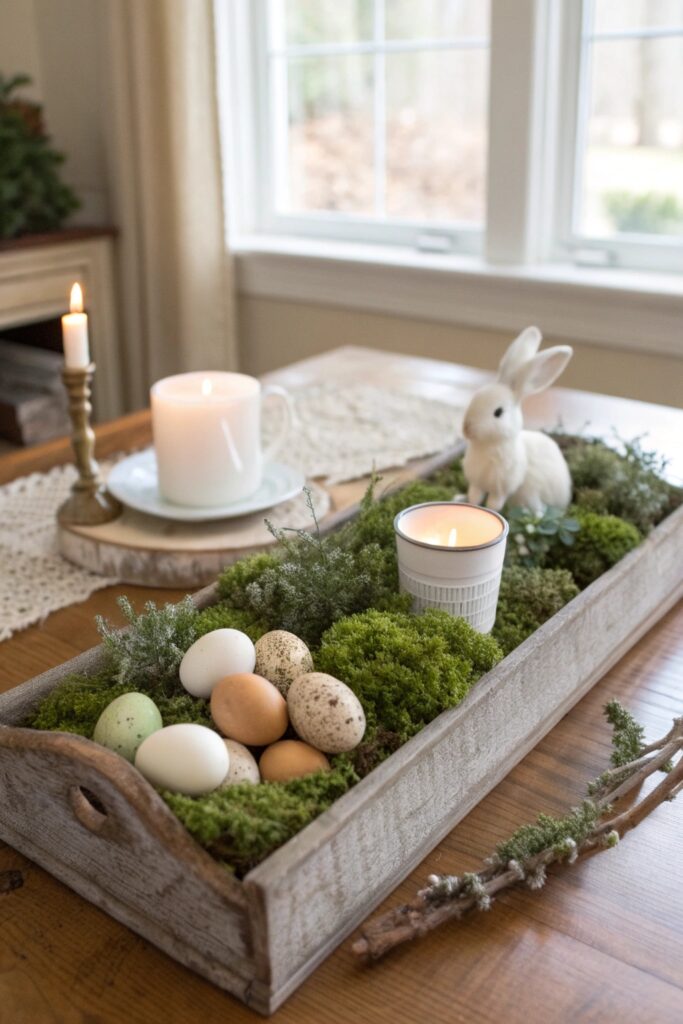
Wooden eggs hold up year after year without fading, which makes this combination one of the more practical options if you want a tray you can reuse without replacing pieces.
Real moss dries out and needs occasional misting to keep its color, while preserved moss stays soft and green without any upkeep.
2. Pastel Easter Egg and Candle Tray
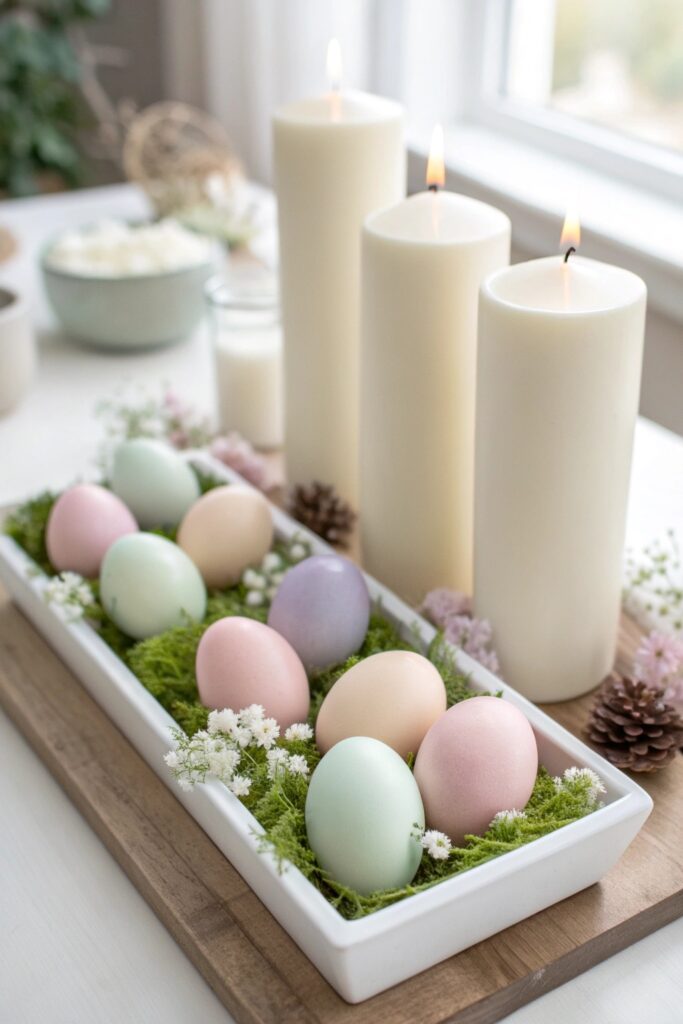
Sticking to two or three pastel shades keeps this combination from looking scattered, especially if the candle holders share a similar finish.
Battery-powered candles are worth using here if the tray sits somewhere kids or pets can reach, since a knocked-over real candle is a genuine mess to clean up.
3. Spring Floral Easter Tray Centerpiece
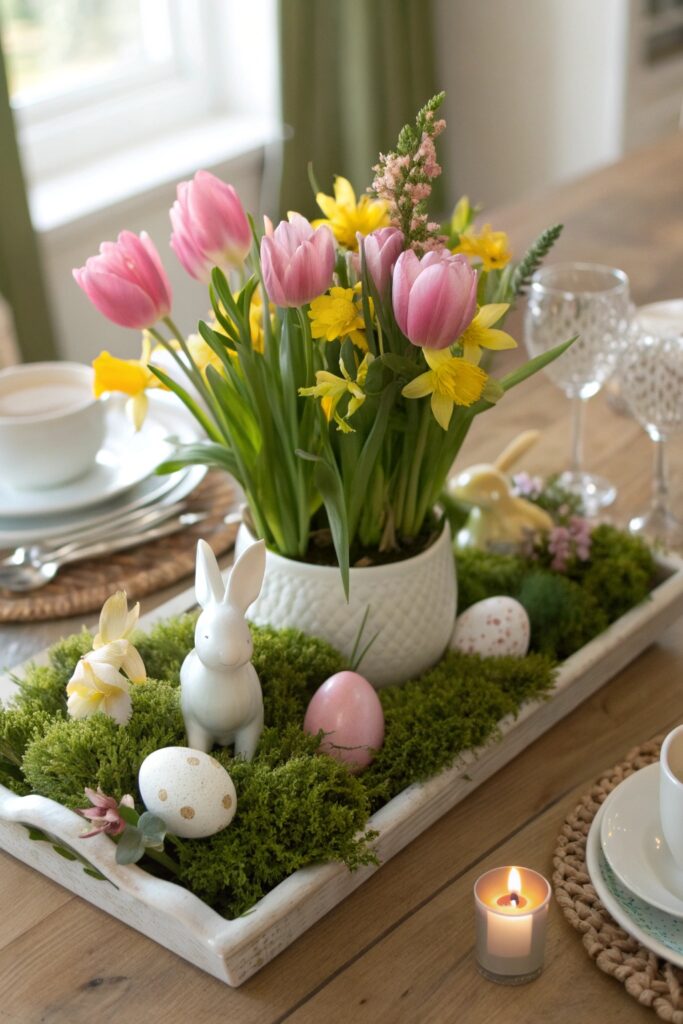
A low, wide vessel works better here than a tall one, since the tray format is meant to sit flat rather than draw the eye upward.
Faux stems hold up better than fresh ones if the tray needs to stay out for more than a few days, though fresh flowers do bring a scent real florals can’t fake.
4. Minimalist White Easter Tray
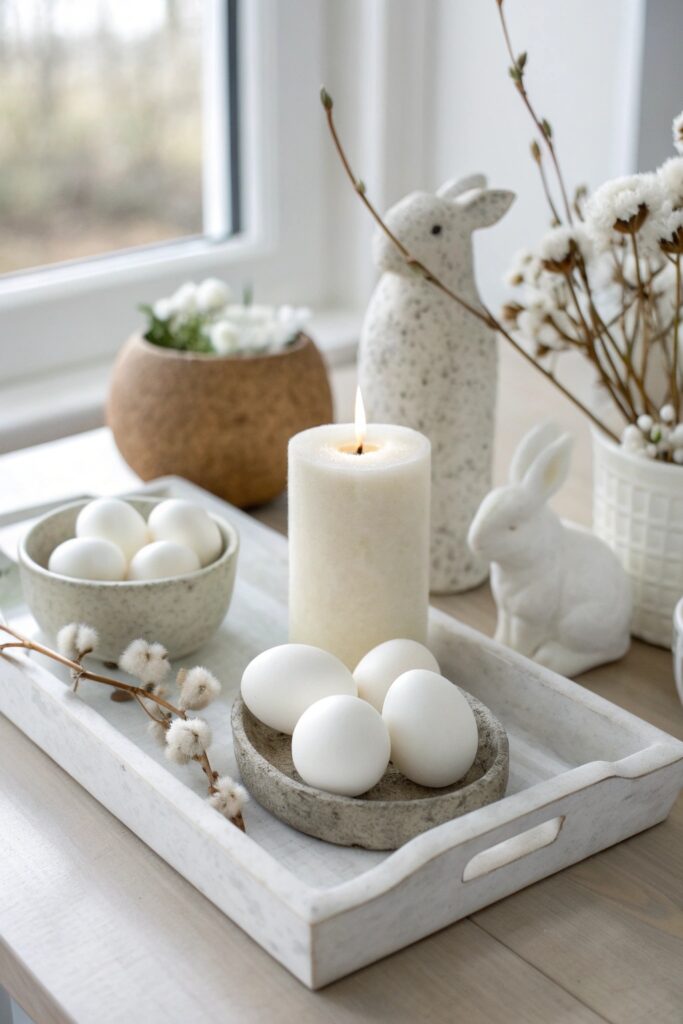
Sticking to a single color forces the shapes and textures to do the visual work, which tends to look more intentional than a busier, multi-colored setup.
A tray this pared-back shows every fingerprint and speck of dust, so plan on wiping it down more often than a busier, more forgiving design.
5. Natural Nest and Bird Egg Easter Tray
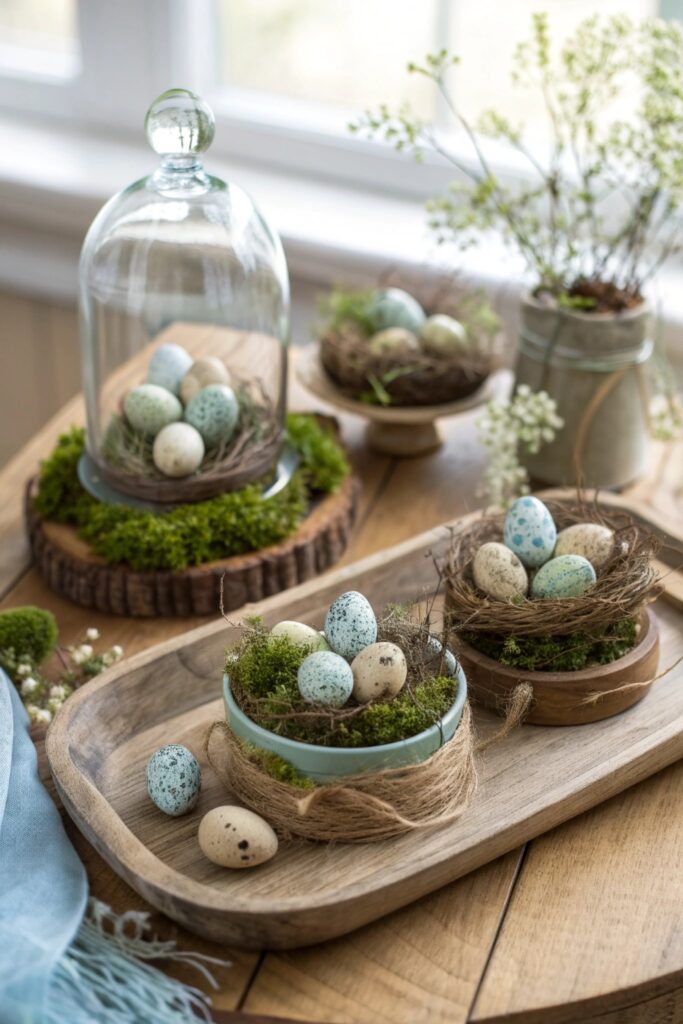
A small nest with a few speckled eggs reads as genuinely seasonal without leaning on any of the more common pastel or bunny-themed decor.
Choose eggs with a genuinely realistic speckled finish rather than solid pastel ones for this look, since the detail is what sells the natural feel.
6. Easter Herb Garden Tray
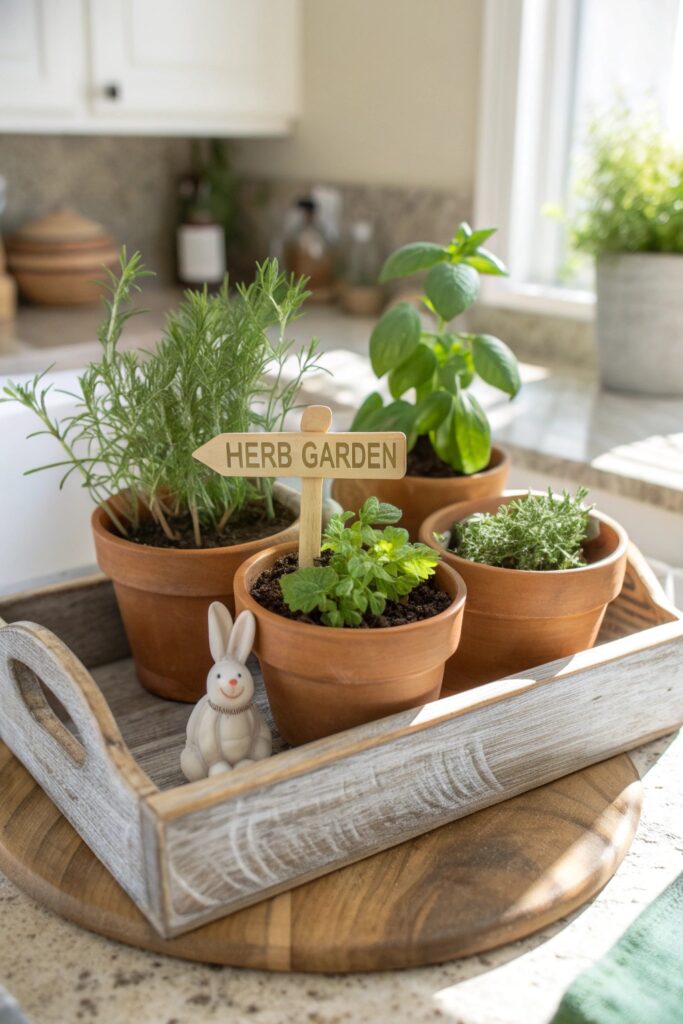
This version pulls double duty as both display and a small kitchen garden, which is worth considering if the tray sits somewhere near where you actually cook.
Snip a few sprigs for cooking right before serving, which keeps the tray looking full rather than picked-over by the time guests arrive.
7. Vintage China and Easter Egg Tray
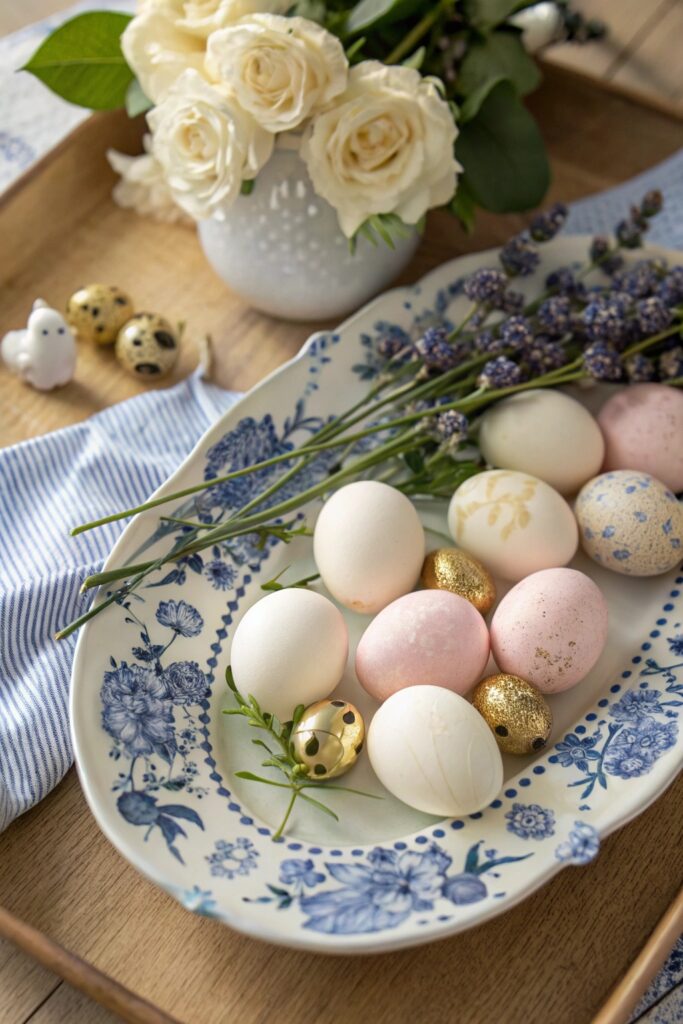
A single mismatched teacup or small saucer tucked among the eggs adds the kind of detail that makes a tray feel collected rather than store-bought.
A single piece is usually enough — more than that can start to look like you raided a china cabinet rather than curated a display.
8. Easter Candle and Greenery Tray
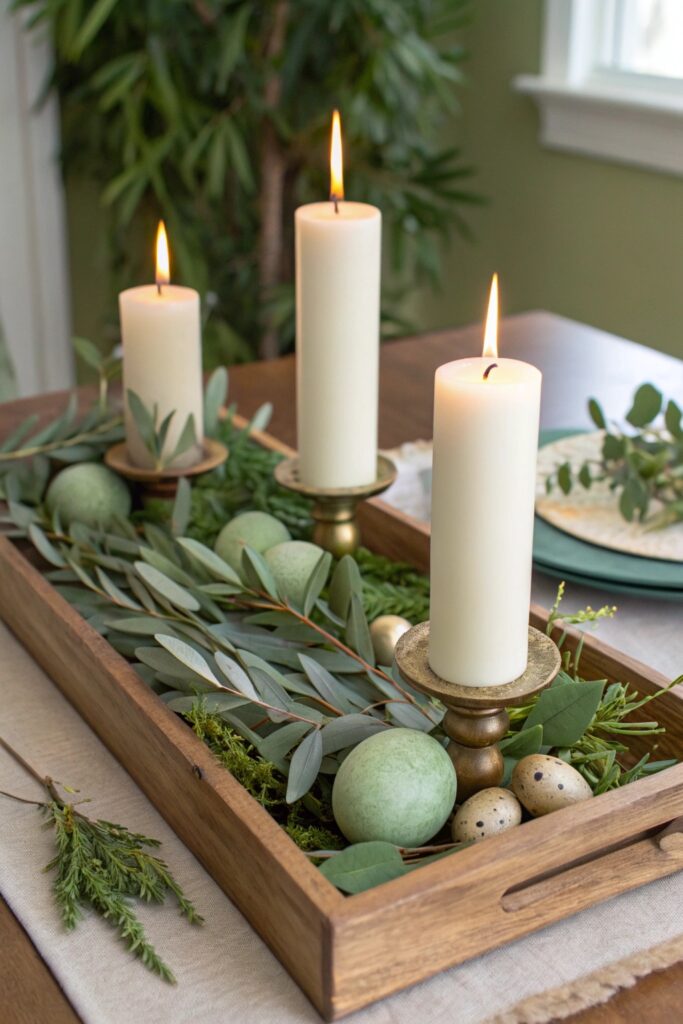
Fresh greenery wilts faster than most other tray elements, so this style works best assembled close to when you’ll actually display it.
Cut stems short enough that they won’t droop over the candle flames if you’re using real ones, which is both a safety issue and a practical one.
9. Easter Dessert and Treat Display Tray
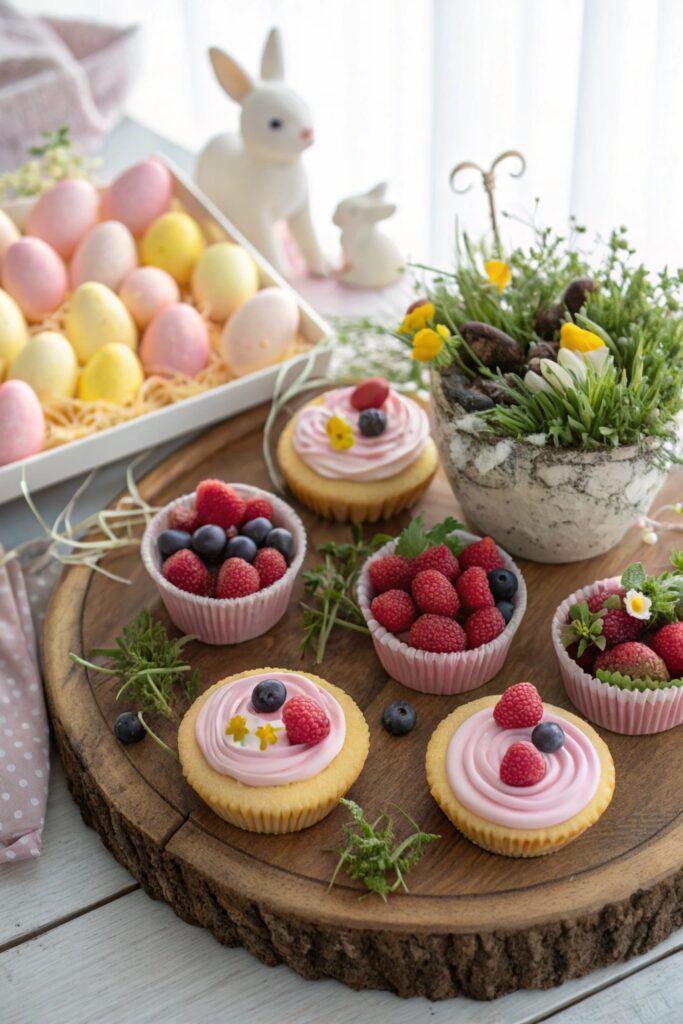
This one genuinely functions as serving ware, so make sure any decorative pieces are food-safe or kept separate from what guests will actually eat.
Keep raw ingredients and finished treats on separate sections of the tray if kids will be helping themselves, just to keep things tidy.
10. Cottagecore Easter Wildflower Tray
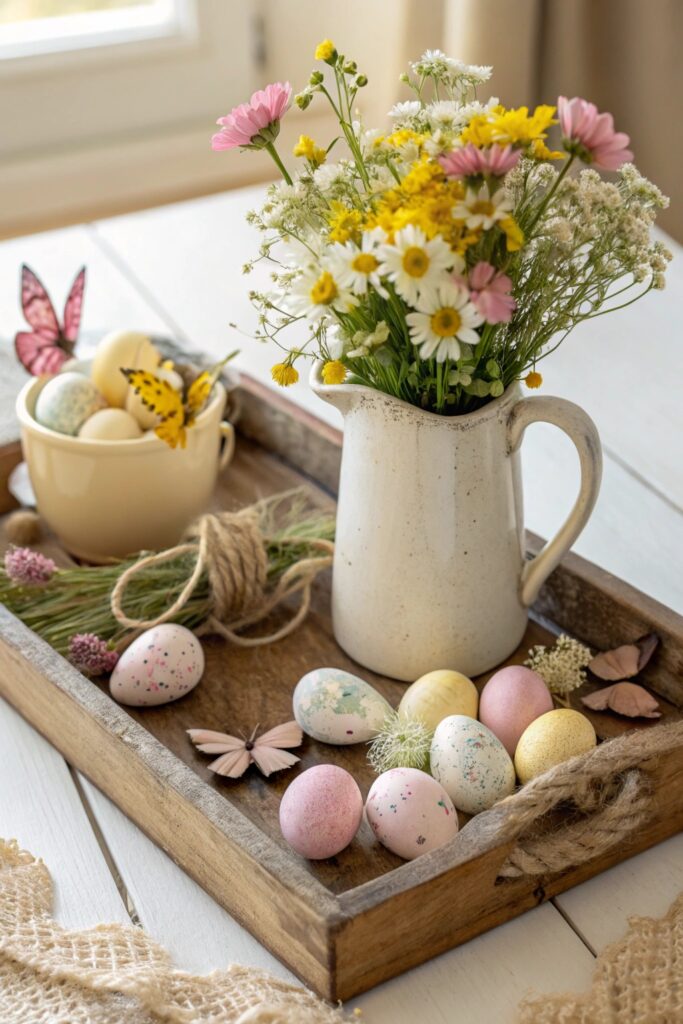
Loose, slightly overgrown-looking stems suit this style better than a tightly arranged bouquet, which can look too formal for the relaxed cottagecore feel.
Wildflowers that have gone slightly past their prime actually suit this look better than perfectly fresh ones, which is a nice excuse to use what’s already wilting in a vase.
11. Monochromatic Green Easter Tray
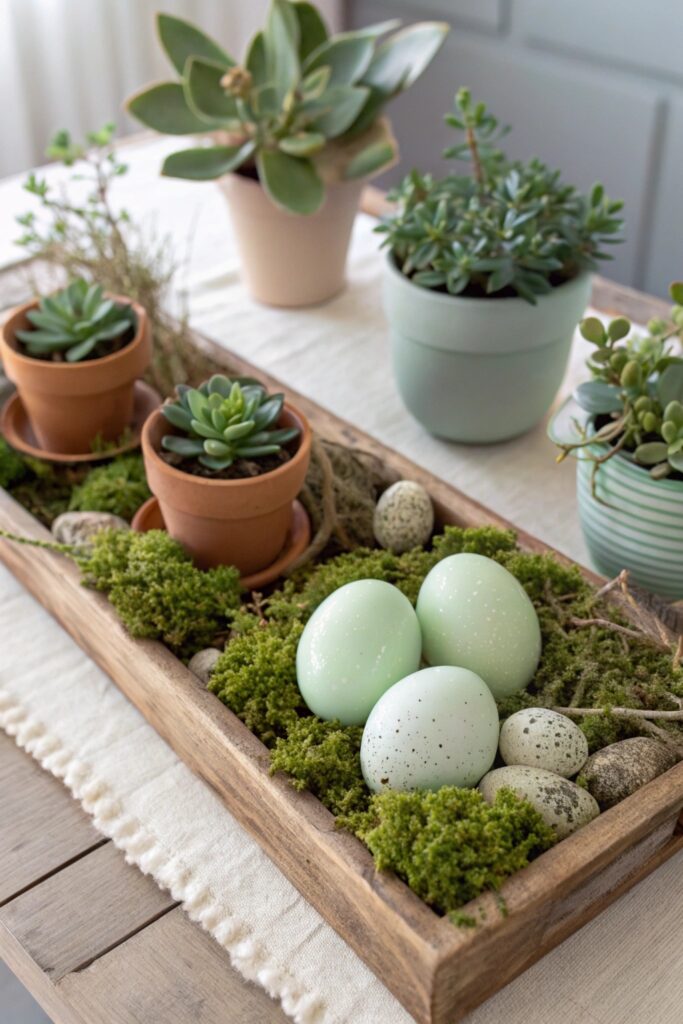
Varying the shades and textures of green — moss, ferns, pale sage — keeps a single-color tray from reading as flat or one-note.
12. Gold Accent Easter Tray
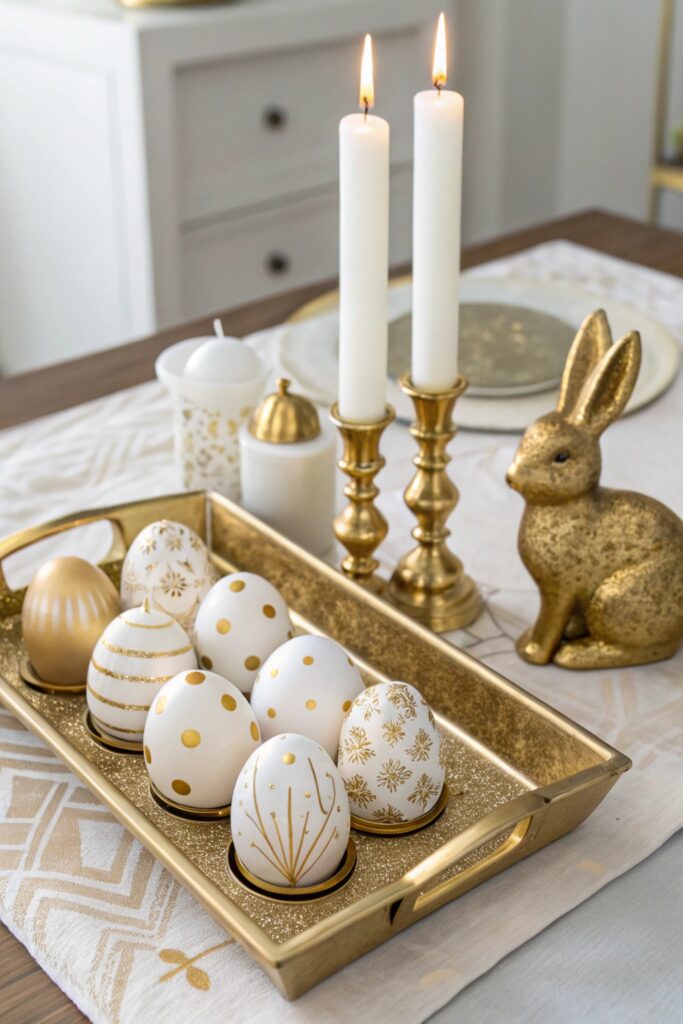
Metallic touches work best in small doses here — a gold-rimmed dish or a few gilded eggs — rather than covering the whole tray in shine.
Picking a Tray Shape That Actually Fits Your Space
A round tray tends to suit a coffee table or a round dining table better, while a rectangular one fits more naturally along a console or a longer surface.
Measure the spot before buying if you’re not reusing a tray you already have, since an oversized tray can crowd a smaller table more than the styling itself matters.
Keeping It Fresh for the Whole Weekend
If the tray needs to look good for more than a single meal, lean toward the styles that use dried, faux, or wooden elements rather than anything fresh that wilts within a day.
For a shorter gathering, fresh flowers and greenery are worth the extra effort since they’ll still look their best by the time everyone sits down.
Assembling It Step by Step
Start with the largest element first — a candle, a vase, or the biggest cluster of eggs — and build the smaller pieces around it rather than placing everything at once.
Leave a bit of open tray space rather than filling every inch. A little breathing room actually makes the whole arrangement look more considered than a tray packed edge to edge.
A quick photo before guests arrive is worth taking too, since trays like this rarely survive a meal intact and it’s nice to have a record of how it looked at its best.
Whatever style catches your eye, start with what’s already in the house before buying anything new. A tray, a candle, or a bowl you already own is often enough to build the whole look around.
Conclusion
Most of these styles cost under $40 to put together, especially if you’re reusing a tray or stand you already own. Keeping the palette to two or three colors, whatever direction you choose, is usually what separates a tray that looks intentional from one that looks like it was assembled in a hurry.