
A small pantry’s storage capacity depends far more on how efficiently the existing space is used than on the pantry’s actual square footage, since most small pantries have considerably more usable capacity than the way they’re typically organized takes advantage of.
Below are 15 ways to genuinely double a small pantry’s functional storage, with real costs and practical notes for each.
1. Install Clear Stackable Bins
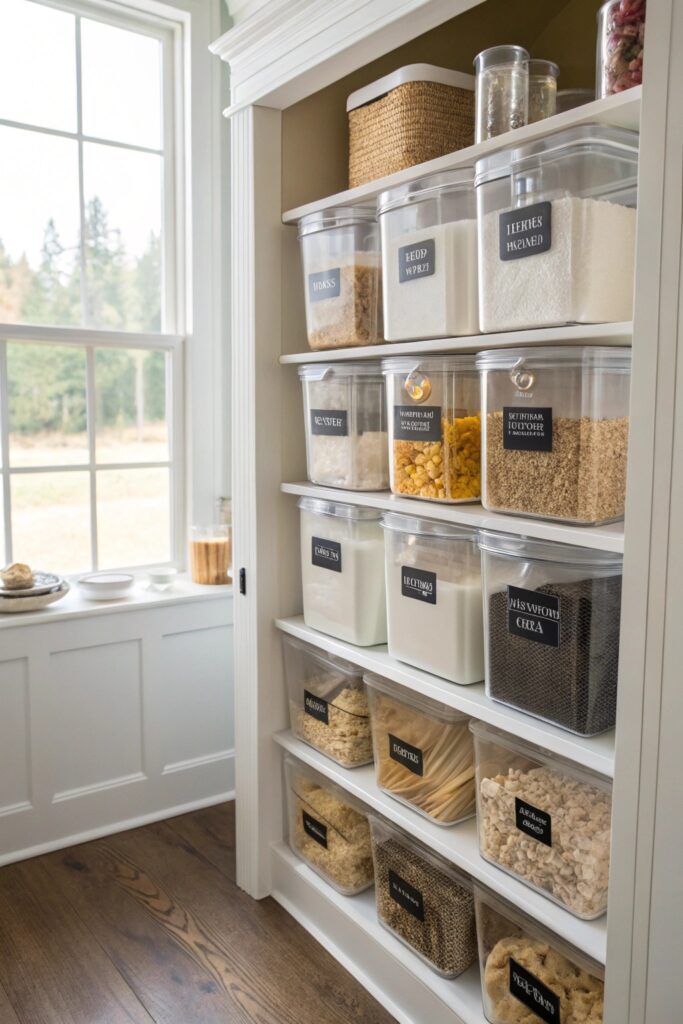
Clear, uniform bins ($10-20 each) let you see contents at a glance while making efficient use of shelf height through stacking, which loose bags and boxes of varying sizes can’t achieve as efficiently.
Choose bins sized specifically to your shelf depth, since an oversized bin that doesn’t fit flush wastes exactly the vertical space you’re trying to gain back.
2. Use a Lazy Susan for Awkward Corners
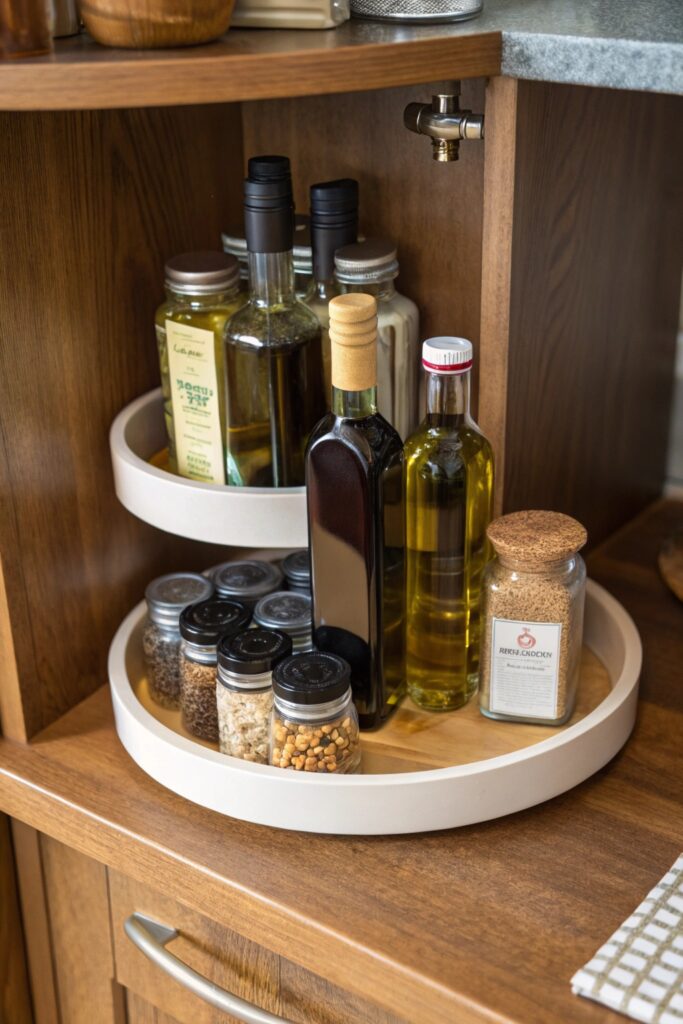
A rotating lazy susan ($10-25) solves the genuine accessibility problem corner pantry sections create, letting you spin items into reach rather than reaching blindly into a corner.
This works particularly well for spices, oils, or condiments used regularly during cooking, letting you spin the needed item into reach rather than reaching awkwardly into a corner.
3. Add Door-Mounted Racks
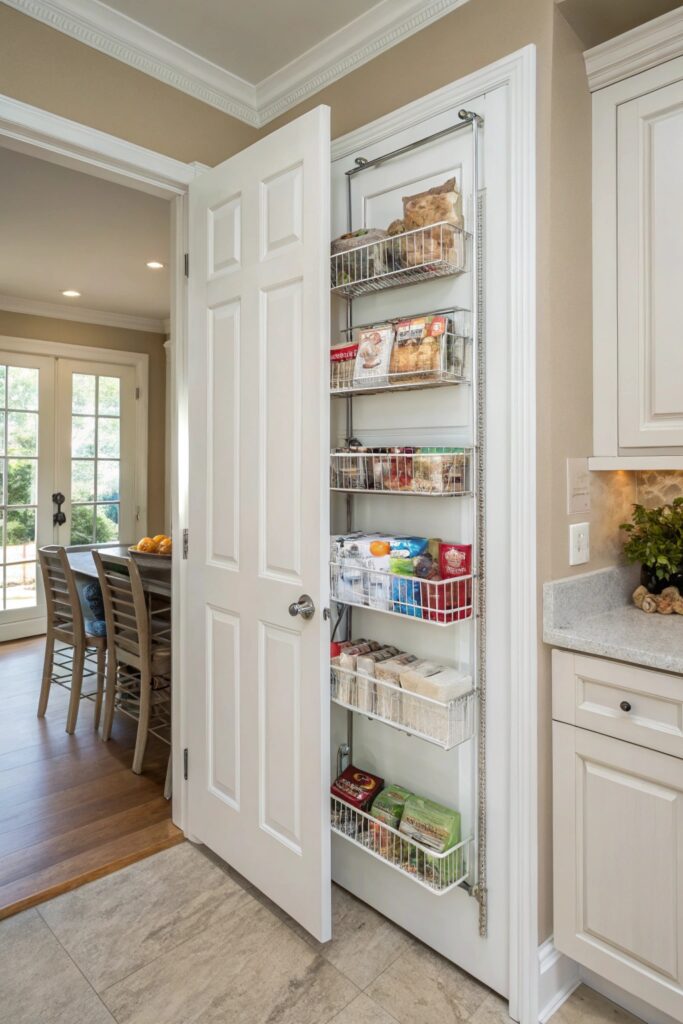
An over-the-door rack ($20-45) uses space that’s completely unused in most pantries, which is worth prioritizing specifically in a small pantry where every other storage option is already stretched thin.
Choose a rack with adjustable tiers if possible, which lets you accommodate taller items like cereal boxes without needing a completely separate storage solution.
4. Decant Dry Goods Into Uniform Containers
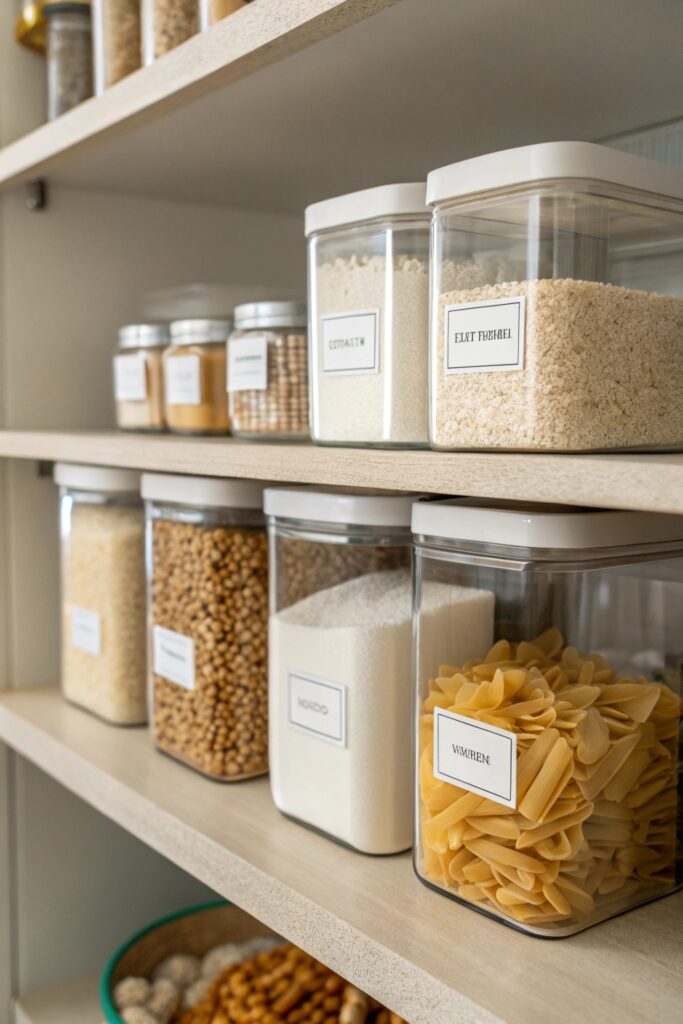
Transferring flour, sugar, rice, and pasta into matching containers ($10-20 each) makes more efficient use of shelf space than the original bags and boxes, which vary considerably in size and don’t stack well.
Airtight containers specifically extend the shelf life of dry goods beyond their original packaging, which is a genuine practical benefit beyond the organizational one.
5. Install Adjustable Shelving
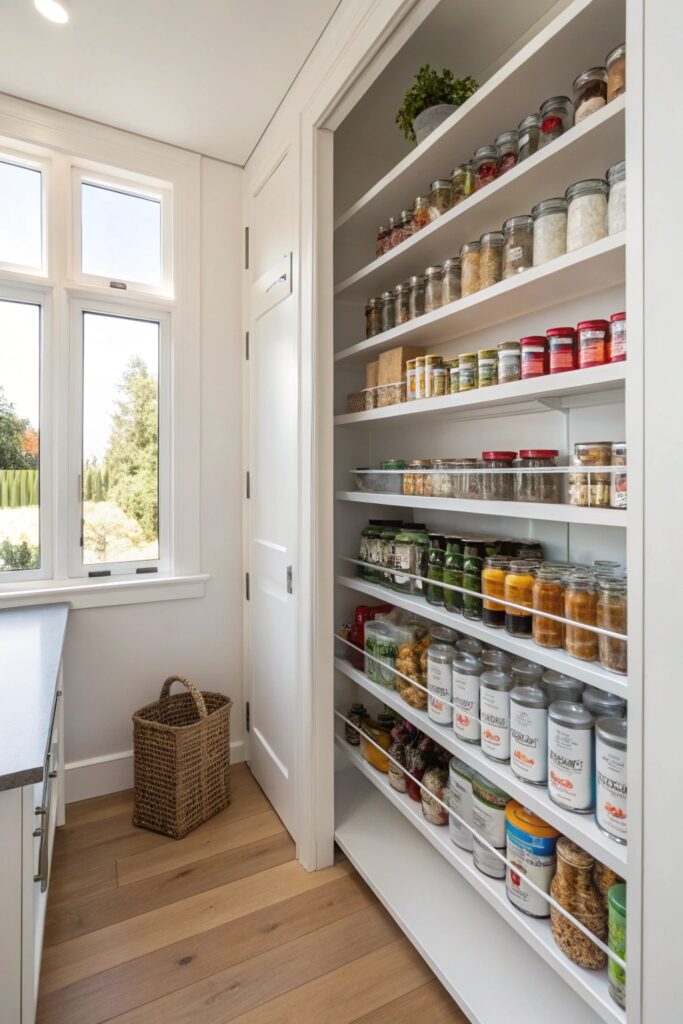
Shelving that can be repositioned ($30-80) adapts to changing storage needs, unlike fixed shelves that lock a small pantry into one configuration regardless of what you’re actually storing week to week.
Look for shelving with holes at frequent intervals, which allows finer height adjustments than systems with only a few fixed positions.
6. Use Tiered Shelf Organizers
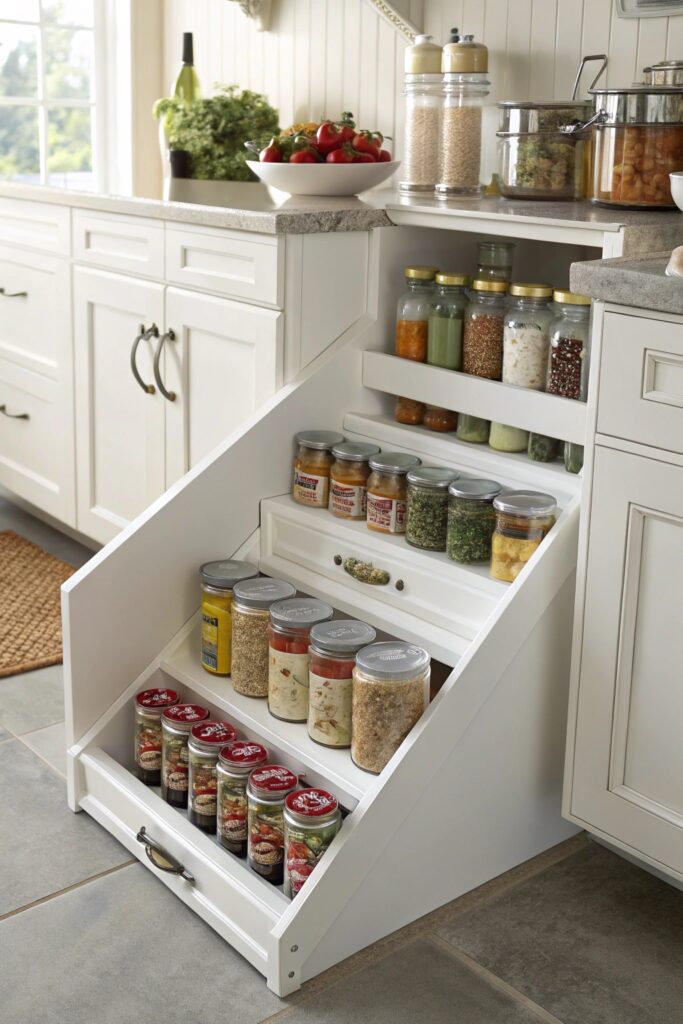
A tiered stand ($15-30) makes vertical use of a single shelf’s height, fitting more canned goods or spice jars into the same footprint than spreading them flat would allow.
This works especially well for spice jars or smaller canned goods, where the tiered format lets you see every label at once rather than only the front row.
7. Hang a Tension Rod for Cutting Boards
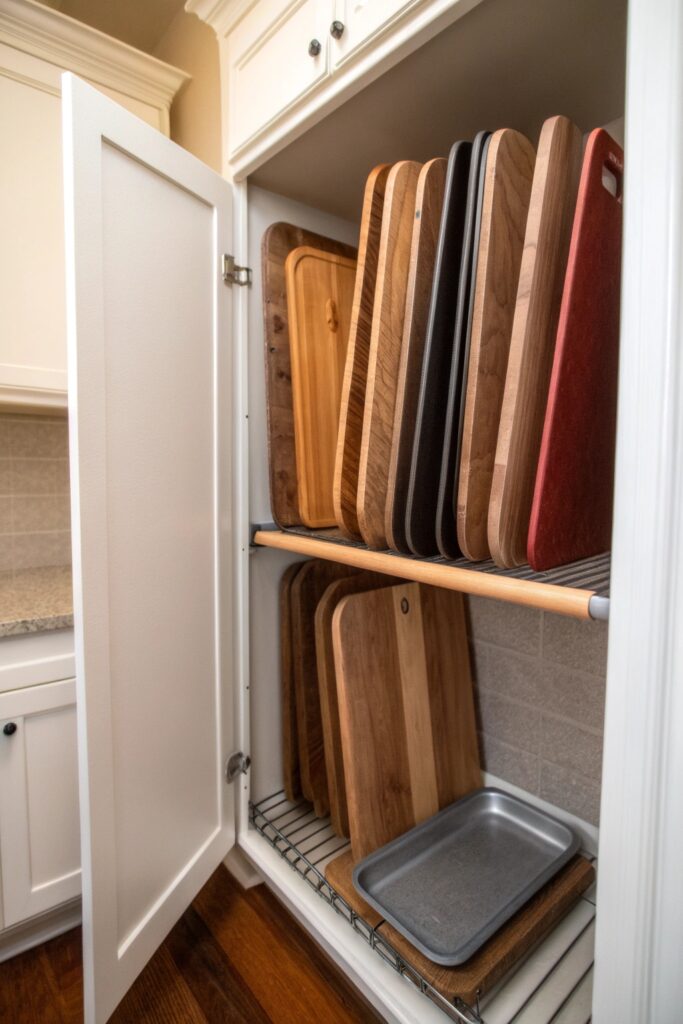
A tension rod ($5-10) installed vertically creates simple upright slots for cutting boards or trays, achieving a similar organizational effect to purchased dividers at a fraction of the cost.
This is one of the lowest-cost solutions on this list, using a genuinely simple household item repurposed specifically for pantry organization.
8. Label Everything
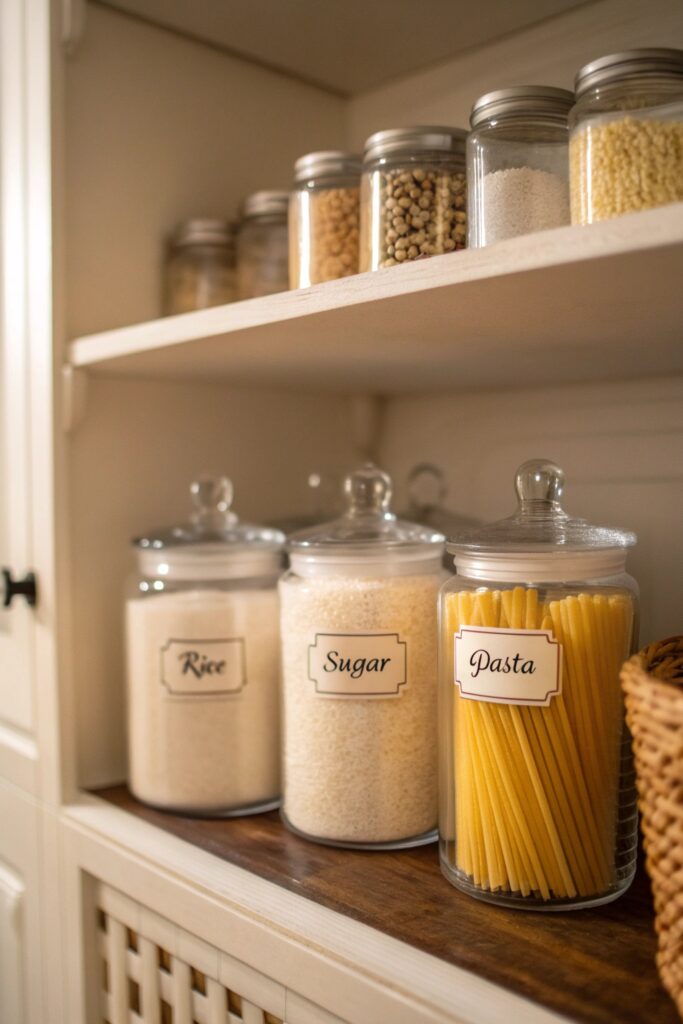
Clear labels on bins and decanted containers help every household member maintain the system correctly, rather than relying on memory alone for where specific items belong.
A label maker produces more durable, legible labels than handwritten ones, worth the investment if you’re organizing multiple pantry shelves at once.
9. Store Snacks in a Caddy or Bin
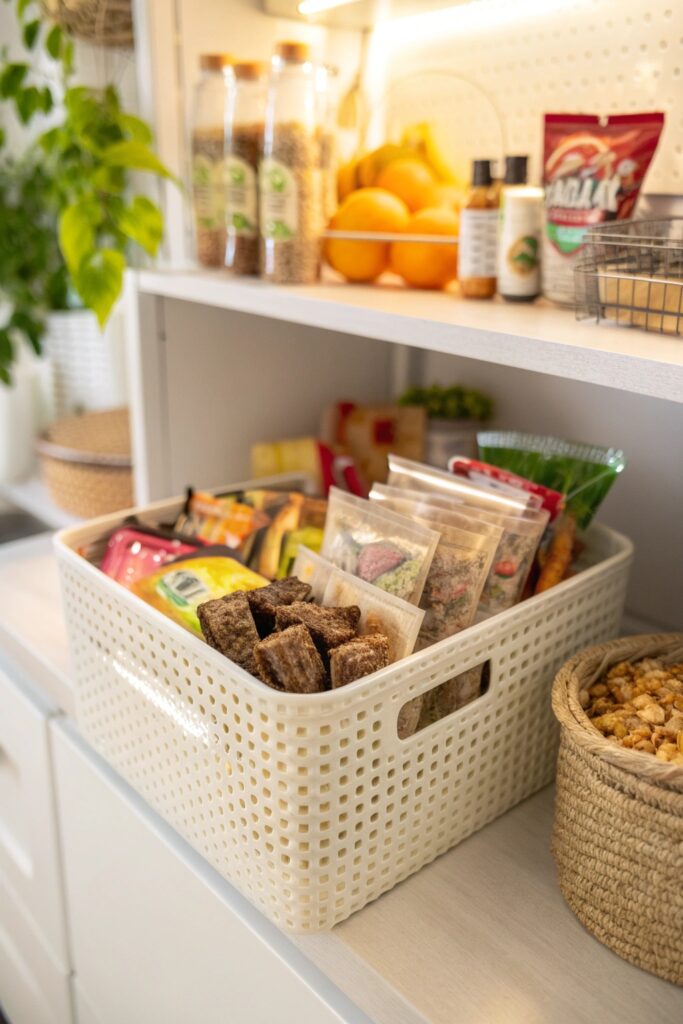
A dedicated bin for snacks ($10-20) keeps smaller packaged items corralled in one spot, preventing them from scattering across multiple shelves where they’re harder to track and easier to lose.
Choose a caddy with a handle specifically if snacks need to be portable for lunches or on-the-go grabbing, adding function beyond pure containment.
10. Use Vertical Dividers for Baking Sheets and Trays
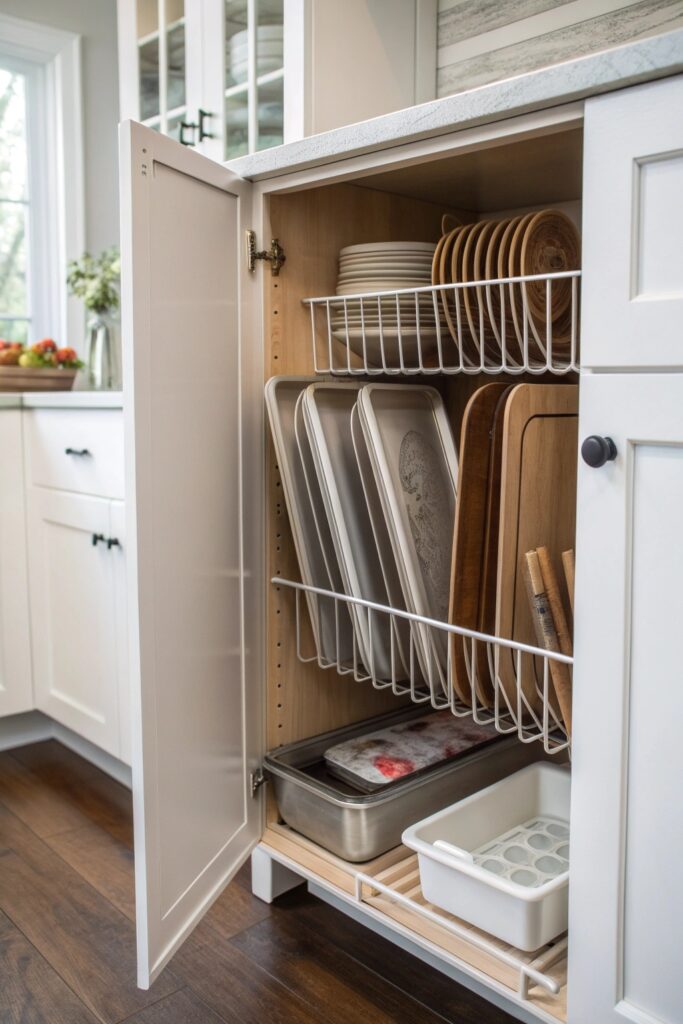
Vertical dividers ($15-30) turn flat, hard-to-reach baking sheets and trays into upright, individually accessible slots, eliminating the problem of digging through a stacked pile for one specific item.
Measure the drawer or shelf’s interior dimensions before buying dividers, since ill-fitting ones shift or fail to contain items properly.
11. Install Under-Shelf Baskets
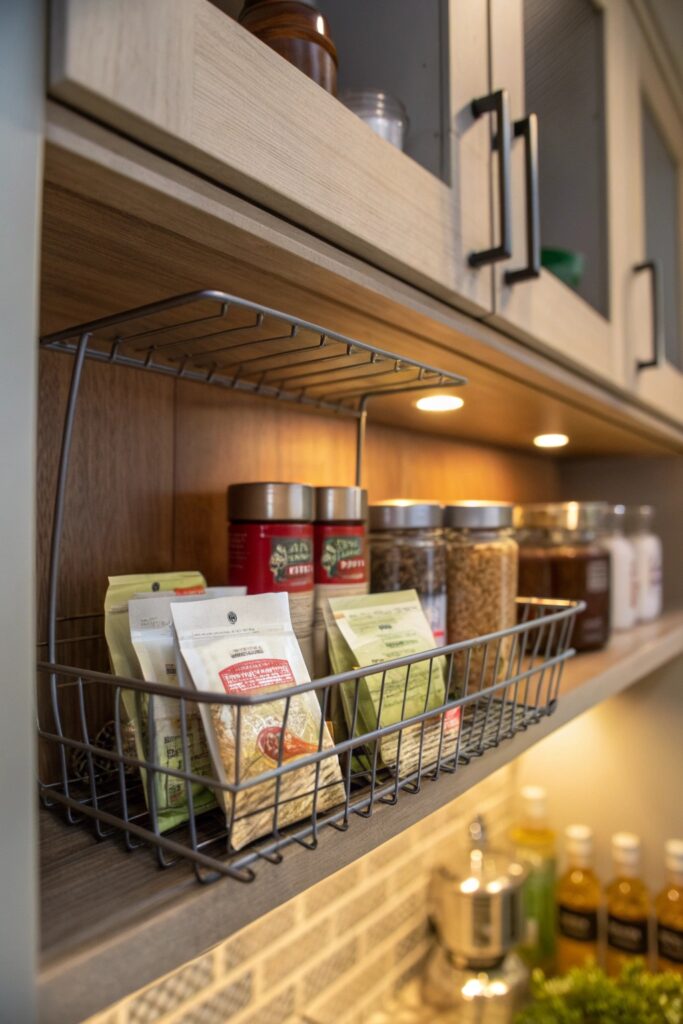
Wire baskets that hang from an existing shelf ($10-20 each) add a genuine second storage layer without requiring any new shelving installation, using the vertical gap above items already on the shelf.
Choose baskets with sturdy handles specifically, since anything hanging from a shelf edge needs a genuinely reliable attachment to avoid tipping.
12. Create a Designated “Zone” for Each Food Category
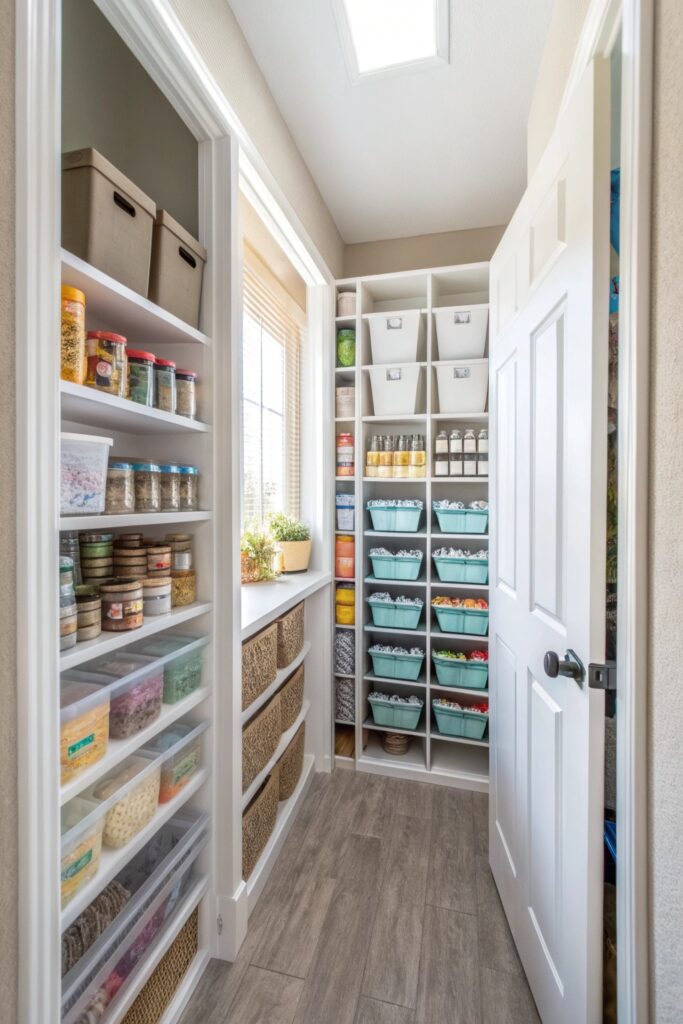
Grouping items by category (baking, snacks, canned goods, breakfast) rather than storing them wherever they happen to fit creates a system that’s genuinely easier to navigate and restock.
Revisit this zoning occasionally as your household’s shopping and cooking habits shift, since a system built around outdated patterns gradually becomes less useful.
13. Use Slim, Stackable Bins for Canned Goods
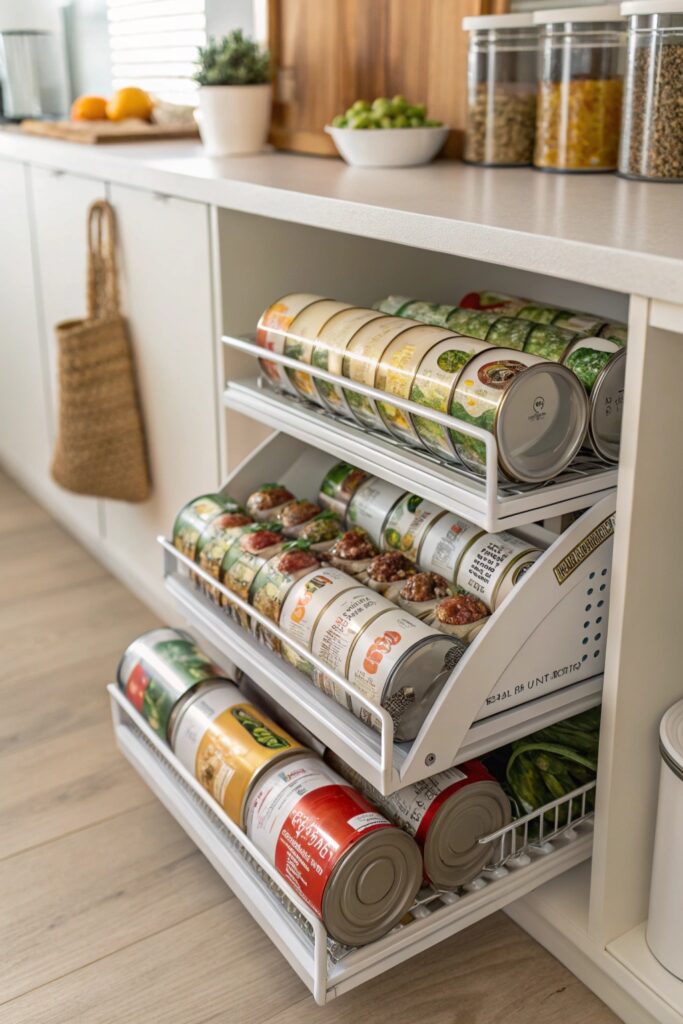
Bins designed specifically for cans ($15-30) let items roll forward as you use the front ones, which keeps older cans from getting pushed to the back and forgotten until they expire.
This system also makes it easier to spot when you’re running low on a specific canned item, since older cans roll to the front automatically.
14. Add a Hanging Basket for Produce
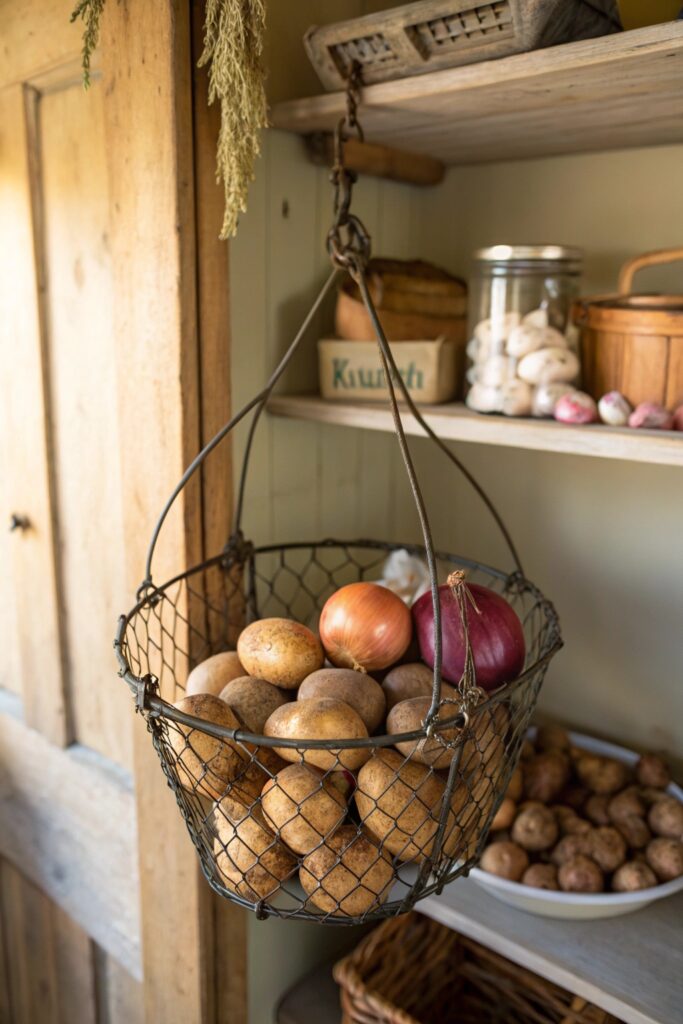
A hanging basket ($10-20) keeps onions, garlic, and other counter-stable produce off shelf surfaces entirely, using vertical space that would otherwise sit empty.
Choose a basket with adequate airflow (an open weave rather than solid material) specifically for produce, since trapped moisture can accelerate spoilage.
15. Use the Back of the Pantry Door for a Full Storage System
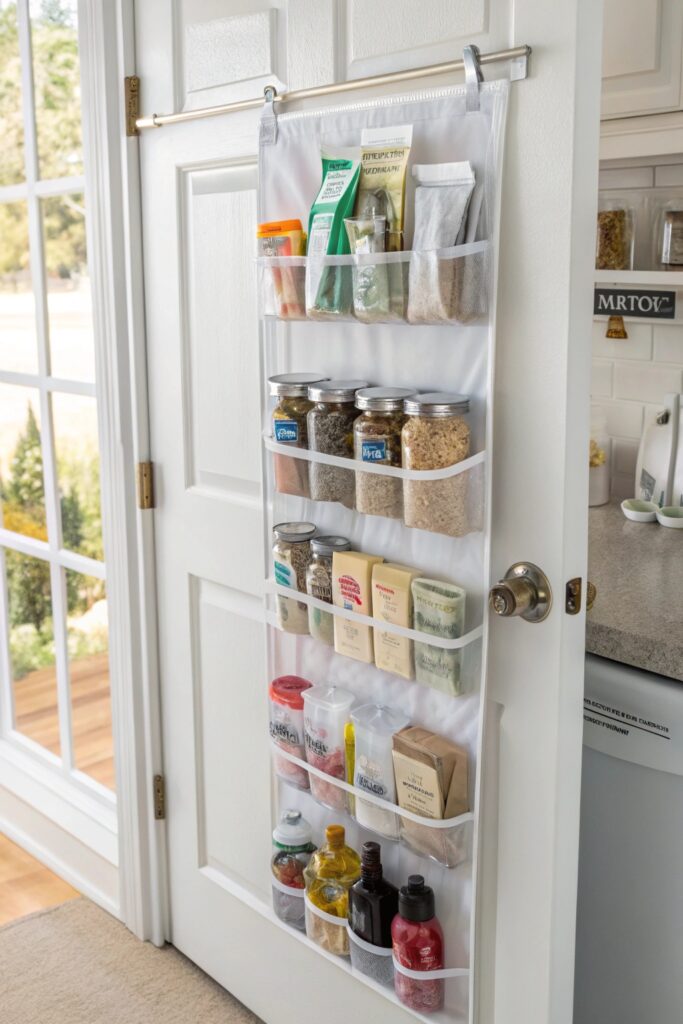
A more substantial door-mounted system ($40-90) with multiple tiers can hold a genuinely significant amount of smaller items, effectively adding an extra half-shelf’s worth of capacity without any structural change.
Confirm your specific door and pantry frame can support the system’s weight when loaded, since some over-door systems are rated for lighter use than a fully stocked pantry actually requires.
Final Thoughts
Decanting into uniform containers and using the door specifically matter most in a genuinely small pantry, since both recover meaningful capacity without requiring any new shelving or structural change. Vertical dividers and under-shelf baskets are worth adding next, since both make fuller use of the height a single shelf offers rather than treating each shelf as a single flat storage layer.