
Modern farmhouse dining rooms have to balance authentically rustic materials — reclaimed wood, galvanized metal, shiplap — against more refined finishing touches like brass and linen, and that tension between rustic and elegant is worth planning for deliberately rather than leaving to chance. The details below cover both the styling direction and the practical specifics for each element.
Below are 11 modern farmhouse dining room ideas worth considering, with the specifics for each.
1. A Thick-Plank Reclaimed Wood Dining Table
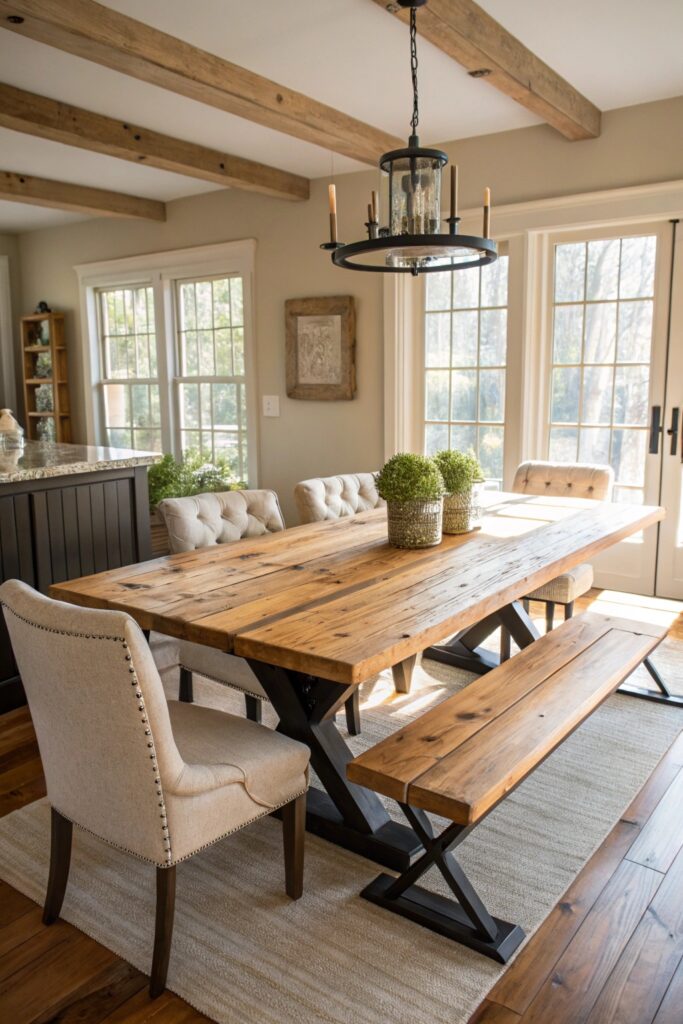
A solid two-inch-plus tabletop is considerably heavier than a standard veneer table, and reclaimed wood specifically continues acclimating even after purchase — choosing a table built with breadboard ends or another construction method that accommodates this seasonal movement helps prevent cracking over time.
2. Shiplap Accent Wall Behind the Buffet
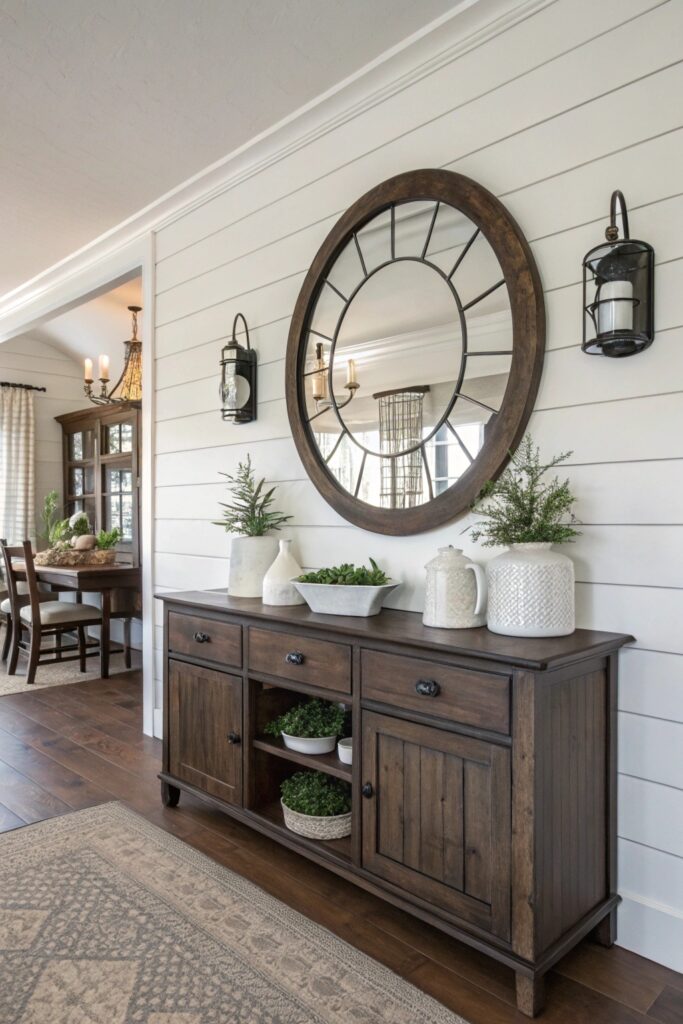
Install shiplap on a properly furred-out, level wall, since visible gaps show more with shiplap’s linear pattern than they would against flat drywall.
3. A Statement Chandelier With Exposed Bulbs
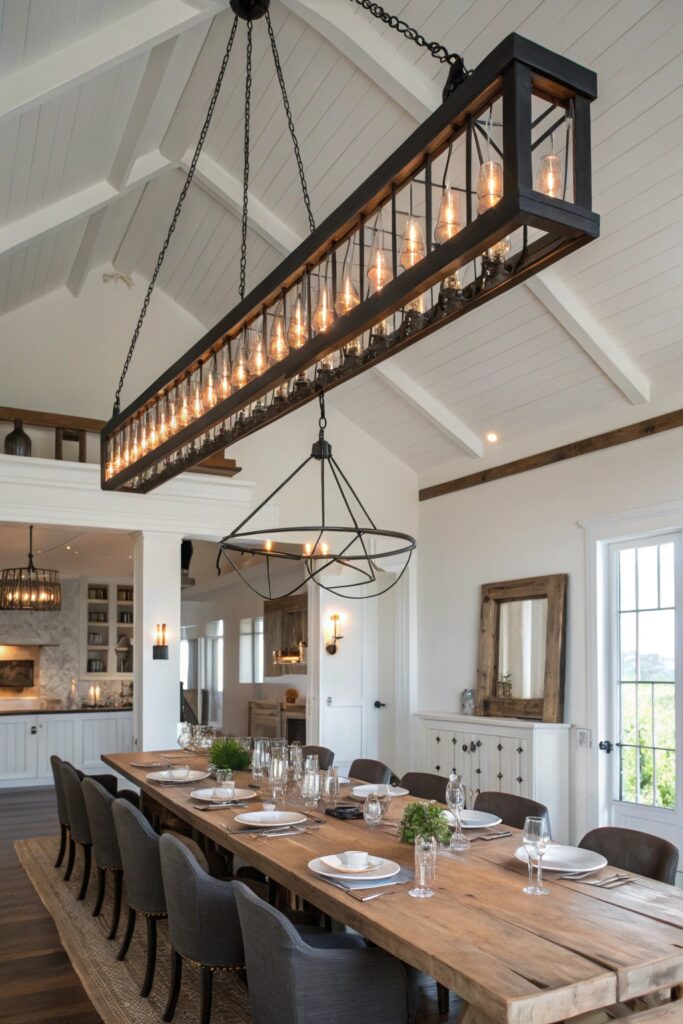
An exposed bulb puts the light source itself on display rather than diffusing it through a shade, so pairing the fixture with a dimmer switch matters more here, since a bare bulb at full brightness is more noticeable than the same wattage behind a shade.
4. Mixed Seating — Bench on One Side, Chairs on the Other
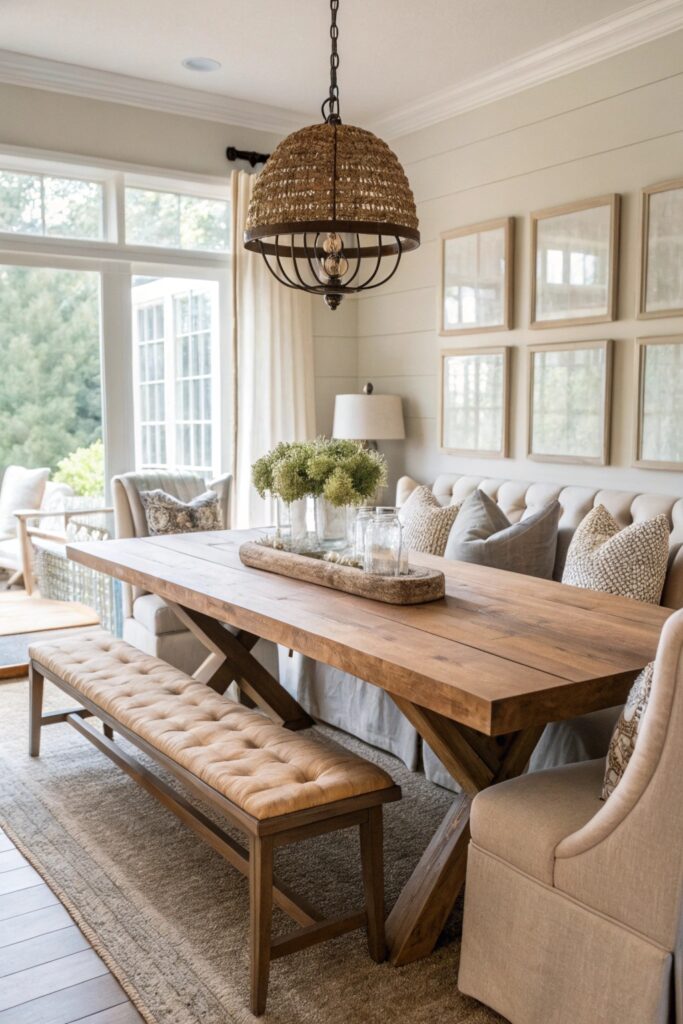
Backless bench seating isn’t comfortable for long meals, so reserving that side for kids or shorter-duration seating while putting chairs with back support on the side adults use regularly makes practical sense beyond the visual mix.
5. Woven Rattan or Jute Pendant Lights Over a Kitchen Island
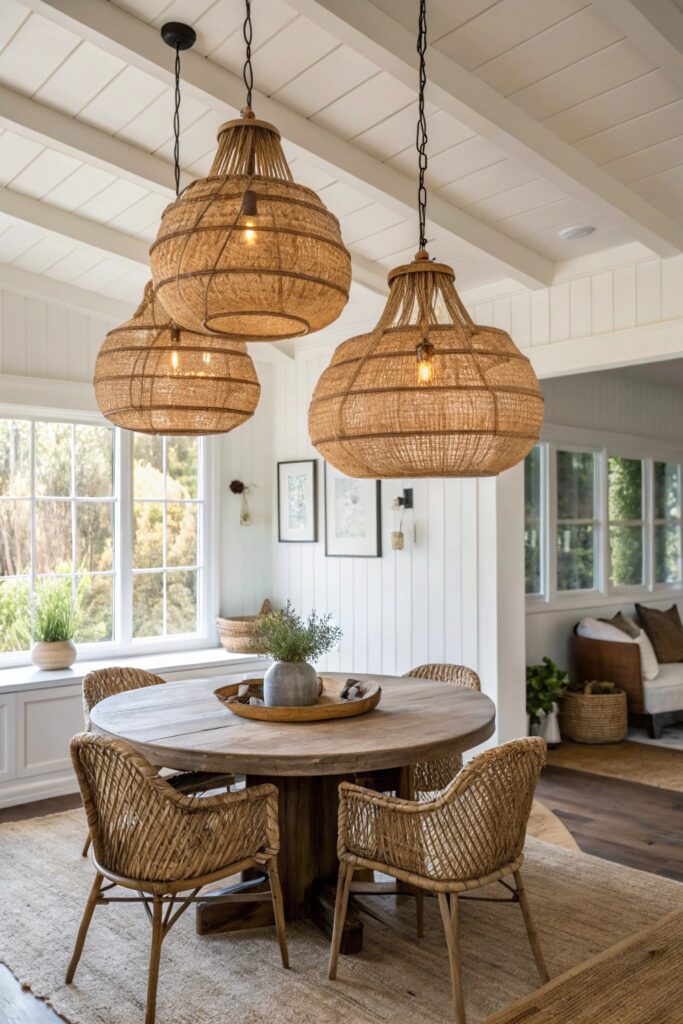
A pendant positioned over an island sits closer to cooking heat and steam than one over just a dining table, so a treated or lacquered rattan finish holds up better to this closer proximity than untreated natural fiber.
6. A Neutral Linen Upholstered Dining Bench With Turned Legs
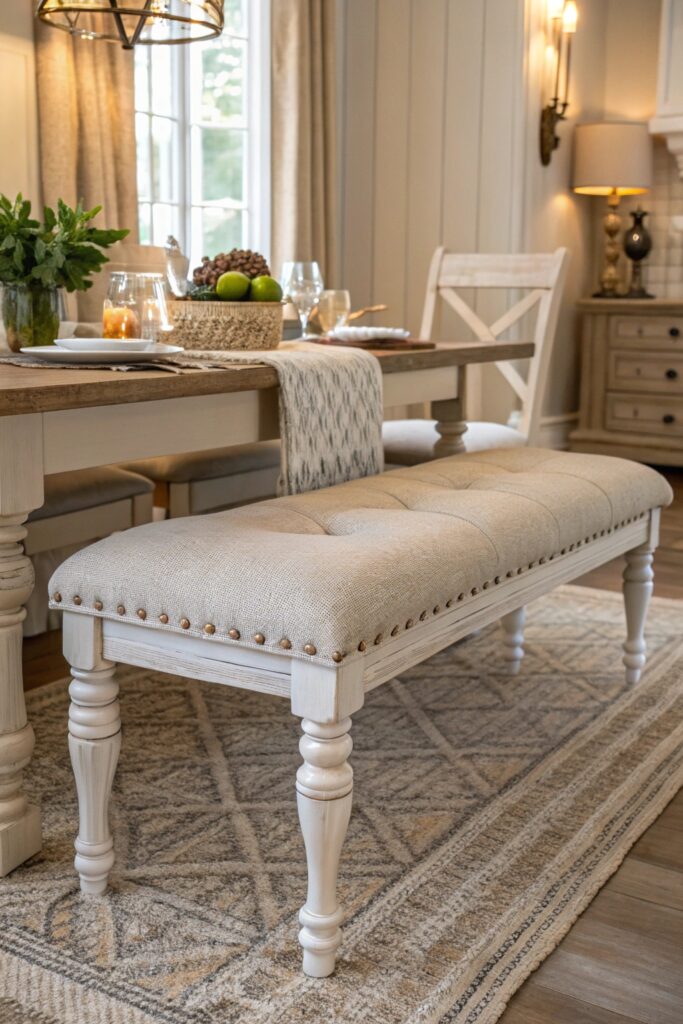
Choose a stain-resistant treatment or a performance fabric blend rather than plain linen, given the inevitable food and drink spills a dining bench sees over regular use.
7. Open Wood Shelving Instead of a China Cabinet
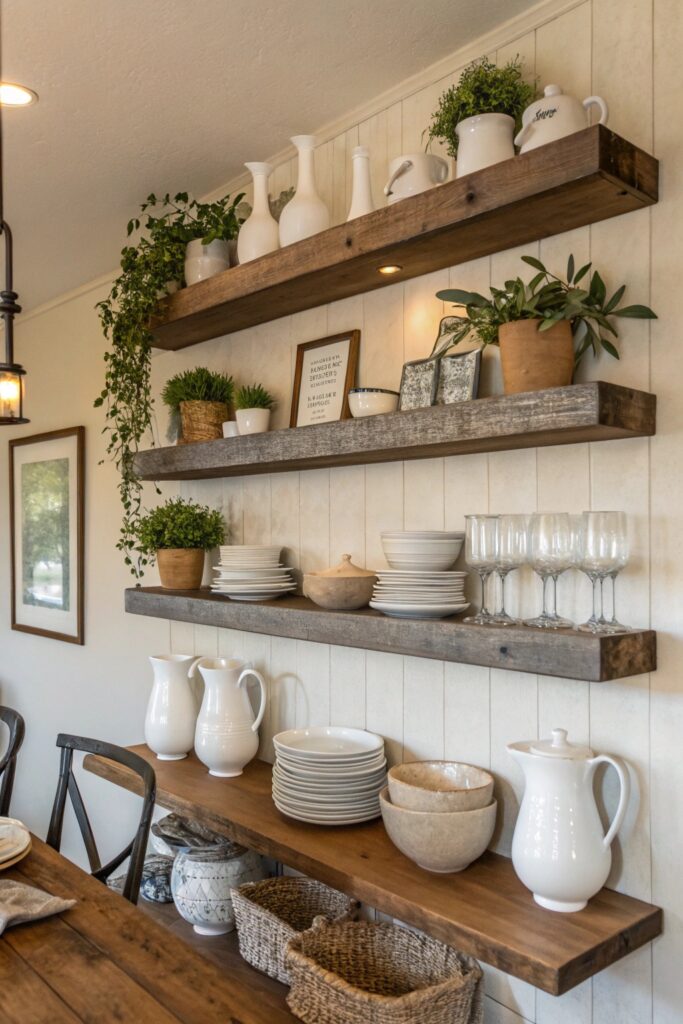
Anchor shelving for the actual weight of stacked china and dishware, not just decorative items, since dish weight adds up faster than most people expect once a full set is displayed.
8. Shiplap Ceiling for Architectural Drama
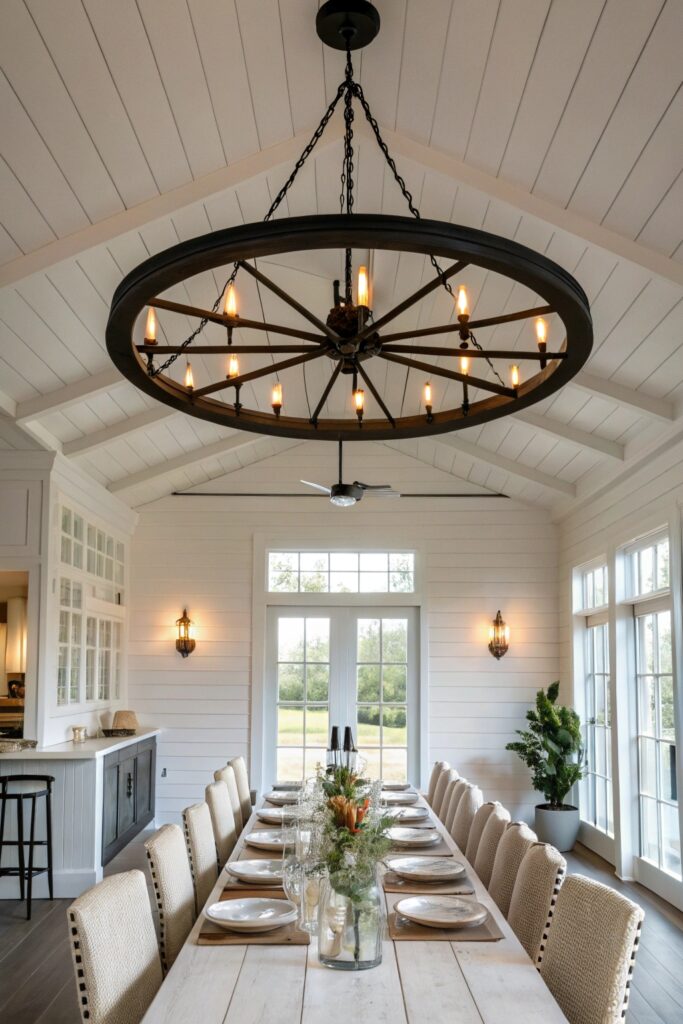
Ceiling-mounted shiplap is considerably harder to install correctly than the same material on a wall, given the overhead work and the material’s own weight pulling down over time — worth hiring an installer with specific ceiling experience rather than assuming wall installation skills transfer directly.
9. A Galvanized Metal or Aged Brass Centerpiece
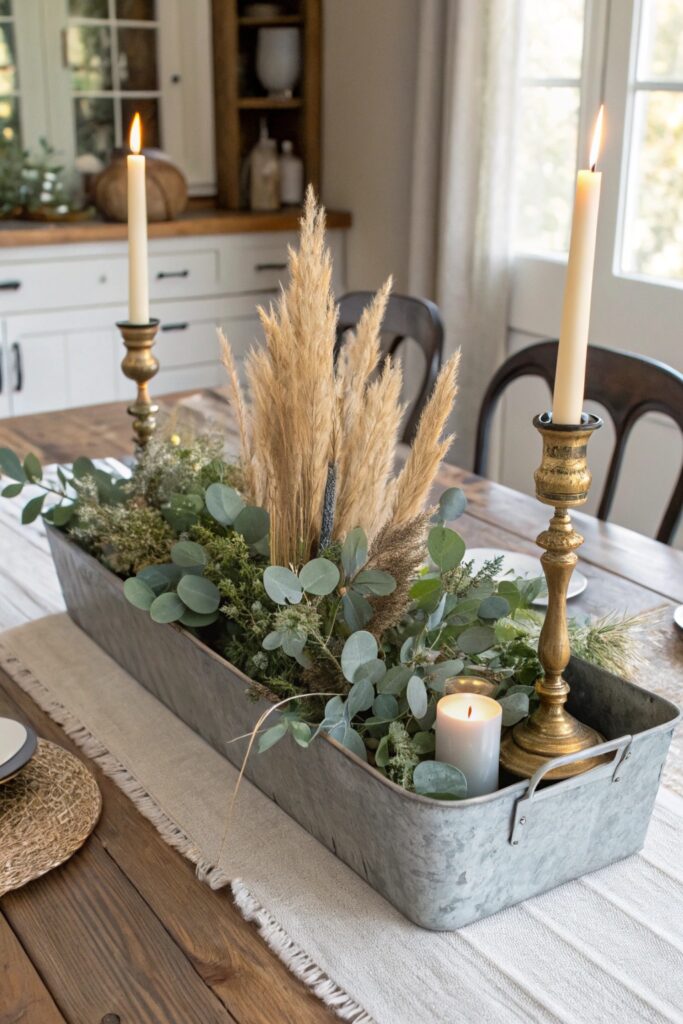
A galvanized metal piece used to hold water and flowers directly needs a sealed liner, since raw galvanized metal can react with certain plant fertilizers and leach zinc into the water over time.
10. Wainscoting or Board-and-Batten on the Lower Walls
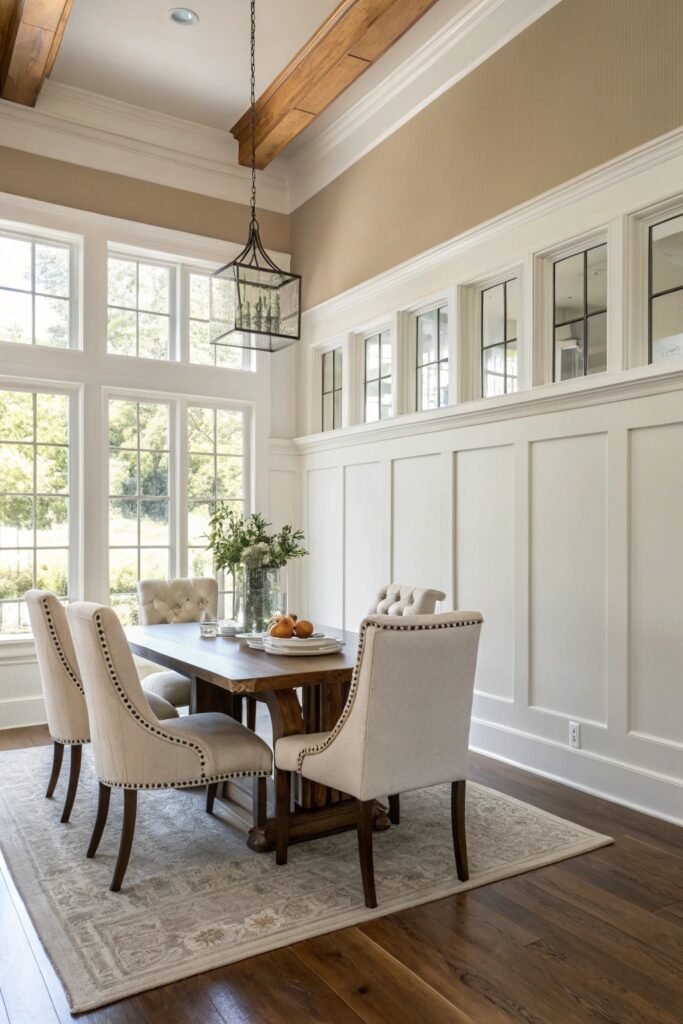
Board-and-batten’s furring strips reduce the room’s usable wall depth slightly, worth accounting for when placing furniture flush against this treatment rather than assuming the same clearance as a flat drywall wall.
11. A Large Vintage-Inspired Area Rug Under the Table
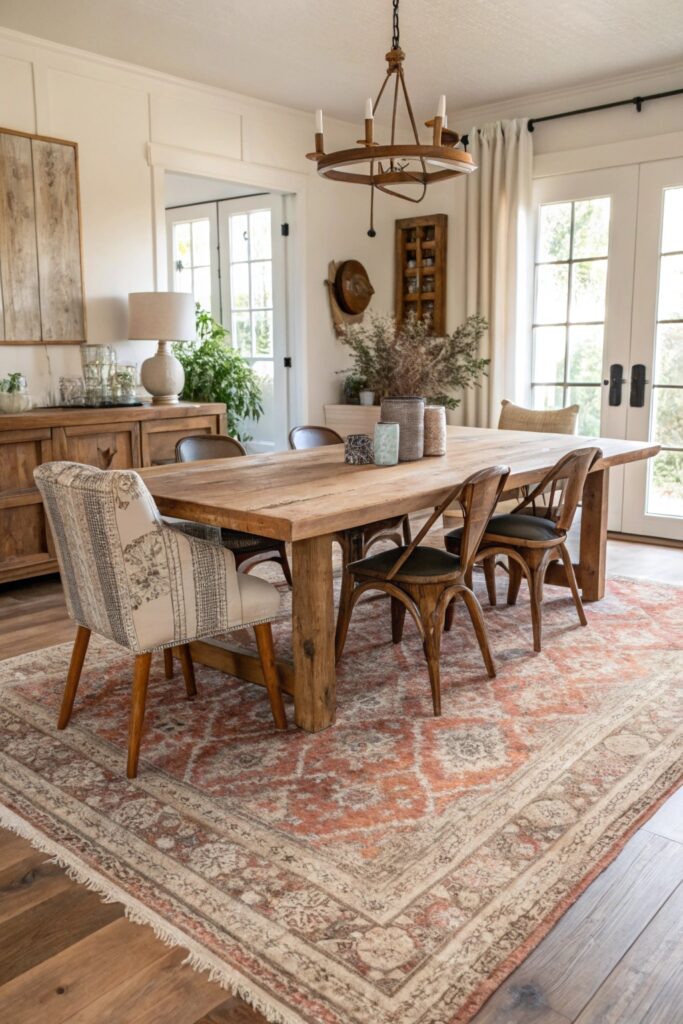
A rug with a busier pattern hides stains and wear better under a dining table than a solid color would, a real practical advantage worth weighing alongside the look in a room that sees this much regular spill risk.
Choosing a Table Size for Your Actual Room
Leave at least 36 inches between the table’s edge and the nearest wall or furniture piece so chairs can be pulled out and people can walk around comfortably during a meal, a clearance that’s easy to underestimate when working from a floor plan rather than the room itself.
Measuring your specific space and marking out the table’s footprint with painter’s tape before ordering helps confirm the dimensions actually work, since a table that looks reasonably sized in a showroom can feel considerably larger once it’s in your own dining room.
What a Modern Farmhouse Dining Room Costs
A cosmetic update — lighting, a rug, and a few accent pieces while keeping existing furniture — typically costs $500 to $1,500 depending on material quality.
A fuller renovation including a new table, chairs, and shiplap detailing runs considerably higher, often $5,000 to $15,000 or more depending on the scope and materials chosen.
Layering Lighting Beyond the Main Fixture
A single statement chandelier, however striking, tends to create flat lighting that doesn’t flatter people seated at the table the way layered sources do. Adding a dimmer and incorporating a wall sconce or a lamp on a sideboard creates warm, adjustable lighting suited to both a casual weeknight meal and a more formal dinner.
Candles remain one of the simplest ways to add warmth here, since their flickering light softens the room’s harder-edged rustic elements like exposed metal or raw wood grain.
Rug sizing matters here too — a rug under the table should extend at least 24 inches beyond the table’s edge on all sides so chairs stay on the rug even when pulled out, keeping the setup looking intentional rather than like an undersized rug placed as an afterthought.
A dining room this deliberately styled still needs to function for everyday use, not just for photographs, so choosing durable, easy-to-clean materials for the pieces that see the most daily contact — the table surface and seating upholstery in particular — matters as much as the overall aesthetic direction.
Whichever combination of these ideas fits your home, giving the room time to settle for a few weeks before adding more pieces often reveals whether it actually needs another layer of rustic texture or whether the current balance is already the right stopping point.
A dining room done thoughtfully in this style tends to work for a wide range of occasions, from a quick weeknight dinner to hosting a larger group, without needing to be restyled between the two, which is part of why this particular combination of rustic and refined has stayed popular across so many different homes.
Final Thoughts
The most successful rooms in this style tend to pick one or two rustic anchor pieces — the reclaimed table, a shiplap wall — and let more refined elements like brass hardware or a tailored linen bench balance them out, rather than piling on rustic texture from every direction at once.
Whichever combination of these ideas you’re drawn to, testing material and finish samples together in the room’s actual lighting before committing helps confirm the rustic and refined elements read as intentionally paired rather than randomly assembled.