
A playroom deserves the same real safety attention as a nursery, since kids use this space more actively — climbing, jumping, exploring at close range — than adults use most rooms in the house. The details below cover both the design direction and these practical safety specifics for each idea.
Below are 11 playroom ideas worth considering, with the specifics for each.
1. Colorful Creative Zone
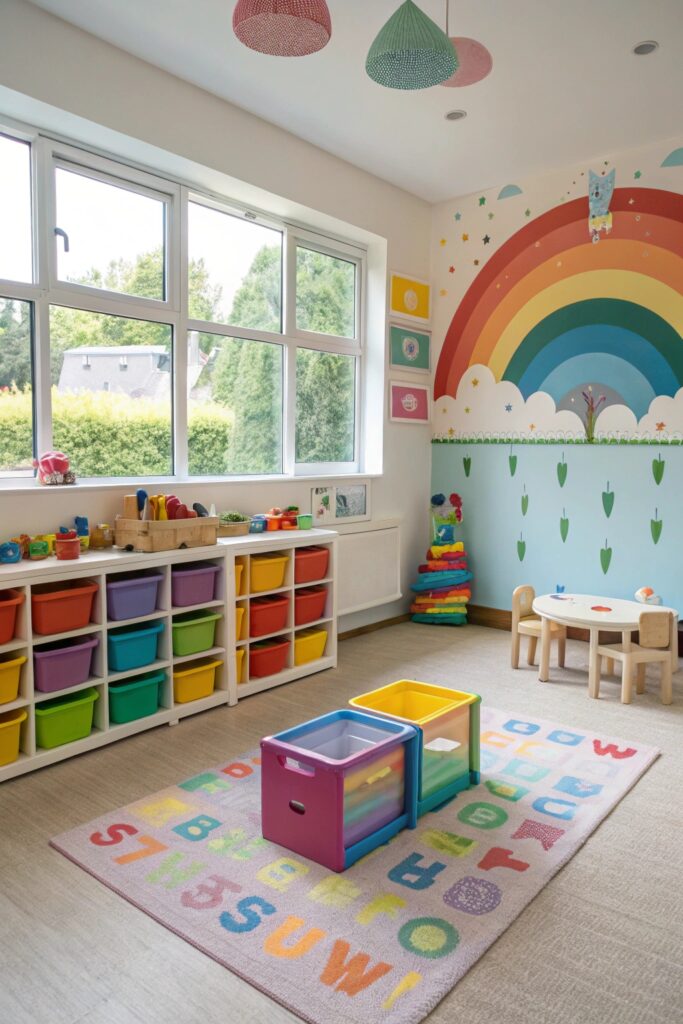
Choose washable, scrubbable paint or wall finishes specifically for this room, given the crayon marks, marker smudges, and general mess a playroom sees more than almost any other space in the house.
2. Reading Nook Playroom Corner
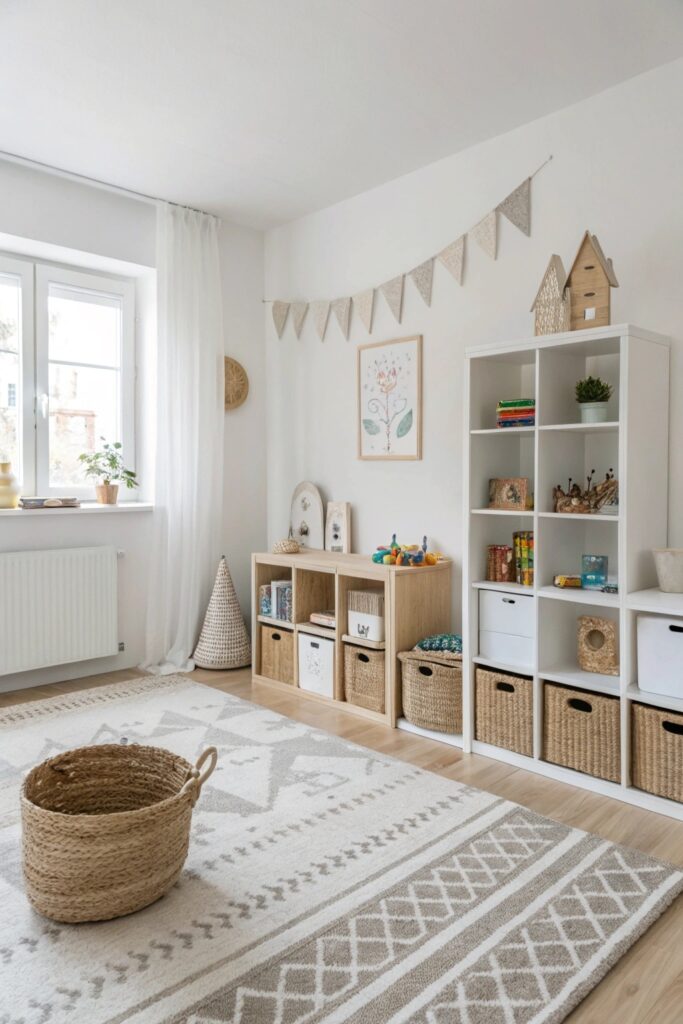
Any canopy or draped fabric should be secured well out of reach and checked for entanglement risk, the same precaution that applies to soft textiles anywhere a young child plays.
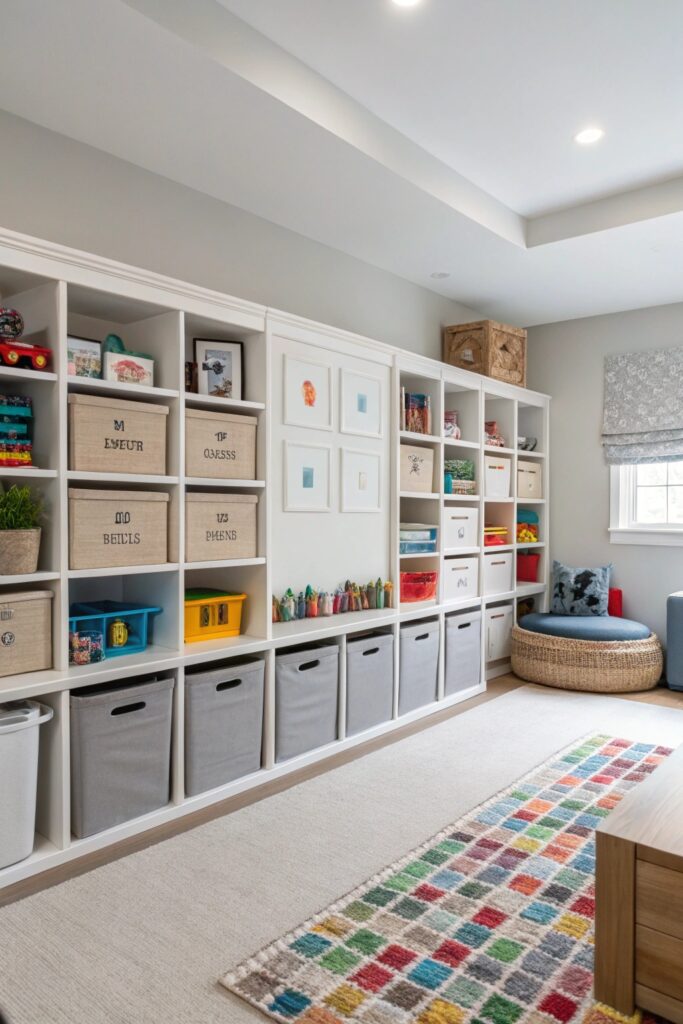
3. Toy Storage That Actually Works
Toy chests need soft-close hinges or a lid support specifically, since a heavy, unsupported lid slamming shut is a real and common cause of finger injuries in this kind of storage.
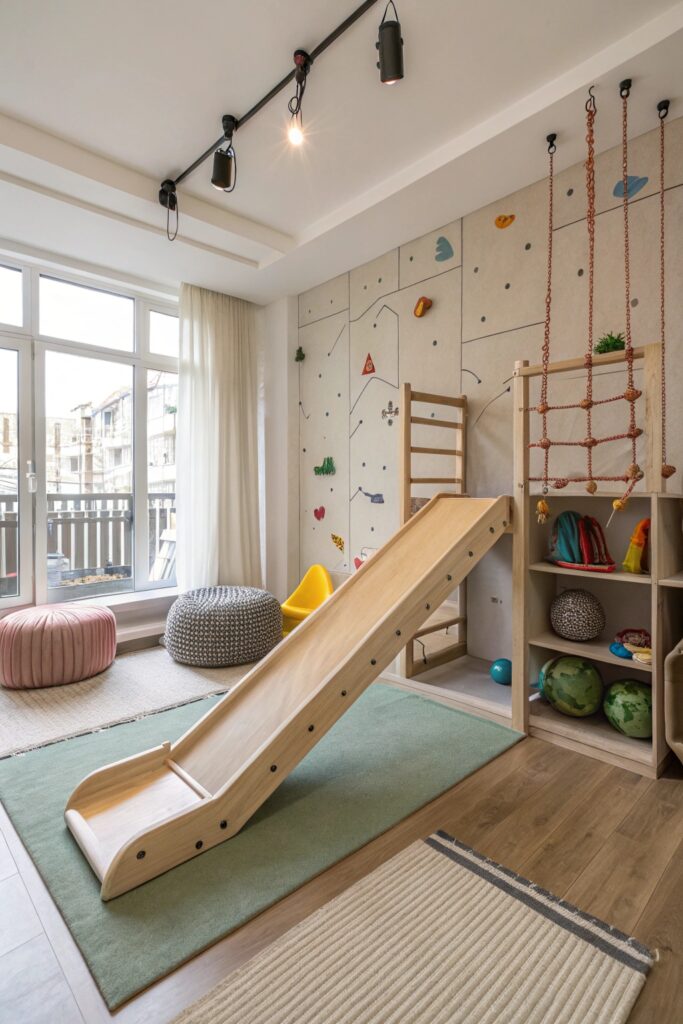
4. Indoor Climbing & Activity Zone
Any climbing structure needs a properly cushioned landing surface rated for fall impact underneath it, and wall-mounted climbing holds require anchoring into actual studs rather than drywall alone, given the dynamic force a climbing child puts on the hardware.
5. Art & Craft Station
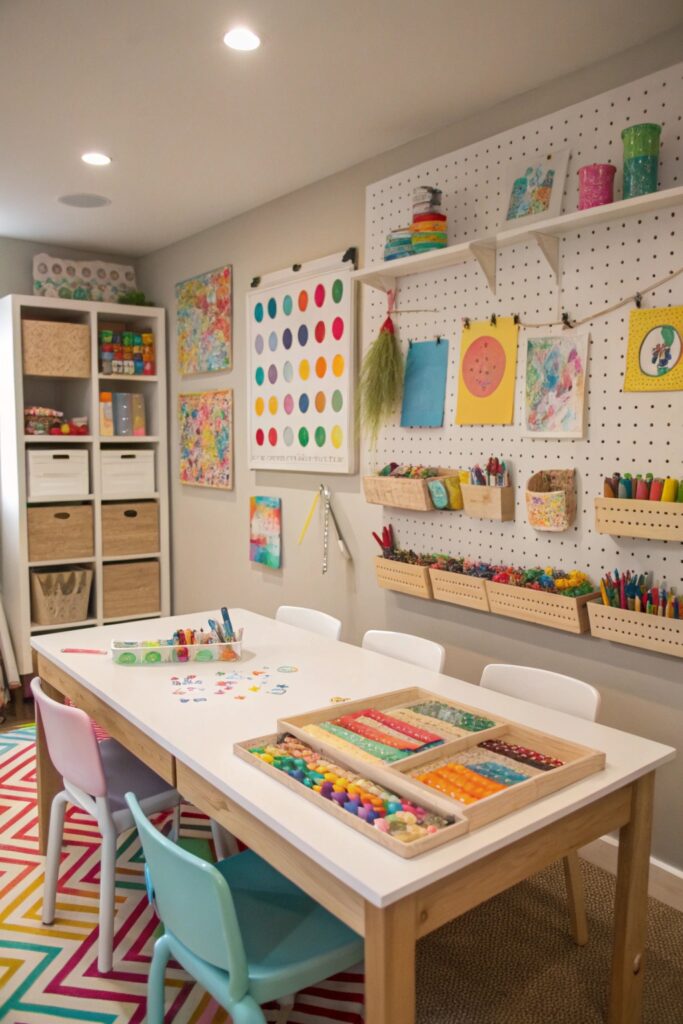
Look for supplies labeled AP or CP by the Art and Creative Materials Institute specifically, rather than assuming any craft product marketed for kids meets this non-toxic certification standard.
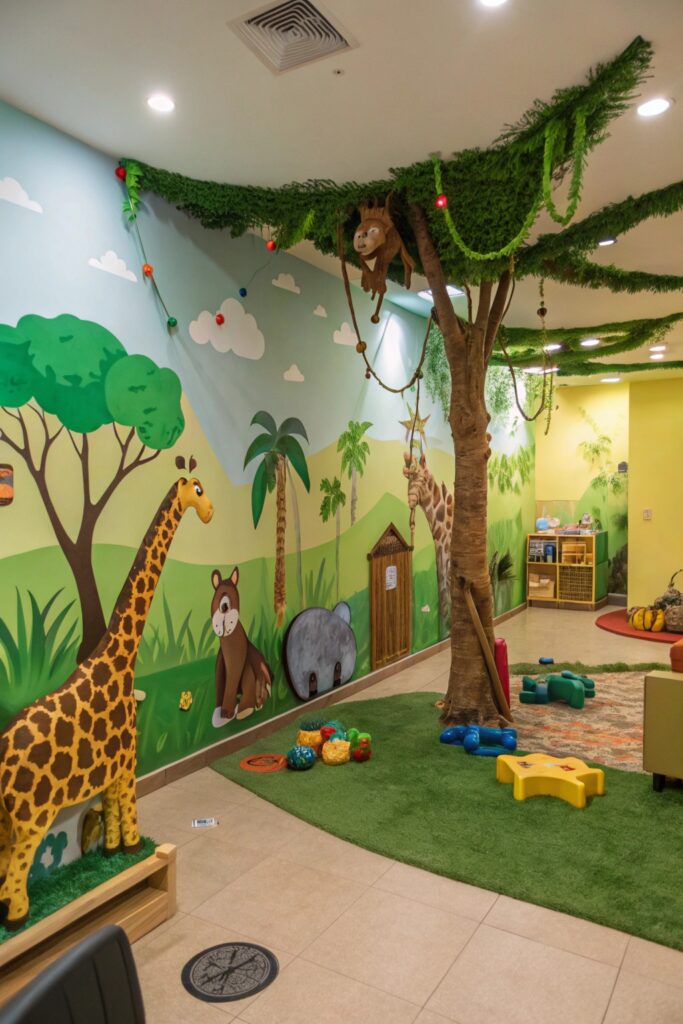
6. Themed Playroom Design
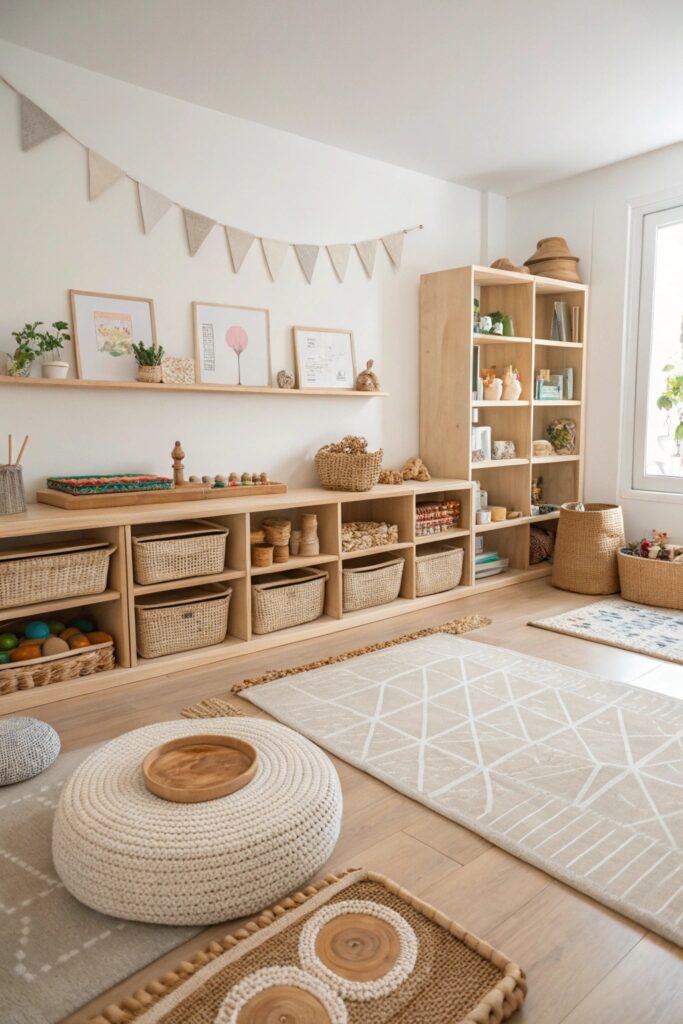
Wall decals and themed decor should still meet the same low-VOC and washable-surface standards as any other playroom finish, regardless of how the specific theme is styled.
7. Soft Play & Cushion Zone
Check that foam cushions and mats have an appropriate firmness rating, since overly soft foam can pose a real suffocation risk for younger children who end up face-down against it.
8. Multi-Functional Playroom Setup
Convertible furniture with folding or reconfiguring mechanisms needs hardware rated for repeated daily use rather than occasional adjustment, given how frequently a multi-purpose piece gets reconfigured in an active playroom.
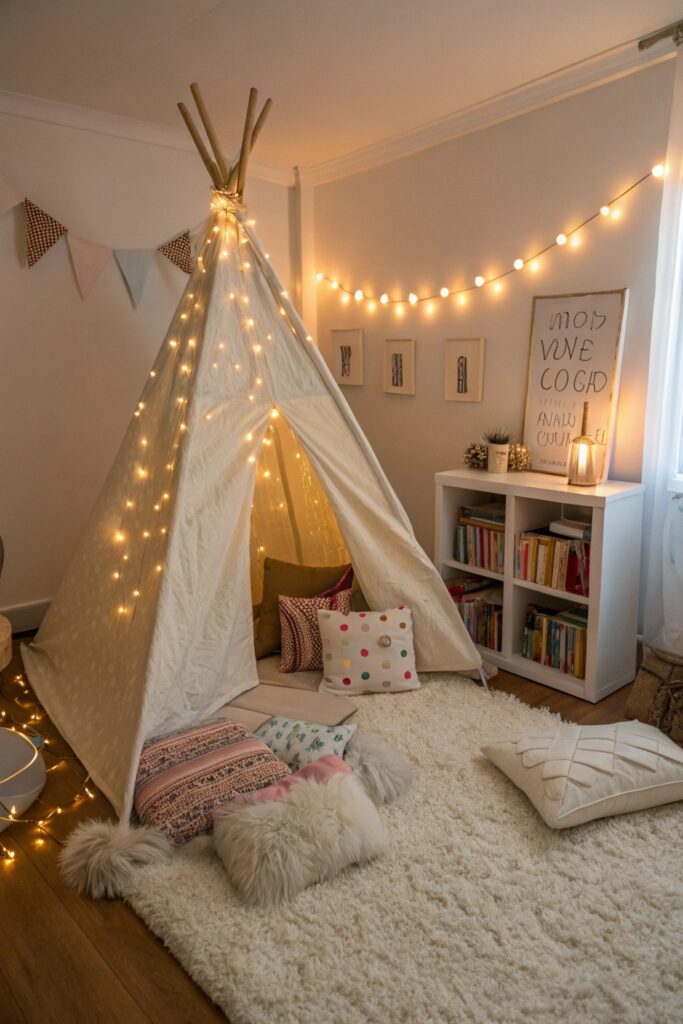
9. DIY Playhouse or Tent Corner
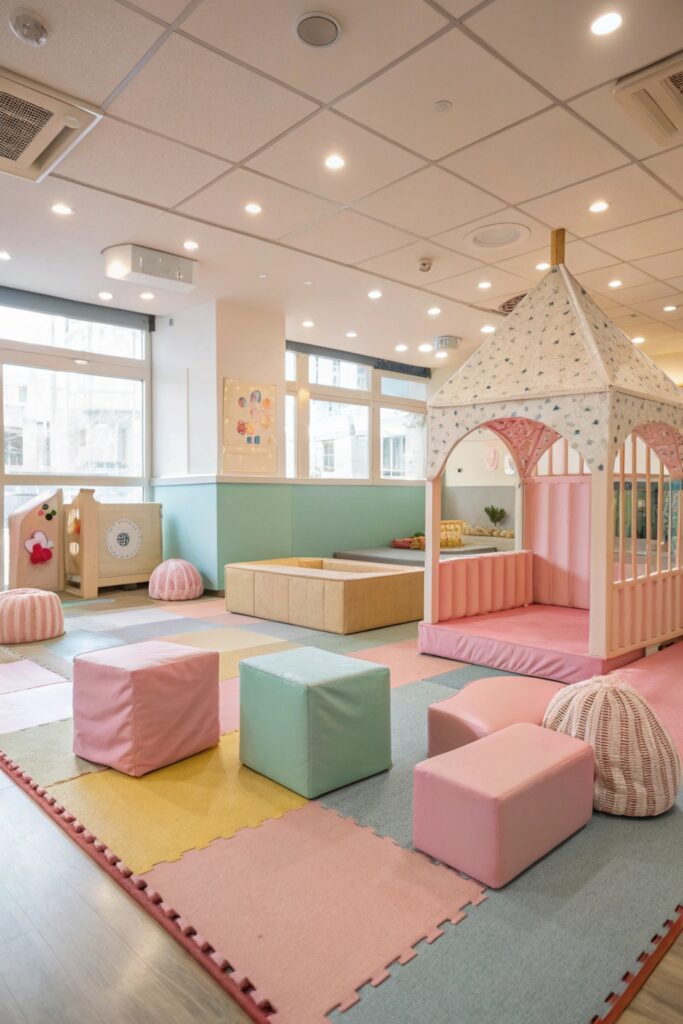
A playhouse structure meant to be climbed on or inside needs genuine weight-rated construction, not just decorative tent poles, if it’s designed for more than a purely fabric enclosure a child sits inside.
10. Interactive Learning Wall
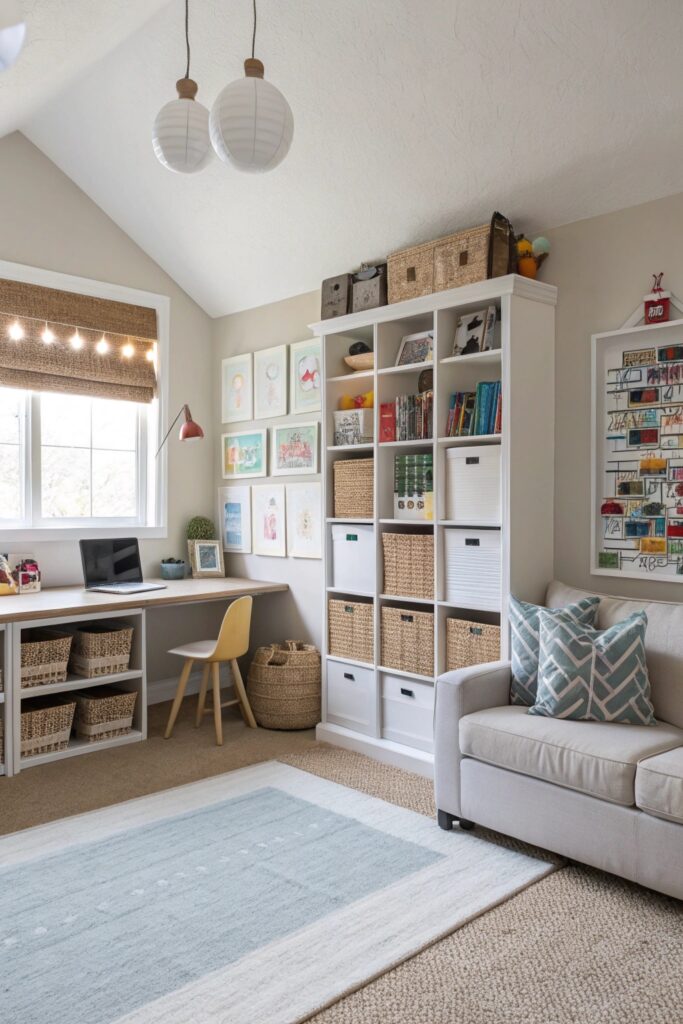
Wall-mounted chalkboards, magnetic panels, or activity boards need the same weight-rated anchoring as any wall-mounted piece, since kids tend to lean and pull on these elements more than adults typically would.
11. Minimalist Calm Playroom
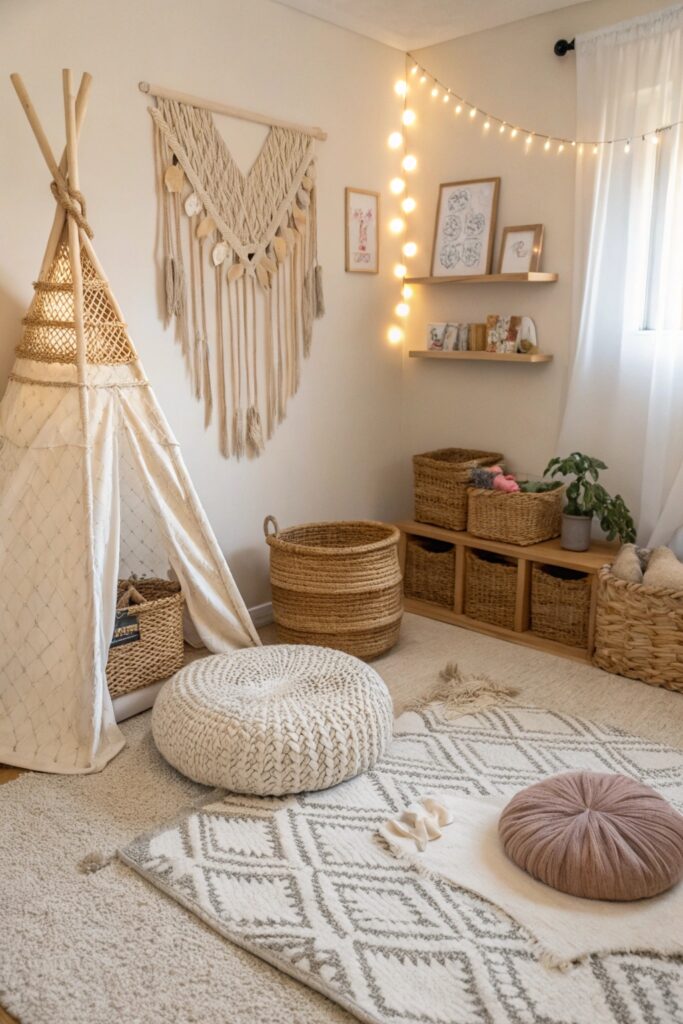
Fewer toys visible at once, with the rest rotated into storage, tends to hold a child’s attention better than an overwhelming amount of options displayed simultaneously, a real behavioral pattern worth designing around.
Designing for Multiple Ages Under One Roof
If siblings of different ages share the playroom, zoning the space by activity type rather than strictly by age tends to work better in practice, since a reading corner or art station can suit a range of ages more naturally than a rigid toddler-versus-older-kid split.
Small parts and choking hazards from an older child’s toys need to stay truly out of reach of a younger sibling, which often means dedicated closed storage for anything with small components rather than open bins accessible to everyone in the room.
What a Playroom Setup Costs
A basic setup with storage, a rug, and a few decor pieces typically costs $300 to $800 depending on material quality.
A fuller build including a climbing structure, built-in storage, and a themed design runs considerably higher, often $2,000 to $6,000 or more depending on the scope.
Flooring That Handles Real Play
A cushioned foam or interlocking play mat offers real fall protection for active play, while still being easy to wipe clean after art projects or spilled snacks, a combination hard flooring alone doesn’t provide.
If keeping the room’s existing hardwood or tile floor, a large area rug with a non-slip pad underneath adds a layer of cushioning and warmth, though it won’t offer the same impact protection a dedicated foam mat does under a climbing structure specifically.
Lighting That Supports Different Kinds of Play
Bright, even overhead lighting suits active play and craft projects, while a dimmer lamp in a reading nook creates a calmer atmosphere better suited to quiet time — worth layering a couple of light sources rather than relying on a single overhead fixture for every activity this room hosts.
Natural light matters too, and positioning quieter activities like reading near a window, while keeping messier craft stations further from delicate window treatments, helps the room’s layout work with its available light rather than against it.
Involving kids in a few of the smaller decisions, like choosing a paint color or picking out a theme, tends to make the finished room feel more truly theirs, which often means they’re more invested in helping keep it organized afterward.
A playroom doesn’t need to be perfectly finished from day one — many families find the space evolves naturally as their kids’ interests change, with certain zones getting more use than others over time as their play styles develop.
Setting a simple end-of-day cleanup routine, rather than expecting the room to stay tidy on its own, matters more to how well any storage system actually works than the storage furniture itself, since even the best-designed bins go unused without a consistent habit around them.
A well-planned playroom gives kids a real sense of ownership over a space that’s designed specifically for them, which tends to encourage more independent, imaginative play than a shared living area asked to double as a play space.
Getting quotes from at least two or three contractors before starting a larger build helps confirm both pricing and their familiarity with child-safe construction standards, particularly for anything involving a climbing structure or built-in furniture kids will interact with directly.
A playroom designed with both fun and function in mind tends to earn its keep for years, adapting alongside a growing child rather than needing a complete overhaul every time their interests shift.
Conclusion
Revisiting the room’s safety details as your child grows matters just as much as getting the initial setup right, since a playroom that was perfectly safe for a toddler isn’t automatically right once that same child is climbing furniture or using scissors independently.
Checking the Consumer Product Safety Commission’s current recall list for any furniture or toy storage you’re considering, particularly secondhand pieces, is worth the few minutes it takes before bringing something into this specific room.