
Choosing pool-friendly plants means considering more than looks alone, since heat reflection, chlorine exposure, and root systems near hardscaping all affect which plants actually thrive in this environment.
Below are 12 plants worth considering for a poolside setting, with practical notes for each. Confirm which options are suited to your specific climate zone before planting.
1. Bird of Paradise (Strelitzia reginae)
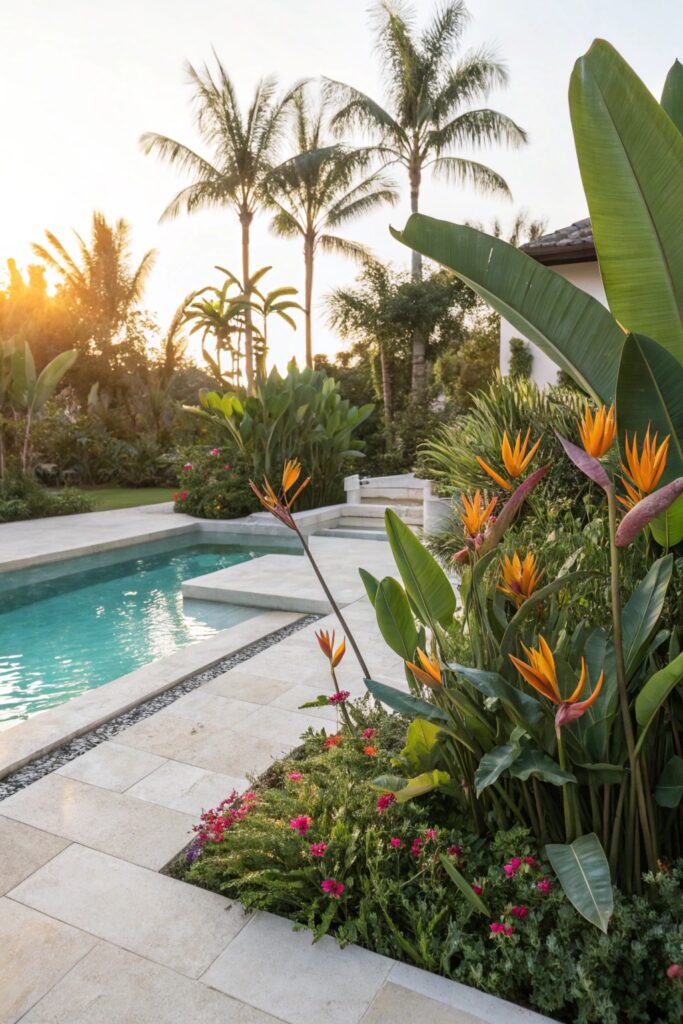
This tropical-looking plant tolerates heat and reflected sun well, making it a common choice for poolside beds in warmer climates.
Plant this variety at a distance from the pool edge, since its root system can spread wider than expected over several years.
2. Agapanthus (Lily of the Nile)
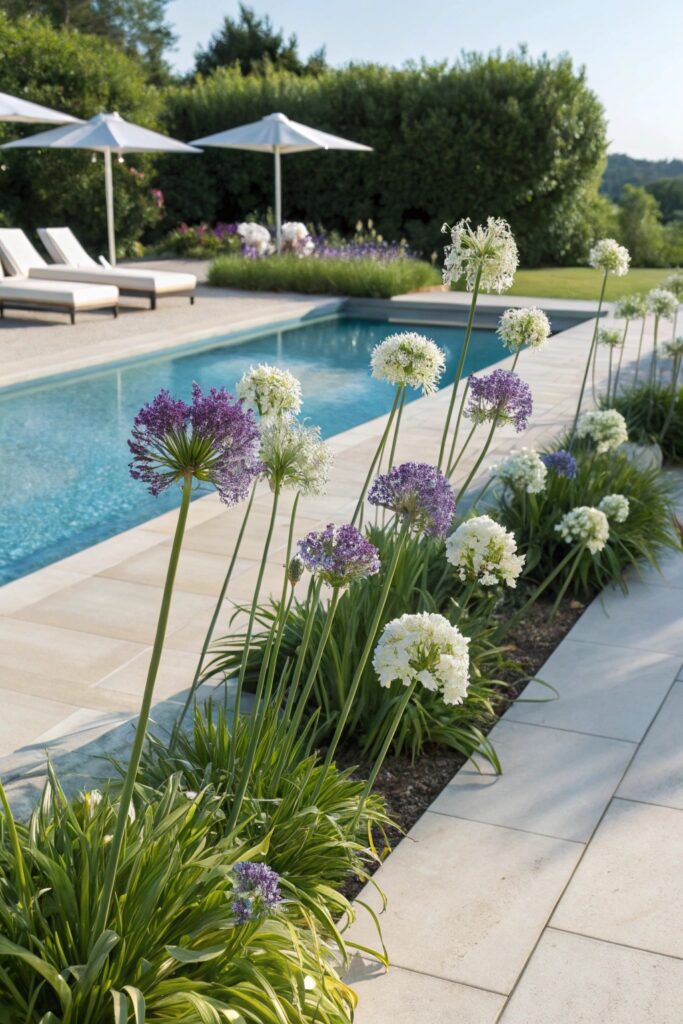
Drought-tolerant once established, this plant handles the occasional splash or overspray from a pool better than many flowering perennials.
Deadhead spent blooms regularly, which encourages continued flowering throughout the warmer months.
3. Dwarf Palmetto (Sabal minor)
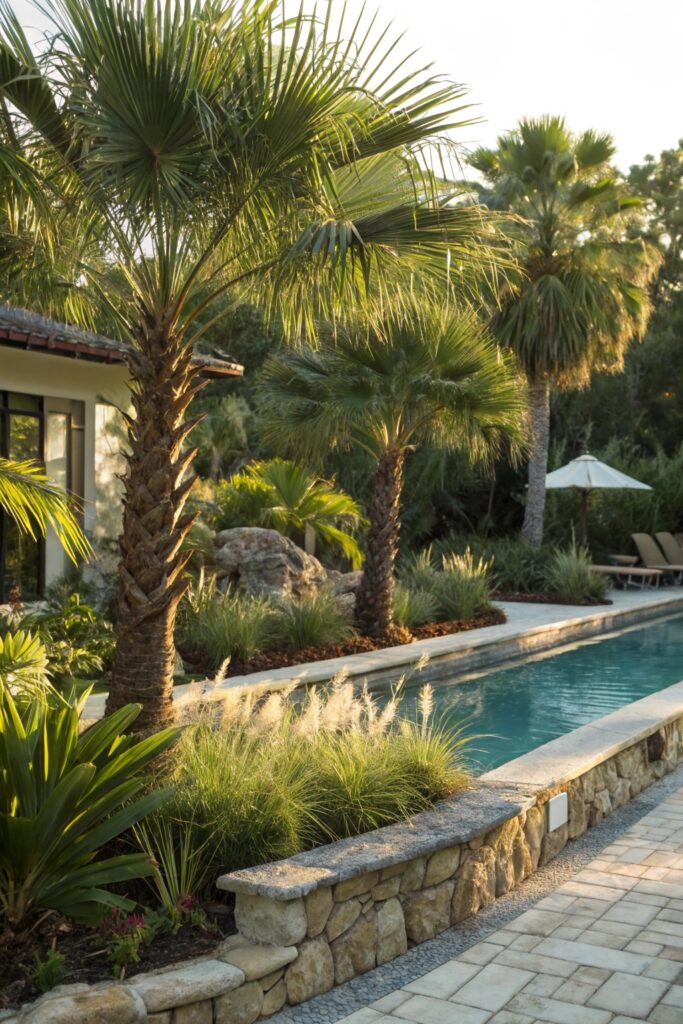
This compact palm variety fits smaller poolside beds where a full-size palm tree would be disproportionate to the space.
Choose a well-draining spot for this plant, since standing water around the base can lead to rot despite its overall toughness.
4. Ornamental Grasses
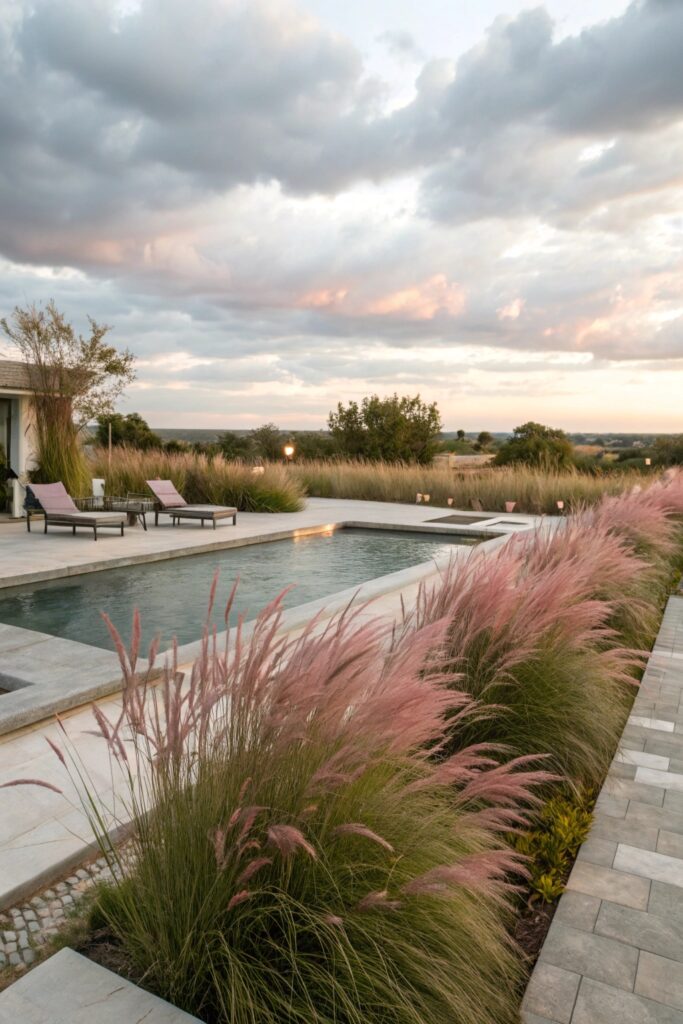
Low-maintenance and movement-adding, ornamental grasses soften the hard edges of pool decking and coping.
Cut back dried foliage at the end of the season, which keeps the plant looking tidy and encourages fresh growth the following year.
5. Bougainvillea
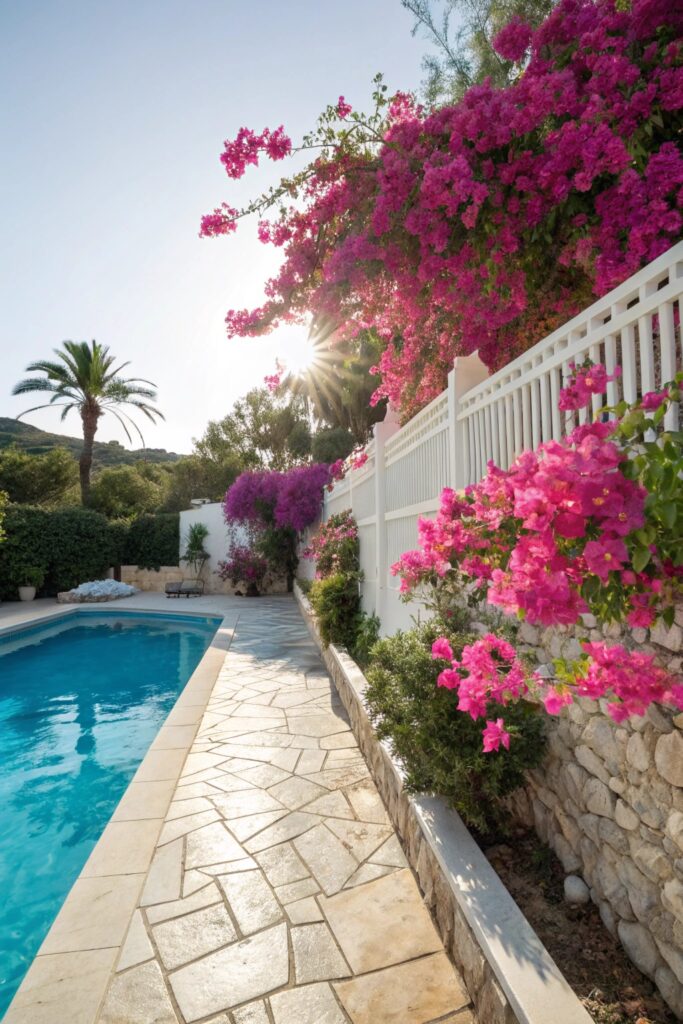
Vibrant and heat-loving, this plant works well trained along a fence or trellis near the pool for vertical color.
Provide support like a trellis or fence early on, since this plant’s growth habit benefits from something to climb rather than sprawling loosely.
6. Lantana
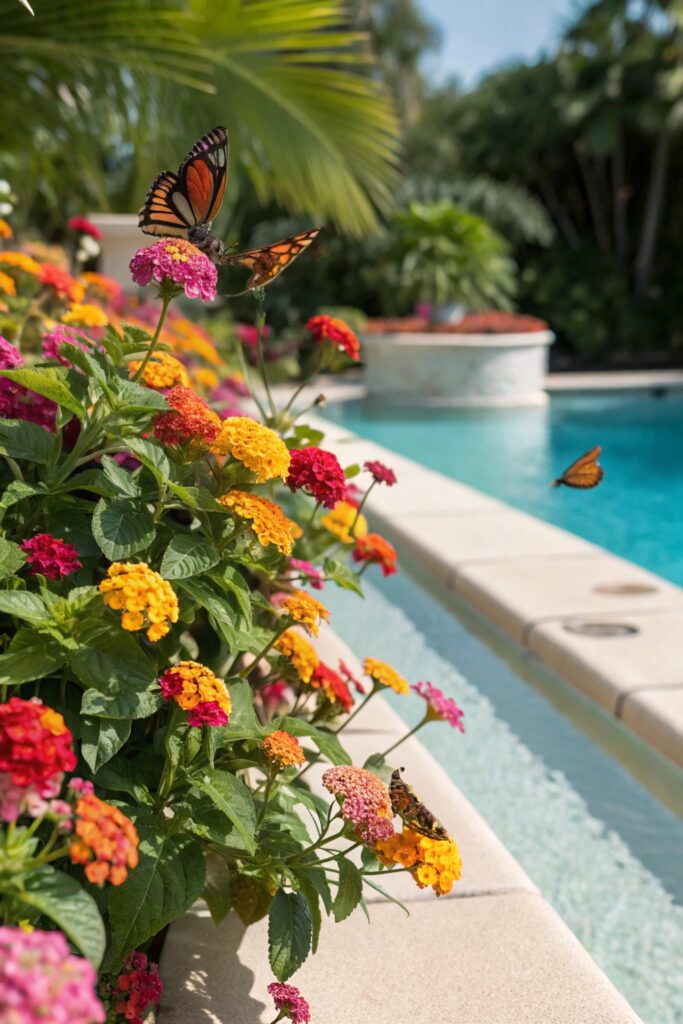
This tough, heat-tolerant plant handles poolside conditions well and attracts pollinators, though it’s worth checking whether it’s considered invasive in your specific region.
Trim leggy growth periodically, which keeps the plant compact and encourages fuller, more consistent flowering.
7. Elephant Ears (Colocasia/Alocasia)
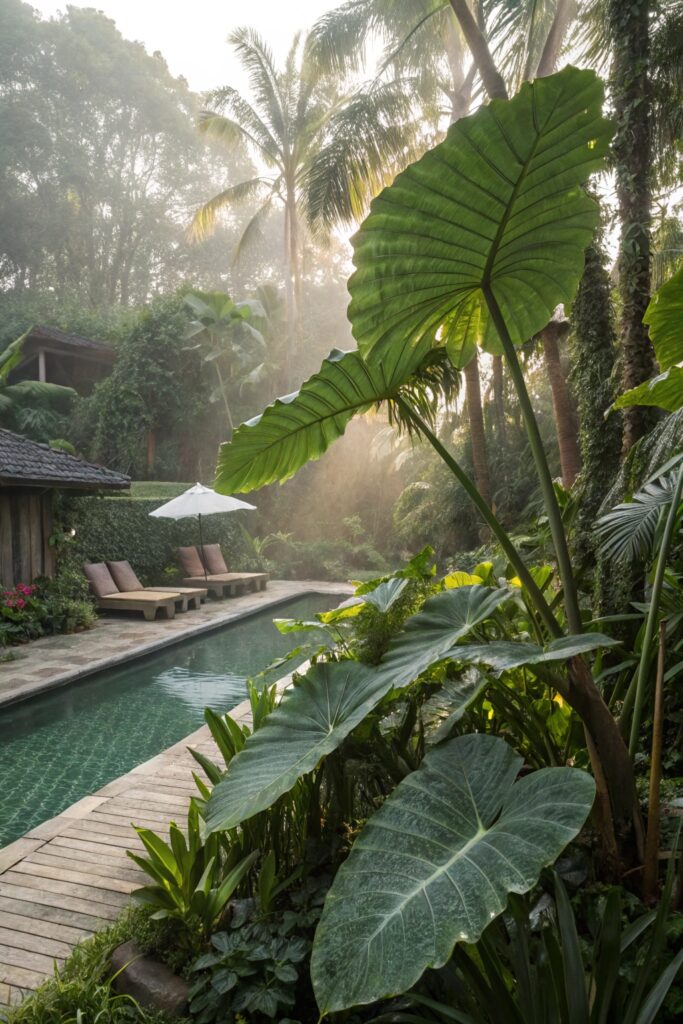
Large, tropical foliage creates a lush backdrop, though these plants typically need more consistent moisture than some other options on this list.
Provide consistent water during hot, dry stretches specifically, since these plants show stress quickly if the soil dries out completely.
8. Plumbago
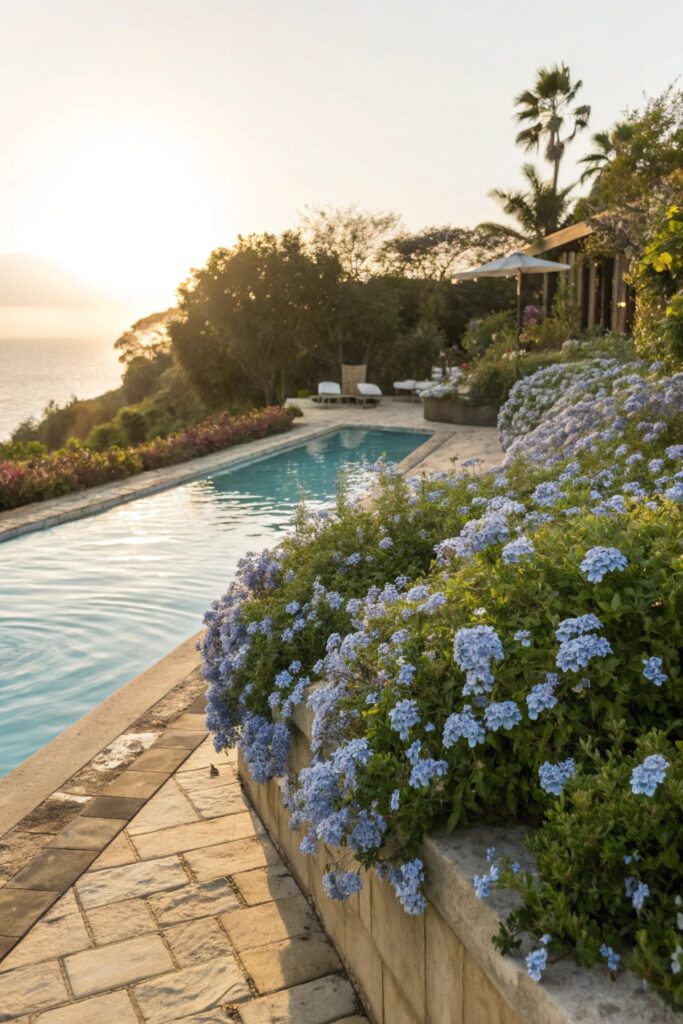
This soft blue-flowering shrub tolerates heat and reflected light well, working nicely as a lower border plant around pool areas.
Prune after the main flowering period, which helps maintain a tidy shape without cutting off next season’s blooms.
9. Rosemary
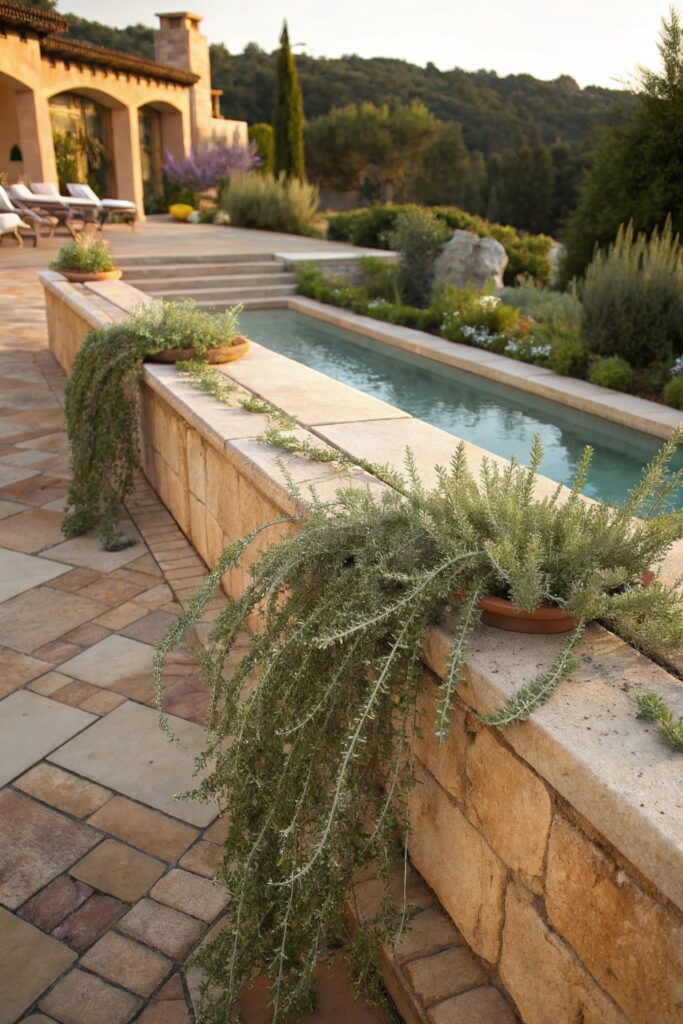
Drought-tolerant and fragrant, rosemary handles poolside heat and occasional chlorine exposure better than many herbs.
Harvest regularly if using this plant for cooking, which also naturally keeps the shrub from becoming overly woody and sparse.
10. Canna Lily
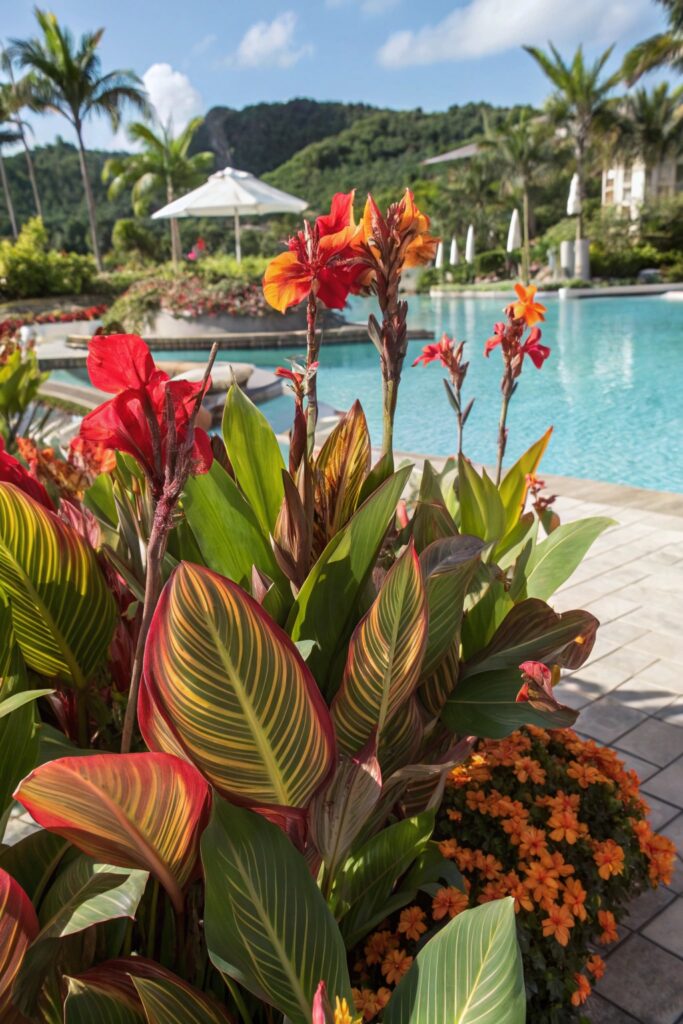
This bold, tropical-looking plant adds height and color, tolerating both heat and occasional wet conditions near a pool.
Divide overcrowded clumps every few years, which keeps the plant blooming well and prevents the center from thinning out.
11. Liriope (Monkey Grass)
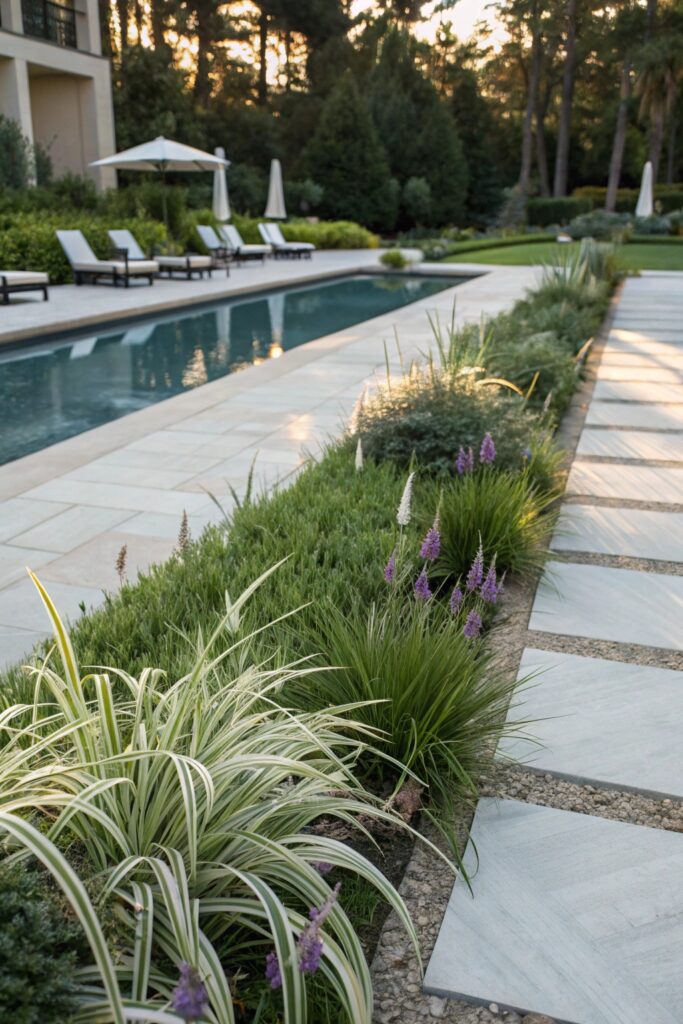
Low-growing and tough, this plant works well as a border along pool edges where a taller plant would be impractical.
Choose a shaded or partially shaded spot for this plant specifically, since it tolerates lower light better than most other options on this list.
12. Frangipani (Plumeria)
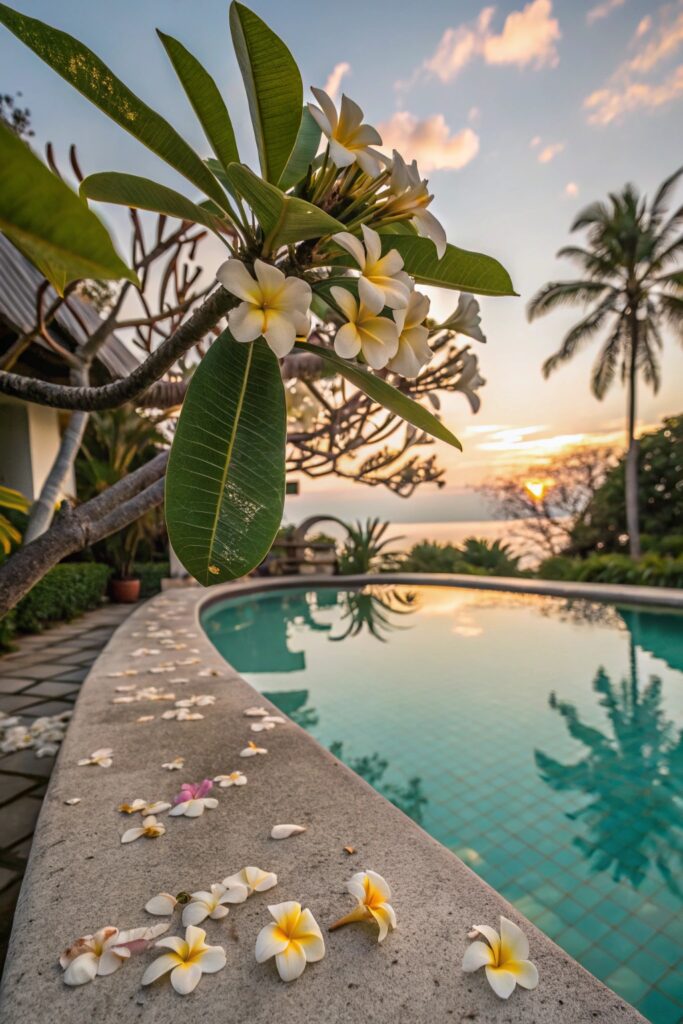
This fragrant, tropical plant suits a resort-style pool aesthetic, though it needs a warm climate to thrive outdoors year-round.
Choosing a Mix of Heights for a Layered Look
A pool border that uses only one plant height tends to look flat from a distance, even if the individual plants are healthy and well-maintained.
Combining a taller anchor plant like bird of paradise or canna lily with mid-height shrubs and a low border planting like liriope creates the layered, resort-style depth that a single row of matching plants can’t achieve on its own.
Keeping Leaf Litter Away From the Water
Plants that drop a lot of leaves, flowers, or seed pods can create extra pool maintenance if they’re planted too close to the water’s edge, since debris that falls in adds to skimming and filter cleaning.
Setting heavier-litter plants like frangipani or bougainvillea back a few feet from the pool edge, and reserving the immediate border for lower-litter options like liriope or ornamental grasses, cuts down on how often the pool needs skimming.
Considering Chemical and Debris Tolerance
Occasional splash-over from a chlorinated pool doesn’t harm most established plants, but consistently soggy soil right at the water’s edge can stress varieties not suited to constant moisture.
Choosing low-litter plants — those that don’t drop excessive leaves, flowers, or seed pods — reduces how often you’re skimming debris out of the pool itself.
What This Landscaping Costs
Smaller potted specimens of most of these plants typically cost $15 to $40 each.
Larger, more established plants like a mature Bird of Paradise or Frangipani run considerably higher, often $75 to $200 per plant depending on size and maturity.
Planning for Root Systems Near Hardscaping
Confirm the mature root spread of any plant before placing it close to pool decking, coping, or underground equipment lines, since some varieties expand considerably more than their above-ground size suggests.
A general rule of thumb is planting larger shrubs and trees at least a few feet back from hardscaping edges, giving roots room to grow without pushing against pavers or concrete over time.
Check with your local extension office or a regional nursery about genuine invasive species concerns before planting, since a few varieties on lists like this one are considered problematic in certain regions despite being popular elsewhere.
Layering different plant heights around the pool — taller specimens toward the back, lower borders near the edge — creates a more finished, resort-style look than a single row of matching plants.
Get a soil test done before planting if you’re unsure about your yard’s drainage and pH, since this small step can save considerable time and money compared to replacing struggling plants after the fact.
Consider a mulched border around each planting bed, which helps retain moisture and keeps splashed pool water from washing away loose soil near the edges.
Whatever combination of these plants you choose, view the finished bed from your typical poolside seating, since the angle you’ll actually see it from most often should guide final placement decisions more than an overhead or straight-on view.
A well-planted pool area transforms an ordinary backyard into something considerably closer to a resort setting, and the investment in the right plants pays off in enjoyment throughout the entire warm season.
Final Thoughts
For more of this resort-style aesthetic, see our guide to pool house ideas.
Choosing plants with non-invasive root systems matters near pool decking and equipment, since aggressive roots can eventually damage hardscaping or underground lines. Grouping plants by their water needs, rather than mixing drought-tolerant and moisture-loving varieties in the same bed, makes ongoing care considerably simpler.