11 Chaotic Room Aesthetic Ideas That Somehow Work Perfectly
Introduction
Some rooms break every design rule in the book — and look absolutely incredible doing it. No matching furniture, no cohesive color palette, no “theme” to speak of. Just a beautiful, glorious mess that somehow pulls together into something you can’t stop staring at.
I’ll be honest — I used to think good design meant everything had to coordinate perfectly. Then I stumbled into the world of chaotic room aesthetics and completely changed my mind. There’s real intention hiding inside the apparent disorder, and once you see it, you can’t unsee it.
If your style motto is “more is more” and minimalism makes you feel vaguely sad, you’re in the right place. Let’s get into 11 chaotic room aesthetic ideas that somehow, against all odds, work perfectly.
1. Maximalist Gallery Wall

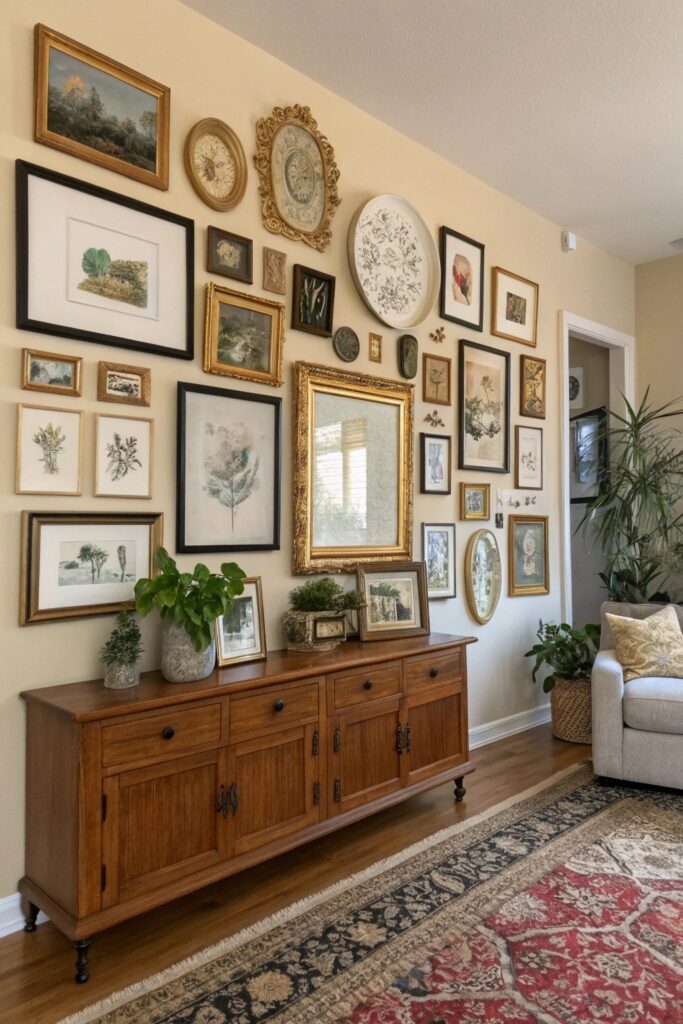
A maximalist gallery wall throws out the “matching frames, even spacing” rulebook and replaces it with something far more interesting — pure, unapologetic abundance. We’re talking mismatched frames in gold, black, wood, and white, hanging at completely different heights, holding art prints, mirrors, vintage plates, pressed botanicals, and photos all at once.
The secret that makes this work? Repeat one element throughout — a consistent color in every piece, or a similar subject matter tying the chaos together. That one thread of connection tricks the eye into seeing intention rather than randomness.
Key elements to mix:
- Frames: different sizes, materials, and finishes
- Content: art prints, family photos, mirrors, decorative objects
- Spacing: intentionally uneven, with clusters and gaps
Start with your largest piece and build outward. Trust the process — it always looks chaotic until the final piece goes up, and then suddenly it’s perfect.
2. Eclectic Furniture Mix

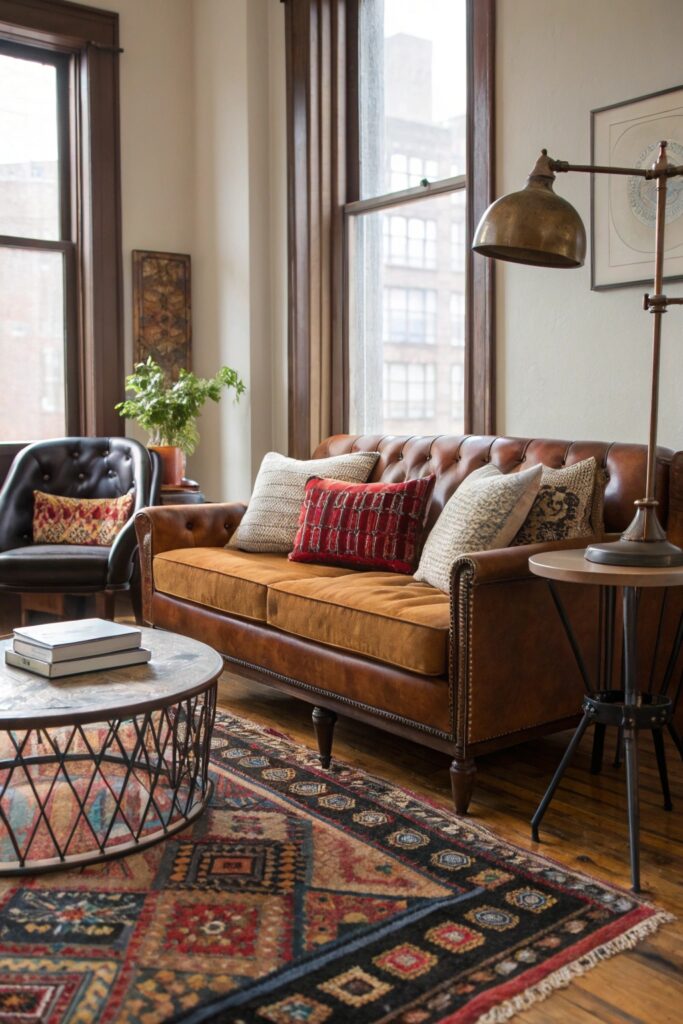
Who told you your sofa and armchair had to match? Whoever it was — ignore them. The eclectic furniture mix aesthetic pairs pieces from completely different eras, styles, and origins, and the result is a room that feels genuinely lived-in and deeply personal.
Think a mid-century modern sofa next to a Victorian-inspired armchair, topped with an industrial metal side table, sitting on a Moroccan-style rug. It sounds like a fever dream, but it works because each piece holds its own visual weight.
The rules that actually matter here:
- Scale consistency — don’t pair massive pieces with tiny ones
- One unifying element — a shared color, material, or finish somewhere
- Breathing room — even chaotic rooms need negative space
IMO, a room full of perfectly matched furniture sets feels like a furniture showroom. A room with eclectic pieces feels like a life actually being lived.
3. Collected Shelf Chaos

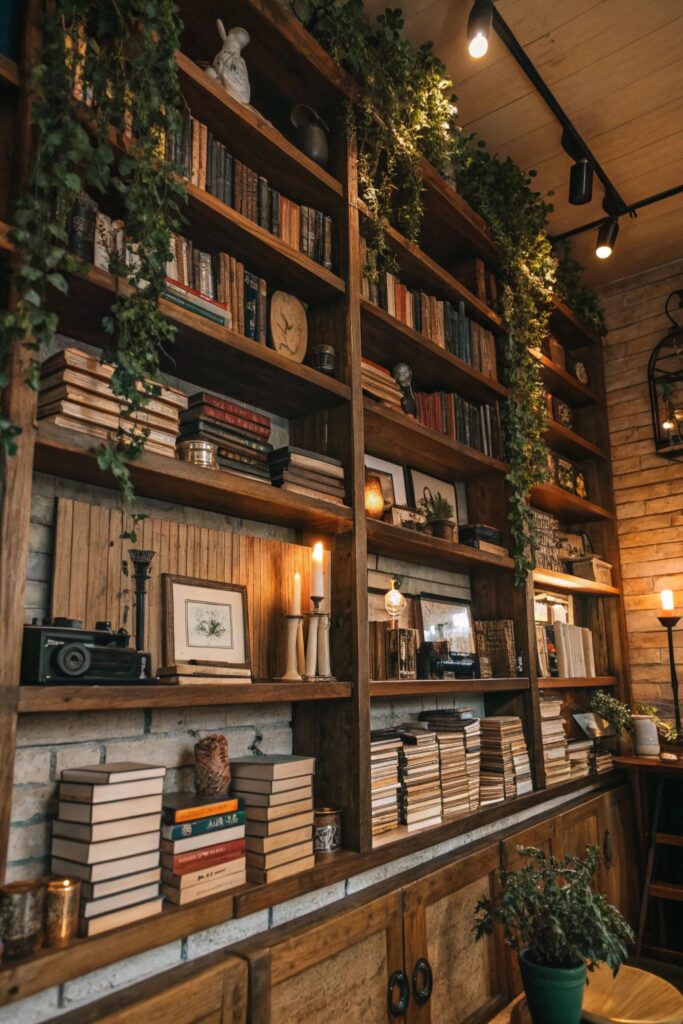
Ever walked into someone’s home and immediately felt like you knew their entire personality just from looking at their shelves? That’s the power of collected shelf chaos — shelves loaded with books stacked horizontally and vertically, plants spilling over edges, vintage finds, travel souvenirs, candles, and random objects that each carry a story.
The key difference between “curated chaos” and an actual mess is intentional grouping. Cluster similar tones together. Break up book rows with objects. Let a trailing plant soften a hard corner.
What makes shelves look collected rather than cluttered:
- Vary heights within each shelf section
- Mix organic and geometric shapes
- Use odd numbers — groups of three always look better than two or four
- Add depth by layering items front to back
Your shelf should tell your story. Fill it like you mean it.
4. Pattern-on-Pattern Bedding

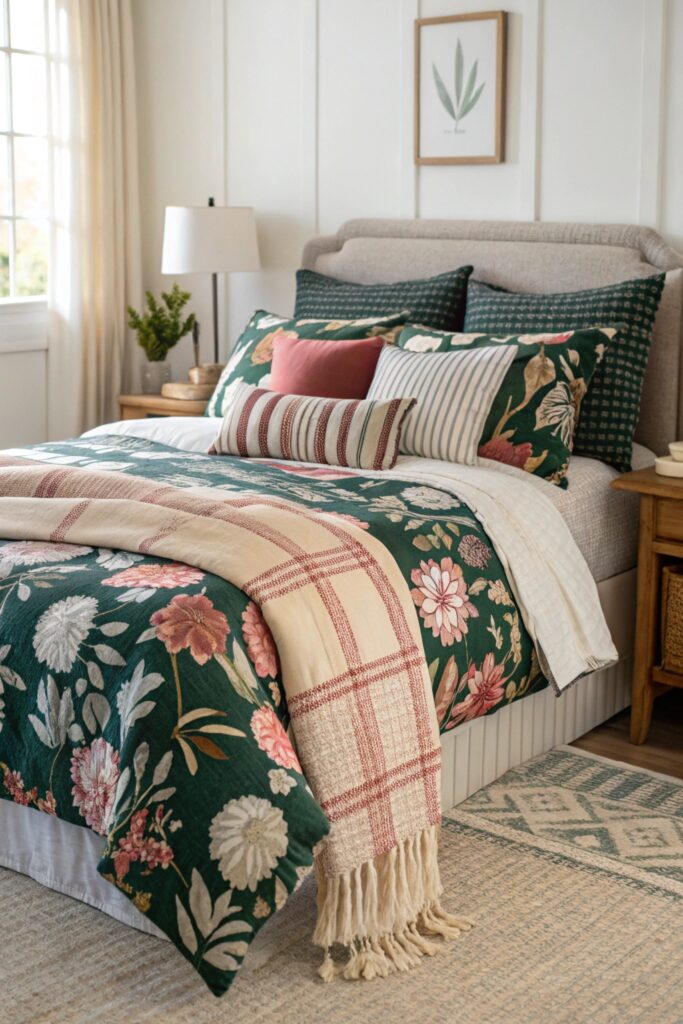
Pattern mixing on a bed terrifies people, and honestly, I get it — the first time I tried it, I was convinced I’d created a disaster. Spoiler: it looked amazing. Mixing a striped duvet with a floral pillow, a geometric throw, and a plaid accent cushion sounds chaotic, but it creates a layered, rich, deeply cozy bed situation that feels intentional and luxurious.
The formula that makes it work every single time:
- Anchor with one dominant pattern on your duvet
- Scale your patterns — mix large, medium, and small prints
- Pull one color that appears in all the patterns, even slightly
- Limit your palette to three colors maximum
Bold florals with thin stripes work. Geometric prints with organic botanical patterns work. What doesn’t work is mixing patterns that share zero colors or scale. Give them something in common, and they’ll get along just fine.
5. Vintage and Modern Clash

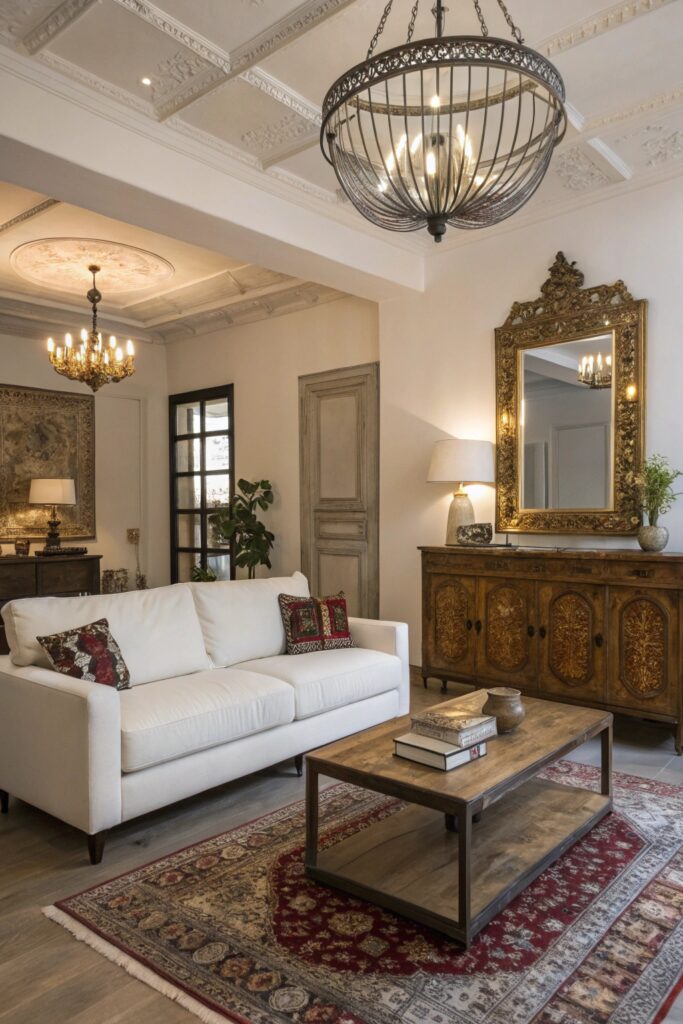
Nothing gives a room more personality than deliberately clashing vintage and modern pieces. A sleek, contemporary sofa next to an ornate antique mirror. A minimal white dining table surrounded by mismatched vintage chairs. Modern pendant lights hanging over a distressed farmhouse sideboard.
This aesthetic works because contrast creates visual interest. When everything is the same era and style, the eye has nowhere interesting to go. When you mix timelines, every piece gets to stand out.
What to mix for maximum impact:
- Vintage lighting with modern furniture
- Antique mirrors in contemporary rooms
- Old rugs under new seating
- Retro accessories on sleek, minimal shelving
The golden rule? Confidence is everything. If you put a piece somewhere and commit to it, it reads as intentional. Second-guessing yourself is what makes things look out of place, not the piece itself.
6. Plant Overload Room

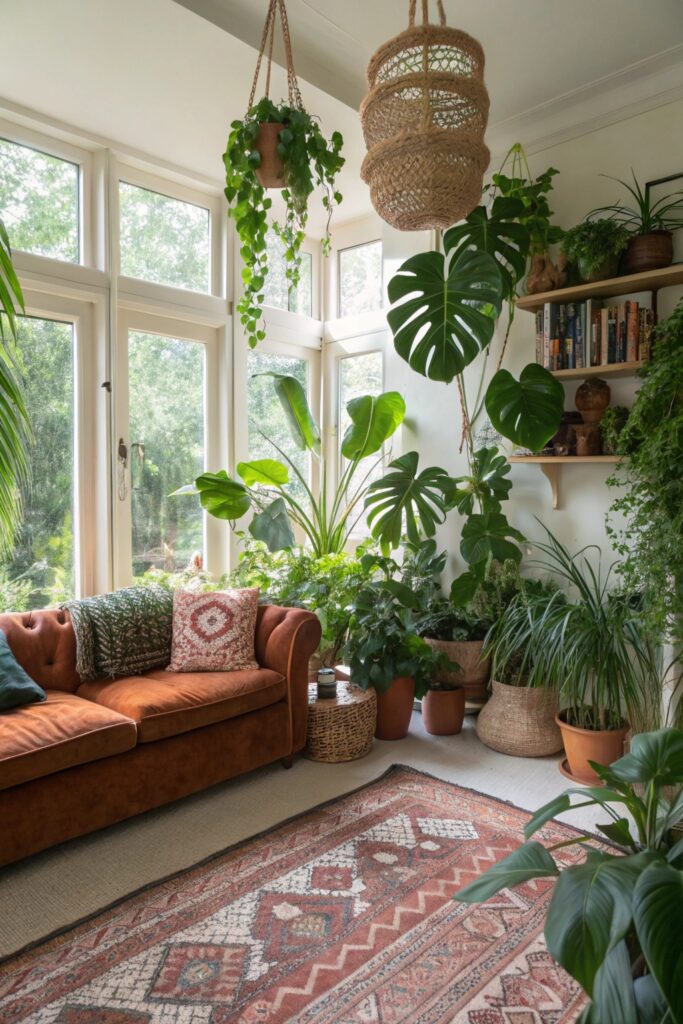
At what point does “a few plants” become a “plant overload room aesthetic”? Honestly, probably around plant number twelve — and that’s exactly where things start to get interesting. Filling a room with plants of wildly different sizes, textures, and heights creates a lush, almost jungle-like atmosphere that feels alive in a way no other decor element can replicate.
The chaotic part isn’t the plants themselves — it’s the mixing of pots, planters, and display methods. Terracotta next to ceramic next to woven baskets. Plants on the floor, on shelves, hanging from the ceiling, trailing off mantles.
Make it work by:
- Varying leaf textures — broad tropical leaves with delicate ferns
- Mixing planter styles — matte, glazed, woven, metal
- Using different display heights — floor, shelf, hanging, tabletop
- Grouping by light needs so they actually survive
A room full of thriving plants always looks intentional, even when it’s beautifully chaotic 🙂
7. Layered Rug Situation

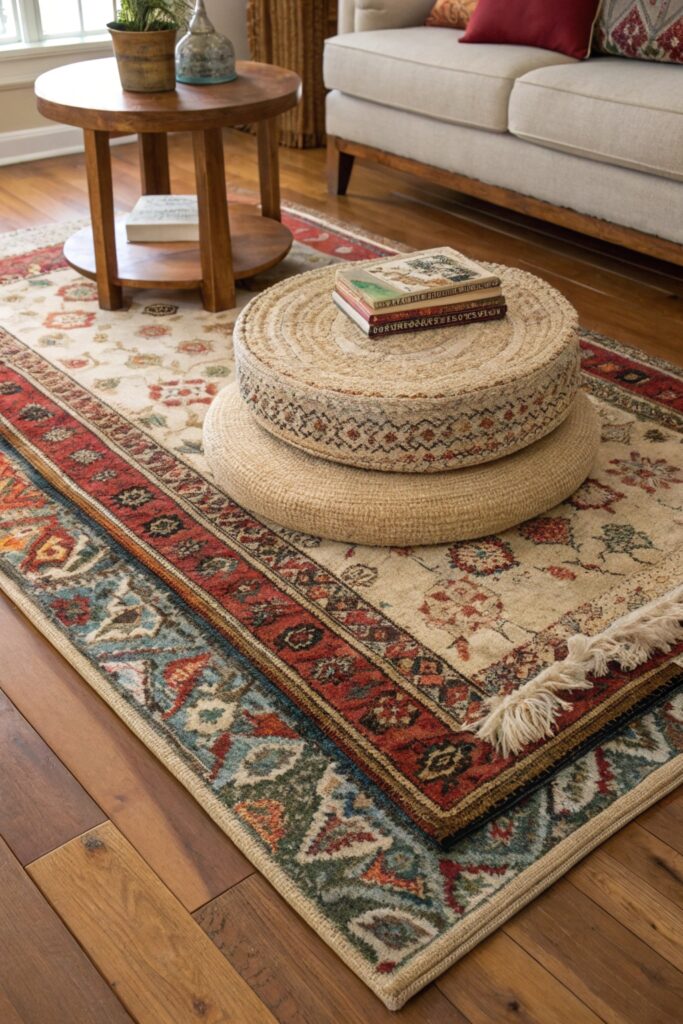
One rug is fine. Two or three rugs layered on top of each other? That’s a chaotic room, an aesthetic power move. Layering rugs adds depth, warmth, and texture to a room in a way that a single rug simply cannot replicate — and it’s one of those tricks that looks like it requires major interior design expertise when it’s actually pretty simple.
The classic formula: a large neutral base rug with a smaller patterned or textured rug layered on top at an angle. Suddenly, you have color, pattern, and dimension working together in one floor moment.
What works for rug layering:
- Jute or sisal as the base — neutral and textural
- Vintage or Persian rugs on top — pattern and color
- Different shapes — rectangular base with a round layer on top
- Similar tones — even if patterns clash, keep the colors related
Don’t overthink the angle. A slight offset looks far more intentional than perfectly centered every time.
8. Maximalist Color Blocking

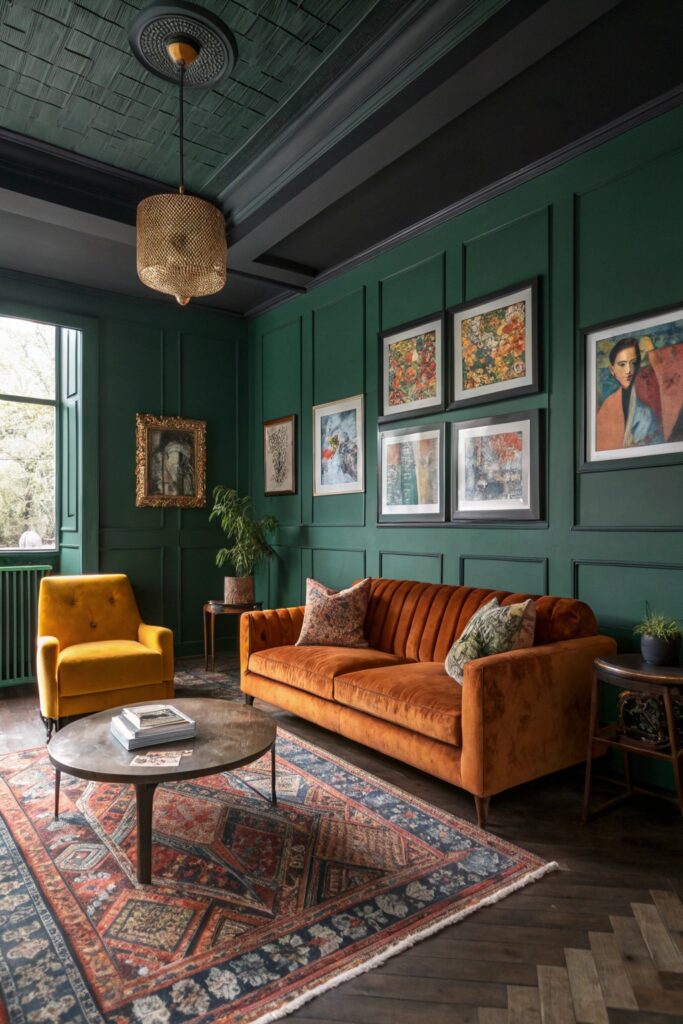
Forget the “one accent wall” advice. Maximalist color blocking goes all in — painting entire rooms in bold, saturated colors, then filling them with furniture and decor in equally bold, sometimes clashing hues. Think a deep forest green room with burnt orange furniture and mustard yellow accents. It sounds intense. It looks extraordinary.
What makes this chaotic aesthetic work is color theory working quietly in the background. Colors that sit opposite each other on the color wheel create tension and energy. Colors adjacent to each other create harmony. You’re essentially using color science to make chaos feel intentional.
Key color blocking combinations that work:
- Terracotta walls + cobalt blue accents
- Forest green + warm mustard
- Deep burgundy + blush pink
- Navy blue + burnt orange
Start with one bold wall color and build your furniture choices around it. Commit fully — half-hearted color blocking just looks confused, not chaotic-chic.
9. Thrifted and Mismatched Dining Chairs
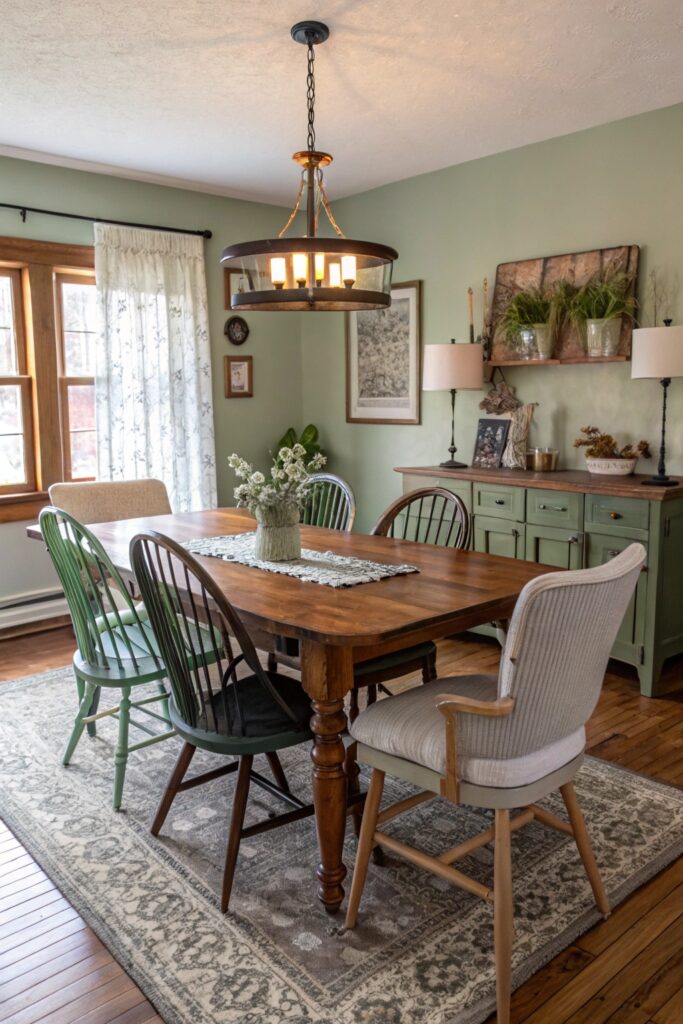
A matching dining set is the safe choice. Six completely different thrifted chairs pulled up to one table? That’s the chaotic dining room aesthetic that people photograph and post online because it’s genuinely that interesting to look at.
Every chair brings its own shape, material, and era to the table — literally. A spindle-back wooden chair next to a velvet upholstered seat next to a metal bistro chair next to a painted vintage find. It’s visually rich and tells a story of someone who collects things they love rather than buying sets.
What ties mismatched chairs together:
- A unified paint color applied to all of them (most popular approach)
- Similar seat cushion fabric across different chair styles
- The same table grounds all the variety beneath it
- Similar heights — the seats should all be roughly level
FYI — this is also one of the most budget-friendly room aesthetics you can create. Thrift stores, estate sales, and Facebook Marketplace are full of individual chairs at a fraction of set pricing.
10. Organized Chaos Desk Setup

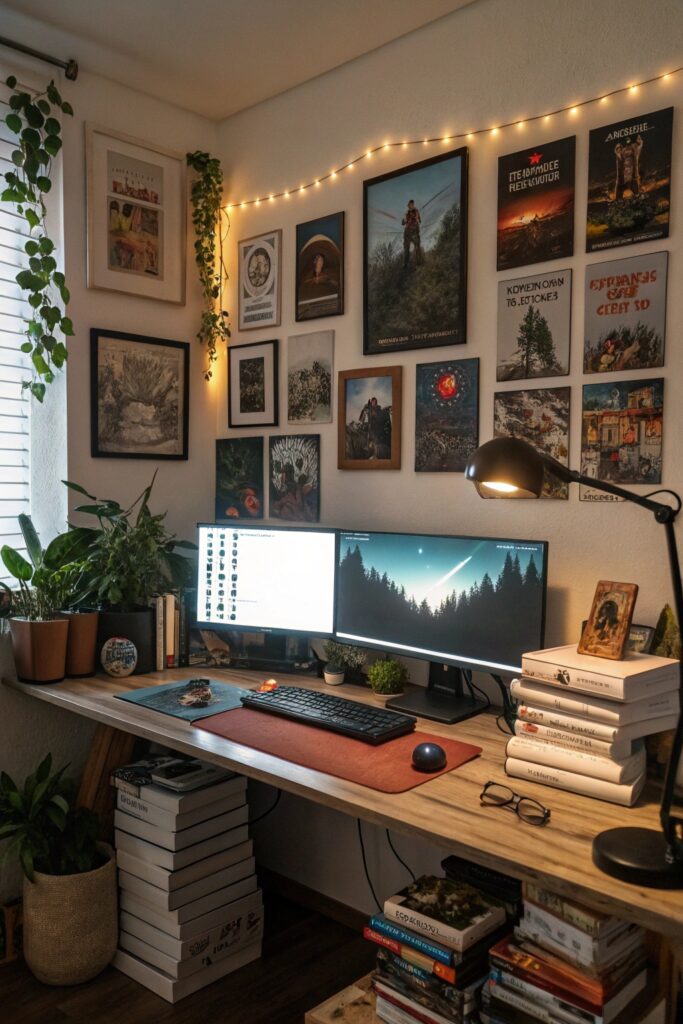
A chaotic desk setup might sound counterproductive, but the organized chaos aesthetic for workspaces is one of the most popular and genuinely functional room styles out there. Multiple monitors, books stacked everywhere, plants tucked into corners, action figures or collectibles lining the shelves, cables only partially managed, art prints covering every inch of wall space behind the desk.
The keyword is organized chaos — everything has a place, even if that place looks messy to an outsider. The person working there knows exactly where everything is, and the environment reflects their personality completely.
Elements of a great chaotic desk setup:
- Layered lighting — monitor glow, desk lamp, LED strips
- Personal collectibles visible on shelves
- Books are stacked both vertically and horizontally
- Plants and organic elements softening the tech-heavy aesthetic
- Art or prints covering the background wall space
The best desk setups feel like an extension of the person sitting there. Make yours feel like you.
11. Dark Academia Clutter Aesthetic

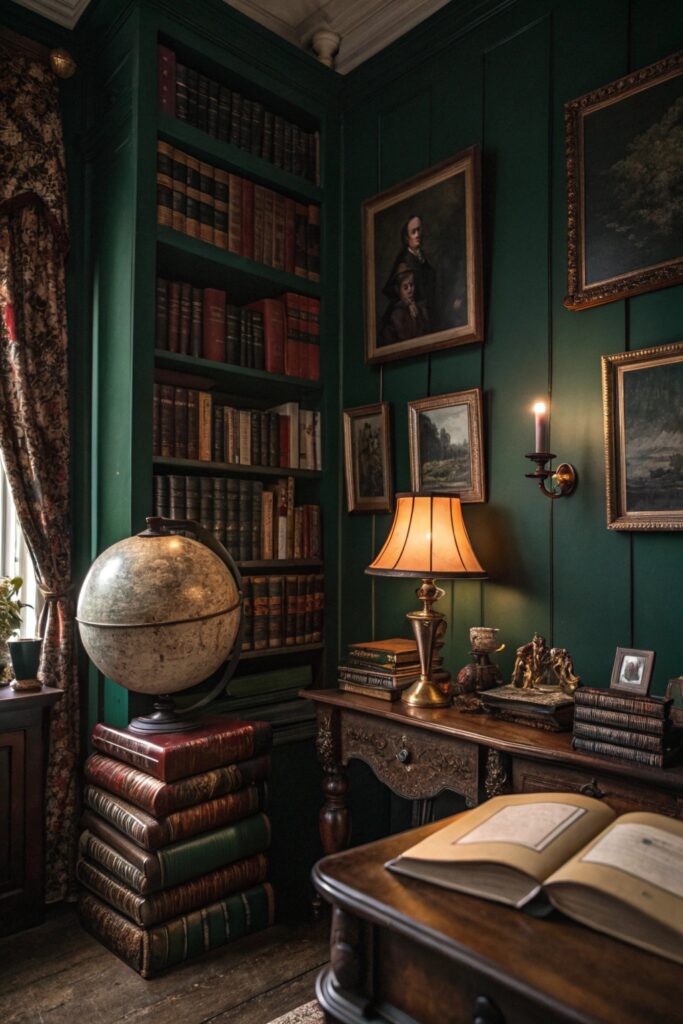
Dark academia clutter might be the most intentionally chaotic room aesthetic on this list — and it’s glorious. Think floor-to-ceiling bookshelves overflowing with books, stacked on every surface, globes and candelabras mixed in, vintage maps and botanical prints on the walls, deep wood tones everywhere, stacked leather journals, and moody atmospheric lighting.
This aesthetic romanticizes intellectual abundance — the idea that a room overflowing with books and knowledge and collected objects is the most beautiful kind of room. And honestly? Hard to argue with that.
Building a dark academia room:
- Books everywhere — overflowing shelves, stacked on floors, on nightstands
- Rich, dark color palette — deep green, burgundy, navy, warm brown
- Vintage objects — globes, magnifying glasses, antique frames
- Candles and warm lighting — nothing fluorescent, ever
- Moody wall art — vintage botanical prints, old maps, classical portraits
The clutter here isn’t accidental — it’s a carefully constructed celebration of curiosity. Every messy stack of books is a deliberate aesthetic choice. Lean into it completely.
Conclusion
Chaotic room aesthetics prove one thing clearly — good design isn’t about following rules, it’s about knowing which rules you’re breaking and why. Every idea on this list looks like disorder on the surface, but underneath it runs a current of intention, personality, and surprisingly solid design thinking.
The real takeaway? Stop waiting for your space to feel “finished” or “perfect.” Fill it with things you love, layer them with confidence, and let the chaos tell your story.
Your room should feel like you walked in and never left — in the best possible way. Now go make some beautiful mess.