
An elegant dining room still needs to function comfortably for actual meals — seat height, chair clearance, table stability — alongside the visual drama, since style without usability undermines the sophisticated feel you’re going for. The details below cover both the design direction and these practical specifics for each idea.
Below are 12 elegant dining room ideas worth considering, with the specifics for each.
1. Go Bold with a Statement Chandelier
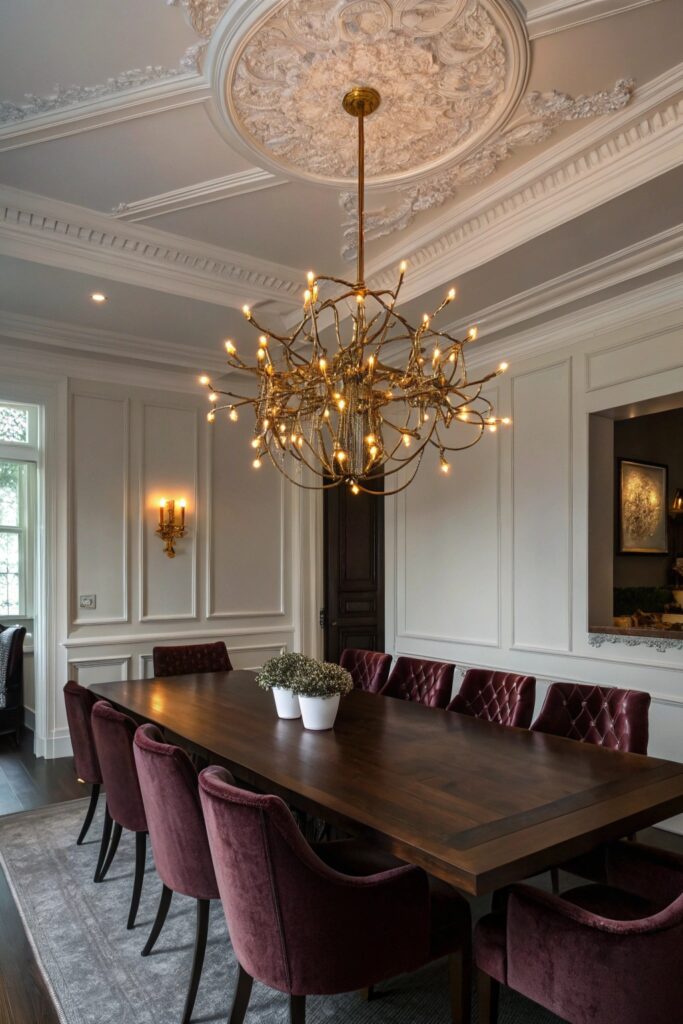
Hang the fixture 30 to 36 inches above the tabletop as a starting point, adjusting for your specific ceiling height, and confirm the ceiling box is rated for the fixture’s actual weight rather than assuming a standard light box will support it.
2. Choose a Dark, Dramatic Wall Color
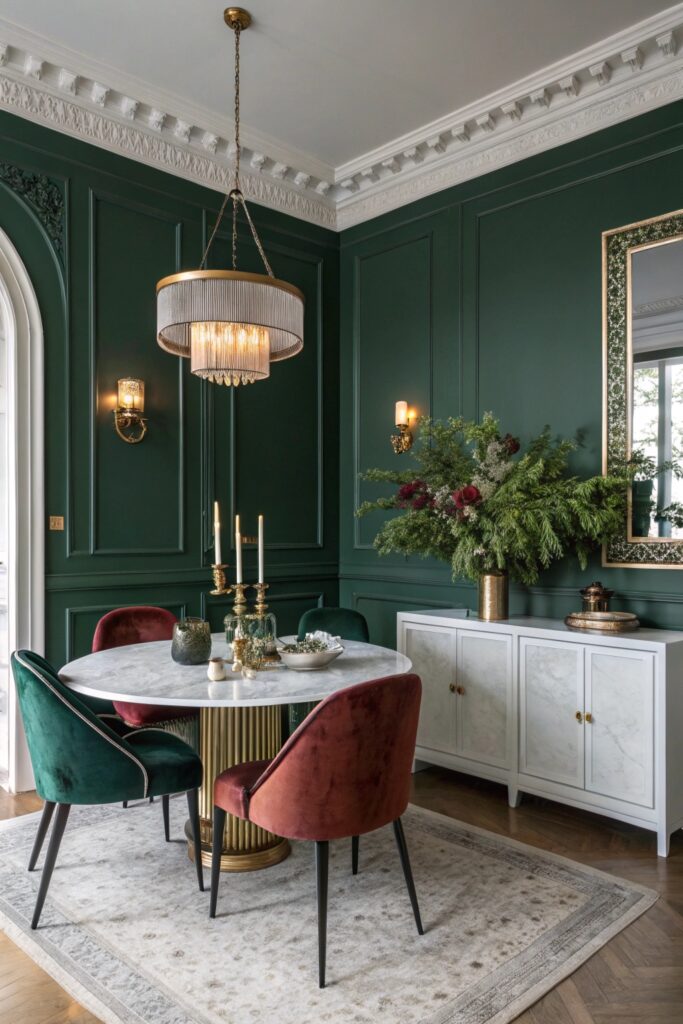
Layer in multiple light sources rather than relying on a single overhead fixture, since a dark dining room lit from only one point can read as gloomy rather than dramatic and inviting.
3. Invest in a Solid Wood Dining Table
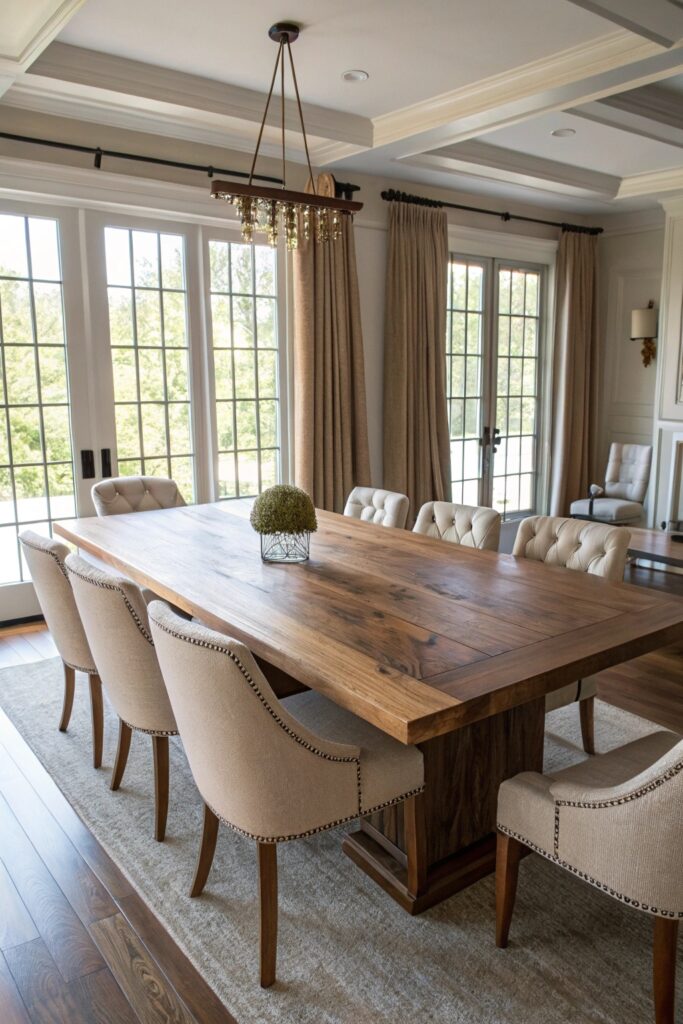
A well-built solid wood table often includes built-in expansion allowance, like breadboard ends, since the wood actually shifts with seasonal humidity, and slightly looser joinery in these spots is intentional construction rather than a flaw.
4. Layer Your Lighting
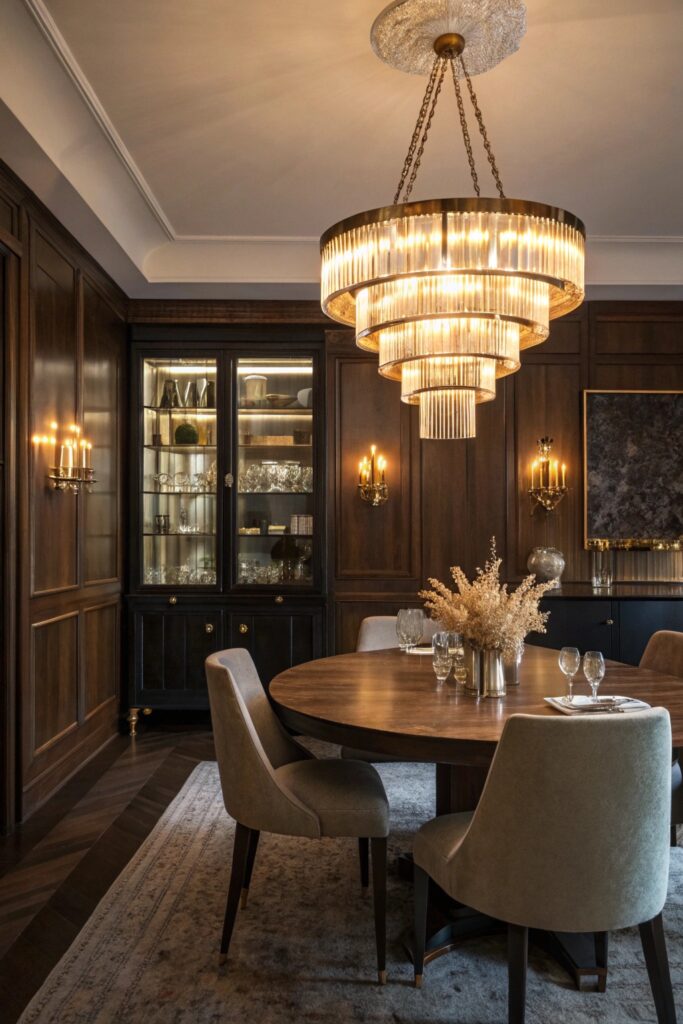
A dimmer on the chandelier paired with wall sconces or accent lighting gives you real flexibility between a bright setting for everyday meals and a lower, more intimate setting for entertaining.
5. Add a Dramatic Area Rug
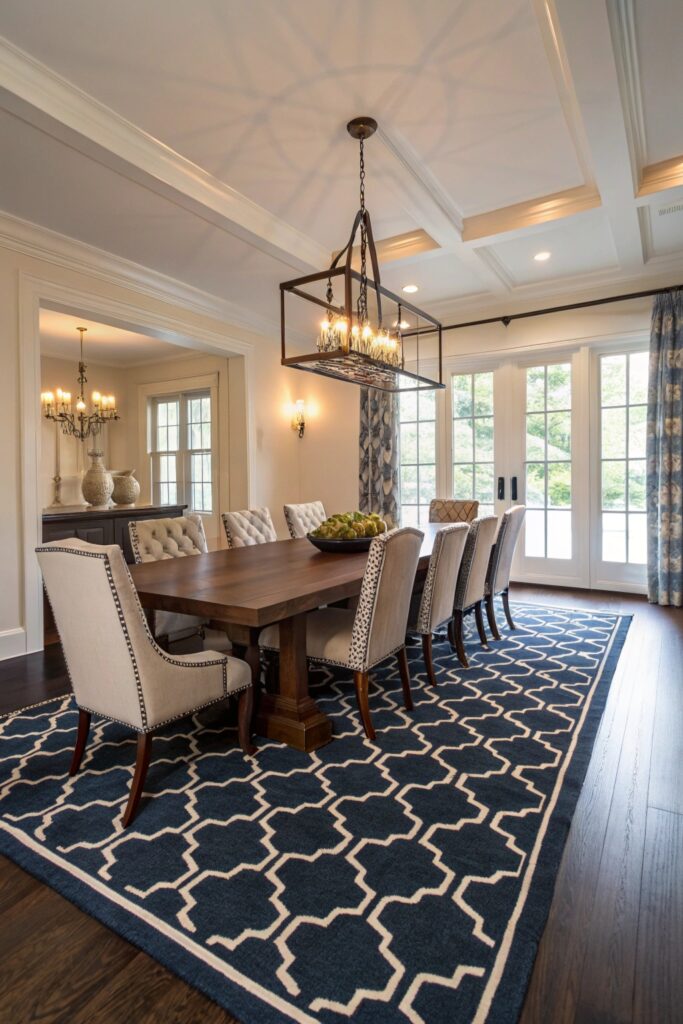
Size the rug so all chairs stay on it even when pulled out, typically 24 to 36 inches beyond the table’s edge on every side, since a rug sized to just the table causes chair legs to catch the rug’s edge during use.
6. Mix Chair Styles Intentionally
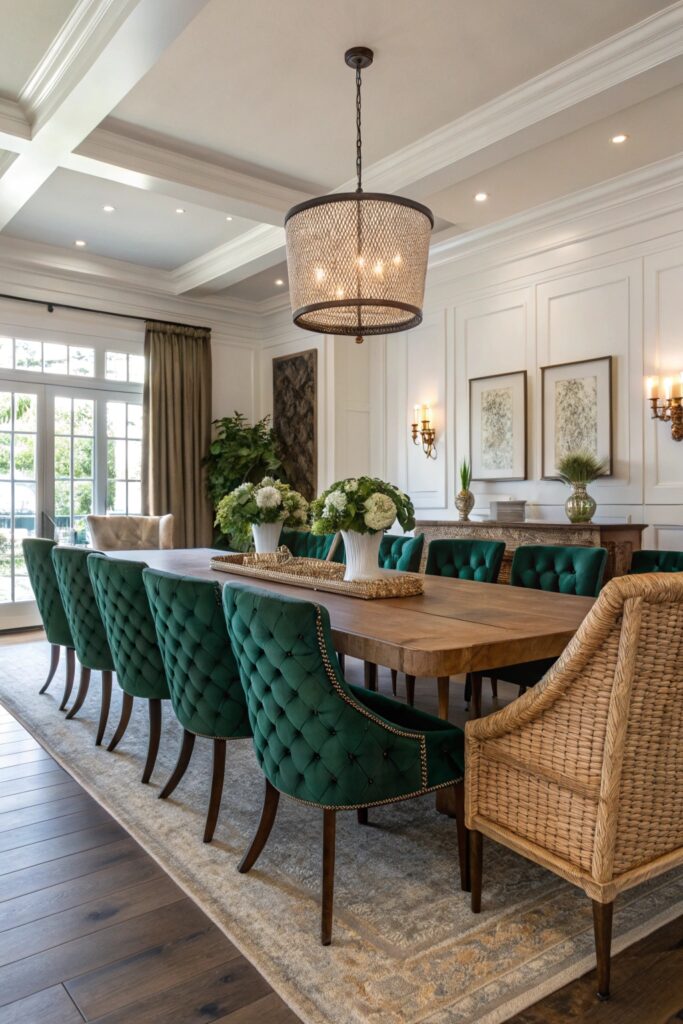
Keep seat heights within about an inch of each other across mismatched chairs, since height differences are more noticeable and disruptive at a shared dining table than in a mixed seating arrangement elsewhere in the house.
7. Hang a Large-Scale Mirror or Artwork
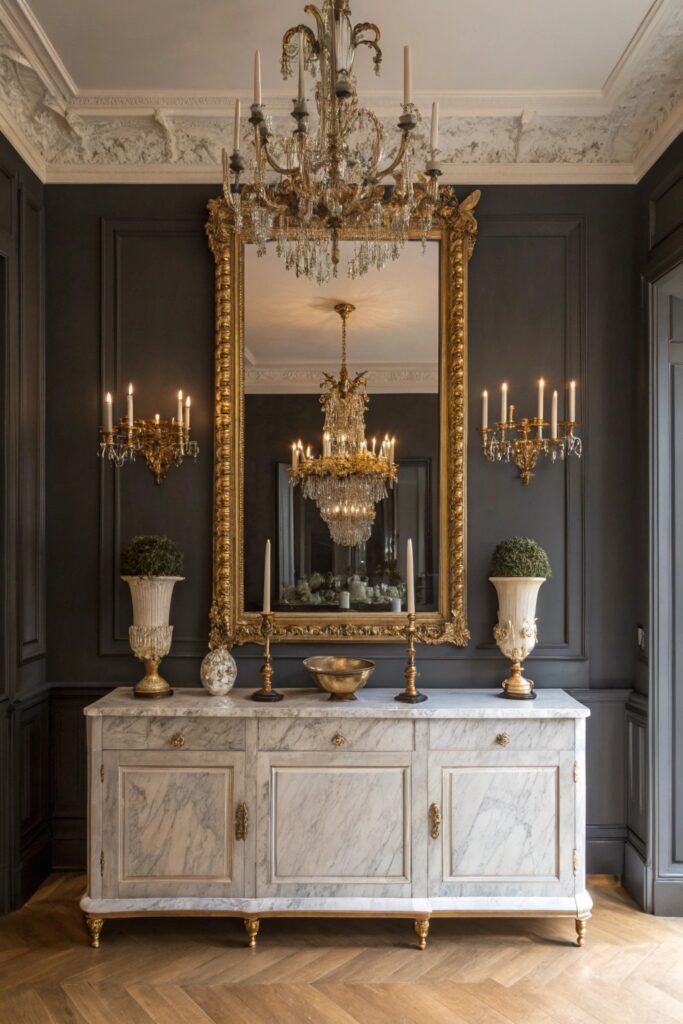
Position a large mirror to reflect the chandelier specifically, doubling the fixture’s visual impact, a more intentional styling choice than simply placing any oversized mirror on the wall.
8. Style a Sideboard or Buffet
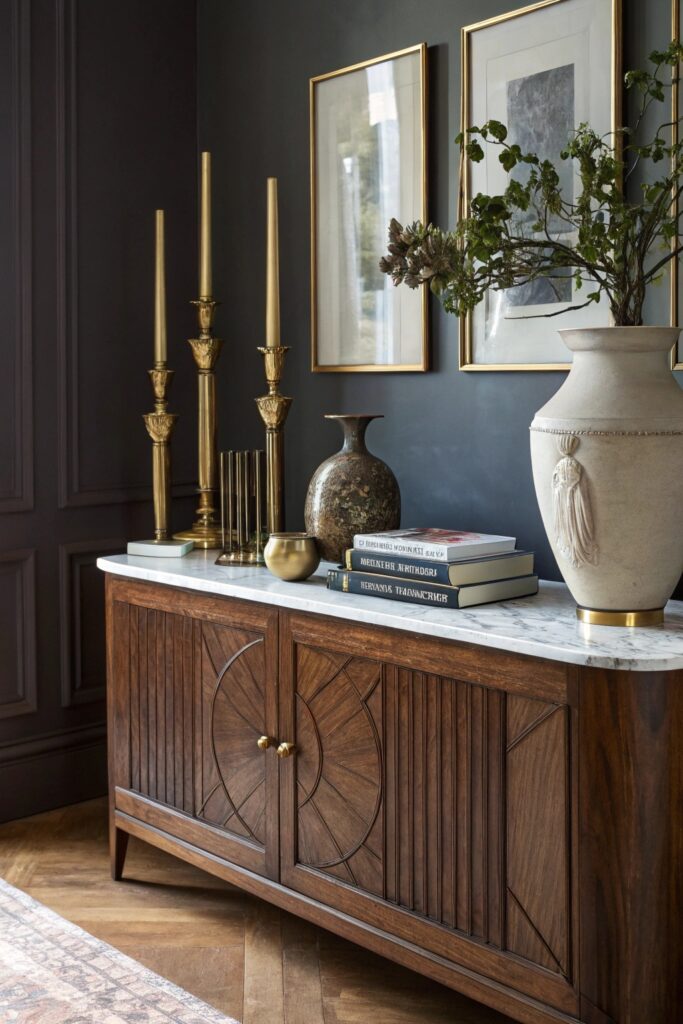
Leave enough clearance in front of the piece for serving during meals, since a beautifully styled sideboard that blocks easy movement around the table works against the room’s actual function.
9. Install Crown Molding and Wainscoting
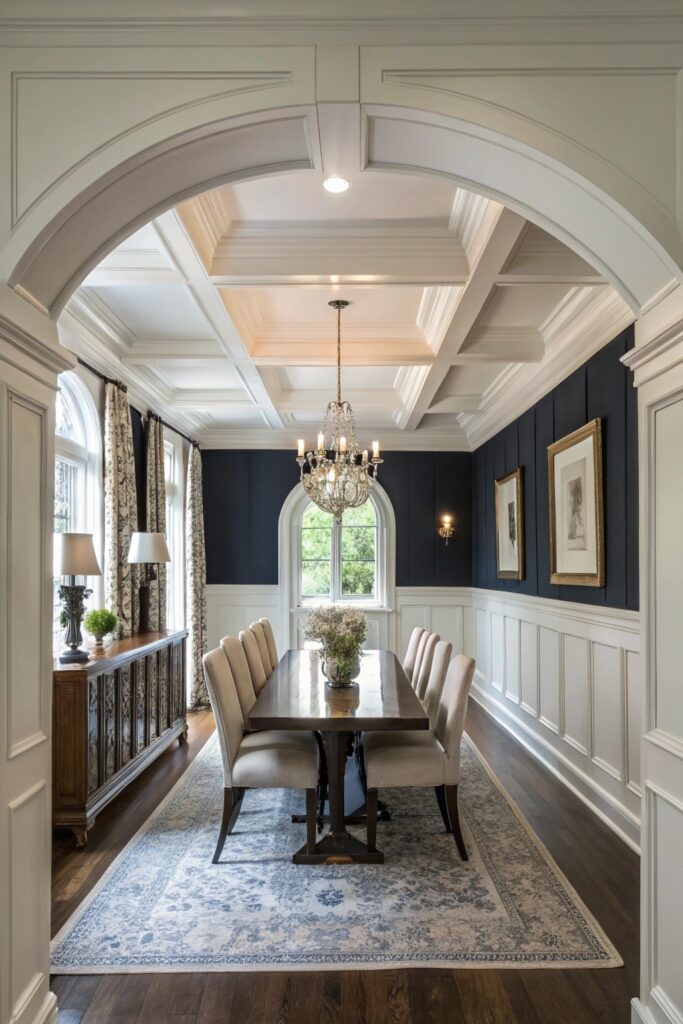
Surface-applied trim work typically doesn’t require a permit, but confirm with your local building department if the installation involves removing existing drywall or any other more invasive step.
10. Dress Your Windows with Floor-Length Drapes
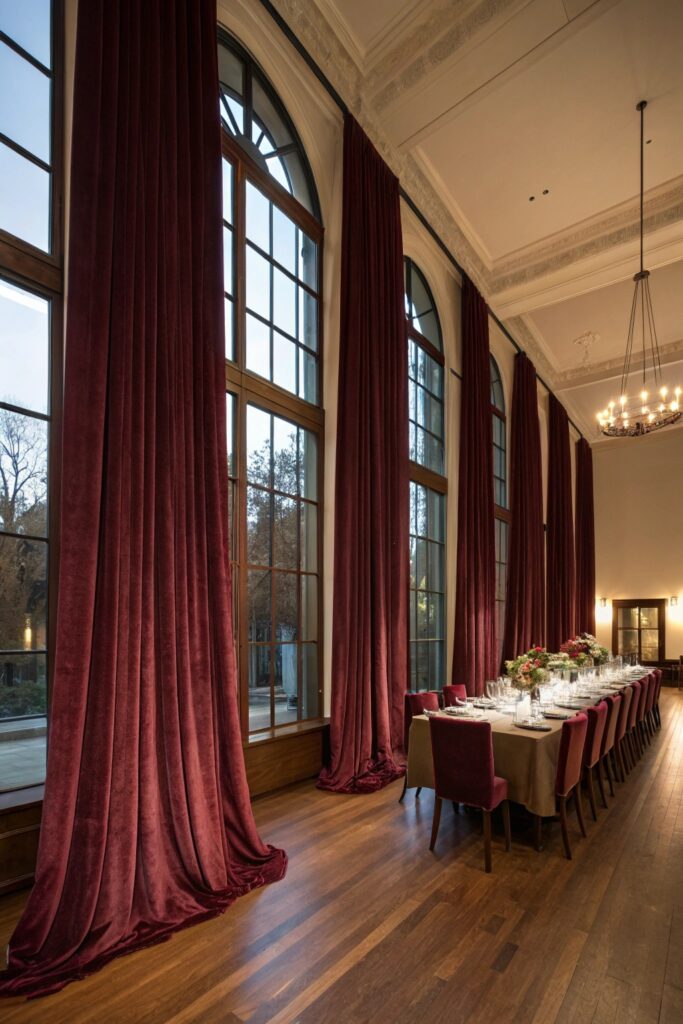
Confirm real clearance between drapes and any overhead fixture they might billow near, and choose washable fabric given how much closer this room’s drapes sit to food and cooking odors than curtains in most other rooms.
11. Incorporate Natural Texture Through a Centerpiece
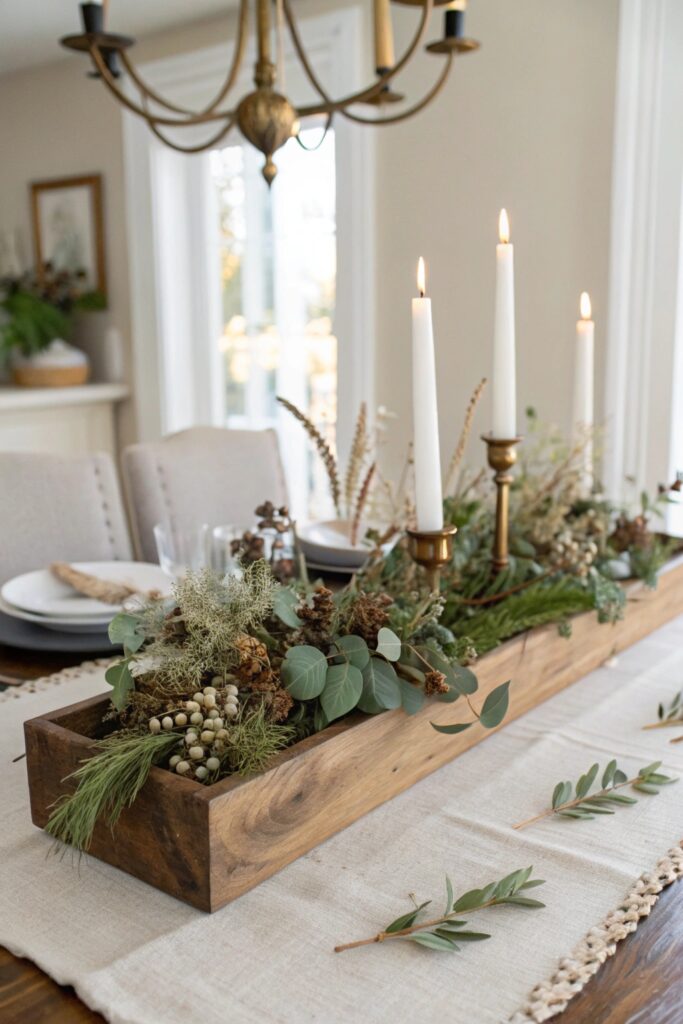
Keep the centerpiece under roughly 12 to 14 inches tall so it doesn’t block sightlines across the table during actual meals and conversation.
12. Use Metallic Accents to Tie the Room Together
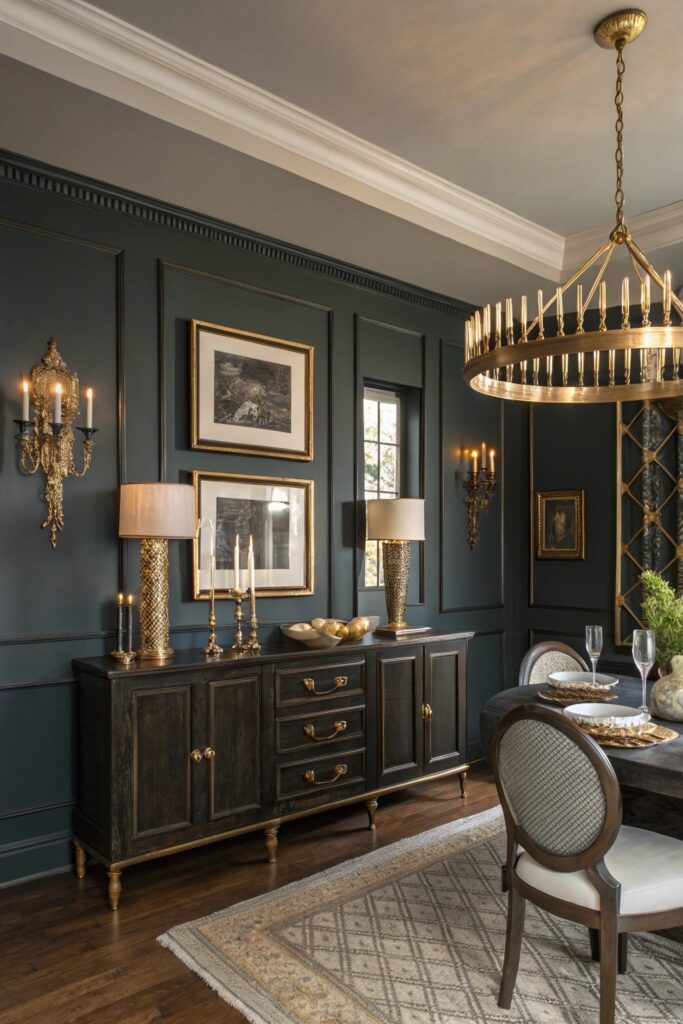
Choose one dominant metal tone with the others used sparingly as accents, rather than splitting evenly between gold, brass, and chrome, which tends to look less intentional than a clear primary choice.
Sizing the Room to the Table
Leave at least 36 inches of clearance between the table’s edge and the nearest wall or furniture piece for comfortable chair movement, more if the space doubles as a walkway during gatherings.
A table that’s too large for the room can undercut the elegant feel you’re going for, since a cramped space reads as impractical regardless of how beautiful the individual pieces are.
What an Elegant Dining Room Costs
A cosmetic refresh using paint, a rug, and updated lighting typically costs $500 to $1,500 depending on material quality.
A fuller renovation including a new table, molding, and custom drapery runs considerably higher, often $5,000 to $15,000 or more depending on the scope.
Coordinating With Adjacent Rooms
A dining room that connects visually to a kitchen or living room benefits from at least loose color or material coordination with those spaces, since an abrupt style shift between open, adjoining rooms can feel jarring rather than intentional.
Pulling one or two elements, like a metal finish or a wood tone, through from an adjacent room helps tie an elegant dining room into the rest of the home without requiring every room to match exactly.
Sound and Acoustics in a Formal Room
A room full of hard surfaces — a wood table, wood or tile floors, minimal soft furnishings — echoes more than a softer space, which can make dinner conversation feel oddly loud or hard to follow with a full table of guests.
A rug, floor-length drapes, and upholstered chair seats all help absorb sound, so an elegant dining room built entirely around hard, reflective materials is worth balancing with at least a few soft elements for practical comfort during actual gatherings.
Getting quotes from at least two or three contractors before starting a larger project, like custom molding or an electrical upgrade for a heavier chandelier, helps confirm both pricing and their specific experience with formal dining room installations.
Living with a smaller version of the look first, like updating just the lighting and a rug before committing to a full wall treatment or new table, gives you a real sense of whether the direction suits your household before making a larger investment.
An elegant dining room done well tends to age gracefully compared to more trend-driven design choices, since classic elements like a solid wood table, layered lighting, and quality drapery hold their appeal well beyond a single season or design trend.
Whichever combination of these ideas fits your space and budget, an elegant dining room built around both real function and genuine visual drama tends to become a room your household actually wants to gather in, rather than a formal space reserved only for rare occasions.
A little planning around the room’s real dimensions and daily use goes a long way toward that goal.
The results are worth it.
The Bottom Line on Elegant Dining Rooms
Sitting at the table for an actual meal before finalizing every design decision reveals problems no amount of visual planning catches, like a centerpiece blocking conversation or a rug that snags chair legs during regular use.
Whichever combination of these ideas fits your space, prioritizing real comfort and function alongside the drama tends to produce a room that feels truly elegant rather than one that only photographs well.