
A powder room’s small footprint and occasional use make it one of the few rooms in a home where a truly bold design choice comes with very little downside, since there’s no shower or tub to work around and the space itself limits both material cost and visual risk. The details below cover the practical side of each idea alongside the styling direction.
Below are 11 approaches worth considering, with the specifics for each.
Working with a truly tiny footprint specifically? See our companion guide to tiny powder room ideas.
This guide focuses on design and style choices for a small powder room. If you’re working with a full bathroom and want storage-focused solutions instead, see our companion guide to small bathroom storage ideas.
1. Go Bold with Statement Wallpaper
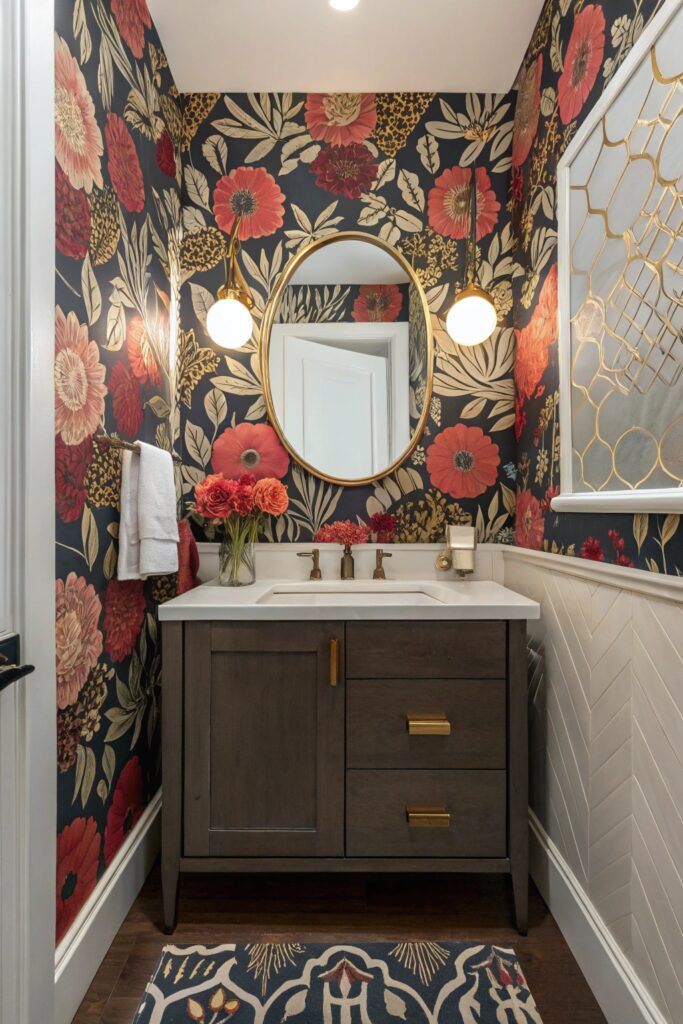
A small, enclosed room like a powder room is arguably the best place in a home to try a bold wallpaper pattern, since the limited square footage keeps the visual impact contained rather than overwhelming an entire living space. Powder rooms also run less humid than a full bathroom with a shower or tub, so standard paper wallpaper holds up better here than it would in a wetter bathroom environment.
2. Install a Floating Vanity
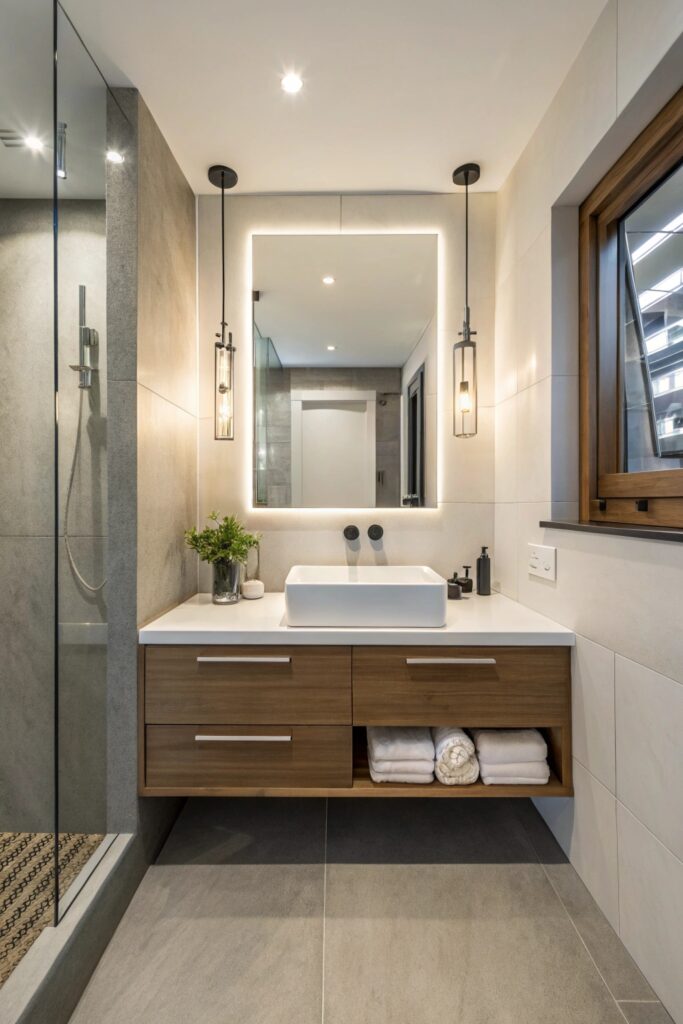
A wall-mounted vanity leaves more visible floor space than a floor-standing cabinet, which makes a small room read larger even though the actual square footage hasn’t changed. It needs proper blocking behind the wall to support the mounting bracket’s weight — a simple drywall anchor isn’t sufficient for a vanity holding both its own weight and everything stored inside it.
3. Use a Large Mirror (Yes, Really)
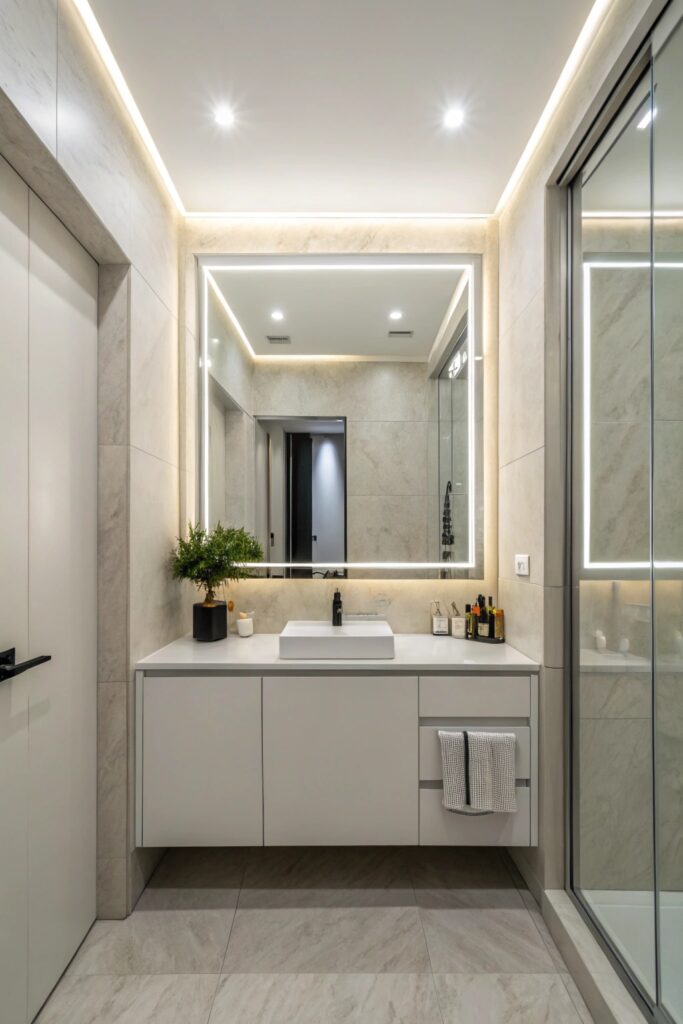
An oversized mirror, sized close to the vanity’s full width or slightly larger, does more to make a tiny room feel bigger than almost any other single change, since it visually doubles the depth of whatever it reflects.
4. Add Dramatic Lighting Fixtures
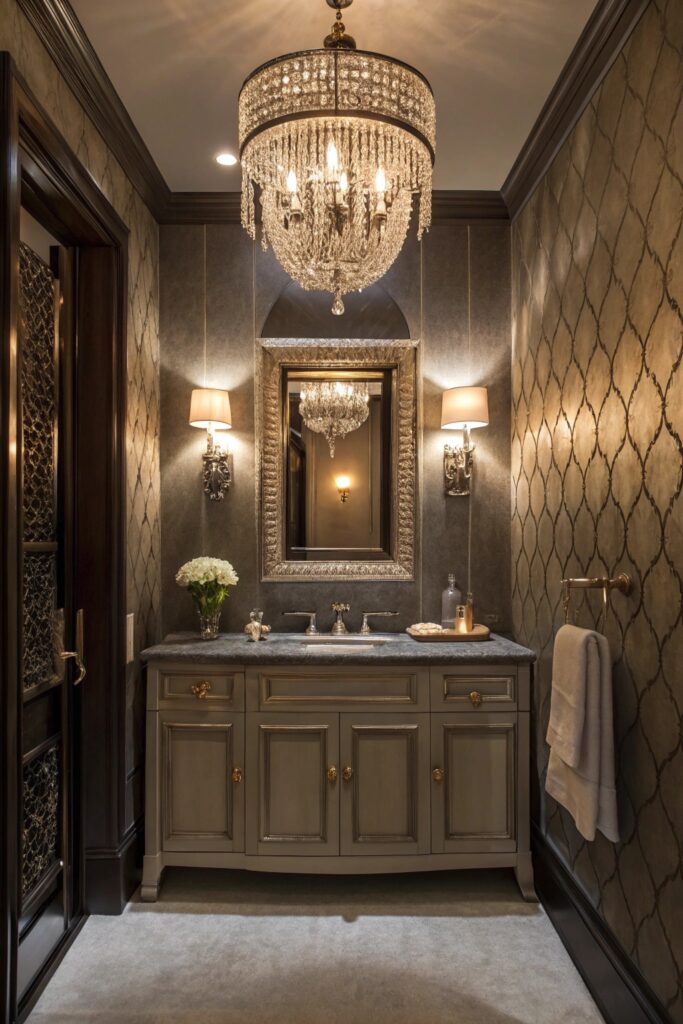
Wall sconces flanking the mirror typically sit 60 to 65 inches from the floor, roughly eye level for most adults. If you’re using a single statement pendant instead, keep at least 78 inches of clearance from the floor to the bottom of the fixture so it doesn’t brush against taller guests’ heads in a small space.
5. Try Dark and Moody Colors
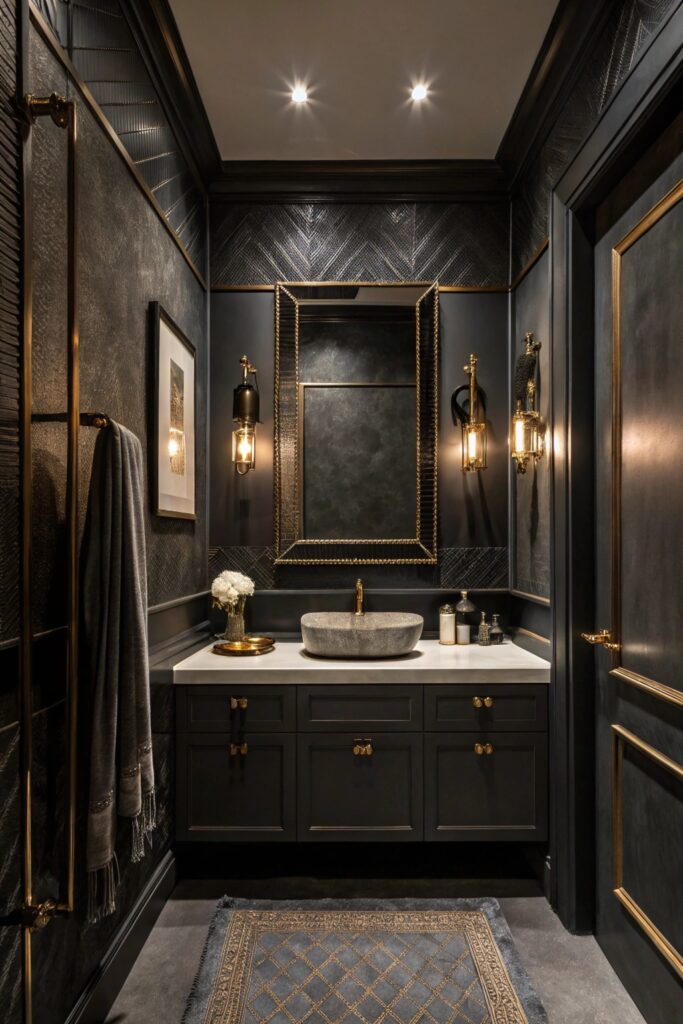
A powder room is one of the few rooms where going dark doesn’t carry the same downside it would in a larger, more frequently used space — since there’s no real need to maximize a sense of openness in a room used briefly and occasionally, a saturated, dramatic color can work well here specifically.
6. Incorporate Open Shelving
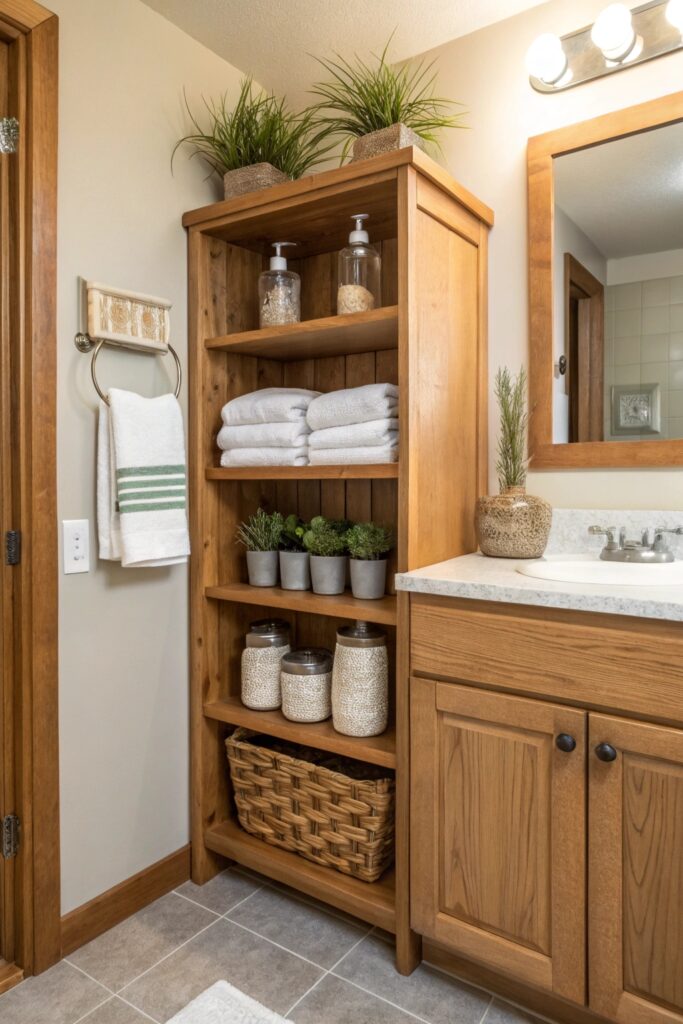
Keep displayed items intentionally lightweight and decorative — rolled hand towels, a small plant, soap — rather than heavier storage, since powder room shelving is meant to be seen rather than to hold significant weight the way a family bathroom’s storage would.
7. Use Statement Tiles
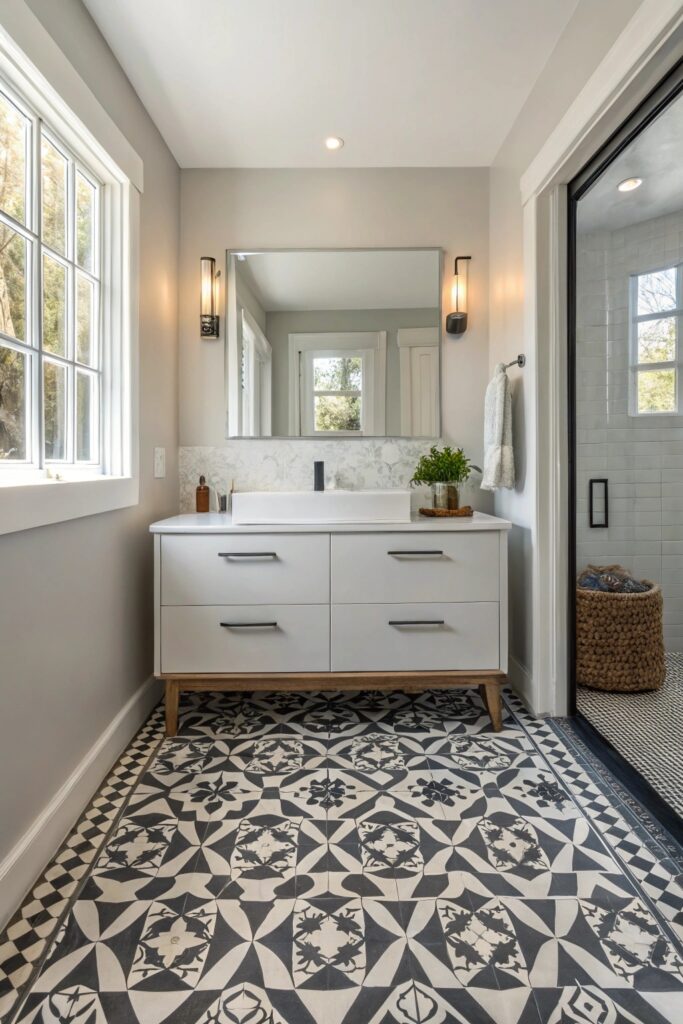
A bold tile pattern on the floor or as an accent wall is a lower-commitment way to try a look that might feel like too much in a larger room, since the small footprint limits both the material cost and the visual scale of the pattern.
8. Add a Touch of Nature
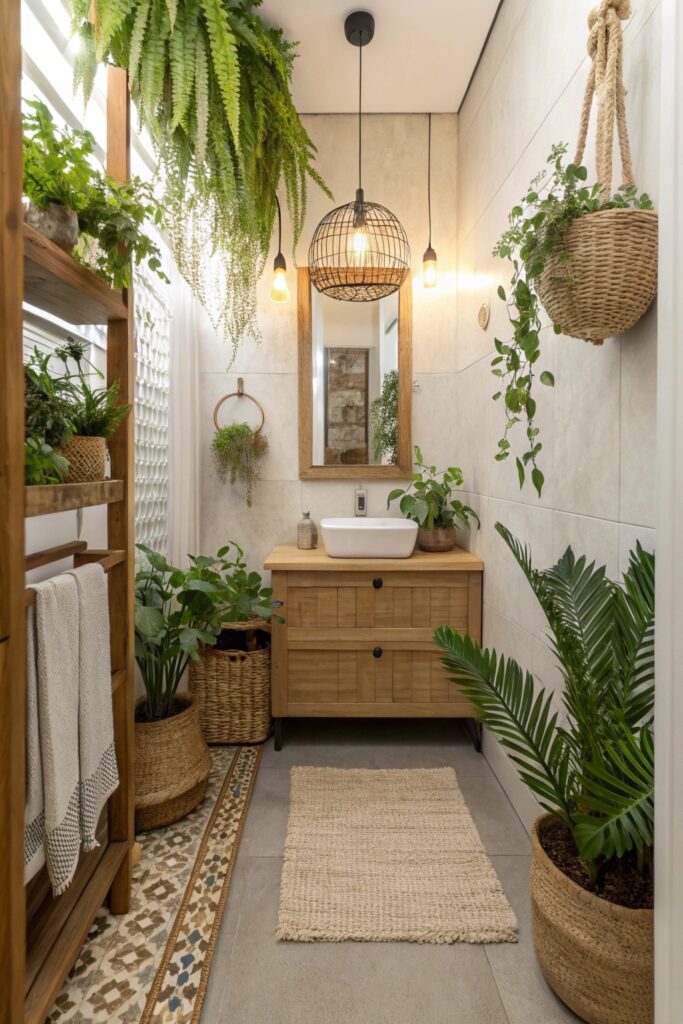
Choose plants that tolerate lower indirect light specifically, since many powder rooms are interior spaces without much natural window light — a small pothos or similar low-light variety holds up better here than most flowering plants would.
9. Upgrade Your Hardware
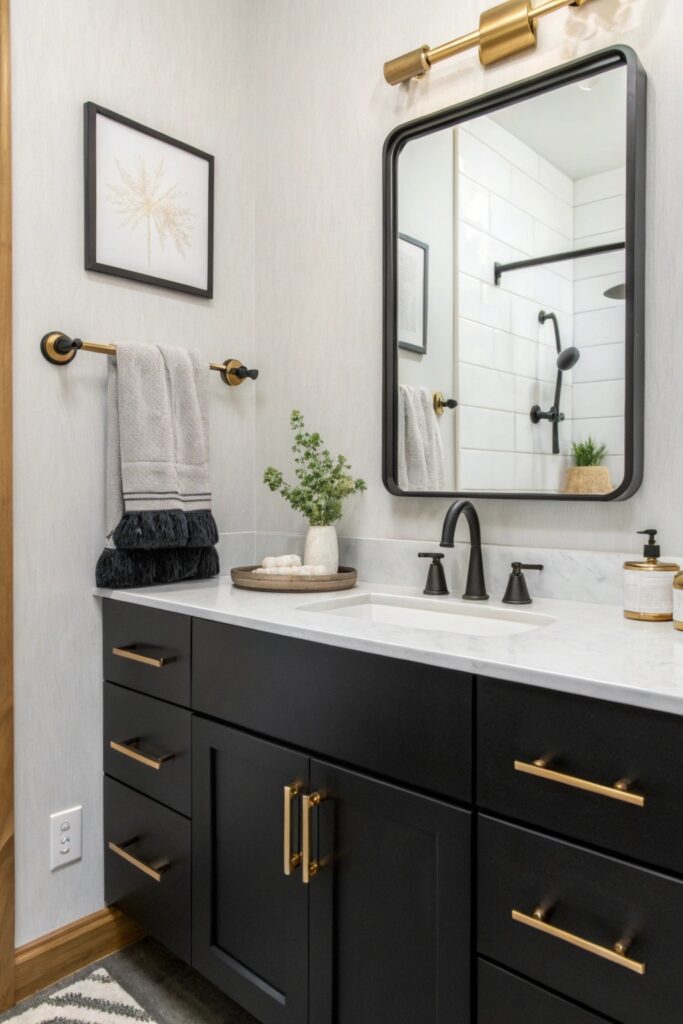
Swapping cabinet pulls and the faucet finish is one of the least expensive, highest-impact updates available for this size of room, since there’s relatively little hardware to replace compared to a full bathroom or kitchen, making a real finish upgrade affordable even on a small budget.
10. Install a Unique Sink
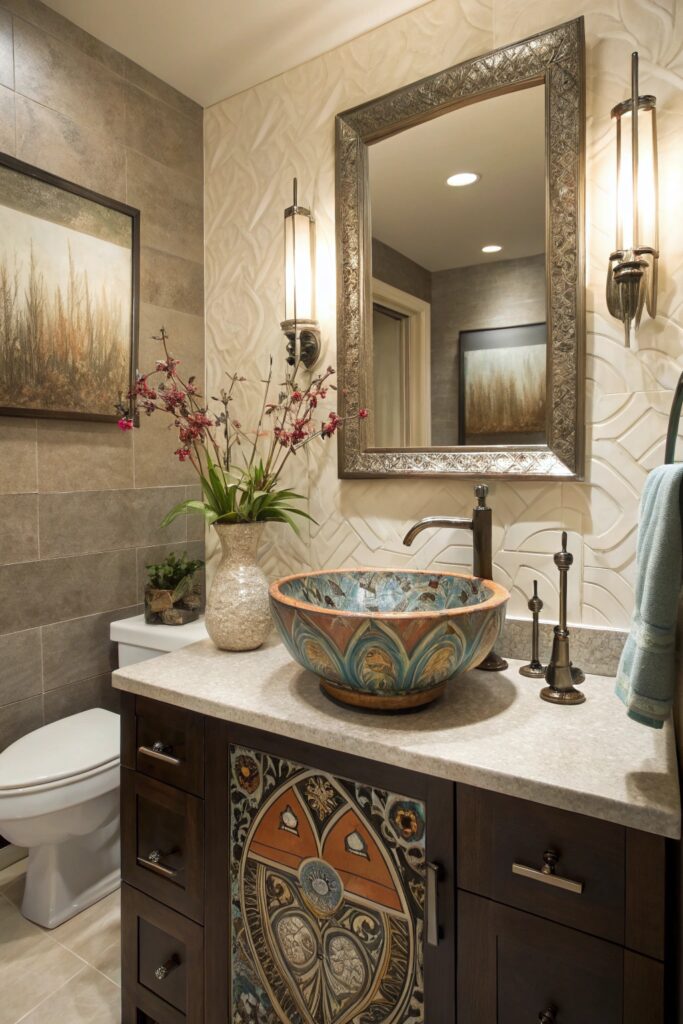
Vessel sinks sit noticeably higher than a standard drop-in or undermount sink, so the vanity height and faucet reach both need adjusting to compensate — a standard-height faucet often sits too low once a vessel bowl is added on top. A pedestal sink takes up less visual space than a full vanity but sacrifices the storage a vanity would otherwise provide, a real trade-off worth weighing for a room this size.
11. Keep It Minimal but Intentional
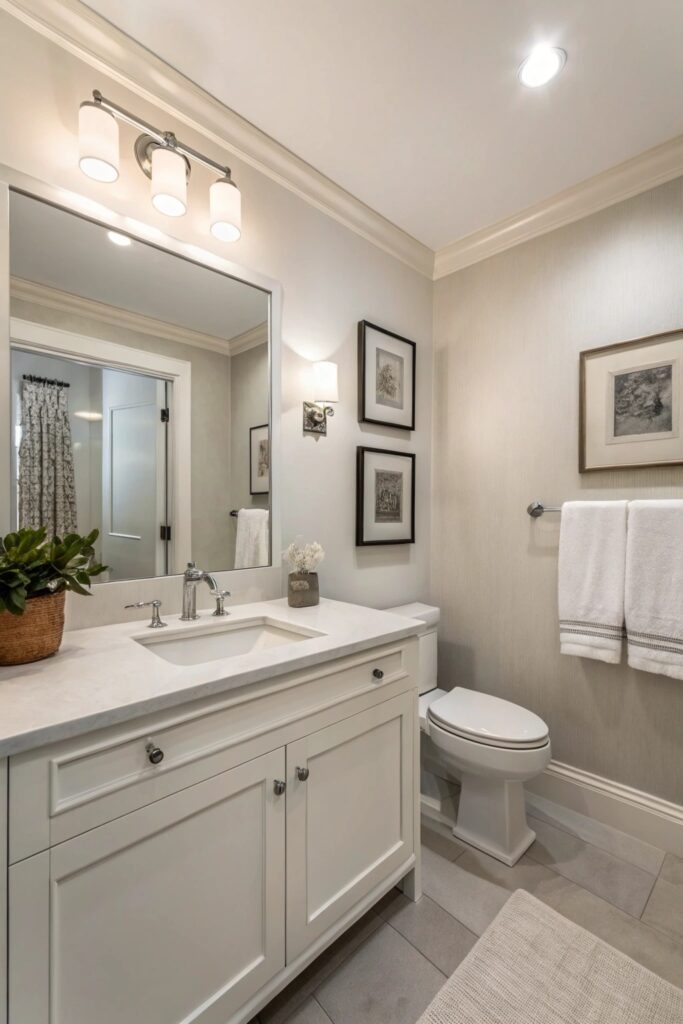
Since a powder room is typically seen only briefly by guests, a few carefully chosen elements — one great fixture, one considered color choice — tend to leave more of an impression than many smaller decorative touches competing for attention in a limited space.
Ventilation Still Matters Without a Shower
Even without a shower or tub generating steam, a powder room still needs functioning ventilation — an exhaust fan rated appropriately for the room’s square footage helps manage odor and any residual moisture from sink use, and it’s a code requirement in many jurisdictions even for a half bath.
If the room lacks a window, confirming the exhaust fan vents to the exterior rather than just into an attic space is worth checking, since venting into an enclosed attic can contribute to moisture problems in that space over time.
What a Powder Room Update Costs
Cosmetic updates — paint or wallpaper, new hardware, updated lighting — typically cost $300 to $1,000 depending on material quality.
A fuller renovation including a new vanity, sink, and flooring runs considerably higher, often $2,000 to $6,000, though this is still generally less than a full bathroom remodel given the smaller footprint and simpler plumbing involved.
Since guests are often the primary users of a powder room, keeping a few practical basics stocked and easy to find — hand soap, a clean towel or disposable options, and functioning lighting — matters just as much as the design choices covered here, even though it’s easy to focus entirely on the visual side of a renovation and overlook these small daily details.
A powder room’s location near the main living areas of a home means it’s often the room guests see most, sometimes more than the primary bathroom, which is part of why a thoughtful update here can have an outsized effect on how the whole home feels to visitors relative to the size and cost of the project itself.
This Is the Room to Take a Design Risk
Because a powder room is small, infrequently used, and relatively inexpensive to update compared to a full bathroom, it’s arguably one of the better places in a home to try a bold wallpaper, a dramatic color, or a statement fixture you might hesitate to commit to elsewhere. If it doesn’t work out, the cost and effort to change it again are considerably lower than they’d be in a larger, more heavily used space.
That said, the practical details still matter even in a small room — proper vanity mounting, adequate lighting clearance, and choosing materials suited to the room’s actual humidity level all affect how well the finished result holds up over time, regardless of how bold or restrained the design choice itself turns out to be.