
A well-executed wet room depends more on proper waterproofing and drainage than any single design choice, since these fundamentals determine whether the space actually holds up long-term.
Below are 13 wet room styles worth considering, with practical notes for each. This kind of renovation genuinely requires a licensed professional for waterproofing and plumbing work.
1. Floor-to-Ceiling Marble Tile
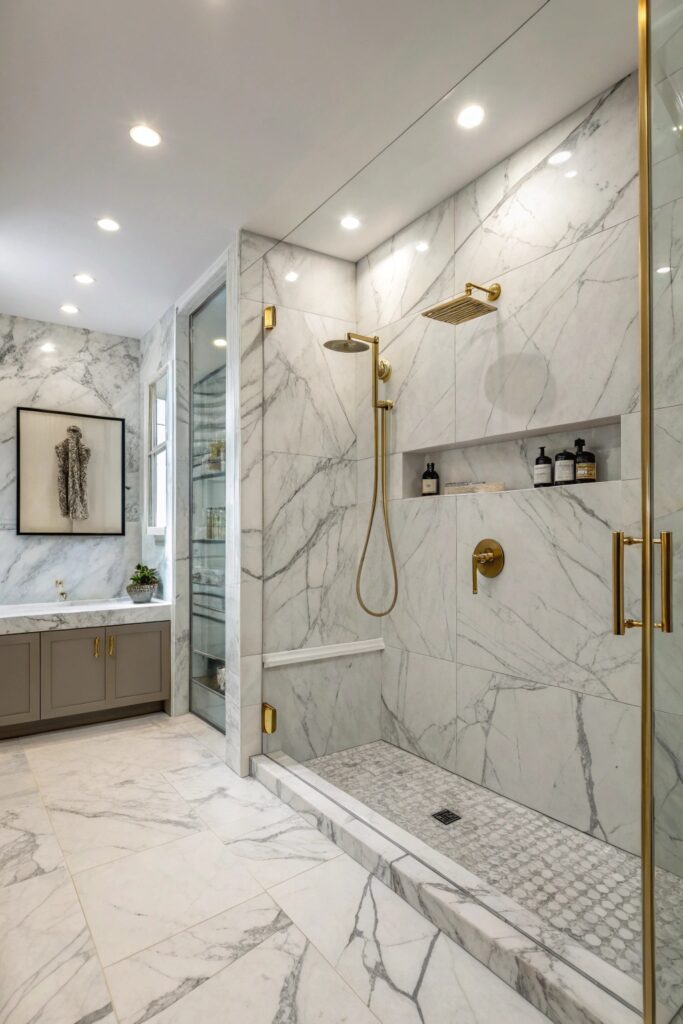
Proper waterproofing beneath the tile matters more here than in a standard bathroom, since a wet room’s entire floor sees direct water exposure.
Choose honed rather than polished marble for the floor specifically, since a matte finish offers better slip resistance than a glossy one.
2. Rainfall Shower Head with Body Jets
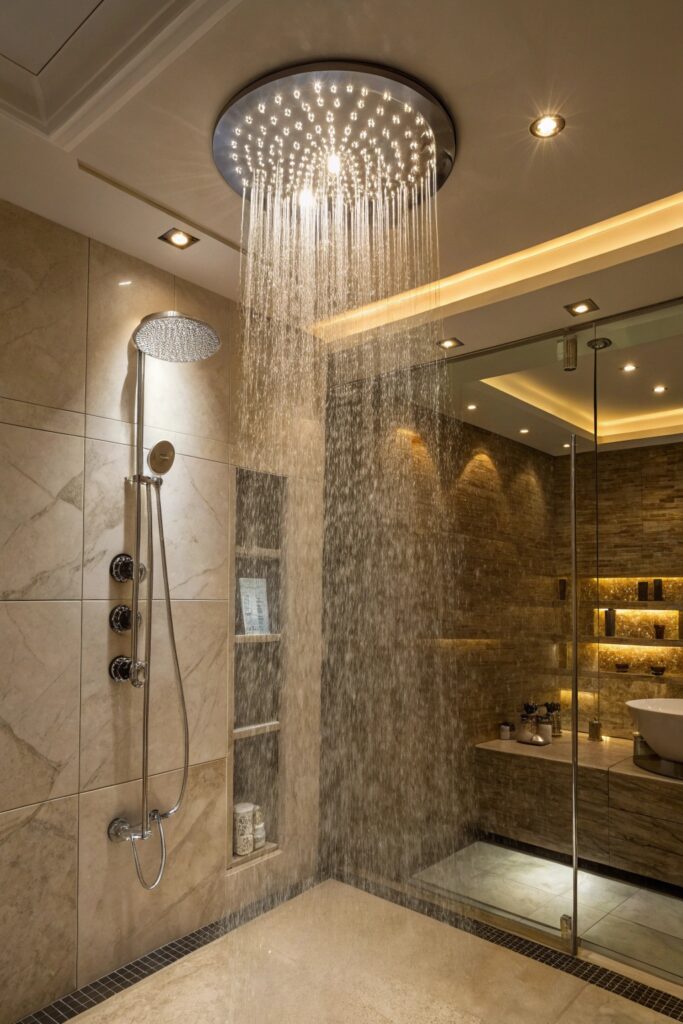
Confirm your water pressure and heater capacity can support multiple simultaneous fixtures before committing to this setup.
Choose thermostatic valves for this setup, which let you preset water temperature and avoid sudden shifts when multiple fixtures run at once.
3. Freestanding Bathtub Inside the Wet Room
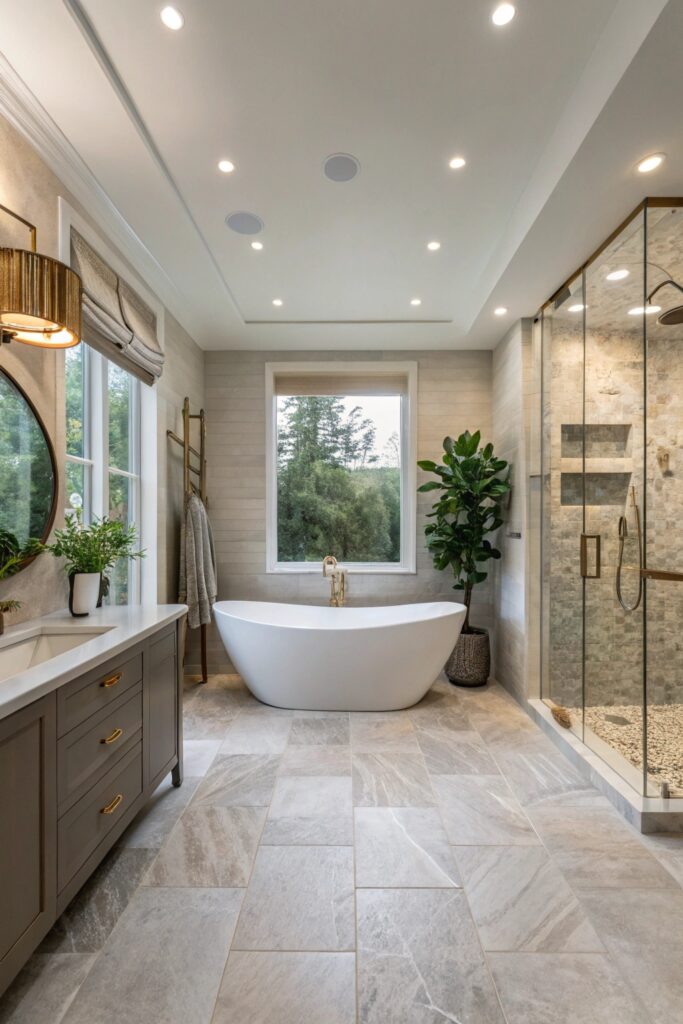
Positioning the tub away from direct shower spray, even within an open wet room layout, keeps bath water cleaner and the tub easier to maintain.
Choose freestanding tub materials rated for constant moisture exposure, like cast iron or solid surface, over materials less suited to this environment.
4. Seamless Glass Panel Enclosure
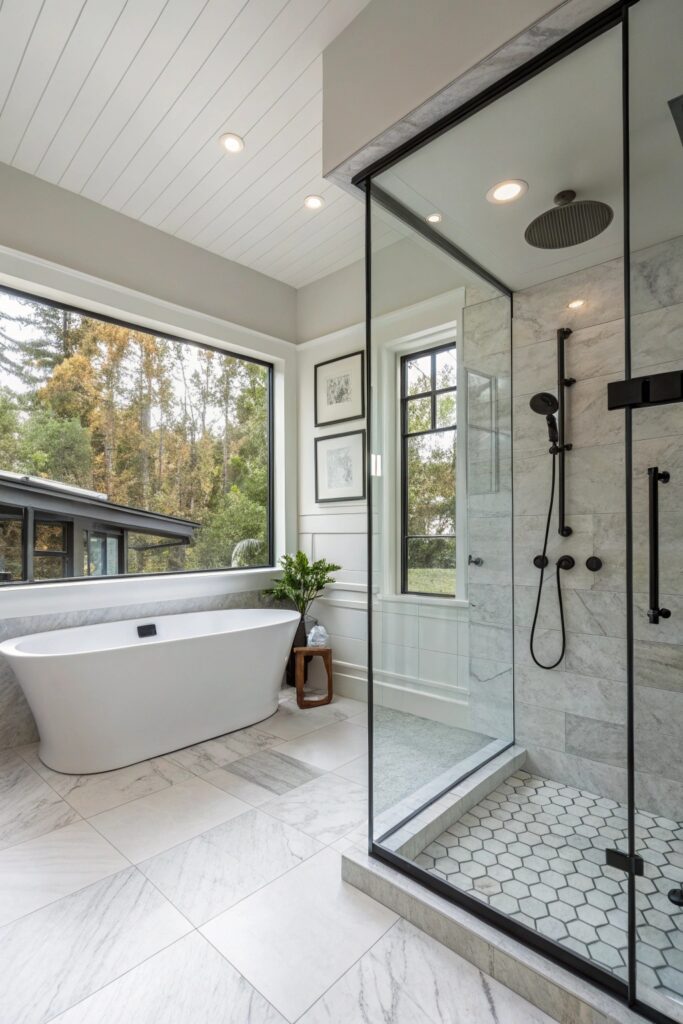
A fixed glass panel, rather than a full enclosure, partially contains water while preserving the open, spa-like feel central to this design.
Choose tempered safety glass specifically, which is both a common code requirement and a practical safety consideration in a wet, slippery space.
5. Natural Stone and Pebble Flooring
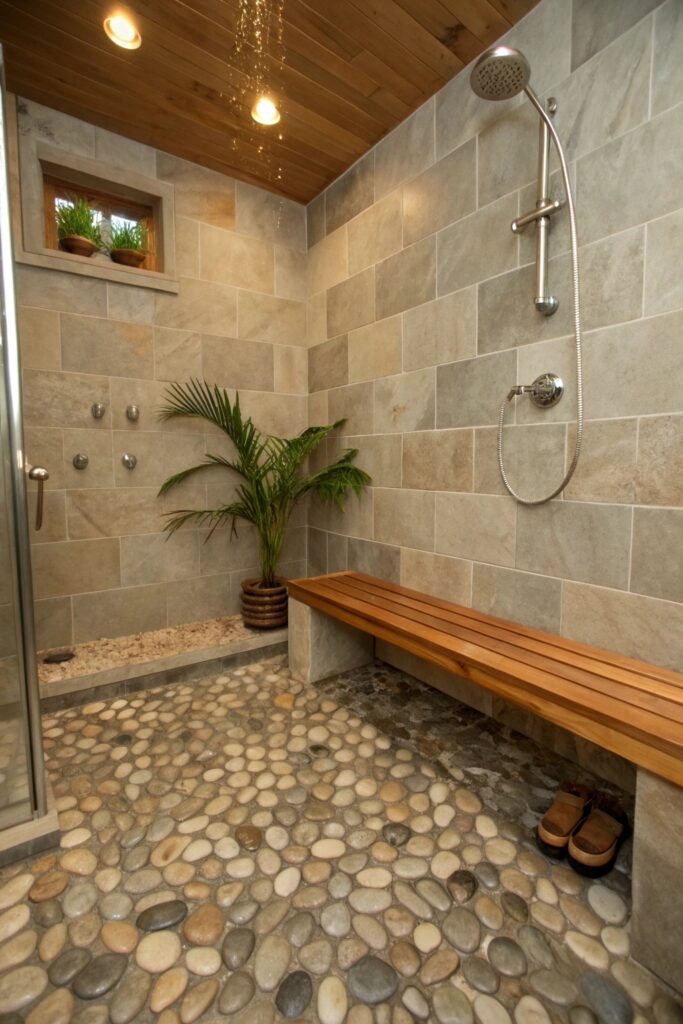
Textured stone provides better slip resistance underfoot than smooth tile, which matters directly for safety in a fully wet space.
Seal natural stone flooring periodically, since this porous material needs more regular maintenance than manufactured tile to resist staining and water damage.
6. Teak Wood Accents and Built-In Bench
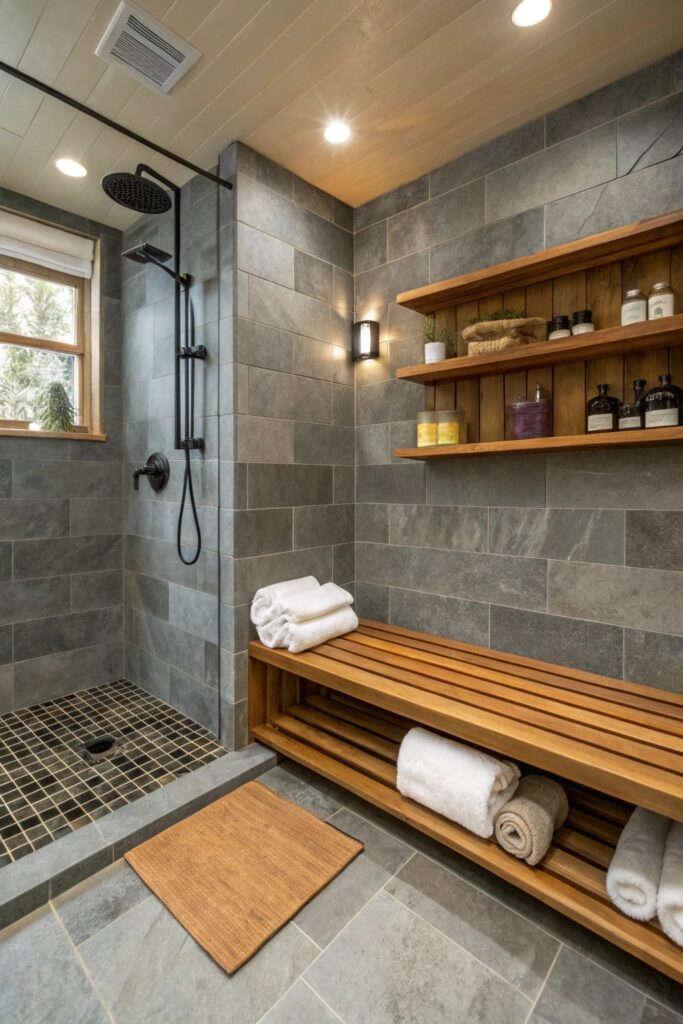
Teak’s natural water resistance suits this application better than most other wood species, though it still needs periodic oiling to maintain its finish.
Reapply teak oil every few months, which keeps the wood’s natural water resistance and appearance from degrading over time.
7. Backlit Niche Shelving
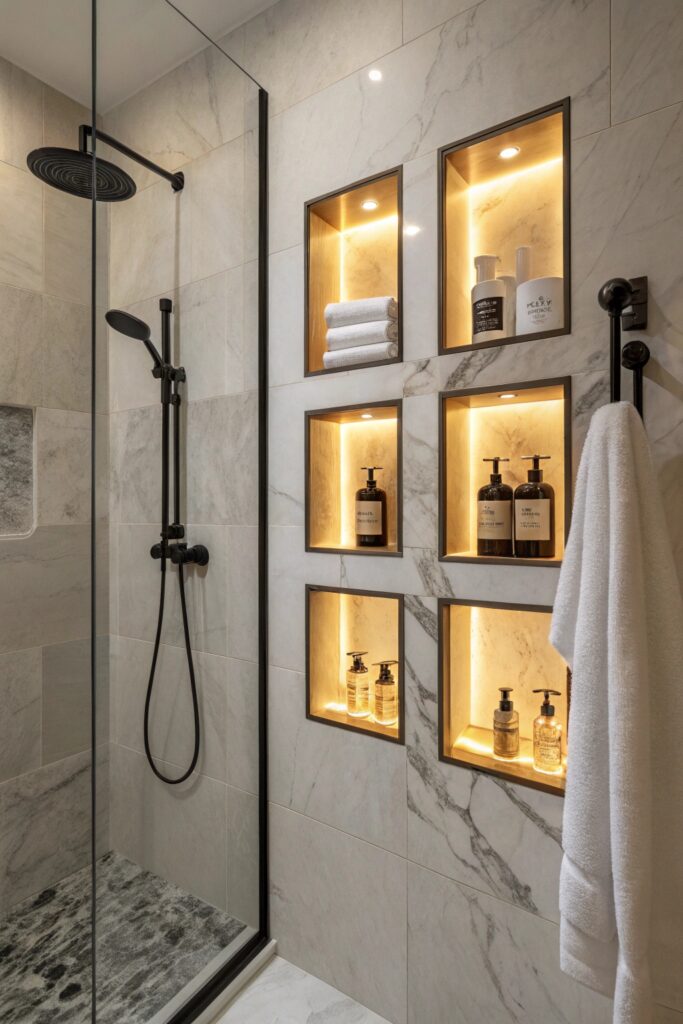
Confirm water-rated electrical fixtures and proper sealing before installing any lighting within direct shower spray range.
Choose LED fixtures rated for wet locations specifically, which is a distinct and stricter rating than standard damp-location fixtures.
8. Black Matte Fixtures Throughout
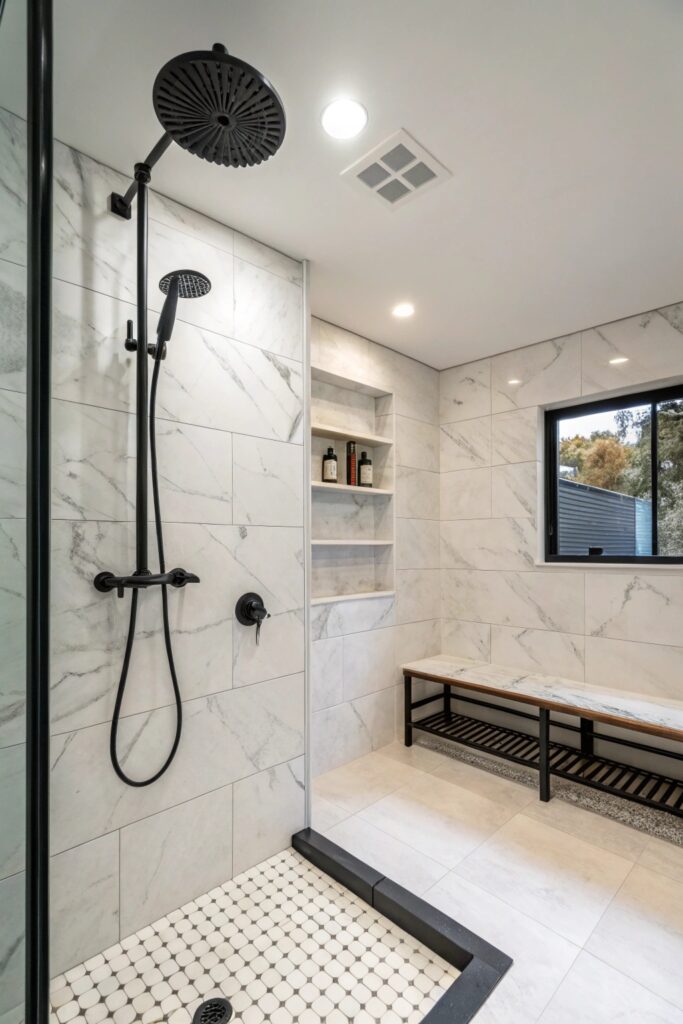
Consistent matte black finishes throughout, rather than mixing metals, create a more cohesive, intentional look.
Choose matte black fixtures from the same manufacturer line when possible, which helps ensure a consistent finish across different fixture types.
9. Double Shower Heads for Two
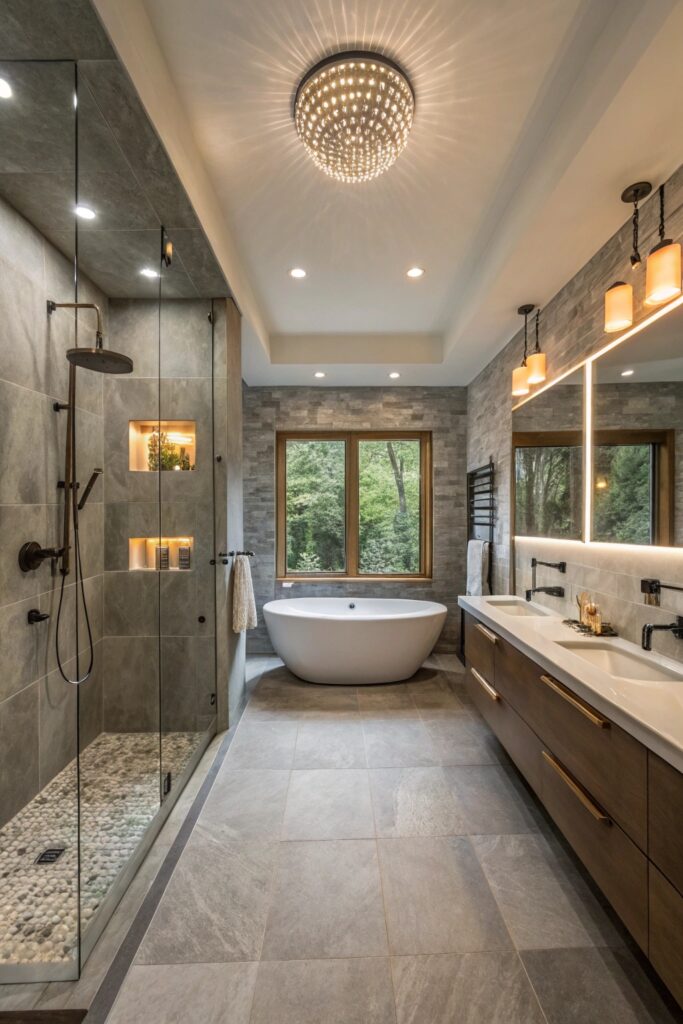
Confirm your water heater capacity supports two simultaneous shower heads, since this setup demands considerably more hot water than a single-person shower.
Install separate temperature controls for each shower head, which lets two people shower comfortably at their own preferred settings.
10. Heated Floors Throughout
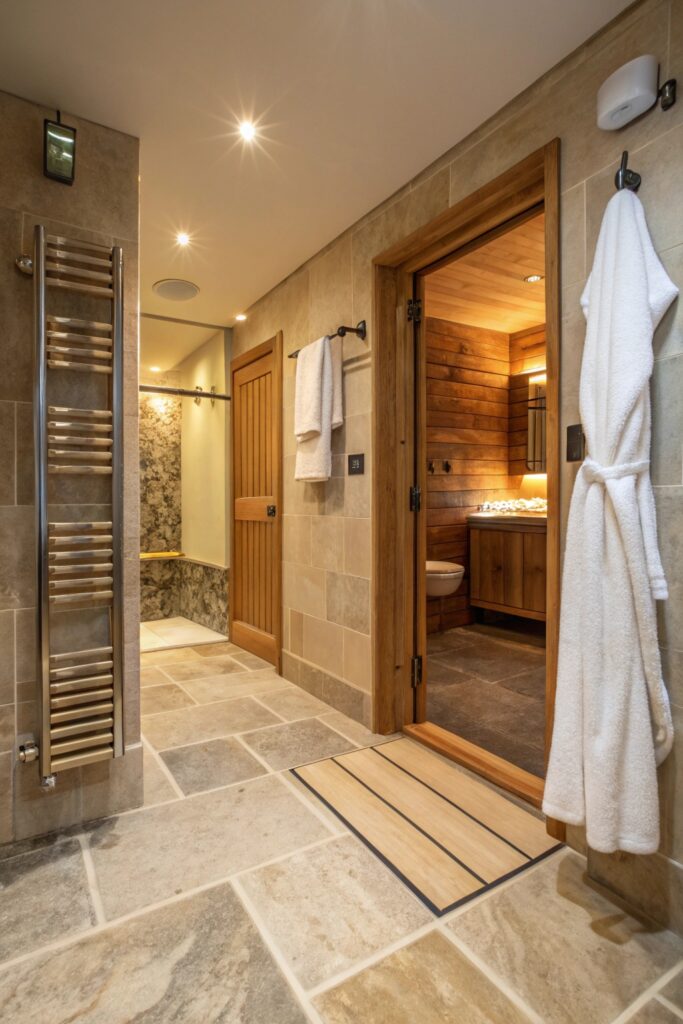
Installing radiant heating beneath the floor adds real comfort in a space that otherwise stays wet and cool underfoot.
Choose a reputable installer specifically for radiant floor heating, since improper installation can lead to costly repairs later.
11. Skylight or Ceiling Window Above the Wet Zone
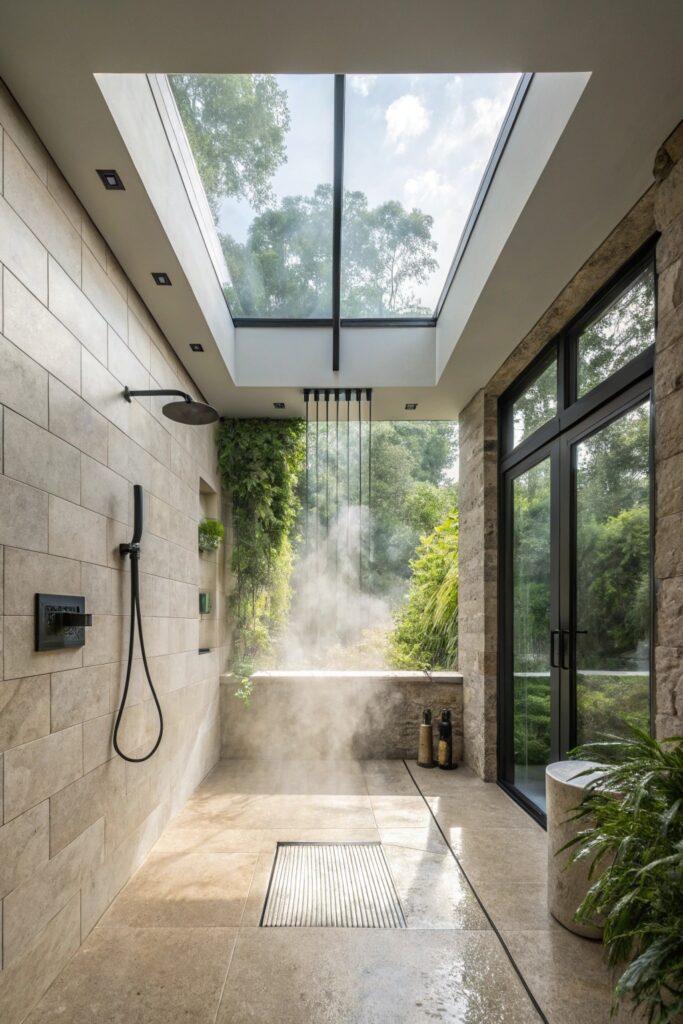
Confirm appropriate waterproof glazing and proper flashing before installing any overhead window in a space with this much moisture exposure.
Choose low-E, water-resistant glazing for this application, which helps manage both moisture and heat loss through the window.
12. Concrete and Minimalist Design
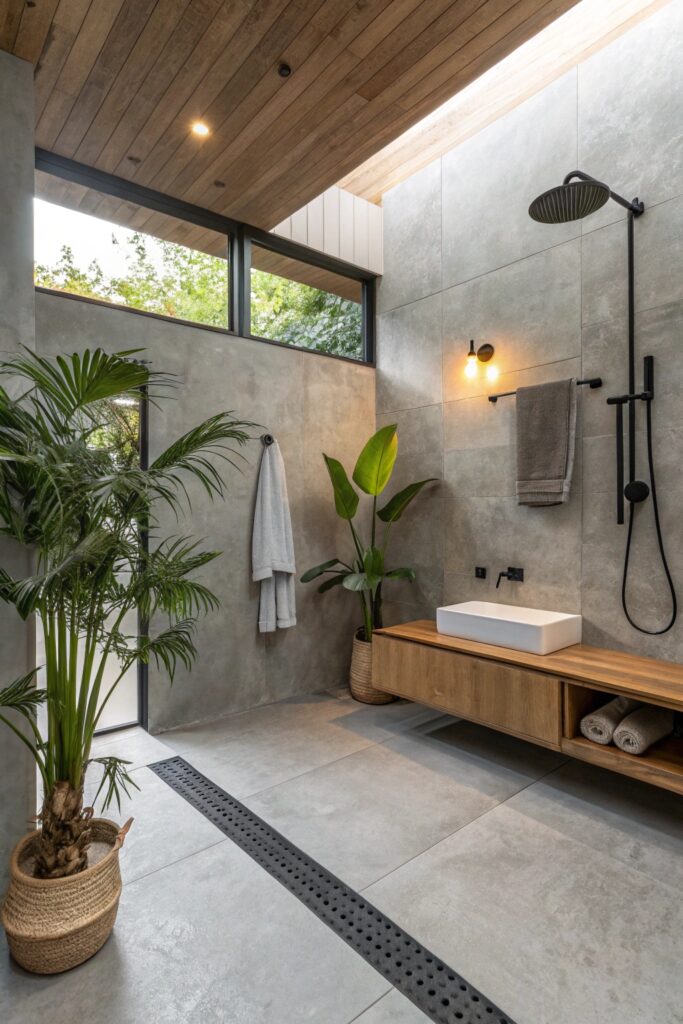
Sealed concrete offers a durable, water-resistant surface, though it requires professional-grade sealing to hold up long-term in a fully wet environment.
Apply professional-grade sealant to concrete every one to two years, which is more frequent than sealing needs in a typical dry room.
13. Indoor Plant Wall and Biophilic Design
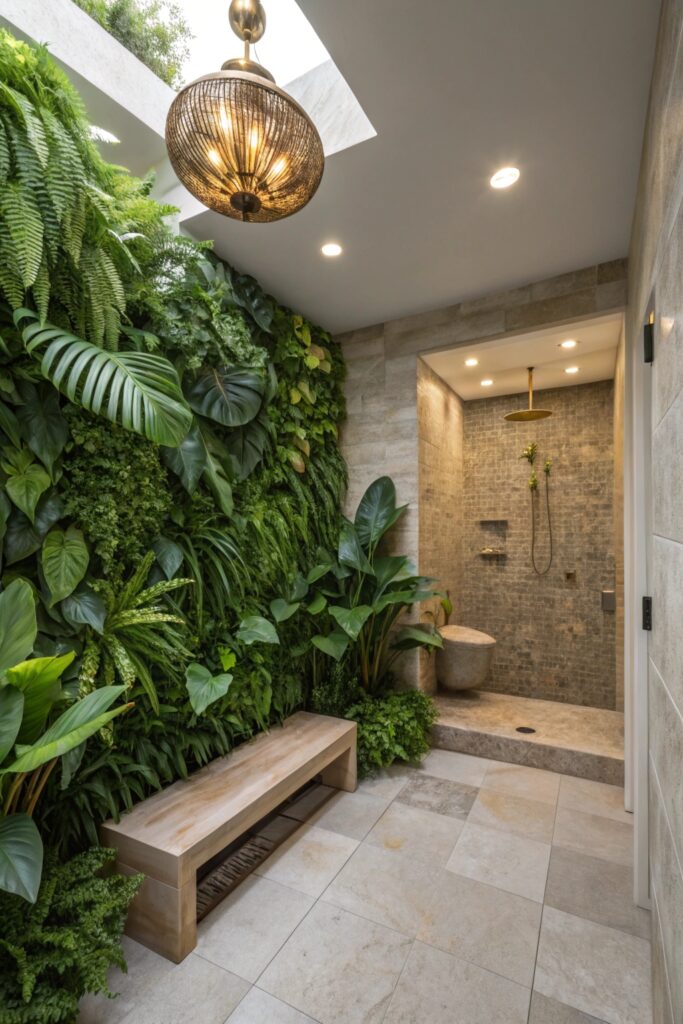
Choose humidity-loving plant varieties specifically, since a wet room’s consistent moisture suits certain species far better than a typical dry bathroom.
Understanding Waterproofing and Drainage
A wet room requires a fully waterproofed substrate beneath every surface, not just the shower area, since water will inevitably spread across the entire floor in this open layout.
A sloped floor directing water toward a central or linear drain is essential, and getting this slope right is one of the more technically demanding parts of the installation, which is why professional work matters here specifically.
What This Renovation Costs
A basic wet room conversion typically costs $8,000 to $15,000 depending on size and materials.
A fuller luxury build with premium tile, heated floors, and higher-end fixtures runs considerably higher, often $20,000 to $50,000 or more depending on the scope of the project.
Get quotes from at least two licensed contractors before committing to this renovation, since labor costs for waterproofing and plumbing work vary considerably based on your home’s existing layout and local rates.
Consider ventilation as carefully as waterproofing, since a well-ventilated wet room helps prevent mold and mildew that can otherwise develop in a space with this much consistent moisture.
Check whether your local building code requires specific documentation or inspection sign-offs for this kind of renovation, since wet rooms sometimes fall under different permitting rules than a standard bathroom remodel.
Whatever style you choose, prioritize functionality alongside the aesthetic, since a wet room still needs to work well for daily use, not just look impressive in photos.
A well-built wet room can also add real resale value to a home, since this style has become an increasingly desired feature in many markets over recent years.
Take your time with the planning phase specifically, since a wet room genuinely represents a significant investment that’s worth getting right the first time rather than rushing through.
Final Thoughts
Confirm your local building code allows a wet room design before finalizing any plans, since some jurisdictions have specific requirements for drainage and waterproofing in fully open shower spaces. Investing in proper waterproofing membrane and professional installation upfront avoids considerably more expensive water damage repairs down the line.