
Minimalist holiday decorating isn’t about having less Christmas spirit — it’s about choosing a tighter set of elements and letting them do more visual work, rather than filling every surface with seasonal objects. The result tends to feel calmer without feeling under-decorated.
Below are 10 ways to decorate this way, with specific materials and placement details for each.
1. Swap a Full Tree for a Branch Arrangement
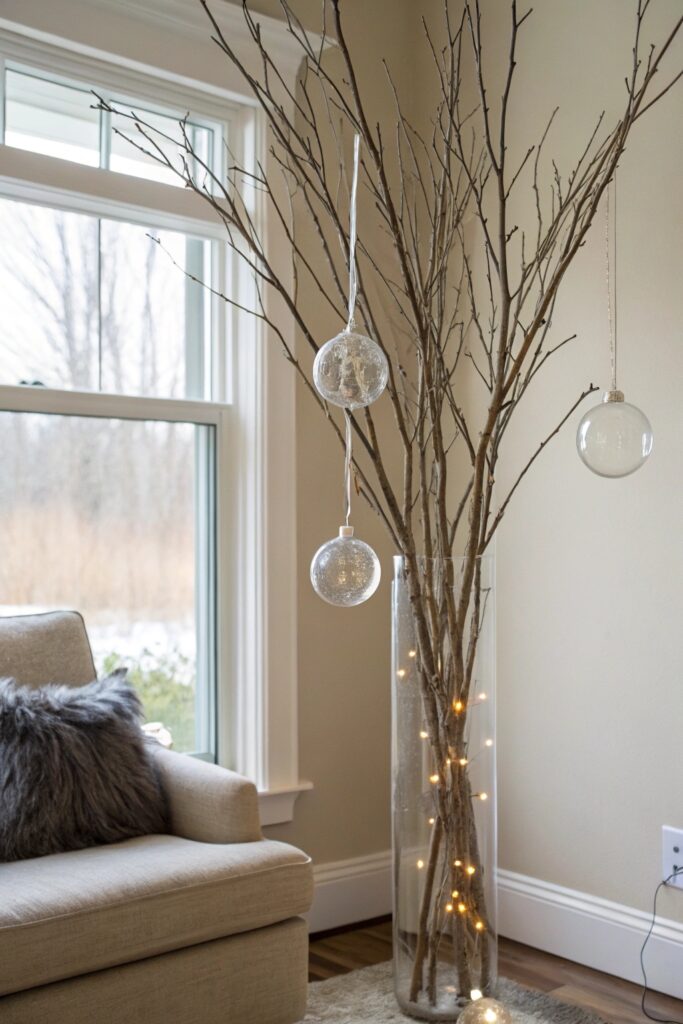
A single large branch arrangement (birch, magnolia, or preserved eucalyptus branches, $15-25 for a bundle at a craft store or florist) in a tall floor vase gives height and a seasonal focal point without the footprint, cost, or cleanup of a full tree. Add small ornaments or a strand of thin warm-white lights woven through the branches if you want a nod to a traditional tree without the full commitment.
2. Choose One Color Palette and Stick to It
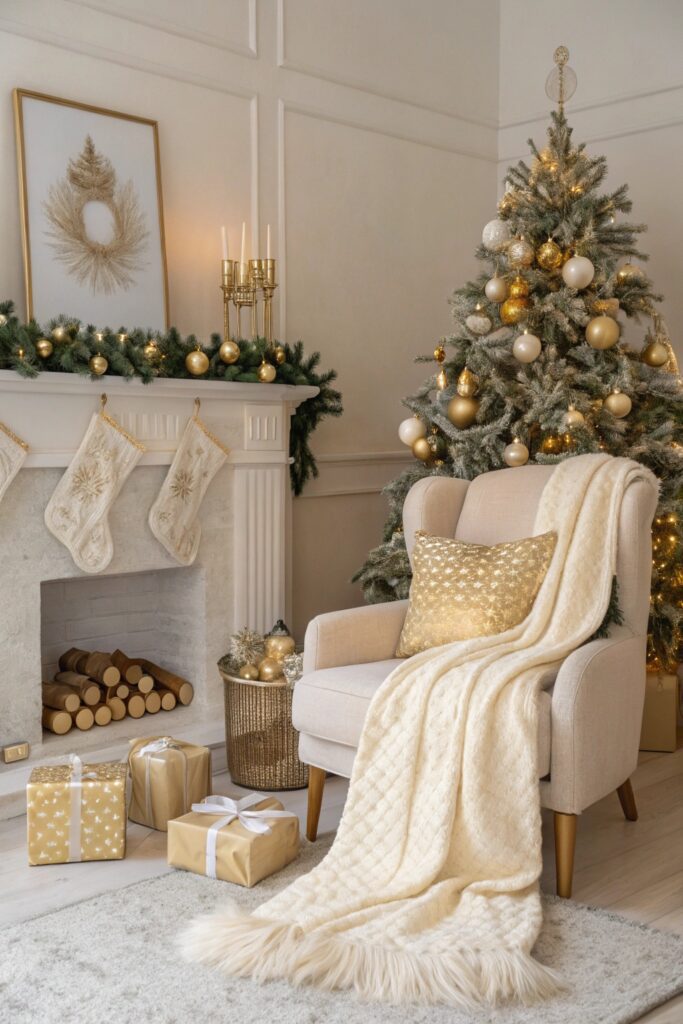
Pick two colors maximum — cream and sage, or white and natural wood tones — and carry them through every decorative element in the space. This is the single biggest thing that separates minimalist Christmas decor from just ‘less stuff’ — a room with five items in one tight palette reads more intentional than a room with fifteen items in the traditional red-green-gold mix.
3. Use Candles Instead of String Lights Everywhere
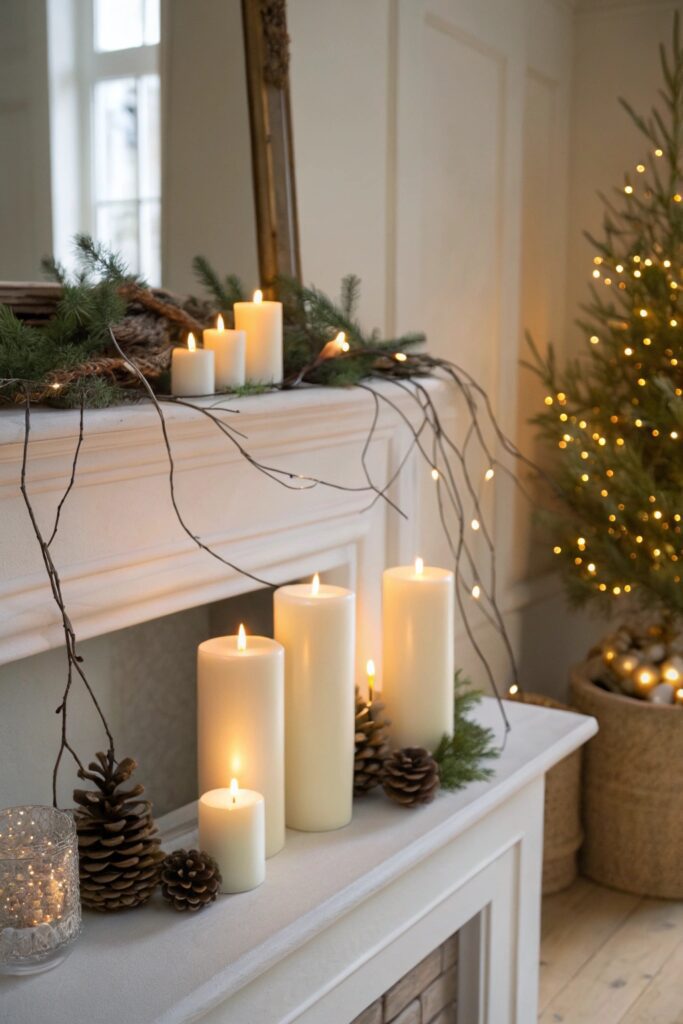
Grouped pillar candles (real or flameless LED) on a mantel, console, or dining table provide warm ambient light with a smaller visual footprint than strung lights draped across furniture and windows. Vary the heights within each grouping by at least 2 inches for visual interest, and stick to unscented or lightly scented candles if you’re also cooking, since competing scents get overwhelming fast.
4. Hang a Single Statement Wreath
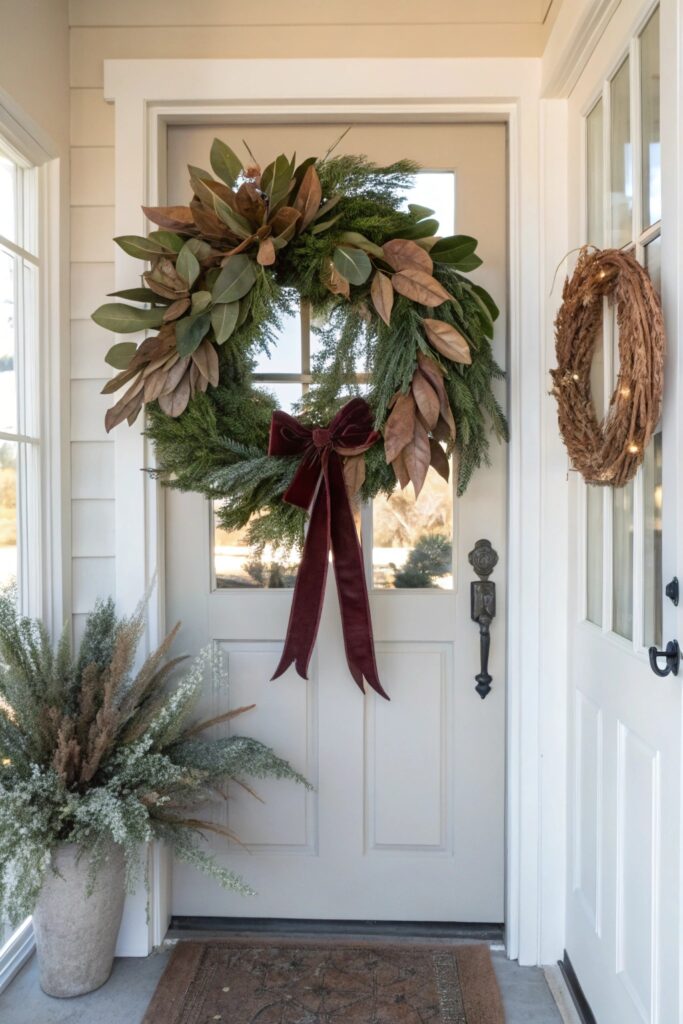
One well-made wreath (18-24 inches, natural greenery or a high-quality faux version) on the front door or above a mantel does more visual work than scattered smaller decorations throughout a room. Skip the bow and ornaments on the wreath itself if you’re going for a genuinely minimal look — a plain evergreen wreath with a simple thin ribbon reads calmer than one loaded with additional embellishments.
5. Layer Neutral Textiles Instead of Adding More Objects
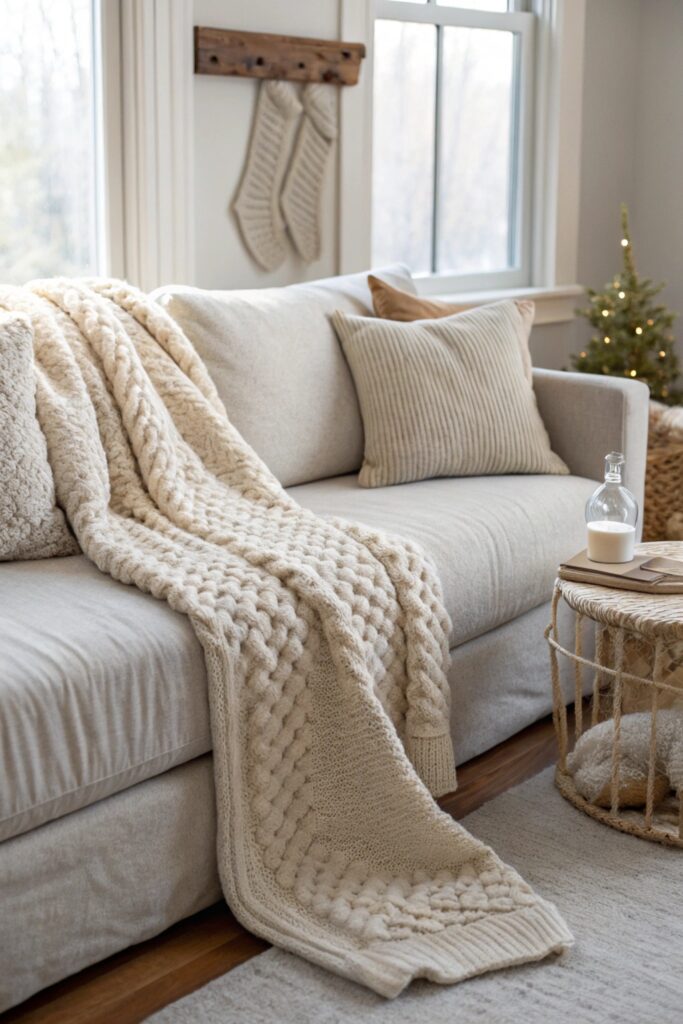
A chunky knit throw in cream or oatmeal draped over a sofa arm, or a set of textured neutral pillow covers, adds seasonal coziness through texture rather than through additional decorative objects. This approach also means the textiles can stay out well past the holiday season, since they’re not explicitly Christmas-themed — just warm and textural.
6. Group Ornaments in Bowls Instead of Hanging Them Everywhere
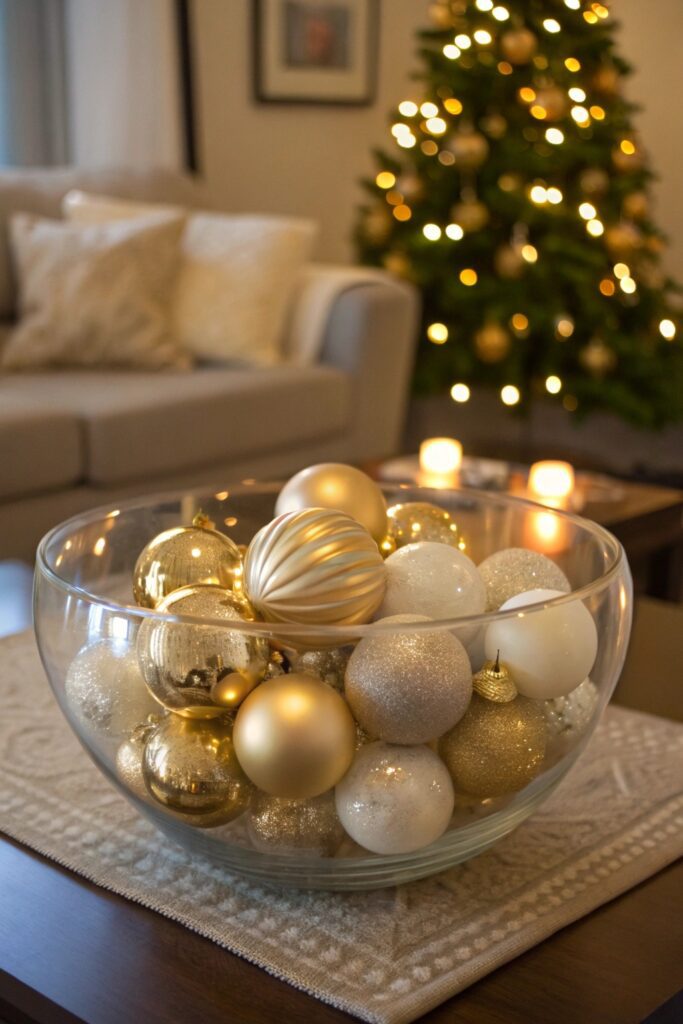
If you love ornaments but not the visual clutter of hanging them throughout a space, group 8-12 in a large glass or ceramic bowl on a coffee table or console instead. This concentrates the sparkle and color into one contained spot rather than spreading small points of visual interest across an entire room, which reads calmer even with the same number of individual pieces.
7. Add Greenery to Everyday Surfaces You Already Use
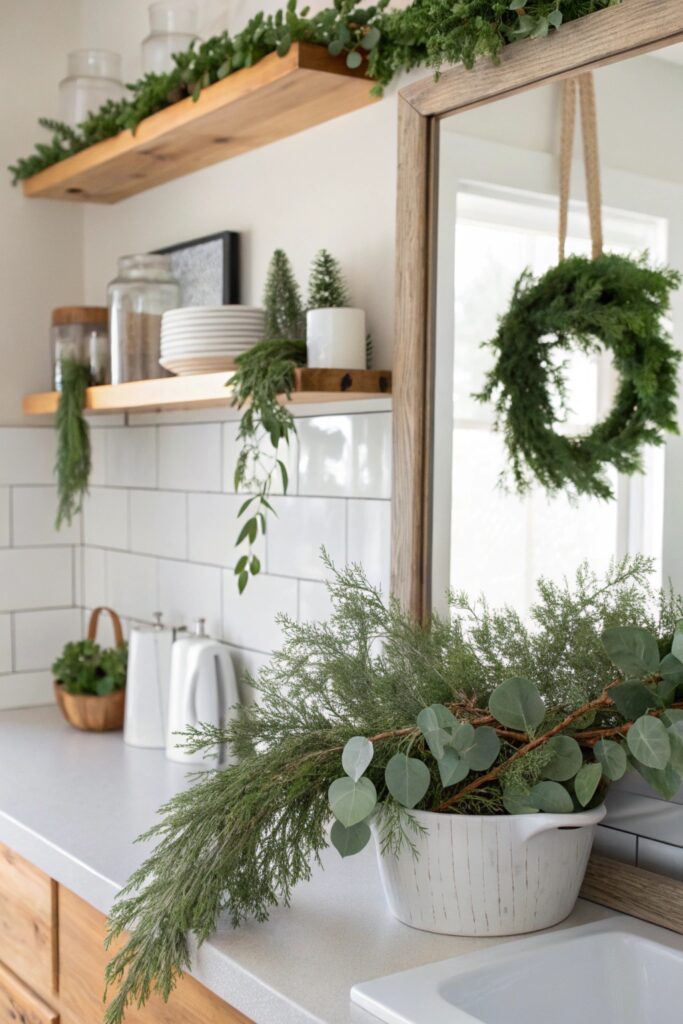
Small clippings of real or faux eucalyptus or pine tucked into a bathroom soap dispenser tray, laid along a kitchen windowsill, or wrapped around a stack of books on a nightstand extends the seasonal feel into spaces most Christmas decor skips, without adding new objects — just seasonal accents to surfaces already in daily use.
8. Choose Warm White Lights Only, Skip the Multicolor
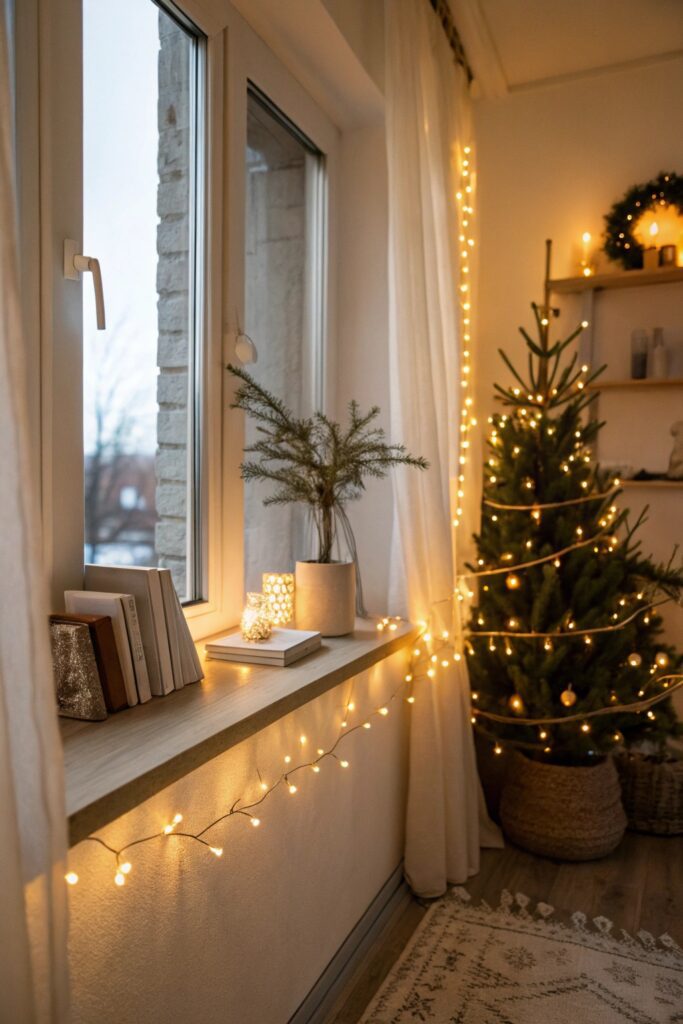
Multicolor lights read as festive-loud, while warm white (2700K specifically, check the packaging) reads as festive-calm — the same twinkle effect with a completely different mood. If you already own multicolor strands, warm white replacement bulbs are often available separately rather than requiring a full new set.
9. Display Cards and Mail on a Simple Ribbon Garland
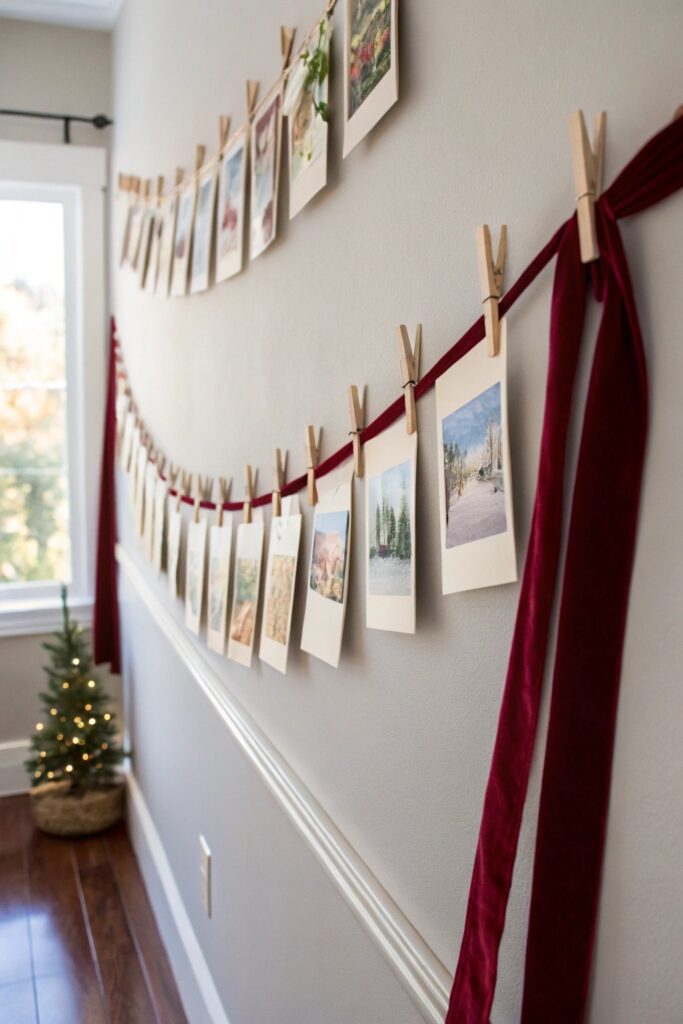
A length of ribbon strung along a wall or mantel with cards clipped on using small clear clothespins keeps received holiday cards visible and organized rather than piled on a counter, and it doubles as a simple decorative garland even before any cards arrive. This is functional decor — it solves an actual clutter problem rather than adding a purely decorative object.
10. Keep the Dining Table Decor to One Centerpiece
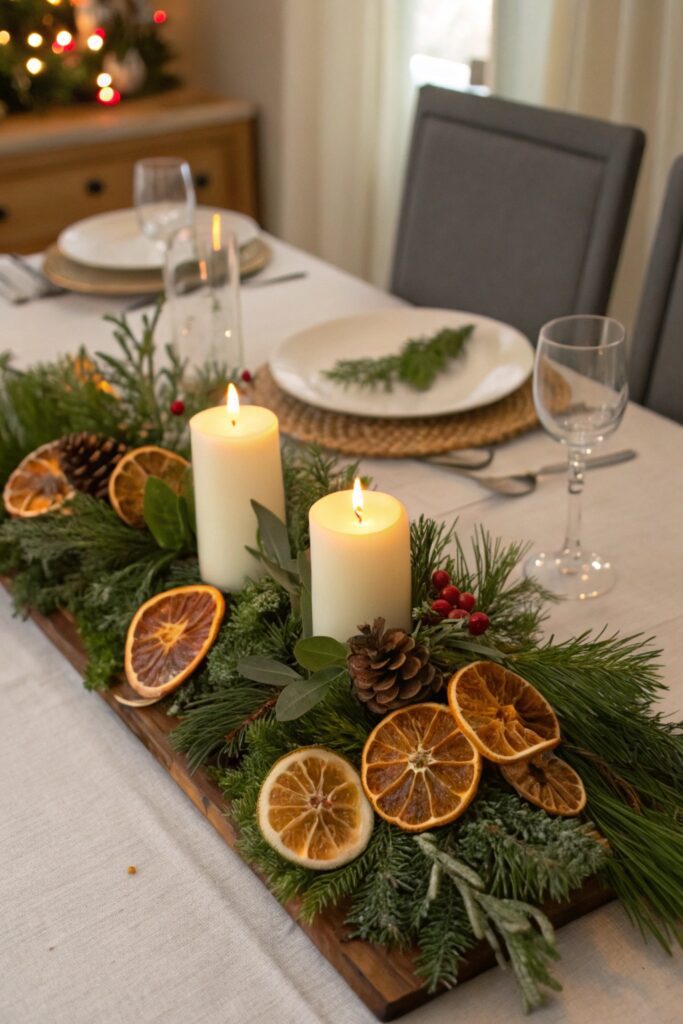
A single runner or a low arrangement of greenery and candles down the center of the table — rather than a full tablescape with individual place settings, favors, and multiple decorative elements — keeps the table functional for actual meals while still feeling seasonal. Keep any centerpiece low enough that guests can see each other across the table; anything over 12-14 inches tall tends to block sightlines during a meal.
Editing as You Go
A genuinely minimalist holiday look benefits from editing throughout the season, not just at setup, since it’s easy for a few extra gifts or cards to accumulate and slowly clutter an otherwise pared-down space.
Set aside a small designated spot for incoming cards and gifts specifically, which keeps them from spreading across surfaces you’ve deliberately kept clear.
What This Approach Costs
A minimalist holiday setup is often genuinely less expensive than a maximalist one, since you’re buying fewer total pieces even if some individual items — a quality wreath, a nice set of candles — cost more per piece.
Most complete setups following this approach run $100 to $300, considerably less than a fuller traditional display with a large tree, extensive lights, and a wide collection of ornaments and figurines.
Wrapping Up a Calmer Holiday Season
The common thread is restraint on quantity paired with intention on placement — one wreath instead of five, one color palette instead of the full traditional spread, textiles that add warmth without adding clutter. Most of these ideas can be layered together without the space starting to feel busy, since they’re built around the same underlying principle of fewer, better-placed elements.