
This guide focuses on the rustic, farmhouse-leaning end of Easter styling specifically — wood, burlap, and weathered materials over the brighter pastel look. For the full range of Easter decorating ideas, see our guide to Easter decor ideas.
Below are 10 ways to bring this style into the home, with practical notes for each.
1. Wooden Bunny Figurine Display
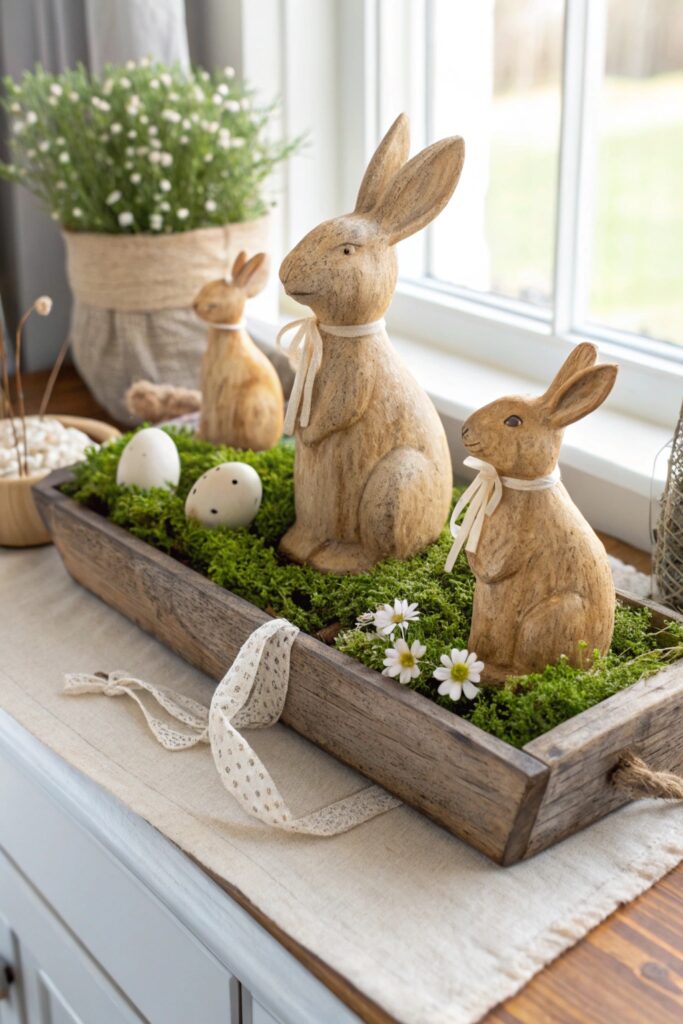
Carved or painted wood bunnies hold up year after year, unlike ceramic or plastic versions that tend to chip or fade with storage.
A light sanding and a coat of matte wax can freshen up an older figurine without erasing the worn look that makes it fit the style.
2. Rustic Easter Egg Wreath
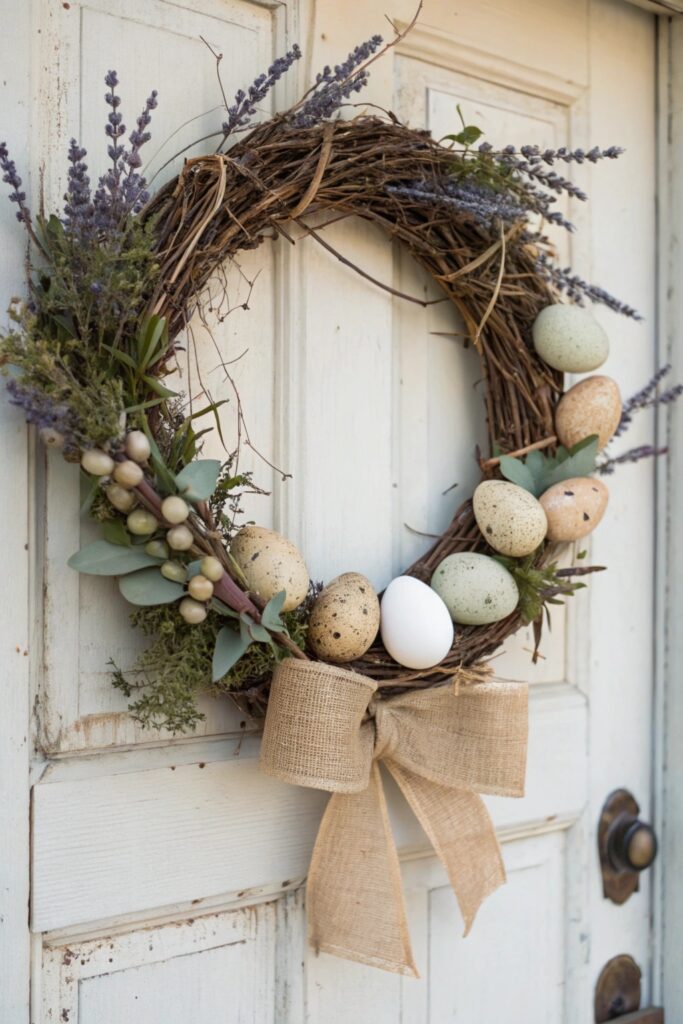
A wreath base of grapevine or dried twigs, rather than foam, sets a genuinely rustic tone before you’ve even added the eggs.
Faux eggs hold their color better through repeated seasonal storage than real ones, which matters if you plan to reuse the wreath for several years.
3. Farmhouse Easter Table Centerpiece
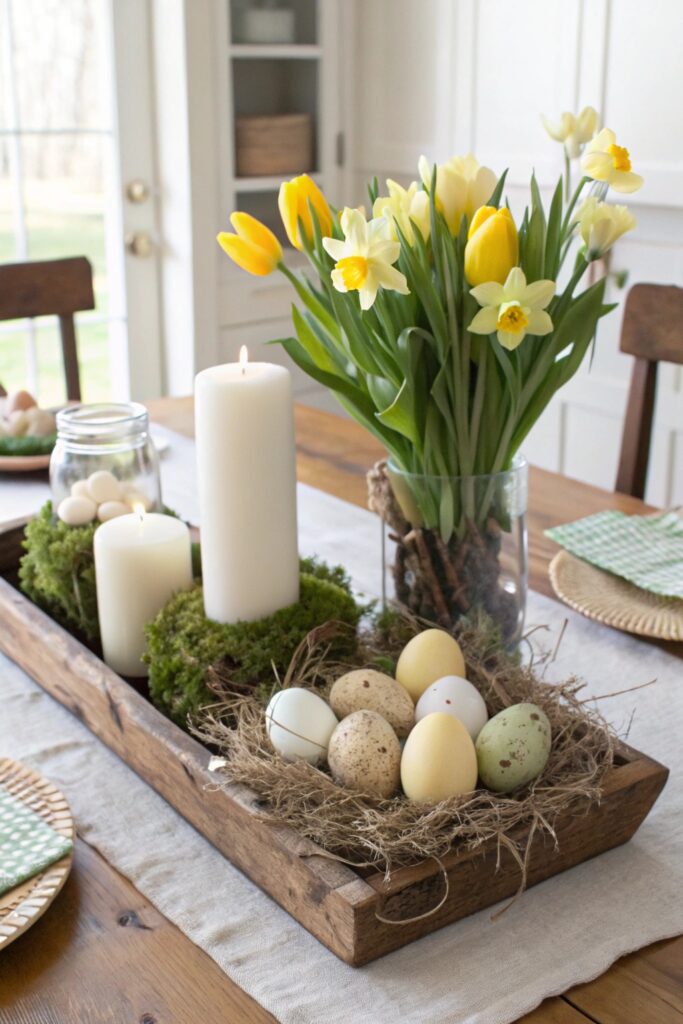
Galvanized metal containers pair naturally with the wood and burlap elements common in this style, avoiding anything glossy or overly polished.
Choose galvanized containers with some visible patina rather than a shiny new finish, since a bit of oxidation actually suits this look better.
4. Burlap and Linen Easter Table Runner
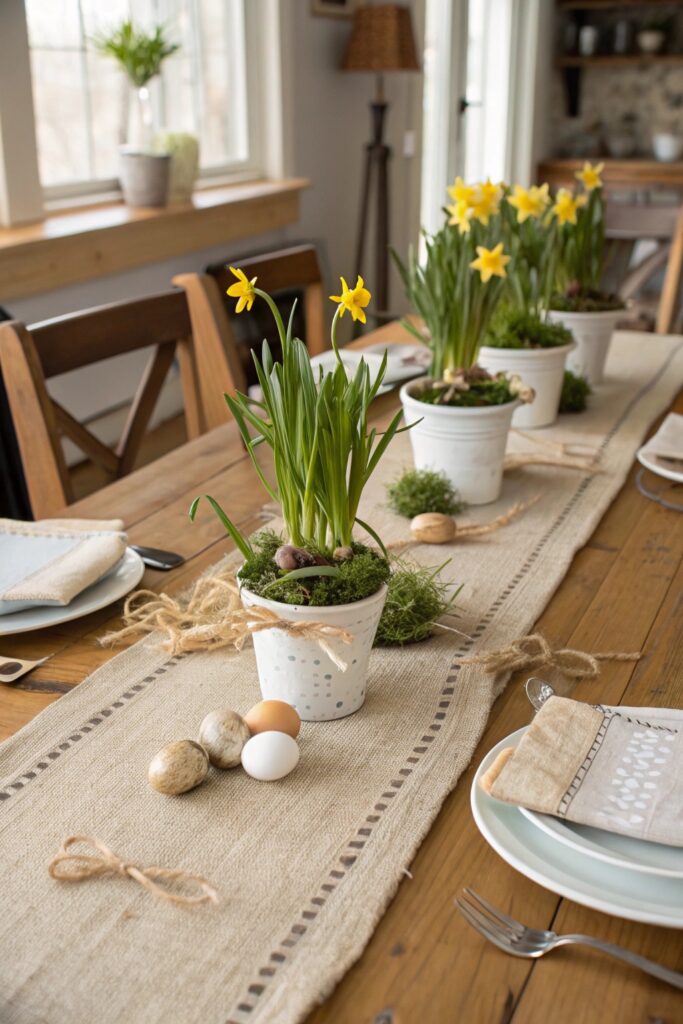
A raw-edge burlap runner reads as intentionally unfinished rather than sloppy, which is part of the rustic style’s overall relaxed approach to detail.
Wash burlap gently and let it air dry, since machine drying can cause the fibers to fray more than they would with a natural material like this.
5. Mason Jar Spring Floral Arrangements
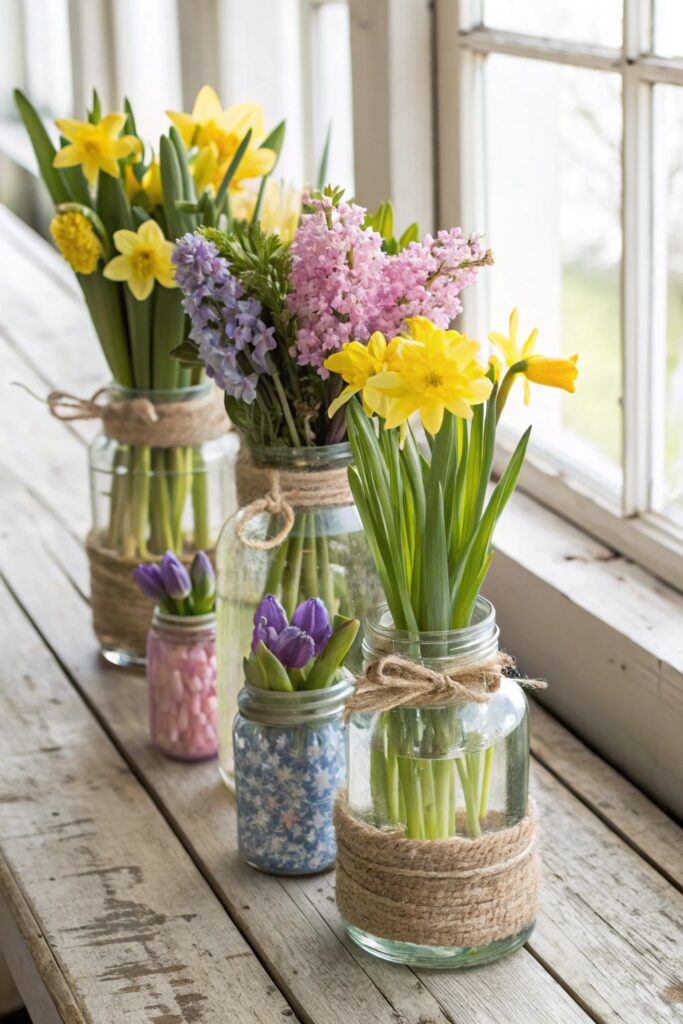
Mason jars are inexpensive, widely available, and hold up to repeated use, making them a practical choice beyond just fitting the aesthetic.
Group jars in odd numbers and varying heights for a more natural-looking cluster than a single uniform row.
6. Natural Twig and Branch Easter Tree
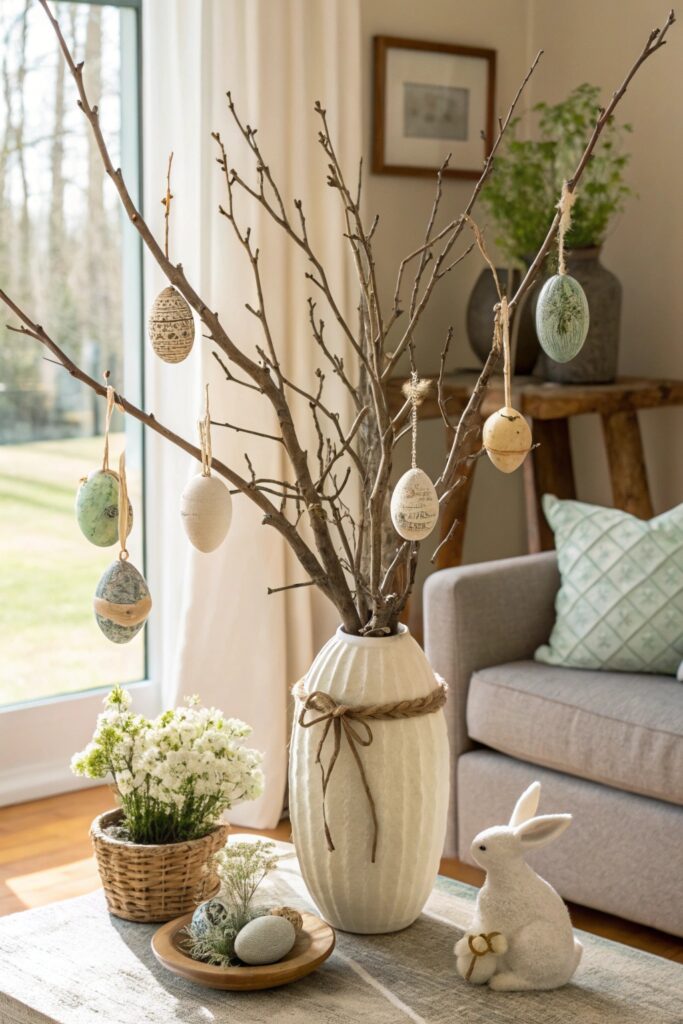
Branches gathered from your own yard cost nothing and tend to look more genuinely rustic than anything purchased specifically for this purpose.
Let branches dry out for a few days after cutting, which helps prevent any sap or moisture from marking nearby surfaces.
7. Terracotta Pot Easter Egg Display
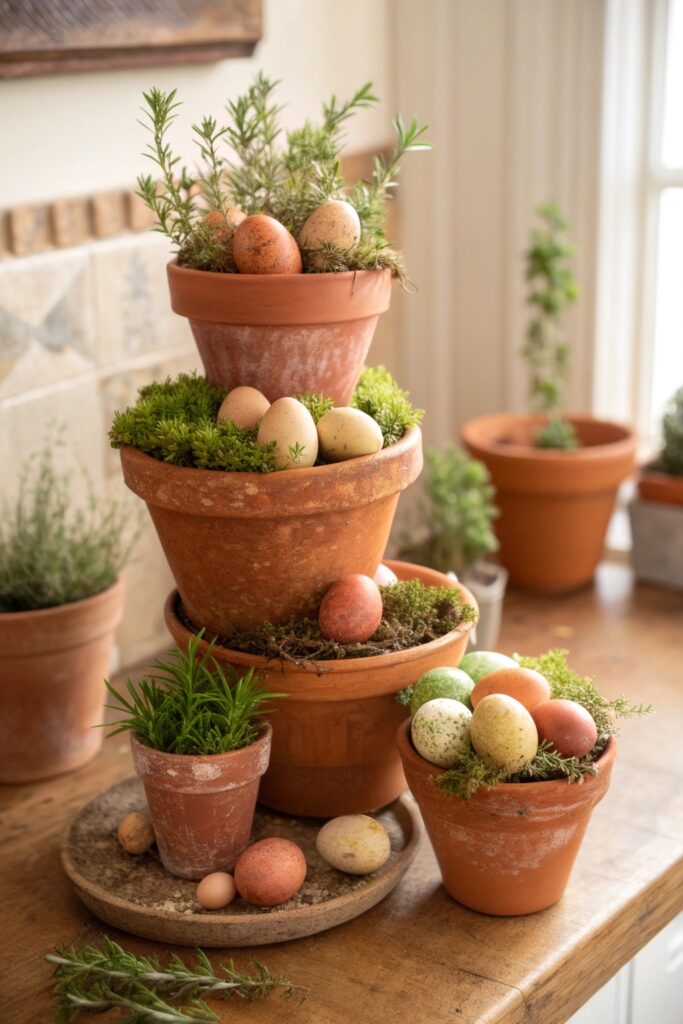
Weathered terracotta with visible mineral staining fits this style better than a clean, new pot, so older or secondhand pots are worth seeking out.
A quick rinse and scrub is usually enough to clean an old terracotta pot without stripping away the character that gives it its weathered look.
8. Vintage Crate and Basket Easter Vignette
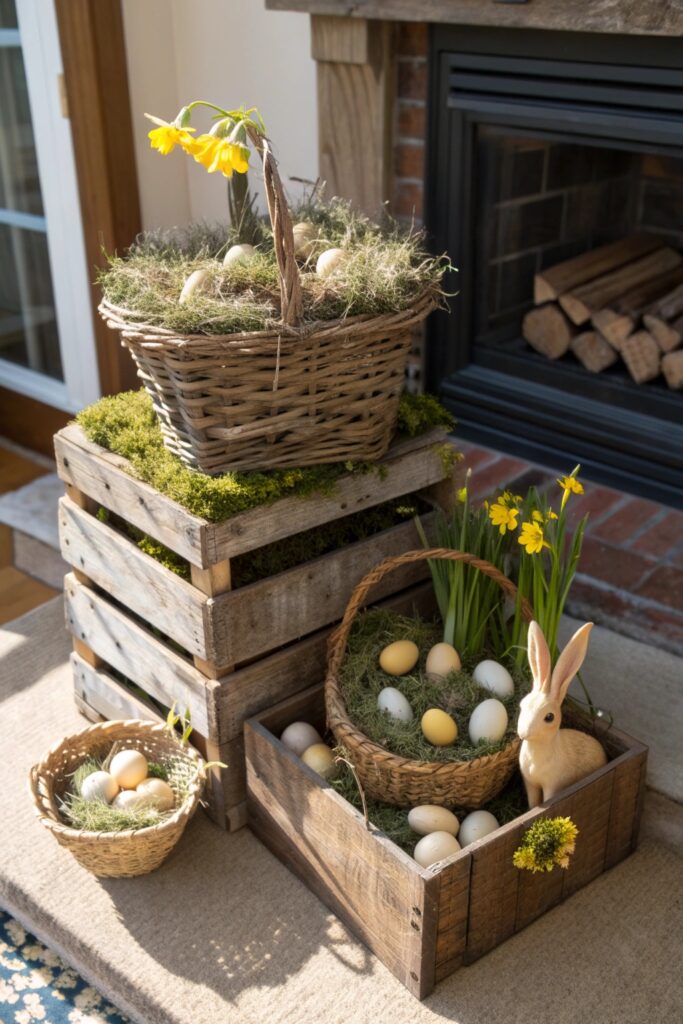
An old wooden crate holding a few baskets and eggs creates genuine height variation without needing any additional props.
Line the crate with a cloth or burlap remnant if you’re worried about splinters catching on delicate items placed inside.
9. Handmade Linen and Twine Egg Garland
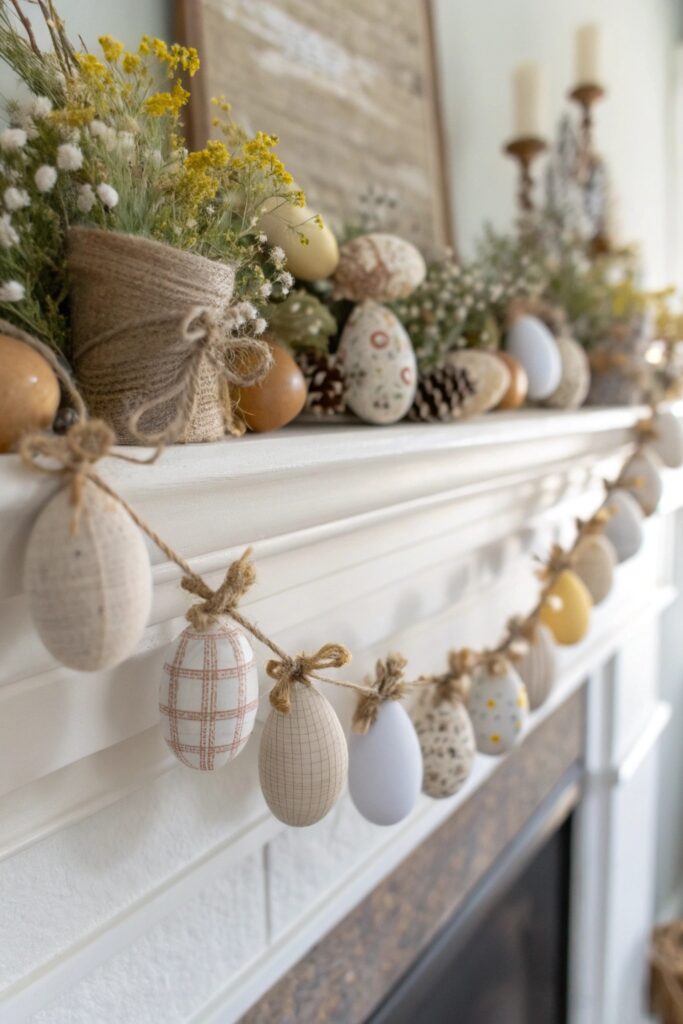
Twine specifically, rather than ribbon, keeps this garland consistent with the rest of the rustic material palette.
Space the eggs unevenly along the garland rather than at perfectly equal intervals, which reads as more handmade and less mass-produced.
10. Outdoor Rustic Easter Porch Display
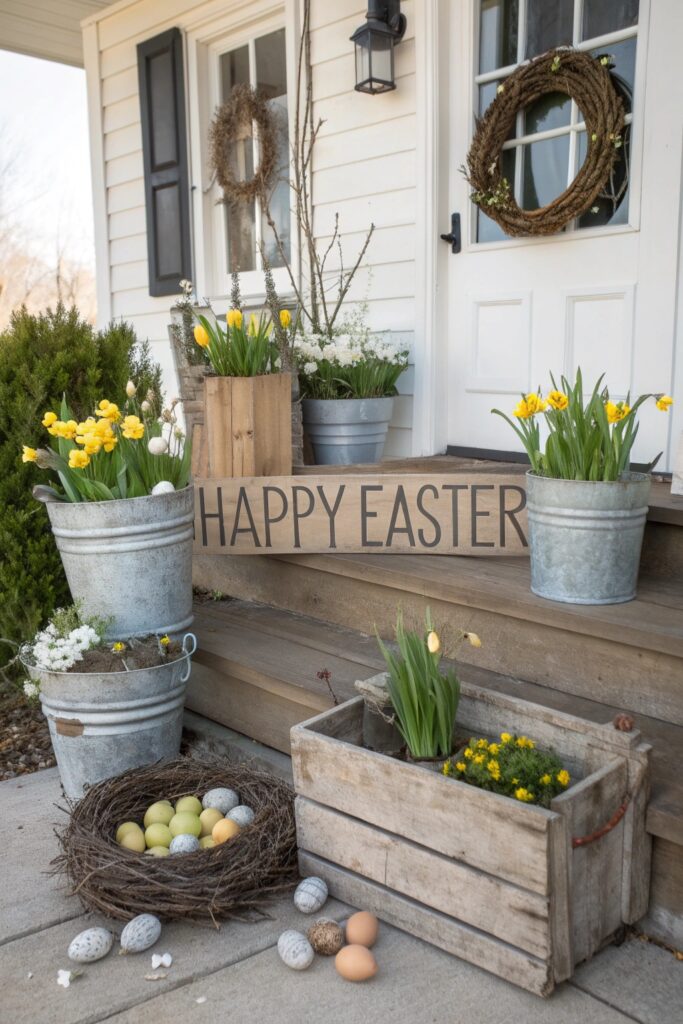
Weather-resistant materials matter most here, since anything left outdoors for the full holiday period needs to hold up to sun and rain.
Check the forecast before committing to a fully outdoor display, since even weather-resistant materials can take a beating in genuinely severe conditions.
Keeping the Palette Grounded
This style works best with muted, earthy colors rather than the bright pastels typically associated with the holiday. Sage, cream, tan, and soft brown all pair naturally with the wood and burlap elements.
If you want to include pastel eggs, choose the more muted, dusty versions rather than the brightest options, which will clash less with the overall palette.
Real Costs to Expect
Most of these ideas cost under $30 to put together, especially if you’re using items already around the house or gathered from your own yard.
Purchased pieces like galvanized containers or vintage crates run higher, typically $20 to $50 each, but they’re reusable well beyond a single Easter season.
Where to Find These Pieces
Farm stands, craft fairs, and antique shops tend to have a better selection of genuinely rustic pieces than a big-box store’s seasonal aisle, which usually leans toward the brighter, more polished side of Easter decor.
Estate sales are also worth checking specifically for older wooden crates, baskets, and terracotta pots, since these items often show up there at a fraction of what a styled version would cost new.
Kids can genuinely take part in putting this style together, since gathering branches, arranging jars, or threading a twine garland doesn’t require the same delicate handling that fresh florals or fragile glass often do.
Most of these pieces store well between years if kept somewhere dry — a labeled bin in a closet or garage works fine — so the upfront cost of a nice galvanized bucket or a set of mason jars tends to pay off over several seasons rather than just one.
Start with just one or two pieces if you’re new to this style, like a wreath or a table runner, and build out from there over future seasons rather than trying to redecorate the whole home at once.
This style also pairs naturally with everyday farmhouse decor, which means it’s less likely to feel out of place once the holiday passes compared to more overtly themed Easter decorations that need to come down right away.
Take everything down within a week or two after the holiday, especially any real branches or florals, which can dry out and shed if left in place too long.
A cohesive rustic Easter setup, once assembled, tends to draw genuine compliments precisely because it looks less like a purchased kit and more like something pulled together with care over time.
Conclusion
Wood, burlap, and weathered metal are the three materials doing most of the work in this style, so lean on them before reaching for anything glossy or brand new. Secondhand and thrifted pieces genuinely suit this look better than new ones, since a bit of wear reads as authentic rather than staged.