
A studio apartment’s single-room layout means every square foot needs to work harder than it would in an apartment with separate rooms, which is why the most effective studio strategies focus on multi-function furniture and genuine spatial zoning rather than simply smaller versions of typical furniture.
Below are 14 ways to make a studio genuinely livable, with real costs and practical notes for each.
1. Invest in Multi-Functional Furniture
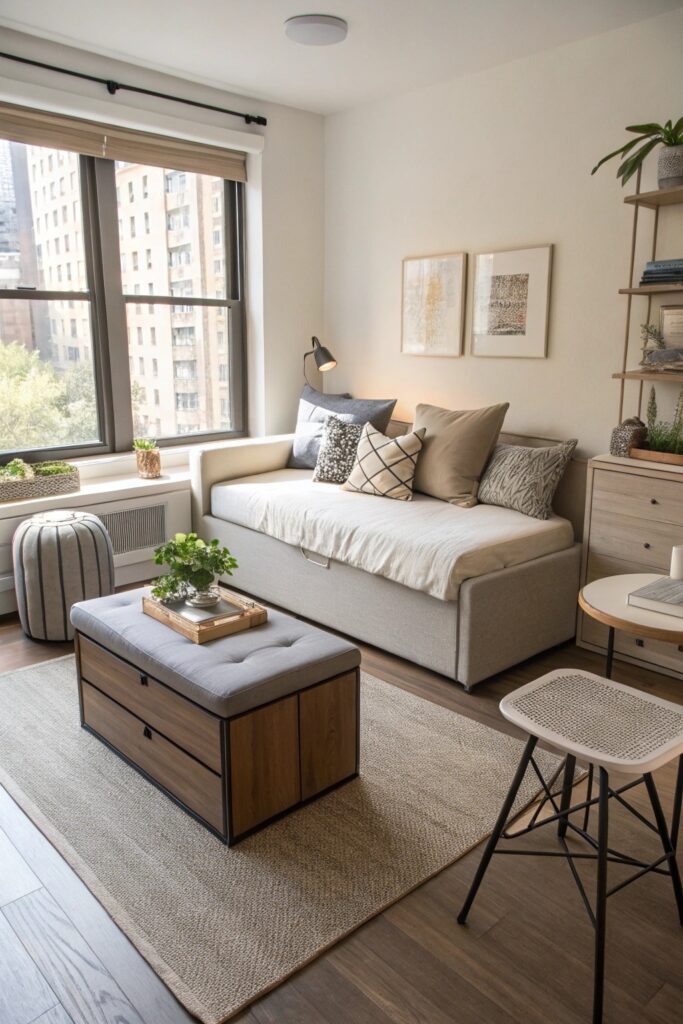
A sofa bed, an extendable dining table, or a storage ottoman ($150-500 depending on the piece) matters more in a studio than almost any other apartment type, since a studio has no separate rooms to distribute different functions across.
Prioritize pieces that serve the functions your specific studio actually needs regularly, rather than buying every multi-functional option available — a fold-down desk matters only if you genuinely work from home, for instance.
2. Use Vertical Space Like It’s Prime Real Estate
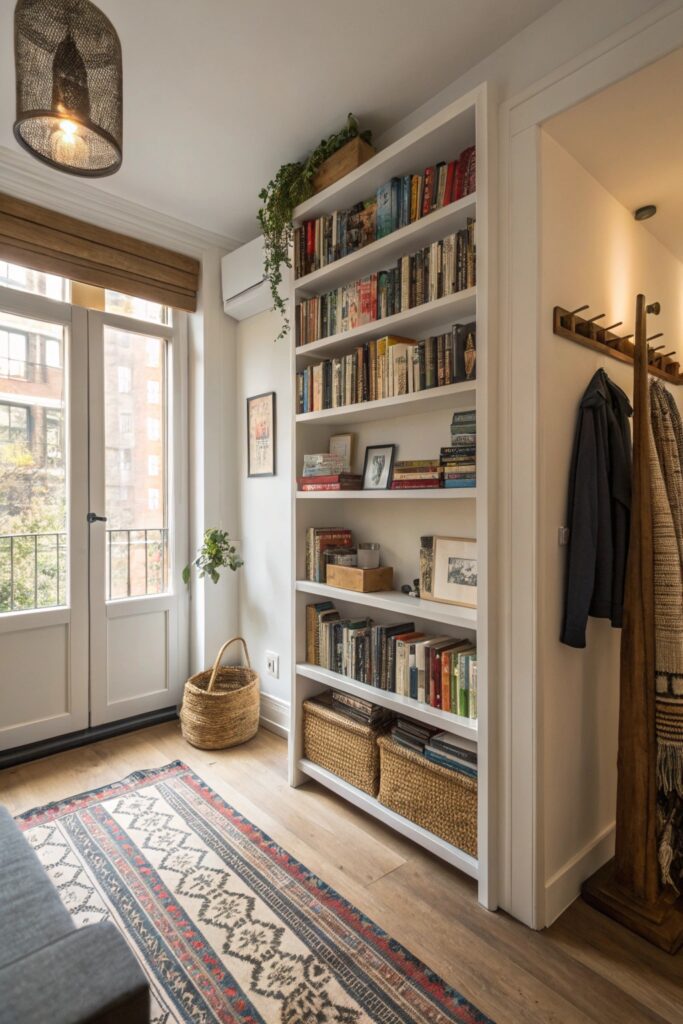
Floor-to-ceiling shelving and wall-mounted storage recover square footage a studio’s limited floor plan can’t otherwise provide, since a studio typically has considerably less floor area than even a small one-bedroom apartment.
This is worth treating as a genuine priority rather than an afterthought — vertical storage in a studio isn’t just nice to have, it’s often the difference between adequate storage and a genuinely cramped-feeling space.
3. Define Zones Without Walls
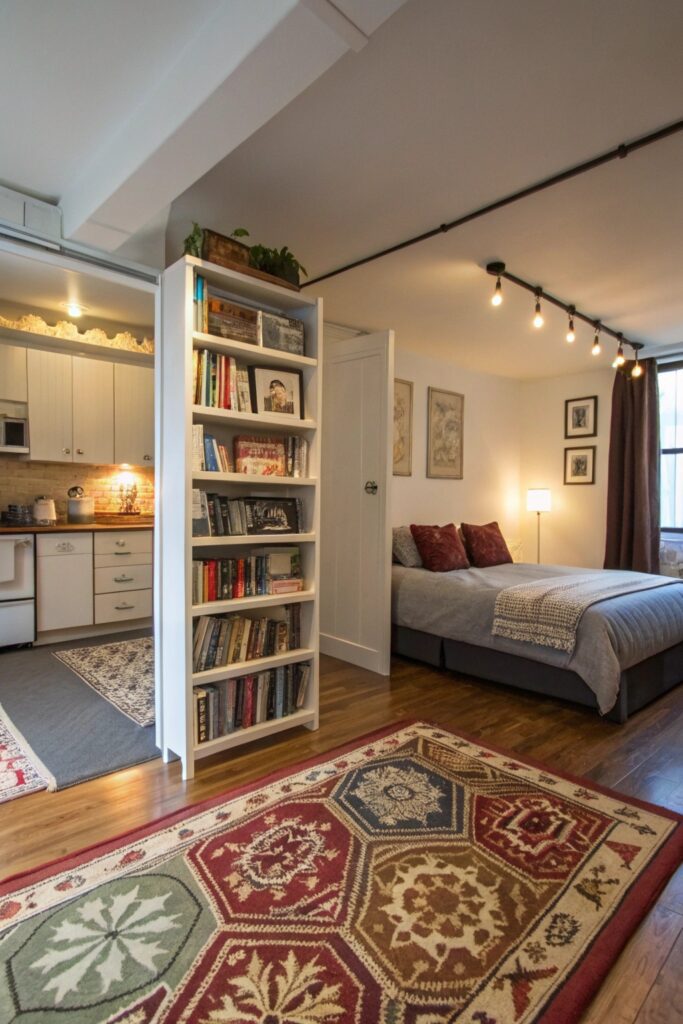
A rug, a bookshelf, or a change in flooring can signal where the sleeping area ends and the living area begins, which matters considerably more in a studio than in an apartment with actual room separation.
This zoning also helps the space feel psychologically larger, since distinct functional areas read as more intentional than one undifferentiated room serving every purpose at once.
4. Get a Murphy Bed (Seriously, Do It)
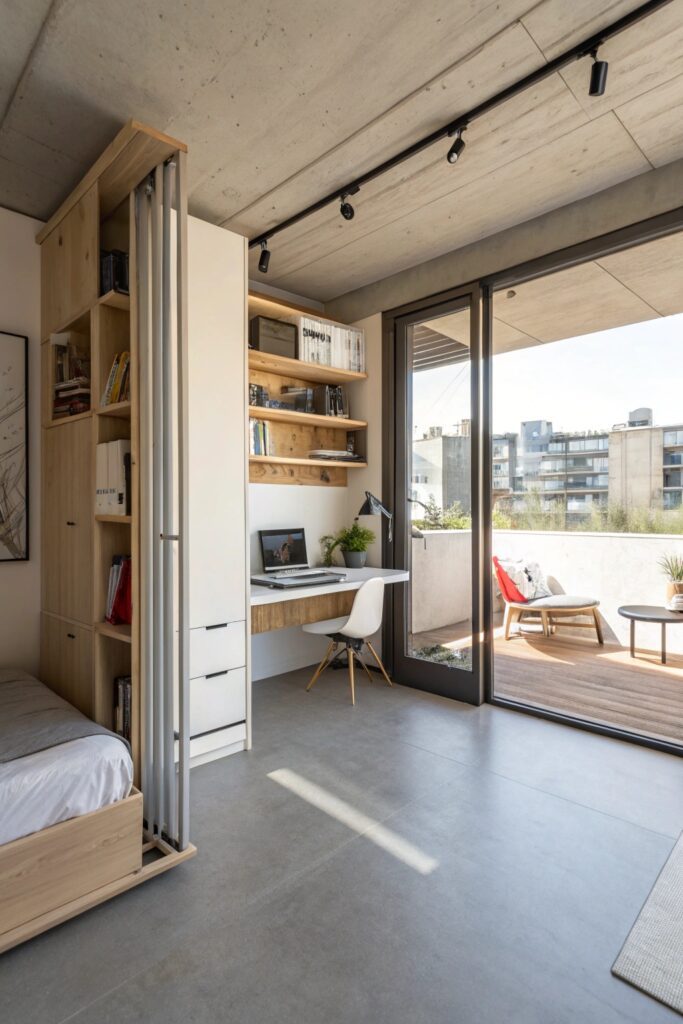
A wall bed ($800-2,500 depending on size and features) folds away entirely during the day, recovering the floor space a standard bed permanently occupies — this is one of the single highest-impact changes available specifically for studio living.
Professional installation is worth the additional cost for a wall-mounted Murphy bed specifically, since improper installation is a genuine safety concern given the mechanism’s weight and moving parts.
5. Choose a Bed with Built-In Storage
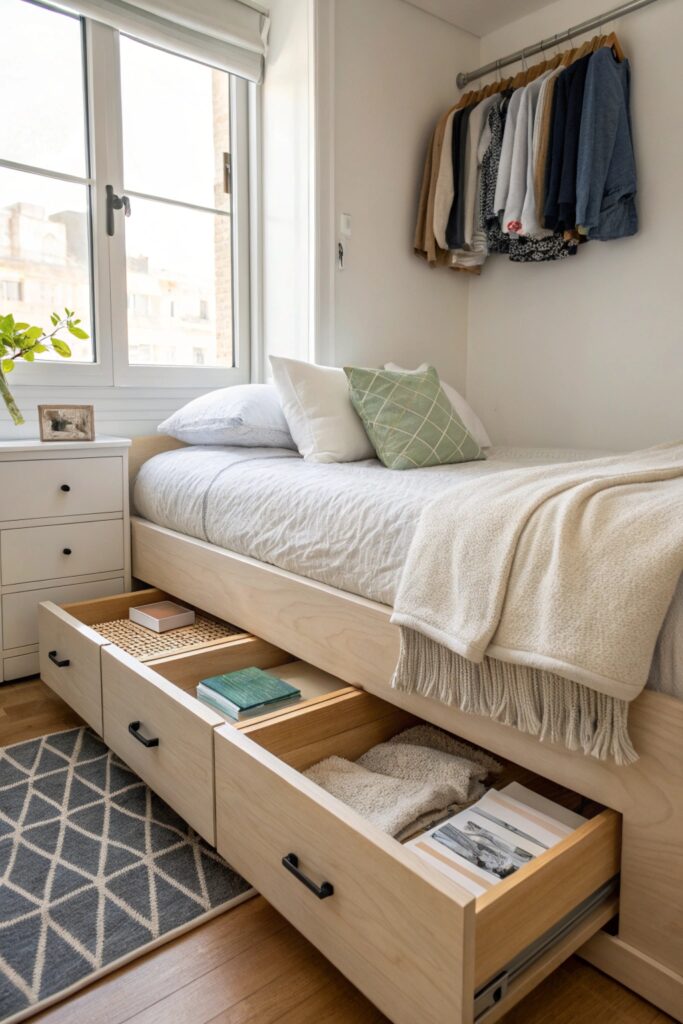
For studios where a Murphy bed isn’t practical or affordable, a platform bed with drawers or lift-storage underneath ($300-700) uses the bed’s large footprint for genuine storage capacity rather than wasted space.
This matters even more in a studio than a bedroom-equipped apartment, since a studio’s bed frame typically represents a larger proportion of the total living space.
6. Mirror, Mirror, Everywhere
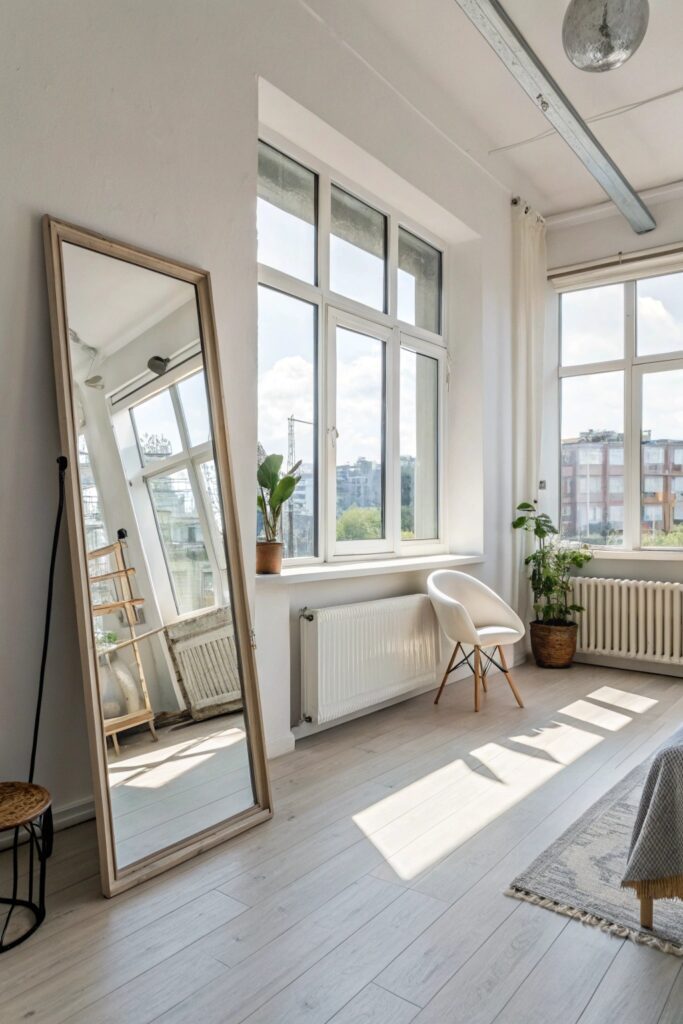
Large mirrors ($60-150 each) reflect light and add visual depth throughout a studio, and using more than one strategically (rather than a single mirror) compounds this effect across the entire open space.
Position mirrors to reflect windows or other light sources specifically, which maximizes the light-bouncing benefit rather than simply reflecting a wall or dark corner.
7. Go Light on Colors, Heavy on Texture
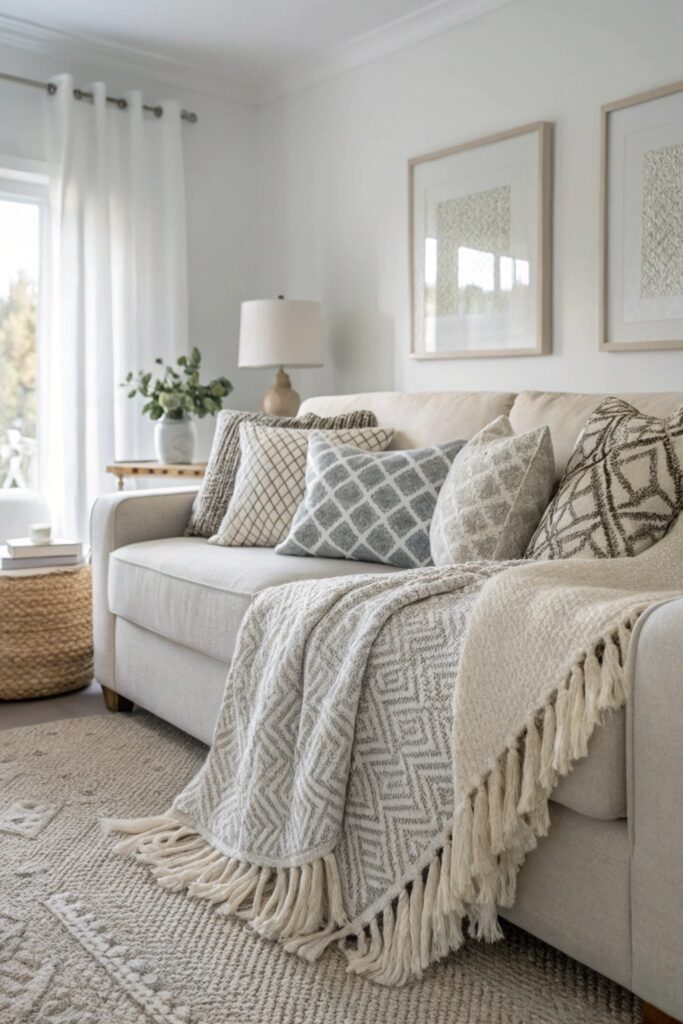
A lighter, cohesive color palette throughout the entire studio (rather than different colors per zone) helps the whole space read as more open, since color continuity prevents visual breaks that can make a studio feel more segmented and smaller.
Texture — through textiles, natural materials, and varied surfaces — does the visual interest work that color variation would otherwise provide, keeping the space from feeling flat despite the more limited color range.
8. Use Curtains or a Room Divider Instead of Walls
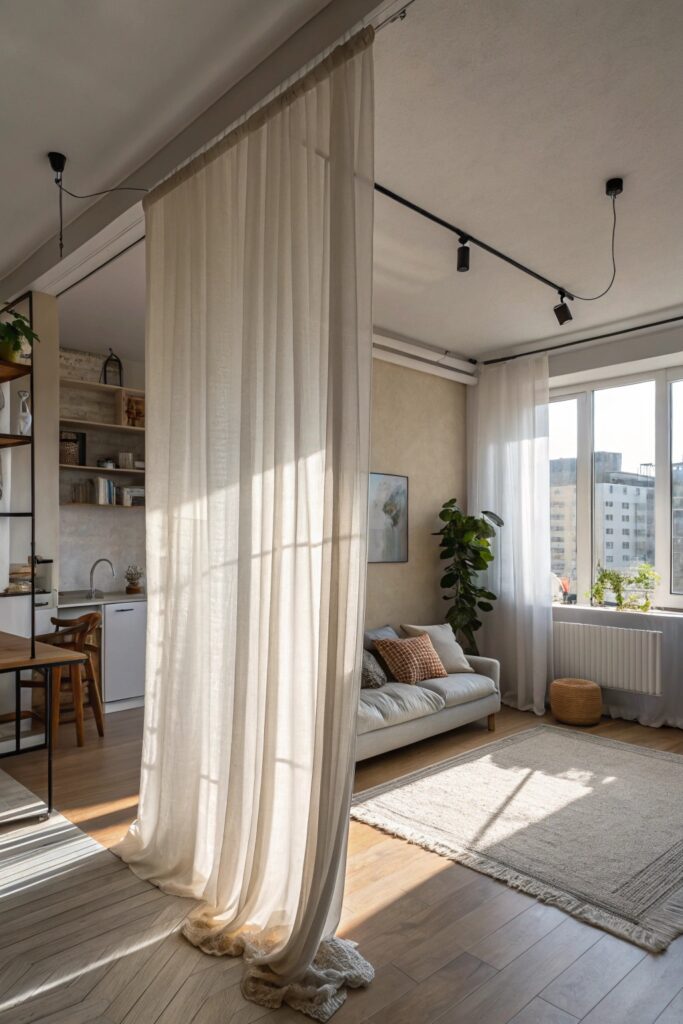
A ceiling-mounted curtain track ($40-100) or a folding screen ($80-200) can section off a sleeping area for genuine visual privacy without the cost or permanence of an actual partition wall, which most studio leases wouldn’t permit anyway.
Curtains work well where ceiling mounting is possible and offer full-width coverage, while a freestanding divider is the better option where mounting isn’t practical, requiring no installation and offering more flexible repositioning.
9. Maximize Closet Organization
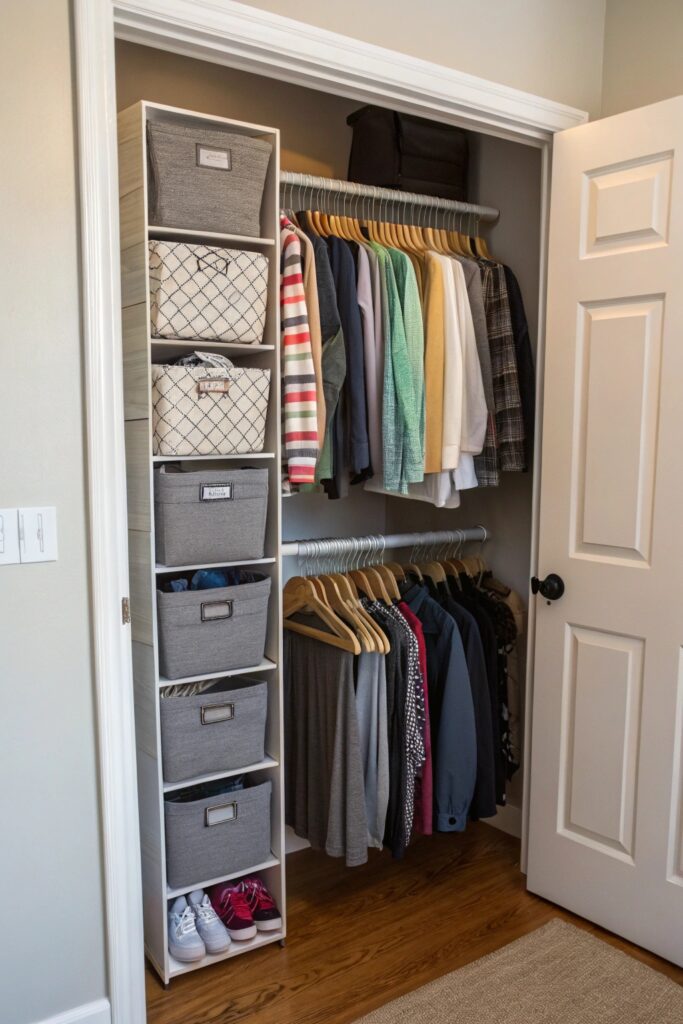
A studio’s closet often needs to handle a wider range of storage than a bedroom closet in a larger apartment, making an efficient double-hang system or added shelving ($50-150) worth the investment.
Every inch of closet capacity effectively expands the studio’s total livable storage, which matters more here than in apartments with additional storage options elsewhere.
10. Choose a Kitchen Cart Over a Full Island
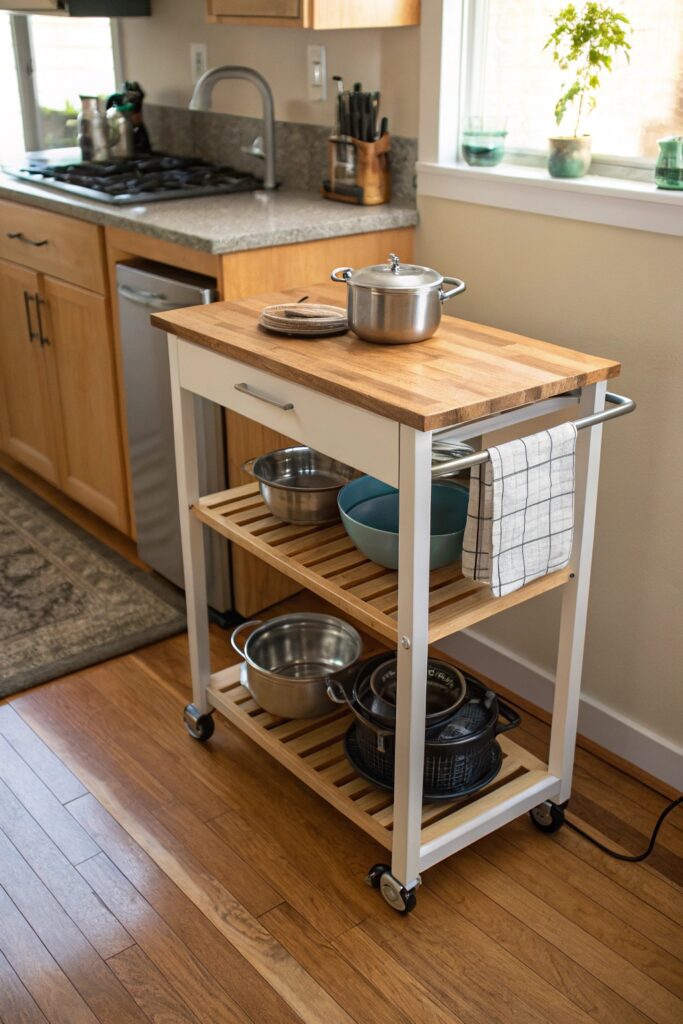
A rolling kitchen cart ($80-200) adds counter space and storage that can be moved or tucked away as needed, offering flexibility a fixed island doesn’t in a studio’s typically compact kitchen area.
This works especially well combined with the cart doubling as a room divider between the kitchen and living zones, adding function beyond its primary storage purpose.
11. Hang Bulky Items on the Wall
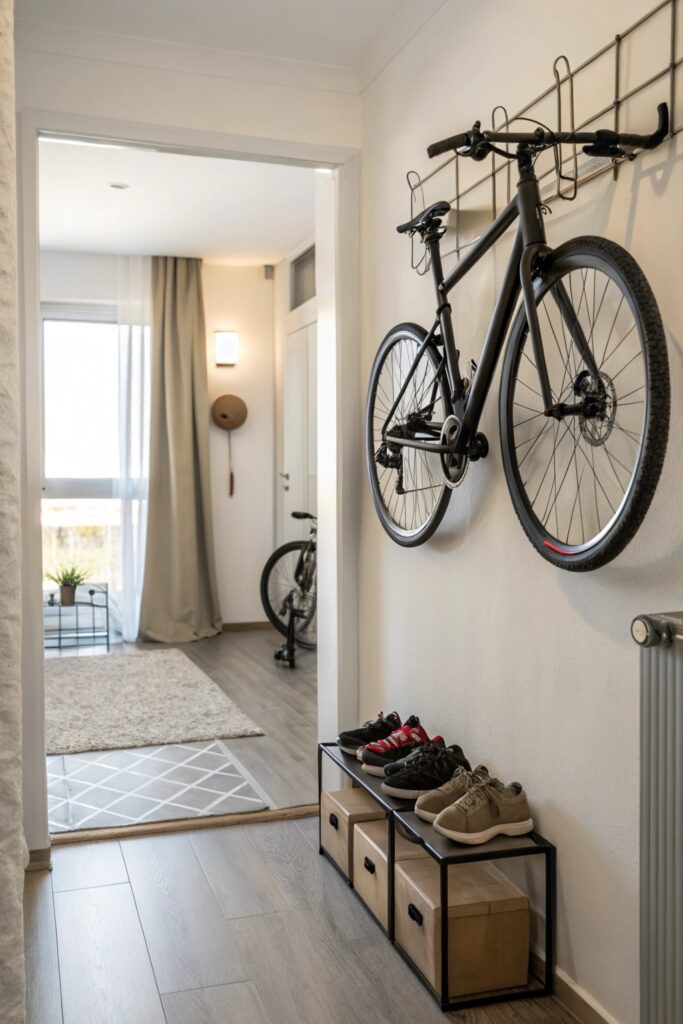
A wall-mounted bike hook, or hooks for sports equipment and luggage ($15-40), recovers floor space these bulky items would otherwise occupy, which matters in a studio where floor space is consistently the scarcest resource.
This vertical-storage approach works for any bulky item that doesn’t need daily access but otherwise consumes valuable floor area better used for daily living.
12. Optimize Your Entryway
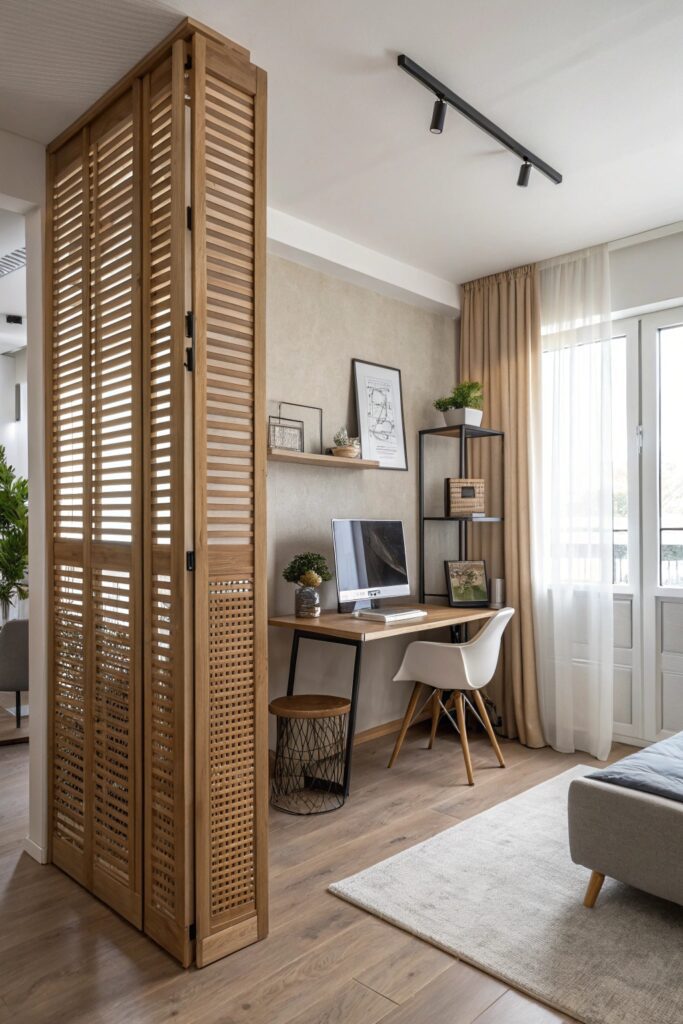
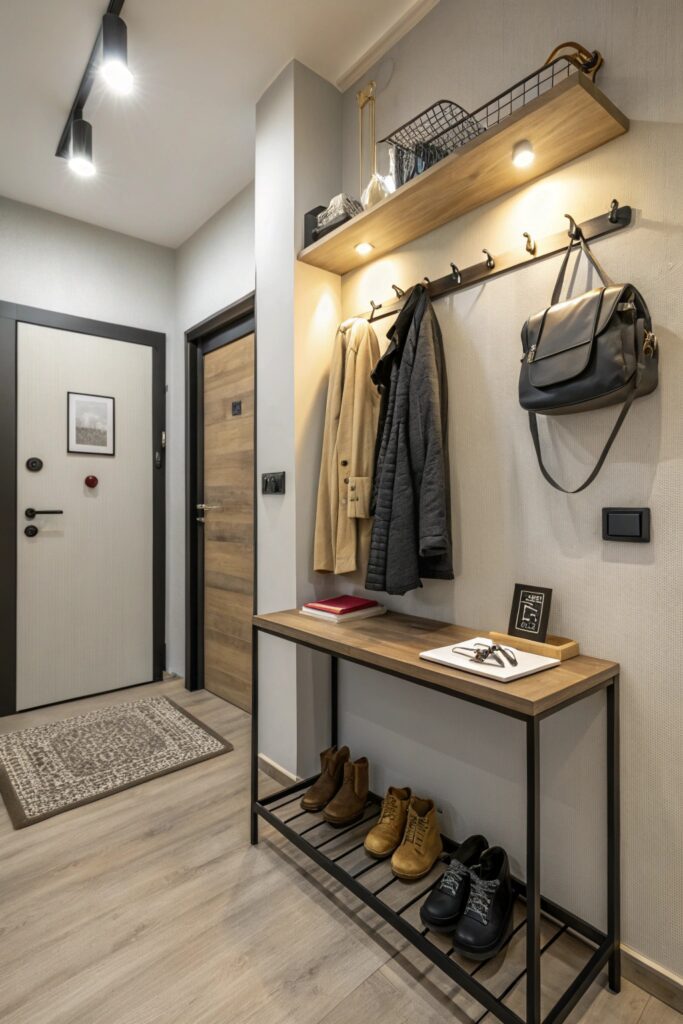
A small entry console with a mirror, hooks, and a spot for shoes ($60-150) prevents the genuine daily clutter of keys, mail, and outerwear from accumulating on the studio’s main living surfaces, which matters more when there’s no separate room to contain that clutter.
This is a small investment relative to its daily functional impact, since a studio’s single room absorbs every organizational gap that a larger apartment could otherwise isolate.
13. Choose Furniture with Legs, Not Bulk
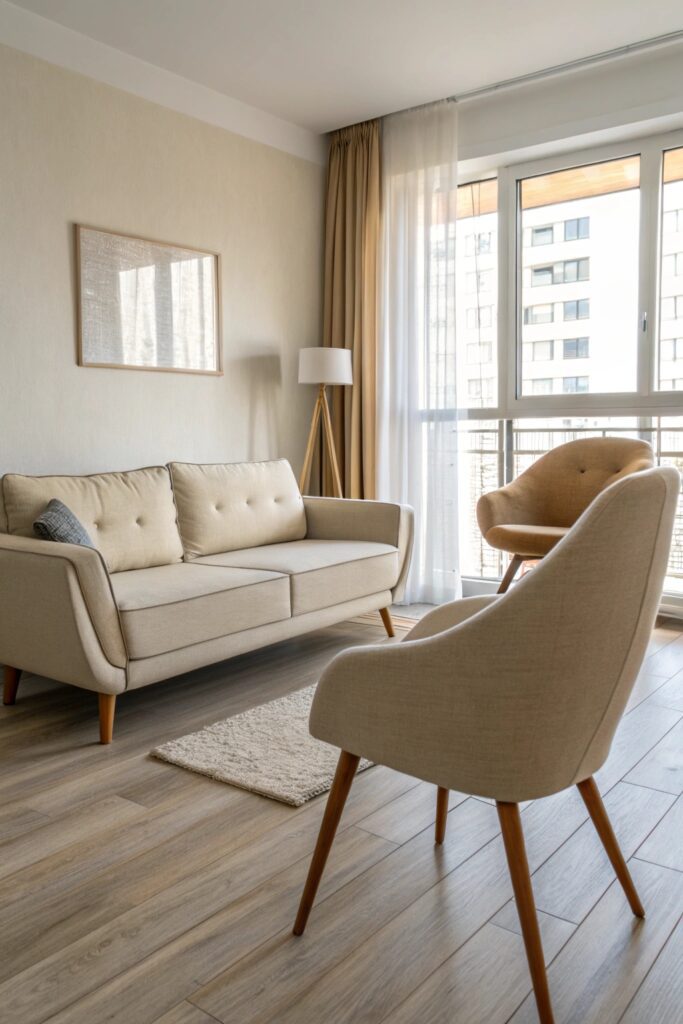
Furniture raised on visible legs, rather than a solid base touching the floor, lets light and sightlines pass underneath, which contributes meaningfully to how open a studio feels throughout its single continuous space.
This effect compounds across a studio’s furniture more than in a segmented apartment, since every piece is visible from most vantage points in the room at once.
14. Edit Ruthlessly (And Keep Editing)
A studio genuinely cannot absorb the same volume of possessions a larger apartment can, making regular decluttering less optional and more of an ongoing necessity for the space to function well.
A consistent one-in-one-out habit, rather than periodic major purges, keeps a studio’s tighter storage capacity from becoming overwhelmed again shortly after each cleanup effort.
Final Thoughts
A Murphy bed or storage bed frame matters more in a studio than in any other apartment type, since the bed typically represents the single largest fixed furniture footprint in a room with no separate bedroom to contain it. Zoning through rugs, curtains, or a room divider is worth prioritizing next, since psychological separation between functions matters as much as physical storage for making a studio feel genuinely livable rather than just one undifferentiated room.