
Your backyard should feel like a retreat, not a punishment. If you’ve ever stepped outside in July and immediately retreated back indoors, you know exactly what I’m talking about. The sun is relentless, and a basic patio umbrella just doesn’t cut it anymore.
Shade sails are the upgrade your outdoor space deserves. They’re affordable, stylish, and truly effective at blocking UV rays while making your backyard look like it belongs in an architecture magazine. I installed my first one three summers ago and honestly can’t imagine going back.
Here are 12 sun sail shade ideas that actually work — and look great doing it.
1. The Classic Single Triangle Sail
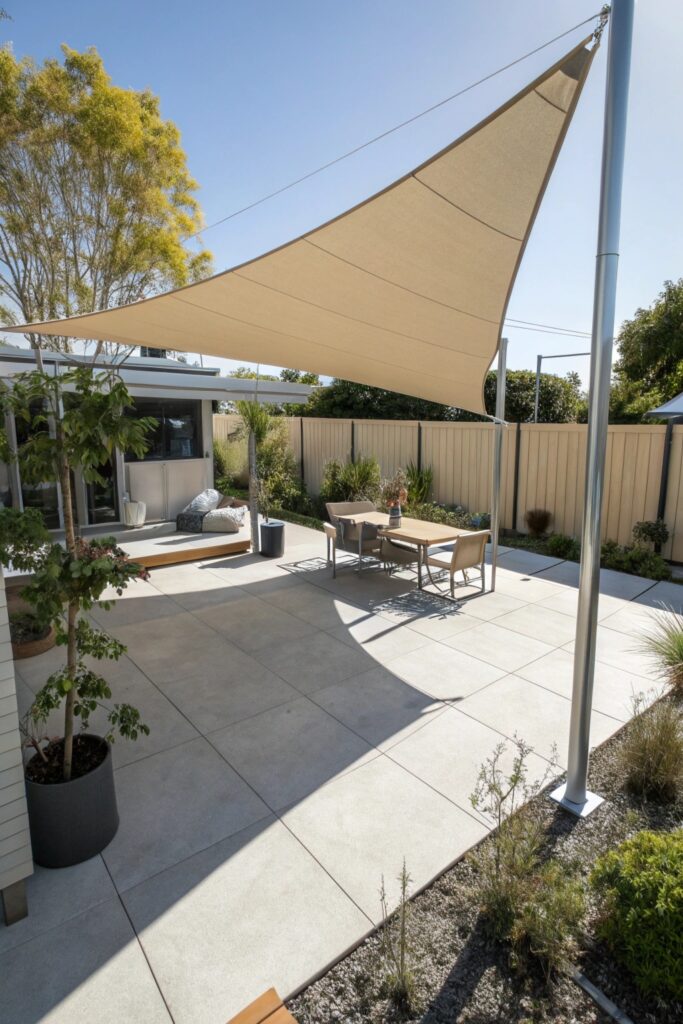
Sometimes simple is the smartest move. A single triangle shade sail mounted between three anchor points gives you clean, modern coverage without overwhelming a smaller backyard.
Choose a neutral tone — sand, slate grey, or white — and it works with virtually any outdoor aesthetic. Mount it at a slight angle rather than flat to allow rainwater to run off naturally and keep the sail taut.
- Works best for patios up to 12×12 feet
- Use stainless steel hardware for long-term durability
- Angle one corner lower for better shade coverage throughout the day
It’s the starter shade sail for a reason — low cost, high impact, zero fuss.
2. Overlapping Multiple Triangle Sails
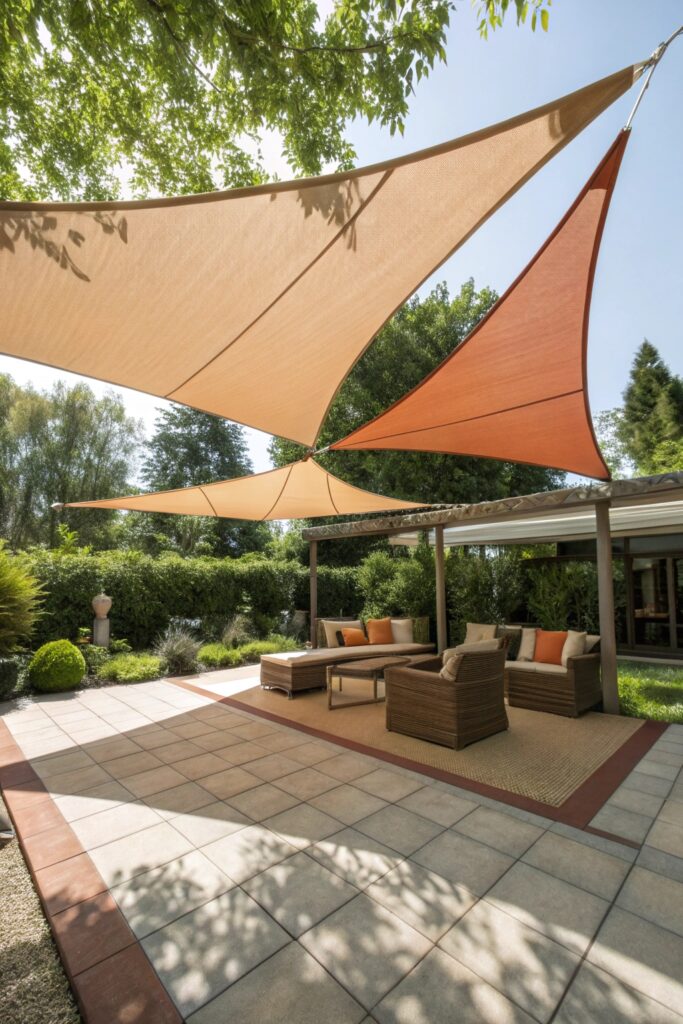
Why stop at one when you can layer? Two or three overlapping triangle sails create a dynamic, sculptural look while maximizing shade coverage across a larger area.
Alternate colors — think warm beige over terracotta, or charcoal layered with white — for a visually interesting effect. The overlapping zones also provide deeper shade in the areas where two sails meet, which is perfect for seating areas.
- Great for larger backyards or open patios
- Stagger heights to create a layered canopy effect
- Mix complementary colors for a designer outdoor look
IMO, this is the most visually impressive setup on this entire list. 🙂
3. Rectangle Sail Over a Dining Area
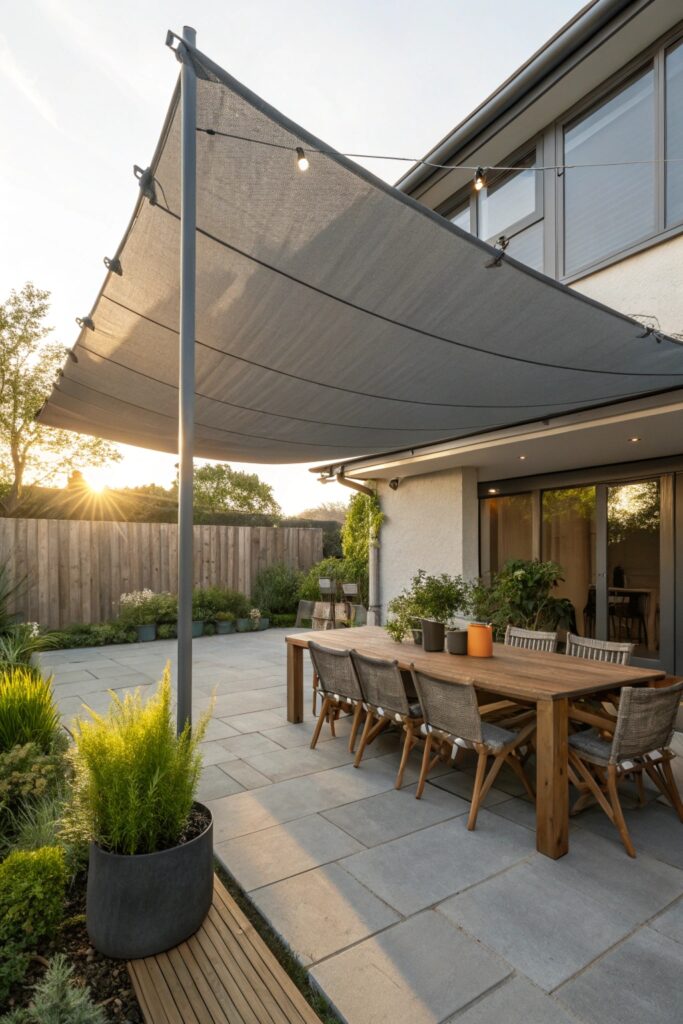
Got an outdoor dining setup? It needs a proper roof — and a large rectangle shade sail is the most practical solution.
A rectangle sail spans more square footage with fewer anchor points compared to multiple triangles. Mount it directly over your table and chairs, slightly off-center toward the afternoon sun direction, to maximize shade during peak dining hours.
- Standard sizes range from 10×13 feet to 16×20 feet
- Choose HDPE fabric for UV blocking and breathability
- Install with turnbuckles for easy tension adjustment
This setup transforms an outdoor dining area into a truly usable space even on the hottest days.
4. Between-House-and-Post Configuration
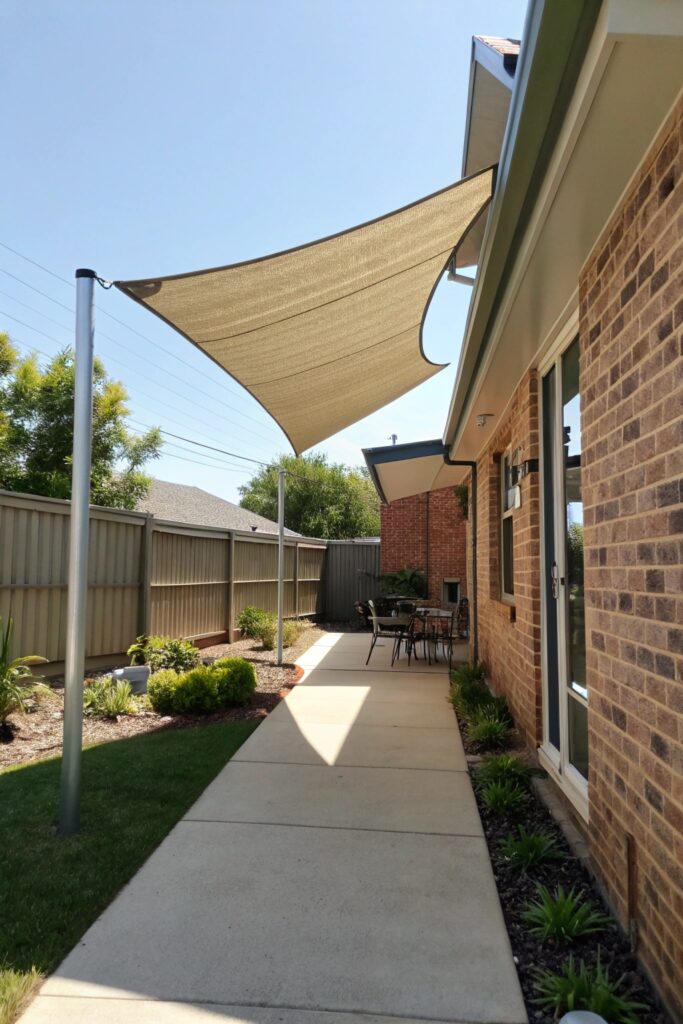
No trees? No problem. Anchoring one side of your shade sail to your home’s exterior wall and the other to a freestanding post is one of the most practical setups for suburban backyards.
This configuration creates a covered walkway or transition zone from your back door to the yard. It keeps you shaded the moment you step outside — which, trust me, makes a bigger difference than you’d expect on a 95-degree afternoon.
- Use heavy-duty wall anchors rated for tension loads
- Keep the sail angle steep enough for rain drainage
- Powder-coated steel posts handle weather far better than wood
It’s a smart, low-footprint solution that uses your existing structure efficiently.
5. Shade Sail Over a Pool or Hot Tub
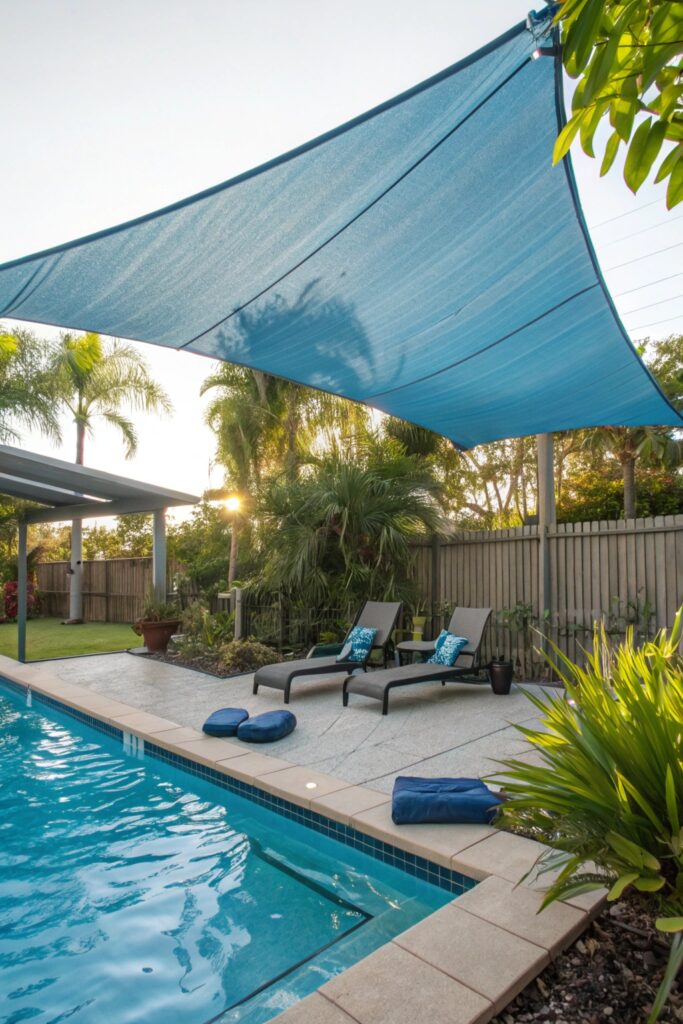
Pools and hot tubs in direct sun are basically just hot soup makers by mid-afternoon. A shade sail positioned over part of your pool area solves this immediately.
You don’t need to cover the entire pool — covering the lounging area and entry steps is enough to make a real difference. It also reduces water evaporation and cuts down on chemical use, which saves money over time.
- Position to shade the west-facing side for afternoon relief
- Use a waterproof-rated sail near water features
- Keep clearance height at 9-10 feet minimum for safety and airflow
FYI — this setup also protects your skin during those long summer lounging sessions, which your dermatologist will appreciate.
6. Colorful Sail for a Kids’ Play Area
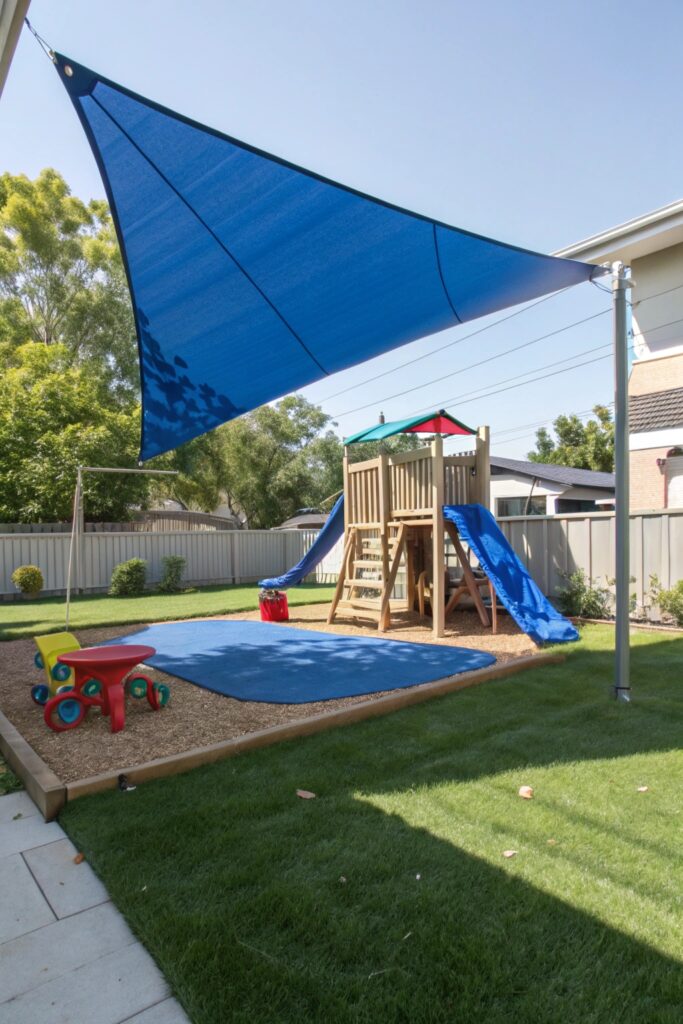
Shade sails over kids’ play areas are easily one of the best backyard investments a parent can make. Bright, bold colors like cobalt blue, lime green, or cherry red make the space feel fun while blocking the UV rays that matter most for young skin.
Mount the sail lower than you would for an adult seating area — around 7 to 8 feet — to keep the shade concentrated right where the kids actually are. Use rounded corner rings for a cleaner, safer installation.
- Bold colors fade faster than neutrals — budget for replacement every 3-4 years
- Multiple small triangle sails work well over irregular play equipment shapes
- Always anchor into concrete footings for security with active kids nearby
7. Shade Sail Pergola Hybrid
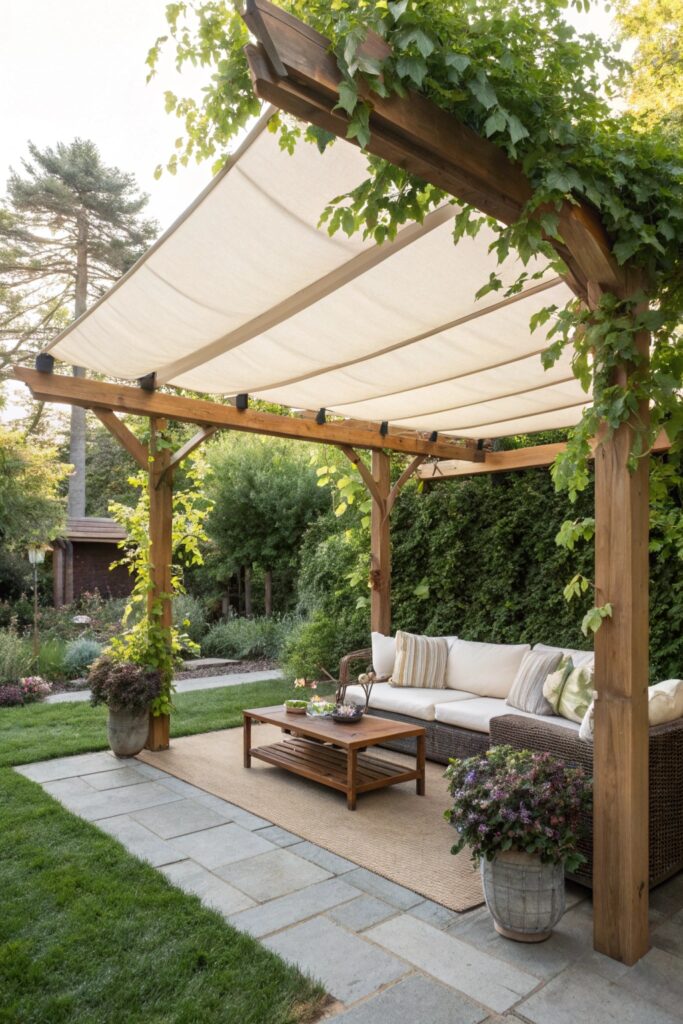
Take your existing pergola and upgrade it with a shade sail draped across the top beams. This hybrid approach gives you the structure of a pergola with the actual shade coverage it usually lacks.
Most pergolas look amazing but block maybe 30% of direct sunlight — which is basically decorative, not functional. Layering a shade sail across the rafters fills those gaps and turns your pergola into a truly cool outdoor room.
- Use clip systems or grommets to attach sails without drilling into beams
- Choose a sail color that complements your pergola’s wood tone
- A single rectangle sail usually covers a standard pergola perfectly
This is the glow-up your pergola has been waiting for.
8. Shade Sail Over a Vegetable Garden
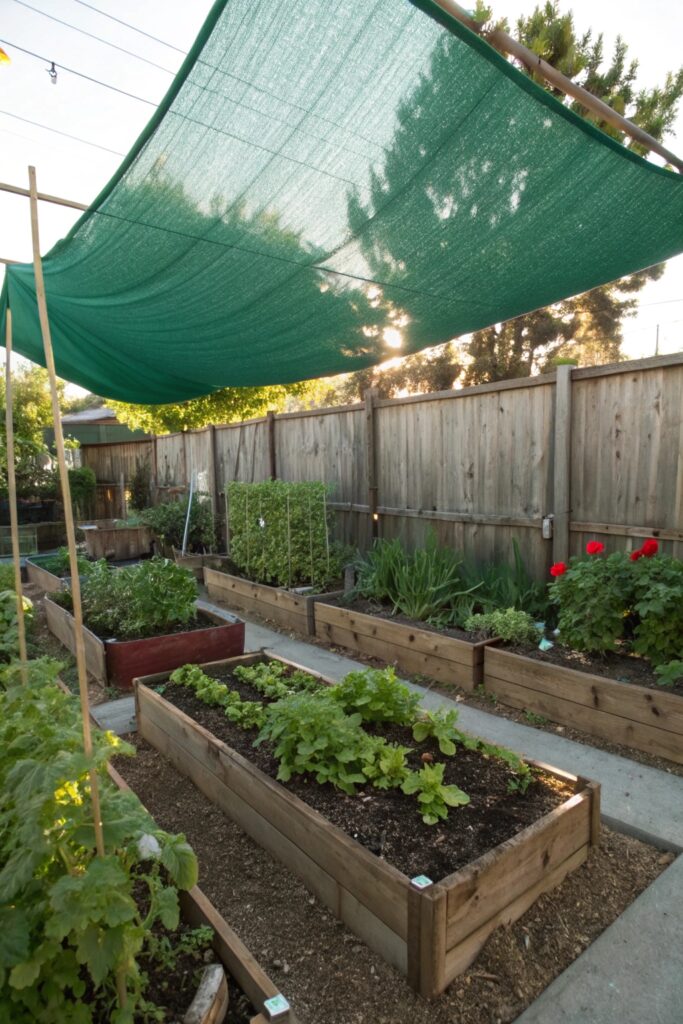
Your tomatoes are sunburning too — and a shade sail over a vegetable garden can actually improve yields during extreme summer heat.
Most vegetables struggle when temperatures push past 90°F. A 30-40% shade cloth sail keeps soil temperatures lower, reduces water evaporation, and extends your growing season into late summer. Leafy greens especially thrive under filtered shade.
- Use knitted polyethylene shade cloth rather than solid fabric for airflow
- Mount at 6-7 feet high to allow easy access beneath
- Position to allow morning sun and afternoon shade for most vegetables
It’s one of those backyard upgrades that’s both beautiful and completely functional.
9. Coastal-Inspired White Sail Cluster
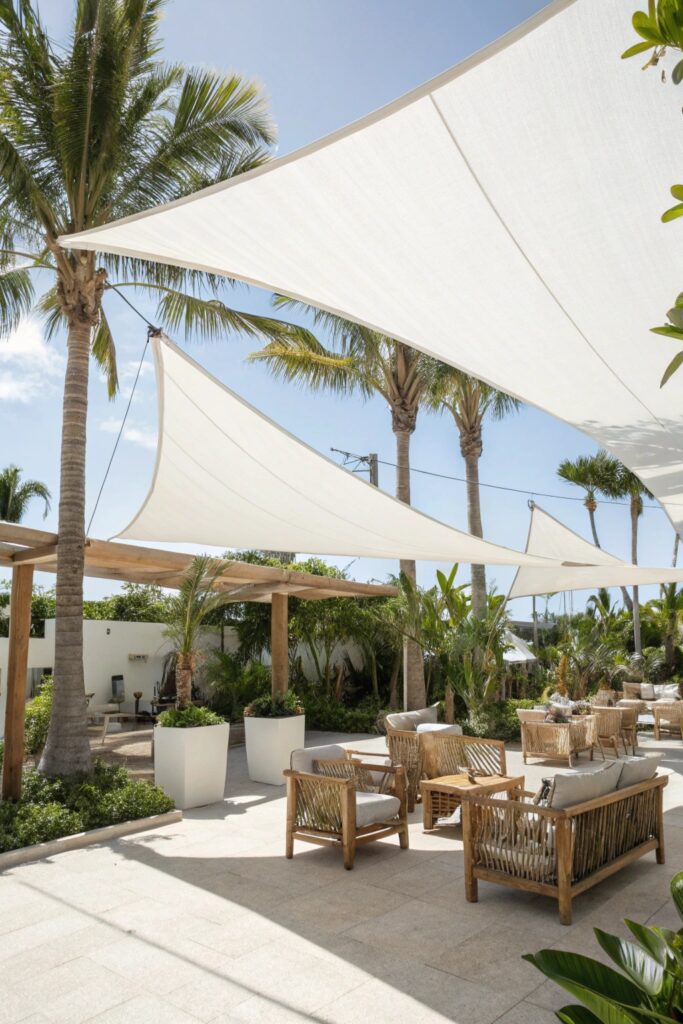
White shade sails have a clean, breezy coastal aesthetic that works brilliantly in any backyard — not just beach houses. A cluster of three white triangle sails at varying heights creates a sophisticated, resort-style look.
Pair this setup with natural wood furniture, rope accents, and potted tropical plants to complete the vibe. White sails reflect sunlight rather than absorbing it, which keeps the space slightly cooler than darker-colored alternatives.
- White and cream sails show dirt faster — plan for regular cleaning
- HDPE fabric maintains color and structure better than canvas
- Works best in backyards with clean, minimal landscaping
If you want your backyard to look like a boutique hotel rooftop, this is your setup.
10. Shade Sail Carport Setup
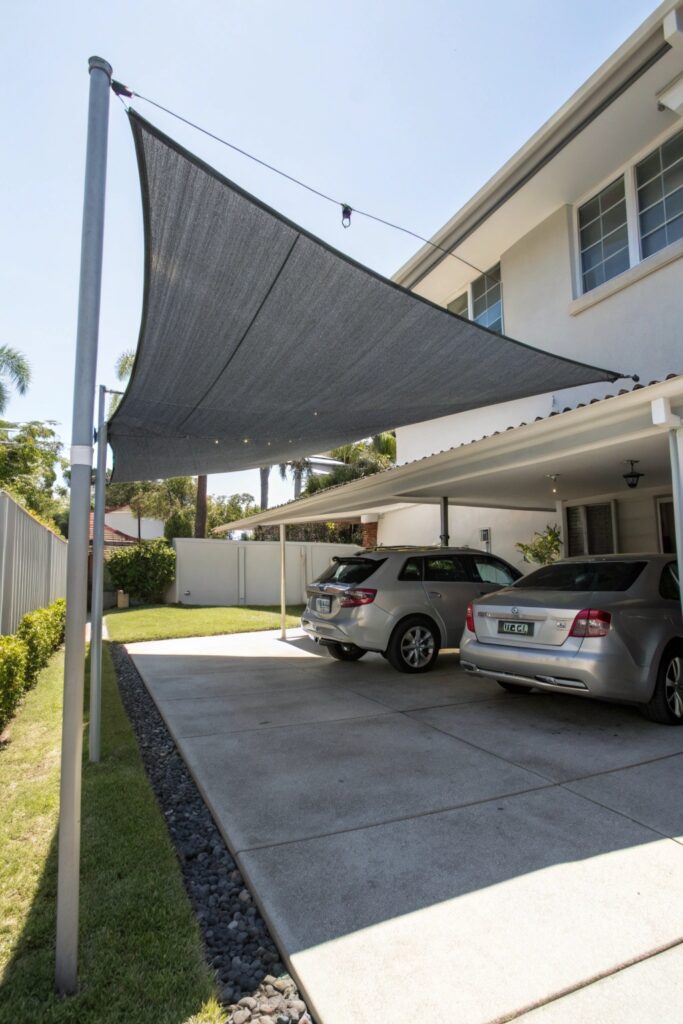
Your car parks outside all day baking in the sun — and your interior suffers for it. A large rectangle or square shade sail configured as a carport cover protects your vehicle without the expense of a permanent structure.
This setup works especially well for driveways with existing posts or fences to anchor into. It keeps your car noticeably cooler, protects the paint from UV fading, and takes about a weekend to install properly.
- Choose a 16×20 foot rectangle sail for standard two-car coverage
- Ensure minimum 10-foot clearance for SUV and truck heights
- Use commercial-grade hardware rated for wind load in your climate
It’s a surprisingly underrated use for shade sails that most people never consider.
11. Low-Hung Hammock Shade Zone
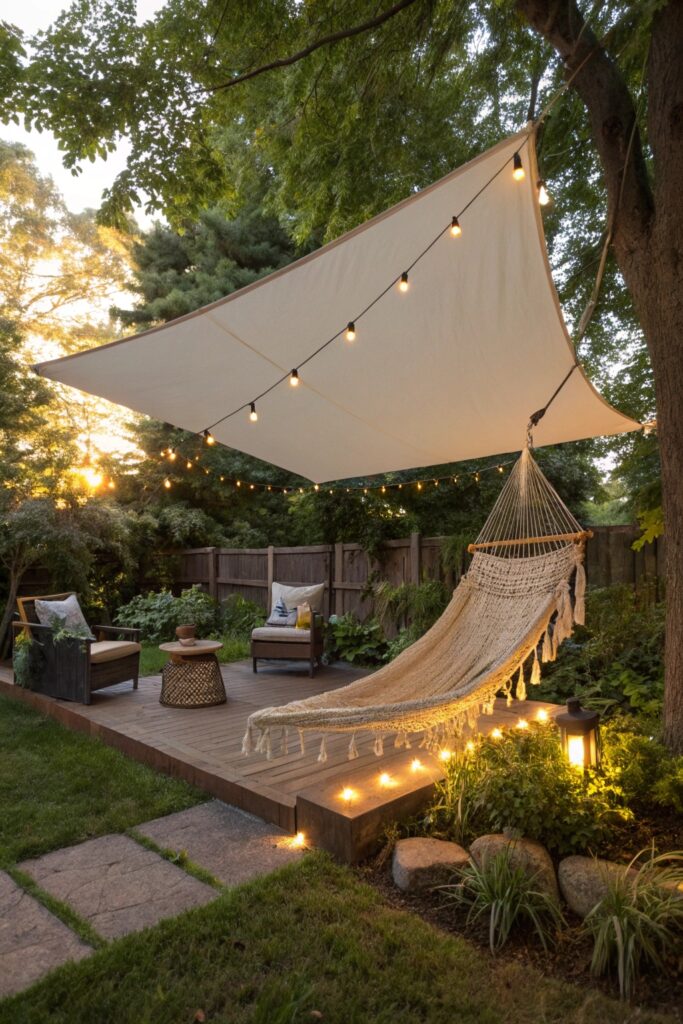
Create the ultimate relaxation corner by combining a low-angled shade sail with a hammock or daybed directly underneath.
Mount the sail at one high anchor point and two lower ones to create a deep, cocoon-like shade pocket. Position your hammock in the deepest shade zone — typically toward the lower corners. Add some string lights along the sail’s edge for evenings and you’ve built yourself a personal oasis.
- Low-angle sails provide deeper shade than flat horizontal installations
- Use breathable HDPE so you don’t trap heat underneath
- A single 16×16 square sail comfortably covers a hammock with room to spare
Honestly, once you build this corner, you’ll never want to leave your backyard. :/
12. Multi-Sail Backyard Room Divider
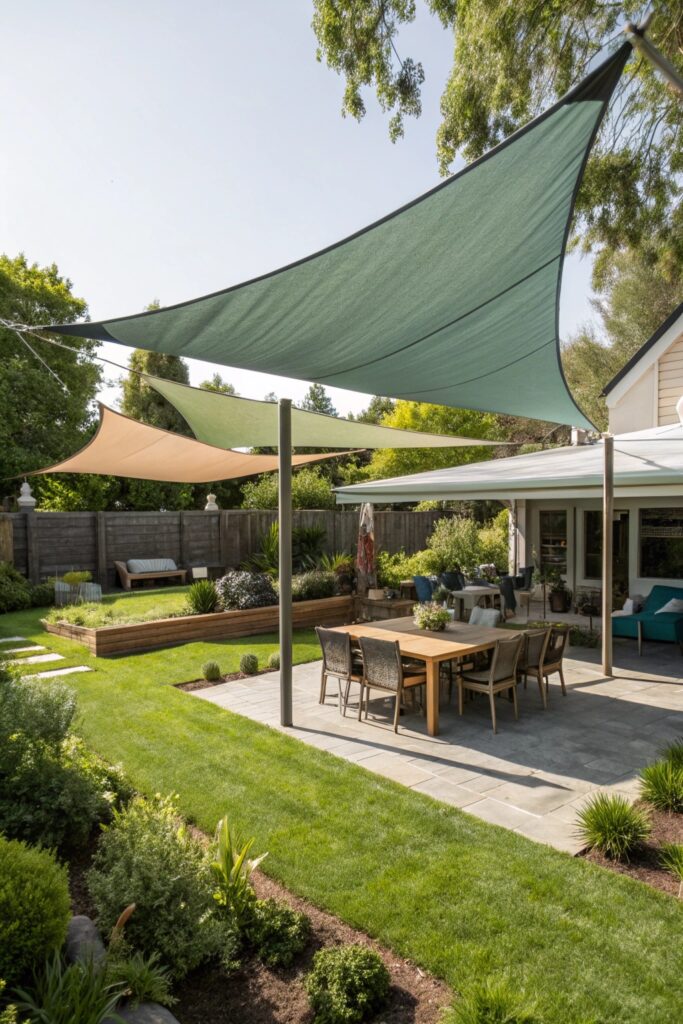
Use shade sails not just for shade, but to define distinct zones within a larger backyard — a dining area, a lounge zone, and a kids’ corner, each with its own sail overhead.
This approach turns an open, undefined backyard into a thoughtfully organized outdoor living space. Each zone feels intentional and separate, which noticeably changes how you use the space. Vary sail colors subtly between zones to create visual separation without clashing.
- Three coordinating colors work better than three identical ones
- Use shared anchor posts between zones to reduce total hardware needed
- This setup works best for backyards over 600 square feet
It’s the most ambitious idea on this list — and the most rewarding when done right.
Your Backyard Deserves Better Than Full Sun
Pairing sails with other outdoor upgrades? See our guides to decks and porches ideas and hot tub ideas for more ways to build out the space.
Sun sails are one of those upgrades that you wonder how you survived without once you finally install one. They’re affordable, they look incredible, and they truly make your outdoor space usable during the hottest months of the year.
Start with one setup that matches your biggest pain point — whether that’s the dining table, the pool area, or just a quiet corner to relax. Get comfortable with the installation, then expand from there.
Your backyard has potential. Stop letting the sun bully you out of it.