
An end table’s styling needs to account for its genuine dual role — a functional surface within reach of the seating area, and a smaller display space that shouldn’t compete with the room’s larger focal points.
Below are 10 ways to style an end table well, with practical notes for each.
1. The Classic Lamp and Book Stack Combo
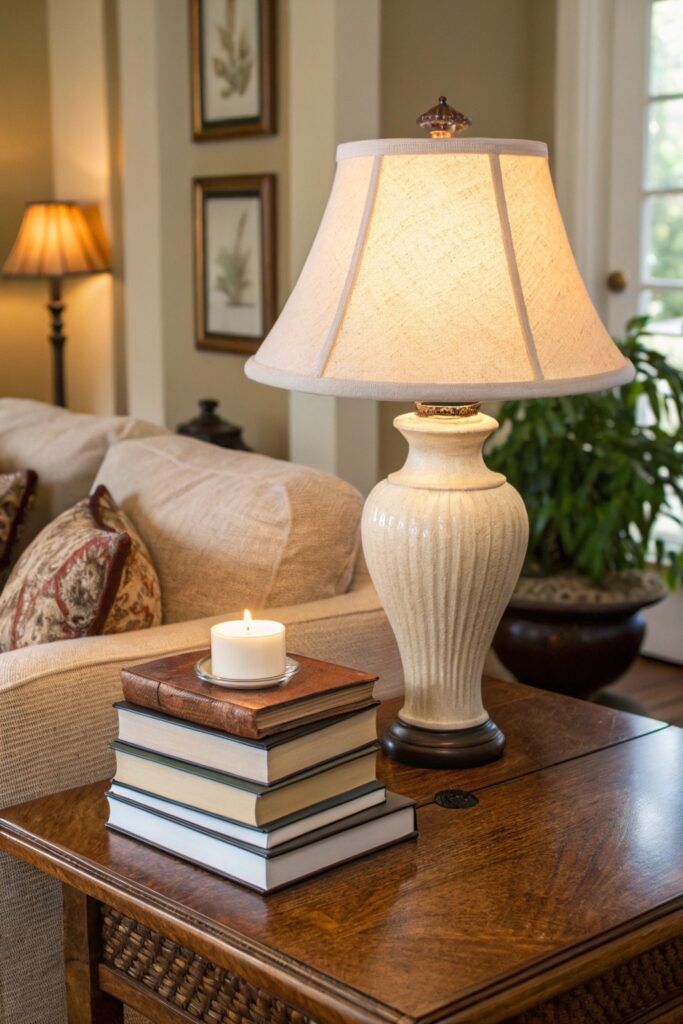
A table lamp paired with a small book stack covers both genuine function (supplemental lighting for the seating area) and styling, working well in nearly any living room style.
Choose a lamp with a warm-toned bulb specifically, since this fixture often serves as one of the room’s main ambient light sources during evening use.
2. A Single Statement Vase With Fresh or Faux Stems
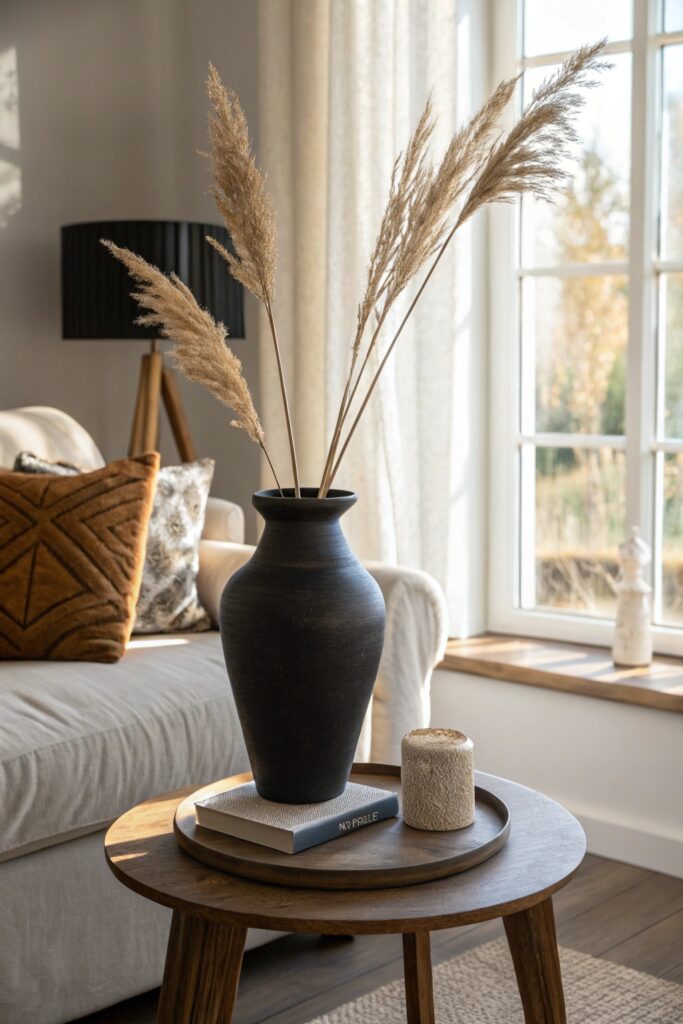
A single tall vase adds genuine height without requiring much of the table’s limited surface area, which matters since an end table typically sits beside seating rather than serving as a primary surface.
Faux stems work well here since they eliminate any concern about water spilling near a lamp cord or other electronics that might sit nearby.
3. A Decorative Tray Styled With Small Objects
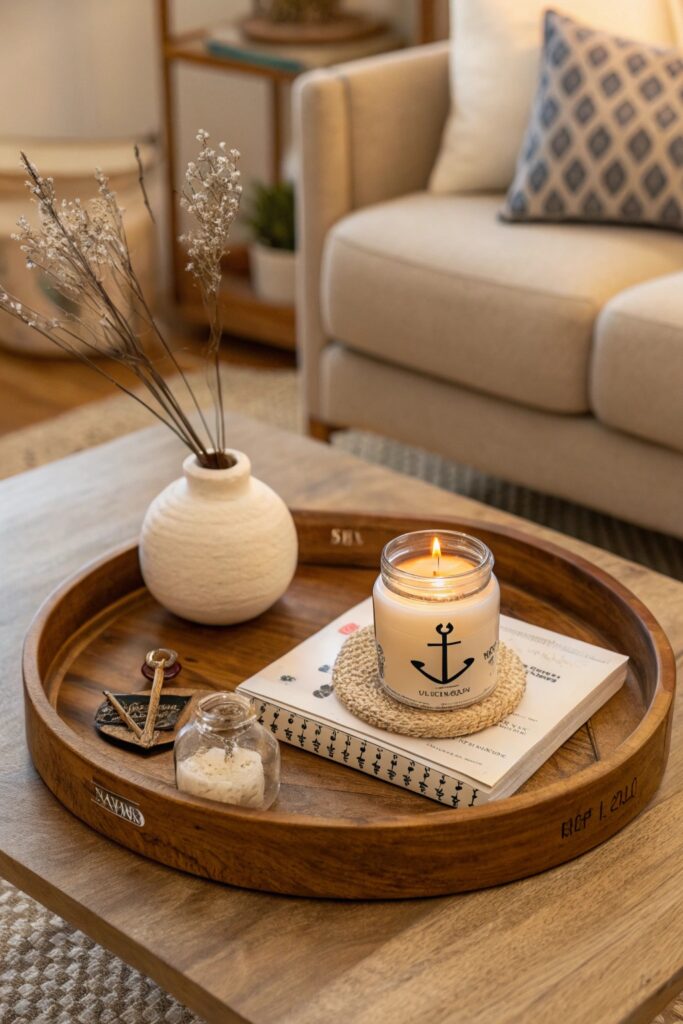
A tray groups smaller items — coasters, a small dish, a candle — into a cohesive vignette, which reads as considerably more styled than the same items scattered loosely.
Choose a tray with a slight lip or edge, which keeps smaller items from sliding off during normal daily use of the surface.
4. Stack Books Horizontally and Style the Top
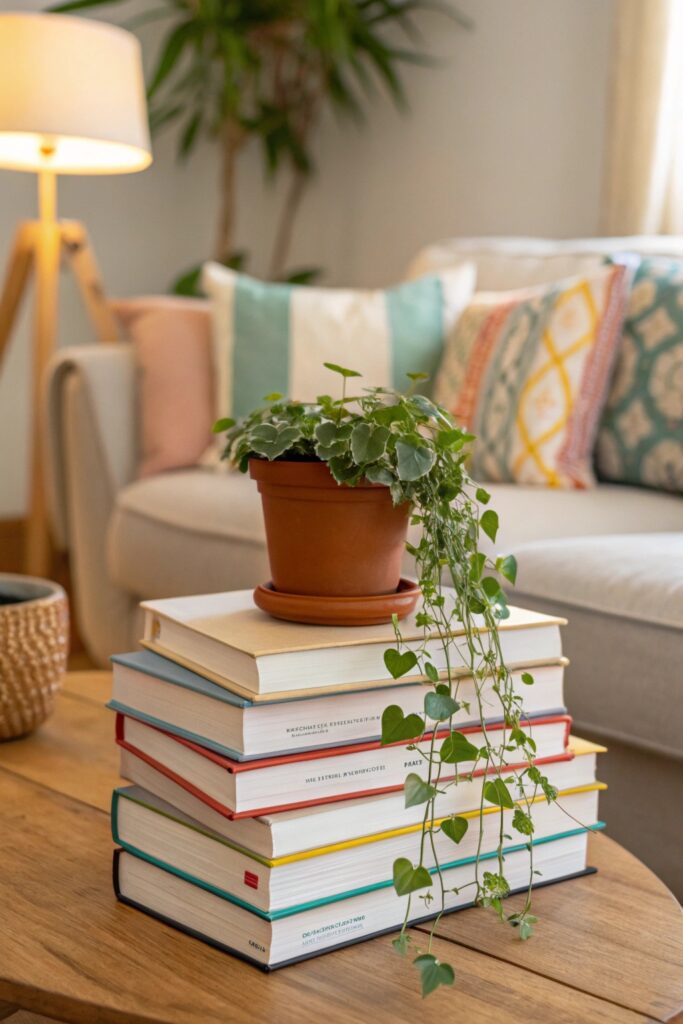
Books stacked flat with a small object placed on top bring genuine height variation and personality, working as one of the most versatile end table styling formulas available.
Vary the stack height slightly between multiple end tables in the same room, which prevents the styling from feeling too repetitive if you have several tables in view at once.
5. Add a Small Indoor Plant or Succulent
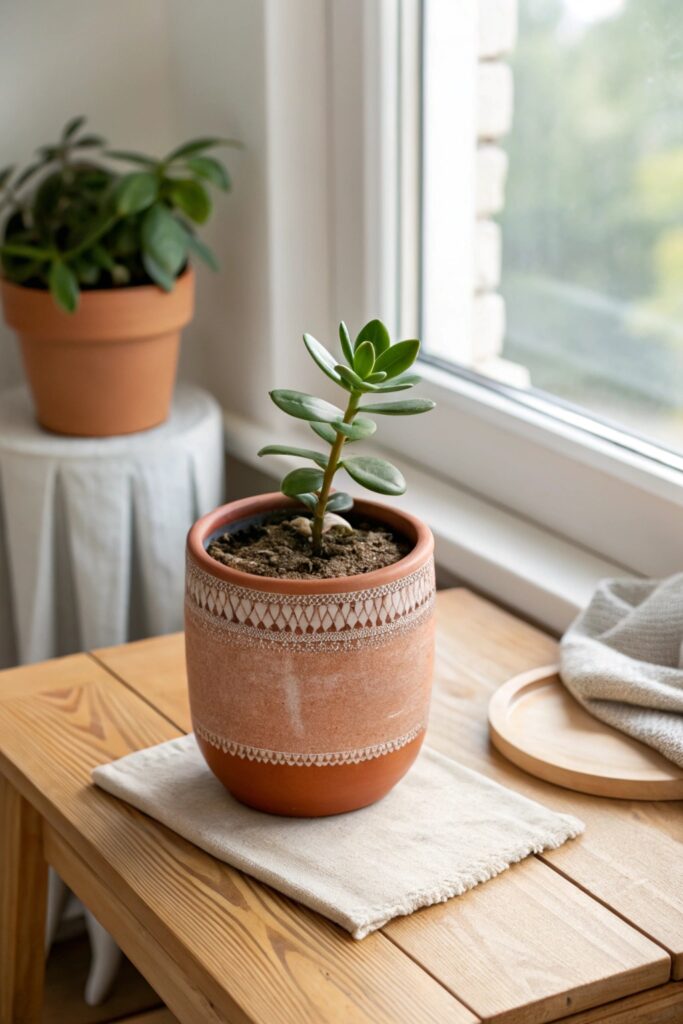
A small plant softens the table’s hard surfaces with organic texture, and a low-maintenance succulent specifically suits an end table’s often lower light exposure near seating.
Confirm the table’s actual light exposure before choosing a real plant, since end tables positioned away from windows may not support anything beyond a genuinely low-light variety.
6. Create a Candle Vignette
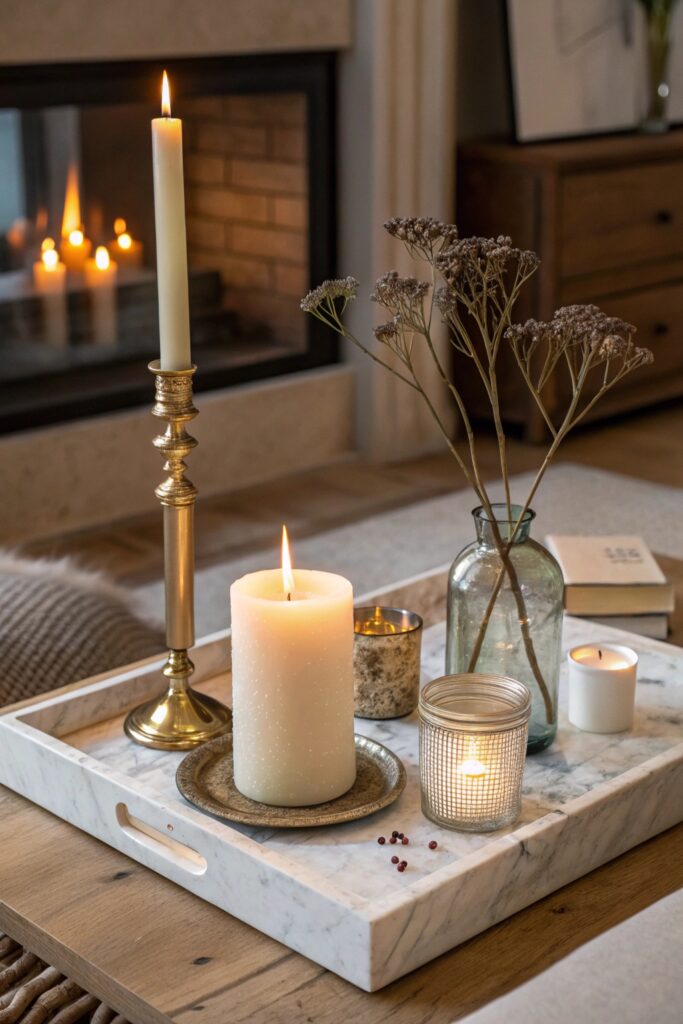
A grouping of candles in varying heights adds genuine evening ambiance to a seating area, working especially well on an end table positioned within reach for actual lighting and use.
Choose flameless candles specifically if the table sits within reach of pets or young children, which removes any open-flame safety concern.
7. Display a Sculptural Decorative Object
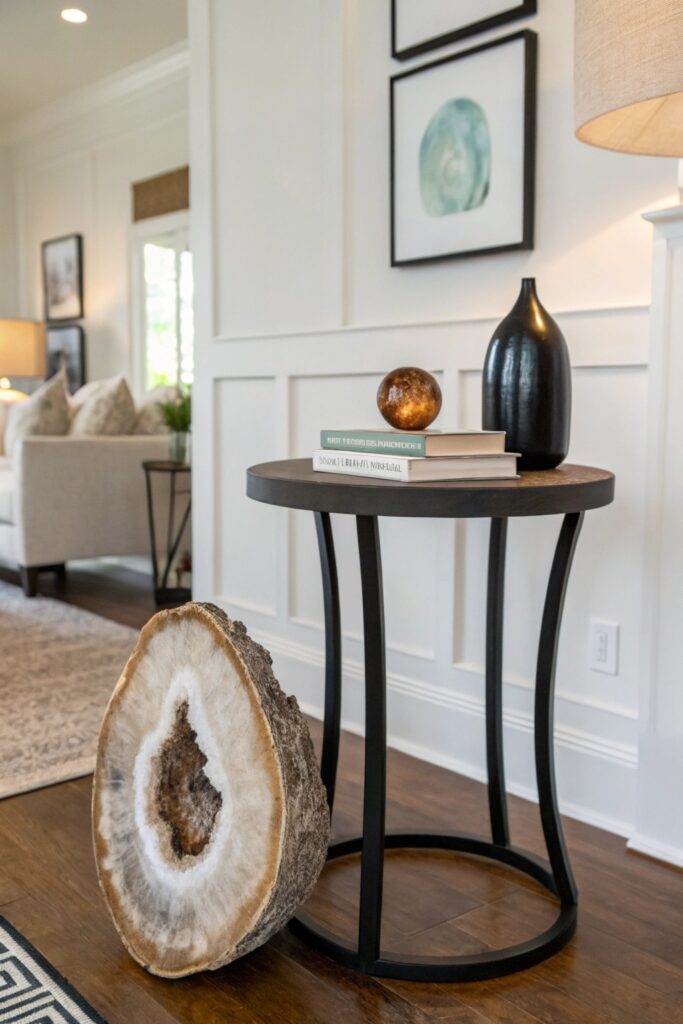
A single distinctive object — a piece of pottery, a small sculpture — gives the table a genuine focal point without requiring several smaller items competing for attention.
Choose an object with a genuine personal story or connection when possible, since these details are what guests are most likely to actually notice.
8. Style With a Small Mirror or Framed Art Piece
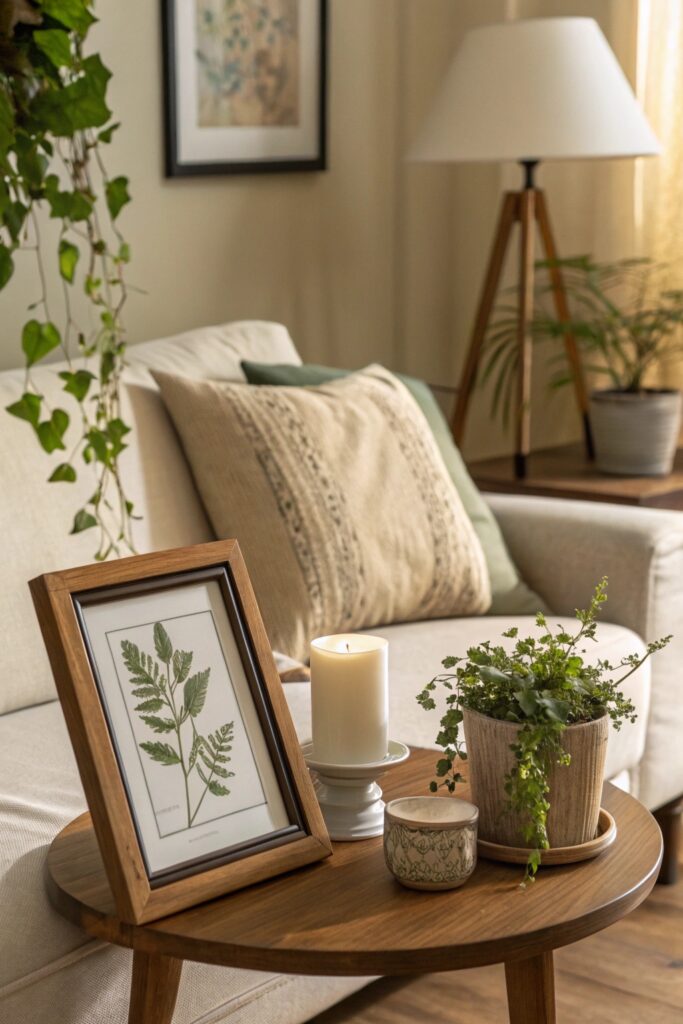
A small mirror or print leaned against the wall behind the table adds height and personality without requiring any wall damage, and it’s easy to swap as your styling preferences change.
Lean the art or mirror at a slight backward angle against the wall, which looks more intentional than a piece propped perfectly vertical without support.
9. Use a Matching Pair of End Tables Symmetrically
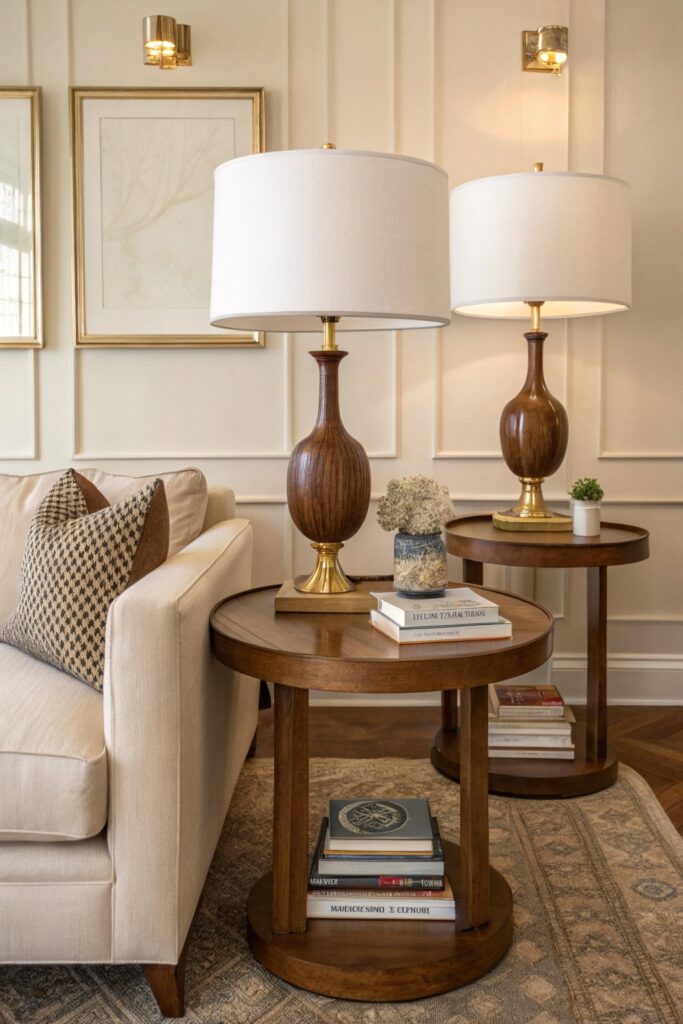
Styling two end tables as mirror images of each other, rather than identical twins, creates genuine visual balance on either side of a sofa while still feeling intentional rather than repetitive.
This mirrored approach works particularly well when the two tables flank a sofa symmetrically, since the visual balance reinforces the room’s overall sense of order.
10. Layer Texture With Natural Materials
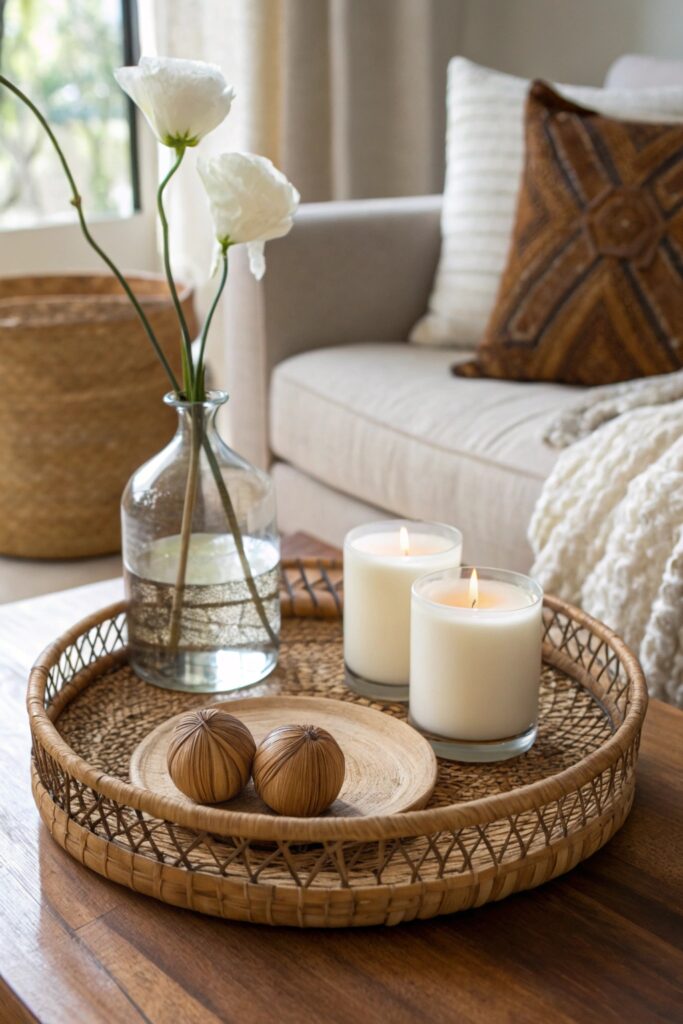
Combining wood, woven rattan, and ceramic on the same small surface adds genuine tactile variety that a single-material display can’t achieve, even within a limited color palette.
Keeping the Palette Cohesive
Limiting an end table’s displayed items to 2-3 coordinated colors or materials keeps a genuinely small surface from reading as visually busy, which matters more here than on a larger display surface since this table typically has limited real estate to work with.
This doesn’t mean every item needs to match exactly — pulling from a consistent material family (all warm metals, or all natural wood and stone) achieves the same cohesive effect without requiring an identically matched set of objects, and it keeps the small vignette feeling intentional even with genuine variety among the pieces themselves.
A regular editing habit — reassessing what’s accumulated on an end table every few weeks — matters more for keeping this display genuinely styled than the initial arrangement, since this surface within easy reach of the couch is a common spot for remotes, mail, and other items to pile up unless there’s an intentional system in place.
Most of these styling approaches require a genuinely modest budget — often under $50 per table — which makes an end table refresh one of the more accessible small projects to tackle without a larger furniture investment.
Wrapping It All Up
Keep the total object count genuinely low (2-3 items maximum) regardless of which specific styling approach you choose, since an end table’s smaller surface area shows clutter more readily than a larger coffee table or console would. Function matters as much as styling here, since this surface typically holds a drink, a remote, or a lamp during actual daily use.