
A four-season sunroom’s success depends on the invisible mechanical systems — insulation, heating and cooling — far more than the visible decor, which is worth keeping in mind before investing heavily in furnishings for a room that can’t actually hold a comfortable temperature through winter. The details below cover both the design direction and these practical specifics for each idea.
Below are 10 four-season sunroom ideas worth considering, with the specifics for each.
1. Start with Proper Insulation — Seriously, Don’t Skip This
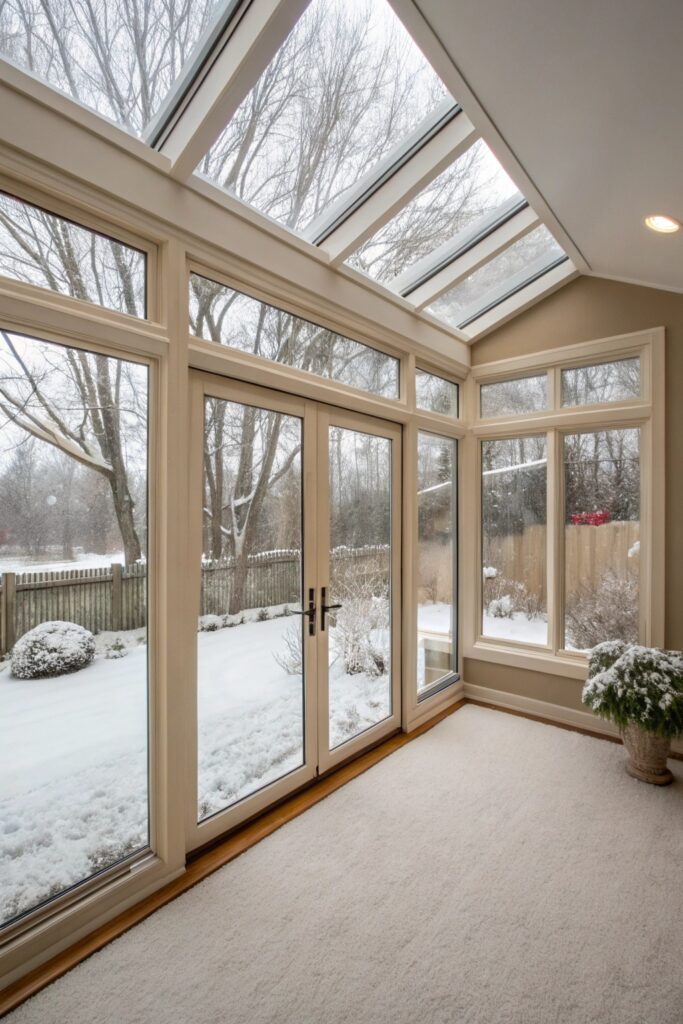
A genuine four-season room needs insulated double or triple-pane glass along with insulated walls and roof, not just quality windows alone — many rooms marketed as sunrooms are actually three-season spaces with single-pane glass that can’t hold heat, worth confirming with a contractor before assuming your structure handles winter use.
2. Install a Heating and Cooling System That Actually Works
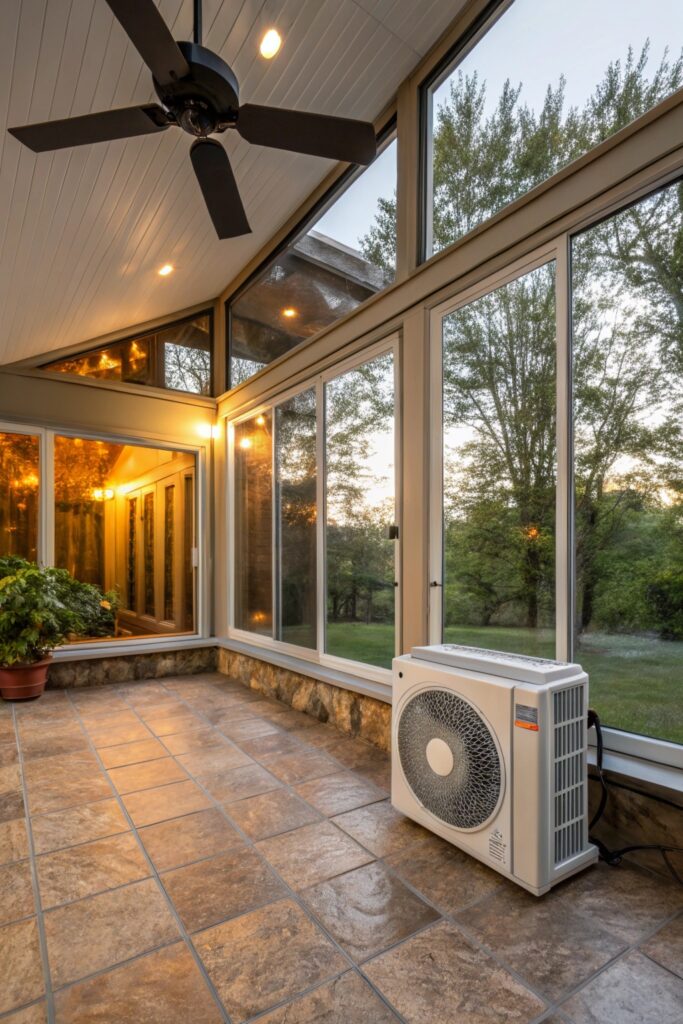
A mini-split system sized specifically for the sunroom’s square footage tends to perform better than extending ductwork from the main house, given the room’s higher window-to-wall ratio and different thermal load compared to typical rooms.
3. Choose Furniture That Can Handle the Conditions
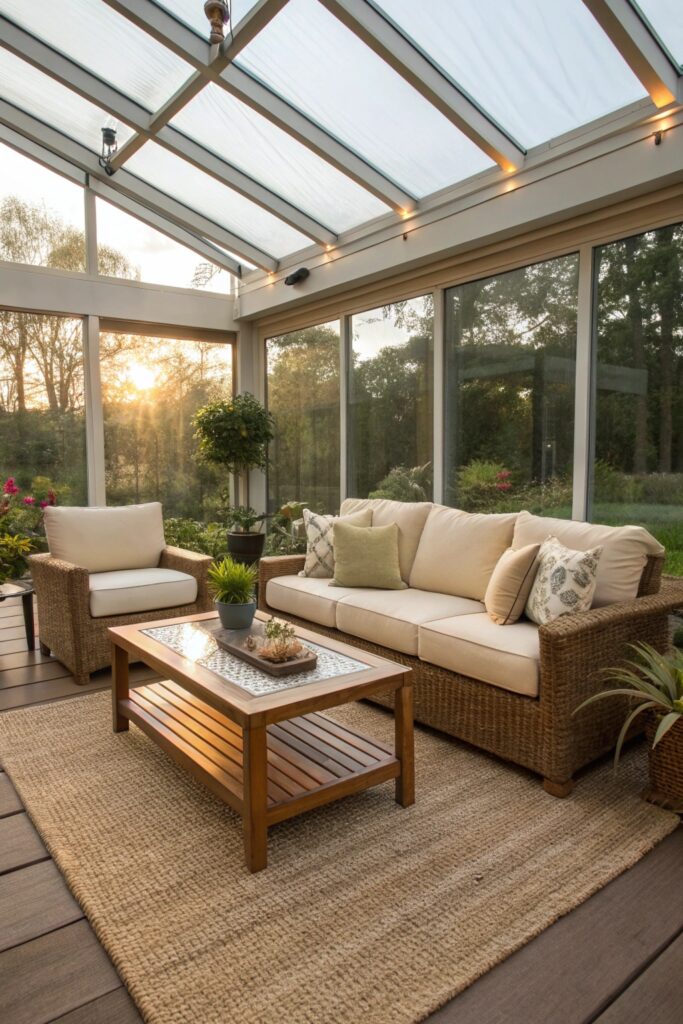
Furniture near south or west-facing glass still experiences more UV exposure and temperature swings than furniture elsewhere in the house, even in a well-insulated room, so fade-resistant fabrics matter here more than they would in an interior room.
4. Layer Your Window Treatments Thoughtfully
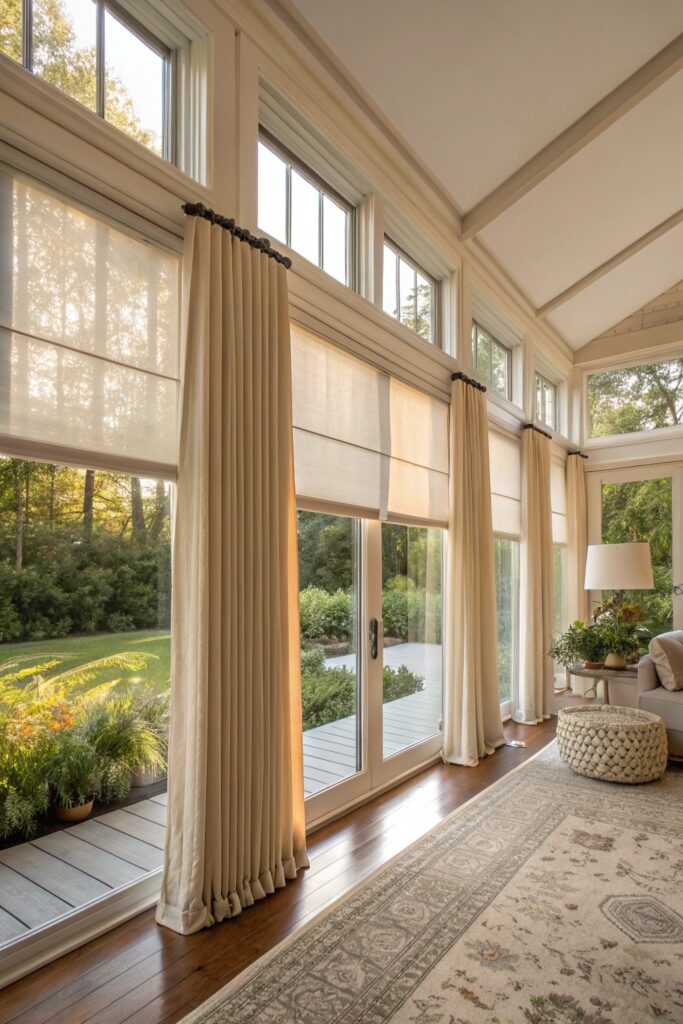
Cellular or honeycomb shades add a real insulating air pocket that meaningfully improves temperature regulation beyond simply blocking glare, worth choosing specifically for this room’s function rather than a purely decorative treatment.
5. Use Tile or Stone Flooring to Your Advantage
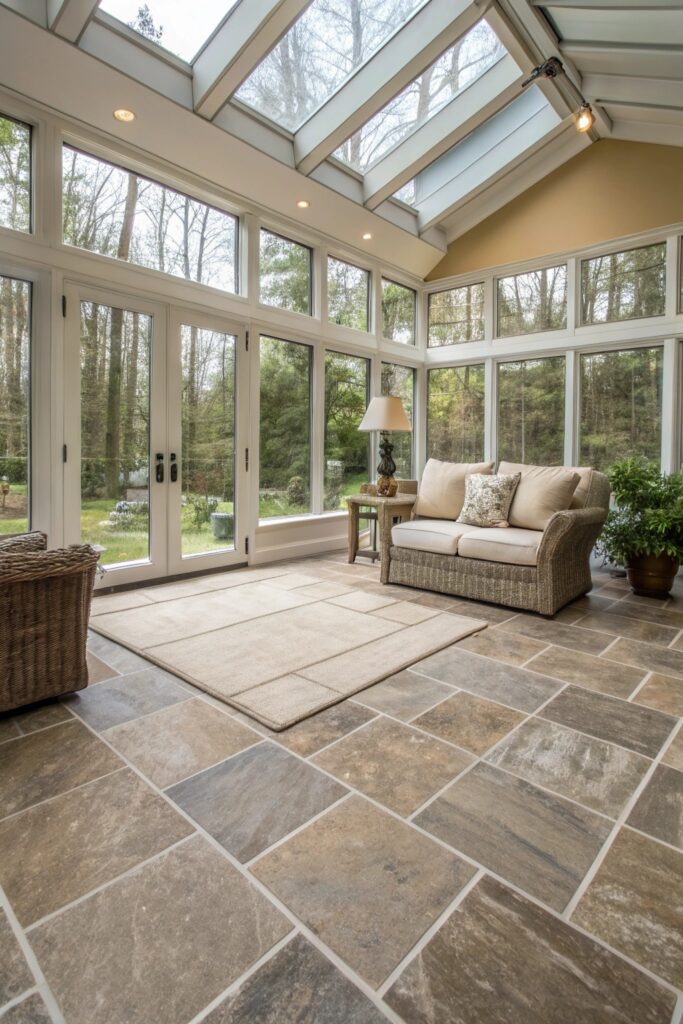
Stone and tile have high thermal mass and can feel notably cold underfoot in winter regardless of the room’s air temperature, so radiant floor heating or area rugs are worth considering specifically for comfort, separate from the room’s main heating system.
6. Bring the Outside In with Year-Round Greenery
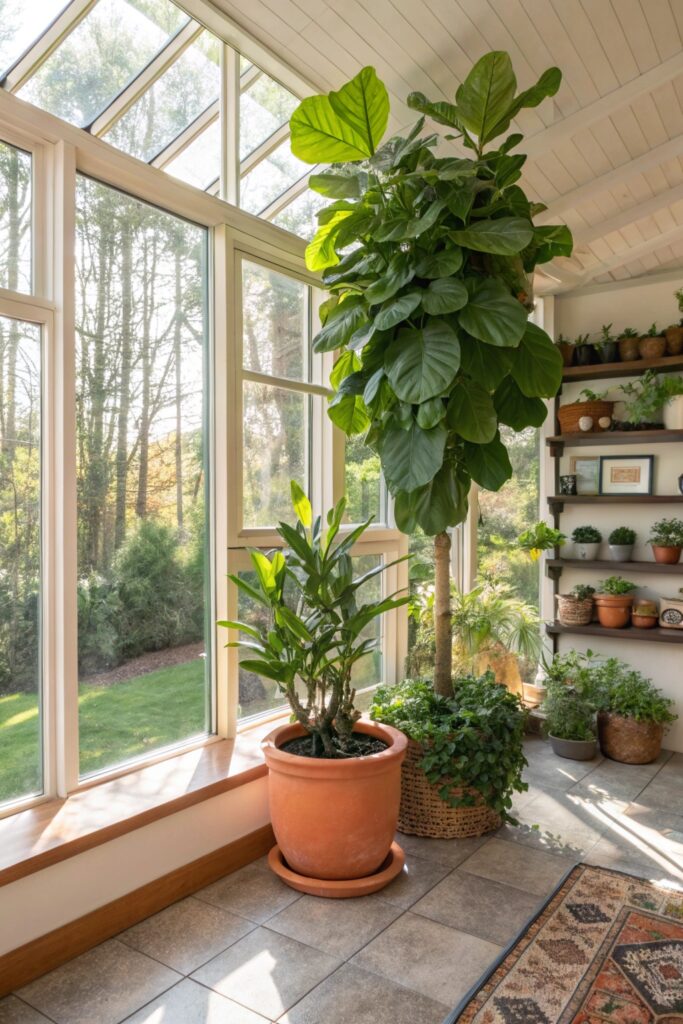
Keep plants a few inches off the glass itself rather than pressed directly against it, since glass transfers cold and heat faster than an insulated wall, exposing plants right against it to more extreme swings than the rest of the room.
7. Design a Dedicated Dining Area
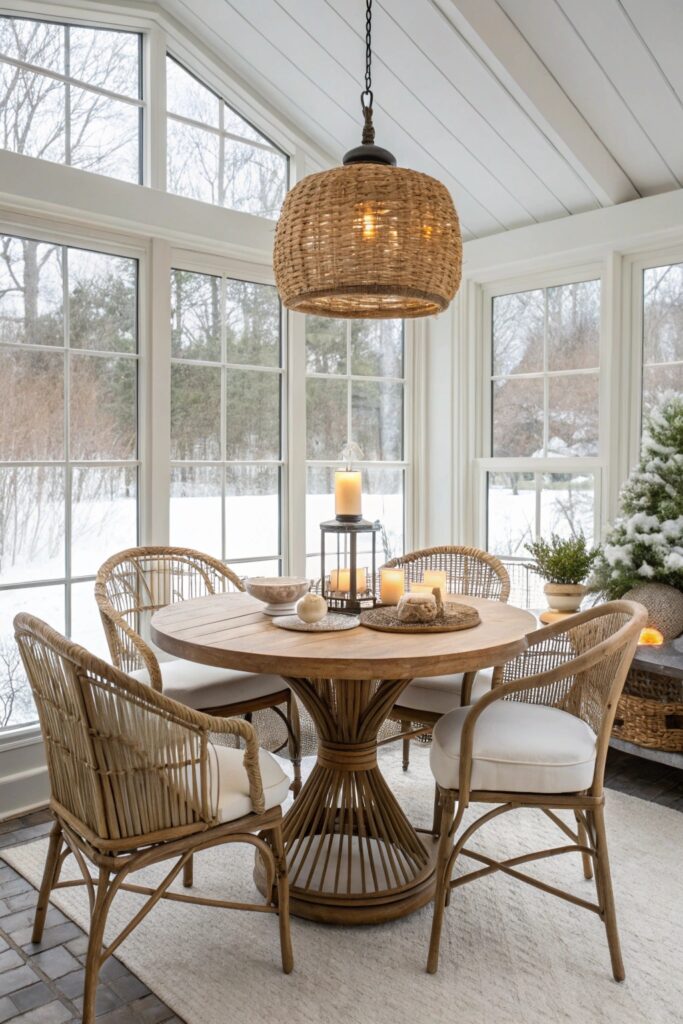
Leave the same 42 to 48 inches of clearance around a dining table that any functional dining space needs, a practical measurement that matters as much here as in a traditional dining room.
8. Create a Reading and Relaxation Corner
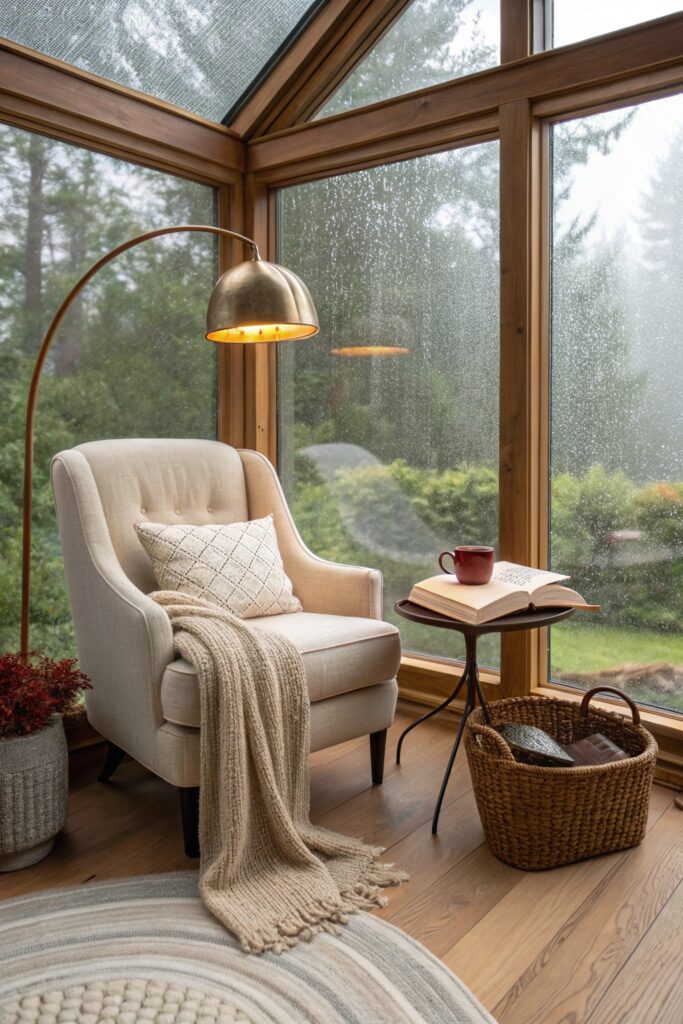
Test your seating spot at different times of day and across seasons before committing, since low-angle winter sun can make a corner uncomfortably warm even in a properly climate-controlled room, a shift that’s easy to miss when decorating in a single season.
9. Add a Ceiling Fan with Lighting Built In
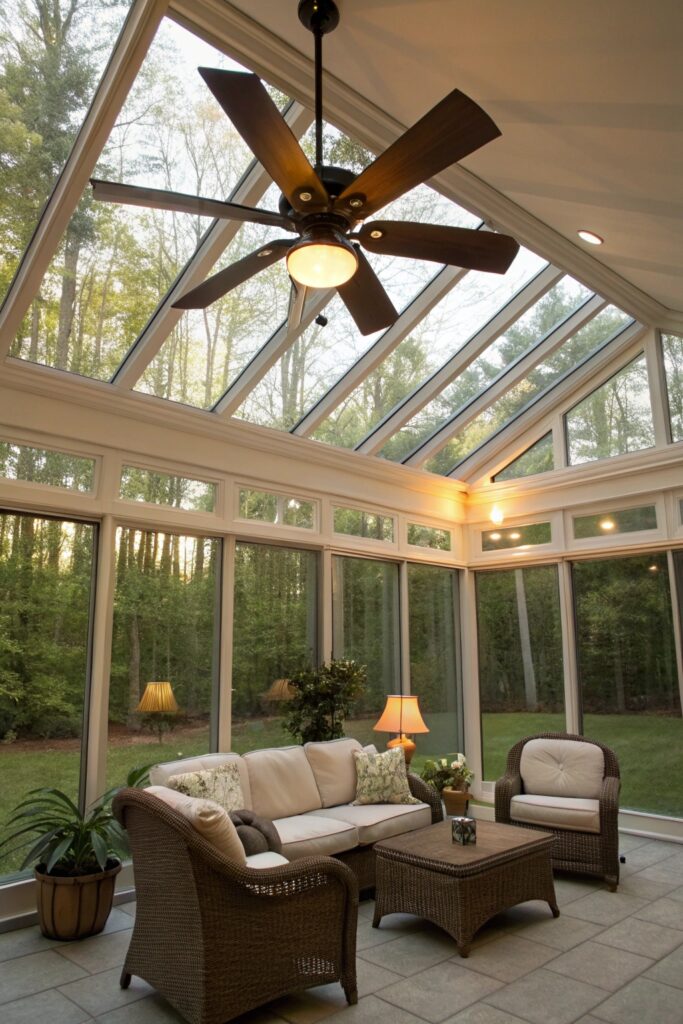
Confirm the fan has a reverse switch, since this feature lets it push warm air back down in winter and create a cooling downdraft in summer — truly useful in a four-season room, though not every fan model includes it.
10. Style It Like a Real Room, Not an Afterthought
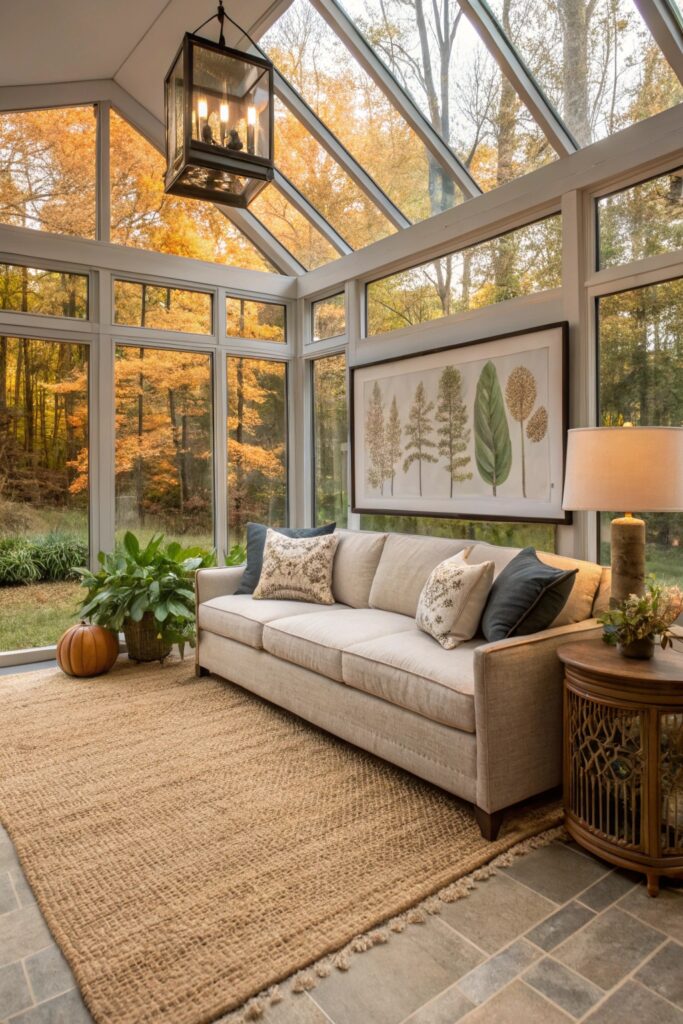
Treating this space with the same design intention as any other room in the house — a real color scheme, considered furniture layout, proper lighting — helps it function as genuine living space rather than a glorified storage overflow area.
Understanding Building Codes and Permits
Converting a three-season porch into a genuine four-season room, or building one from scratch, typically requires a permit given the electrical, insulation, and sometimes structural work involved, so checking with your local building department before starting matters as much as the design decisions themselves.
Skipping this step can create real problems down the line, from failed home inspections during a future sale to insurance complications if the work wasn’t done to code.
What a Four-Season Sunroom Costs
Converting an existing three-season porch to four-season use typically costs $15,000 to $40,000 depending on size and the extent of insulation and HVAC work needed.
Building a new four-season sunroom addition from scratch runs considerably higher, often $30,000 to $80,000 or more depending on size, materials, and site conditions.
Managing Condensation and Humidity
The large expanse of glass in a sunroom creates more surface area for condensation to form during temperature swings between seasons, which over time can lead to mold or wood damage around window frames if it’s not addressed.
A dehumidifier during humid months and confirming your windows have proper weatherstripping and drainage both help manage this, and it’s worth checking window seals annually as part of the room’s regular maintenance rather than only when a problem becomes visible.
Getting quotes from at least two or three contractors before starting a conversion or new build helps confirm both pricing and their specific experience with four-season insulation and HVAC work, since this differs meaningfully from a standard room addition.
Positioning Matters as Much as the Room Itself
A south-facing sunroom gets the most consistent light throughout the day but also the most heat gain in summer, while a north-facing room stays cooler but has softer, more even light year-round — worth factoring into both your HVAC sizing and your furniture placement decisions.
If the room already exists and you can’t change its orientation, exterior shading like an awning or strategically placed trees can help manage summer heat gain in a south or west-facing space without relying solely on the mechanical cooling system.
A properly functioning four-season sunroom often becomes one of the most-used rooms in the house, precisely because it offers a connection to the outdoors that most interior rooms can’t match, provided the underlying mechanical systems are actually up to the job.
Checking with your homeowner’s insurance provider about how a sunroom conversion or addition affects your coverage is also worth doing early in the planning process, since some policies treat this square footage differently than the rest of the home, particularly if the room wasn’t originally built to the same code standard.
A well-planned four-season room ultimately adds real, usable living space to a home rather than a seasonal bonus room, which is worth factoring in alongside the upfront cost when weighing this project against other home improvement priorities.
Final Thoughts
Getting a contractor’s honest assessment of whether your existing structure can actually support four-season use, before investing in furniture and decor, saves real disappointment compared to discovering the room is only comfortable half the year after the fact.
Whichever combination of these ideas fits your space, prioritizing the mechanical systems first tends to produce a room you actually use year-round, rather than one that looks good in photos but sits empty for several months.