
Your staircase is one of the first things people see when they walk into your home — and most people treat it like a purely functional afterthought. Just a way to get from one floor to the next, right? Wrong. A well-designed staircase is one of the most powerful architectural statements a home can make, and upgrading yours doesn’t always require a full renovation.
I’ve seen staircases completely transform the feel of an entire home — not just the entryway. The right design choice ripples through every adjacent space and sets the tone for everything guests experience after it.
Whether you’re building new, renovating, or just refreshing what you already have, these 12 staircase ideas cover every style and budget — and every single one will make your home feel noticeably more elevated.
1. Switch to Open Riser Stairs
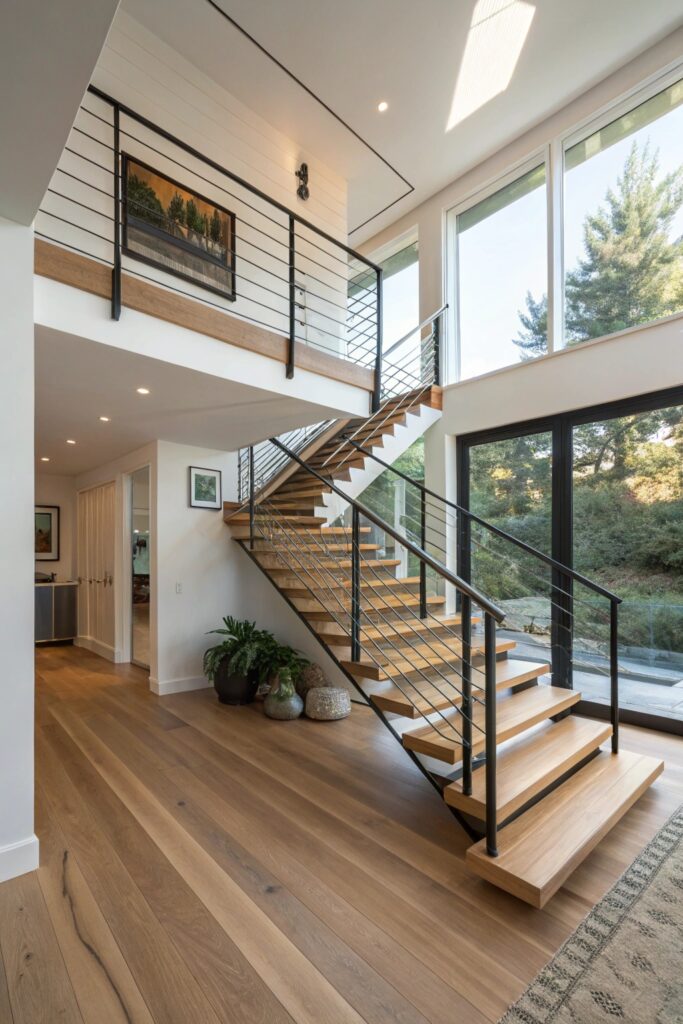
Open riser staircases — stairs with no solid back panel between each tread — create an immediate sense of lightness and modernity that closed-riser stairs simply cannot match. They visually open up the space beneath and around the staircase, making even compact entryways feel significantly larger and more airy.
This design works especially well in contemporary, minimalist, and Scandinavian-influenced interiors where visual weight matters enormously.
What to know before going open riser:
- Building codes vary — most require balusters or railings that prevent a 4-inch sphere from passing through
- Floating tread construction requires proper structural support from a central stringer or wall-mounted brackets
- Wood species choice matters — white oak, walnut, and maple all age beautifully as exposed treads
- Open risers work best with glass or cable railings that preserve the airy, unobstructed look
IMO, open riser stairs with white oak treads and black steel railings represent the single most impactful staircase upgrade available right now.
2. Install a Cable or Glass Railing System
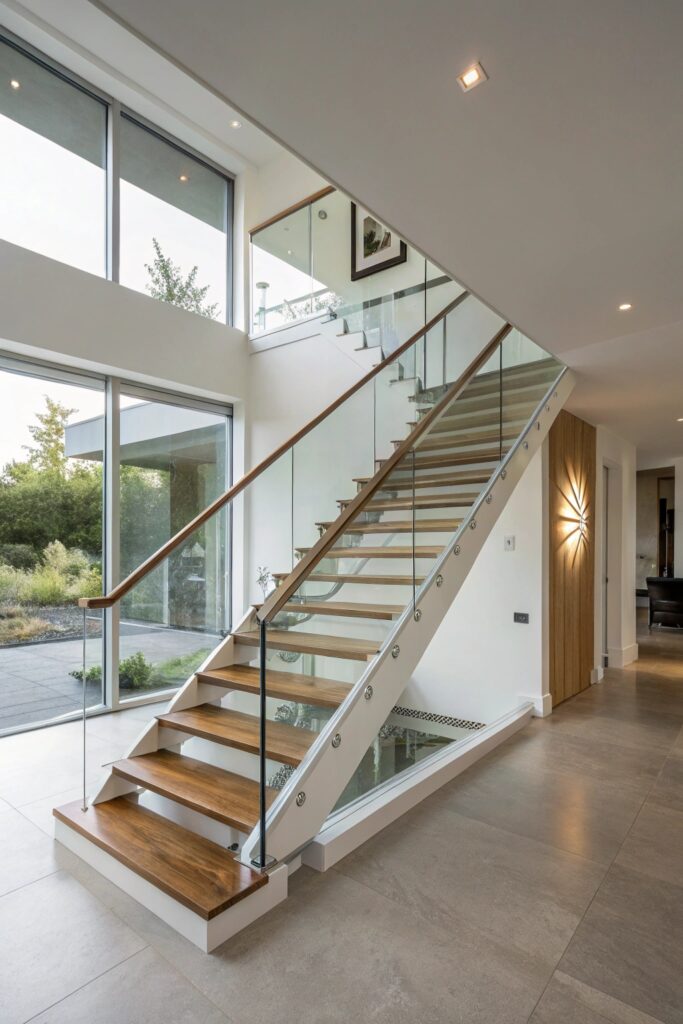
If your staircase railing looks like it belongs in a 1995 colonial revival — you know the one, thick wooden spindles, chunky newel posts, the whole situation — a cable or glass railing system will completely transform the look without touching a single stair tread.
Both options create a clean, unobstructed visual line that makes staircases feel contemporary and spacious rather than heavy and segmented.
Cable vs. glass railing comparison:
- Cable railings: Industrial-modern aesthetic, lower cost, requires tensioning maintenance, suits open and outdoor-adjacent spaces
- Glass railings: Ultra-clean and invisible look, higher cost, requires regular cleaning, suits modern and luxury interiors
- Both pair best with simple horizontal or minimal top rail designs in steel, aluminum, or wood
- Frameless glass panels deliver the most dramatic transformation but carry the highest price point
Either choice makes your staircase look like it belongs in an architectural magazine. Worth every penny. 🙂
3. Add a Statement Stair Runner
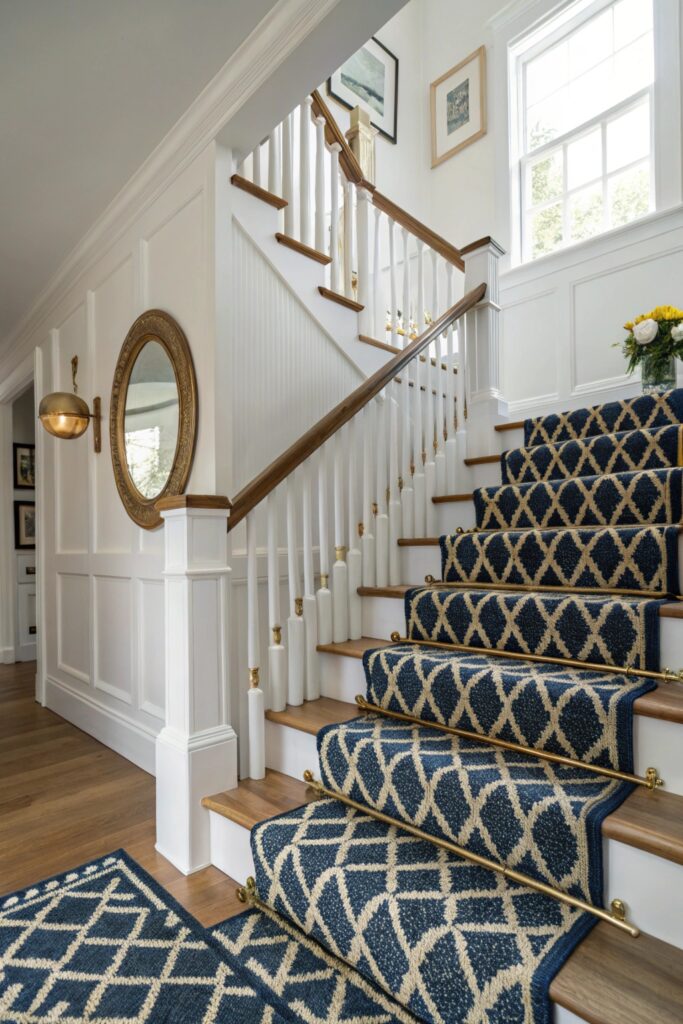
A well-chosen stair runner is one of the most affordable, highest-impact staircase upgrades you can make without any structural changes whatsoever. The right runner adds color, pattern, texture, and warmth — while also reducing noise and protecting your treads from wear.
The pattern you choose sets the entire personality of the staircase and, by extension, the entryway it occupies.
Stair runner styles by interior design direction:
- Classic herringbone or Greek key border — traditional, timeless, suits formal interiors
- Bold geometric or diamond pattern — graphic, contemporary, makes a strong statement
- Neutral sisal or jute runner — organic, relaxed, suits farmhouse and coastal homes
- Colorful Moroccan or Persian-inspired pattern — maximalist, warm, adds instant personality
- Solid deep color (navy, forest green, charcoal) — sophisticated, versatile, suits any style
FYI — always use a quality stair rod system to secure your runner rather than just tacking it down. The rods add a polished detail that elevates the entire installation.
4. Paint the Risers for a Bold Pop of Color
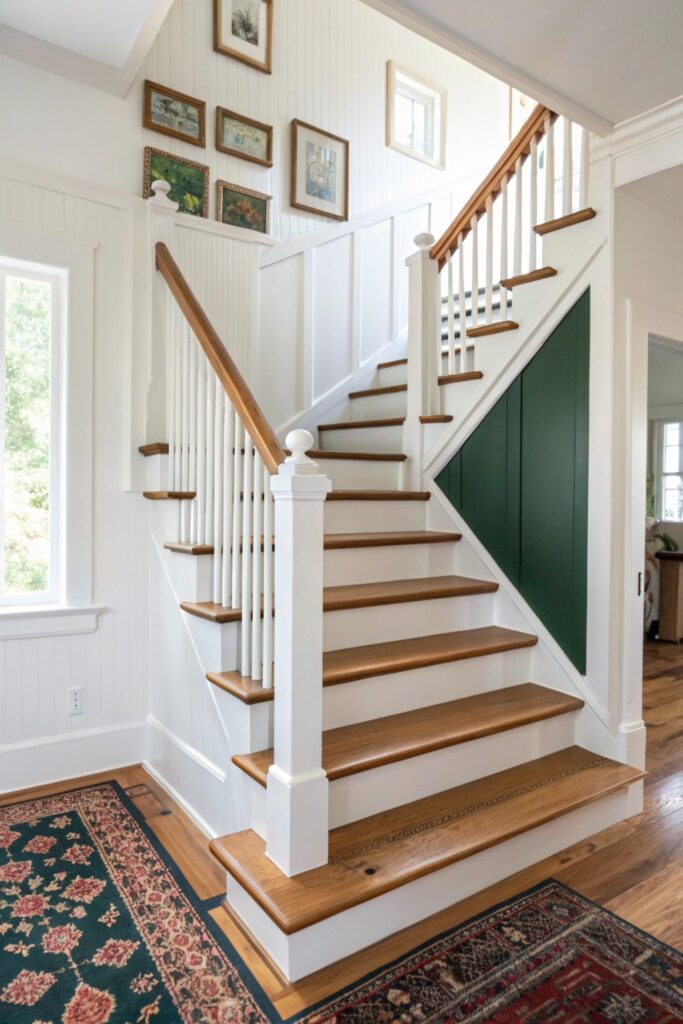
Here’s a staircase upgrade that costs almost nothing and delivers a truly dramatic result: painting your stair risers. While your treads stay natural wood or a neutral tone, painted risers inject personality, color, and intentionality into an otherwise plain staircase.
This works especially well in entryways that need a focal point but don’t have the budget for structural changes.
Riser painting ideas that work:
- Deep navy or forest green risers against natural oak treads — classic and sophisticated
- Black risers with white treads — graphic, bold, always photographs well
- Pattern-painted risers — alternating colors, stripes, or even stenciled motifs on each individual riser
- Soft terracotta or dusty blue — unexpected, warm, suits eclectic and bohemian interiors
Use floor-grade paint or porch enamel on risers — regular wall paint chips within weeks under foot traffic. The right paint makes this a durable, long-lasting upgrade rather than a temporary fix. :/
5. Upgrade to Hardwood Treads
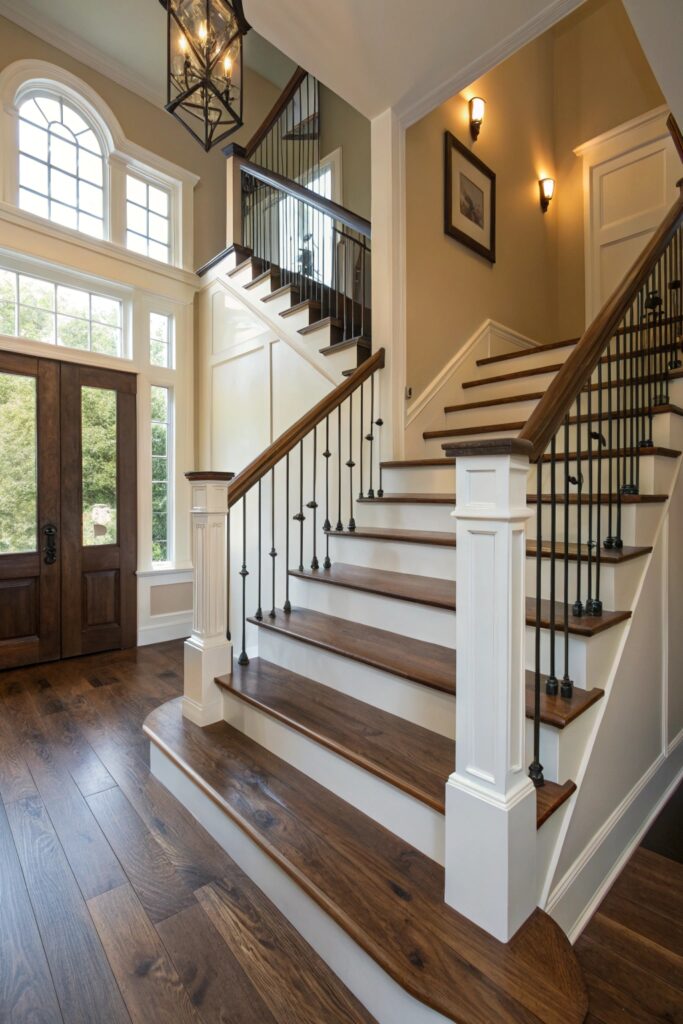
If your staircase currently has carpet or builder-grade wood, upgrading to quality hardwood treads is the single most structurally significant improvement on this list — and the one with the highest return on investment. Nothing communicates quality and permanence quite like well-crafted solid wood stairs underfoot.
Best hardwood species for stair treads:
- White oak — currently the most popular choice, beautiful grain, ages gracefully, takes stain well
- Walnut — rich dark tones, luxurious feel, naturally durable, no staining needed
- Maple — hard, pale, clean-grained, suits modern and Scandinavian interiors
- Red oak — traditional, affordable, widely available, classic staining options
Finish options to consider:
- Matte or satin polyurethane — durable, low sheen, hides scratches better than gloss
- Hardwax oil — penetrating finish, natural look, easier to spot-repair than film finishes
- Wire-brushed texture — adds depth and hides everyday wear beautifully
Great hardwood treads make every other staircase upgrade look better by association.
6. Create a Gallery Wall Along the Staircase
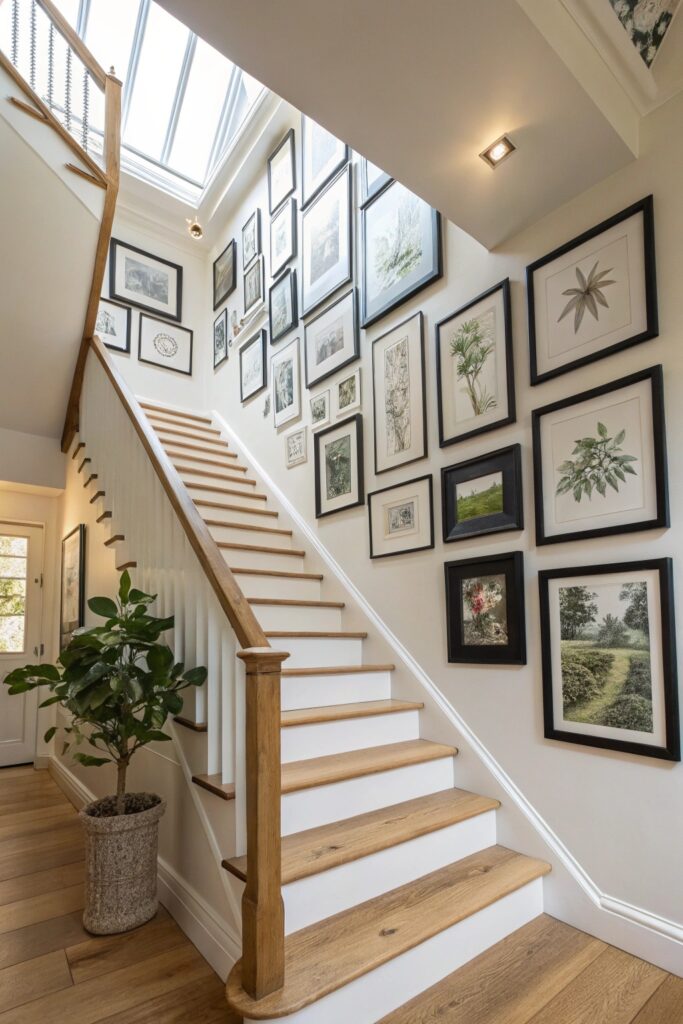
The staircase wall is one of the most underused display surfaces in any home — a long, angled expanse that most people either leave blank or scatter random frames across without any system. A properly executed staircase gallery wall turns this neglected surface into one of the most compelling visual experiences in your entire home.
The key is following the stair angle with your arrangement rather than fighting it.
Gallery wall approaches that work on staircases:
- Follow the rake of the stairs — arrange frames in a diagonal line that mirrors the staircase angle
- Use a consistent frame finish — all black, all gold, or all natural wood for cohesion
- Mix frame sizes with a clear size hierarchy — larger pieces lower, smaller ones higher
- Leave consistent spacing between frames (3–4 inches) regardless of size variation
- Combine photography, art prints, and mirrors for visual variety within a unified scheme
Lay your entire arrangement on the floor before committing to wall placement. Your future self will thank you for this.
7. Add Under-Stair Storage or a Built-In Nook
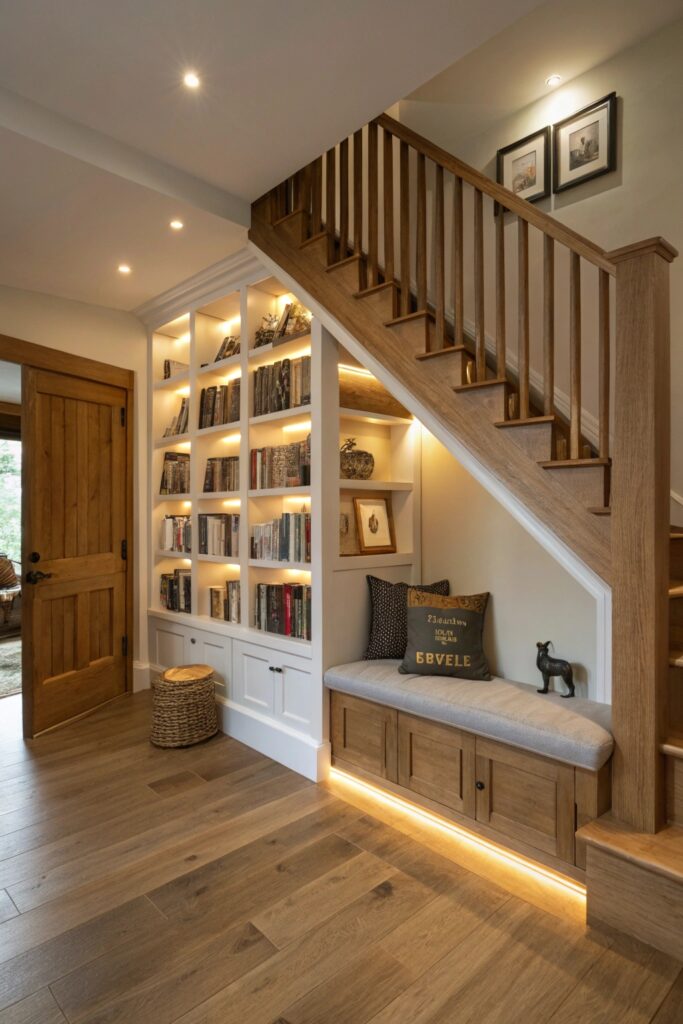
The space beneath your staircase represents some of the most valuable square footage in your home — and most people fill it with a coat closet or, worse, just leave it dead. Under-stair built-ins transform this awkward space into something truly functional and visually impressive.
Done well, an under-stair built-in becomes one of the most talked-about features of your home.
Under-stair space ideas ranked by impact:
- Built-in bookshelf with integrated lighting — stunning, functional, adds character
- Home office nook with a built-in desk, shelving, and task lighting
- Wine storage with a custom rack system — practical and surprisingly impressive at dinner parties
- Children’s reading nook with built-in bench seating and a curtain for privacy
- Pull-out drawer storage — maximizes every inch of depth for household organization
Custom built-ins deliver the best result but carry higher costs. IKEA hack solutions using Billy bookcases fit remarkably well into many standard under-stair configurations at a fraction of the price.
8. Install LED Stair Tread Lighting
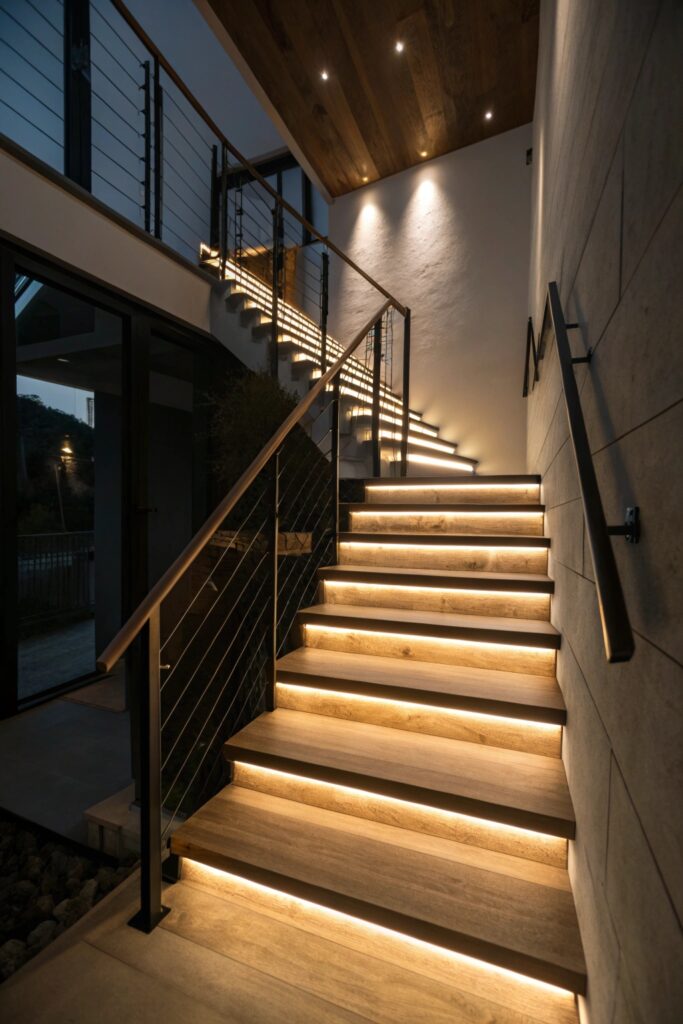
LED stair lighting — recessed strips or individual fixtures installed beneath each tread or along the side stringer — transforms a staircase from a purely daytime feature into a truly dramatic architectural element at night. It also serves a practical safety function that becomes especially valuable in homes with children or elderly residents.
The lighting effect ranges from subtle to stunning depending on placement and intensity.
LED stair lighting options:
- Recessed tread lights — small fixtures set into the riser face, invisible during the day
- Strip lighting under the tread nosing — continuous glow along each step edge, clean and modern
- Wall-mounted step lights on the stringer — directional, architectural, suits contemporary interiors
- Motion-activated systems — lights activate as you descend, energy-efficient and truly useful
Choose warm white (2700K) for a cozy, residential feel. Cool white reads clinical in a home setting and defeats the atmospheric purpose of the lighting entirely.
9. Choose a Dramatic Newel Post Design
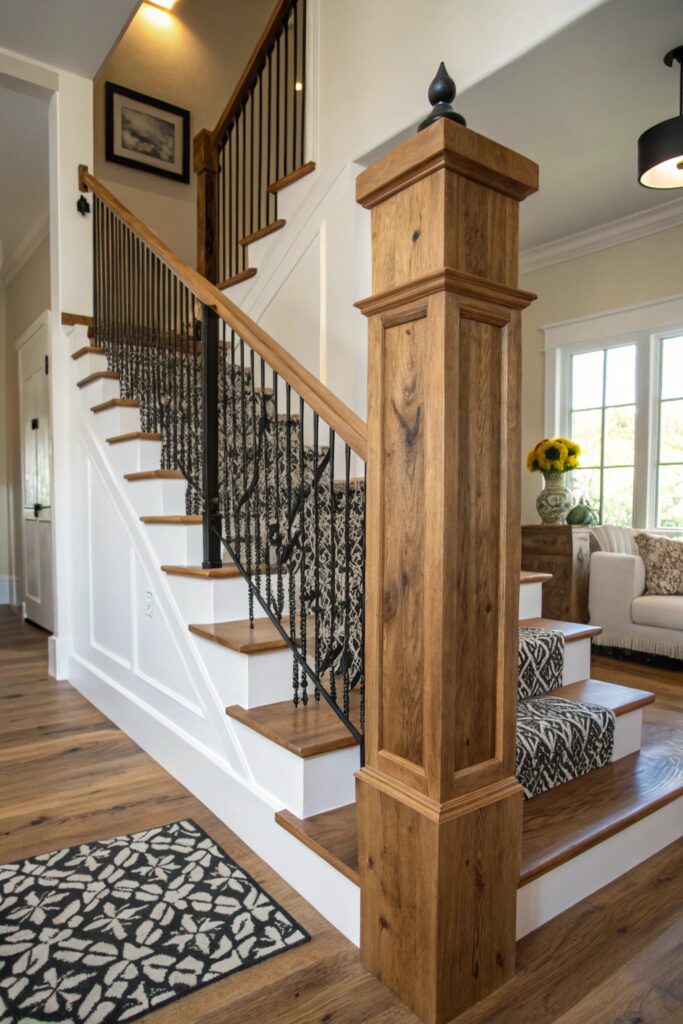
Most people never think about their newel post — the anchor post at the bottom of a staircase railing. But a statement newel post sets the design tone for the entire staircase before anyone takes a single step. It’s the first detail the eye lands on, and it deserves the attention.
Newel post styles by interior design direction:
- Chunky square timber post — farmhouse, rustic, substantial and warm
- Slim black steel post with geometric detailing — contemporary, industrial-modern
- Turned traditional newel in a painted finish — classic colonial or craftsman
- Architectural column-style post — formal, grand, suits traditional and transitional homes
- Reclaimed wood or live-edge post — organic, one-of-a-kind, maximally characterful
The newel post and the handrail material should speak the same design language. Mixing a rustic reclaimed post with a sleek chrome rail creates visual confusion rather than intentional contrast.
10. Apply Wallpaper to the Staircase Wall
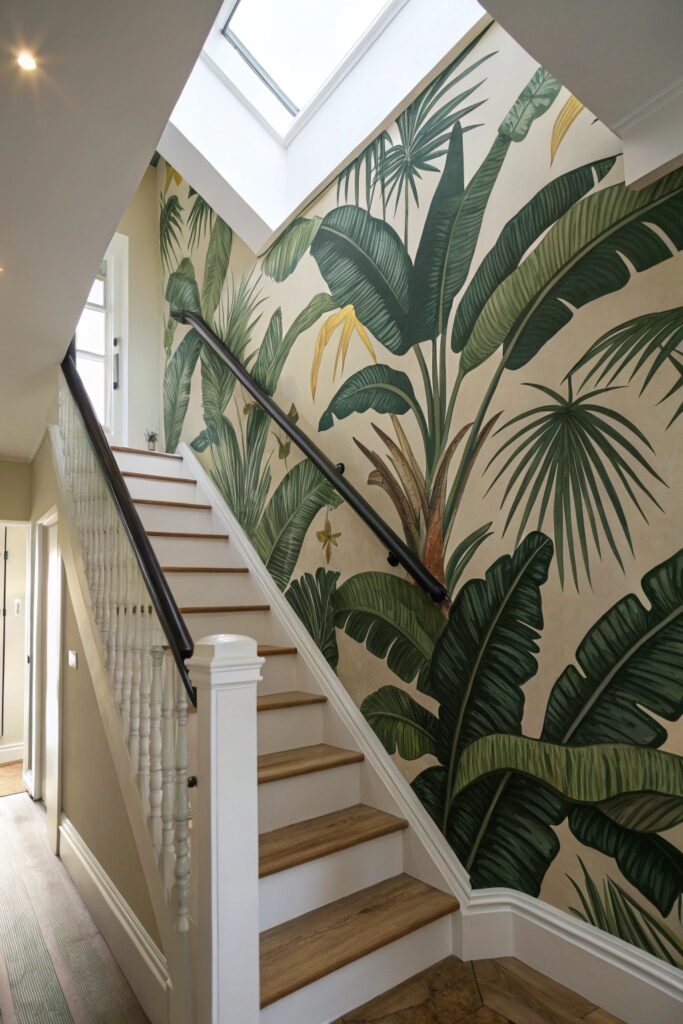
Wallpaper on a staircase wall creates one of the most memorable interior moments in any home. Unlike a regular room wall, the staircase wall runs at an angle and spans two floors — giving wallpaper a scale and drama it rarely achieves elsewhere.
The movement of climbing the stairs also means you experience the pattern dynamically, not just as a static backdrop.
Wallpaper styles that excel on staircase walls:
- Large-scale botanical or tropical print — lush, immersive, unforgettable
- Geometric repeat pattern in bold colors — graphic, energetic, contemporary
- Grasscloth or textured neutral — adds warmth and depth without visual noise
- Vintage-inspired stripe — classic, elongating, suits traditional homes beautifully
- Abstract or painterly mural — artistic statement, entirely unique
Use paste-the-wall installation method on angled staircase surfaces — it’s significantly easier to manage than paste-the-paper when working on a diagonal. Always hire a professional for multi-story drops unless you’re truly confident in your papering skills.
11. Paint the Entire Staircase a Single Bold Color
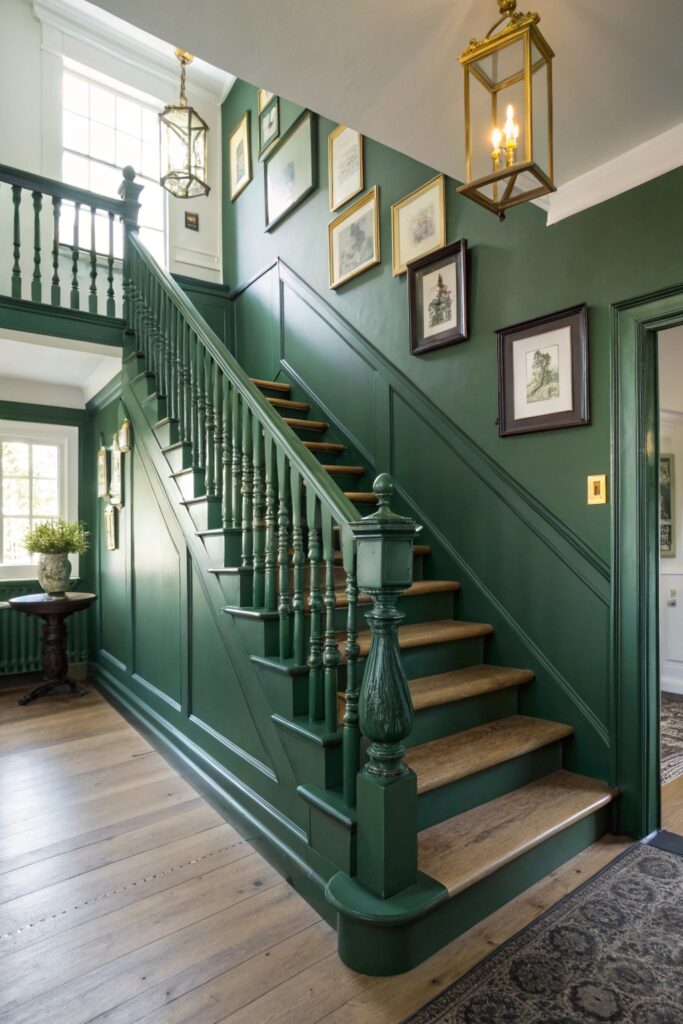
Color drenching your staircase — painting the treads, risers, railings, spindles, newel post, and adjacent wall all in one cohesive color — creates one of the most visually arresting interior moments possible. It transforms a staircase from a series of separate components into a single sculptural object.
This approach takes confidence, but the result is truly spectacular.
Colors that work exceptionally well for staircase drenching:
- Matte black — dramatic, graphic, makes everything else in the room pop by contrast
- Deep forest green — rich, enveloping, pairs beautifully with brass and warm wood
- Navy blue — classic, sophisticated, works in both traditional and contemporary homes
- Terracotta or burnt orange — warm, unexpected, suits eclectic and maximalist interiors
- Warm white or cream — subtle drenching that unifies without dramatic color commitment
Use floor-grade enamel on all surfaces that experience foot traffic, and standard eggshell or satin on railings and walls for a durable, cleanable finish.
12. Install a Floating Staircase With a Structural Feature Wall
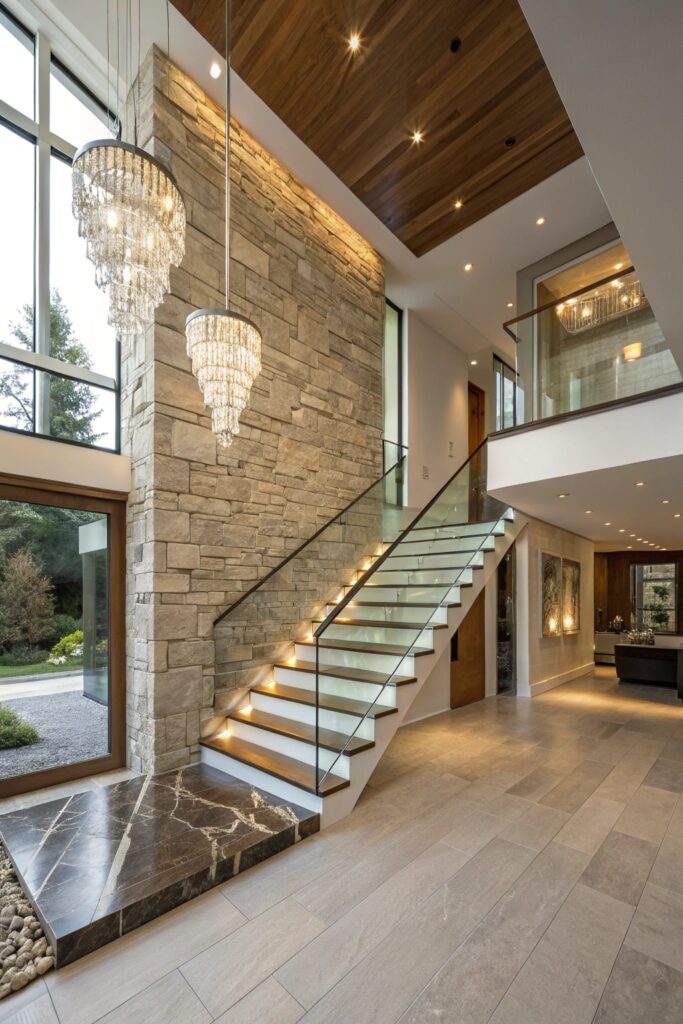
The floating staircase — treads cantilevered from a structural wall or central spine with no visible support beneath — represents the pinnacle of contemporary staircase design. When paired with a dramatic feature wall (floor-to-ceiling stone, wood paneling, or a textured plaster finish), it creates an architectural moment that defines an entire home.
This is the most significant investment on the list — but also the most transformative.
Key elements of a stunning floating staircase design:
- White oak or walnut cantilever treads for warmth against a structural wall
- Glass or cable side railings that preserve the floating, weightless appearance
- Integrated LED lighting beneath each tread for nighttime drama
- Floor-to-ceiling stone or large format tile on the feature wall behind the stairs
- Double-height ceiling if structurally possible — amplifies the drama enormously
A floating staircase with a feature wall isn’t just a staircase — it’s the reason guests stop talking the moment they walk through your front door.
Your Staircase Deserves Better Than Builder-Grade Basic
A staircase upgrade doesn’t require gutting your entire entryway. Start with the changes that deliver the most impact for the least disruption — a stair runner, painted risers, a gallery wall, or LED tread lighting — and work toward bigger structural changes if and when the budget allows.
The staircase you’ve been overlooking has serious potential. Every idea on this list proves that the difference between a forgettable staircase and a truly impressive one often comes down to a few deliberate, well-executed decisions.
Pick your starting point and go. Your home’s first impression is waiting to be completely transformed. 🙂