
This guide focuses on the porch as a functional outdoor space — seating, structural additions like swings, and weatherproof materials. For door-specific details, house numbers, and entrance styling, see our companion guide to home entrance decor ideas.
Below are 10 elements worth focusing on, with the practical details for each.
1. Add Stylish Outdoor Seating
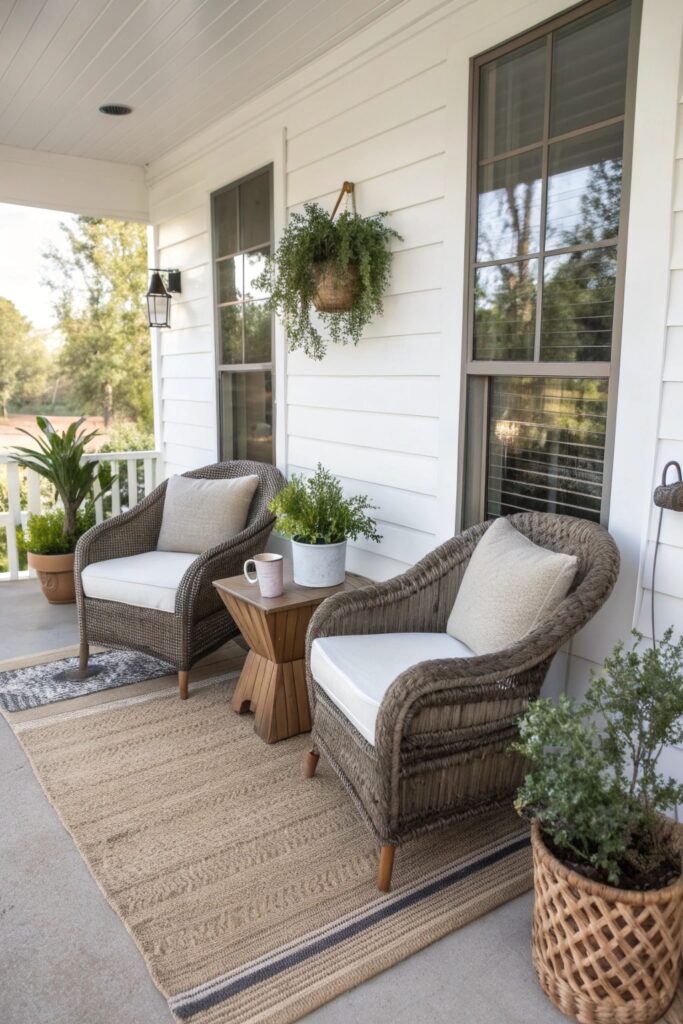
Materials specifically suited to full weather exposure — teak, powder-coated aluminum, or all-weather wicker — hold up considerably longer on an uncovered porch than untreated wood or fabric-upholstered pieces, which can warp or mildew within a season.
2. Upgrade Your Front Door
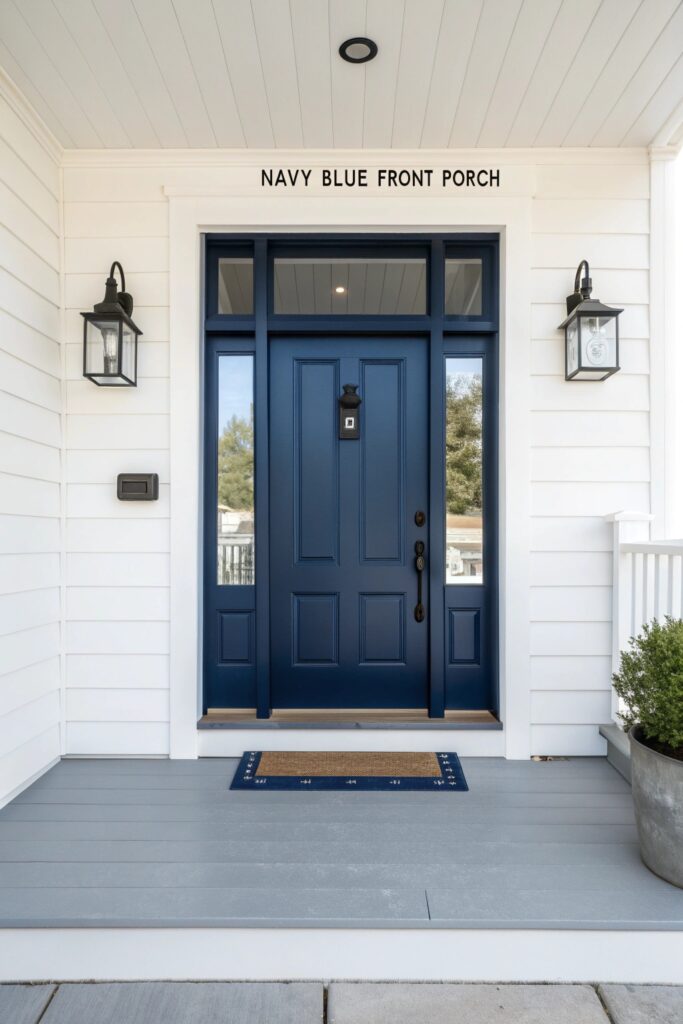
A semi-gloss or gloss finish holds up better to weather and cleaning than a flatter sheen, and repainting an existing door in good structural condition costs a fraction of full replacement.
3. Use Statement Lighting
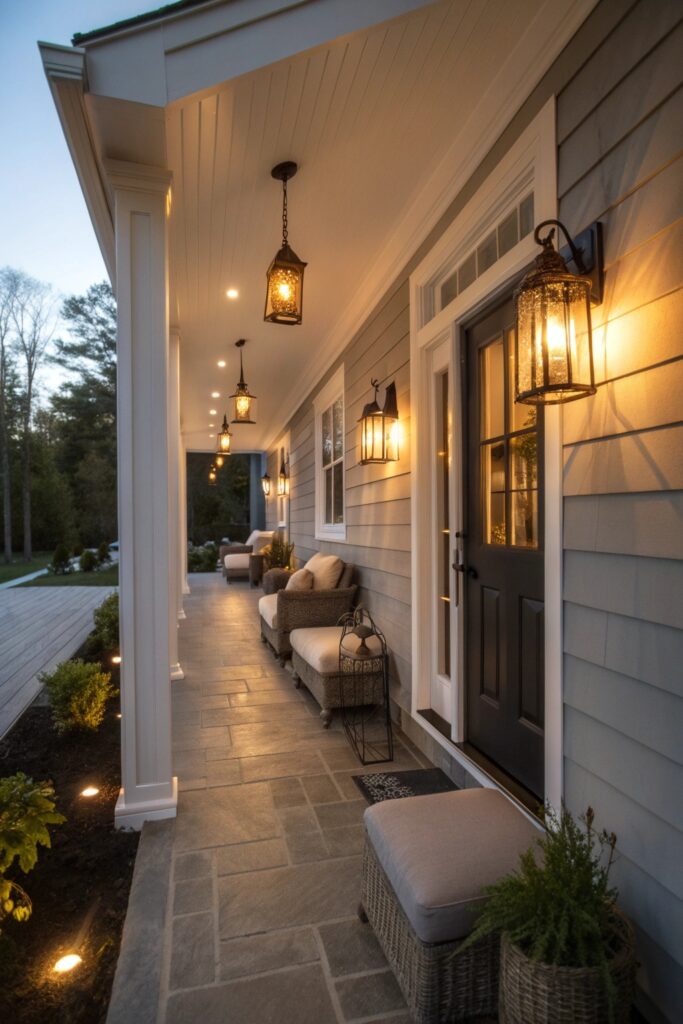
Mounting fixtures at eye level, roughly 66 to 72 inches from the ground, and choosing a dark-sky compliant design that shields the bulb reduces glare for anyone standing at the door.
4. Add Greenery and Plants
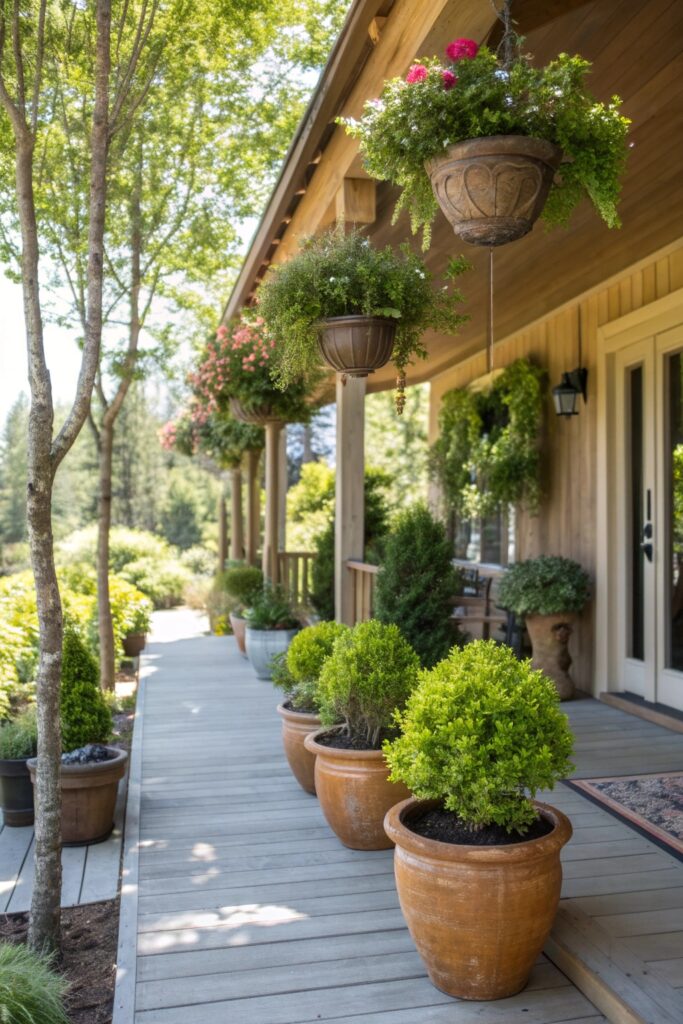
Check a plant’s actual sun exposure needs against your porch’s specific orientation — a covered porch facing north gets meaningfully less direct light than an uncovered south-facing one, and plant selection should match that reality rather than a generic recommendation.
5. Install a Porch Swing
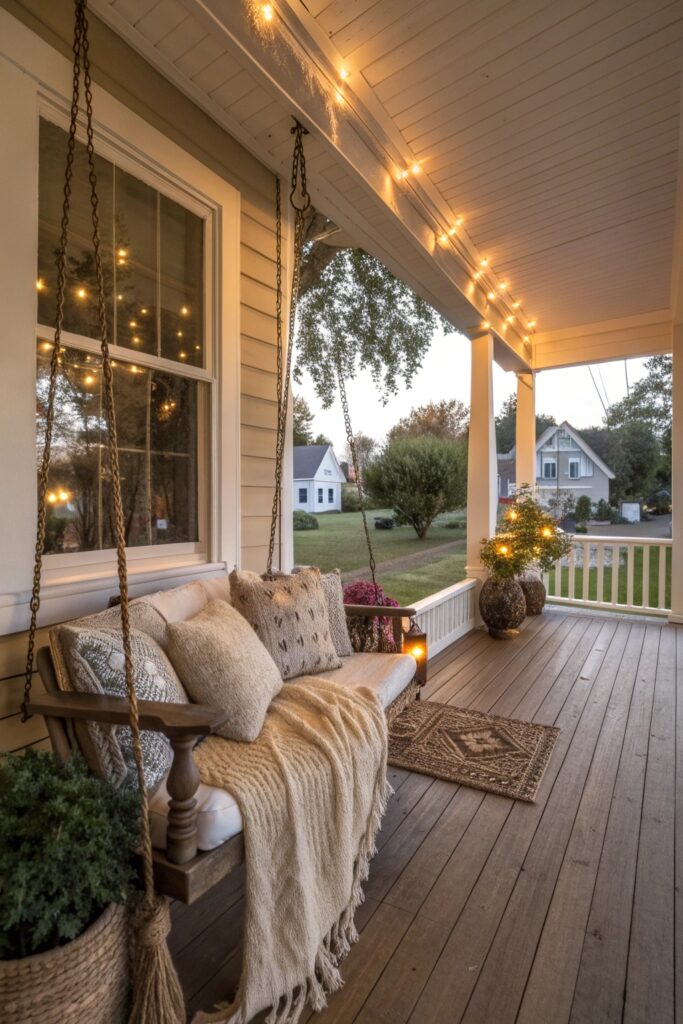
A hanging porch swing needs to be secured into ceiling joists rather than drywall or a porch ceiling’s decorative finish alone, since the combined weight of the swing and occupants puts real structural load on the mounting point. Confirm the chain or rope hardware is rated for at least the combined weight of the swing plus two adult occupants before installation.
6. Layer with Outdoor Rugs
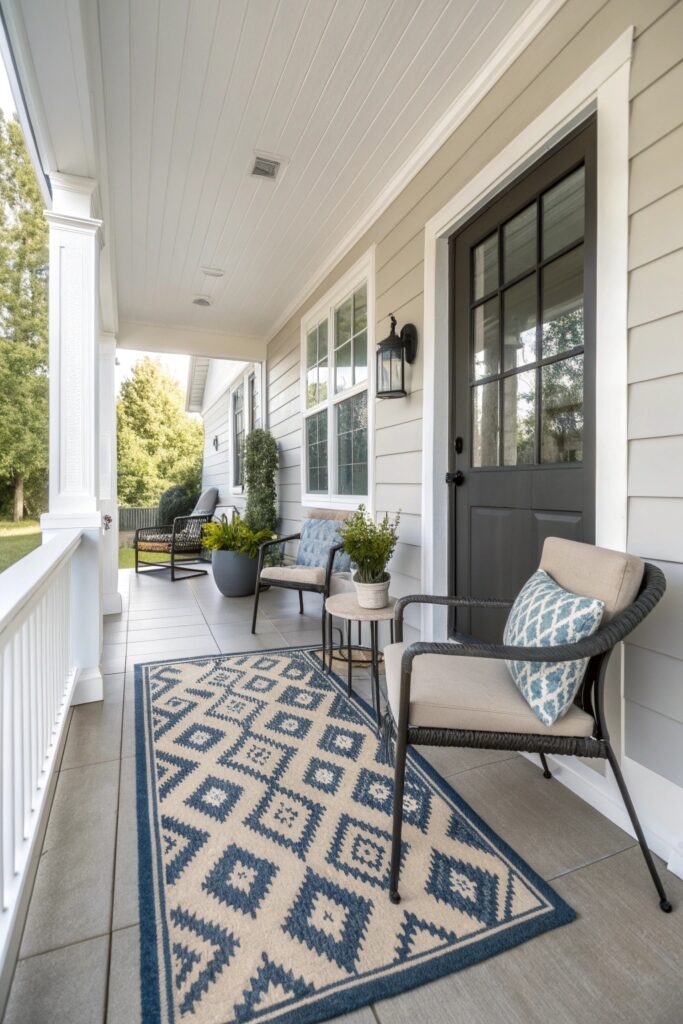
A rug rated specifically for full sun and moisture exposure holds its color and shape considerably longer than an indoor-outdoor rug not designed for constant weather — worth checking the specific rating rather than assuming any outdoor label means the same durability.
7. Decorate with Seasonal Touches
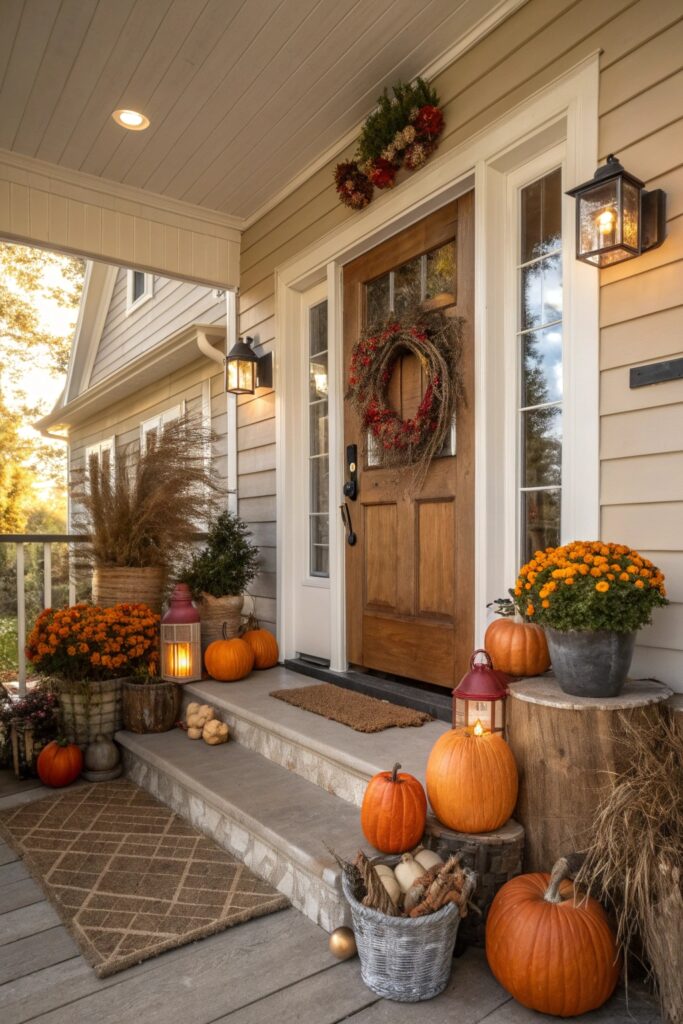
Rotating a few key pieces — a wreath, a planter’s contents, a doormat — on a seasonal basis keeps the porch feeling current without requiring a full redecoration each time the season changes.
8. Add Architectural Details
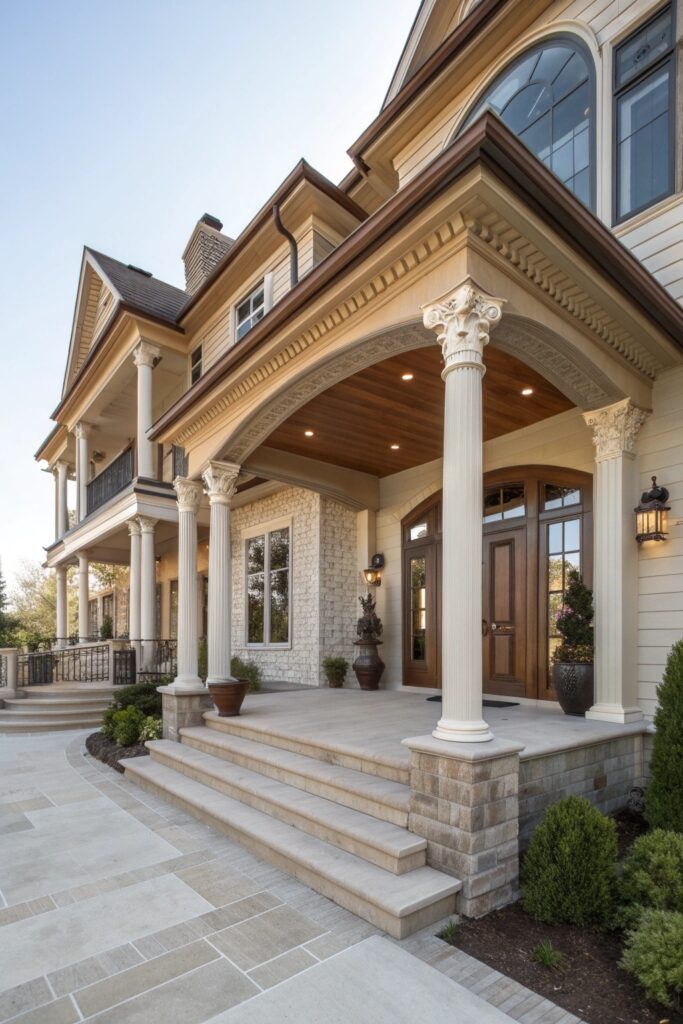
Column wraps and railing updates can meaningfully change a porch’s character without a full structural rebuild, though anything affecting the railing’s structural function specifically should meet current code height and spacing requirements, which is worth confirming before starting the project.
9. Keep It Clean and Clutter-Free
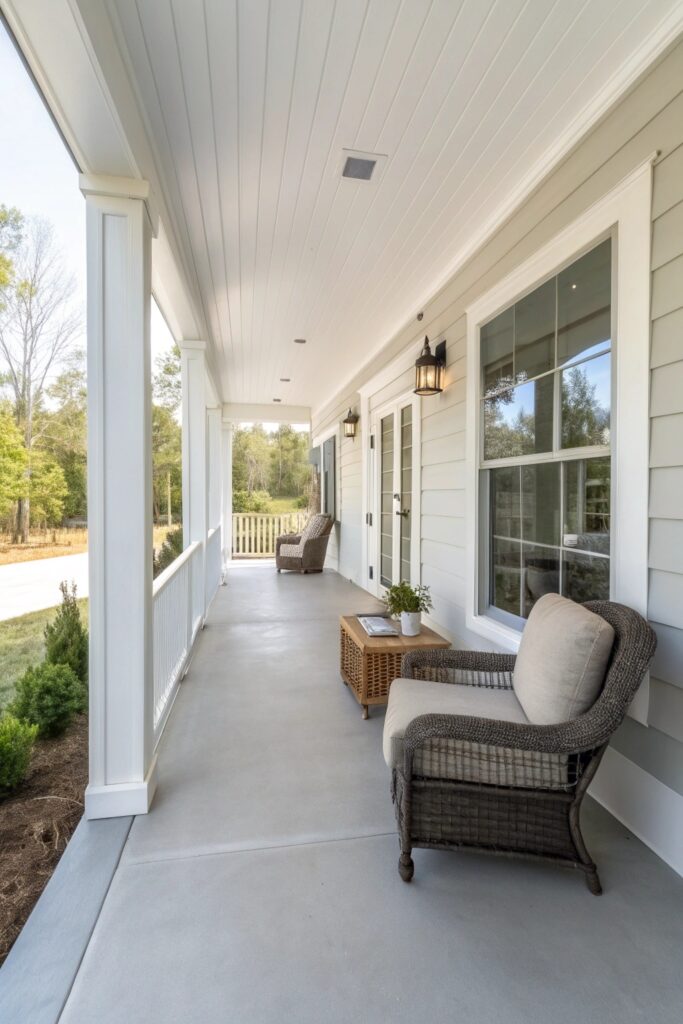
A porch accumulates dirt, pollen, and debris faster than most interior spaces, so a regular sweeping and power-washing schedule does more to maintain curb appeal day to day than any single decorative choice.
10. Personalize with Unique Decor
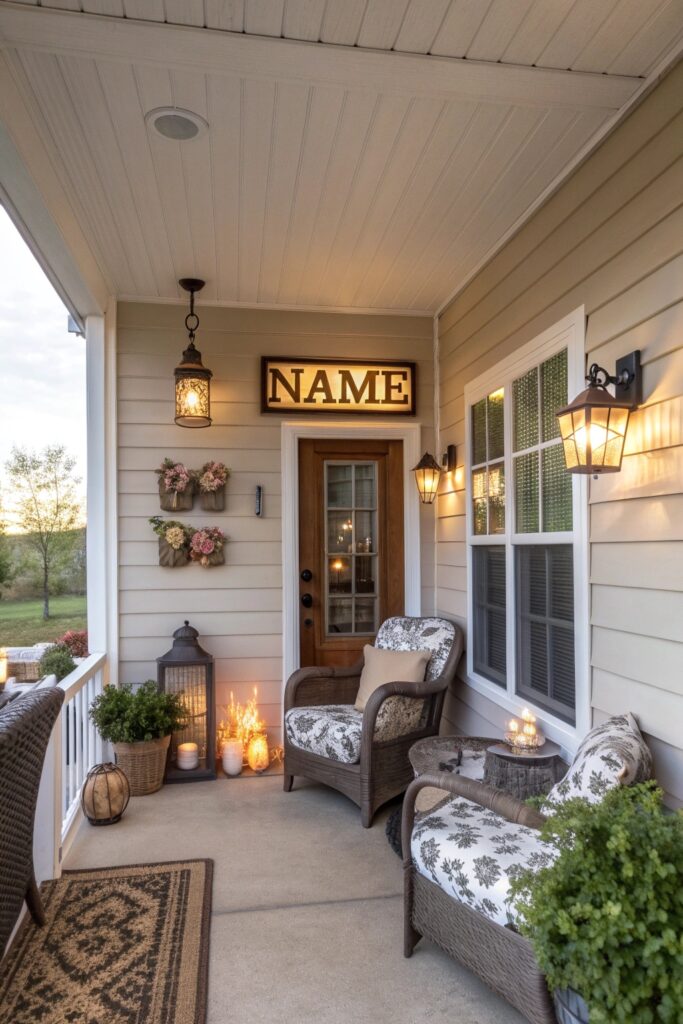
A few meaningful, curated items — rather than many small decorative pieces — read as more intentional from the street, which is the vantage point most visitors and passersby actually experience the porch from.
Seasonal Maintenance Worth Scheduling
A porch’s flooring, whether wood, composite, or concrete, benefits from a seasonal inspection for cracking, warping, or loose boards, since these small issues are easier and cheaper to fix before they become larger structural problems or trip hazards.
Wood porch ceilings and railings need resealing or repainting every few years depending on sun exposure, and catching peeling or cracked finish early prevents moisture from getting into the wood underneath, which is a more costly repair than routine maintenance.
What a Porch Refresh Costs
A basic refresh — new seating, lighting, and a few plants — typically costs $300 to $1,000 depending on furniture quality.
A fuller update including a porch swing, new railings, or architectural details runs considerably higher, often $1,500 to $5,000 or more depending on the scope and whether structural work is involved.
Flooring Options Suited to a Porch Environment
Composite decking resists rot and insect damage better than untreated wood, though it can run warmer underfoot in direct sun than a lighter-colored material would. Pressure-treated wood costs less upfront but needs periodic sealing to maintain that rot resistance over time, while a stained or painted finish on any wood porch floor needs refreshing every few years depending on foot traffic and sun exposure.
Concrete or stone porch floors need very little ongoing maintenance beyond occasional sealing, making them a lower-upkeep choice if you’re prioritizing durability over the warmer look wood provides.
Checking HOA Guidelines Before Structural Changes
Many homeowners associations have specific rules about visible structural changes to a front porch, including railing style, column details, and sometimes even furniture visible from the street, so it’s worth reviewing any governing documents before committing to architectural changes or a permanent addition like a swing. Even without an HOA, some municipalities require a permit for structural porch modifications, which is worth confirming ahead of starting the project rather than after.
A well-maintained porch typically factors into how appraisers and potential buyers assess a home’s overall condition, since it’s one of the first things visible during a drive-by or walkthrough — worth keeping in mind if any of these updates are partly motivated by an eventual sale rather than purely daily enjoyment.
Testing furniture arrangement and any new fixtures against the porch’s actual traffic flow — how people naturally move from the driveway or walkway to the front door — helps confirm the layout stays functional and doesn’t create an obstacle right where guests need to pass through most often.
Small, regular upkeep — sweeping, wiping down furniture, checking for loose boards or railings — keeps a porch looking cared for between larger seasonal refreshes, and takes considerably less time than letting maintenance build up into a bigger cleaning or repair project down the line.
A porch refresh, whatever combination of these ideas you pursue, has the advantage of being visible and enjoyable to the whole household immediately, unlike interior updates tucked away in a single room — the return on this particular kind of project tends to feel immediate every time you come home.
Weather Exposure Should Guide Every Material Choice
A porch’s actual sun and weather exposure — covered versus uncovered, north-facing versus south-facing — affects which materials actually hold up here more than almost any other factor. Confirming a piece’s specific weather rating, rather than assuming a general “outdoor” label covers your porch’s actual conditions, saves the cost and disappointment of replacing furniture or decor that fails within a single season.
Structural additions like a porch swing or railing changes are worth having confirmed by someone experienced with the work if you’re not certain about load capacity or code requirements, since these carry real safety weight beyond a purely cosmetic decision.