
A home’s entrance sets the tone before anyone steps inside, and the details that make it work — proportion, material durability, actual code requirements for things like house numbers — matter as much as the style direction you choose. The specifics below cover both.
Below are 10 elements worth focusing on, with the practical details for each.
Looking specifically for porch seating, swings, and structural additions? See our companion guide to front porch ideas.
1. Statement Front Door That Steals Attention
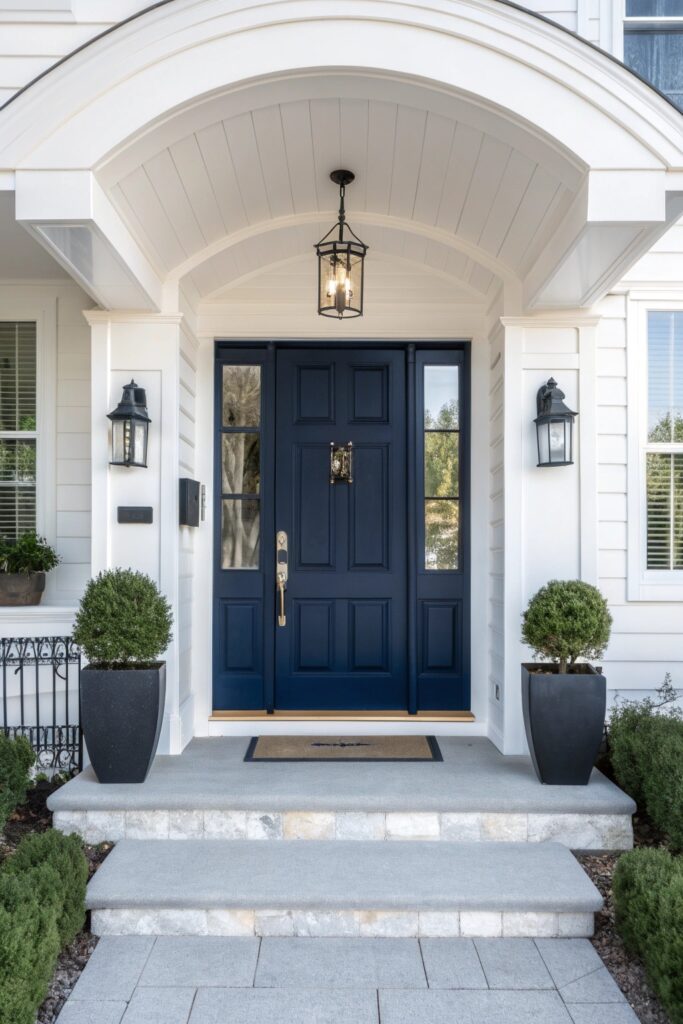
A semi-gloss or gloss finish is the standard choice for exterior doors rather than flat or eggshell, since it holds up better to weather, cleans more easily, and resists the fading that a flatter sheen shows more visibly over a few seasons of sun exposure.
Fiberglass doors need considerably less upkeep than solid wood, which typically requires refinishing every three to five years depending on sun and moisture exposure. If the existing door is structurally sound but dated, repainting costs a fraction of full replacement — usually under $100 in materials for a DIY job versus $800 to $3,000 or more for a new door.
2. Stylish Outdoor Lighting for Instant Ambiance
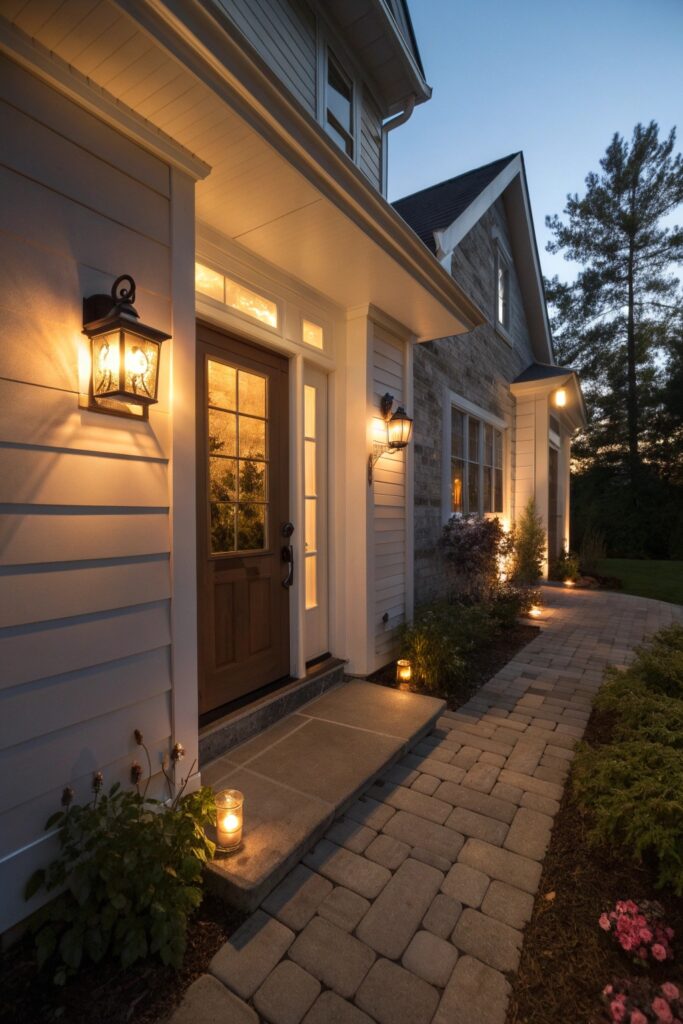
A single entry fixture in the 800 to 1,100 lumen range (roughly equivalent to a 60 to 100 watt incandescent bulb) covers a standard porch adequately without being overly bright. Dark-sky compliant fixtures, which shield the bulb and direct light downward, reduce glare for anyone standing at the door and cut down on light spilling into neighboring windows.
Mount fixtures at eye level — typically 66 to 72 inches from the ground — flanking the door, or centered above it if using a single fixture. A dusk-to-dawn photocell automatically turns lights on at sunset, while a motion sensor conserves energy but won’t provide the steady ambient glow a photocell setup does.
3. Greenery That Brings Life to Your Entrance
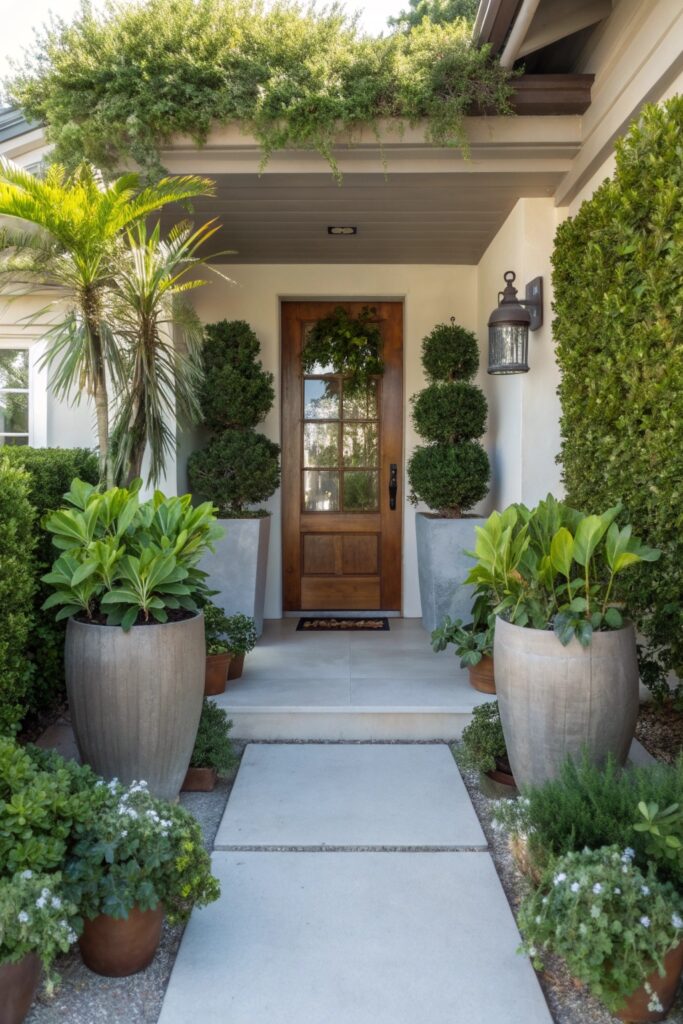
A large planter filled with wet soil can weigh 50 pounds or more once established, which is worth checking against your porch or landing’s actual load capacity before committing to an oversized urn, especially on a raised wood deck rather than a concrete slab.
A general proportion guideline is sizing the planter to roughly a third to half the height of the door, which keeps the greenery from looking undersized or overwhelming the entrance. Rotating seasonal plants — spring bulbs, summer annuals, evergreen boughs in winter — keeps the entrance feeling current without a full redesign each time.
4. A Chic Doormat That Says Something About You
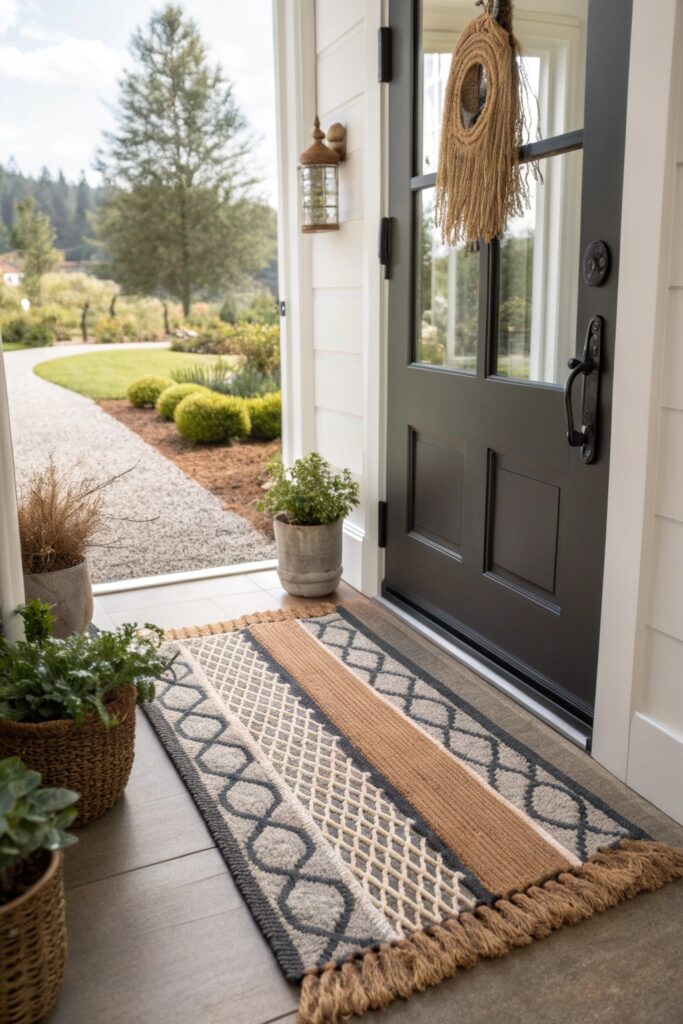
Coir mats, made from coconut fiber, scrape dirt and debris off shoes effectively but shed loose fibers initially and break down faster in consistently wet or snowy climates. A rubber-backed synthetic mat holds up better to repeated moisture exposure and resists mold, making it the more practical choice for entrances that see regular rain or snow.
Size the mat to fully cover the landing rather than leaving bare concrete or wood exposed around the edges, which reads as an afterthought rather than an intentional design choice.
5. Eye-Catching House Numbers
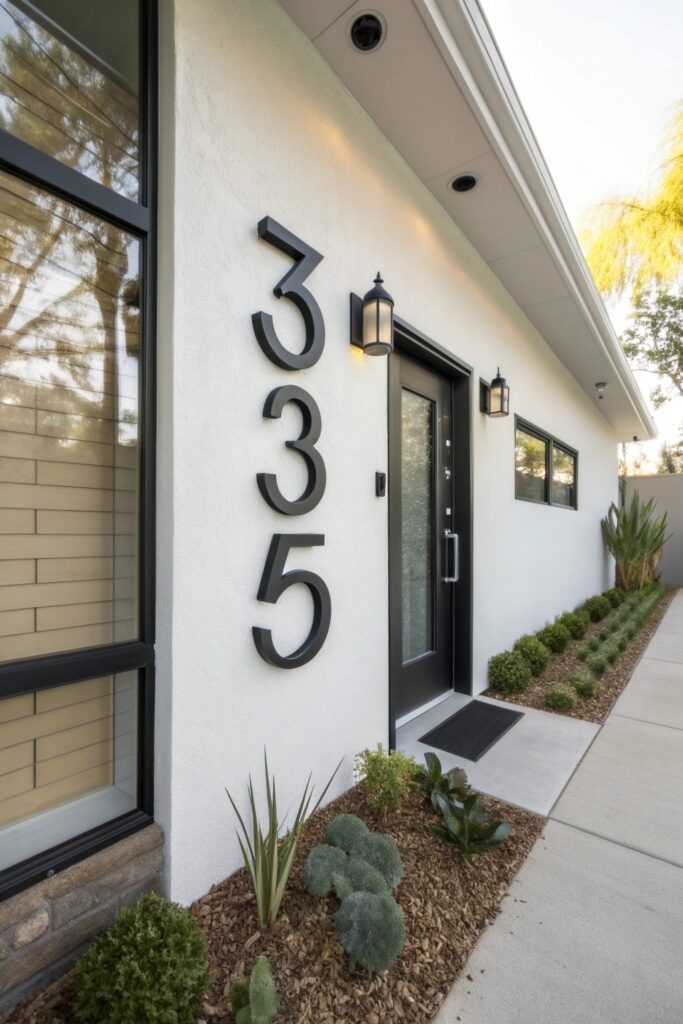
Many local fire codes require house numbers to be at least 4 inches tall and clearly visible from the street, since emergency responders rely on quickly locating the correct address — it’s worth checking your specific municipal code before finalizing a smaller decorative option.
Contrast matters as much as size: dark numbers against a light-colored door or wall (or the reverse) read at a glance, while numbers that closely match their background color can be difficult to spot even during daylight.
6. Welcoming Seating Area (If Space Allows)
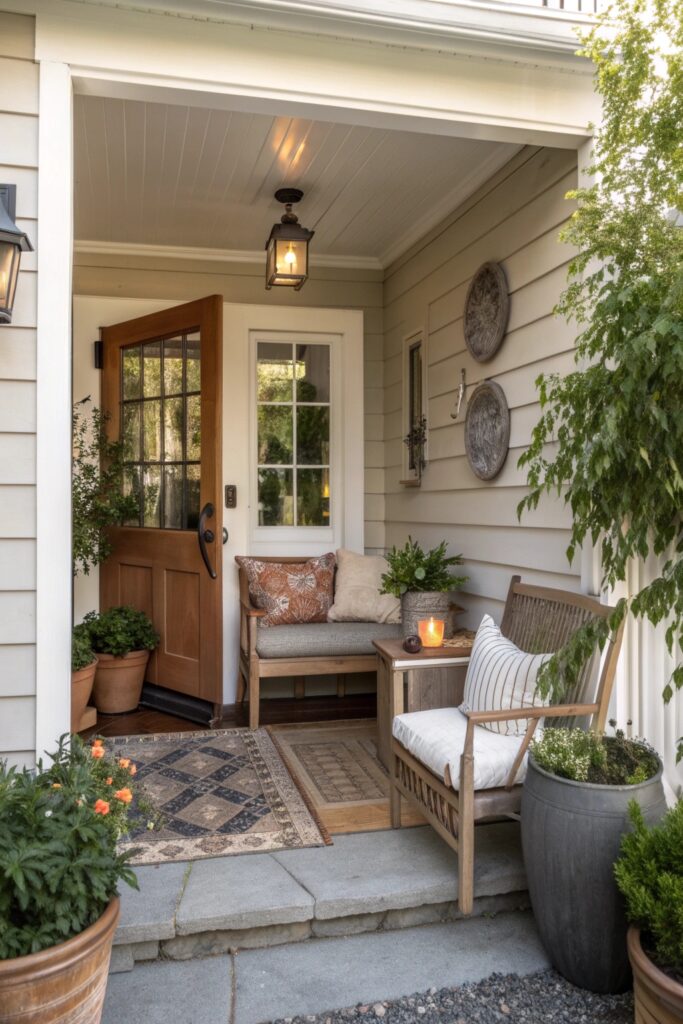
Materials suited to an exposed porch — teak, powder-coated aluminum, or synthetic all-weather wicker — hold up to sun and rain considerably better than untreated wood or fabric-upholstered furniture, which can warp, fade, or mildew within a season or two outdoors.
Keep at least 3 feet of clear walking path to the door itself when placing any seating, so the furniture doesn’t create an obstacle for guests or deliveries.
7. Decorative Wreaths for Year-Round Style
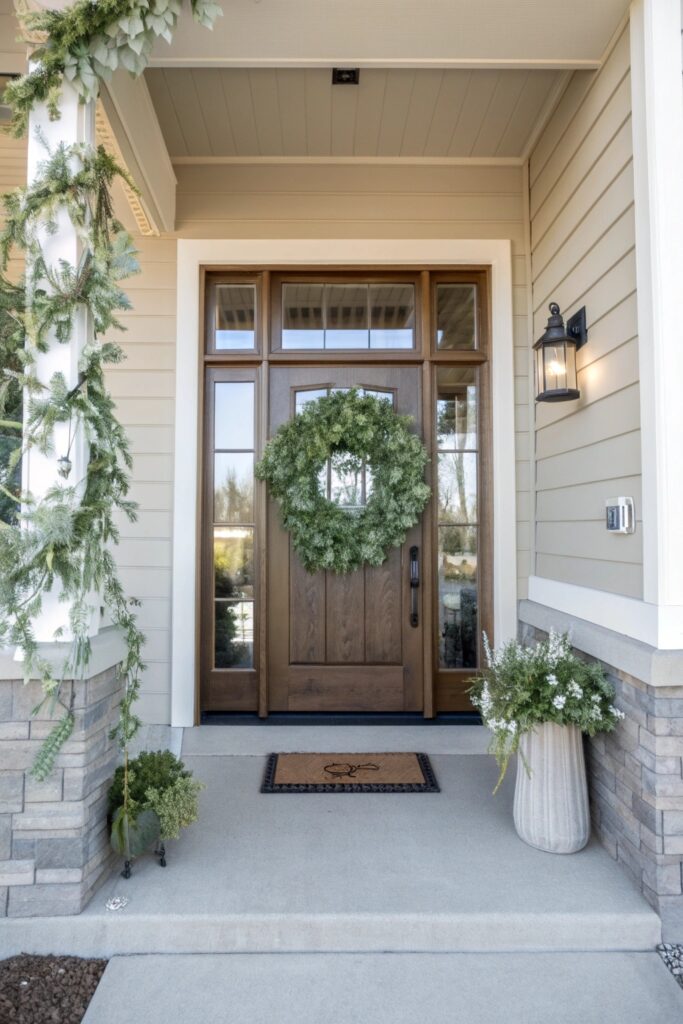
Rotating a wreath seasonally — florals in spring, greenery in summer, something warmer-toned for fall and winter — keeps the entrance feeling current throughout the year. Covered entries allow a wider range of materials to hold up over time than fully exposed ones, which is worth factoring into how elaborate or delicate a design you choose.
8. Layered Textures for a Designer Look
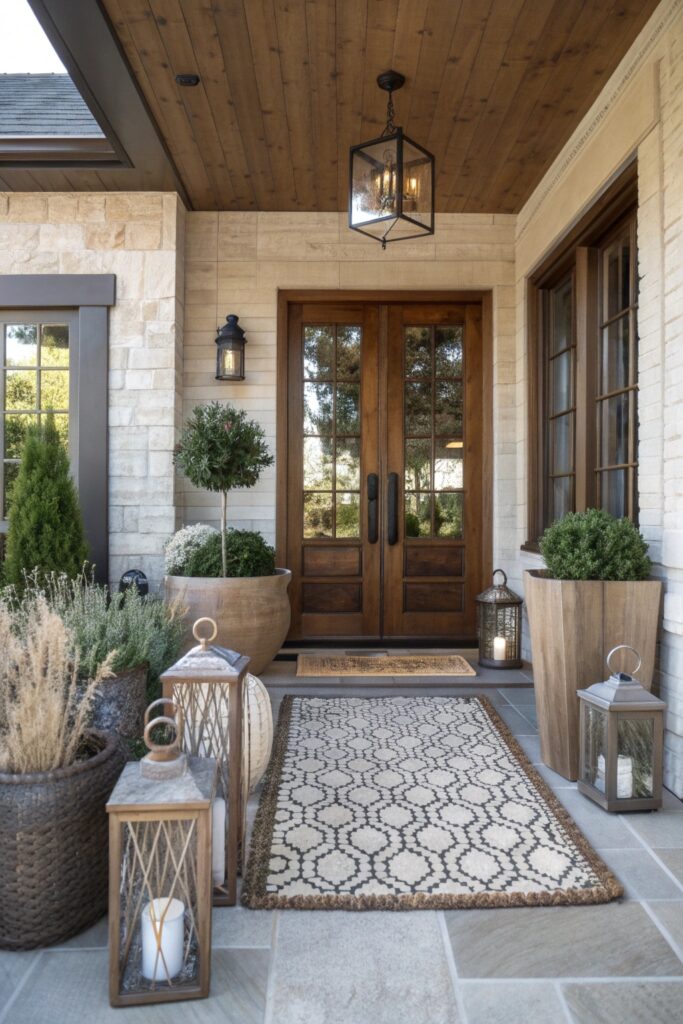
Combining at least two distinct material families — metal hardware against a wood door, a stone planter beside a woven mat — creates visual depth that a single-material entrance doesn’t achieve. Limiting the mix to three or four total textures keeps the look cohesive; beyond that, an entrance starts to feel busy rather than intentionally layered.
9. Mirror or Wall Decor for Small Entry Spaces
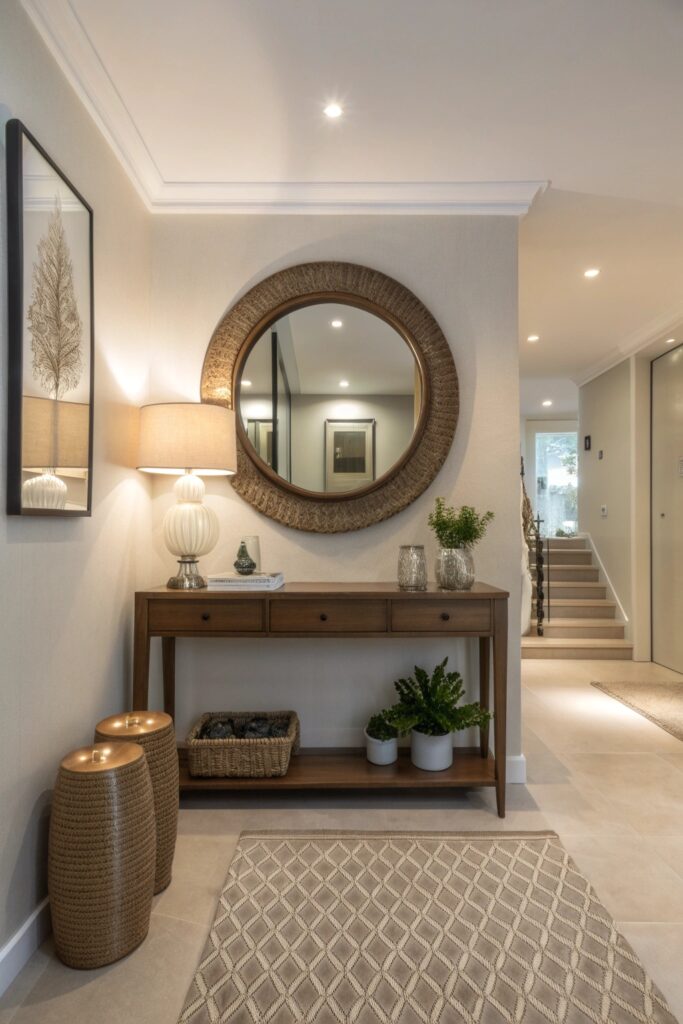
A standard mirror can develop dark spots or corrosion along the edges when exposed to consistent outdoor moisture, so look specifically for a sealed-back or outdoor-rated mirror if it will live on a covered porch rather than repurposing an indoor piece.
Positioning a mirror to reflect the doorway or a nearby light source helps a narrow or shallow entry read as more open than its actual square footage.
10. Personal Touches That Tell Your Story
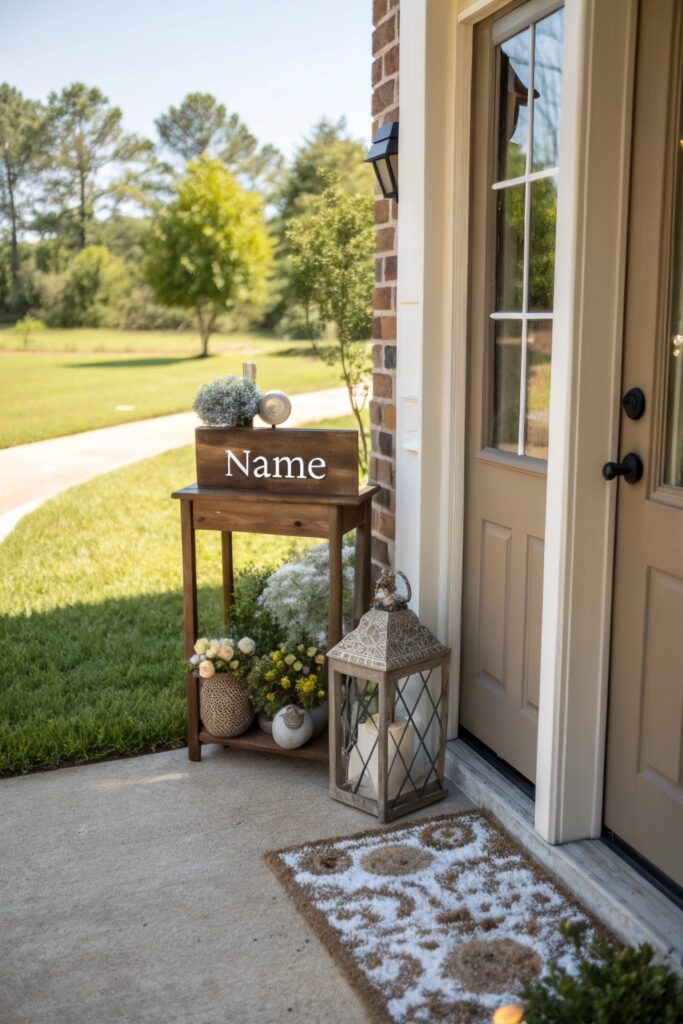
Two or three curated, meaningful items — a specific plant variety, a piece with personal history, a distinct color choice — read as more intentional than an entrance covered in many small decorative pieces competing for attention. Swapping just one or two of these elements seasonally keeps the space feeling maintained without requiring a full redecoration each time.
Seasonal Maintenance Worth Planning For
An entrance sees more direct weather exposure than nearly any other part of a home’s exterior, so a few maintenance tasks are worth scheduling rather than waiting until something visibly fails. Checking door hardware for rust or stiffness each season, resealing a wood door’s finish before it starts to show UV fading, and clearing debris from light fixtures all take a few minutes but prevent bigger repairs later.
If your entrance faces significant sun exposure — a south-facing door in particular — expect faded paint and fixtures to need attention sooner than a shaded, north-facing entrance would. Factoring in your specific orientation when choosing paint quality and fixture finishes can save a repaint or replacement cycle down the line.
What an Entrance Refresh Costs
A basic refresh — new house numbers, a doormat, a few potted plants — typically costs $50 to $200 in materials.
A fuller update including new lighting fixtures, a repainted door, and seating runs considerably higher, often $500 to $1,500 depending on fixture quality and whether any of the work is hired out rather than done as a weekend project.
Proportion Is the Most Common Entrance Mistake
More than color or style choice, the most frequent issue with entrance decor is scale — a planter too small for the door, house numbers too subtle to read from the street, furniture that crowds the actual walking path. Before finalizing any single element, step back and view the entrance as a whole from the street or driveway, which is the vantage point most guests and visitors will actually experience first.
Weatherproofing matters more here than in almost any other part of a home’s decor, since an entrance is exposed to sun, rain, and temperature swings year-round regardless of climate. Choosing materials specifically rated for outdoor use — even for smaller accent pieces — saves the cost and hassle of replacing decor that fails within a single season.