
This guide focuses on organizing a standalone laundry room. If you’re working with a combined mudroom-and-laundry space instead, see our companion guide to mudroom laundry room combo ideas, which covers the added considerations that come with combining the two functions.
Below are 11 ways to organize this space, with the practical details for each.
Looking for a farmhouse-style laundry room specifically? See our companion guide to farmhouse laundry room ideas.
1. Install Open Shelving for Easy Access
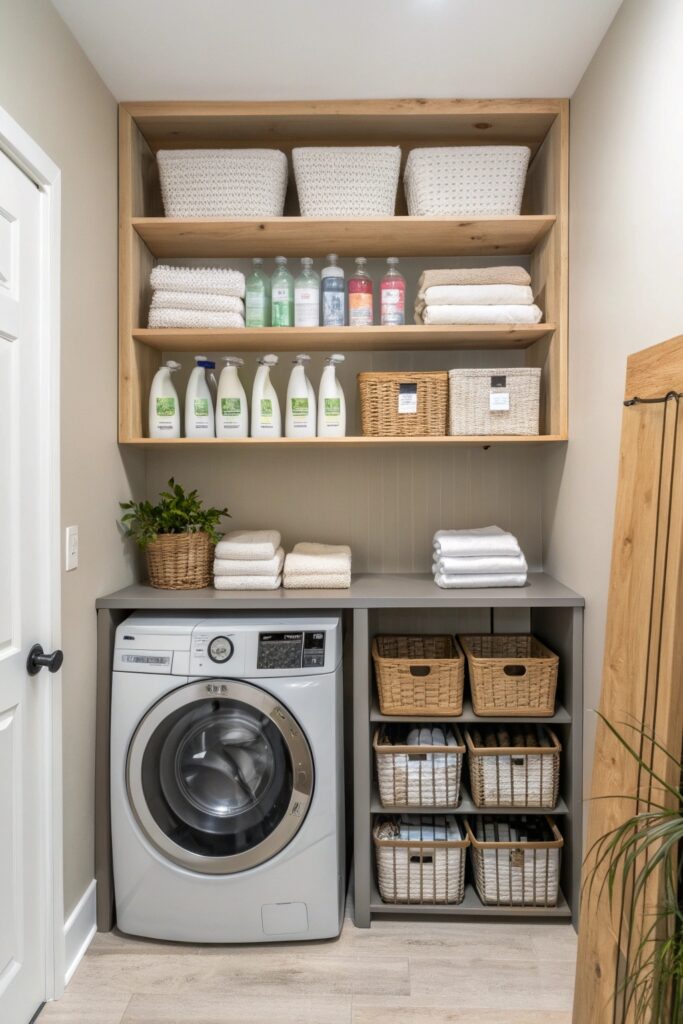
Anchor shelves into studs where possible, since bulk-sized detergent and supply bottles are heavier than they look — a shelf rated only for light decorative items won’t hold up to a fully stocked laundry supply lineup.
2. Use Baskets to Sort Laundry Like a Pro
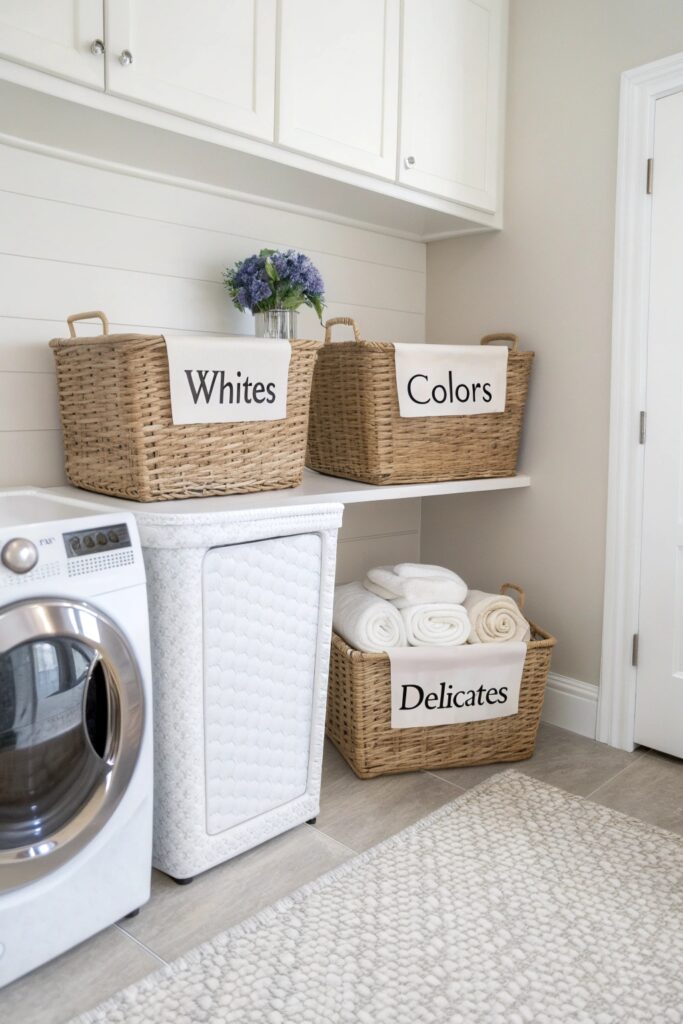
Woven or mesh baskets allow more airflow around damp items waiting to be washed than a solid plastic bin does, which matters for anything that sat slightly damp before making it to the laundry room.
3. Add a Folding Station
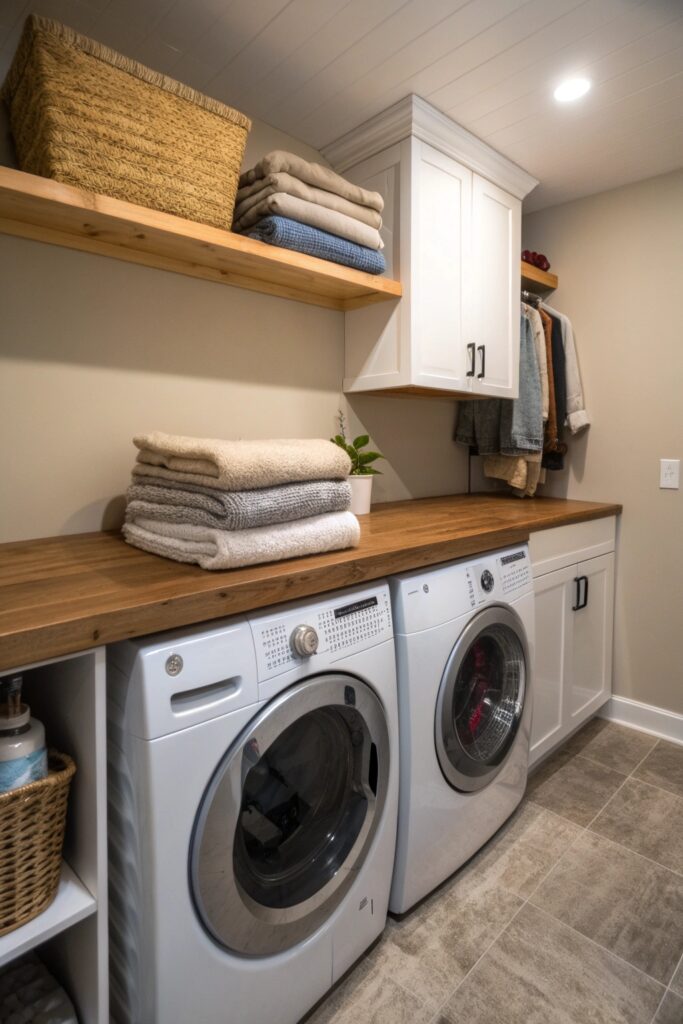
A counter height around 36 inches, matching a standard kitchen counter, keeps folding at a comfortable working height. If the station sits near the dryer’s exhaust, a heat-resistant surface like quartz holds up better than laminate, which can warp with repeated heat exposure over time.
4. Go Vertical with Storage
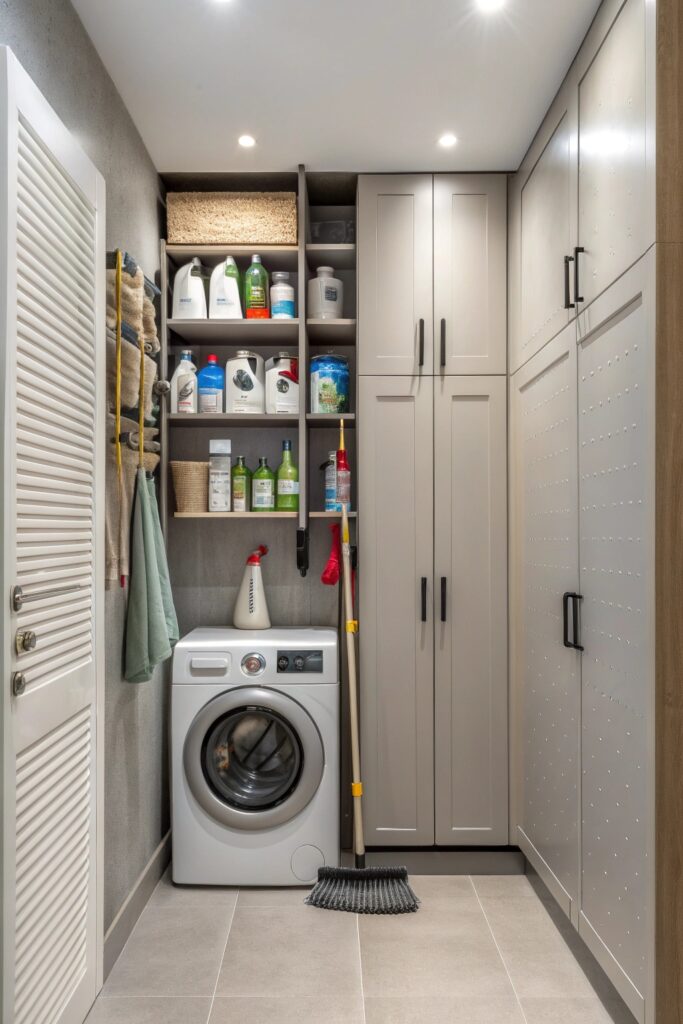
Matching cabinet depth to the washer and dryer’s actual height creates a cleaner built-in look if you’re planning to conceal the appliances, while shallower upper cabinets work well for supplies that don’t need to match the machines’ footprint.
5. Hide Clutter with Stylish Cabinets
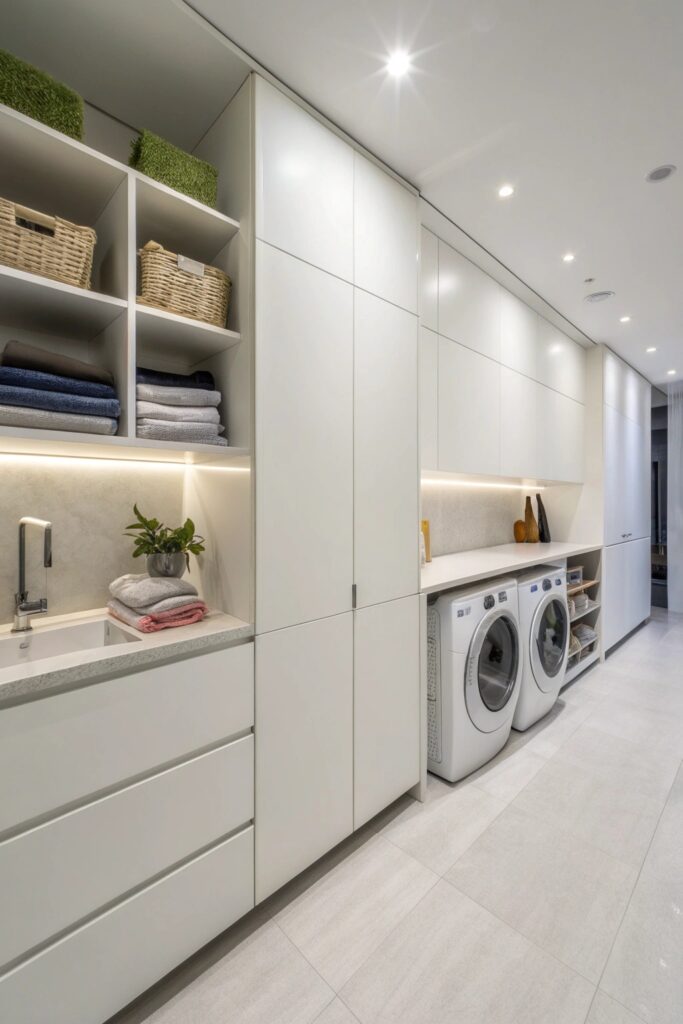
Standard MDF cabinetry can swell with the humidity a laundry room regularly produces, so solid wood or a moisture-resistant particleboard rated for wet areas specifically holds up better here than it would need to in a drier room.
6. Use Wall Hooks for Everyday Items
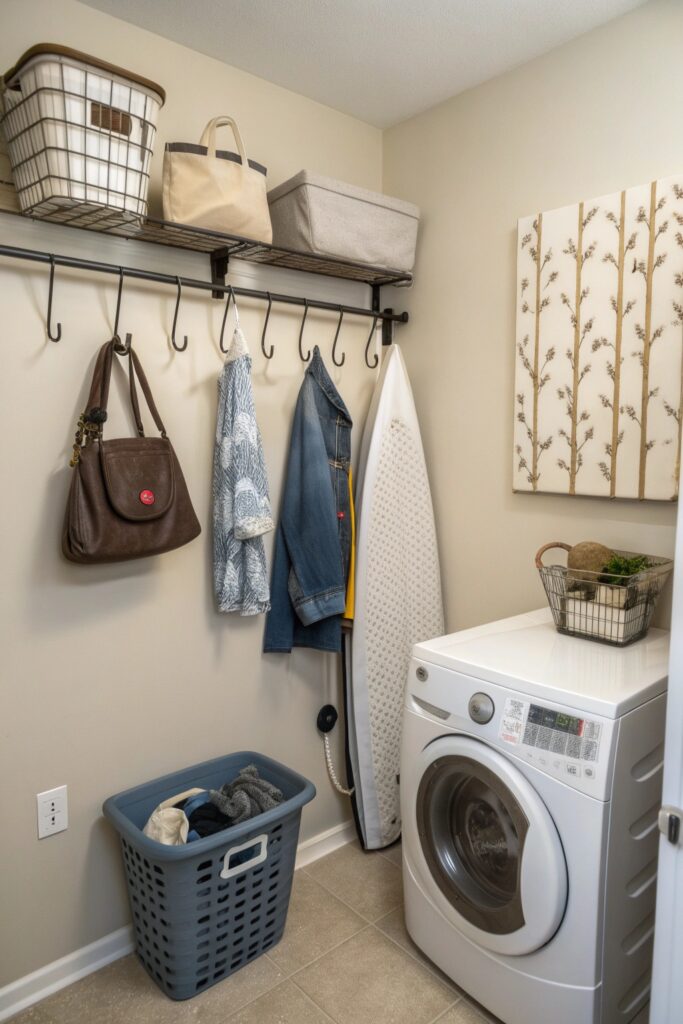
Hooks work well for hanging delicates to air dry or holding a mesh laundry bag, and positioning a few at different heights accommodates both shorter hanging items and longer ones without overlap.
7. Incorporate Pull-Out Hampers
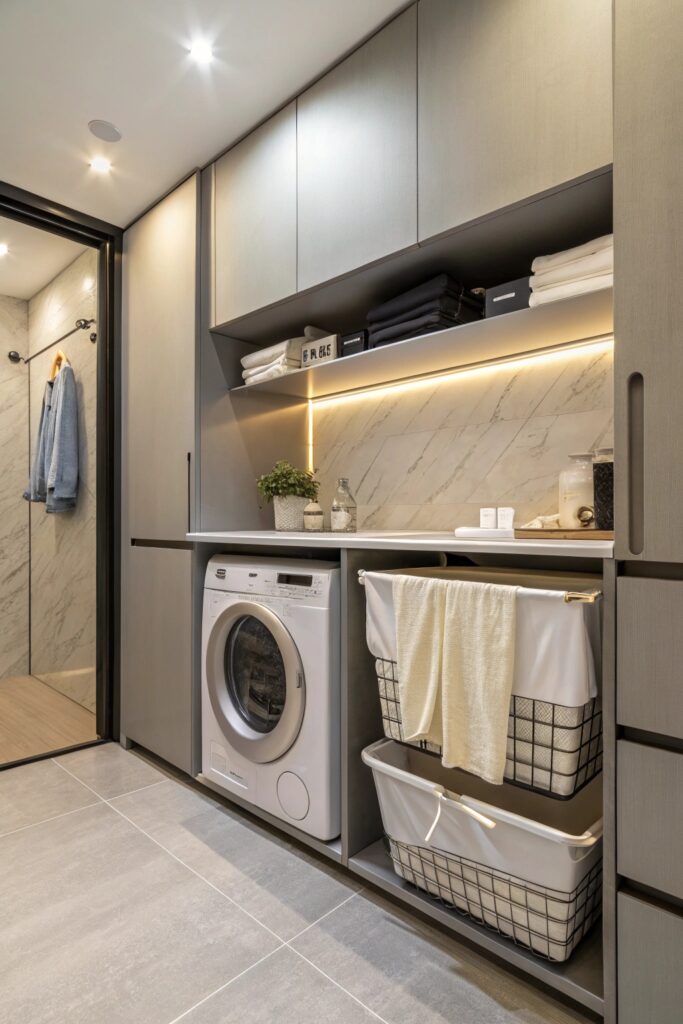
A single pull-out bin typically fits within a standard 12 to 18 inch cabinet module, which is worth confirming against your specific cabinetry before ordering hardware, since not every pull-out hamper insert fits every cabinet width.
8. Brighten Up with Good Lighting
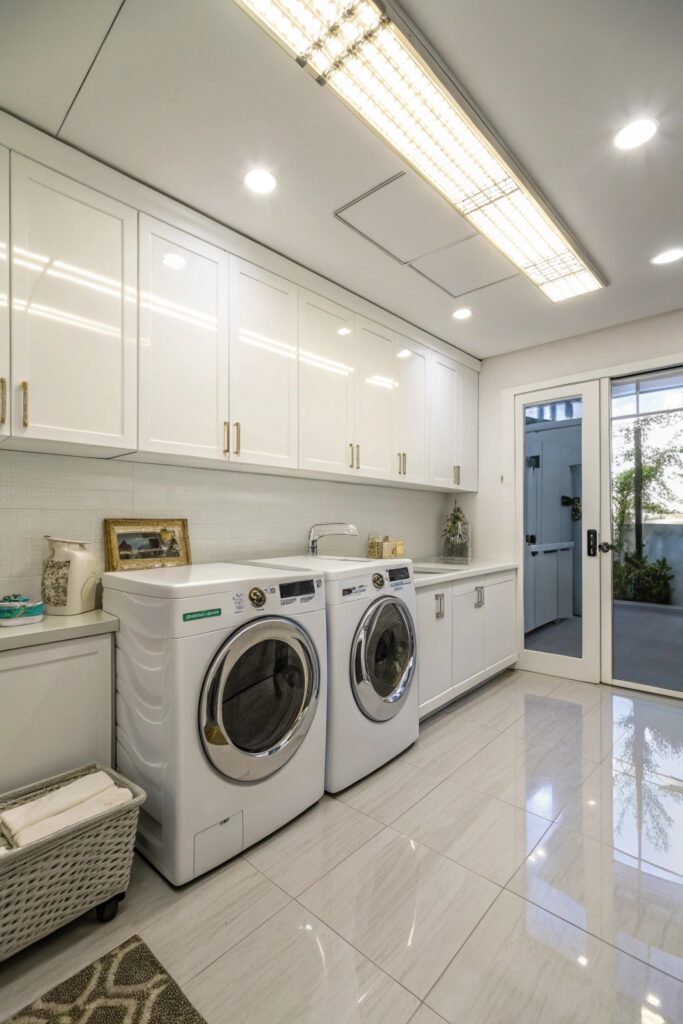
Stain-spotting and reading care labels both benefit from brighter, more direct task lighting than the room’s general ambient light typically provides — a dedicated fixture over the folding or sorting area makes these small but frequent tasks noticeably easier.
9. Add a Pop of Color or Pattern
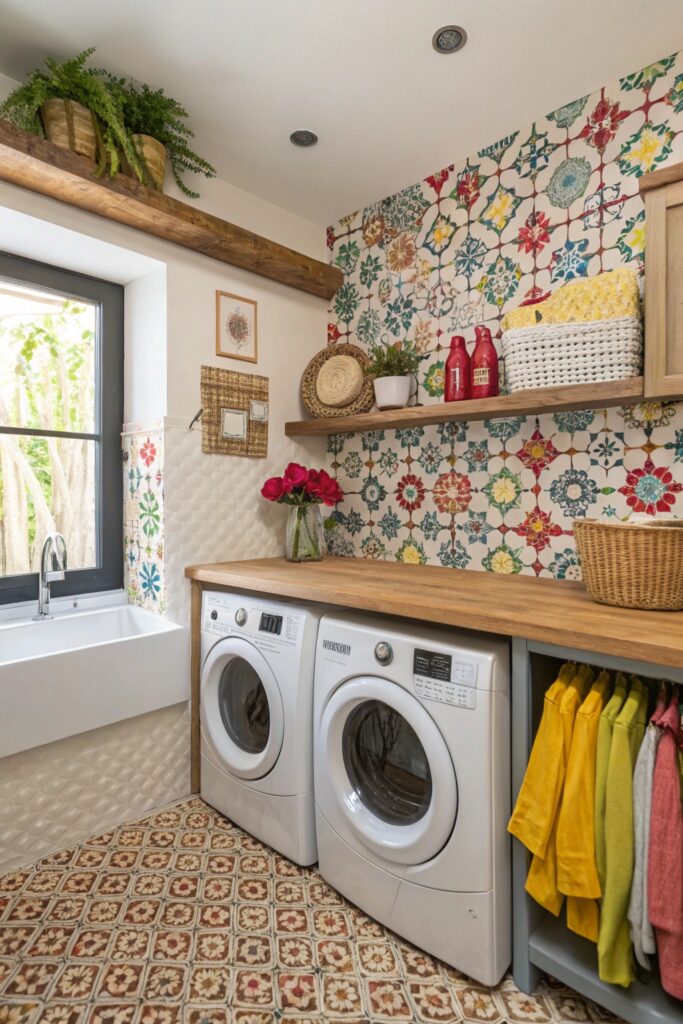
Peel-and-stick wallpaper is a practical, lower-commitment way to introduce a bold pattern here specifically, since the room’s smaller size limits both material cost and the effort involved if you want to change it again later.
10. Use Multi-Functional Furniture
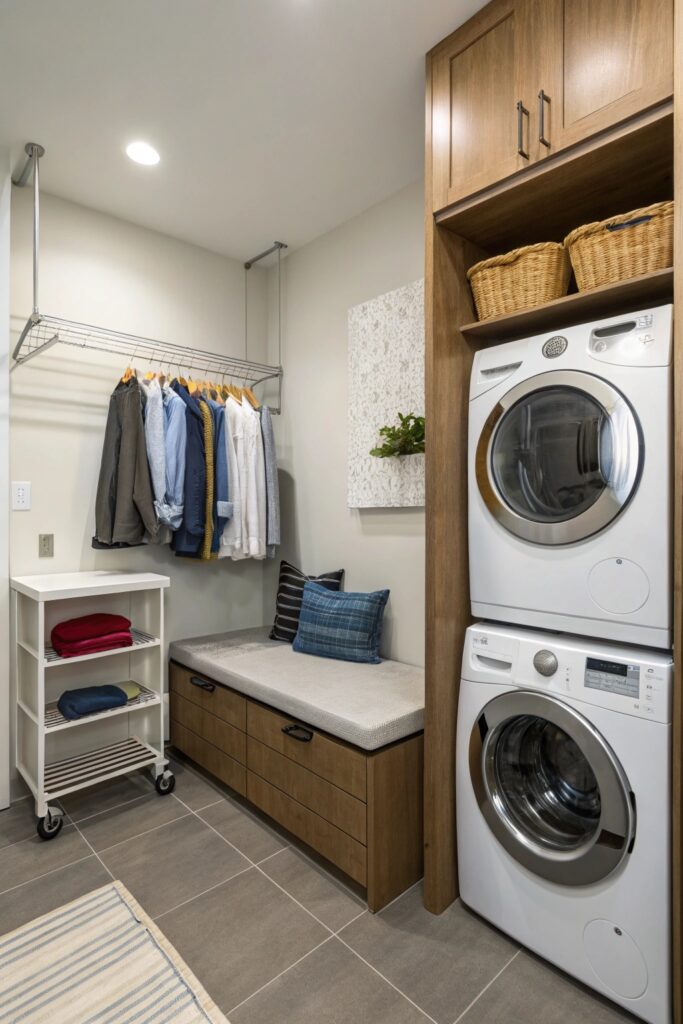
A rolling cart moves easily between the washer, dryer, and folding station, which is actually useful in a laundry room’s real workflow rather than a purely decorative feature. A drying rack that mounts to the inside of a cabinet door saves floor space entirely when not in use.
11. Keep It Minimal and Clutter-Free
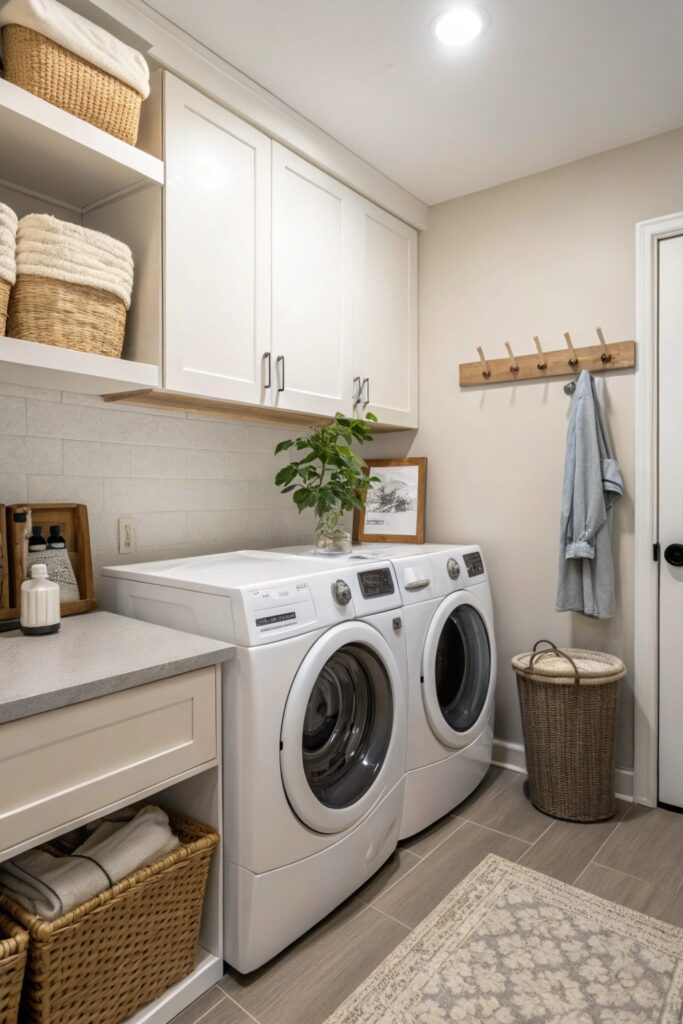
Clutter in a laundry room does more than look messy — it actually slows down the task of doing laundry itself, unlike clutter in a purely decorative room, since every misplaced item is something you have to move out of the way mid-task.
Ventilation Matters in a Small Laundry Room
A laundry room without an exterior window or dedicated exhaust fan can trap humidity from both the washer and dryer, which over time contributes to a musty smell or even mold growth in a poorly ventilated space. A simple exhaust fan, even a small one, makes a meaningful difference in keeping the room dry between loads.
Clean the dryer’s lint trap after every single load, since lint buildup restricts airflow, makes the dryer run less efficiently, and is a genuine fire hazard when neglected over time — this is one of the simplest habits with real safety implications in the entire room.
What a Laundry Room Update Costs
A basic organizational refresh — shelving, baskets, hooks, and a folding surface — typically costs $150 to $500 depending on material quality.
A fuller renovation including new cabinetry and countertops runs considerably higher, often $2,000 to $6,000 depending on the scope and whether plumbing or electrical work is also involved.
Sorting Supplies to Reduce Daily Decisions
Keeping detergent, stain remover, and fabric softener in clearly labeled containers near the washer cuts down on the small daily decisions and searching that add up over repeated loads. Decanting bulk detergent into a smaller, more manageable pump dispenser also reduces spills and makes it easier to gauge how much product you’re actually using per load.
A small caddy or tray for stain treatment supplies specifically, kept separate from everyday detergent, makes it faster to grab exactly what’s needed the moment a spill or stain happens rather than digging through a shelf of mixed products.
Flooring in this room sees regular water exposure from spills and the occasional overflow, so a water-resistant option like tile, vinyl, or sealed concrete holds up better long-term than carpet or unsealed hardwood, which can warp or develop mold if moisture sits on the surface even briefly.
Whatever combination of these ideas fits your space and budget, focus first on the changes that reduce daily friction — a folding surface at the right height, supplies within easy reach — before moving on to purely decorative upgrades, since those functional improvements tend to make the biggest difference in how much the room actually gets used and enjoyed.
Reassess the room’s organization every few months rather than assuming an initial setup will work indefinitely, since laundry habits and household needs shift over time — what worked well for one person’s routine might need adjusting once schedules or family size changes.
A well-organized laundry room, even a small one, noticeably changes how often the task itself gets put off, since a functional, pleasant space is easier to walk into and use regularly than a cramped, cluttered one.
Organize Around the Actual Workflow
A laundry room works best when it’s organized around the real sequence of tasks — sorting, washing, drying, folding — rather than storage volume alone. Placing hampers near the entry, the folding station near the dryer, and supplies within reach of the washer keeps the room functioning smoothly rather than requiring extra steps between each stage.
Small, consistent habits — putting supplies back in their designated spot, folding as items come out of the dryer rather than letting them pile up — tend to matter more for keeping this room organized long-term than any single storage product, however well designed.