
A washing machine stuck full of water mid-cycle usually points to a drainage problem, but electrical and mechanical causes are common enough to rule out too, especially if the drain hose and pump both check out clear.
Below are 12 causes to check, generally starting with the simplest and most common before moving toward more involved mechanical or electrical issues.
1. Clogged Drain Hose
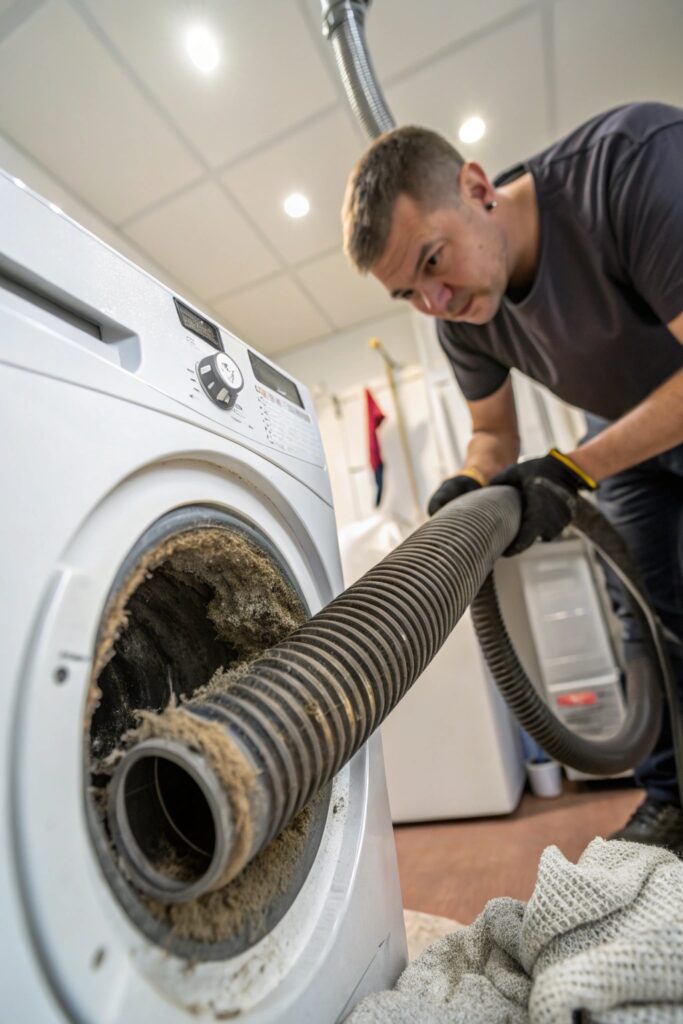
Lint, small clothing items, or debris can build up inside the drain hose over time, restricting or fully blocking water from draining out and leaving the machine stuck mid-cycle full of water.
Disconnect the hose from the wall and machine (with the machine unplugged first) and run water through it in reverse to check for blockages — a persistent clog often requires a flexible drain snake to fully clear.
2. Clogged Drain Pump Filter
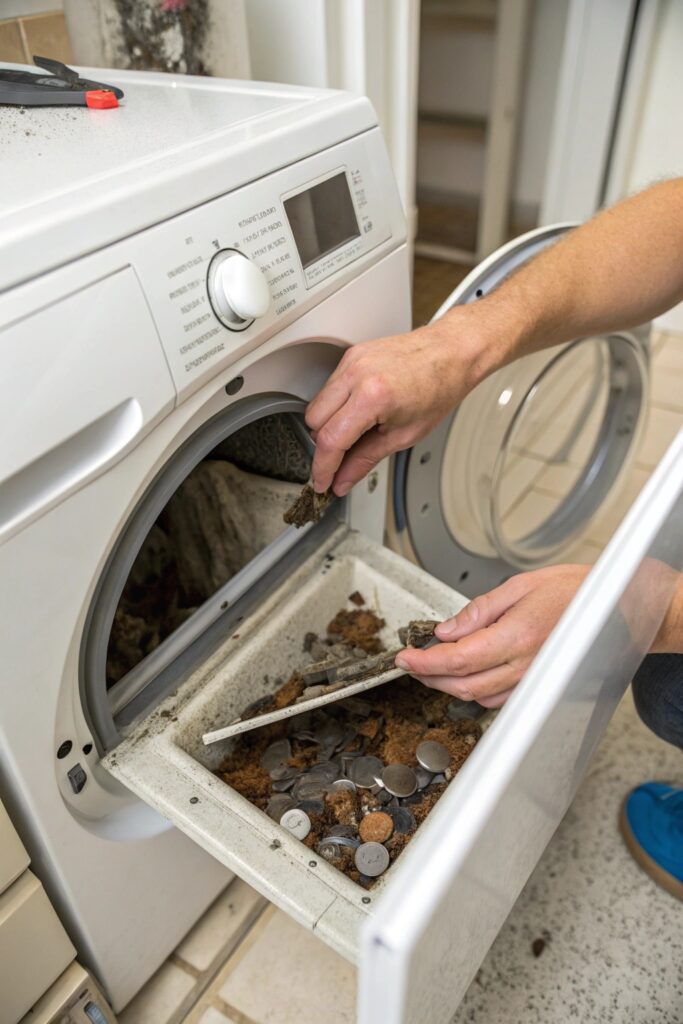
Most front-load and many top-load machines have an accessible filter (usually behind a small panel at the bottom front) that traps coins, buttons, and small debris before they reach the pump — a full filter can stop drainage entirely.
Check your specific model’s manual for the filter’s exact location, and expect some water to spill out when opening it, so keep a shallow pan and towels ready before starting.
3. Faulty Drain Pump
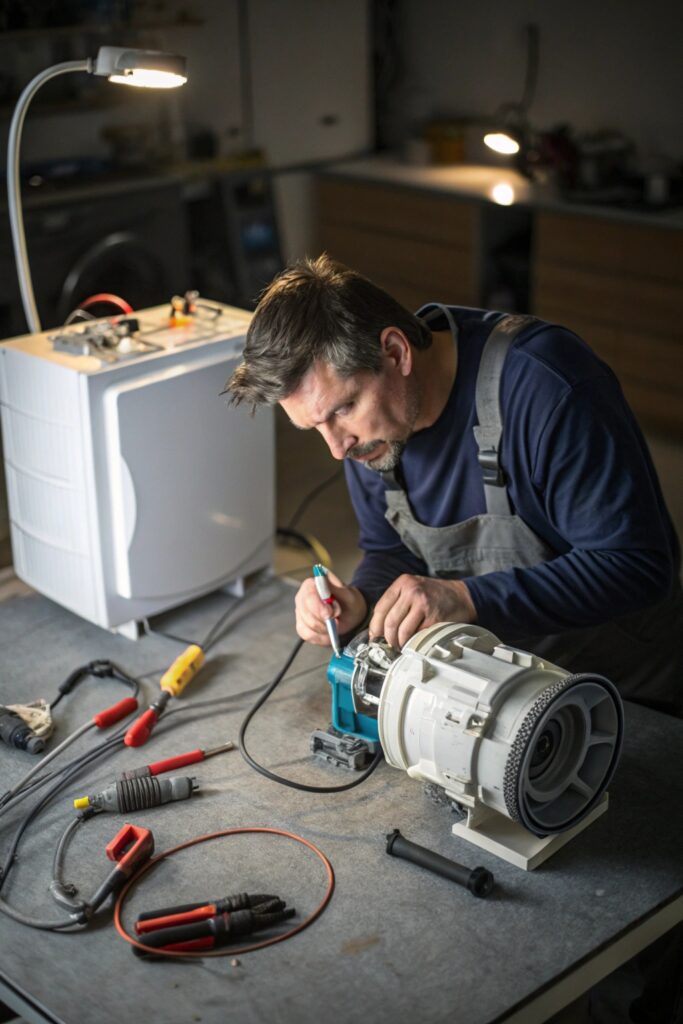
If the hose and filter are both clear but water still won’t drain, the pump itself may have failed — often from a jammed impeller (something small and hard, like a bra underwire, lodged inside) or a burned-out motor.
Listen during the drain cycle: a humming sound with no water movement suggests a jammed impeller, while complete silence points toward a dead pump motor needing replacement, typically $30-80 in parts depending on the machine model.
4. Kinked or Blocked Drain Hose at the Wall
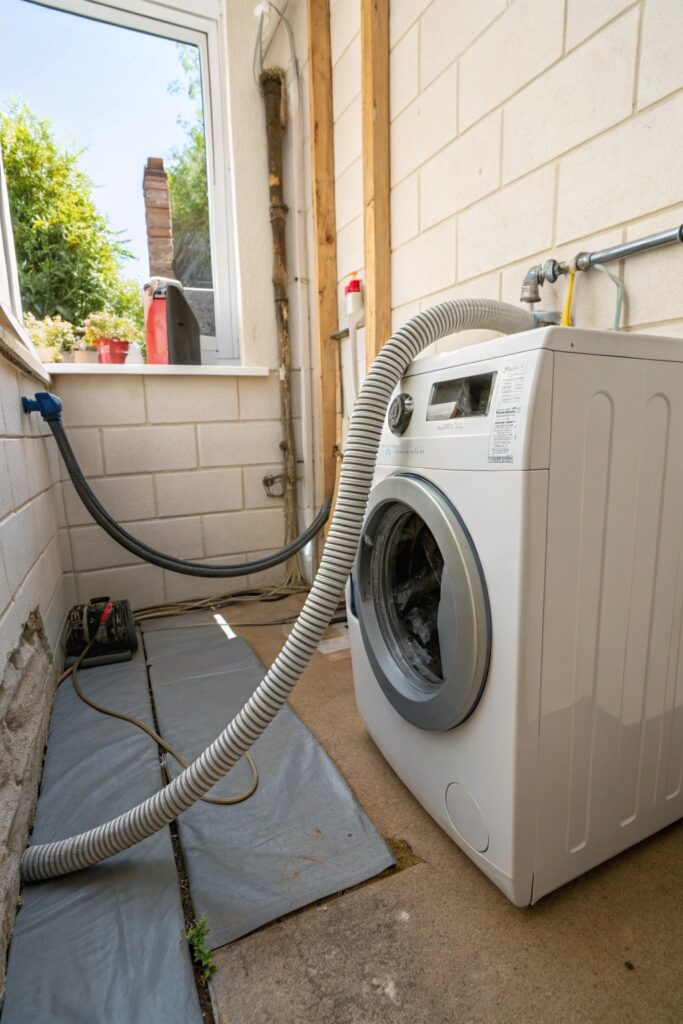
The section of hose running from the machine to the wall drain or standpipe can develop a kink from the machine being pushed too close to the wall, or the standpipe itself can be blocked with buildup from previous use.
Pull the machine out slightly to check the hose’s full path for any sharp bends, and inspect the standpipe opening for visible buildup if your setup drains into one rather than a floor drain.
5. Malfunctioning Water Level Sensor (Pressure Switch)
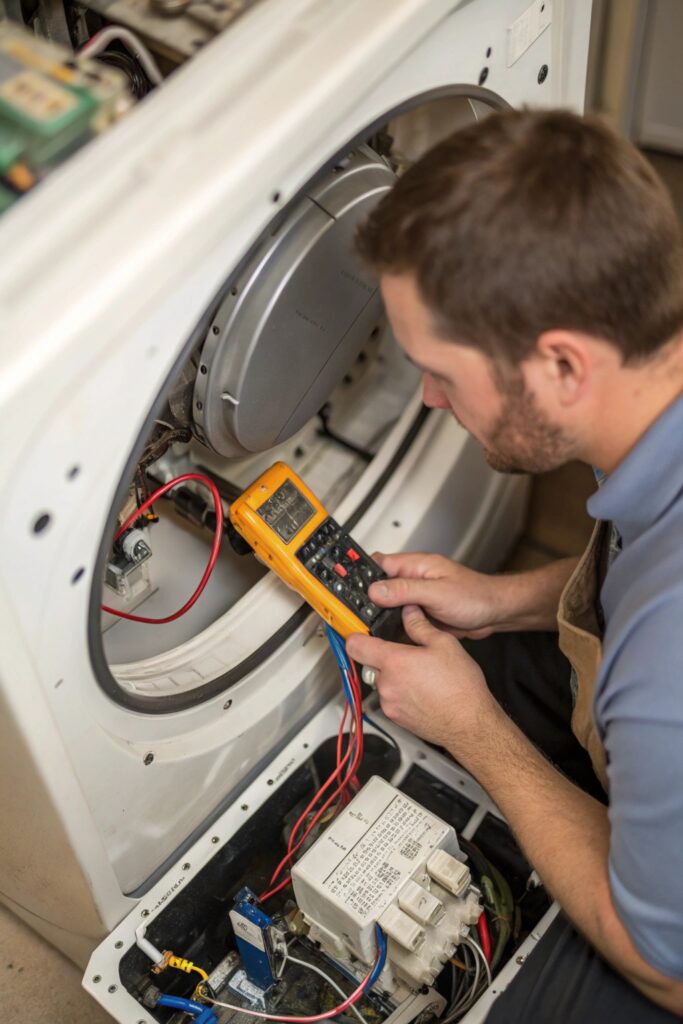
The pressure switch tells the machine how full the tub is and when to stop filling or start draining — if it fails or reads incorrectly, the machine can get stuck believing it’s still full when it should be moving to the next cycle step.
This component is usually located near the top of the tub and connects via a small air hose; a pinched or disconnected air hose can cause the same symptoms as a fully failed switch and is worth checking first since it’s a simpler fix.
6. Broken Lid Switch or Door Latch
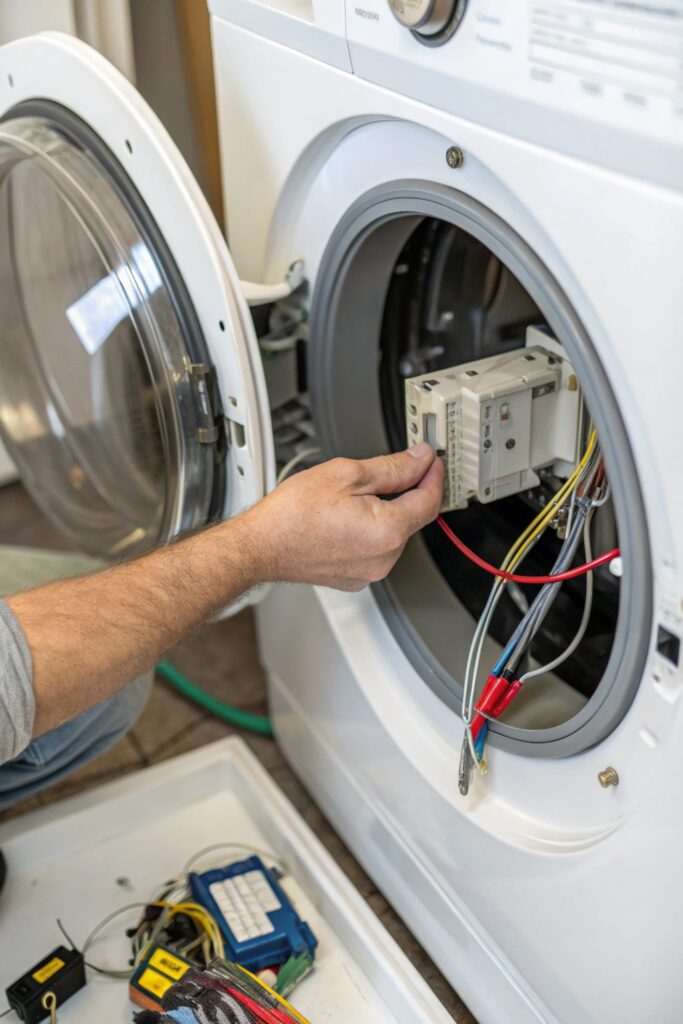
Top-load machines won’t spin or drain if the lid switch doesn’t register as closed, and front-load machines have a similar door latch safety mechanism — a failed switch can leave the machine stuck mid-cycle even with the door or lid genuinely closed.
Listen for a click when closing the lid or door; if there’s no click or the machine display shows a door/lid error code, the switch or latch itself likely needs replacement rather than any deeper mechanical issue.
7. Overloaded Machine
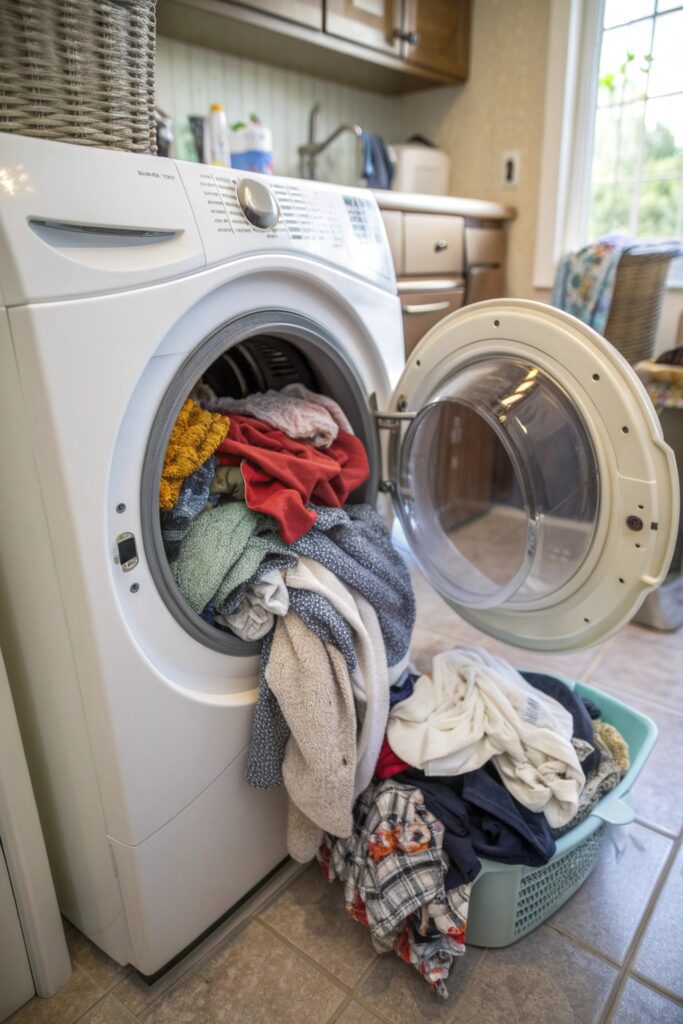
Packing a machine beyond its rated capacity can prevent the drum from spinning properly, which in turn prevents draining, since many machines require a minimum spin speed to fully evacuate water from the tub.
Check your specific model’s maximum load capacity (often printed inside the drum or in the manual) and redistribute or remove some items if the load appears visibly overpacked.
8. Faulty Timer or Control Board
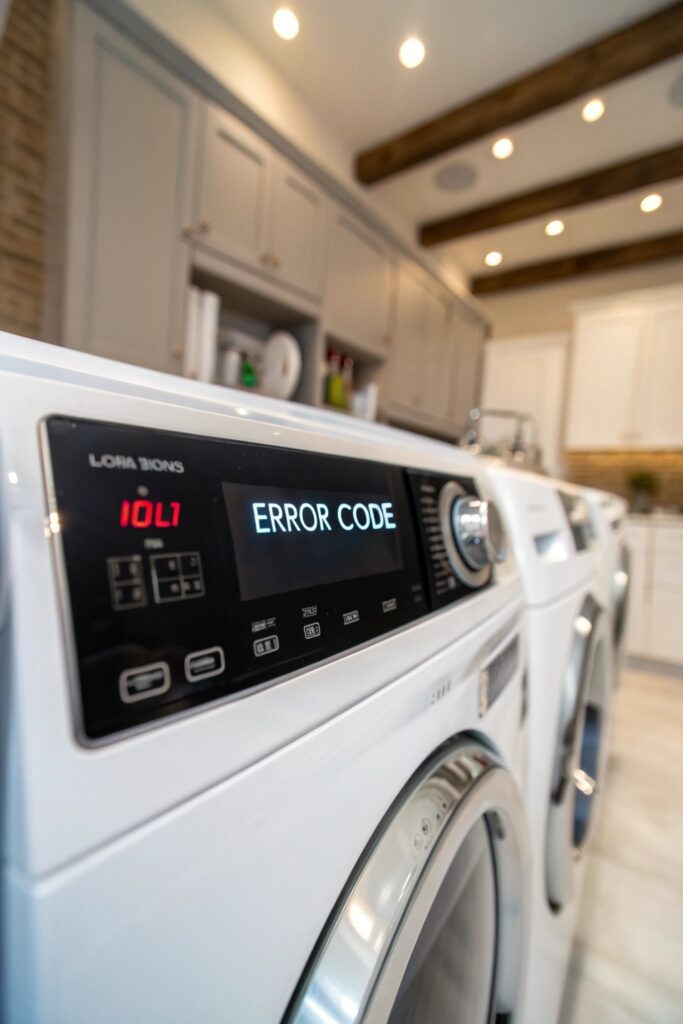
On older mechanical-timer machines, a worn timer motor can cause the cycle to stall at a specific point; on newer machines, a malfunctioning control board can send incorrect signals that stop the cycle before draining begins.
This is a more involved diagnosis best done by checking for visible burn marks or corrosion on the control board (with the machine unplugged) or consulting a technician if the machine displays an error code pointing to the control system specifically.
9. Failed Water Inlet Valve
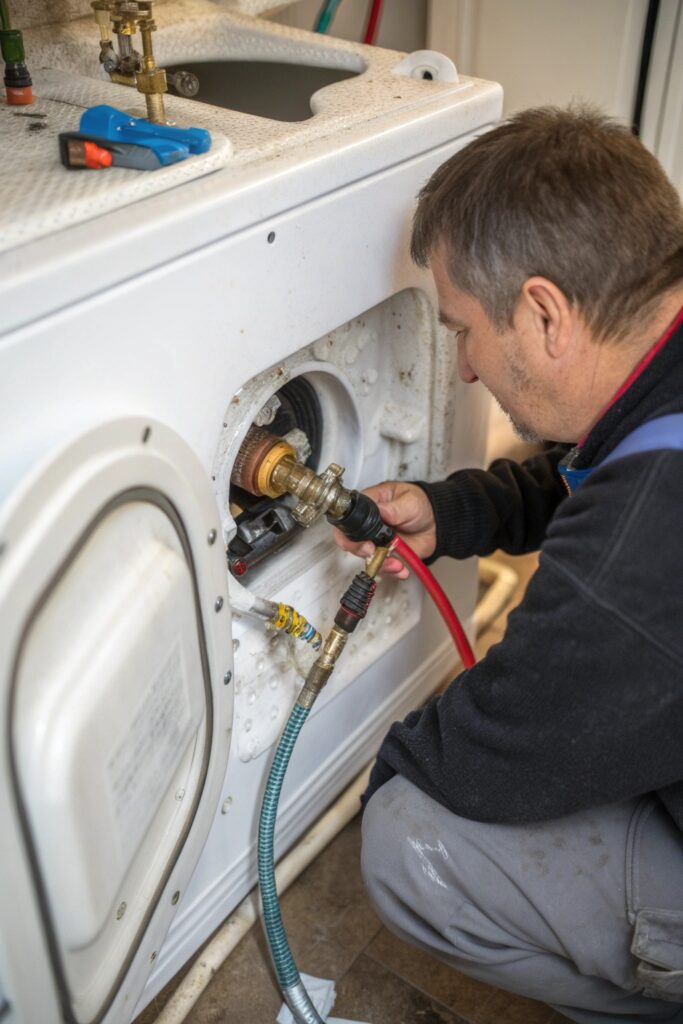
A stuck-open inlet valve can continue adding water even after the machine should have stopped filling, which some machines interpret as an error condition and halt the cycle entirely to prevent overflow.
If the machine is stuck with water still slowly rising rather than simply sitting full, this points toward the inlet valve specifically rather than a drainage-side issue.
10. Tripped Circuit Breaker or Power Interruption
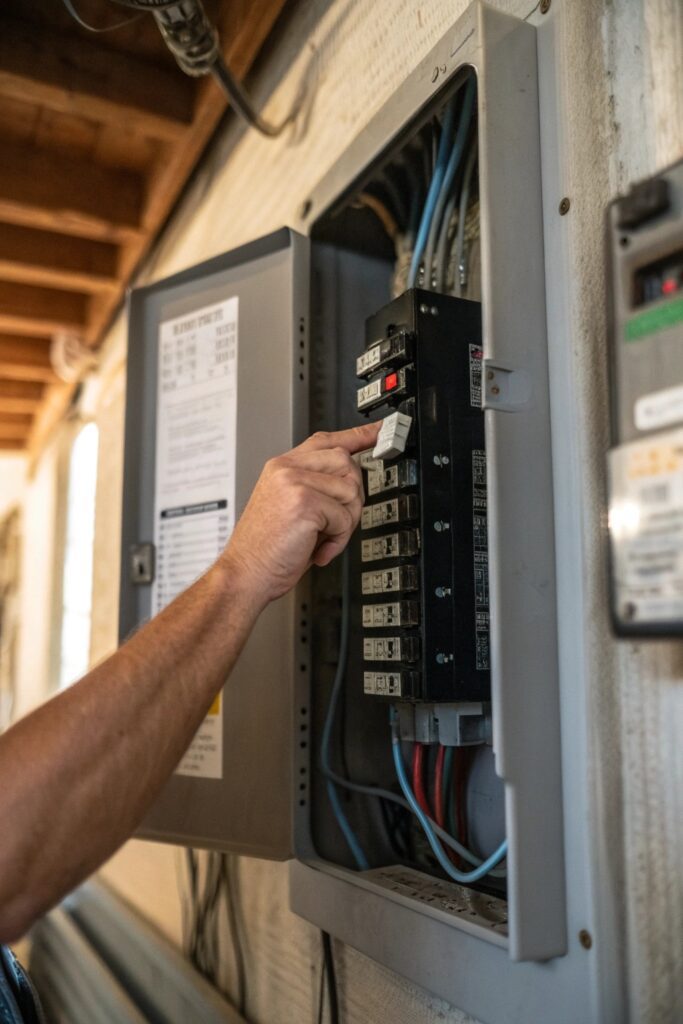
A brief power interruption mid-cycle — a tripped breaker, a brownout, or the machine being accidentally unplugged — can leave it stopped at whatever point the interruption occurred, often mid-fill or mid-wash with water still in the tub.
Check your home’s breaker panel for a tripped switch specifically dedicated to the laundry circuit, and try restarting the cycle from the beginning once power is confirmed stable.
11. Unbalanced Load Triggering Safety Stop
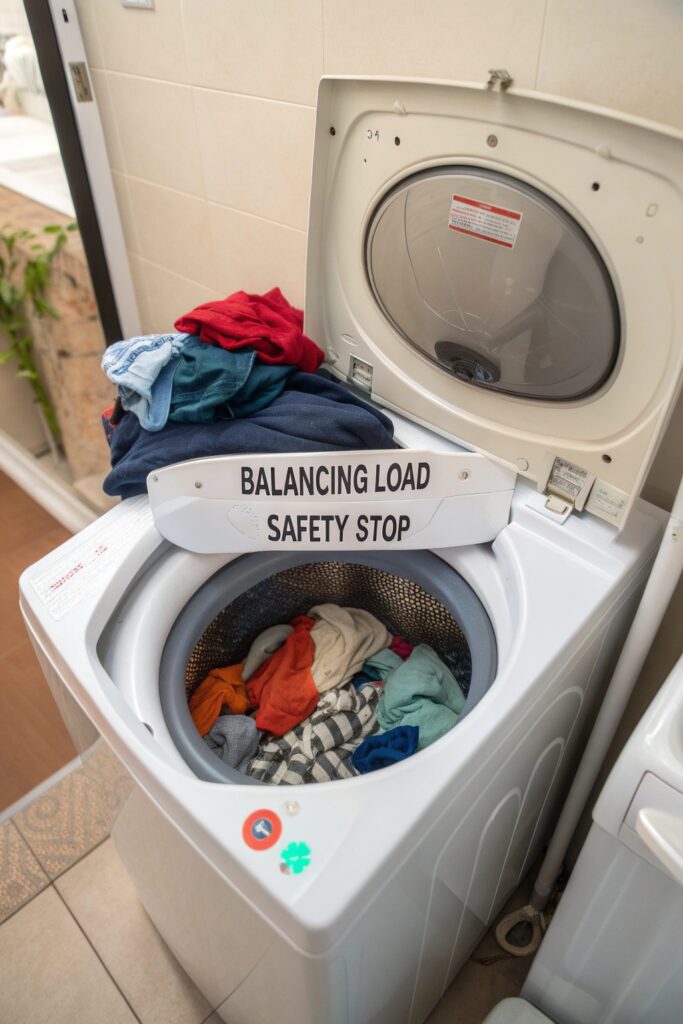
Many machines have a sensor that halts the cycle if the load becomes significantly unbalanced during spin, as a safety measure to prevent the machine from damaging itself or ‘walking’ across the floor — this can leave water in the tub if it happens before draining completes.
Redistribute the load manually and restart the cycle; if this happens repeatedly with the same load type, uneven distribution of heavy items (like a single towel or bedsheet) is the likely ongoing cause.
12. Aging or Worn-Out Machine
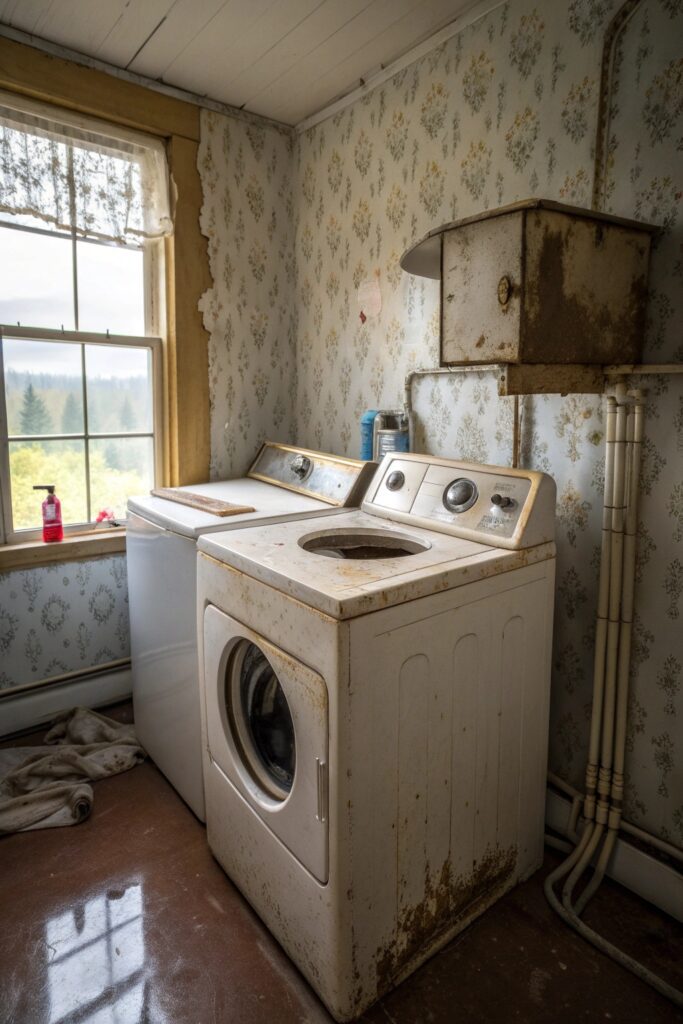
Machines beyond 10-12 years old accumulate wear across multiple components simultaneously, and sometimes a stuck-full cycle is the combined result of several minor issues rather than one single clear cause worth chasing down individually.
If repair costs for diagnosing and fixing an older machine start approaching half the cost of a new one, replacement is often the more practical choice rather than continuing to troubleshoot an aging unit part by part.
Final Thoughts
The drain hose and pump filter resolve the majority of stuck-full cases, since both are simple to check without any tools beyond basic access to the machine. If those are clear, work through the pump, lid switch, and pressure sensor next before assuming a bigger mechanical or electrical failure is responsible.