
A washing machine that won’t rinse or spin usually points to either a drainage problem (since most machines won’t spin standing water) or a mechanical issue preventing the drum from moving, and narrowing down which category applies makes troubleshooting considerably faster.
Below are 12 causes to check, generally starting with the simplest and most common before moving toward more involved mechanical or electrical issues.
1. The Load Is Unbalanced
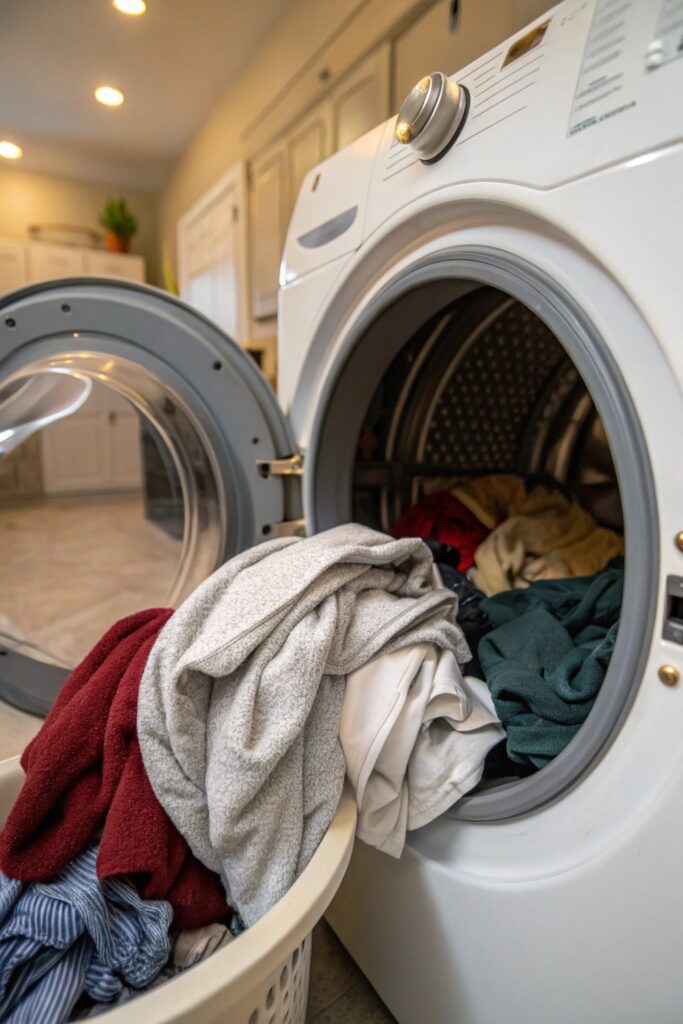
Most machines have a safety sensor that halts the spin cycle if the load shifts too far to one side, since spinning an unbalanced drum at high speed can damage the machine or cause it to move dangerously.
Redistribute the load evenly around the drum and restart the cycle — if this happens repeatedly with the same items (a single heavy towel or comforter, for instance), washing bulkier items separately from lighter loads helps prevent the imbalance from recurring.
2. The Lid or Door Isn’t Fully Closed
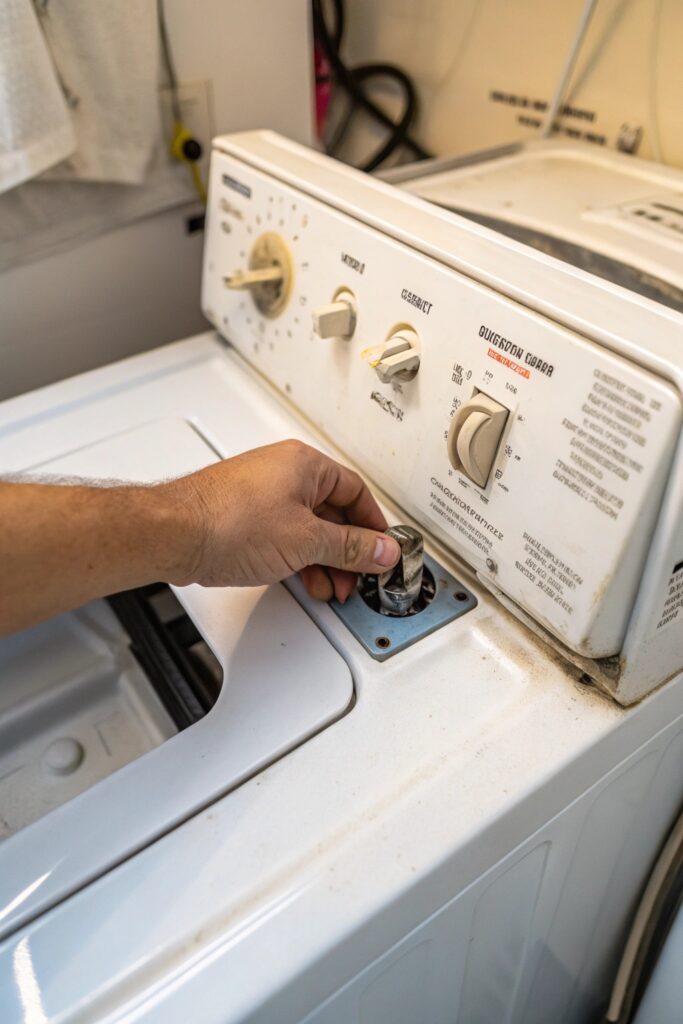
A lid or door that isn’t fully latched won’t allow the machine to enter its rinse or spin cycle at all, as a safety measure to prevent water and clothing from being flung out during high-speed spinning.
Listen for an audible click when closing the lid or door, and check for anything (a stray sock, a bunched-up item) caught in the seal that might be preventing a full, secure close.
3. Clogged Drain Hose
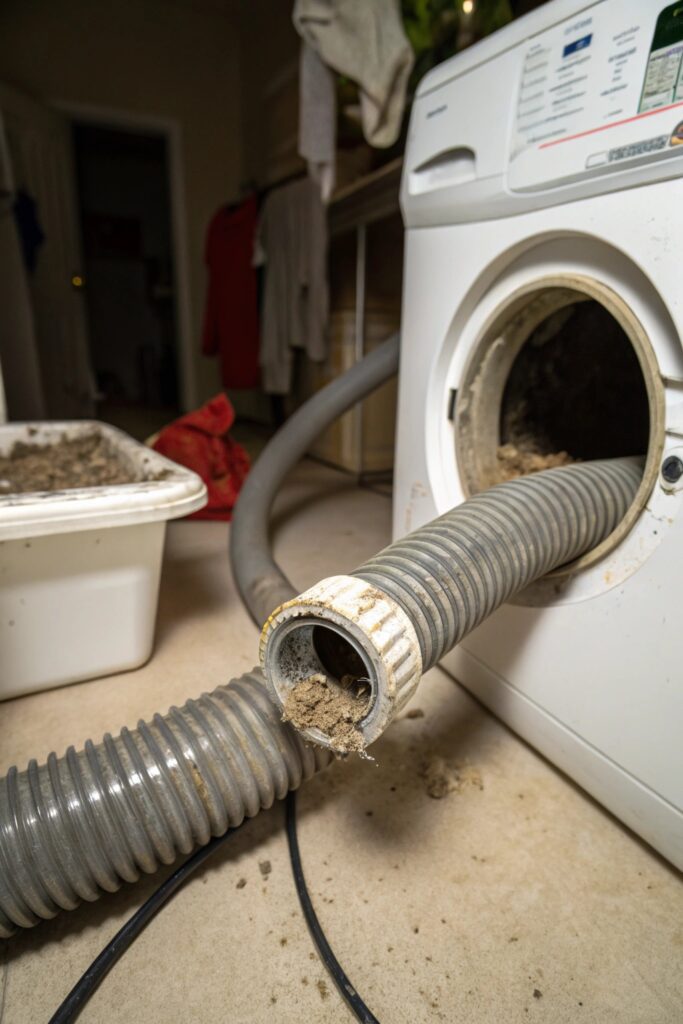
Since most machines won’t spin with standing water still in the tub, a clogged drain hose that prevents proper drainage before the spin cycle begins can present as a spin failure even though the actual problem is upstream in the drain process.
Disconnect the hose (with the machine unplugged) and check for lint, small clothing items, or debris blocking the flow — running water through it in reverse often reveals and clears a partial clog.
4. Clogged or Faulty Drain Pump
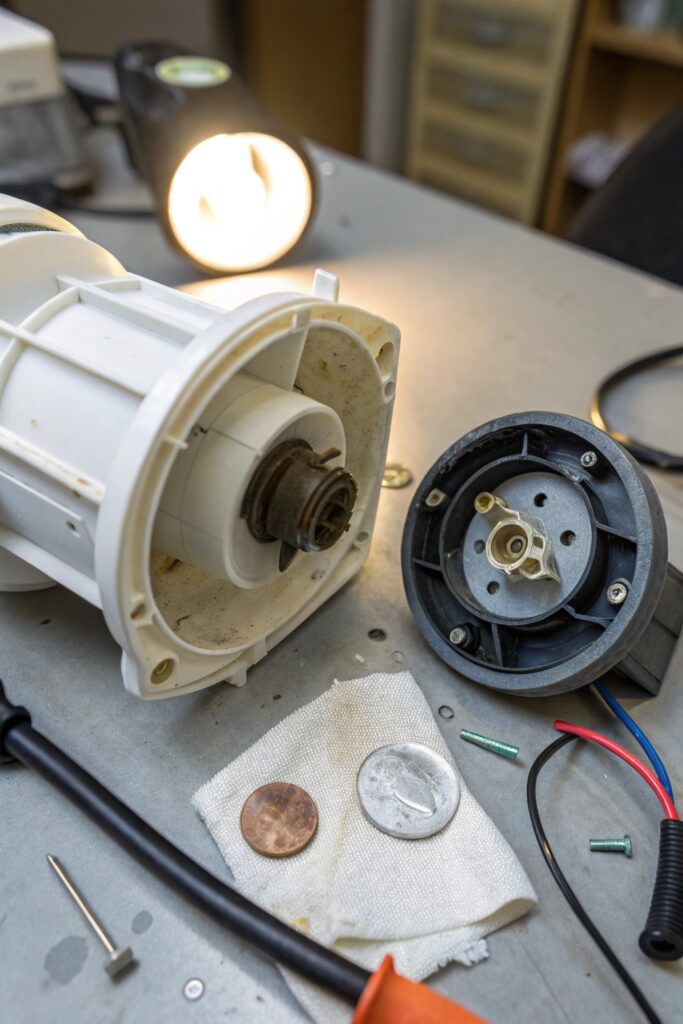
A pump blocked by a small object (a coin, a button, a bra underwire) or one that’s simply failed mechanically prevents the tub from draining, which in turn prevents the machine from proceeding to spin.
Most machines have an accessible pump filter — check your specific model’s manual for its location, and expect some residual water to spill out when opening it.
5. Worn-Out Drive Belt
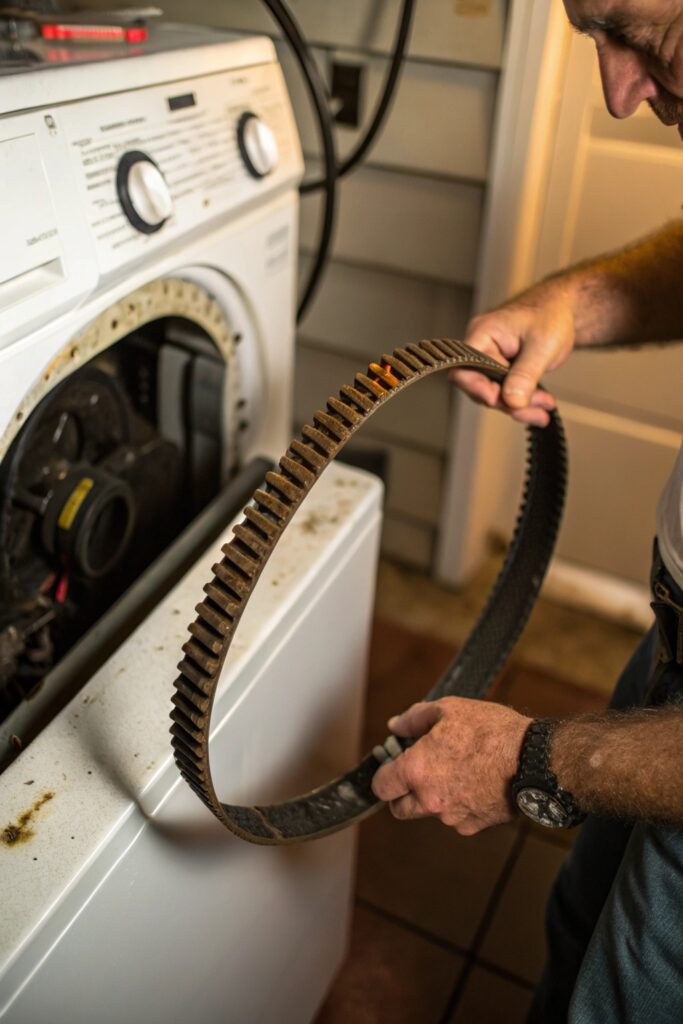
On machines with a belt-driven drum, a worn, loose, or broken belt can prevent the drum from spinning at all, even though the motor itself is running normally — this typically presents as a humming sound with no actual drum movement.
Belt replacement ($15-30 in parts) is a moderately involved repair requiring access to the machine’s rear or bottom panel, depending on the specific model’s design.
6. Malfunctioning Lid Switch or Sensor
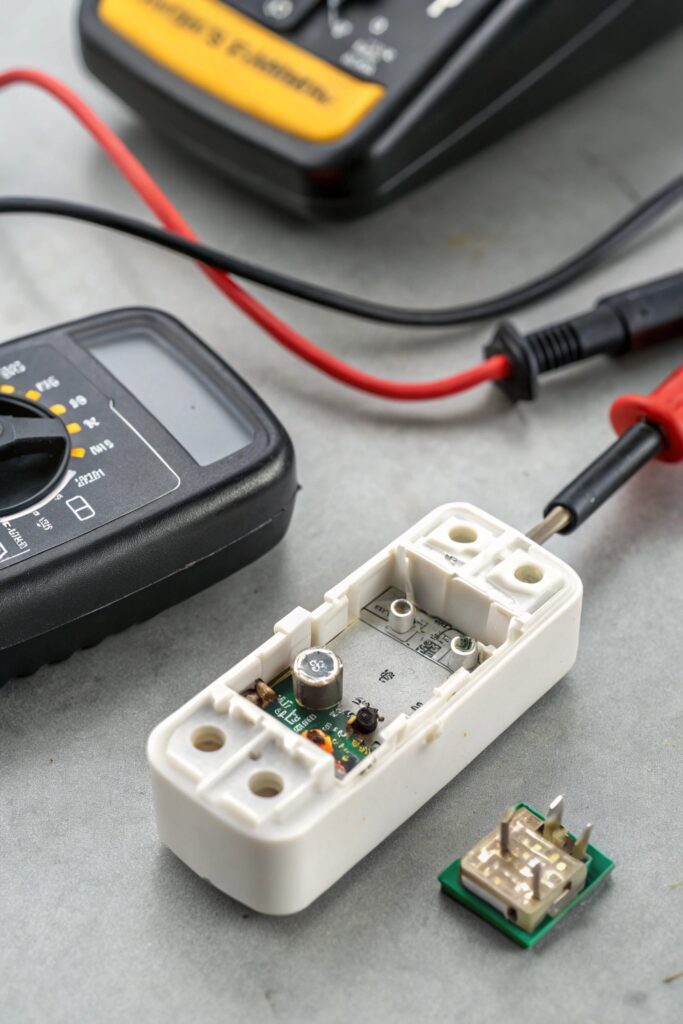
Even with the lid or door genuinely closed, a failed switch or sensor can send an incorrect signal to the control board, causing the machine to behave as though the lid is still open and refuse to spin.
This is often confirmed by testing whether the machine registers the lid state correctly — some models display a specific error code for this exact issue, worth checking against your machine’s manual before assuming a different cause.
7. Overloading the Machine
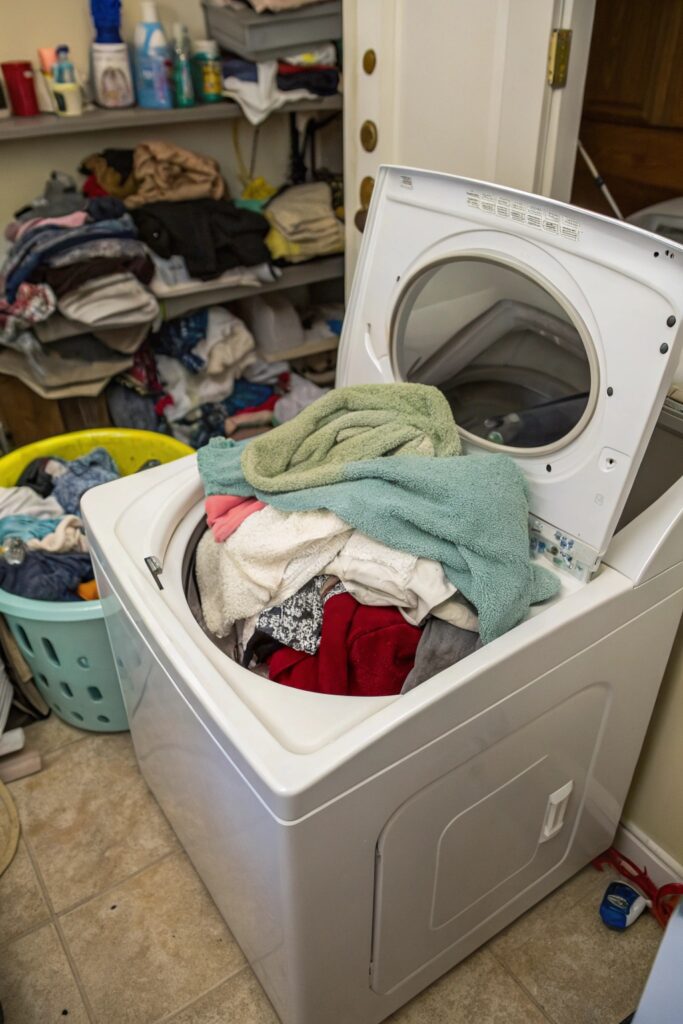
Packing a machine beyond its rated capacity prevents the drum from achieving the rotational speed needed for a proper spin cycle, since the excess weight and volume physically restrict normal movement.
Check your specific model’s maximum load capacity and reduce the load size if it appears visibly overpacked, particularly with bulky items like comforters or heavy towels that take up more effective volume than their weight alone suggests.
8. Faulty Motor Coupling
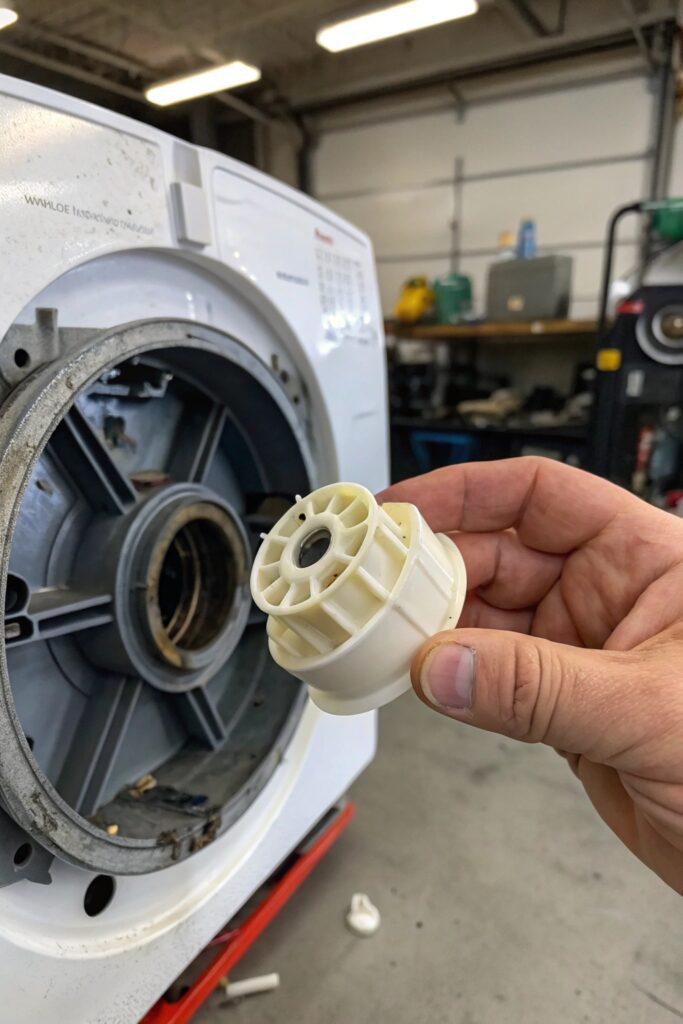
On many top-load machines, a plastic coupling connects the motor to the transmission, and this component is specifically designed to be a wear item that fails before more expensive parts do — a broken coupling disconnects the motor from the drum entirely.
This is a relatively inexpensive part ($15-25) but requires disassembling part of the machine to access, making it a moderate rather than beginner-level DIY repair.
9. Clogged Filter
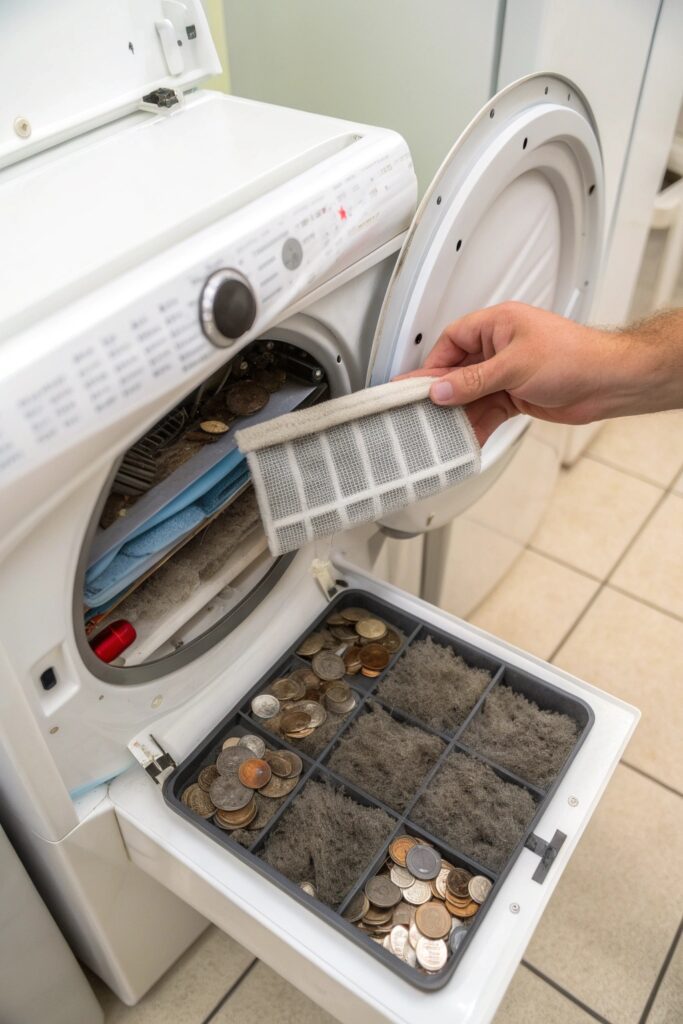
Beyond the drain pump filter specifically, some machines have additional lint or debris filters elsewhere in the water path that can restrict flow enough to trigger a spin-prevention safety response, even when the main drain pump filter is clear.
Check your specific model’s manual for any additional filter locations beyond the primary pump filter, since not all models make secondary filters as obvious or accessible.
10. Water Level Sensor Malfunction
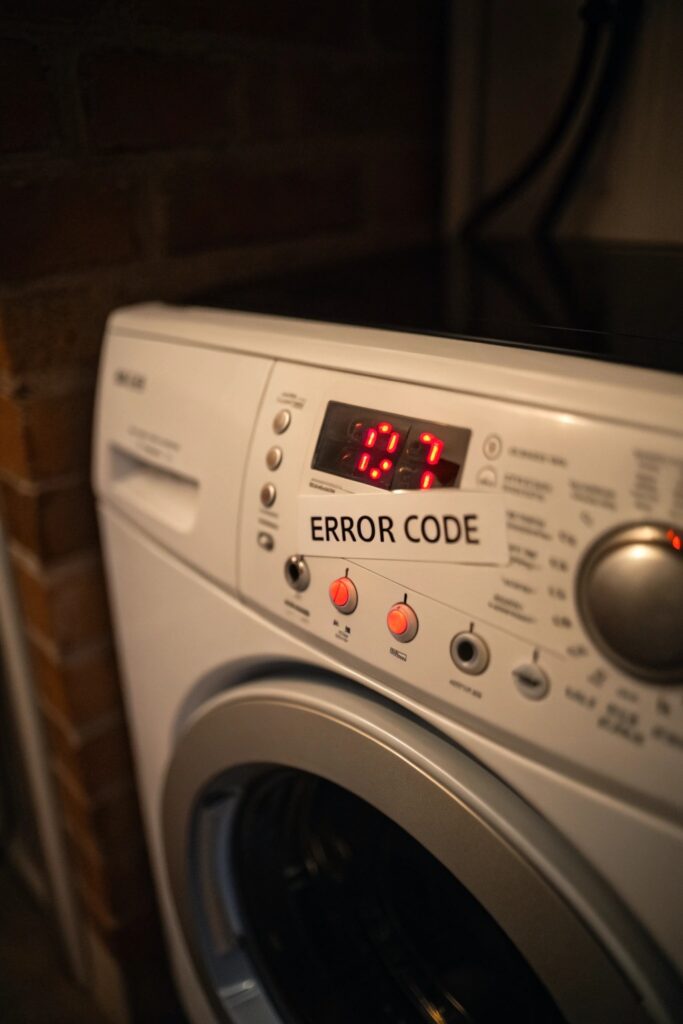
A pressure switch that incorrectly reads the tub as still full of water — even after draining has completed — can prevent the machine from proceeding to spin, since most machines won’t spin a tub they believe still contains standing water.
Check the small air hose connecting to this sensor for pinches or disconnection, since a hose issue can cause the same symptoms as a fully failed sensor and is a simpler fix to rule out first.
11. Electrical or Control Board Issues
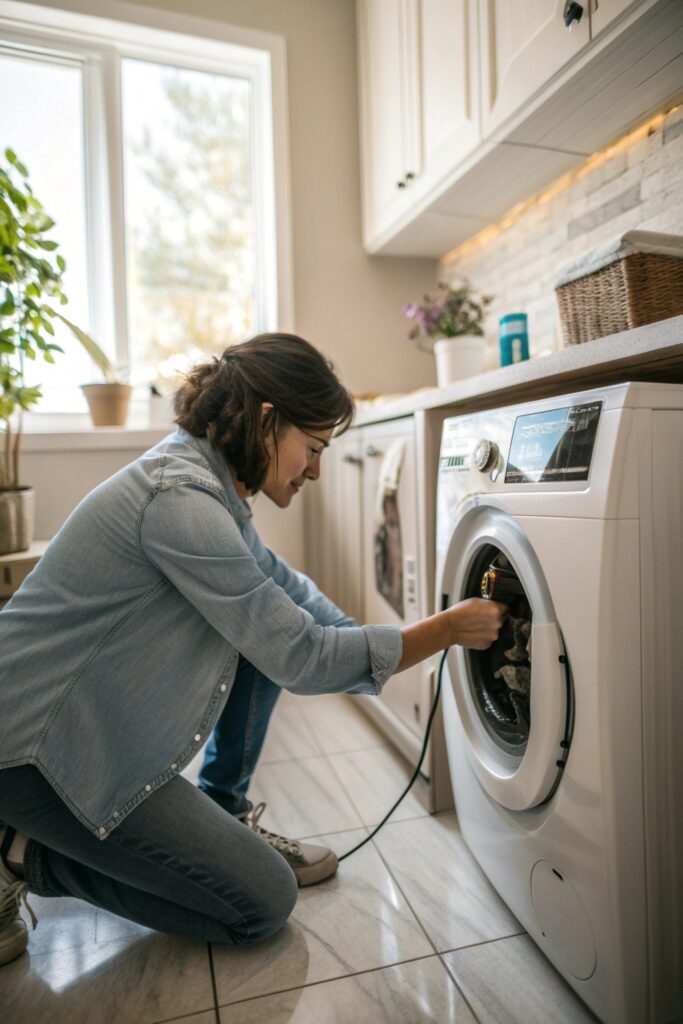
A malfunctioning control board can fail to send the correct signals to initiate spin, even when every mechanical component (pump, belt, motor) is functioning normally — this is a less common but genuine possibility worth considering if mechanical causes have all been ruled out.
Check for any displayed error codes specific to the control system, and inspect the board (with the machine unplugged) for visible burn marks or corrosion if you’re comfortable opening the machine’s control panel.
12. Excess Suds from Too Much Detergent
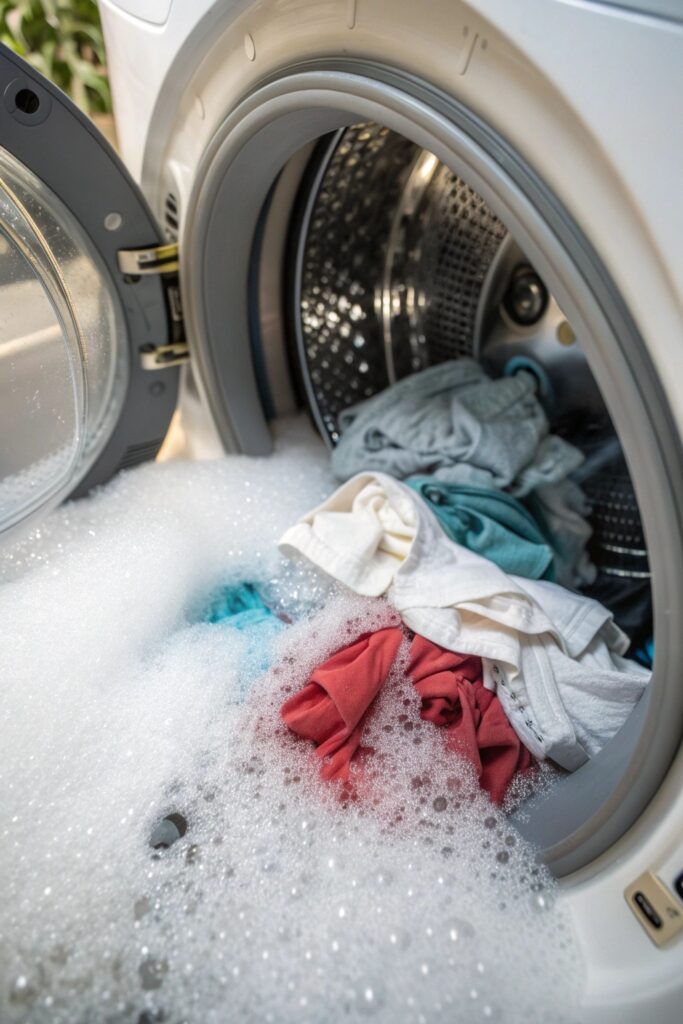
Overloading a machine with detergent, especially non-HE detergent in a high-efficiency machine, can create excess suds that some machines detect as a fault condition, halting the cycle before rinse and spin to prevent overflow.
Use HE-specific detergent in HE machines and follow the recommended amount rather than estimating — many people use considerably more detergent than actually needed, which contributes to this issue more often than expected.
Final Thoughts
Load balance and a fully closed lid resolve a meaningful share of spin-failure cases and require no tools to check. If those are fine, work through the drain hose and pump next, since drainage issues are the next most common cause before considering belt, motor, or electrical problems.