
A small dining room actually has an advantage over a larger, emptier one: with fewer square feet to work with, each individual choice carries more visual weight, which makes it easier to create a considered, elegant look without needing to fill the space with furniture or decor. The details below cover the specific proportions and material choices that make this work.
Below are 12 approaches worth considering, with the specifics for each.
1. Light and Neutral Color Palette
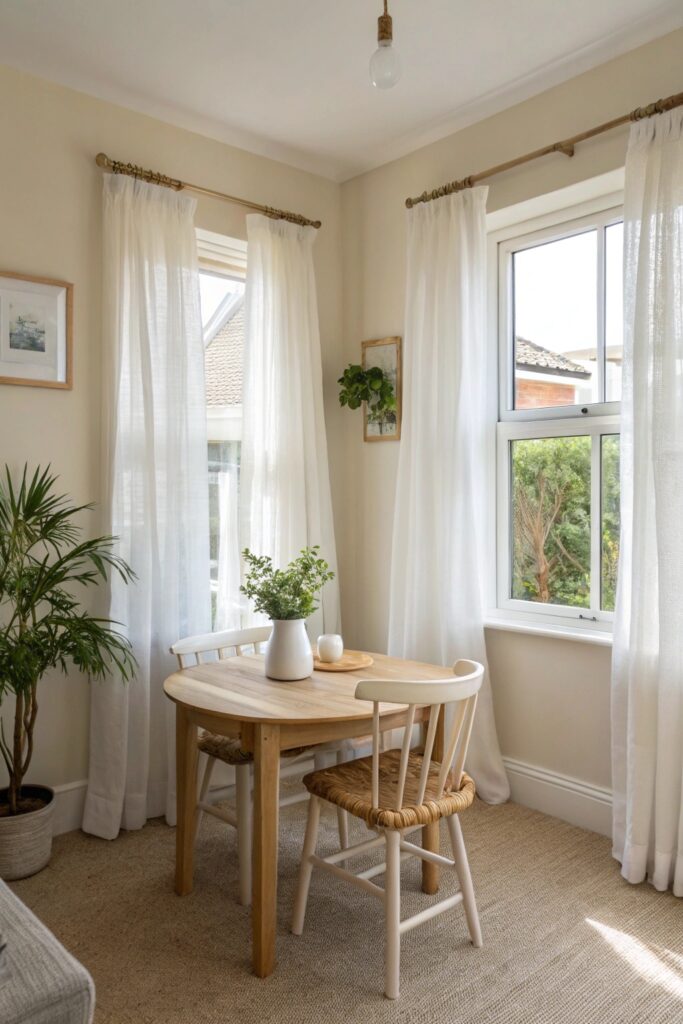
A palette with a higher light reflectance value bounces more of the room’s available light around, which matters more in a small dining room than a larger one, since there’s less wall surface for that light to travel across before reaching every corner.
2. Round Dining Table Magic
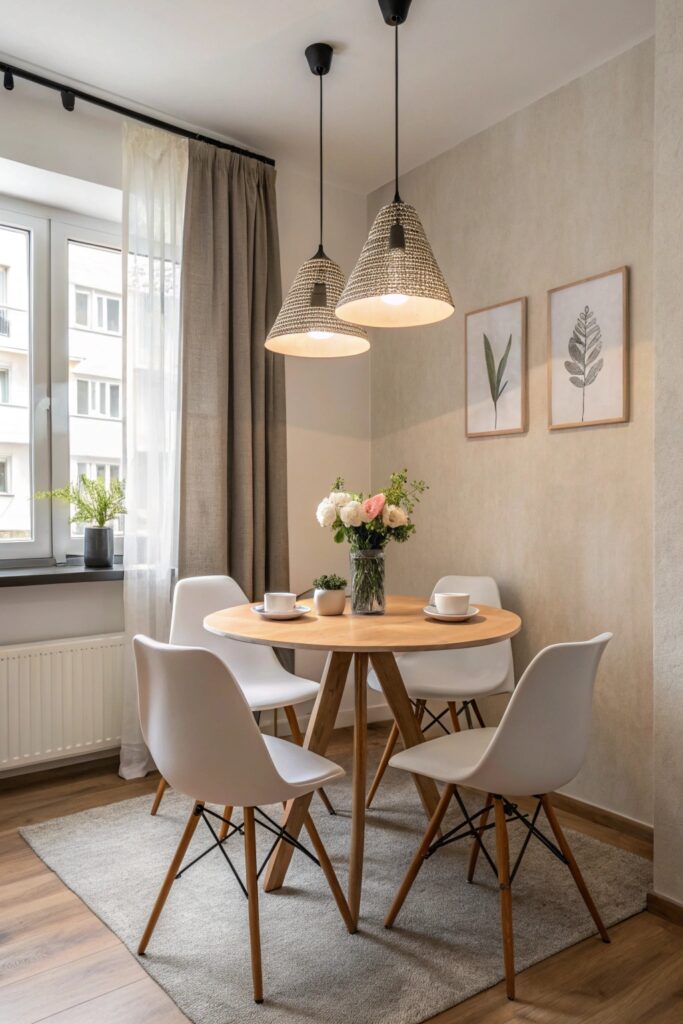
A round table eliminates the sharp corners that eat into walking space in a tight room, and a 42-inch round table comfortably seats four in roughly the same footprint a rectangular table would need for the same capacity. Keep at least 36 inches between the table’s edge and the nearest wall so chairs can be pulled out without blocking the room’s main walking path.
3. Built-In Bench Seating
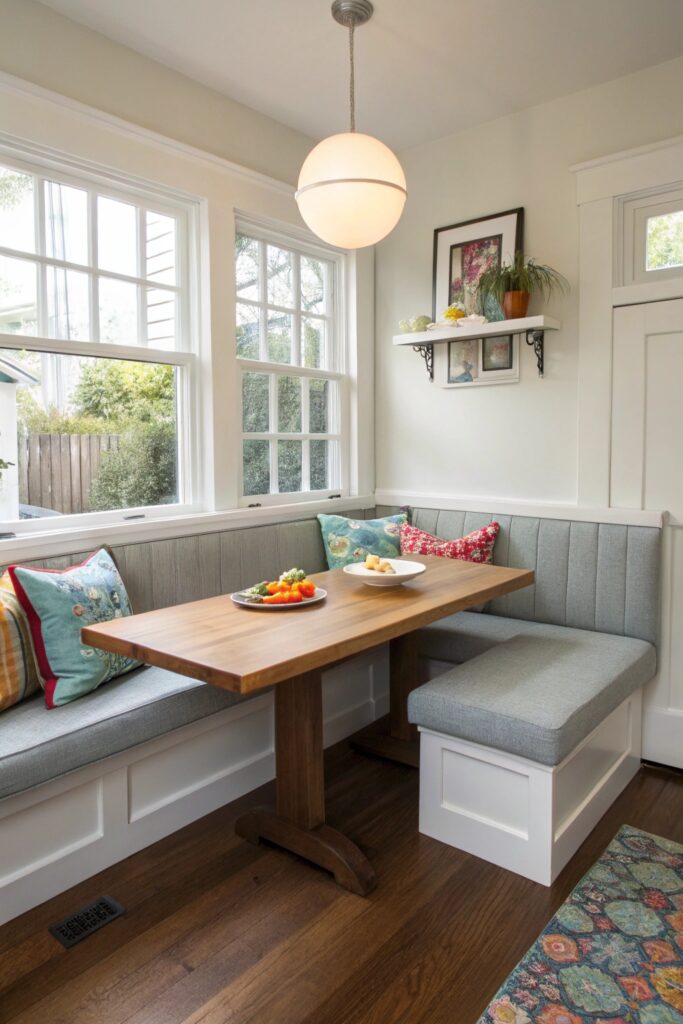
A bench along one wall uses considerably less floor space than individual chairs, which each need pull-out clearance on every side. Standard bench depth runs 16 to 18 inches, deep enough for comfortable seating without extending far into the room.
4. Statement Lighting Fixture
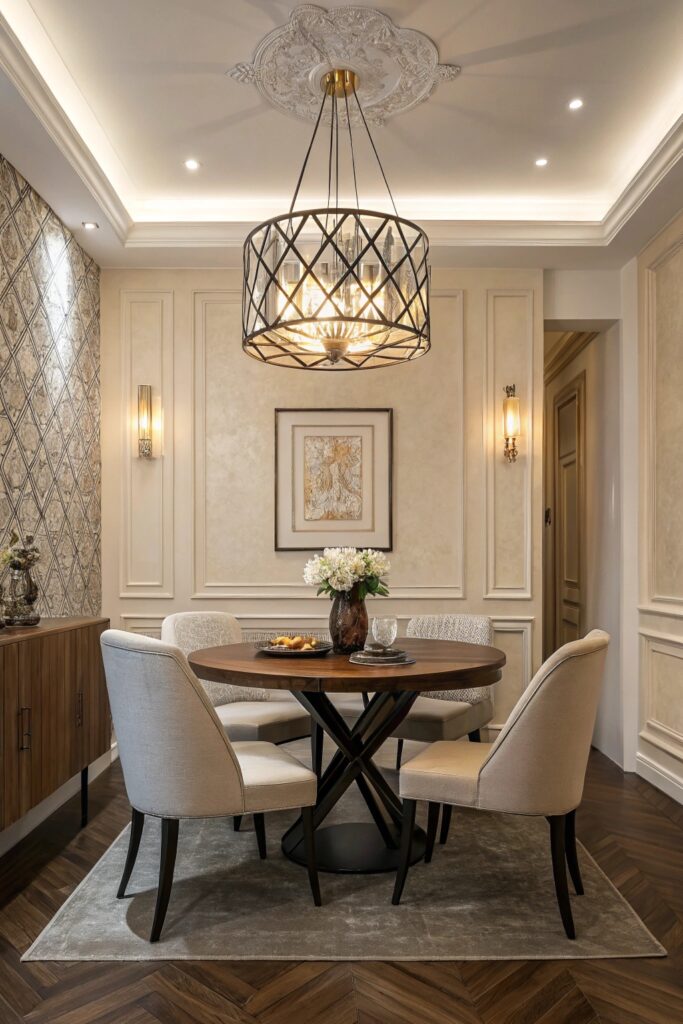
In a small room specifically, one bold fixture does more visual work than several smaller ones would, since there’s less surrounding negative space for multiple pieces to read as intentional rather than cluttered.
5. Mirrors to Expand Space
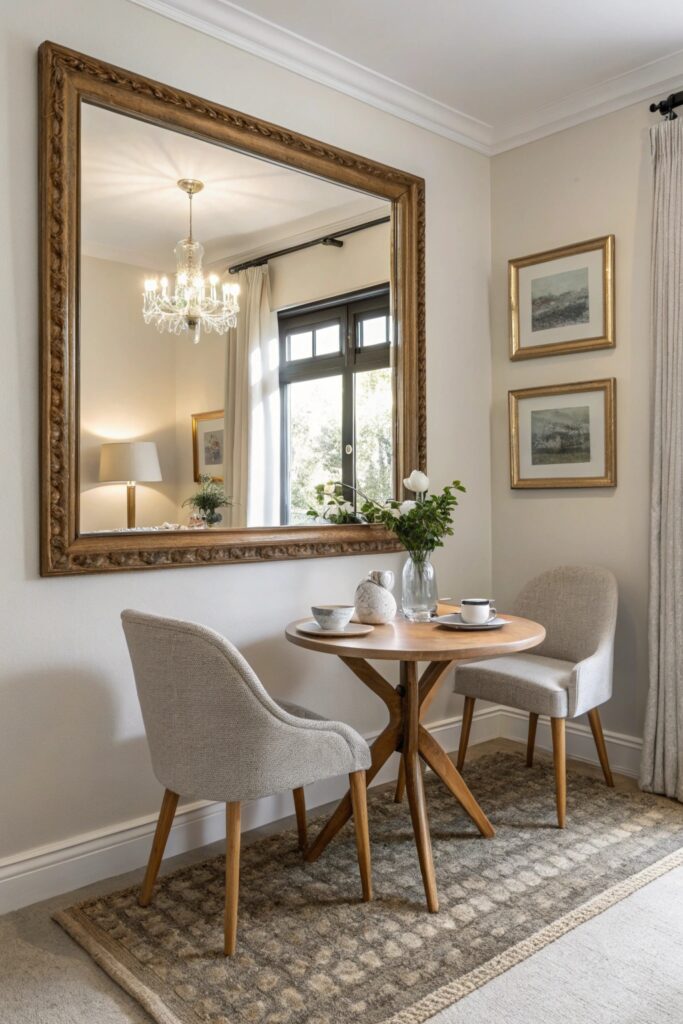
Positioning a mirror to reflect the table setting itself, rather than a blank wall, doubles the visual interest in the reflection and makes the room’s main focal point feel more substantial than it actually is.
6. Minimalist Decor Approach
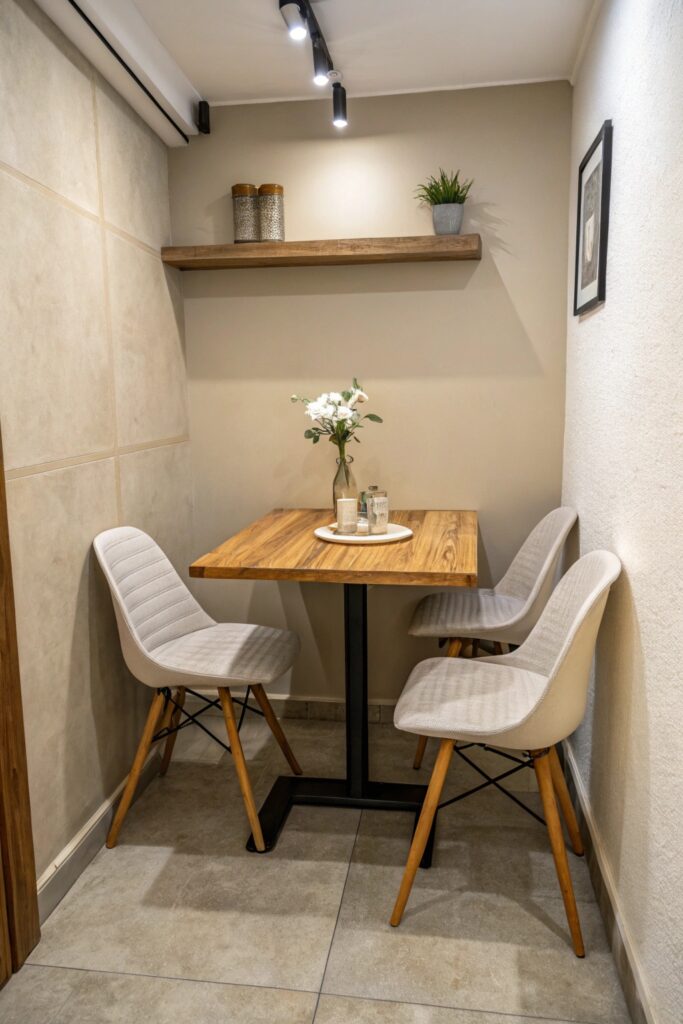
A few well-chosen pieces read as more intentional in a small room than an attempt to fill every surface, since limited square footage makes clutter considerably more noticeable than it would be in a larger space.
7. Vertical Storage Solutions
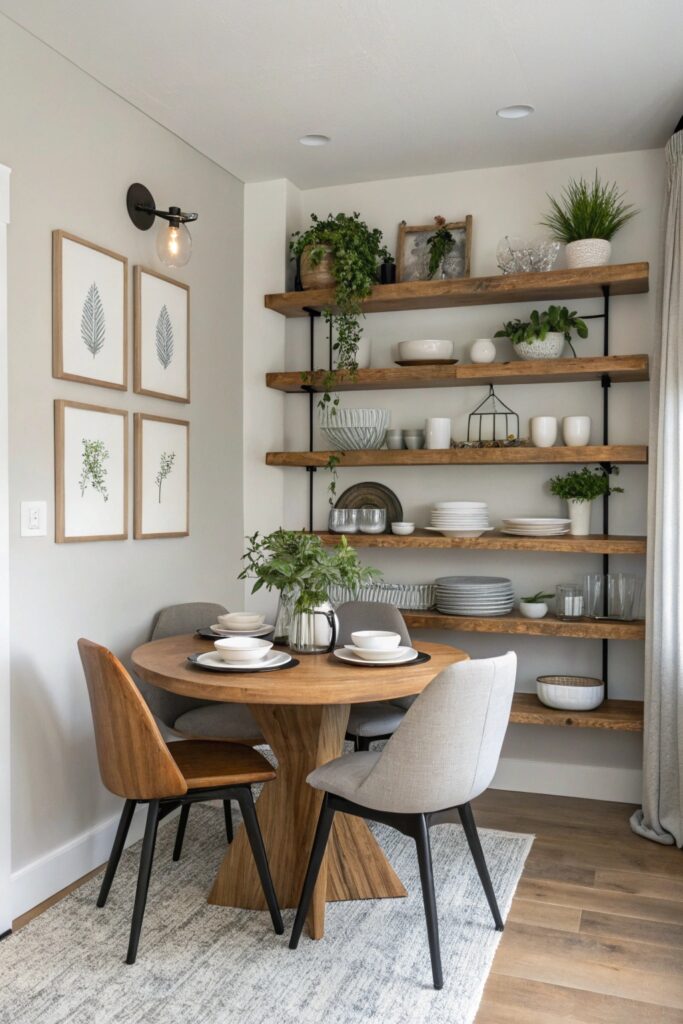
Wall-mounted shelving or a floating sideboard frees up floor space that a traditional floor-standing sideboard would otherwise claim — a real trade-off worth considering specifically in a room this size, where every square foot of open floor matters more than it would in a larger dining area.
8. Glass and Acrylic Furniture
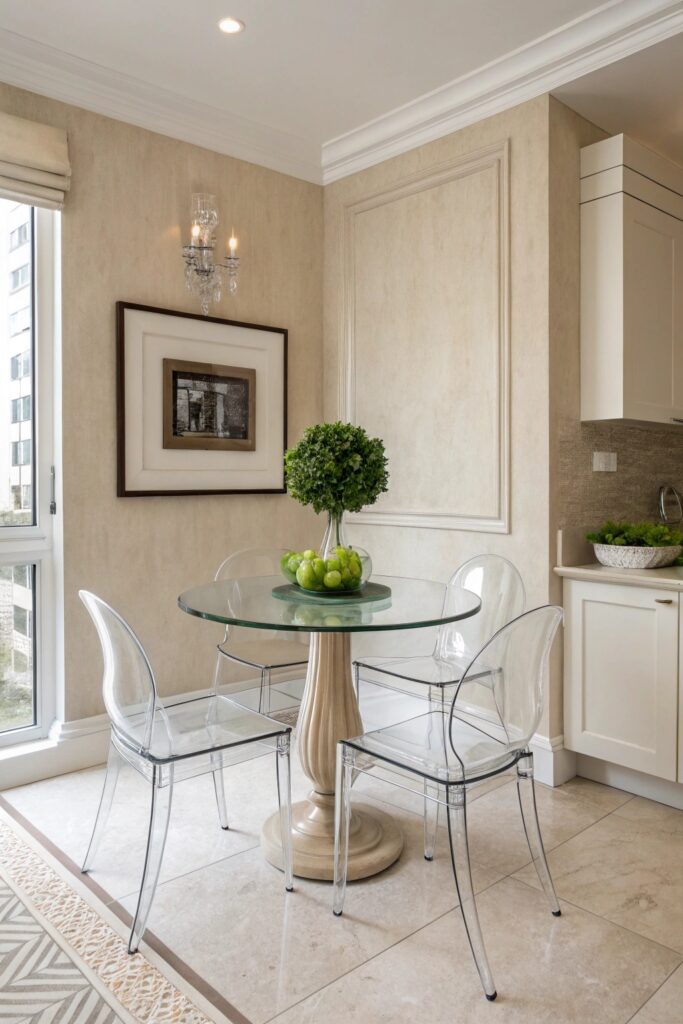
A glass-top table or acrylic chairs visually recede in a way no paint color can replicate, since the material itself lets sightlines pass through rather than simply reflecting light off a solid surface — a distinctly different optical effect from a light color choice.
9. Bold Accent Wall
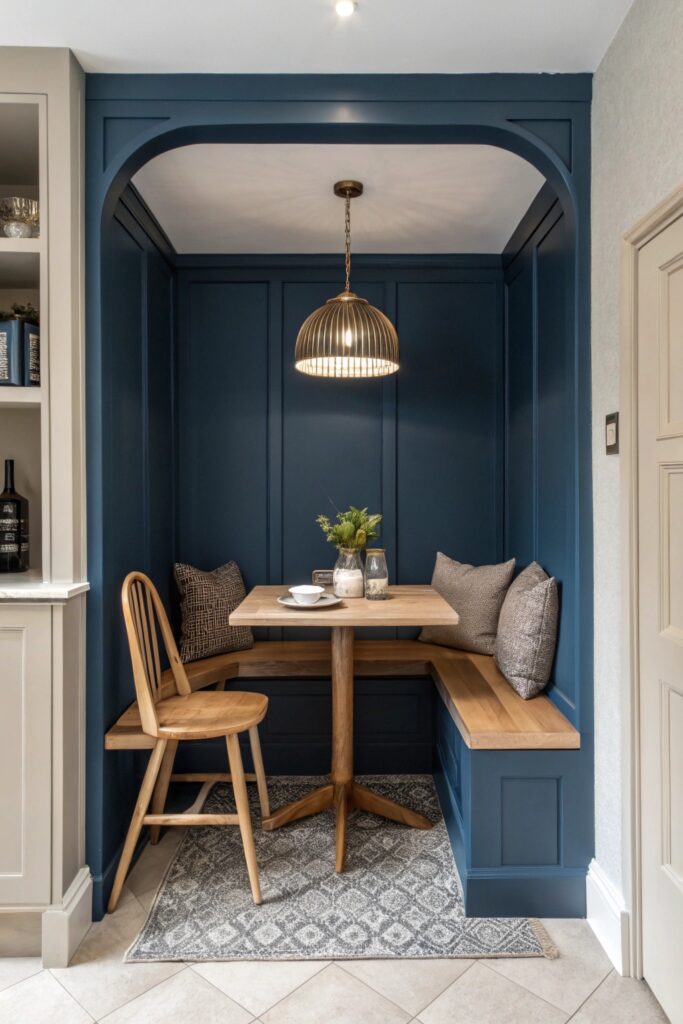
A bold color commitment costs considerably less to execute in a small room simply because there’s less wall surface to cover, making this one of the lower-risk ways to introduce real drama into a compact dining space.
10. Multi-Functional Furniture
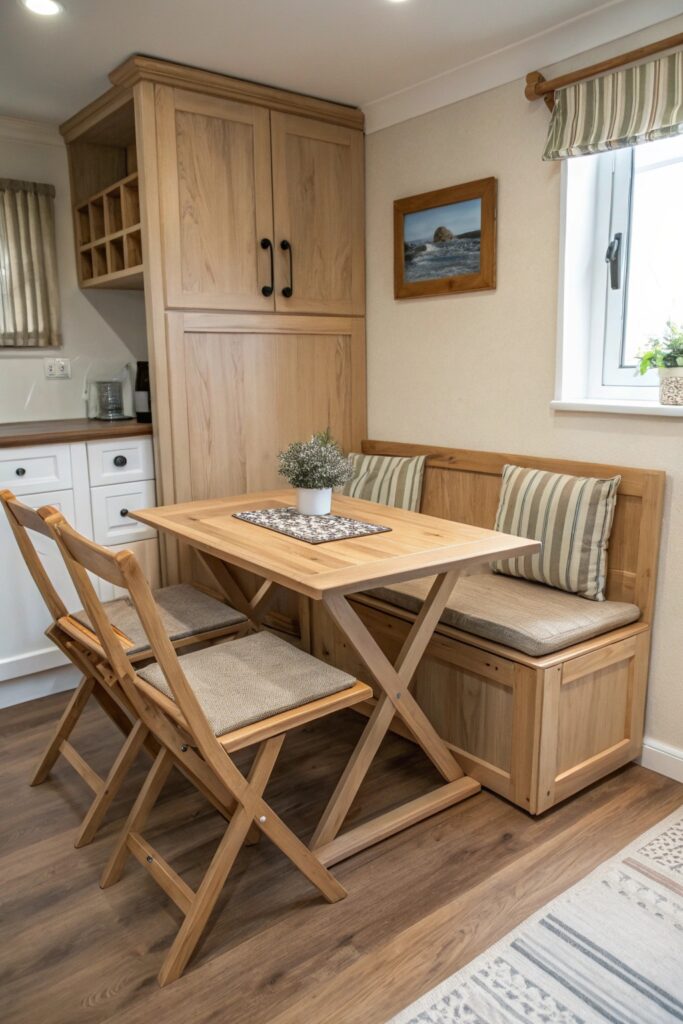
An extendable or drop-leaf table stays compact for everyday use and expands only when hosting a larger group, while a bench with storage built into the base adds function without adding to the room’s visual footprint.
11. Layered Textures and Fabrics
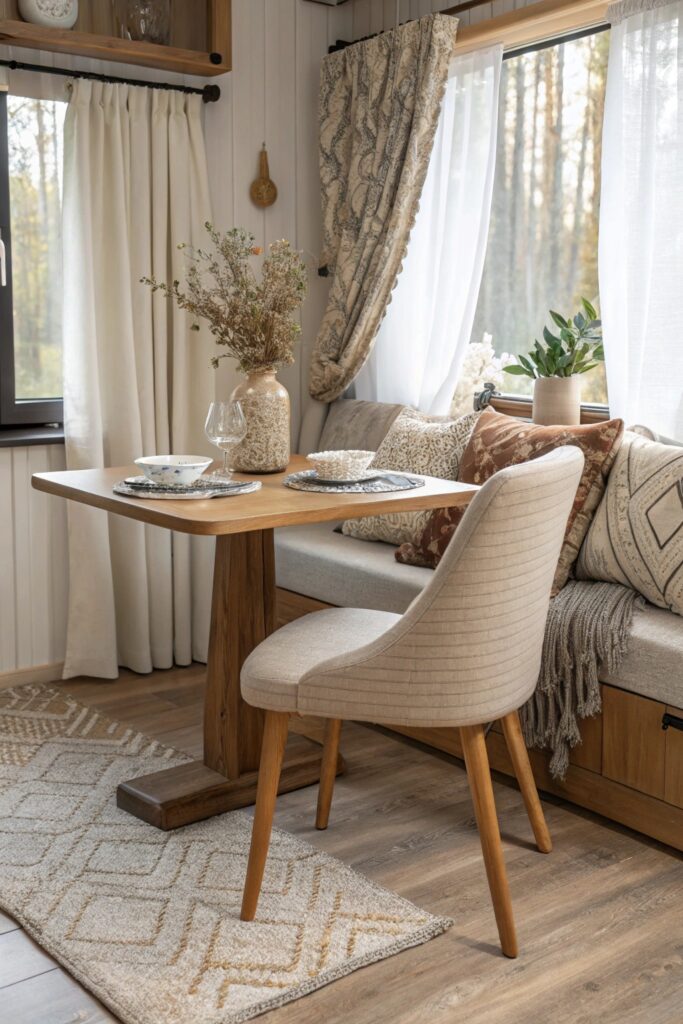
Mixing a woven placemat, a soft table runner, and varied chair upholstery adds warmth without requiring any additional floor space, which matters in a room where every added object competes for limited room.
12. Greenery and Natural Elements
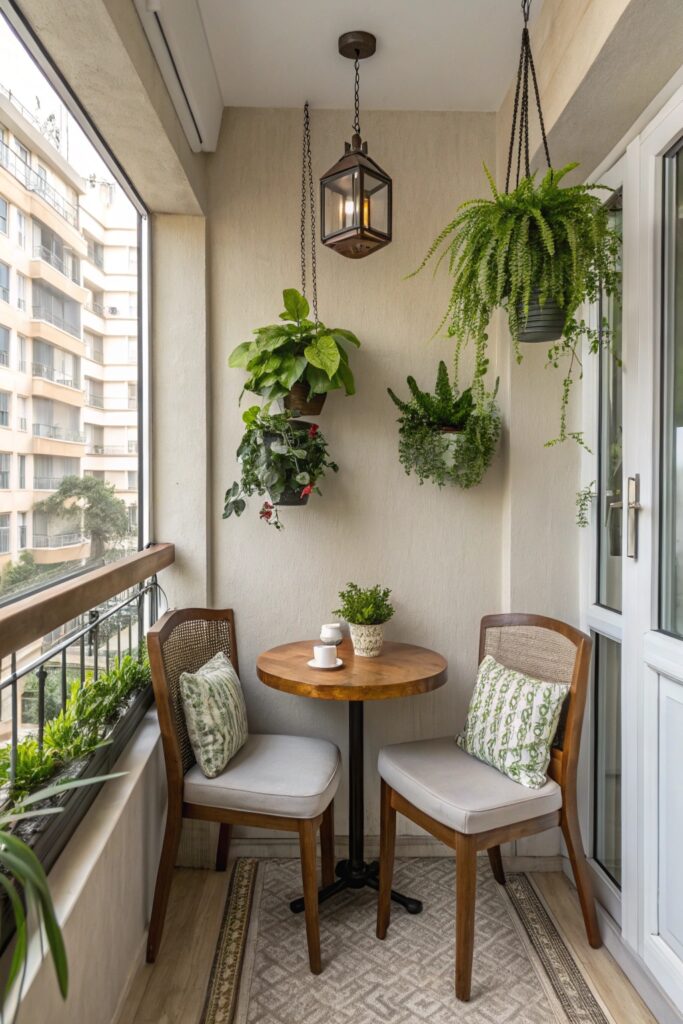
A single well-placed plant, chosen for tolerance to whatever light the room actually gets, adds more genuine warmth than several smaller plants scattered across limited surface space.
Choosing Chairs That Fit the Room
Armless dining chairs take up noticeably less visual and physical space than chairs with arms, which matters when every few inches around the table affects how easily people can move in and out of their seats. Chairs with a lower back profile also read as lighter in a small room than tall, upright designs, even at the same actual footprint.
Stackable or foldable chairs are worth considering if the room occasionally needs to accommodate more guests than its everyday setup allows, since extra seating can be stored elsewhere and brought in only when needed rather than permanently occupying floor space.
What a Small Dining Room Refresh Costs
A cosmetic update — paint, lighting, and a few new textiles — typically costs $200 to $600 depending on material quality.
Replacing furniture, including a new table and chairs suited to the room’s actual proportions, runs considerably higher, often $800 to $3,000 depending on materials and how many pieces need replacing.
Rug Sizing for a Compact Room
A rug under the dining table still needs enough width for all four chair legs to stay on it when pulled out — typically 24 to 30 inches of rug beyond the table’s edge on each side, even in a small room. Sizing the rug too small is a common mistake in compact dining rooms specifically, since it’s tempting to scale the rug down along with everything else, but an undersized rug actually makes the room look smaller rather than more proportional.
A small dining room that opens onto or sits near a living room benefits from sharing some of that adjacent room’s color palette and material choices, since visual continuity between the two spaces helps the smaller dining area feel like a natural extension rather than a cramped afterthought squeezed into leftover square footage.
Whatever combination of these ideas you choose, walk the actual space with the intended furniture in place, even temporarily with cardboard cutouts or borrowed pieces, before finalizing a purchase — this simple step catches proportion issues that measurements on paper alone can miss.
A small dining room done well can end up feeling more intentional and elegant than a larger one furnished without the same level of care given to proportion and clearance.
Fewer, Better Choices Beat Filling the Space
The recurring theme across these ideas — a single statement light, one well-placed mirror, a few layered textures rather than many small ones — is that a small dining room rewards restraint more than a larger room does. Every piece added to a compact space is more visible and carries more visual responsibility than the same piece would in a bigger room, which is exactly why fewer, better-chosen elements tend to outperform an attempt to fill every available surface.
Measuring the actual room and testing furniture placement with painter’s tape on the floor before purchasing anything helps confirm your planned layout leaves enough clearance for comfortable movement, since even a few inches matter considerably more in a small dining room than they would in a larger one.