
A basement hangout space comes with a few practical considerations that don’t apply upstairs — humidity, ceiling clearance, and venting all affect what actually works well below grade. The details below cover both the styling direction and these basement-specific factors for each idea.
Below are 14 elements worth focusing on, with the specifics for each.
1. Create a Warm Family Lounge Area
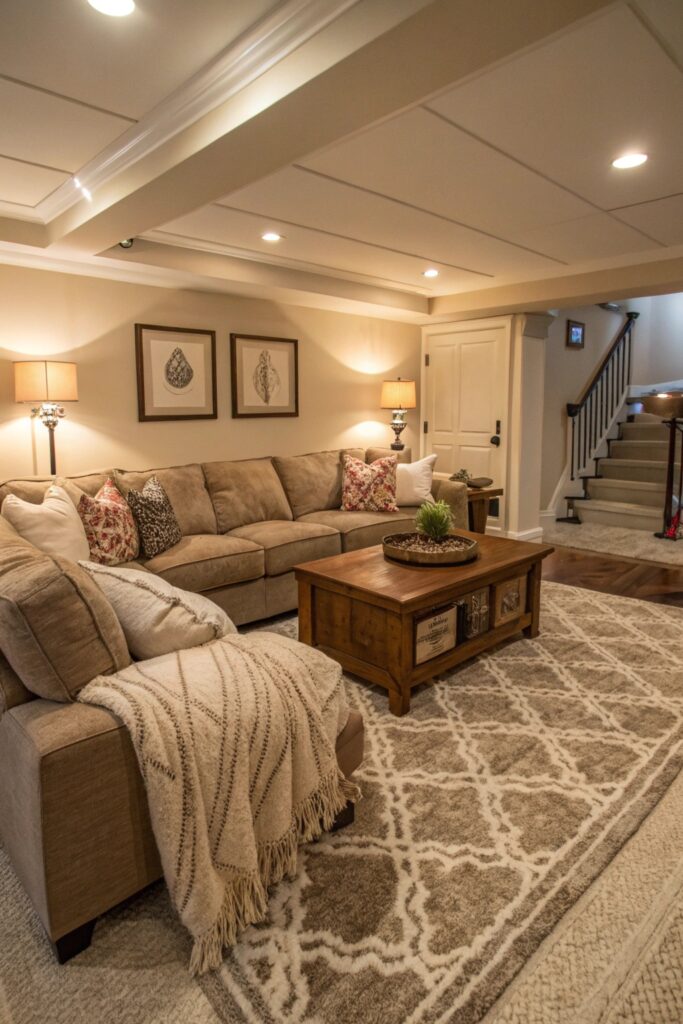
Choosing moisture-resistant upholstery and rugs matters more in a basement than upstairs, since below-grade spaces run more humid even when finished well, and fabric prone to trapping moisture is more likely to develop a musty smell over time down here.
2. Add a Home Theater Experience
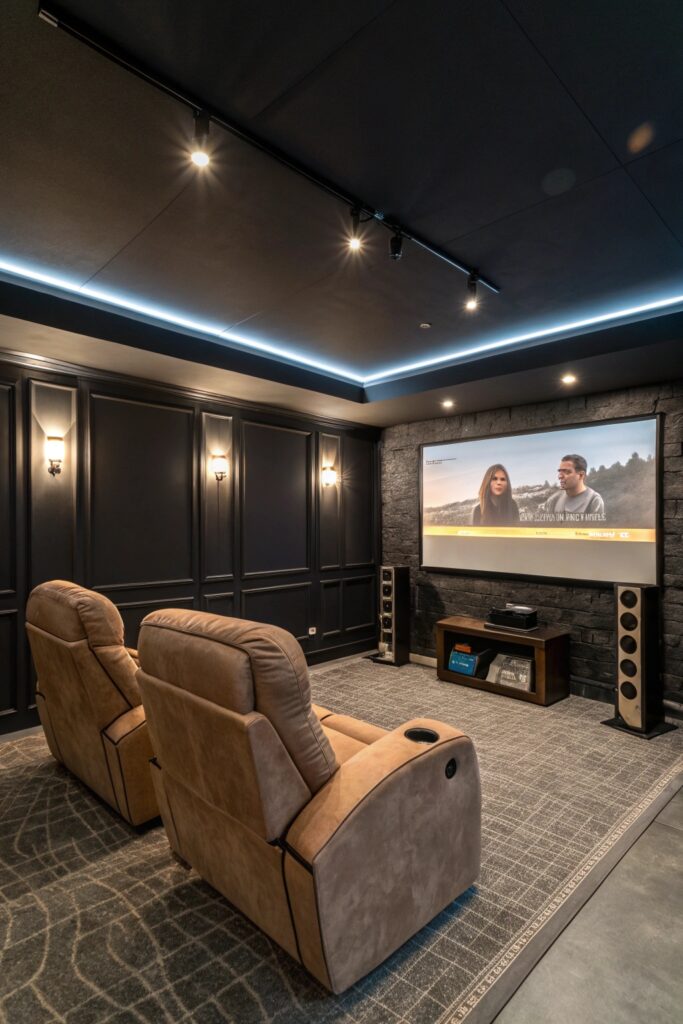
Basements naturally contain sound better than above-grade rooms thanks to surrounding concrete, but that same hard surface can create excess echo — acoustic panels or a sufficiently thick rug help absorb reflected sound rather than letting it bounce around. Basements also typically have less ambient light than upstairs rooms, so a lower-lumen projector can often perform as well here as a much brighter one would need to in a sunlit living room.
3. Design a Cozy Game Room Corner
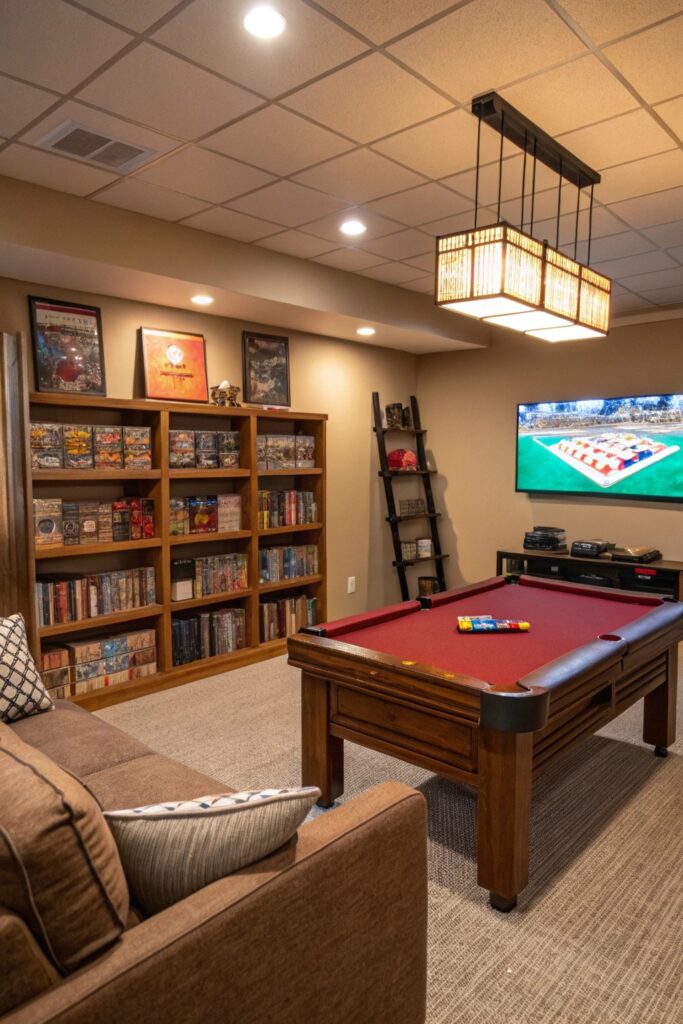
If you’re adding a pool table or other heavy, level-dependent furniture, check the concrete slab’s actual level first — basement floors can settle unevenly over the years, and a table that isn’t level affects gameplay in a way that’s hard to fix after the fact.
4. Build a Mini Snack Bar
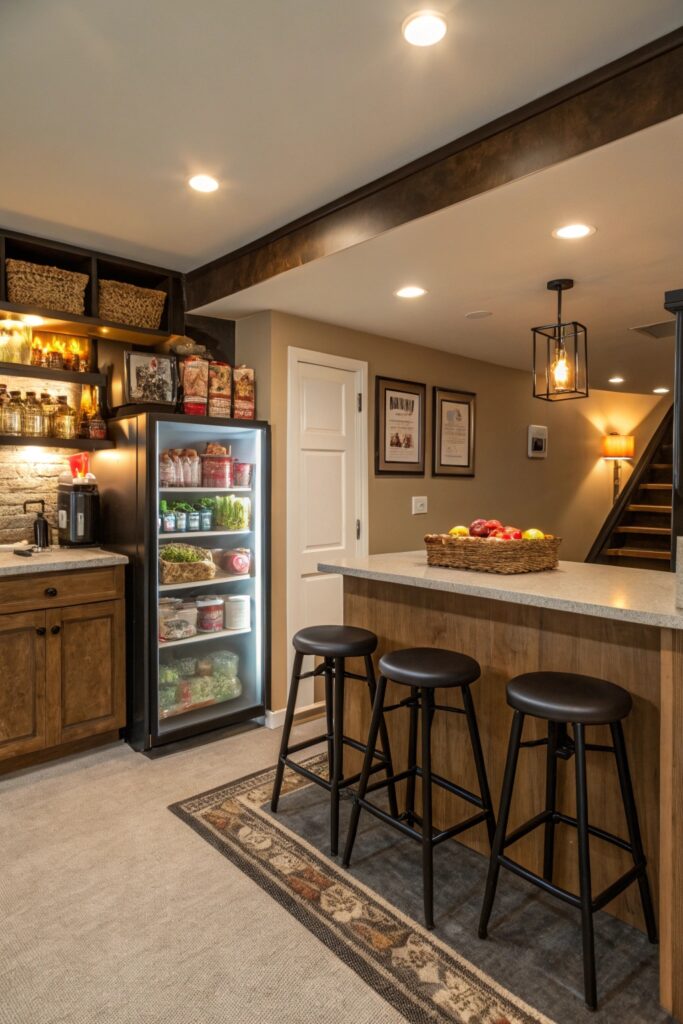
A mini fridge and any small appliances benefit from their own dedicated electrical circuit rather than sharing one with lighting or other basement systems, which avoids tripped breakers when everything runs at once.
5. Use Soft Lighting for a Cozy Glow
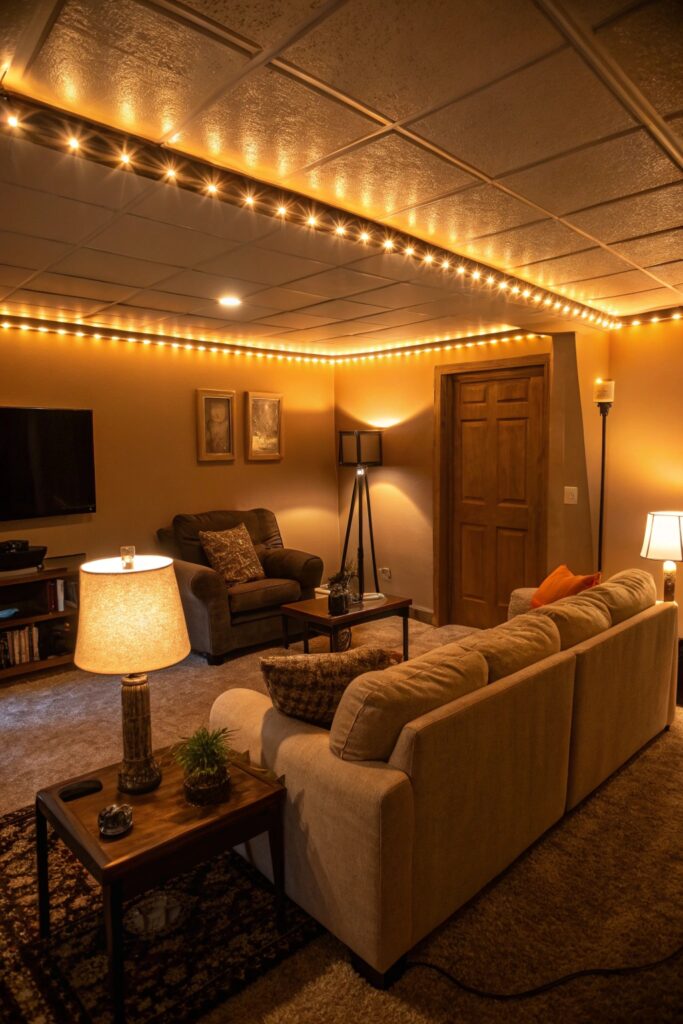
Confirm actual ceiling clearance before committing to recessed can lighting, since basements sometimes have lower ceiling heights than the rest of the house once ductwork and framing are accounted for — surface-mounted fixtures are a practical alternative where clearance is tight.
6. Add Built-In Storage for a Clean Look
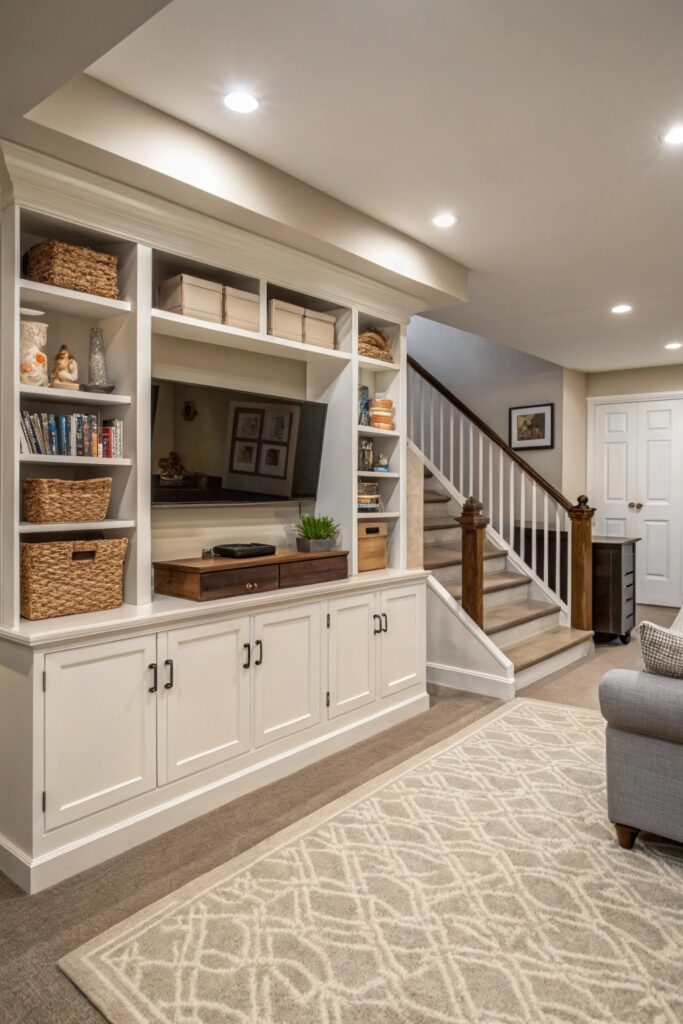
Plastic storage bins hold up to basement humidity considerably better than cardboard boxes, which can develop mold if stored long-term in a space with elevated moisture levels, even a well-finished one.
7. Create a Reading Nook
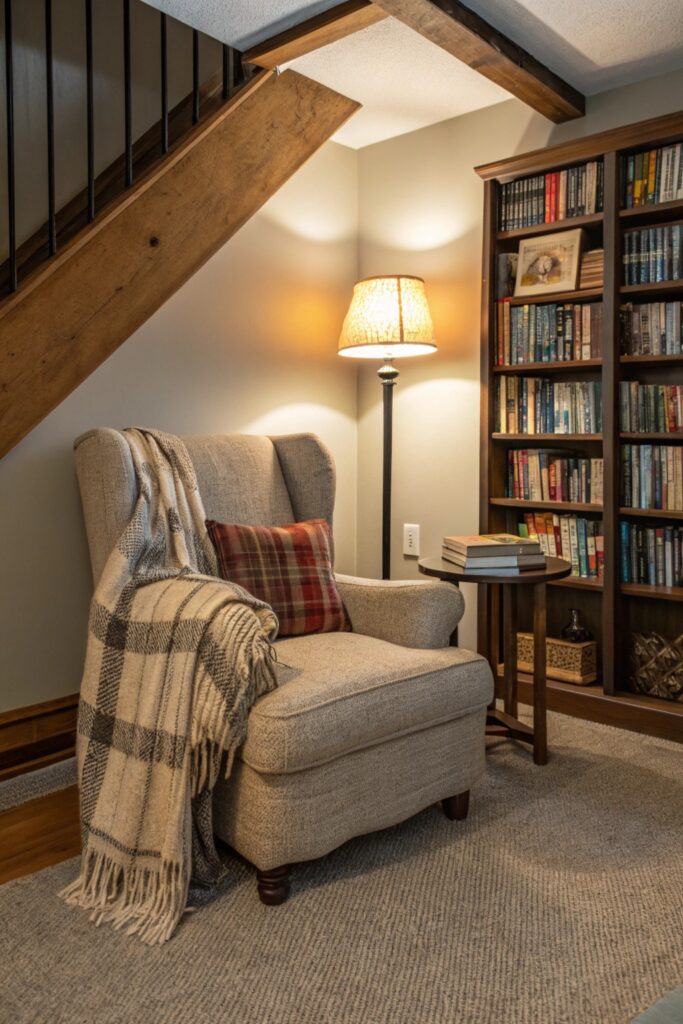
A single comfortable chair with a dedicated reading lamp turns an otherwise unused basement corner into a genuine destination, without requiring much square footage or a large furniture investment.
8. Use Warm Color Palettes
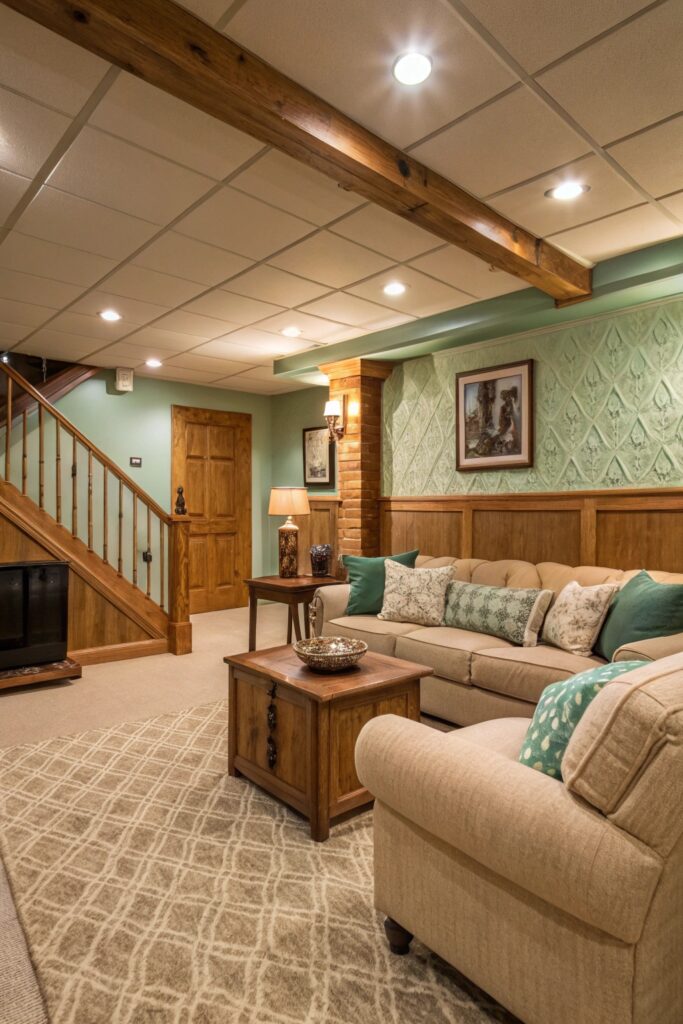
Since basements typically get little or no natural daylight, the color temperature of your artificial lighting does more to create a warm feeling than the wall color choice alone — warm-toned bulbs paired with a warm neutral palette read considerably cozier than the same wall color under cooler lighting.
9. Install a Fireplace Feature
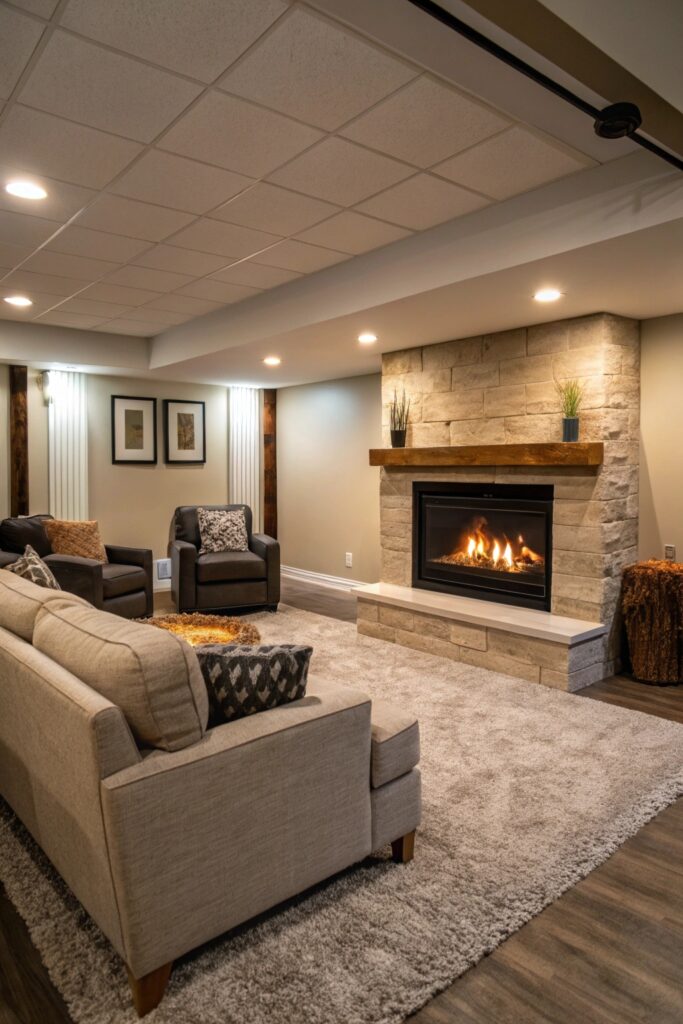
Electric fireplaces are especially common in basements specifically, since venting a gas unit to the exterior from a below-grade room is more complicated and costly than doing so from an above-grade room with easier access to an outside wall.
10. Add Textures for Comfort
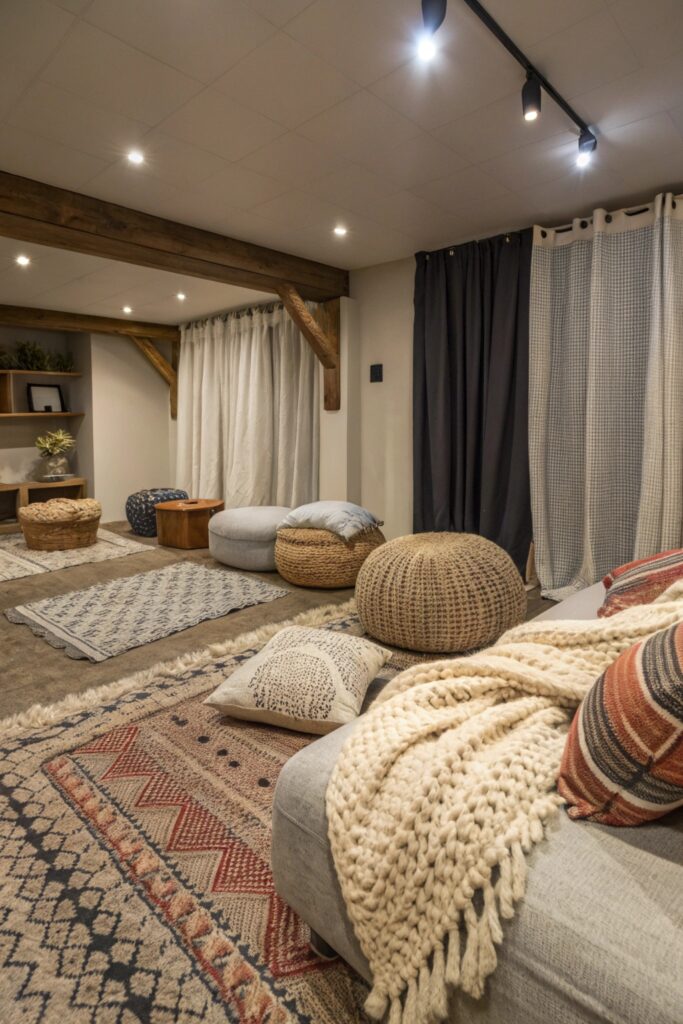
Layering a chunky knit throw, a plush area rug, and varied pillow fabrics adds warmth to a room that can otherwise feel harder and cooler than upstairs living spaces, both physically and visually.
11. Design a Multi-Functional Space
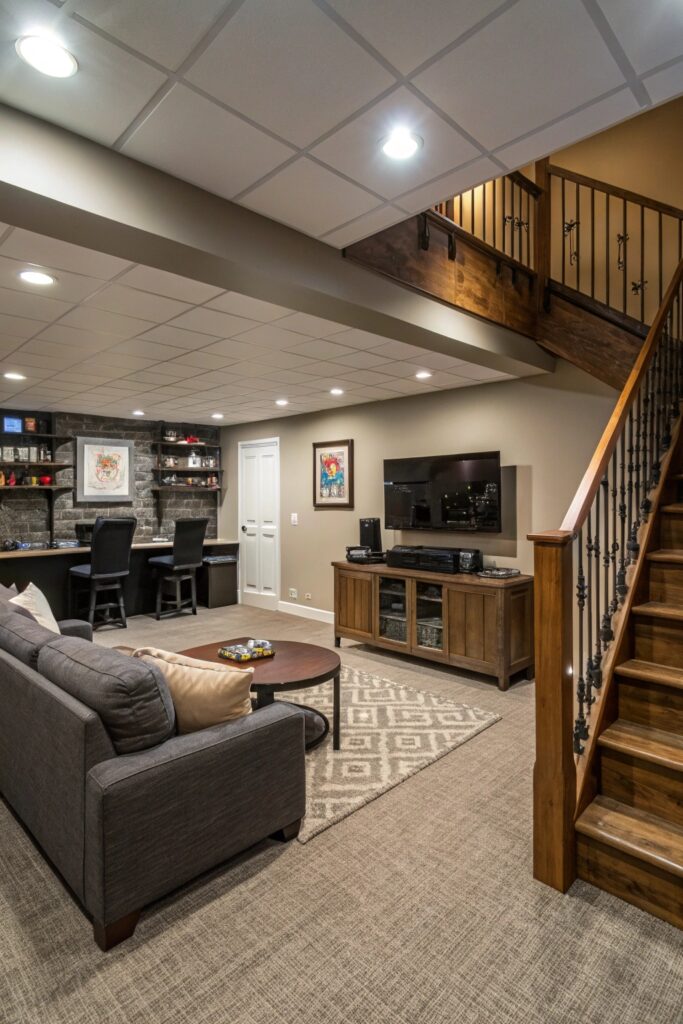
Using a rug or a flooring material change to visually separate zones — a lounge area from a game corner, for instance — helps a single open basement read as distinct spaces rather than one undefined room.
12. Add Personal Decor Touches
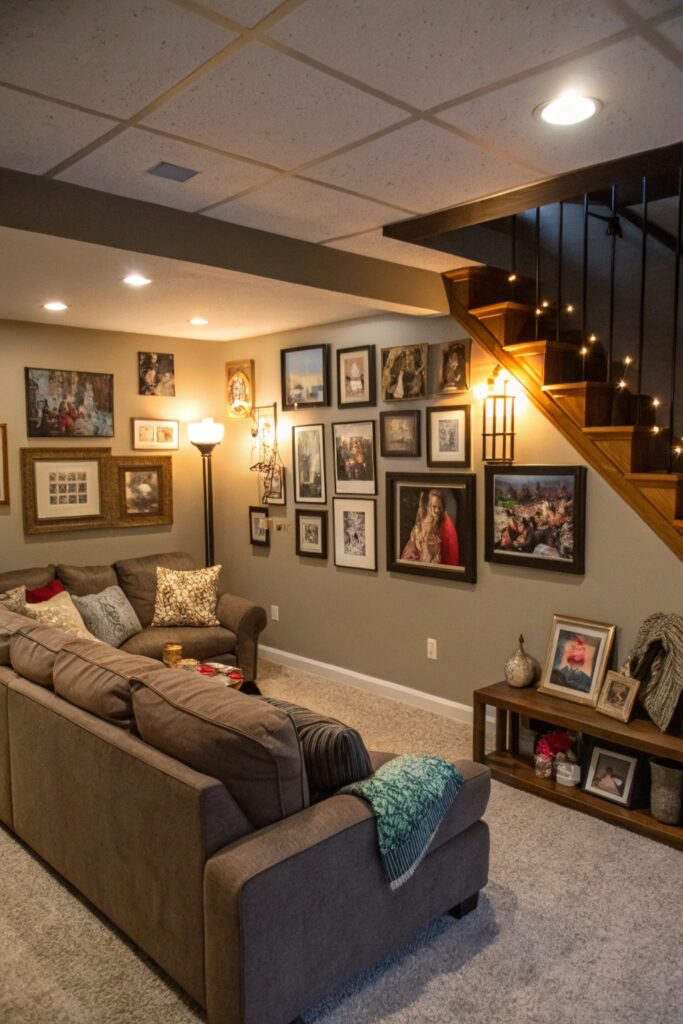
Family photos, hobby-related displays, or collected items give a basement hangout space real character that a purely styled, showroom-like room doesn’t achieve.
13. Include Indoor Plants
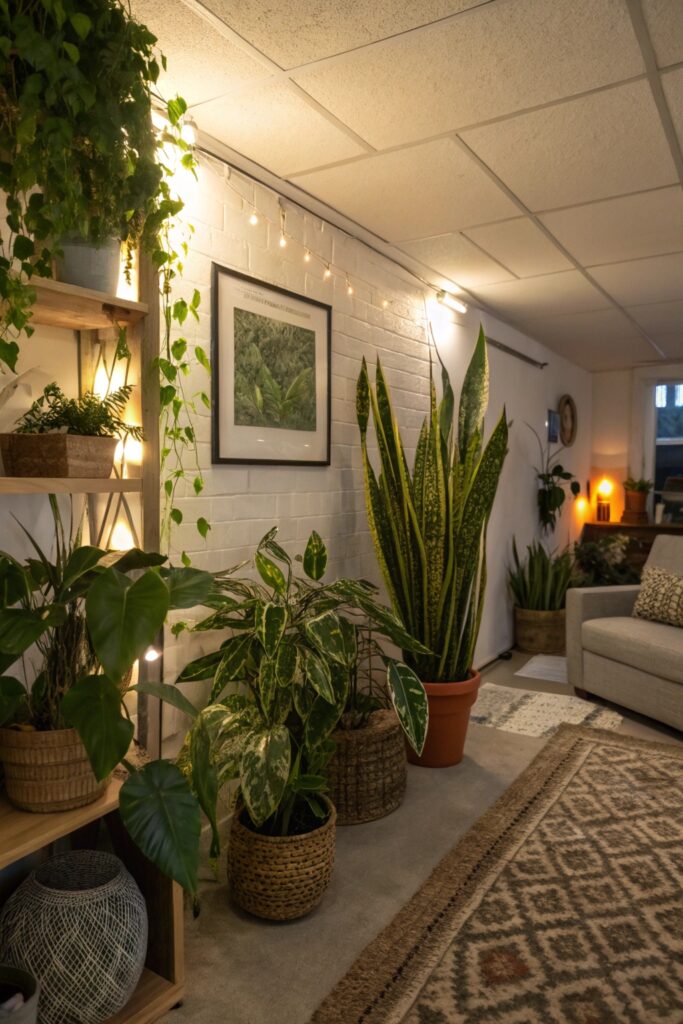
Choose plants that tolerate both low light and the slightly cooler, more consistent temperatures common in basements — many of the same low-light varieties suited to a windowless room upstairs also handle basement conditions well.
14. Keep It Comfortable with Climate Control
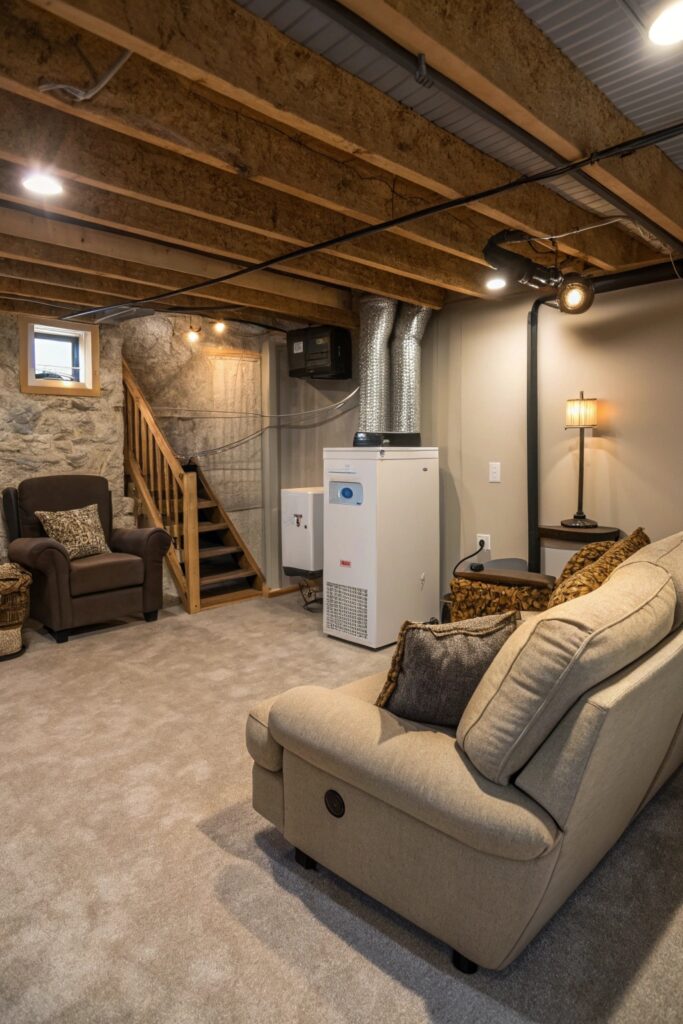
A dedicated dehumidifier is often necessary in a finished basement regardless of how well it was originally waterproofed, since below-grade spaces sit closer to groundwater and naturally run more humid than the rest of the house. It’s also worth testing for radon in any below-grade living space specifically, since radon exposure is a genuine health consideration for rooms where family members spend regular time, and testing kits are inexpensive and straightforward to use.
Flooring Choices for a Below-Grade Space
Standard hardwood isn’t recommended for basement floors, since even a small amount of moisture can cause warping over time — engineered wood, luxury vinyl plank, or tile all handle basement humidity considerably better while still offering a similar warm look.
If carpet is part of the plan, choosing a synthetic fiber over natural wool helps resist moisture-related odor and mold growth, and a moisture barrier underlayment beneath the carpet adds another layer of protection against the concrete slab below.
What a Basement Refresh Costs
A cosmetic update — paint, lighting, furniture, and decor — for an already-finished basement typically costs $1,000 to $4,000 depending on the room’s size and furniture quality.
Finishing an unfinished basement from scratch runs considerably higher, often $20,000 to $50,000 or more, since that scope includes framing, insulation, electrical work, and addressing any moisture issues before finish work begins.
If the basement will be used as a genuine living space rather than occasional storage, confirming it meets local egress requirements — a window or door large enough for emergency exit — is worth checking against your specific building code, since some jurisdictions treat a finished basement hangout space differently than unfinished square footage for code purposes.
A finished basement that families actually gather in regularly tends to add real value to a home when it comes time to sell, more so than a similarly sized room used purely for storage, which is worth keeping in mind if the project is partly motivated by long-term investment alongside daily use.
Moisture Control Underlies Nearly Every Choice Here
Humidity affects more decisions in a basement than in any other room of the house — furniture material, storage choices, even how a fireplace gets vented all trace back to the fact that a below-grade space runs more humid than the rest of a home, regardless of how well it’s finished. Addressing this with a proper dehumidifier and moisture-appropriate materials from the start makes every other design choice on this list hold up considerably better over time.
A basement that stays dry and comfortable becomes a space families actually use regularly, while one that feels damp or musty, however well decorated, tends to go underused regardless of how much effort went into the design itself.