
Your basement is either the most underutilized square footage in your home or a storage room for things you forgot you owned. Either way, it’s sitting there doing nothing useful — and that’s truly wasteful when you could turn it into actual living space.
A finished basement adds real value to your home — both financial and practical. I finished my own basement three years ago and gained what effectively became a second living room, a home office, and a guest room all in one renovation. The impact on daily life was immediate and significant.
These 10 basement ideas cover the most popular and practical ways to transform unused square footage into spaces your family will actually use every single day. From home theaters to in-law suites, every idea here adds genuine living value.
1. Create a Home Theater or Media Room
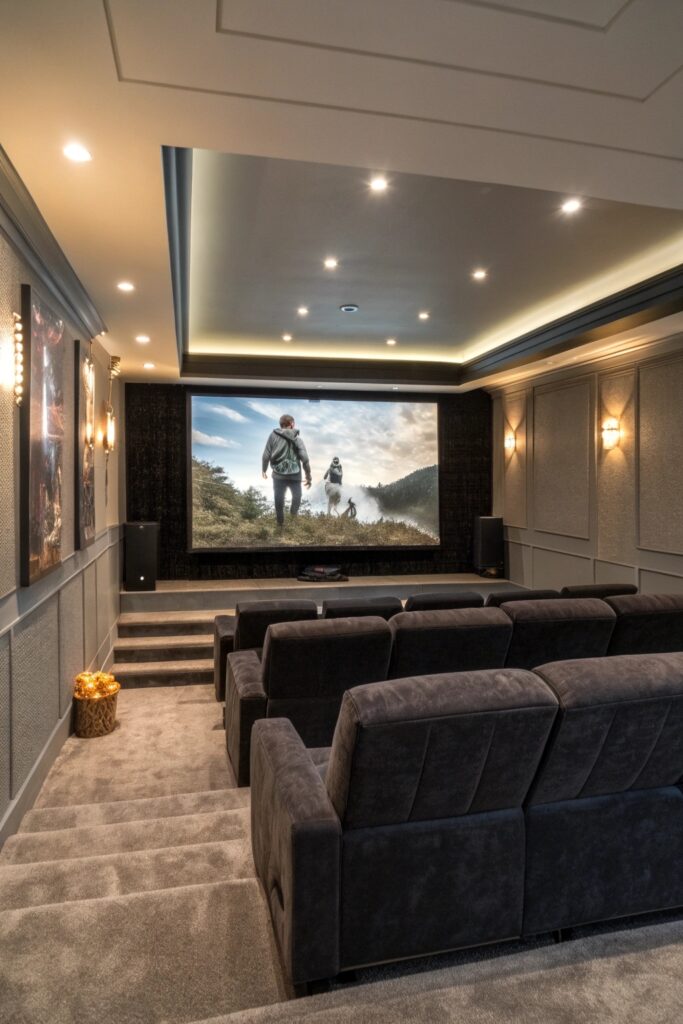
A basement home theater is one of the highest-enjoyment basement conversions available — and the below-grade location that makes basements feel dark and cave-like actually works perfectly for a dedicated media room where you control every lumen of light.
Key elements of a great basement home theater:
- A large format screen or projector — 100 inches or larger for genuine cinematic impact
- Tiered seating with a raised platform at the back for clear sightlines from every seat
- Acoustic panels or sound-dampening materials on walls and ceiling to contain and improve sound
- Blackout curtains or solid walls that eliminate all ambient light completely
- A popcorn station or mini bar built into one wall for the full experience
Proper acoustic treatment separates a truly great home theater from an expensive TV in a dark room. Bass frequencies travel through walls and floors — a basement location naturally contains low-frequency sound better than above-grade rooms. IMO, a well-designed basement home theater delivers a better watching experience than most commercial cinemas, which is a bold statement that holds up completely once you’ve sat in one.
2. Build a Home Gym
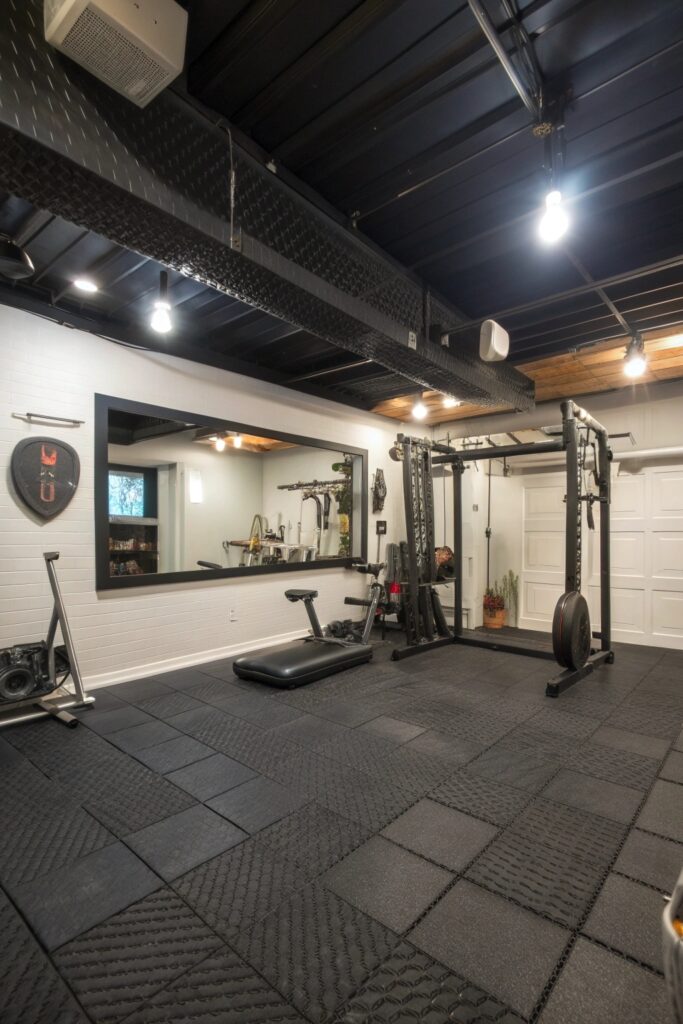
A basement home gym eliminates every excuse that prevents regular exercise — no commute, no membership fee, no waiting for equipment, and no judgment from strangers watching you struggle with a weight you probably shouldn’t have chosen.
Essential home gym elements for a basement space:
- Rubber flooring tiles over the concrete floor for impact absorption and equipment stability
- Full-length mirrors on one wall for form checking during workouts
- Adequate ceiling height — a minimum of 8 feet for overhead movements
- Good ventilation — a basement gym without proper airflow becomes noticeably unpleasant within minutes
- Equipment chosen for your specific training goals rather than everything at once
Start with the flooring and mirrors — these two elements transform any basement space into something that feels like a real gym. Add equipment gradually based on actual use rather than aspirational use. FYI, a basement gym pays for itself within 18 months compared to average gym membership costs — and it’s available at 5am, 11pm, and every hour in between without requiring pants that are acceptable in public.
3. Design a Guest Suite with a Private Bathroom
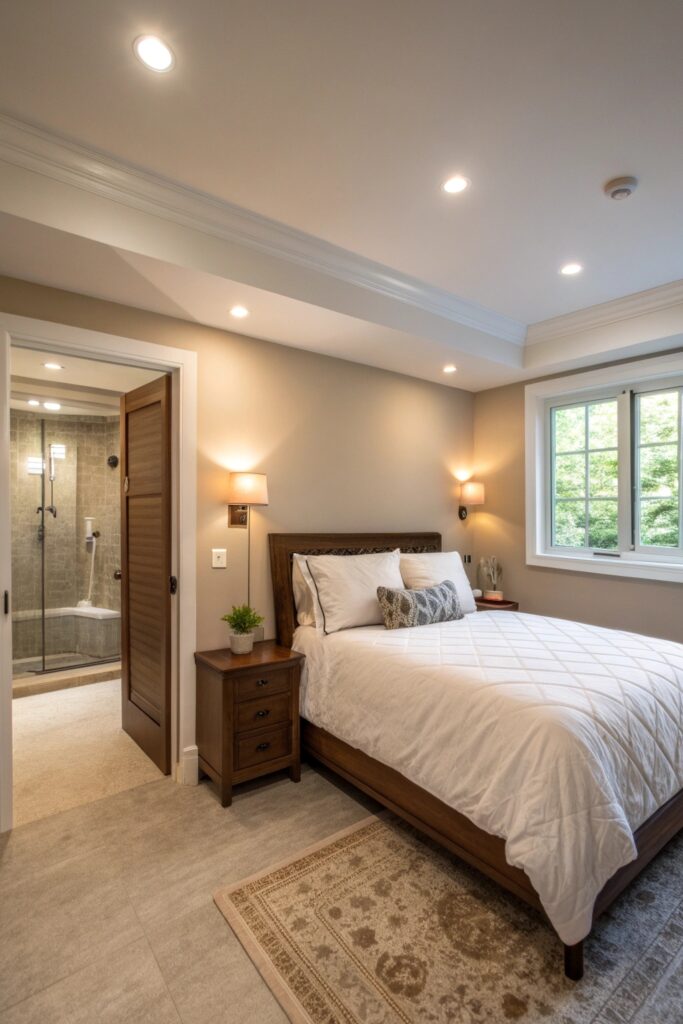
A basement guest suite gives visitors genuine privacy and gives your main floor its sanity back — because the alternative of hosting guests in an upstairs bedroom while sharing a hallway bathroom with the whole family is exactly as inconvenient as it sounds.
Guest suite essentials for a basement conversion:
- A proper egress window — required by building code for any sleeping room and critical for safety
- An ensuite bathroom with shower, toilet, and vanity for complete guest independence
- A closet with adequate hanging space for extended visits
- Sound insulation in the ceiling to prevent noise transmission from the main floor above
- A separate exterior entrance if your basement layout allows it — this transforms the suite into a potential rental unit
A basement guest suite with a private entrance creates enormous flexibility — guests come and go without disrupting the household, and the space can function as a short-term rental when guests aren’t visiting. Check local zoning regulations before adding a rental-ready entrance, as requirements vary significantly by municipality. 🙂
4. Build a Kids’ Playroom or Game Room
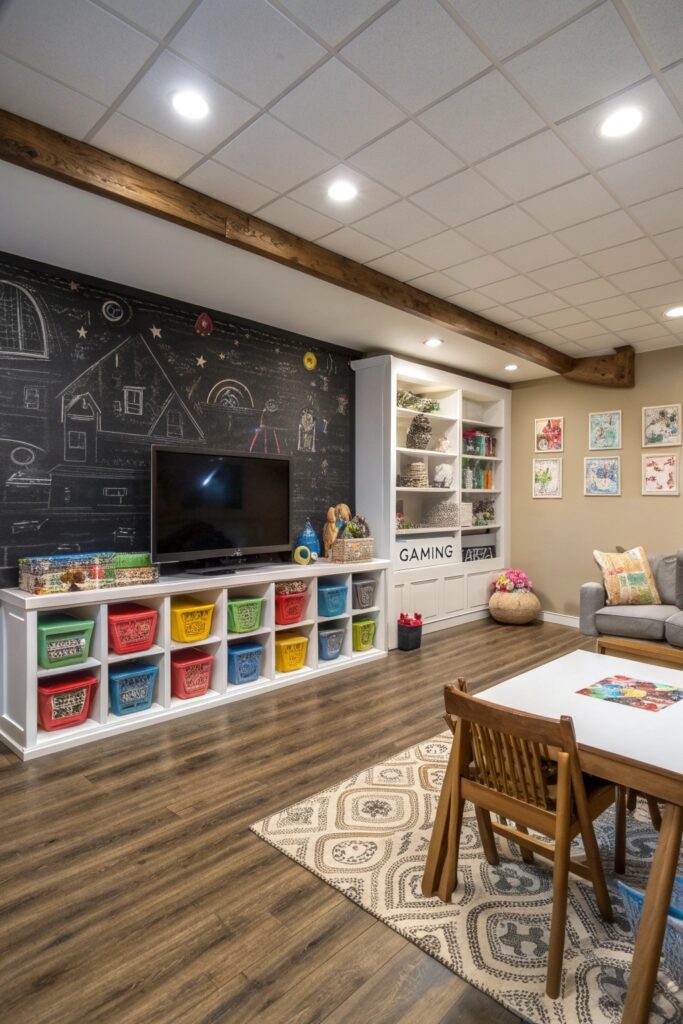
A dedicated basement playroom moves the chaos of children’s play to a contained, appropriate space — which is a gift both to your main floor living areas and to your mental health during weekend afternoons.
Playroom and game room design elements that work:
- Durable, easy-clean flooring — luxury vinyl or sealed concrete handles spills and play traffic
- Built-in toy storage with labeled bins that children can access and return items independently
- A chalkboard or whiteboard wall for creative play and activity
- A dedicated gaming area with comfortable seating and proper screen placement
- Acoustic ceiling tiles to contain the inevitable noise below the main floor
Design the space to grow with your children — a toddler playroom should transition to a tween game room with minimal renovation investment. Built-in storage that holds toys at 4 years old can hold board games, craft supplies, and gaming equipment at 12. Investing in flexible, quality storage from the beginning saves significant renovation cost as the room’s function evolves.
5. Create a Home Bar and Entertainment Space
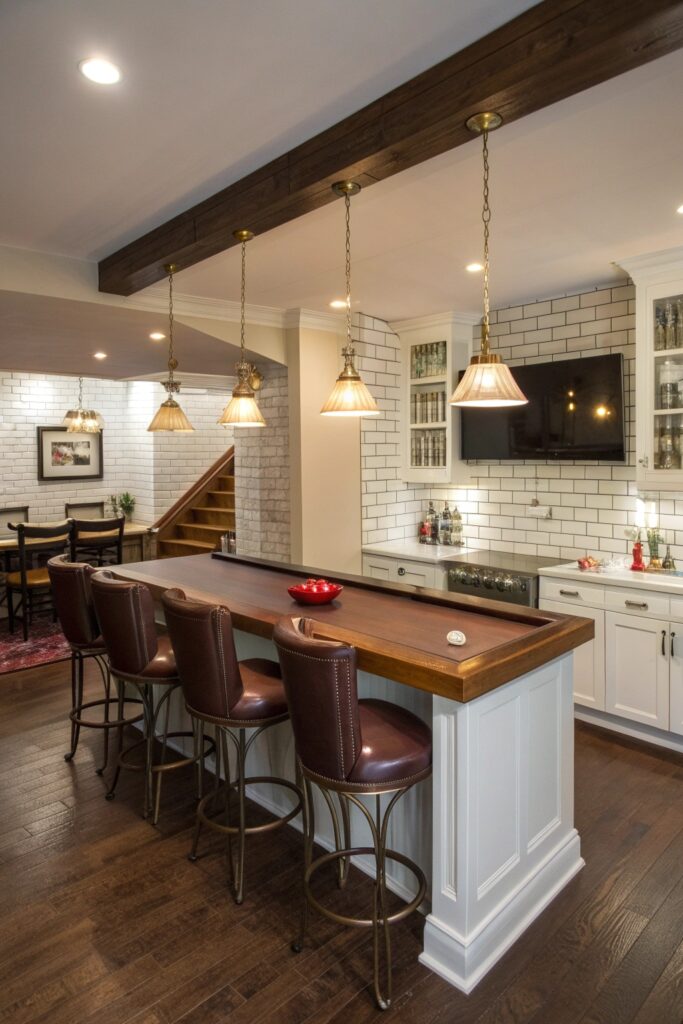
A basement bar and entertainment area becomes the social hub of your home — the space where guests naturally gravitate and where hosting happens comfortably without disrupting the rest of the household.
Home bar essentials for a basement entertainment space:
- A built-in bar with a sink — the sink is non-negotiable; a bar without one creates constant trips upstairs
- A beverage refrigerator or wine cooler beneath the bar counter
- Bar seating — stools at 28 to 30 inches for a standard 42-inch bar height
- Pendant lighting above the bar for atmosphere and task lighting simultaneously
- A shuffleboard, pool table, or dartboard depending on your group’s preferred entertainment
The bar becomes the natural focal point of the entire space — design it as the architectural anchor and arrange seating and entertainment elements around it. A well-designed basement bar with comfortable seating, good lighting, and your preferred entertainment options creates a space that feels like a private venue. Your social calendar will fill up faster than you expect.
6. Design a Home Office or Remote Work Suite
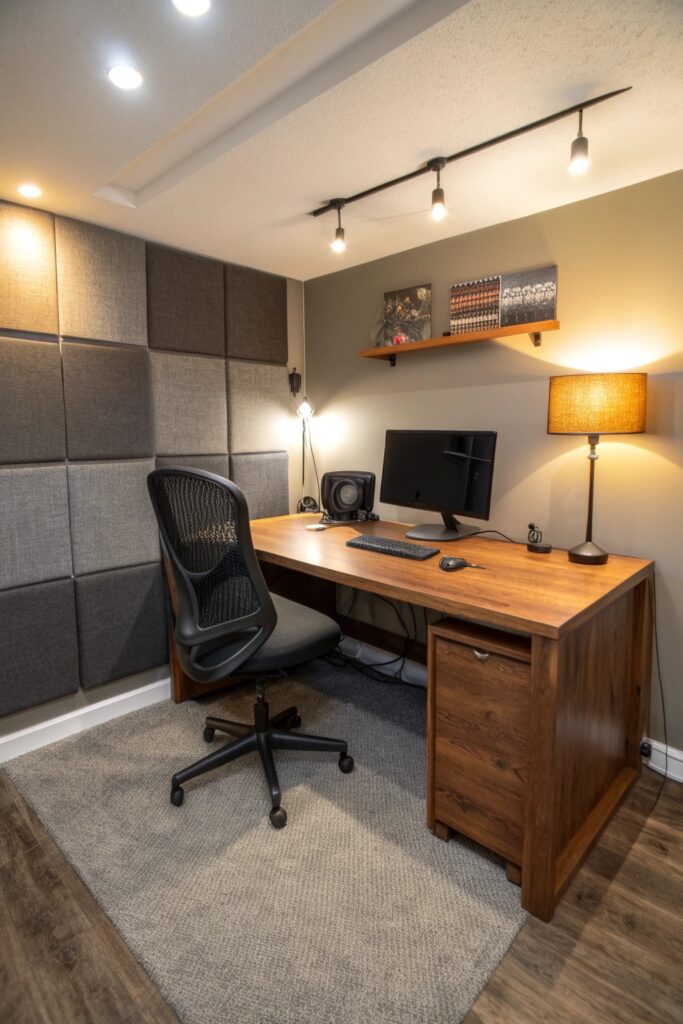
A basement home office separates work from home life in the most literal way possible — different floor, different environment, different mental context — which makes the end-of-day psychological transition from work mode to home mode dramatically more achievable.
Home office elements that make a basement workspace truly productive:
- Proper egress and ventilation for comfort during long work sessions
- Acoustic treatment on walls and ceiling for video call audio quality
- Dedicated high-speed internet connection — run ethernet directly rather than relying on WiFi
- A proper desk and ergonomic chair — the investment pays dividends in productivity and back health
- Strategic lighting that eliminates monitor glare and provides adequate task illumination
A basement home office works particularly well for roles that require focused, distraction-free work — the physical separation from main floor activity creates a mental boundary that open-plan above-grade home offices struggle to provide. Add a comfortable reading chair in the corner for breaks, and the office becomes truly pleasant rather than merely functional.
7. Build an In-Law Suite or Secondary Living Space
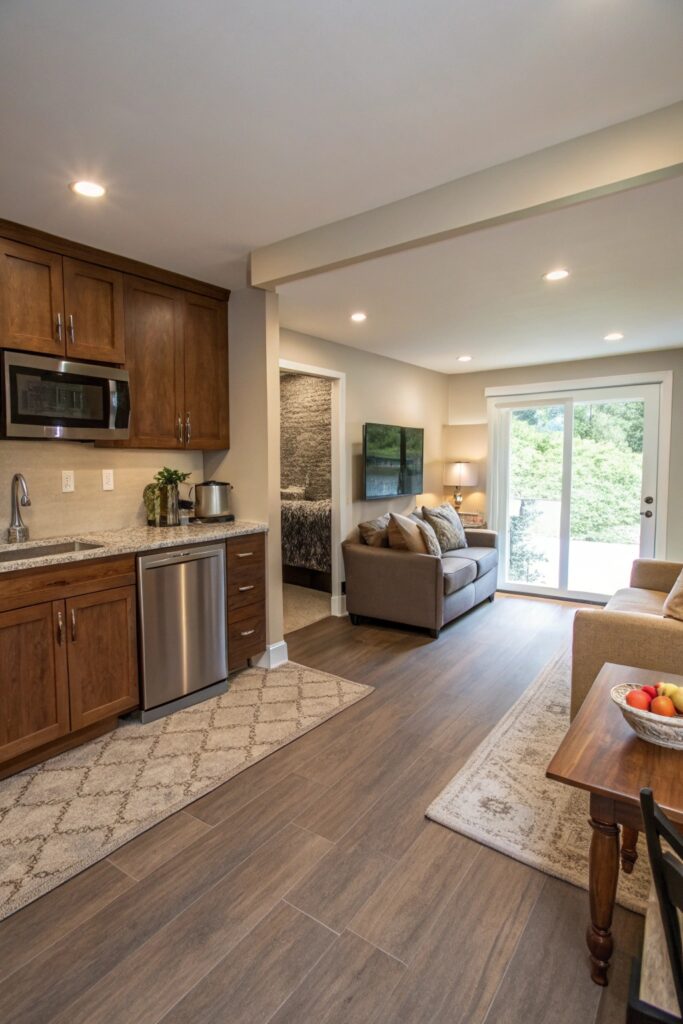
A basement in-law suite or secondary living space solves the multigenerational housing challenge that more and more families face — and it does so while keeping everyone within the same property without sacrificing anyone’s privacy or independence.
In-law suite requirements for a basement conversion:
- A proper egress window in every sleeping area — required by code and essential for safety
- A kitchenette with a small refrigerator, microwave, and sink for basic food preparation independence
- A full bathroom with accessible design features if the suite will house elderly family members
- Soundproofing in the ceiling for privacy and peaceful coexistence
- A private entrance that allows independent coming and going
Design the suite with accessibility in mind from the beginning — wider doorways, a curbless shower, and grab bar blocking in bathroom walls cost very little during initial construction and a great deal to retrofit later. An accessible, well-designed basement in-law suite serves its immediate purpose and adds genuine long-term value to the property for future buyers facing the same multigenerational needs.
8. Create a Music Room or Recording Studio
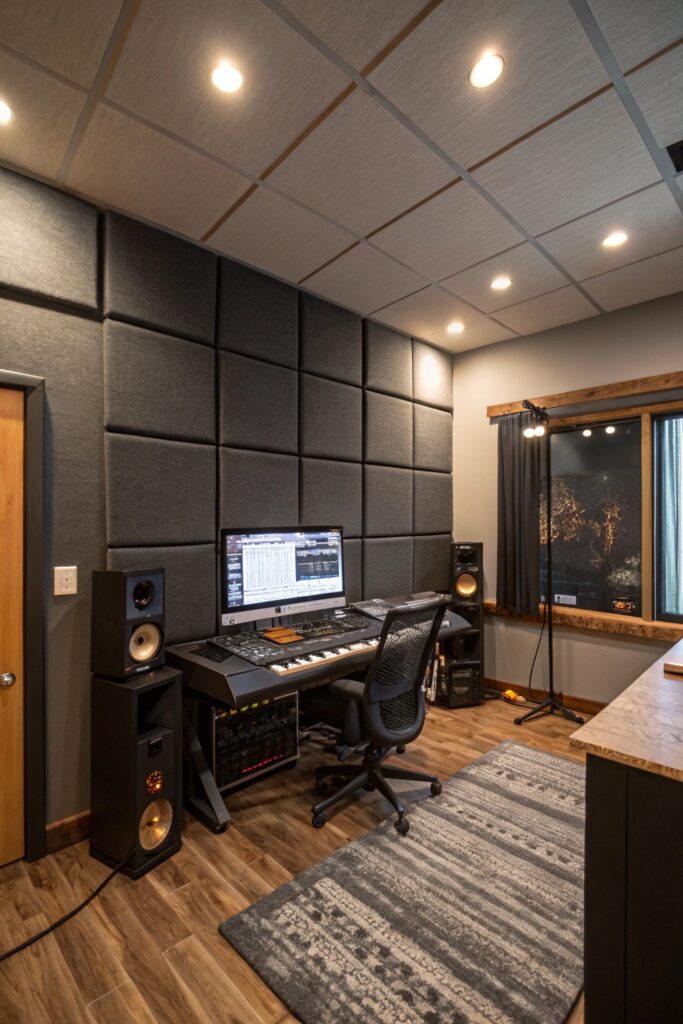
A basement is acoustically the most logical location for a music room in any home — the below-grade position contains sound naturally, protects neighbors and household members from noise, and provides the physical separation that serious practice and recording requires.
Music room and recording studio essentials:
- Acoustic treatment panels on walls and ceiling to control reflection and reverb
- Sound isolation in the ceiling and walls to prevent sound transmission to the main floor
- Adequate electrical outlets for amplifiers, recording equipment, and computers
- Proper lighting — both task lighting for music stands and ambient lighting for recording video
- Cable management built into the room from the start rather than added as an afterthought
The difference between acoustic treatment and soundproofing is important — treatment improves the sound quality inside the room, while soundproofing prevents sound from leaving it. A music room needs both. :/ Treat the walls first for playback quality, then add mass and isolation to the ceiling and walls for sound containment. Getting both right creates a room that sounds truly professional.
9. Design a Craft Room or Hobby Workshop
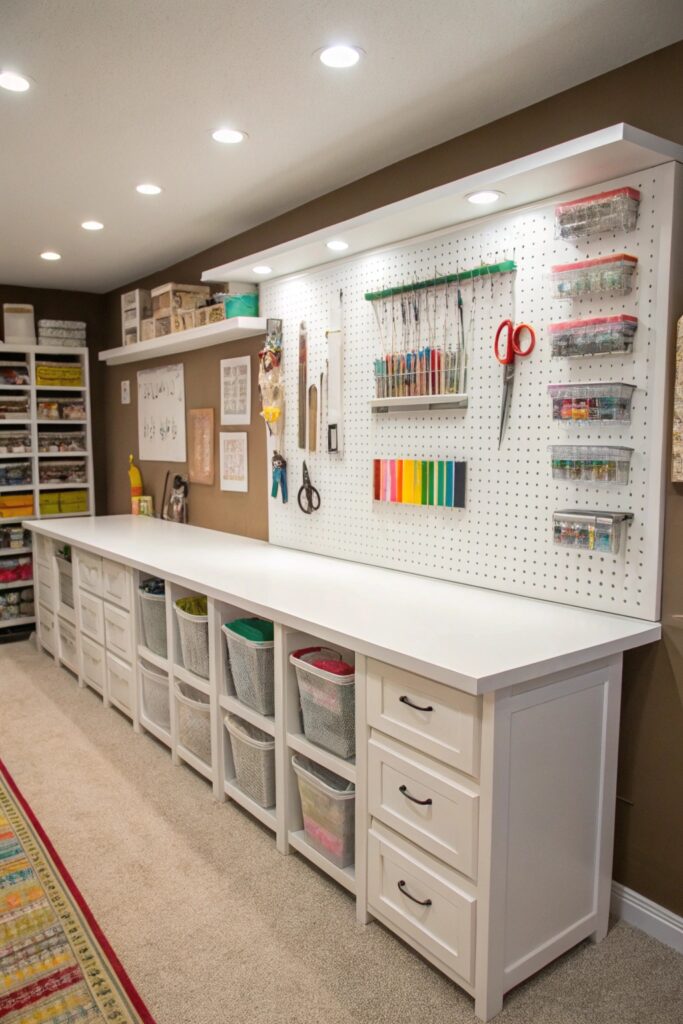
A dedicated basement craft room or hobby workshop gives your creative pursuits the permanent, organized space they deserve — rather than the dining room table that gets cleared and reset with every project and every meal.
Craft room and workshop essentials:
- A large, durable work surface at standing or sitting height depending on your primary activity
- Organized storage systems for materials — pegboards for tools, shelving for supplies, drawer units for small items
- Excellent task lighting directly over the work surface — natural light equivalent LEDs for color-accurate craft work
- Easy-clean flooring that handles paint, glue, sawdust, and general material mess without permanent damage
- Ventilation for fumes if the hobby involves paint, stain, adhesives, or finishes
A permanent craft or workshop space eliminates the setup and teardown time that prevents many people from pursuing hobbies consistently. When the tools are always out, the materials always organized, and the space always ready, the barrier to starting a project on any given evening drops to essentially zero. That accessibility changes creative output dramatically.
10. Build a Wine Cellar or Tasting Room
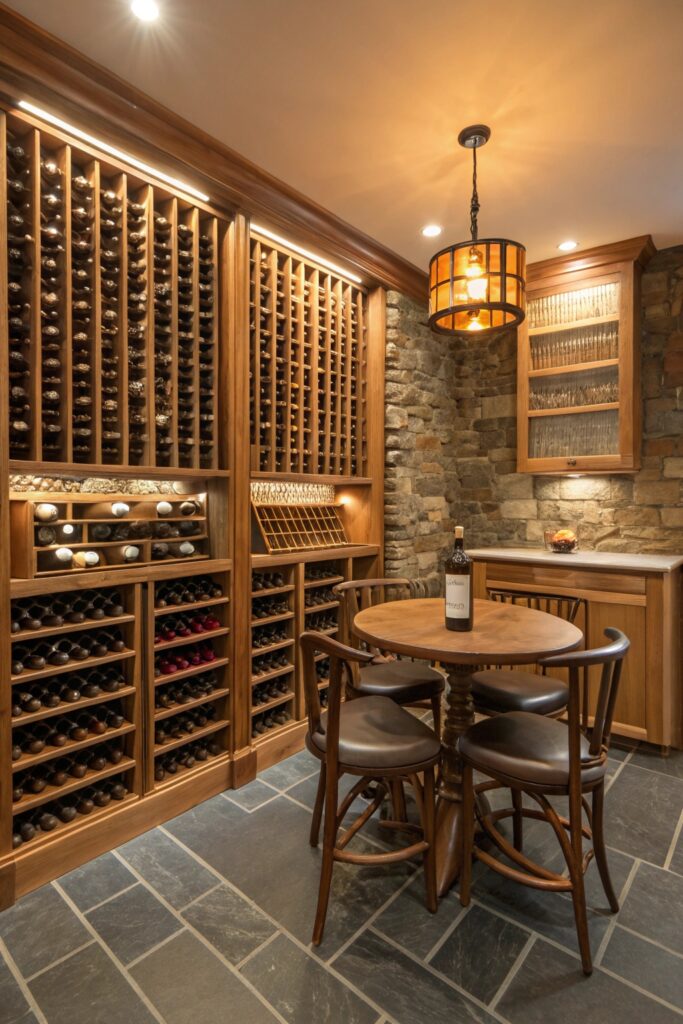
A basement wine cellar uses the naturally cool, stable temperature conditions of below-grade space for exactly the purpose those conditions are best suited for — storing and aging wine properly without expensive climate control equipment.
Wine cellar essentials for a basement conversion:
- Temperature stability between 55 and 65 degrees Fahrenheit — basements naturally maintain this range in most climates
- Wine racking in wood, metal, or modular systems that accommodate your collection size
- Humidity control at 50 to 70 percent to prevent cork drying
- Vibration isolation away from mechanical equipment like HVAC systems and appliances
- A small tasting table and seating for experiencing the collection in its storage environment
A dedicated wine cellar room with proper racking, lighting, and a small tasting area creates a truly extraordinary space in a home — practical for serious collectors and impressive for casual enthusiasts alike. Even a modest collection of 200 to 300 bottles benefits enormously from proper storage conditions, and a well-designed cellar space protects that investment while creating a room worth showing guests.
Your Basement Is Ready — What Are You Waiting For?
Before diving into any of these builds, it’s worth addressing the technical fundamentals first — moisture control, radon testing, egress requirements, and permits. Our companion guide to unfinished basement ideas covers these foundational steps in detail.
An unfinished basement represents significant untapped living potential sitting directly beneath your feet. A home theater, gym, guest suite, home office, or entertainment space — any one of these transforms unused square footage into a room your family uses every single day.
Start with the function your household needs most urgently. Working from home and lacking a dedicated office? Start there. Hosting guests on air mattresses in the living room? Build the suite. The renovation that solves your real problem delivers the best return on every dollar spent.
Your basement is ready. The question is what version of your home you want to live in — the one that’s been ignoring several hundred square feet, or the one that finally uses all of it.