
The real planning decision behind a basement kitchenette is how much cooking function you actually need — a simple wet bar has far fewer plumbing, electrical, and venting requirements than a full kitchenette with a cooktop. For a beverage-focused space without the cooking infrastructure, see our companion guide to basement bar ideas. The details below cover both the styling direction and the practical specifics for a genuine kitchenette.
Below are 10 basement kitchenette styles worth considering, with the specifics for each.
1. The Wet Bar Kitchenette
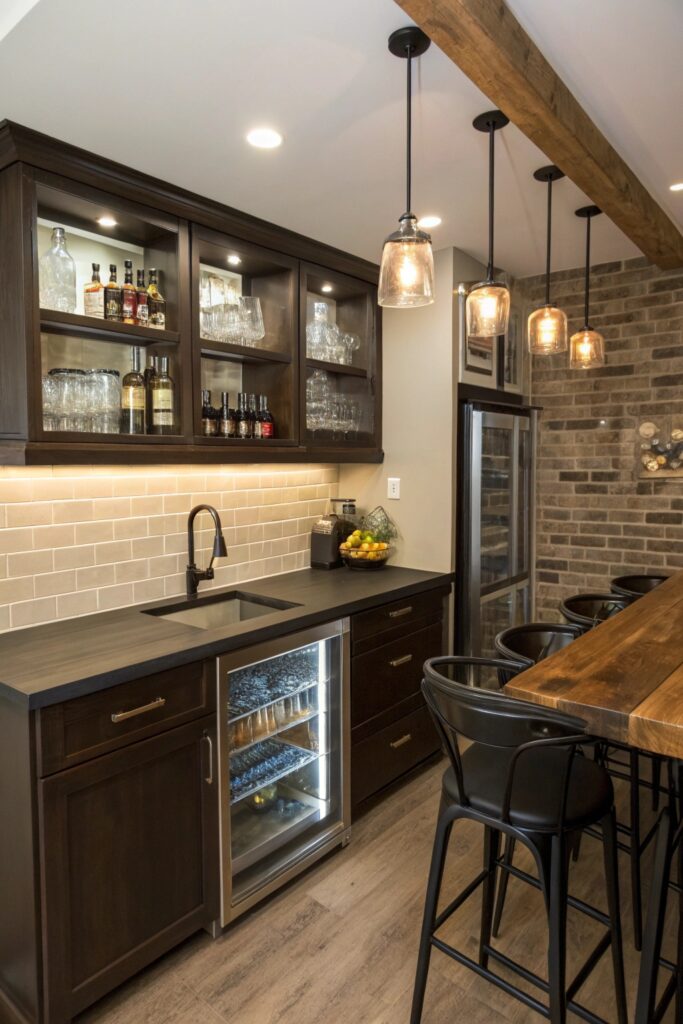
A true wet bar needs only a small sink and a water line, considerably simpler than a full kitchenette — the moment you add a cooktop or full-size oven, real venting requirements come into play that a beverage-only setup doesn’t need.
2. The Compact L-Shaped Kitchenette
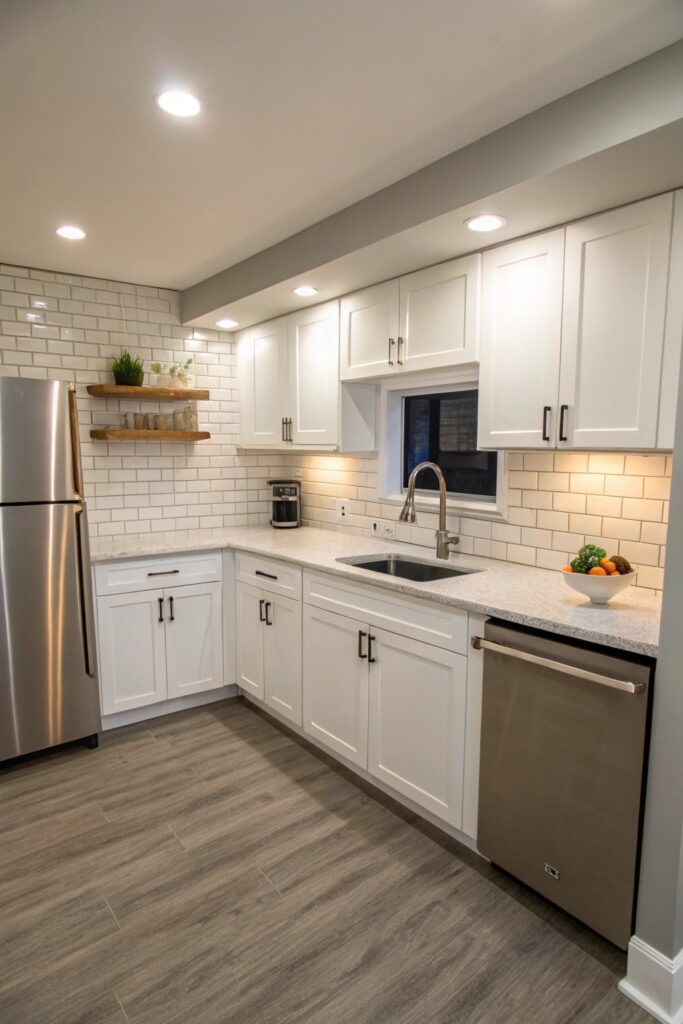
Leave at least 42 to 48 inches between opposing counters or appliances in an L-shaped layout, which is the minimum clearance for one person to work comfortably without constantly bumping into cabinetry or appliance doors.
3. The Industrial Basement Kitchenette
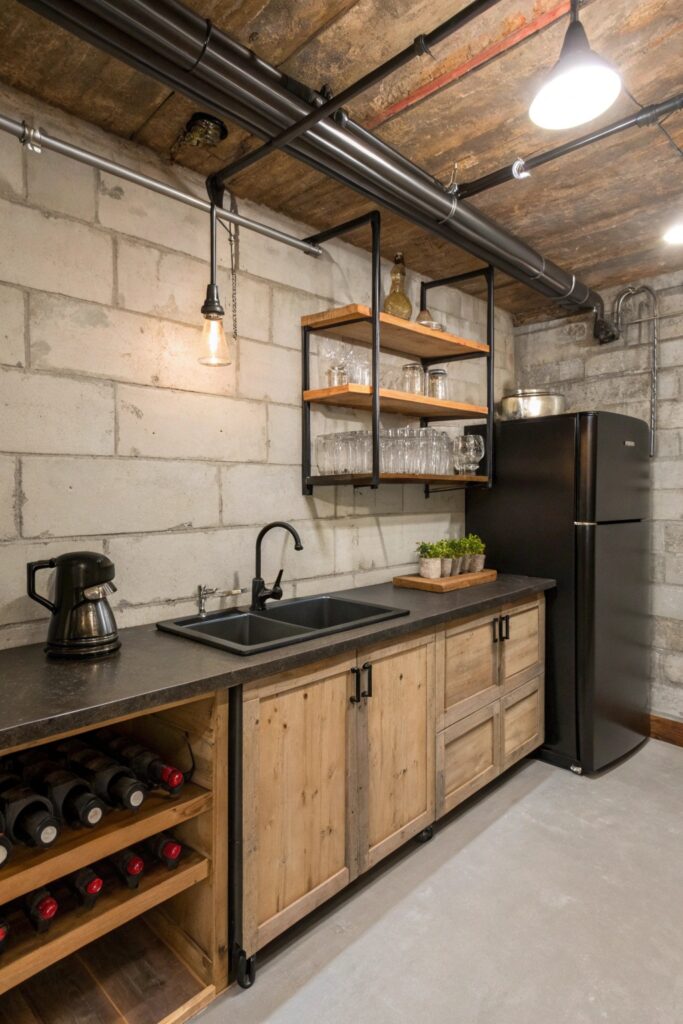
Exposed metal fixtures and shelving are more prone to condensation in a basement’s naturally higher humidity than they would be on an upper floor, so a sealed or powder-coated finish holds up better here.
4. The White Shaker Basement Kitchenette
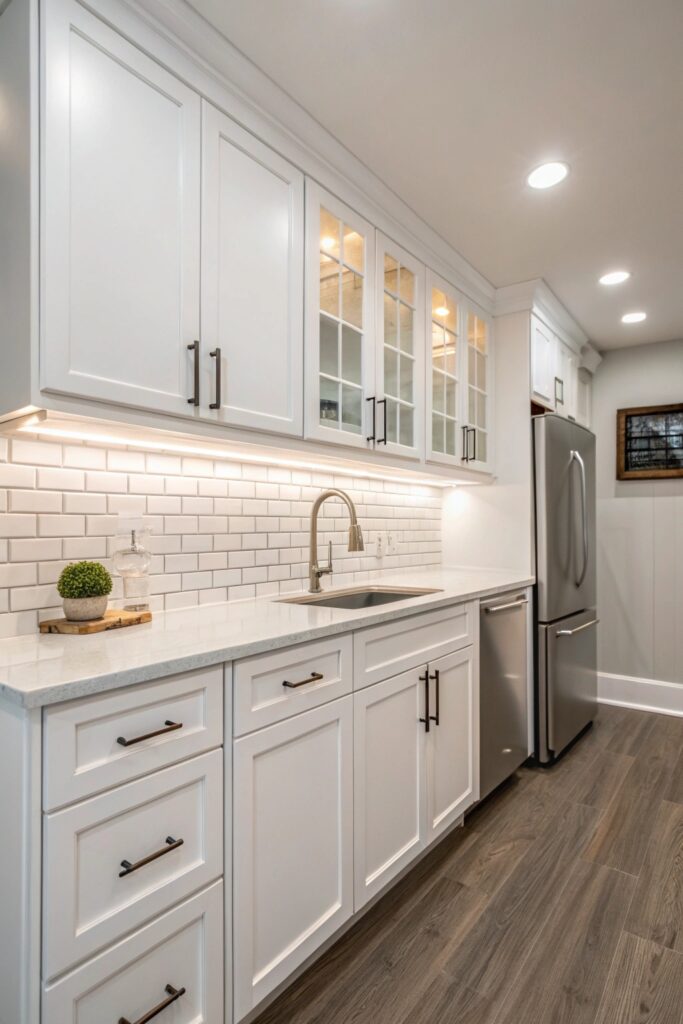
White cabinetry shows water spots and staining more visibly than darker finishes, which matters more in a basement’s typically higher-humidity environment than it would in a drier upstairs kitchen.
5. The Navy and Brass Basement Kitchenette
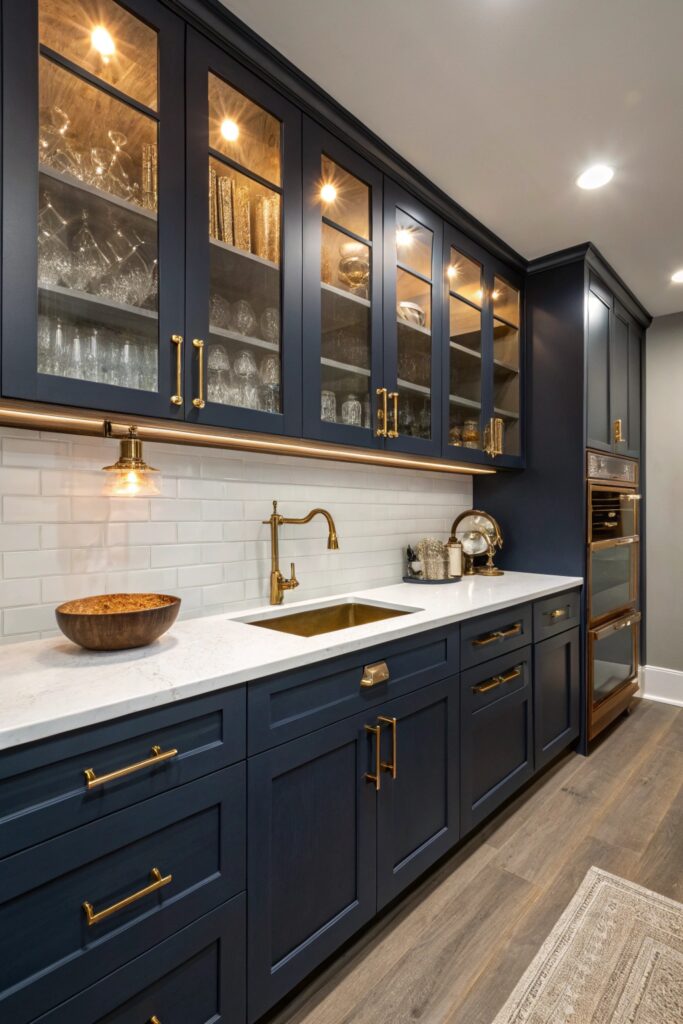
Unlacquered brass develops a natural patina over time, which some homeowners want intentionally, while lacquered brass stays uniformly shiny — worth deciding upfront since the two age very differently.
6. The Open Shelving Basement Kitchenette
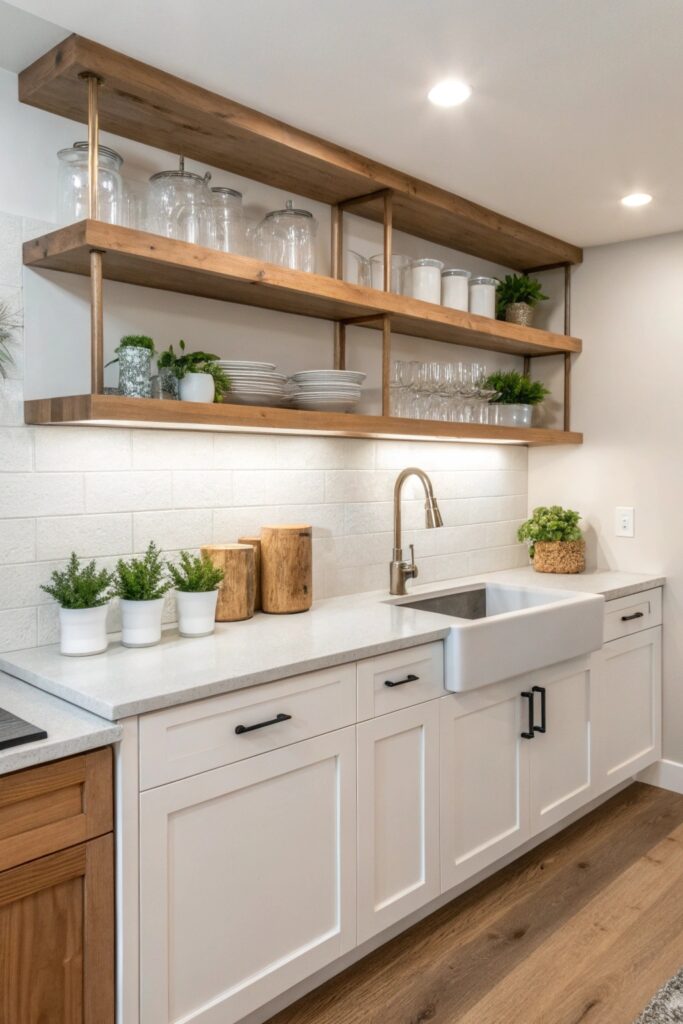
Basements typically see less air circulation than upper floors, so dust settles on open shelving faster here, meaning dishes stored openly may need rewashing before use more often than the same setup would in a well-ventilated upstairs kitchen.
7. The Two-Tone Basement Kitchenette
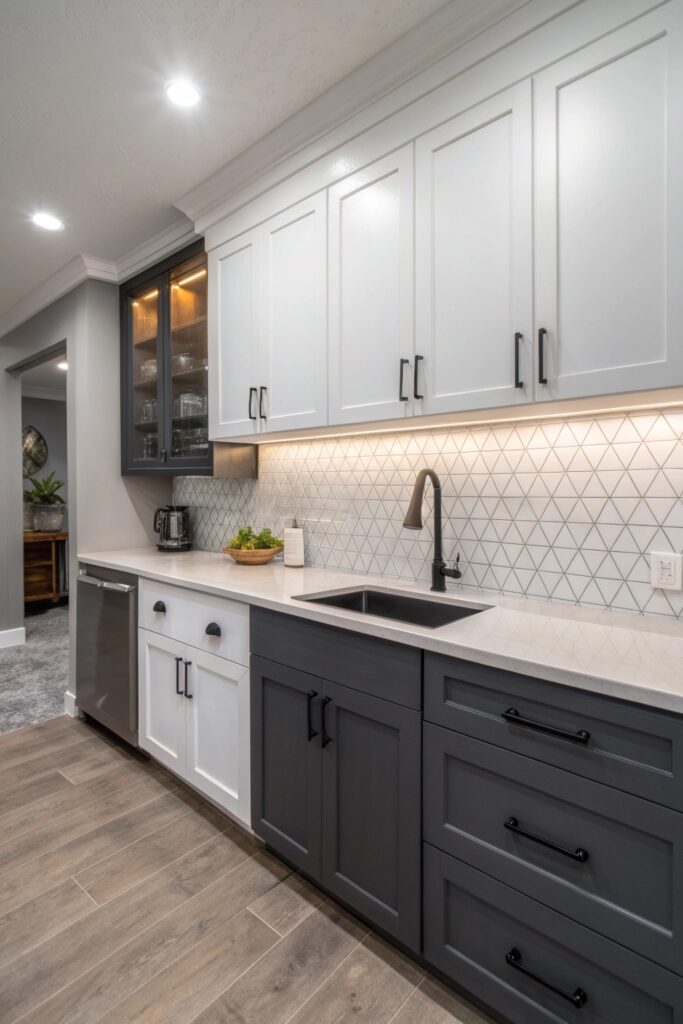
Pairing a lighter upper cabinet color with a deeper lower tone helps a smaller basement kitchenette feel less visually heavy than an all-dark palette would in a room that may already have lower ceilings or less natural light.
8. The Basement In-Law Suite Kitchenette
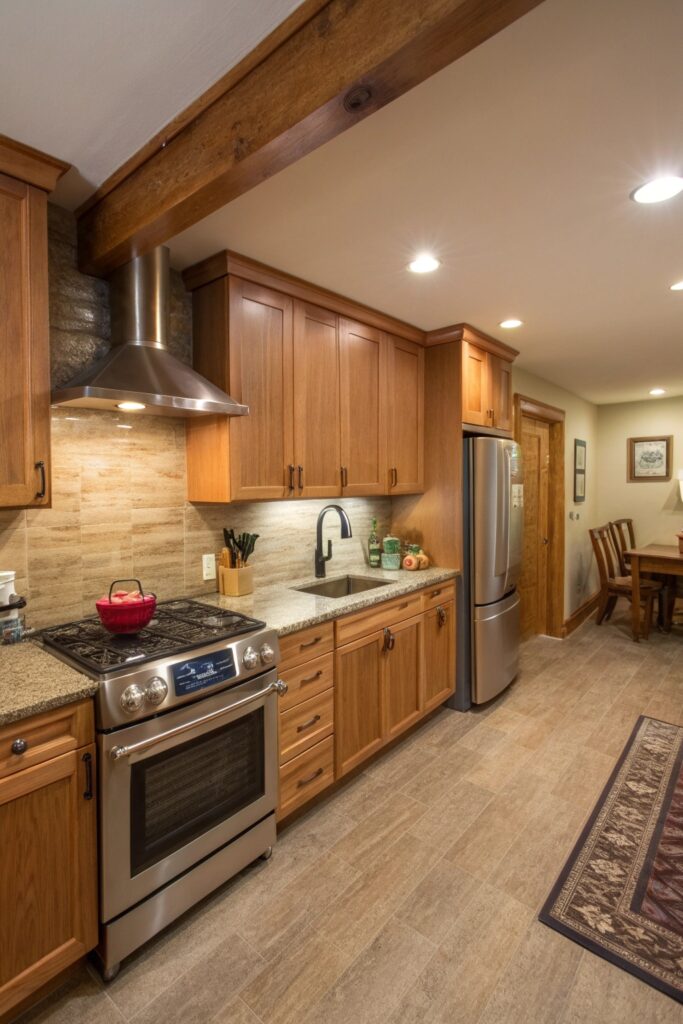
If this space is intended as a fully independent living area, a full kitchenette can trigger different permit and zoning requirements than a simple wet bar, since some jurisdictions specifically regulate second kitchens or accessory dwelling units — this is worth confirming with local building and zoning offices before installation, especially if the space might eventually be rented out.
9. The Home Theater Snack Bar Kitchenette
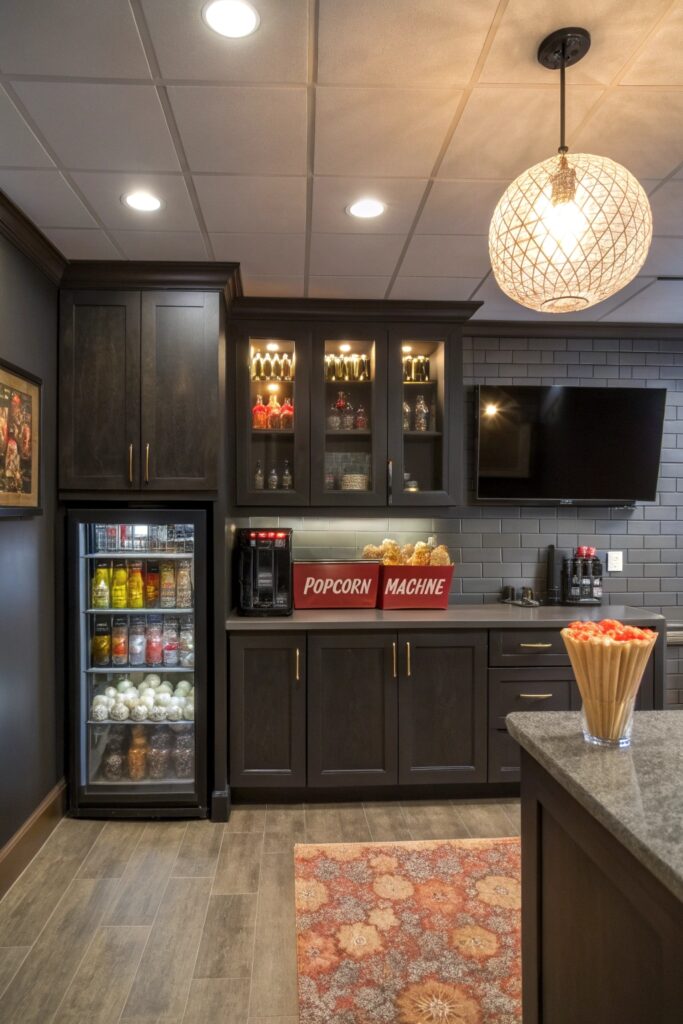
Keep food odors and grease away from theater seating and electronics by positioning any cooking appliances, even something as simple as a popcorn maker, with ventilation that carries odors away from the viewing area rather than into it.
10. The Basement Kitchenette with Island Seating
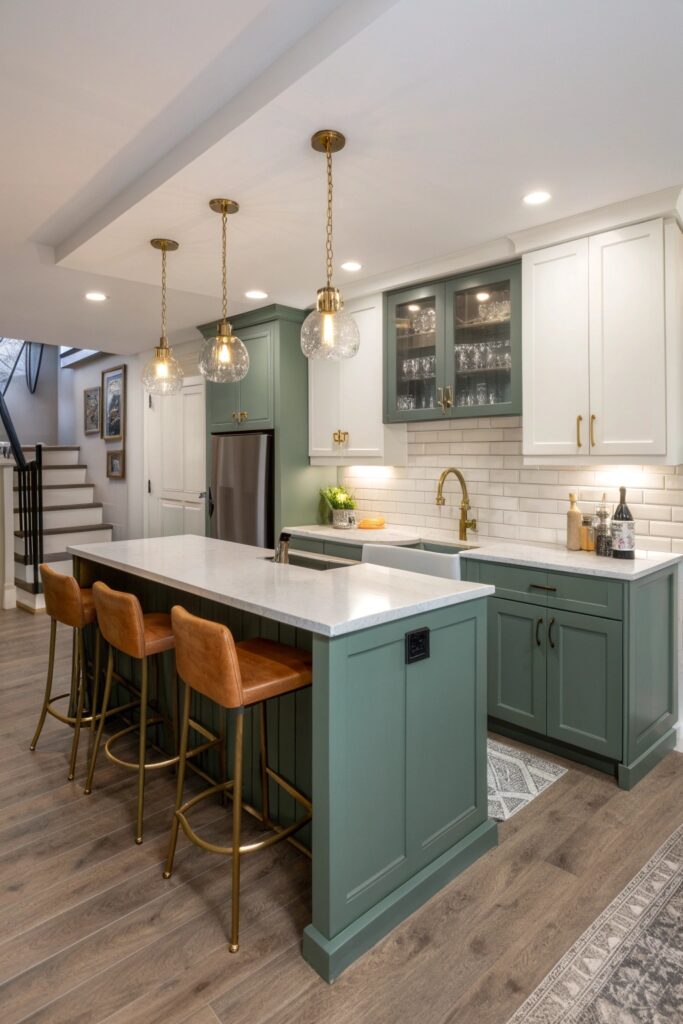
An island with seating needs real structural support beneath it rather than floating cabinetry alone, given the combined weight of the countertop, any appliances built in, and people seated at the overhang.
Plumbing Considerations Specific to Basements
Basement plumbing often needs to pump wastewater up to the main sewer line rather than relying on gravity, since a basement kitchenette sink typically sits below the level where the home’s drain lines exit — this usually means installing a sewage ejector pump, a real added cost and complexity beyond what an upstairs kitchen renovation would require.
Confirming your basement’s existing plumbing rough-in, if any, before finalizing a layout helps avoid the more expensive scenario of running entirely new supply and drain lines to a location the basement wasn’t originally plumbed for.
What a Basement Kitchenette Costs
A basic wet bar setup with just a small sink and beverage fridge typically costs $2,000 to $5,000.
A full kitchenette with a cooktop, sink, cabinetry, and proper venting runs considerably higher, often $10,000 to $25,000 or more depending on whether new plumbing lines and a sewage ejector pump are needed.
Electrical Capacity Worth Confirming Early
A full-size refrigerator, cooktop, and small appliances add real load to your home’s electrical panel, and an older home’s existing panel may not have enough spare capacity without an upgrade. An electrician can assess this before you finalize appliance selections, which avoids the more disruptive scenario of discovering a panel upgrade is needed midway through installation.
Dedicated circuits are typically required for major appliances like a refrigerator or cooktop specifically, rather than sharing a circuit with lighting or smaller outlets, which is worth planning for from the start rather than retrofitting later.
Ventilation for a Cooktop Specifically
Any cooktop, even a compact two-burner unit, needs a real exhaust solution — either ducted to the exterior or a quality recirculating hood with a charcoal filter — to manage cooking odors and grease in a way passive basement air circulation alone can’t handle.
A ducted system that vents to the outside performs considerably better than a recirculating one, though running ductwork through a finished basement ceiling adds real cost and complexity worth factoring into the project’s total budget from the planning stage.
Getting quotes from at least two or three contractors familiar specifically with basement renovations, rather than general kitchen remodelers unfamiliar with below-grade plumbing and code considerations, helps ensure the finished space is both functional and properly permitted from the start.
A well-planned basement kitchenette meaningfully extends how a home functions day to day, whether it’s supporting a home theater setup, giving guests or in-laws real independence, or simply adding convenience for a household that spends significant time in the basement level, making the upfront planning worth the effort it takes to get right.
Take time comparing a few different layouts before committing, since the difference between a workable kitchenette and a cramped one often comes down to a few inches of clearance that are much easier to adjust on paper than after installation.
Final Thoughts
Deciding early whether you need a full kitchenette with cooking capability or a simpler wet bar setup shapes nearly every other decision in this project — plumbing scope, electrical capacity, ventilation, and in some cases permitting requirements all depend on this choice. Matching the actual build to how the space will actually be used, rather than over-building toward a full kitchen or under-building for real cooking needs, tends to produce the most satisfying result.
Checking local code requirements before finalizing plans, particularly if the space might function as an independent living area, saves real cost and hassle compared to discovering a permitting issue after installation is complete.