Modern farmhouse exteriors work best when siding, windows, roofline, and hardware all share a consistent material and color language, rather than reading as a collection of individually trendy elements. The details below cover both the styling direction and the practical material specifics for each piece.
Below are 12 elements worth focusing on, with the specifics for each.
1. Board and Batten Siding in Crisp White
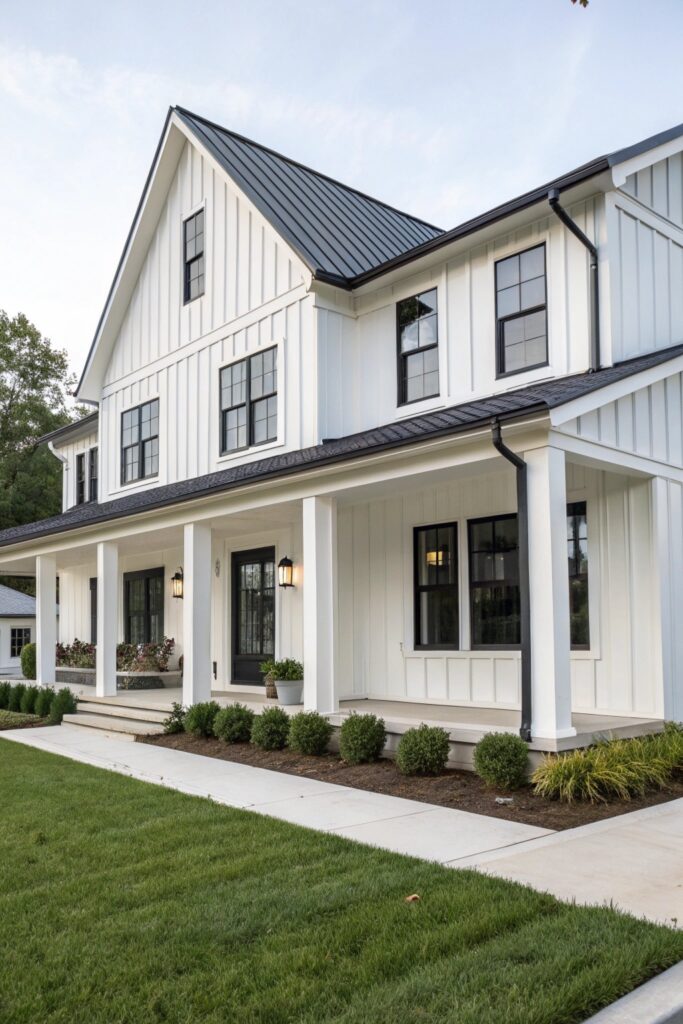
Battens are typically installed 12 to 16 inches on center over the seams between boards, and fiber cement holds up to this vertical application better than real wood, since it resists the rot that can develop where water channels down each board and battens meet the base.
2. Black Window Frames and Trim
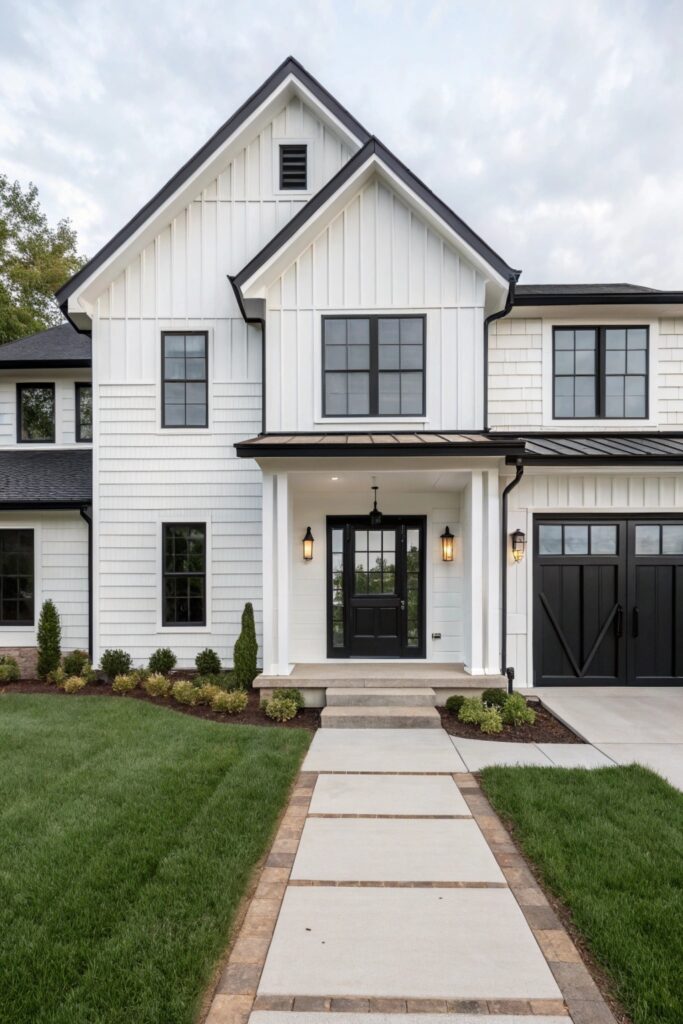
Black frames absorb more heat than lighter colors, and this matters more for vinyl-clad windows than aluminum-clad ones, since vinyl can warp under intense heat absorption in consistently sunny climates in a way aluminum-clad frames resist better.
3. Metal Roof Accents
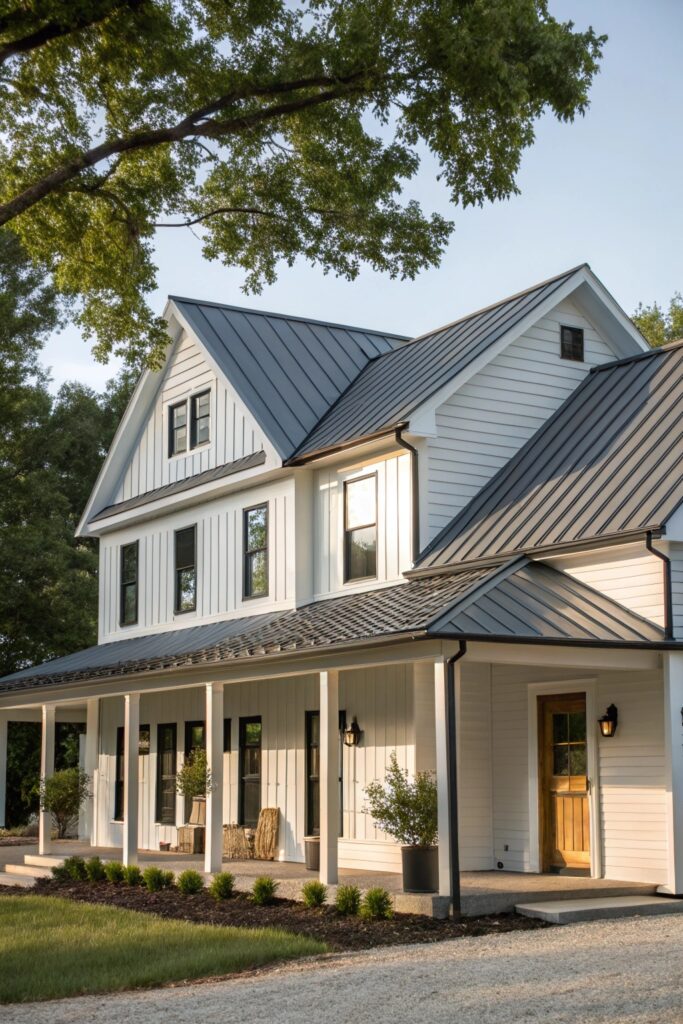
Metal roofing expands and contracts considerably with temperature swings, so proper underlayment and expansion allowances matter here — a standing seam profile is specifically designed to accommodate this movement without the panels buckling over time.
4. Covered Front Porch with Wood Columns
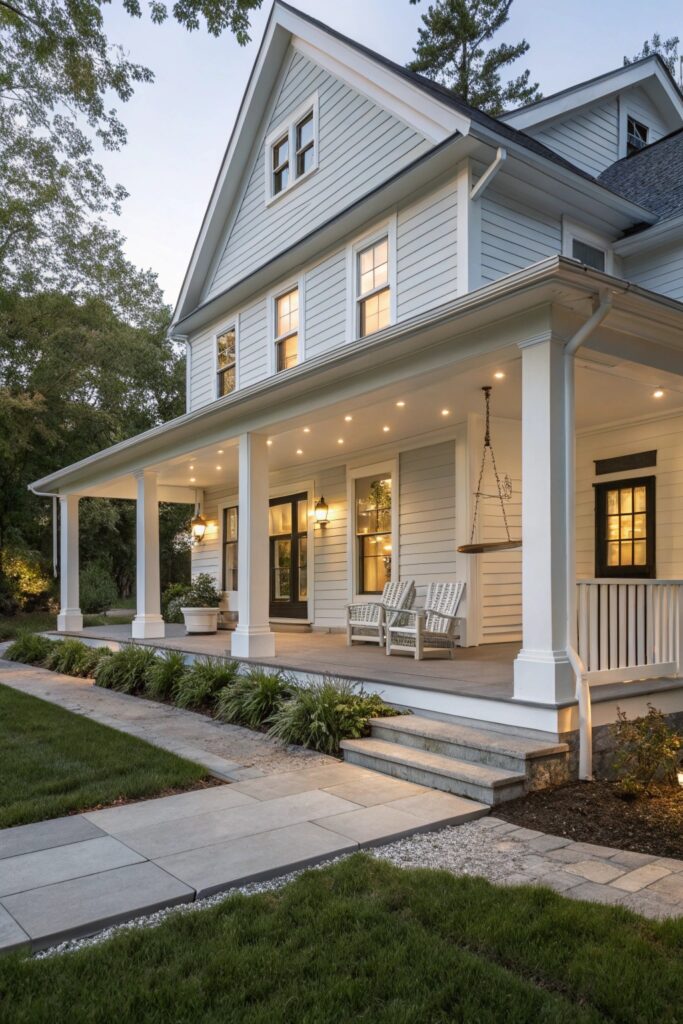
Wood columns need to avoid direct ground contact, either through pressure treatment or by sitting on a proper base or pier, since ground-contact rot is one of the more common structural failures in porch columns built without this consideration.
5. Black Front Door as a Focal Point
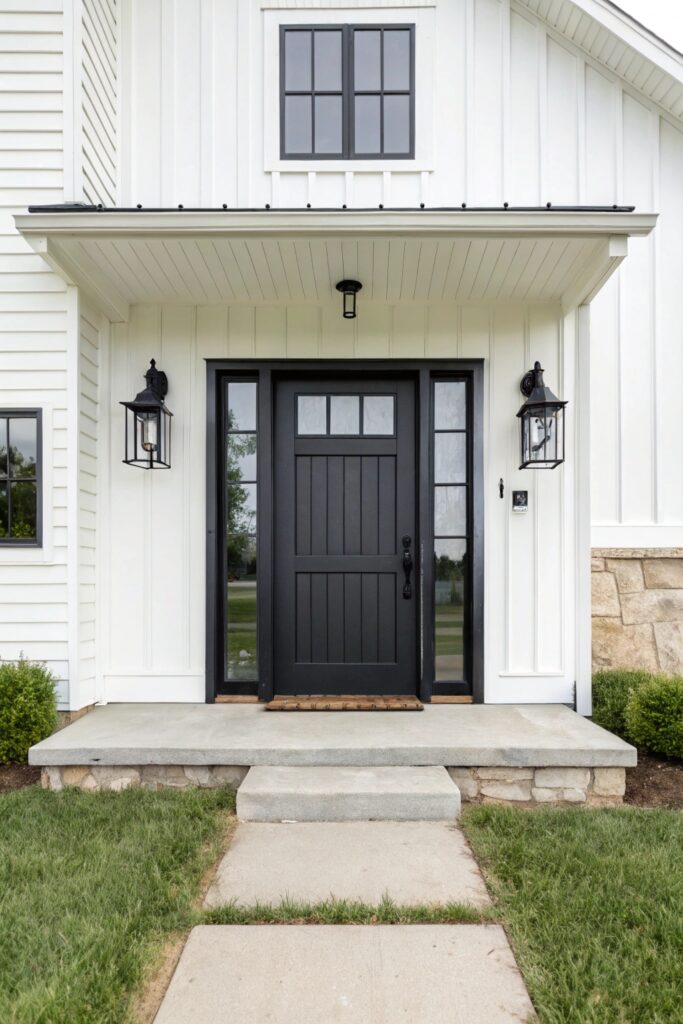
A black door absorbs more direct sun heat than a lighter color, and fiberglass handles that heat and the resulting expansion better than solid wood, which is more prone to warping under repeated heat cycling.
6. Mixed Material Exterior — Siding Plus Stone
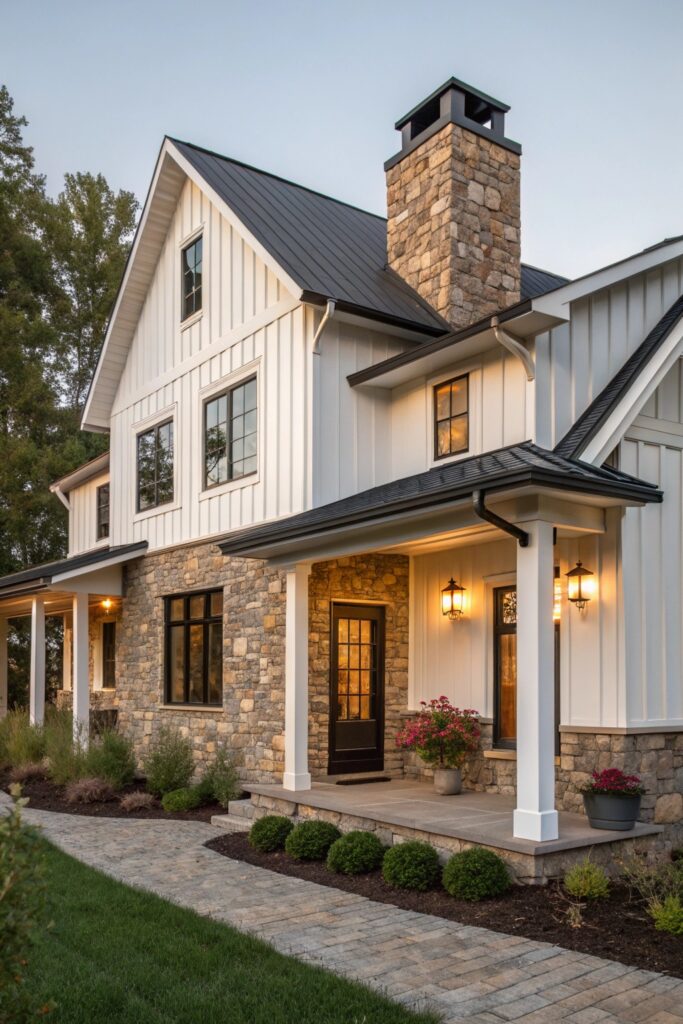
Manufactured stone veneer is considerably lighter than real stone and easier to install, though real stone often reads as more authentic up close — a real trade-off worth weighing against your budget and how closely anyone will actually view the transition.
7. Wraparound Porch with Board and Batten
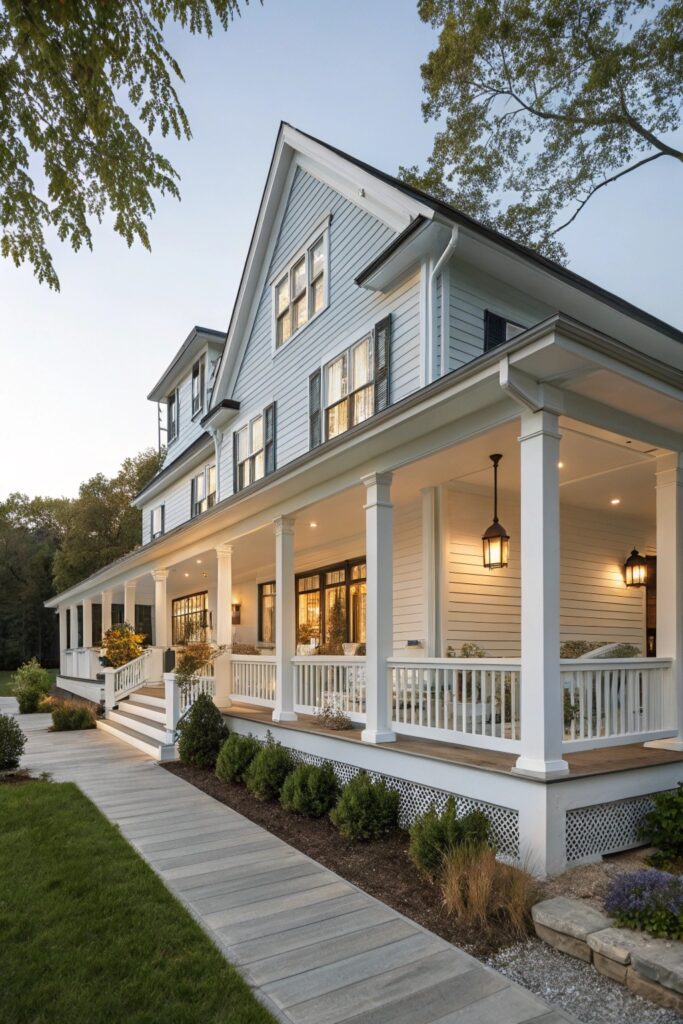
Wrapping the porch around a corner of the house requires additional support posts and footings at that direction change, more structural planning than a straight-run porch needs.
8. Dark Exterior Paint — Black or Charcoal Farmhouse
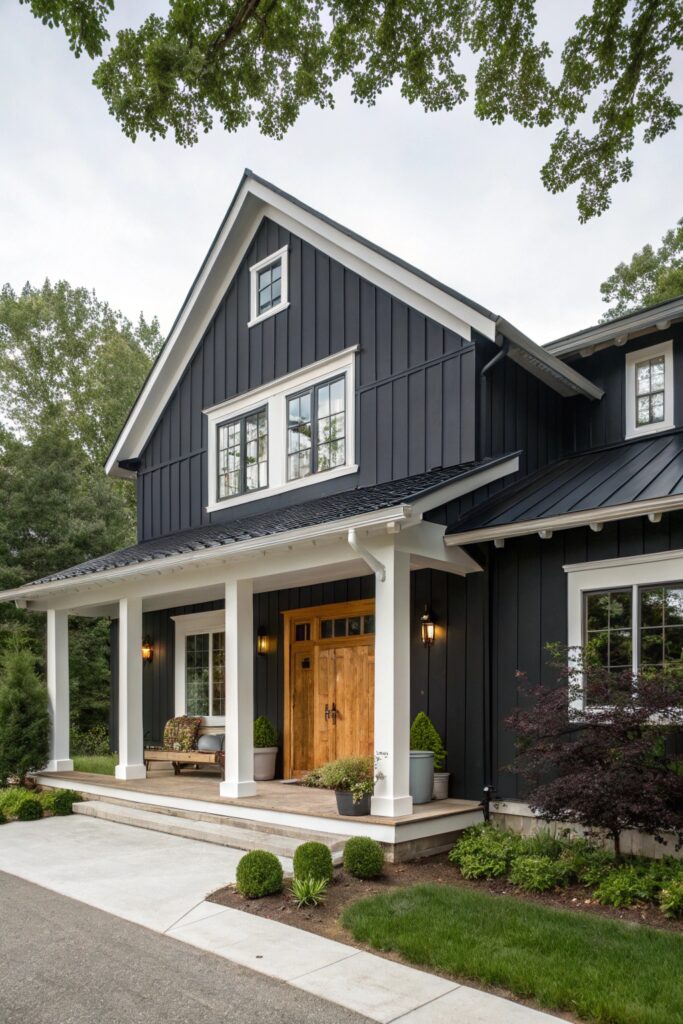
Black and charcoal show dust and pollen buildup more visibly than a color like navy, since there’s no underlying color variation to help hide it, meaning this exterior needs more frequent washing to keep looking as crisp as it does right after painting.
9. Modern Farmhouse Landscaping and Pathway
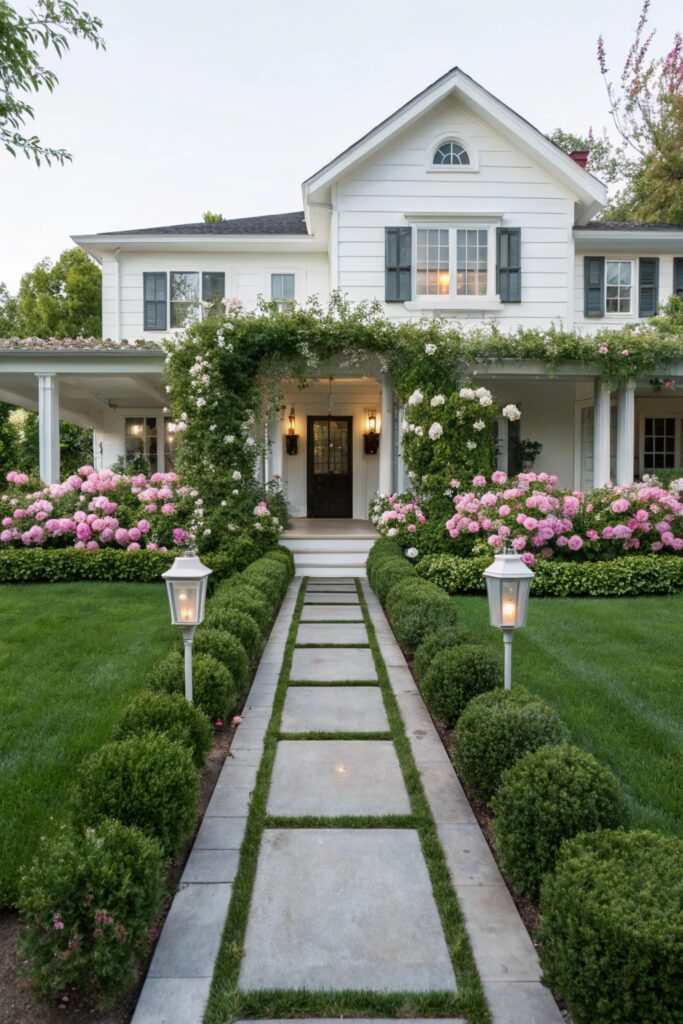
Permeable pavers near the house improve drainage around the foundation compared to solid concrete, which can contribute to water pooling against the foundation walls if the surrounding grade doesn’t slope away efficiently.
10. Barn-Style Garage Doors
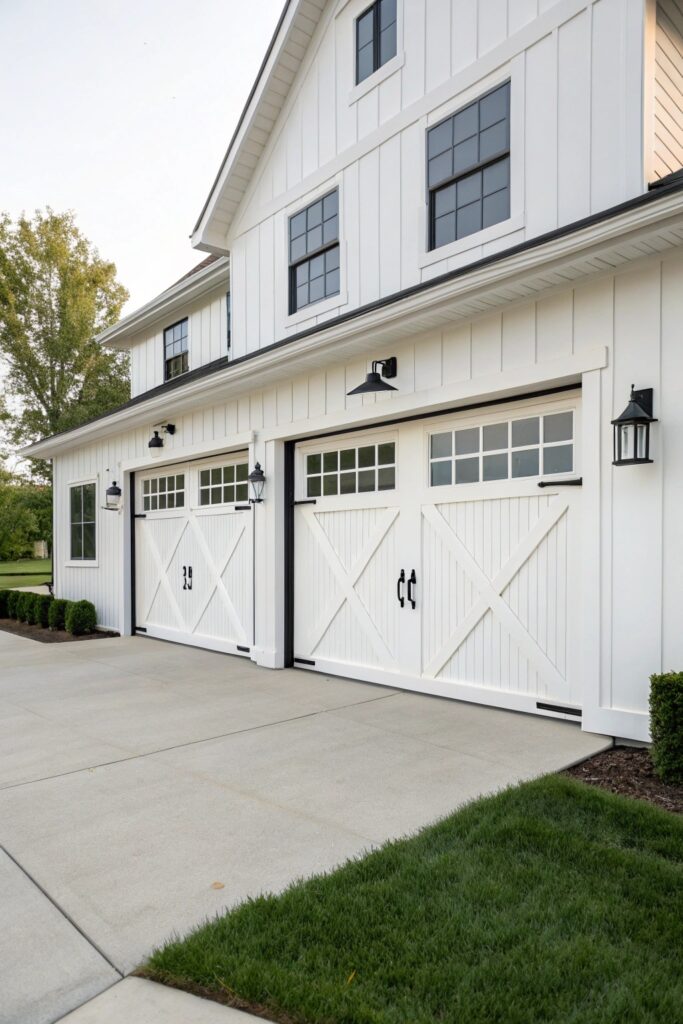
Most “barn style” garage doors sold for this look are actually standard insulated sectional doors with barn-style cosmetic panels and hardware, not genuine sliding barn doors — worth knowing since it means you still get normal garage door insulation performance rather than sacrificing it for the look.
11. Vertical Garden Wall or Trellis Feature
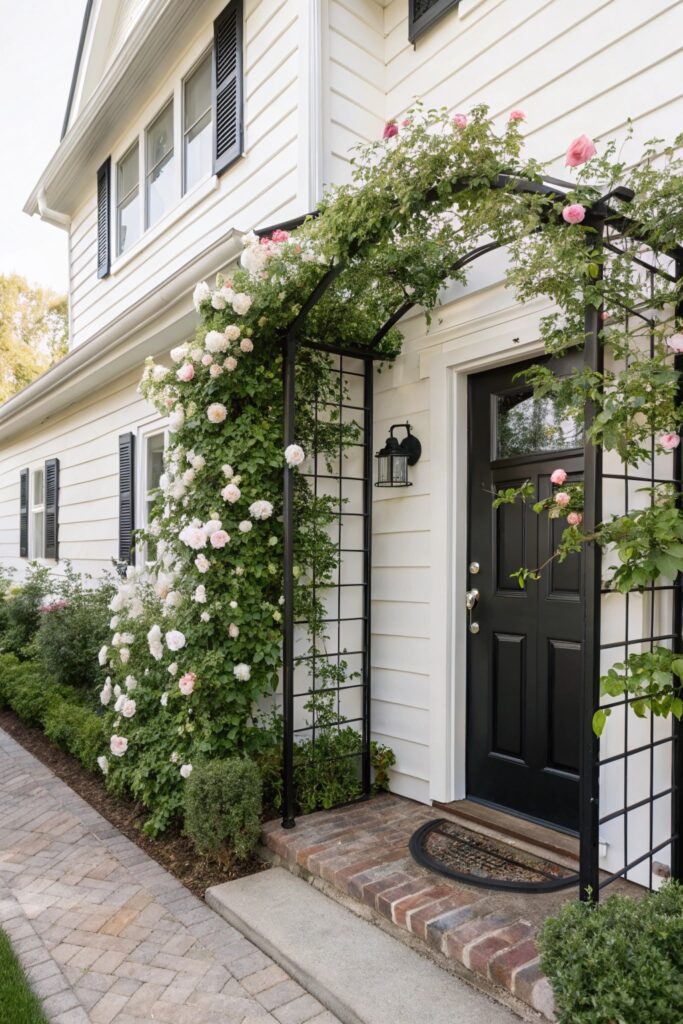
A trellis mounted with standoff brackets keeps climbing plants from growing in direct contact with the siding, since vines pressed directly against a wall trap moisture and can encourage rot or mold behind the growth over time.
12. Outdoor Lighting that Works Day and Night
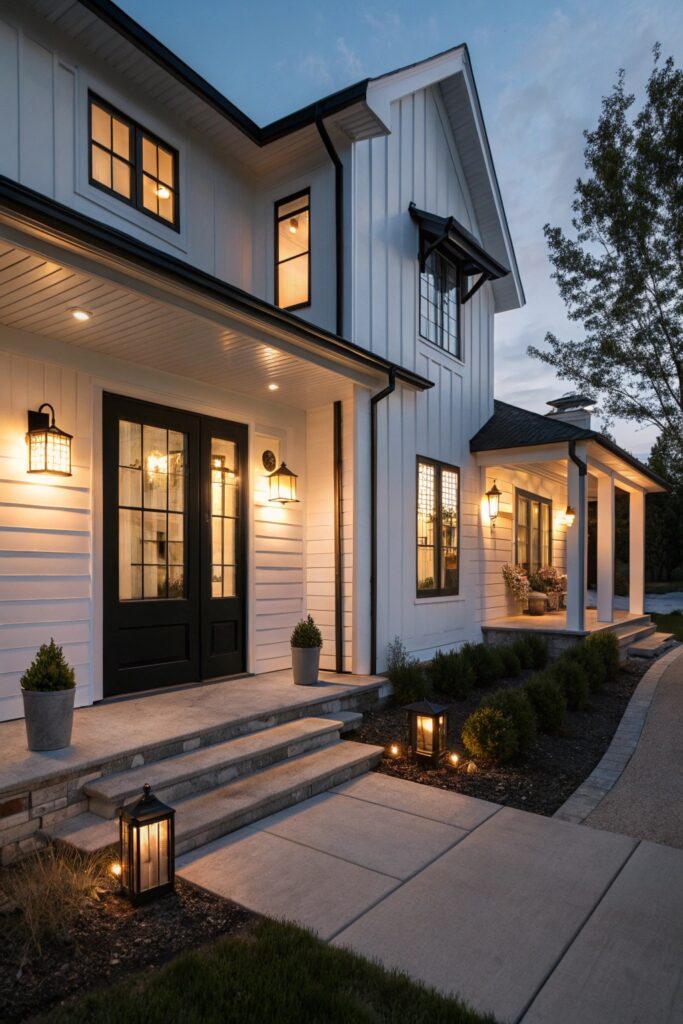
Choosing fixtures with a distinct, attractive silhouette matters here specifically, since these pieces read as intentional daytime decor as much as functional nighttime lighting — a plain utilitarian fixture only does half the job this style asks of it.
Balancing Modern and Traditional Elements
The “modern” in modern farmhouse usually shows up in cleaner lines and simpler trim profiles rather than the more ornate detailing of a traditional farmhouse, while the “farmhouse” side comes through in material choices like board and batten siding and barn-inspired hardware.
Leaning too far toward either side can push the look into a different style entirely — too modern and it reads as contemporary rather than farmhouse, too traditional and it loses the clean simplicity that defines the modern half of the equation.
What a Modern Farmhouse Exterior Costs
Cosmetic updates — a new front door, exterior lighting, and landscaping — typically cost $2,000 to $6,000 depending on material quality.
A fuller exterior renovation including new siding, windows, and a roof accent runs considerably higher, often $30,000 to $80,000 or more depending on home size and material choices.
Checking HOA Guidelines Before Major Changes
Many homeowners associations have specific rules about siding materials, exterior colors, and window frame colors, so it’s worth reviewing any governing documents before committing to a full modern farmhouse transformation, particularly for higher-contrast choices like black window frames or a dark exterior color.
Even without an HOA, checking whether your neighborhood has any historic district designation or design guidelines helps avoid starting a project that later needs to be modified to meet requirements you weren’t initially aware of.
Fixed elements already on the home — a brick foundation, existing roofline, mature landscaping — should guide which of these ideas make the most sense rather than trying to force every element from this list onto a home whose existing bones don’t naturally support them all.
Getting quotes from at least two or three contractors before starting a larger exterior project helps confirm both pricing and their specific experience with modern farmhouse details, since not every contractor is equally familiar with the material combinations this style depends on.
A well-executed modern farmhouse exterior tends to hold real appeal for a broad range of buyers, which is worth keeping in mind if resale value factors into the decision alongside your own daily enjoyment of the finished home.
Taking photos of the home from the street at different times of day before starting helps establish a clear before-and-after reference, and it’s a useful way to double check that planned changes actually address the specific proportions and sightlines of your particular home rather than just following the trend generically.
Final Thoughts
What separates a cohesive modern farmhouse exterior from a mismatched one is usually consistency — the same black used across window frames, the front door, and any metal roof accents, rather than several different near-black tones competing with each other. Choosing a limited, coordinated palette across all these elements before selecting individual products keeps the finished exterior from feeling like separate decisions made in isolation.
Given how many of these elements involve real weather exposure and structural considerations, working with a contractor experienced in this specific style — rather than someone applying generic exterior remodeling knowledge — helps ensure both the aesthetic and the underlying construction hold up together.