
Moody vintage bathrooms work by combining a dark, saturated color palette with genuinely aged or vintage-inspired materials — brass, natural stone, encaustic tile — rather than simply painting a bathroom dark and calling it done. For the tile choices specifically within this style, our guide to shower tile combinations covers additional pattern and material options that pair well with this aesthetic.
Below are 11 elements that build this look, with real material and cost considerations for each.
For ideas focused specifically on sourcing genuinely vintage and secondhand pieces, see our companion guide to moody vintage bathroom ideas full of character.
1. Paint the Walls a Deep, Moody Color
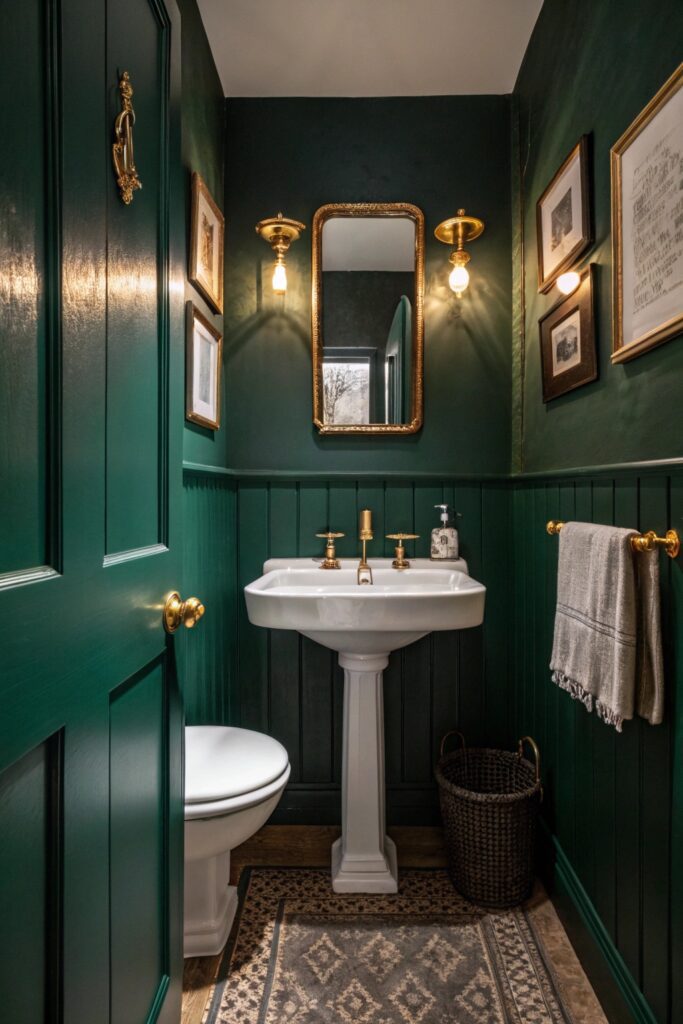
Deep forest green, navy, aubergine, or charcoal wall color establishes the moody foundation this style depends on, and a bathroom’s typically smaller size means bold color commitment feels less overwhelming than it would in a larger room.
Choose a paint formulated for high-humidity spaces specifically (most major brands offer a bath-and-kitchen or mold-resistant line) since standard interior paint doesn’t hold up as well to a bathroom’s moisture levels over time.
2. Choose Vintage-Inspired Brass Fixtures
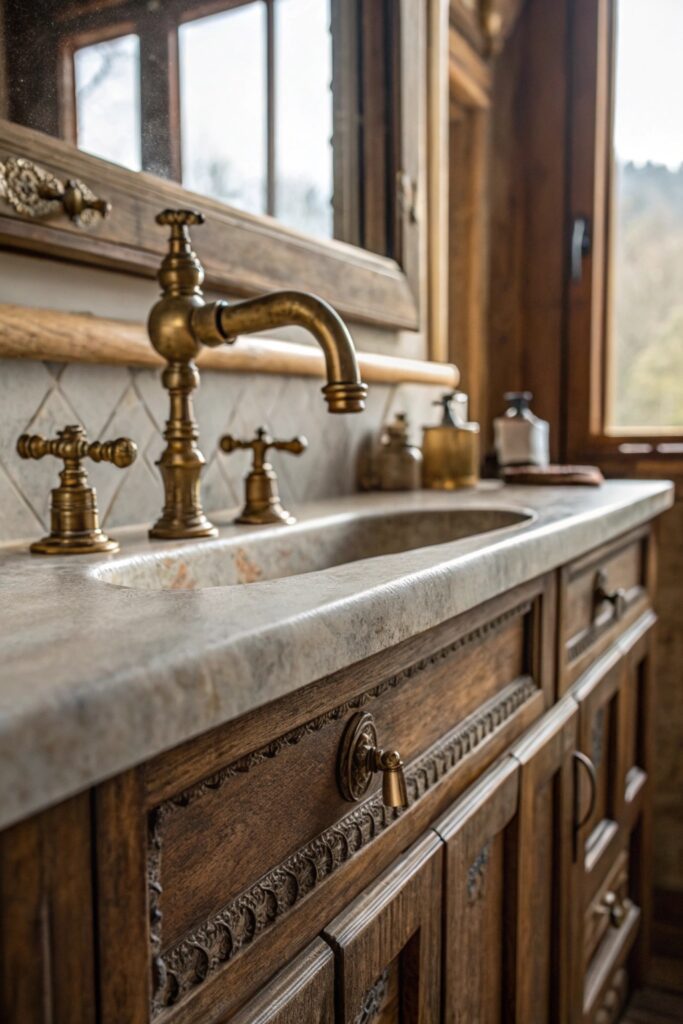
Unlacquered or aged brass fixtures — faucets, cabinet hardware, light fixtures — develop a genuine living patina over time that reads as authentically vintage rather than artificially distressed, which polished chrome or nickel can’t replicate.
Unlacquered brass specifically will tarnish and darken with exposure, which some homeowners love as part of the aesthetic and others prefer to maintain with regular polishing — know your own maintenance preference before committing to this finish throughout a full bathroom.
3. Install a Clawfoot or Vintage-Style Tub
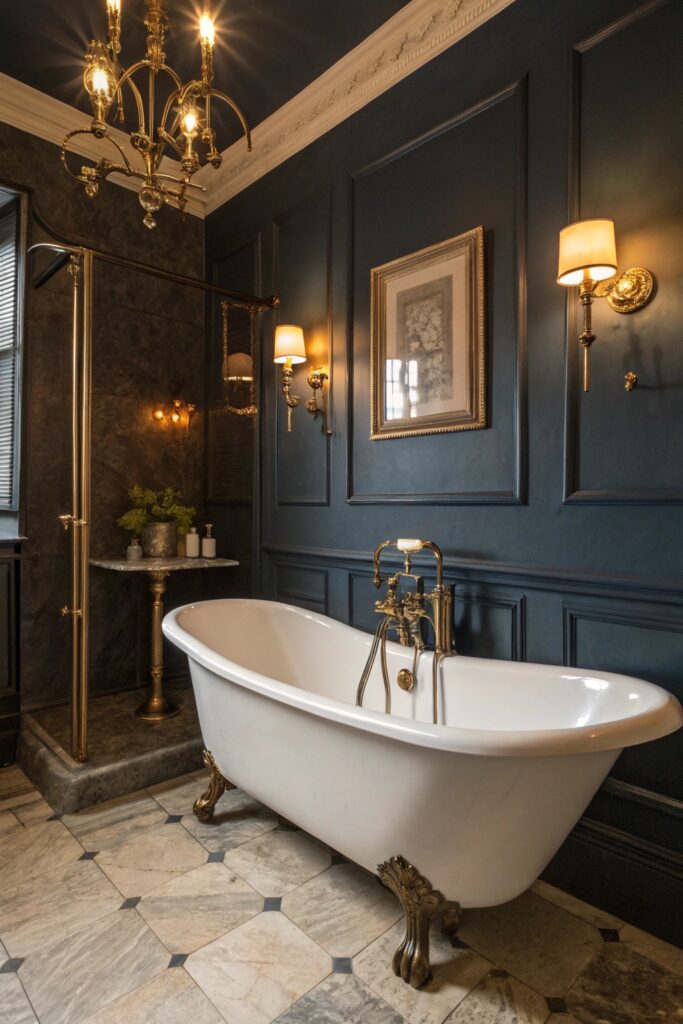
A clawfoot or slipper-style tub serves as the room’s natural focal point and is one of the most recognizable signifiers of vintage bathroom design, available in both genuine cast iron (heavier, more expensive, better heat retention) and lighter acrylic reproductions.
Cast iron clawfoot tubs run $1,500-3,000+ and require floor reinforcement given their substantial weight when filled, while acrylic reproductions ($600-1,200) offer a similar look with considerably easier installation.
4. Add Patterned or Encaustic Tile
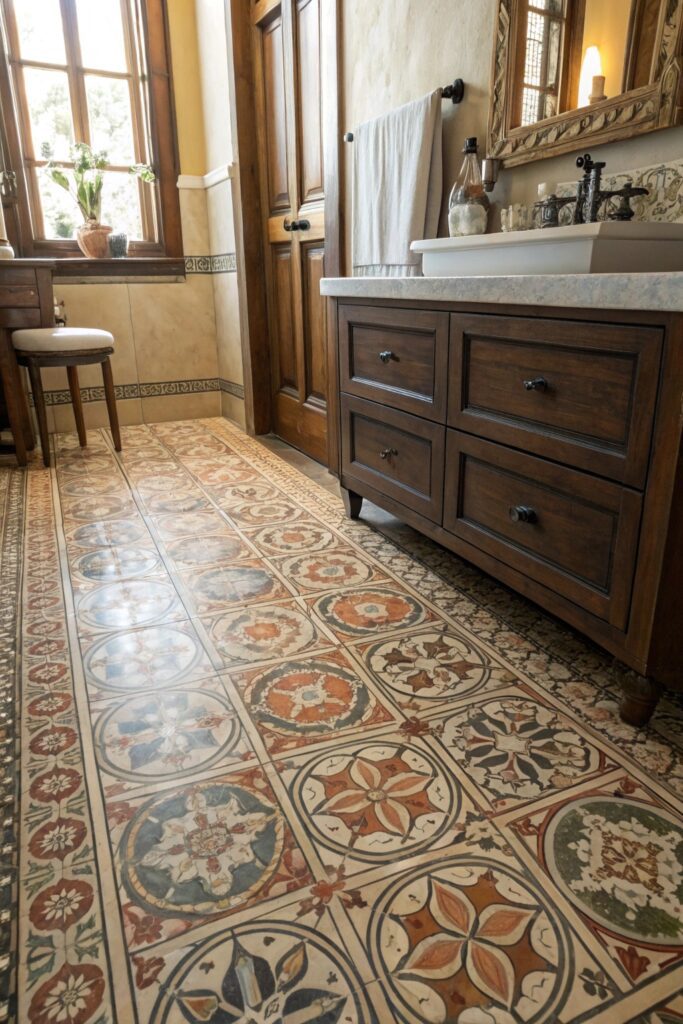
Encaustic cement tile, with its characteristically matte finish and intricate geometric or floral patterns, brings genuine old-world character that printed porcelain reproductions approximate but don’t fully replicate in texture and depth.
Genuine encaustic tile requires sealing (both initially and periodically afterward) since the material is more porous than glazed porcelain, which is worth factoring into long-term maintenance expectations before choosing it over a printed alternative.
5. Use a Vintage or Antique Mirror
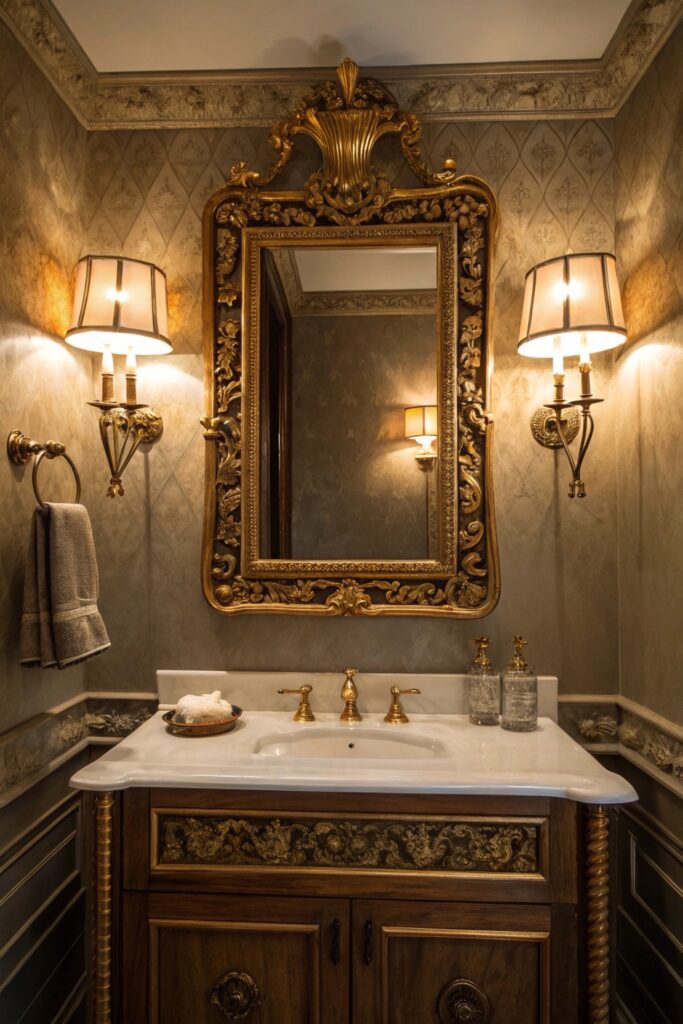
An aged, foxed, or ornately framed mirror sourced from an antique shop or vintage marketplace adds genuine age and character that a new mirror, however well-designed, can’t fully replicate.
If genuine antique options are hard to source or budget-prohibitive, several manufacturers now produce intentionally ‘antiqued’ mirror glass with a foxed, spotted finish that approximates the look at a more accessible price point.
6. Layer in Warm, Ambient Lighting
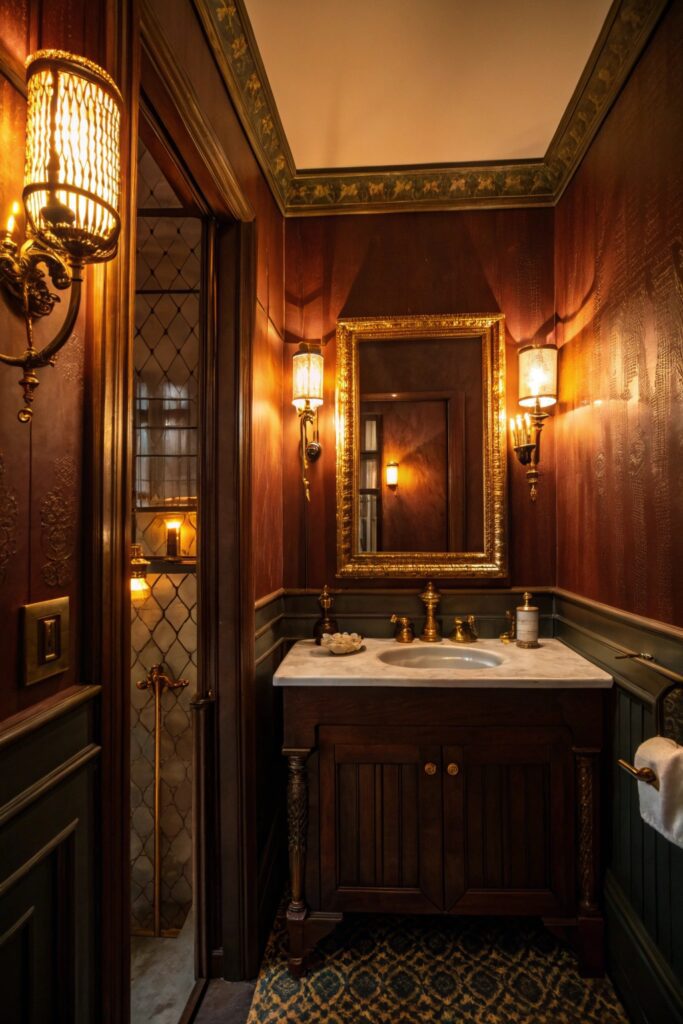
Warm-toned bulbs (2700K or lower) throughout, combined with layered lighting sources (sconces flanking the mirror, plus an overhead fixture) rather than a single harsh overhead light, is essential for a moody bathroom to feel intentionally atmospheric rather than simply dim and underlit.
A dimmer switch on the main lighting circuit lets the room shift between brighter task lighting for grooming and softer ambient lighting for a bath, which is worth the modest additional installation cost for how much it affects the room’s usability.
7. Incorporate Rich Wallpaper
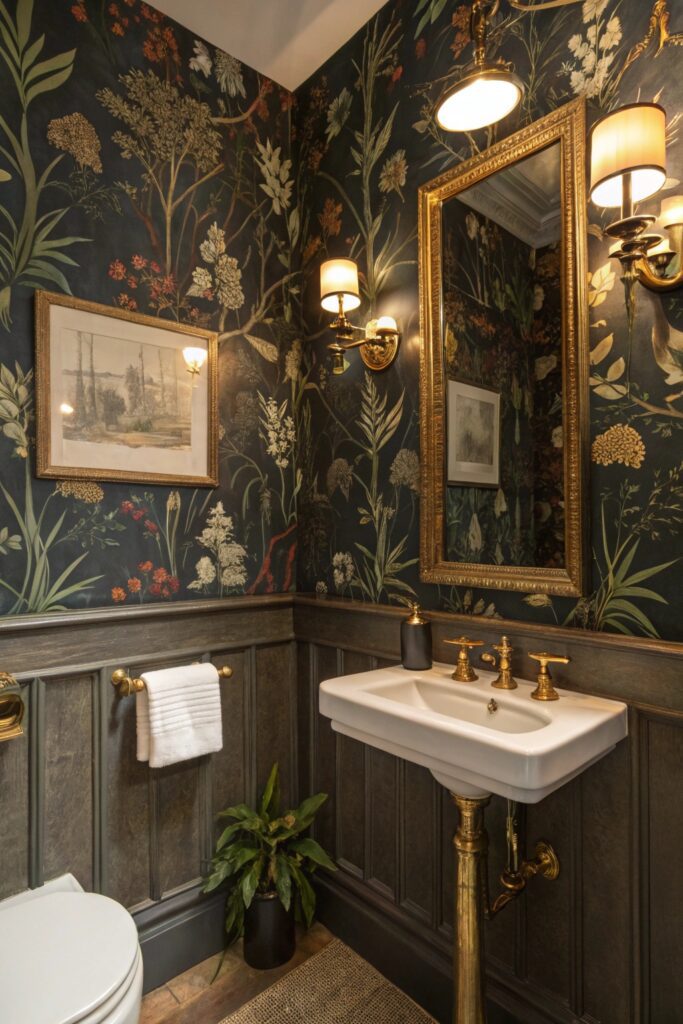
A botanical, damask, or richly patterned wallpaper specifically rated for high-humidity use adds pattern and depth that paint alone can’t achieve, working particularly well on a single accent wall if a full-room application feels like too much commitment.
Vinyl-coated or specifically bathroom-rated wallpaper is essential here — standard wallpaper will peel and warp in a bathroom’s humidity, so confirm the specific product’s moisture rating before purchasing.
8. Add Dark Wood Vanity Cabinetry
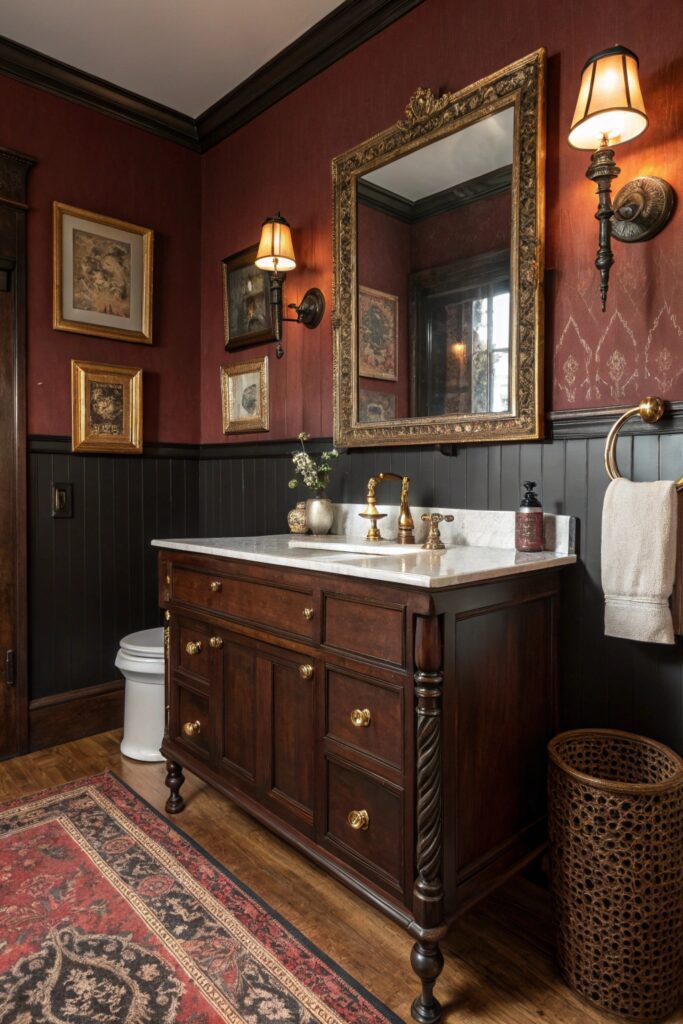
A vanity in a rich, dark wood tone (walnut, mahogany, or a dark-stained oak) grounds the room’s moody palette and reads as more furniture-like and considered than a standard white or light-toned builder-grade vanity.
Vintage or antique dressers converted into vanities are a popular way to achieve this look with genuine period character, though this conversion requires proper waterproofing of the wood and cutting for plumbing access, best handled by an experienced installer.
9. Use Marble or Stone With Rich Veining
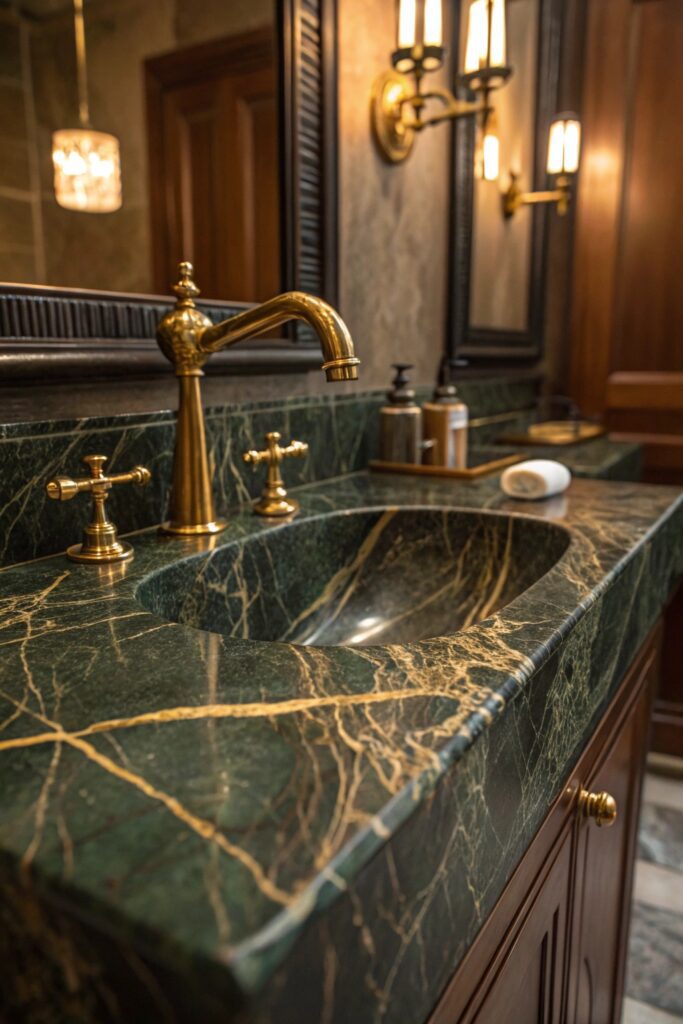
Marble or marble-look porcelain with dramatic, high-contrast veining (rather than a subtle, uniform pattern) adds visual richness that complements the room’s darker overall palette, working well on countertops, shower surrounds, or flooring.
Genuine marble in a bathroom requires regular sealing to resist staining and etching from bathroom products, while marble-look porcelain offers a nearly identical appearance with none of that ongoing maintenance requirement.
10. Add Vintage Artwork or Botanical Prints
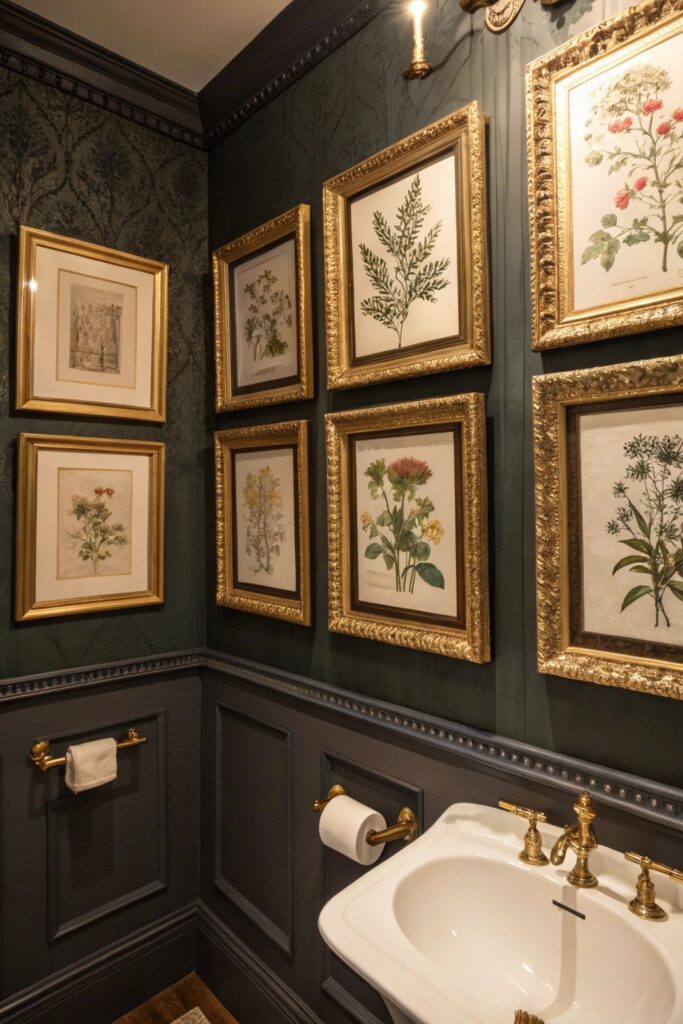
Framed botanical prints, vintage-style illustrations, or genuinely antique small artwork adds a personal, collected layer that ties the room’s various vintage-inspired elements together into a cohesive, intentional space.
Choose frames in the same warm metal tone as your other fixtures (brass, typically) to keep the room’s material palette consistent rather than introducing a new, competing finish through the art frames specifically.
11. Finish With Vintage-Inspired Textiles
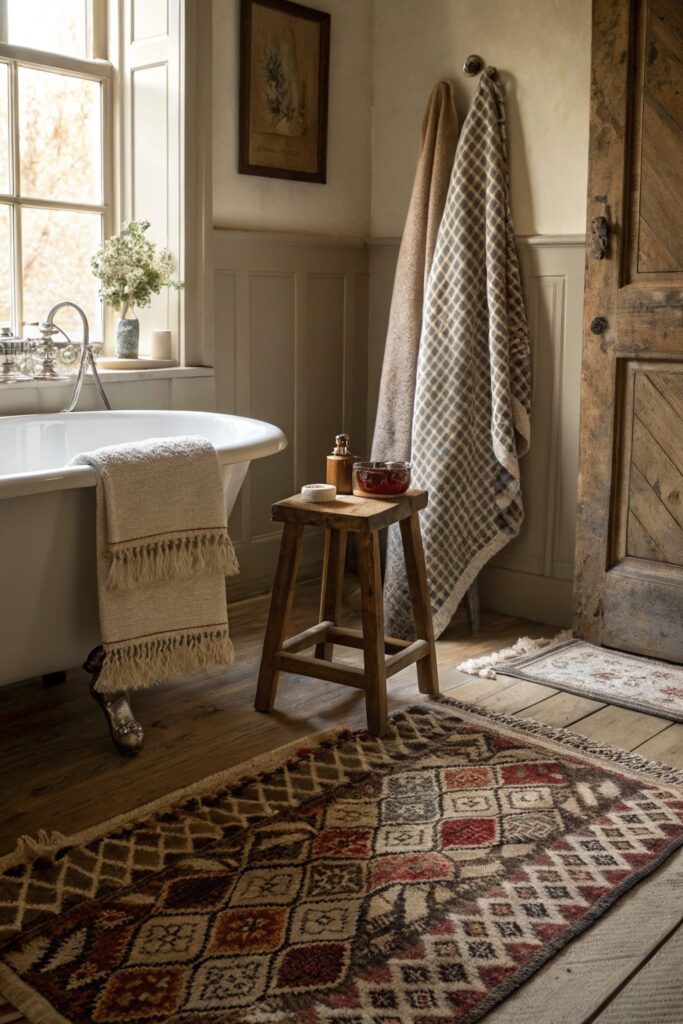
Textured bath mats, a vintage-style shower curtain, and monogrammed or fringed hand towels in colors that complement the wall paint add a final layer of softness and detail that a purely hard-surfaced bathroom (tile, stone, wood) can otherwise lack.
Choose natural fiber textiles (cotton, linen) over synthetic blends specifically, since natural fibers tend to have a more authentically vintage look and feel that better matches the room’s other material choices.
Wrapping It Up
Wall color and lighting matter most if you’re prioritizing only a few elements — both are lower-cost changes that establish the room’s entire mood before you invest in larger fixtures like a clawfoot tub or stone surfaces. Layer in brass hardware and vintage textiles once those two foundational elements are in place to complete the look without a full bathroom renovation.