
Exterior paint choices need to account for your actual regional climate and maintenance realities, not just how the color looks in photos taken somewhere else entirely. The details below cover both the design direction and these practical specifics for each shade.
Below are 10 green house exterior ideas worth considering, with the specifics for each.
1. Deep Forest Green with Black Trim
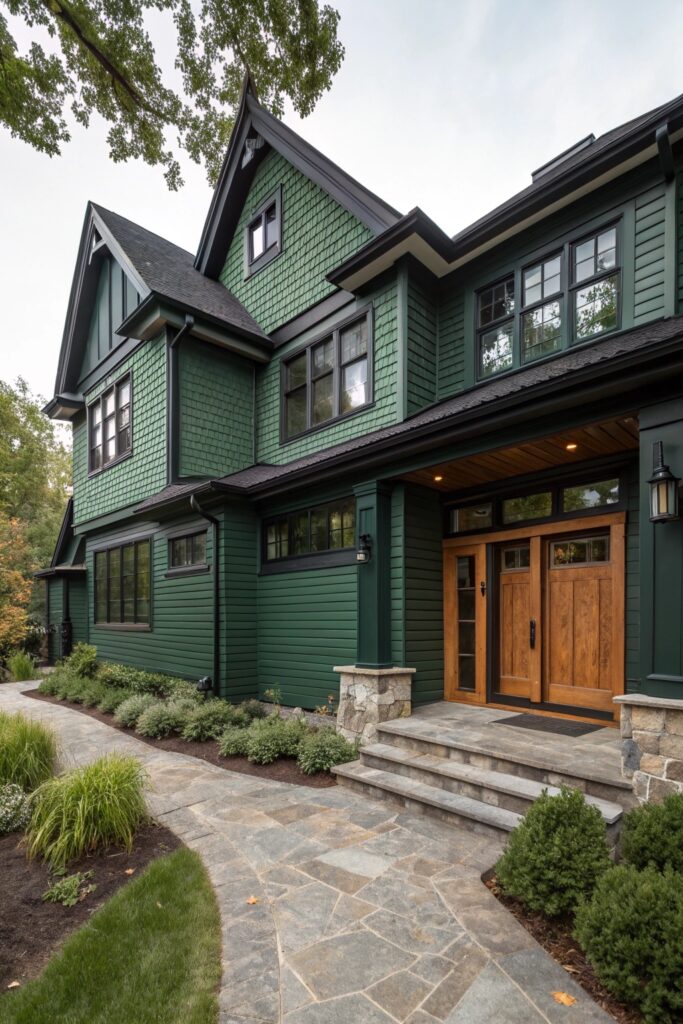
Dark exterior colors absorb more heat than lighter ones, which can accelerate siding expansion and fading in intense sun, so choosing a paint formulation specifically rated for dark colors matters more here than with a lighter shade.
2. Sage Green with Warm White Trim
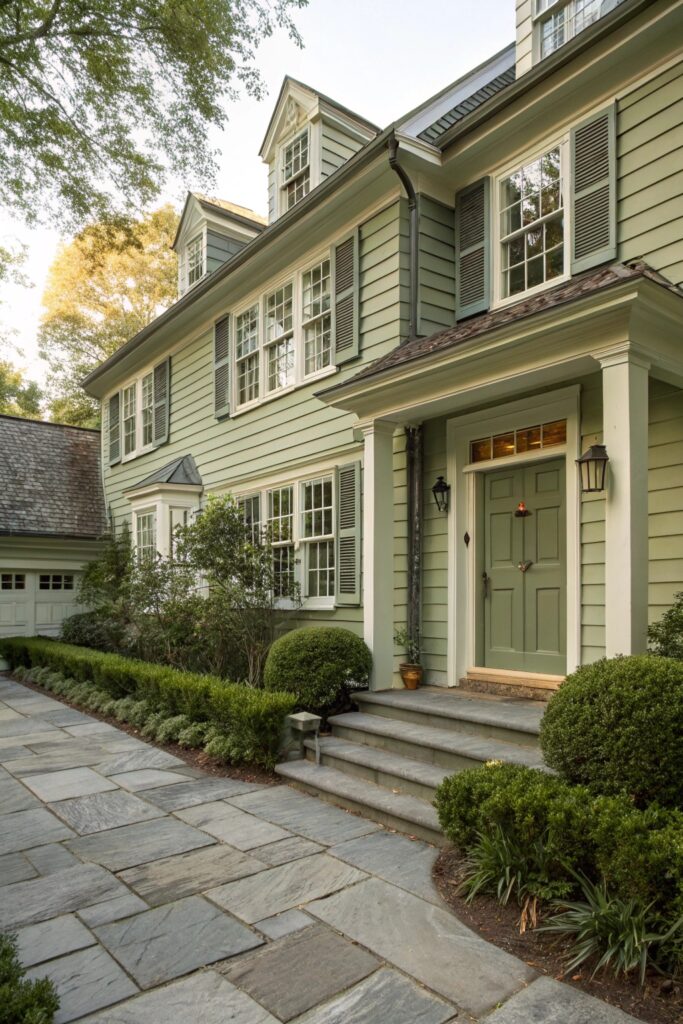
Test large sample boards outdoors in your actual daylight rather than relying on small paint chips, since sage green’s undertone shifts more dramatically with changing exterior light than most interior colors do.
3. Olive Green with Cedar Wood Accents
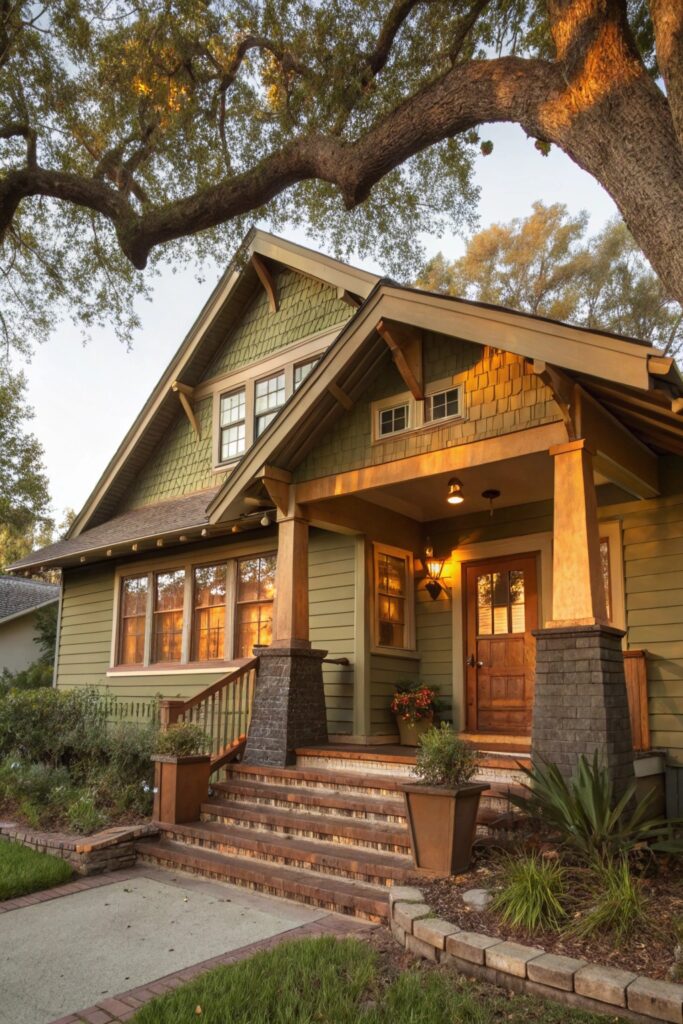
Decide upfront whether you want the cedar to keep its original tone or weather naturally to gray, since maintaining the original color requires a UV-protectant sealant reapplied roughly every one to two years.
4. Dark Emerald Green with Gold Hardware Accents
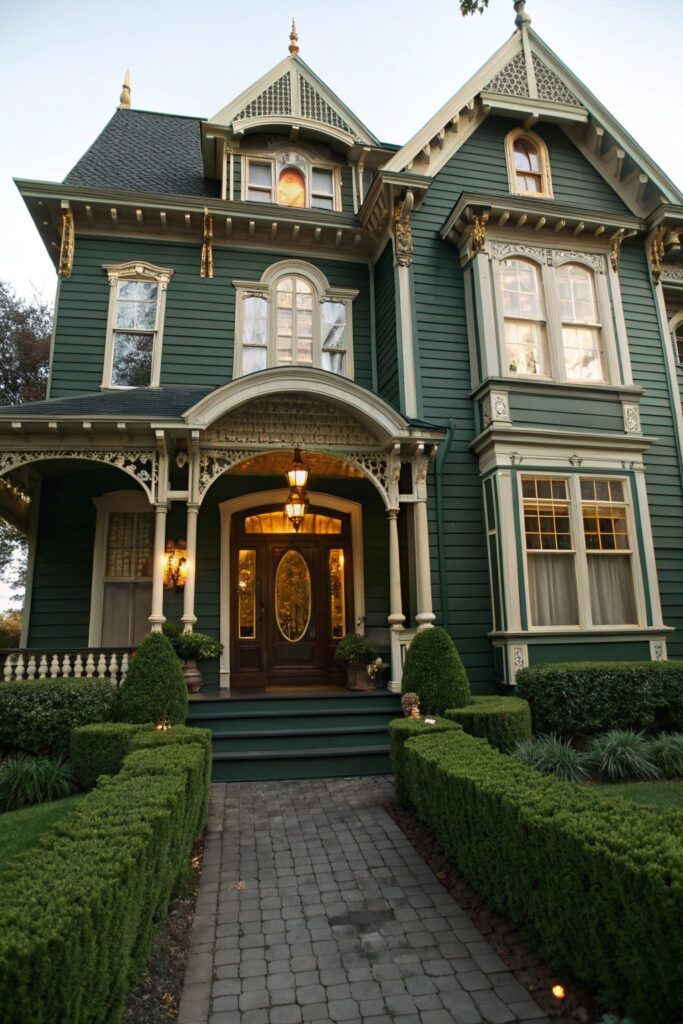
Confirm any gold or metal hardware carries a finish actually rated for exterior use, since interior-rated brass or gold fixtures can tarnish or discolor considerably faster once exposed to direct weather.
5. Soft Celadon Green with Natural Stone
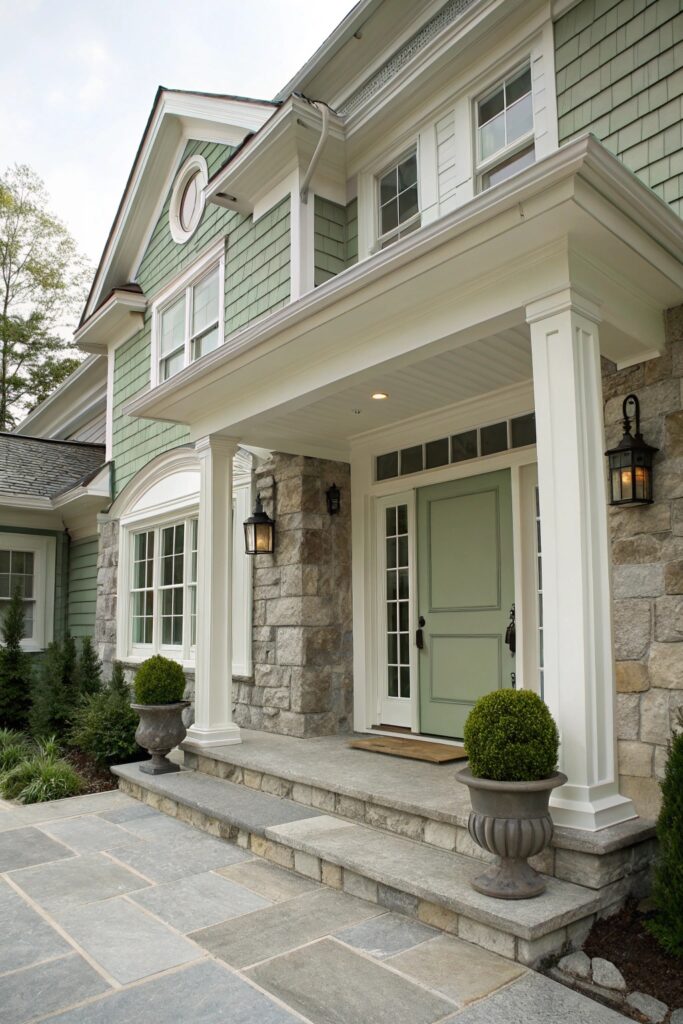
Proper flashing and a moisture barrier behind any stone veneer matter as much as the visual result, since improperly installed stone accents are a common source of water intrusion behind exterior walls.
6. Modern Green with Flat Roof and Horizontal Siding
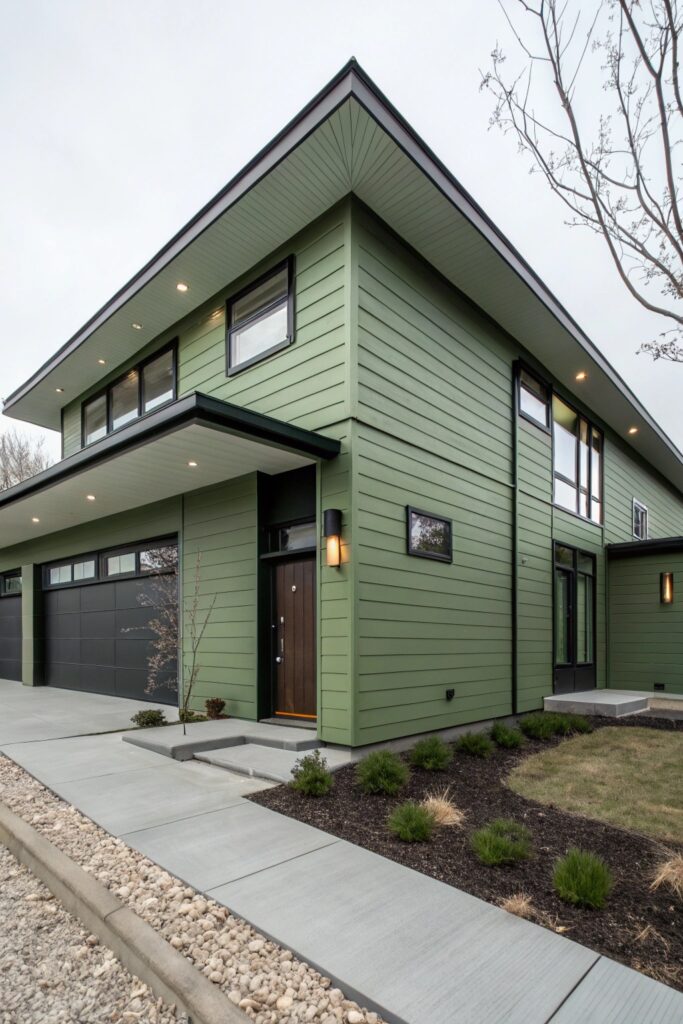
A flat roof needs more frequent drainage inspection than a pitched one, given the real risk of standing water, a maintenance consideration separate from the color choice itself.
7. Green and White Coastal Exterior
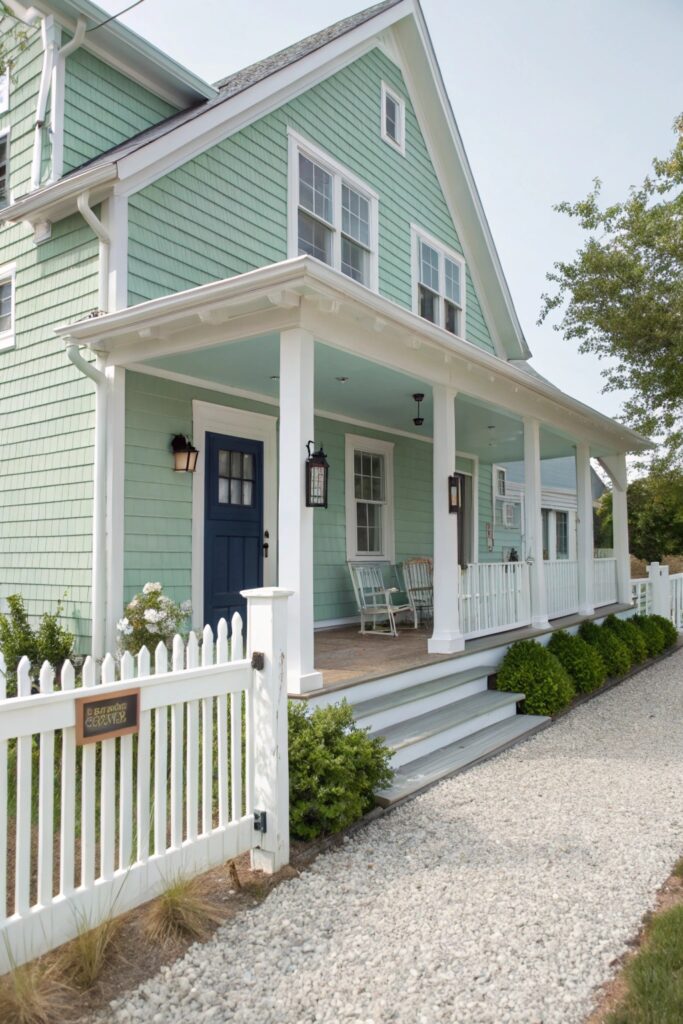
Choose a paint formulation specifically rated for mildew resistance in humid coastal climates, since green pigments can sometimes show mildew growth more visibly than very light colors would.
8. Two-Tone Green Exterior
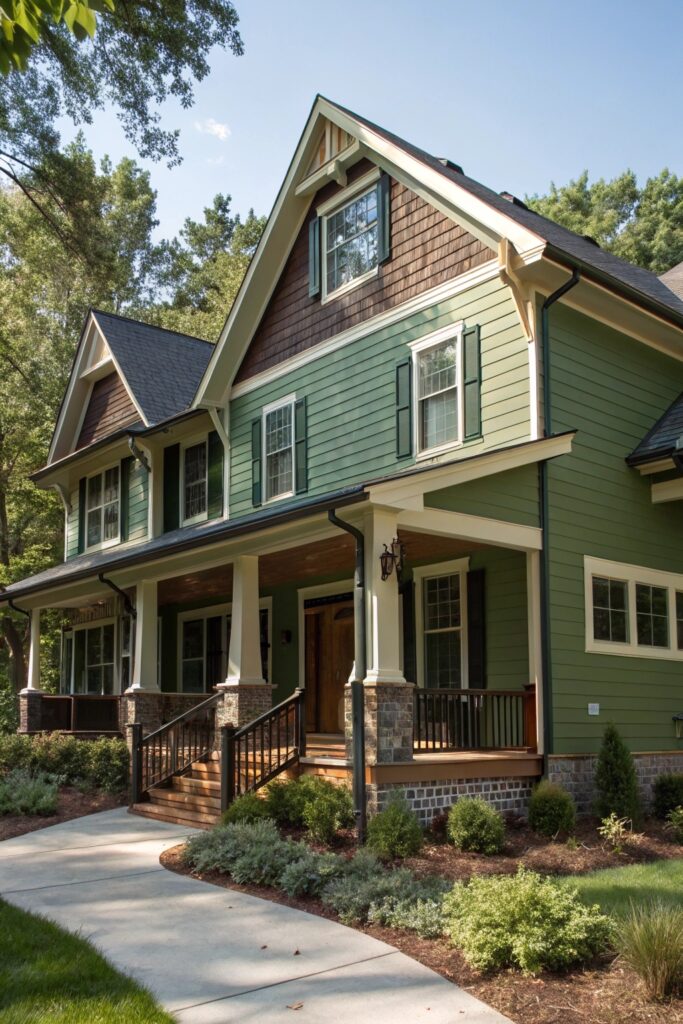
Budget for the additional labor a two-tone exterior requires, since the careful cutting-in and masking needed at the transition line between colors adds real cost compared to a single-color paint job.
9. Green Exterior with a Bold Red or Terracotta Door
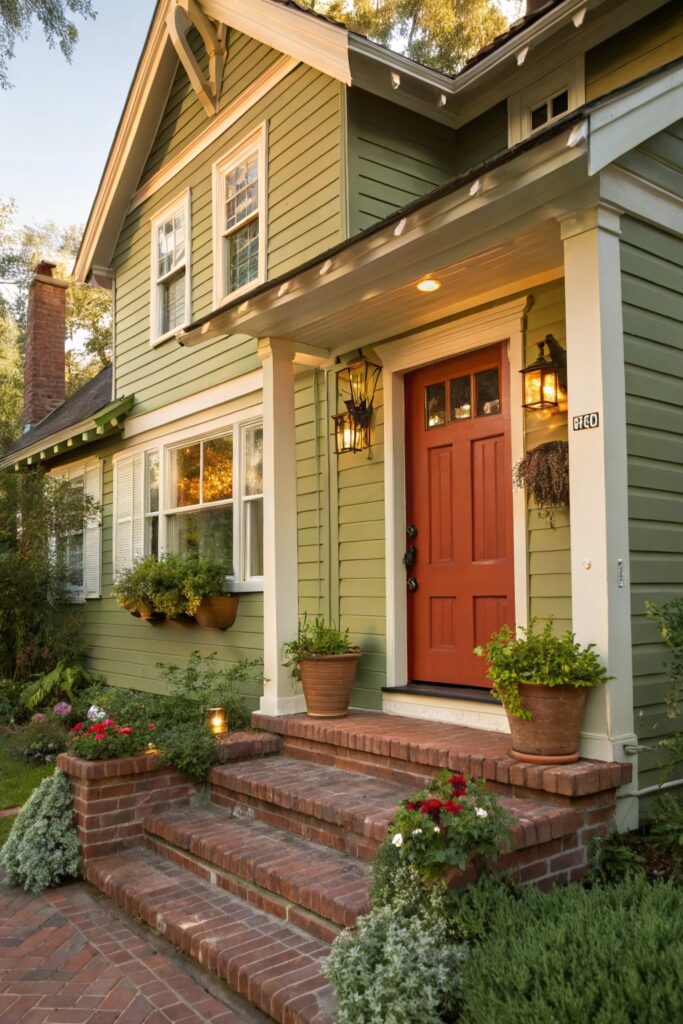
A door this saturated benefits from a UV-resistant exterior paint or stain, since bold reds and terracottas tend to fade faster in direct sun than more muted exterior colors.
10. Green Board-and-Batten Farmhouse Exterior
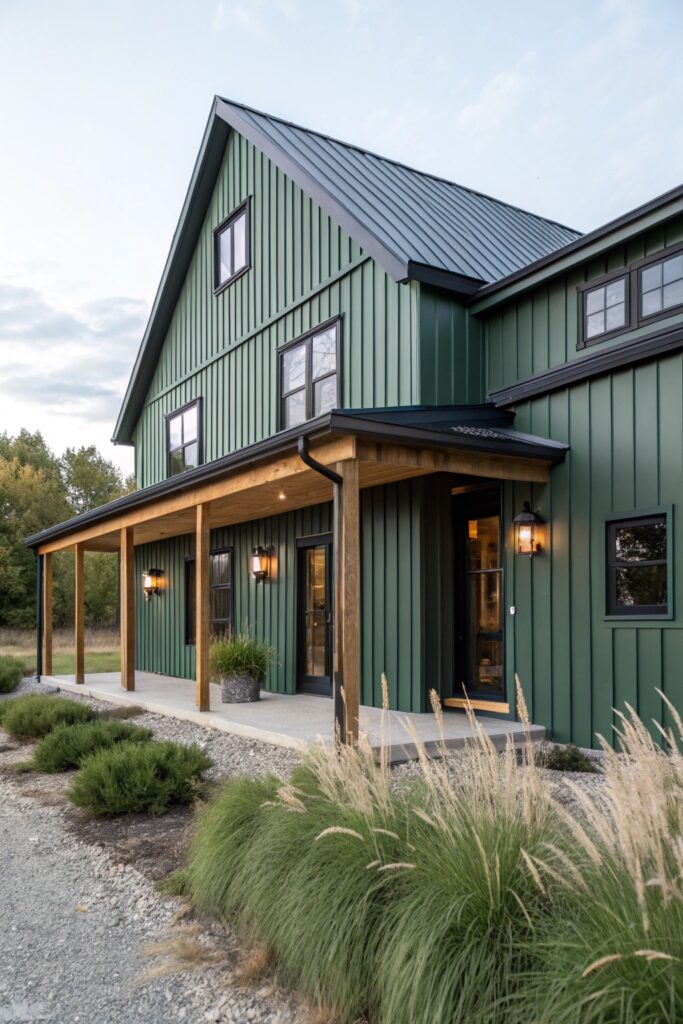
Vertical board-and-batten siding shows water streaking at the seams more readily than horizontal siding if gutters aren’t well maintained, worth factoring into your regular gutter cleaning schedule if you choose this style.
Checking HOA Rules Before You Commit
Many homeowners associations have specific rules about exterior colors, sometimes requiring approval before repainting or limiting choices to a pre-approved palette, so checking your HOA guidelines before ordering paint saves real time and potential rework.
Even without an HOA, some municipalities have historic district guidelines that affect exterior color choices, worth a quick check with your local planning department if your home falls in one of these zones.
What an Exterior Repaint Costs
A professional repaint of an average-size single-family home typically costs $3,000 to $7,000 depending on square footage and prep work needed.
DIY repainting runs considerably lower in labor cost, often $500 to $1,500 for paint and materials, though it requires significant time and proper safety equipment for ladder work.
Timing Your Exterior Paint Project
Most exterior paints need daytime temperatures consistently above 50 degrees Fahrenheit and low humidity to cure properly, which typically points to spring or fall in most climates rather than the height of summer or winter.
Scheduling around your region’s rainy season also matters, since paint applied too close to a rain event can fail to bond properly, leading to peeling or bubbling within the first year rather than lasting the many years a quality exterior paint job should provide.
Considering Resale Value
Green exteriors have grown considerably more popular in recent years, but a more muted, natural-toned green tends to appeal to a broader range of buyers than a very bright or unusual shade if resale value is a factor in your decision.
Checking what other homes in your neighborhood look like can also help gauge whether a bold color choice will stand out in a good way or feel mismatched with the surrounding streetscape.
Prepping the Surface Before Painting
Power washing the exterior and scraping any peeling old paint are worth doing regardless of which green shade you choose, since paint applied over a dirty or flaking surface won’t adhere properly no matter how good the product itself is.
A primer coat matters especially when going from a very light color to a dark green or making any other dramatic color change, since it helps the new color show true rather than getting muddied by whatever’s underneath.
Getting quotes from at least two or three painting contractors before starting a larger project helps confirm both pricing and their experience with the specific prep work your home’s siding material requires, since stucco, wood, and vinyl all need different approaches.
A quality exterior paint job on most siding materials should last 10 to 15 years before needing a full repaint, though touch-ups on high-wear areas like door and window trim may be needed sooner depending on your climate’s exposure to sun and moisture.
A green exterior tends to pair especially well with the natural landscaping most homes already have, since the color echoes surrounding greenery in a way that feels cohesive rather than competing with it for visual attention.
Whichever shade you land on, a green exterior offers a truly versatile alternative to the more common white, gray, and beige palettes, giving your home real character while still reading as timeless rather than trendy when chosen thoughtfully.
Living with a large sample board on your actual house for at least a week, checking it in morning light, midday sun, and evening shade, is the single best way to avoid an expensive color regret before committing to a full exterior repaint.
It’s a worthwhile step regardless of which shade you’re leaning toward.
Final Thoughts
Requesting a large sample board and viewing it on your actual house at different times of day, rather than relying on a small chip or an online photo, catches color surprises before you commit to a full exterior repaint.
Whichever shade of green speaks to you, choosing a paint formulation matched to your climate and the specific maintenance commitment you’re realistically willing to keep up with tends to matter more long-term than the exact hue itself.