
A basement bar has a few structural considerations that don’t come up in an above-grade room — plumbing drainage, humidity control, and often no natural light — alongside the usual design choices. The details below cover both the design decisions and the practical basement-specific factors that affect how well each idea actually works in that environment.
Below are 15 approaches worth considering, with the specific details for each.
Looking for full cooking capability instead of just a beverage station? See our companion guide to basement kitchenette ideas.
1. Modern Minimalist Bar
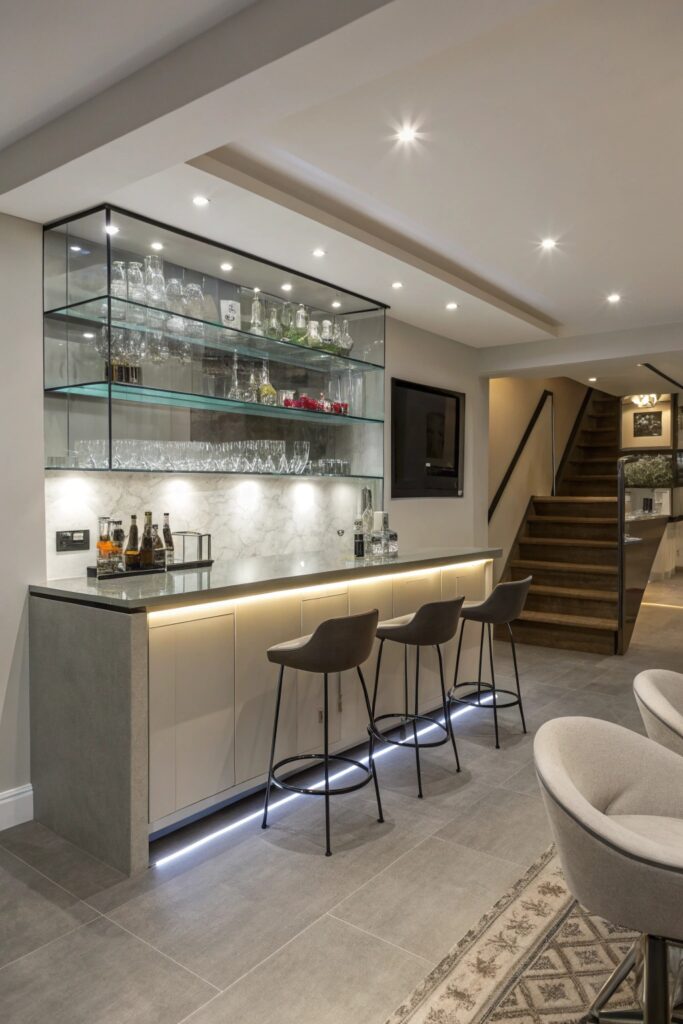
Quartz countertops don’t need sealing and resist staining better than granite, which requires annual resealing to stay non-porous — a real consideration for a surface that sees regular contact with citrus and alcohol. Warm LED strip lighting under the counter overhang, in the 2700K to 3000K range, reads as ambient rather than clinical.
2. Rustic Wooden Bar
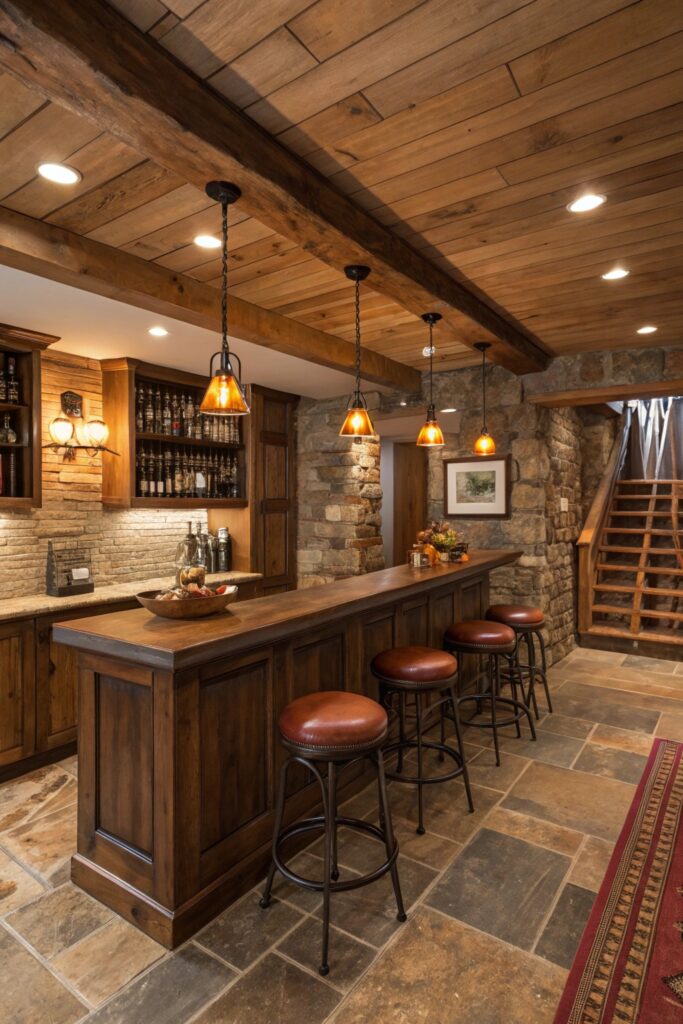
A bar top that sees regular use needs at least three coats of polyurethane or a bar-specific epoxy finish to resist water rings and spills — a single coat of standard wood sealer wears through within months of regular glasses being set down on it.
3. Industrial-Chic Bar
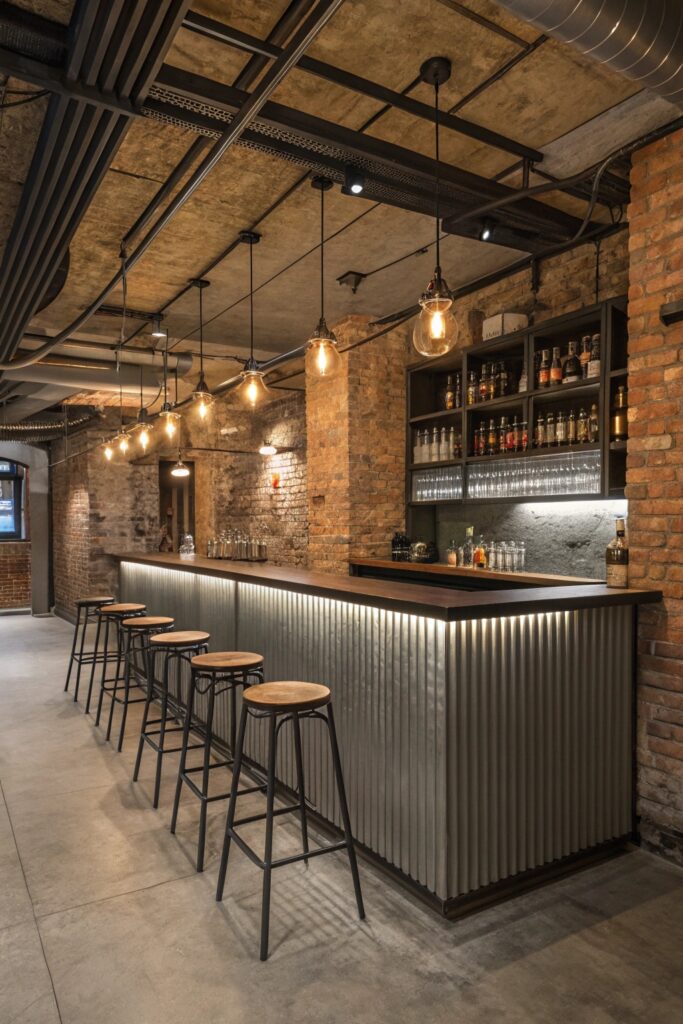
Black iron pipe shelving needs floor flanges rated for the actual weight of a full bottle collection — a shelf of loaded liquor bottles is heavier than most people estimate. Poured concrete countertops need reinforcement and sealing to resist cracking and staining; an unsealed concrete surface will absorb spills permanently.
4. Retro Vibes
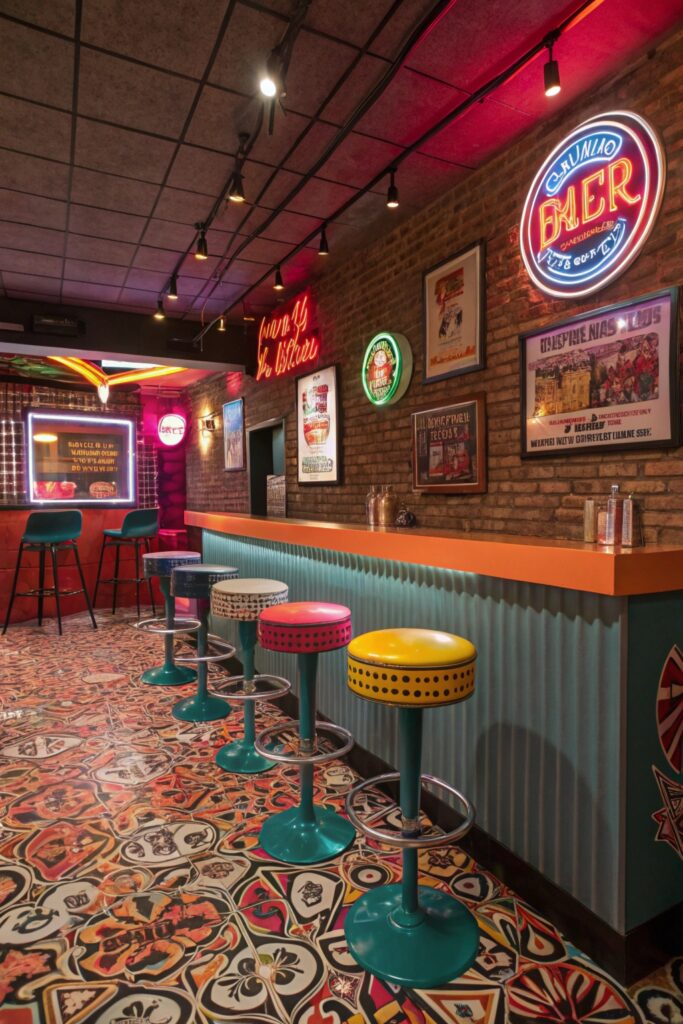
LED neon-style flex tape has mostly replaced real gas-filled neon for this application — it uses a fraction of the power, doesn’t generate the heat real neon tubes do, and holds up considerably longer without the glass tube breakage risk.
5. L-Shaped Entertainment Bar
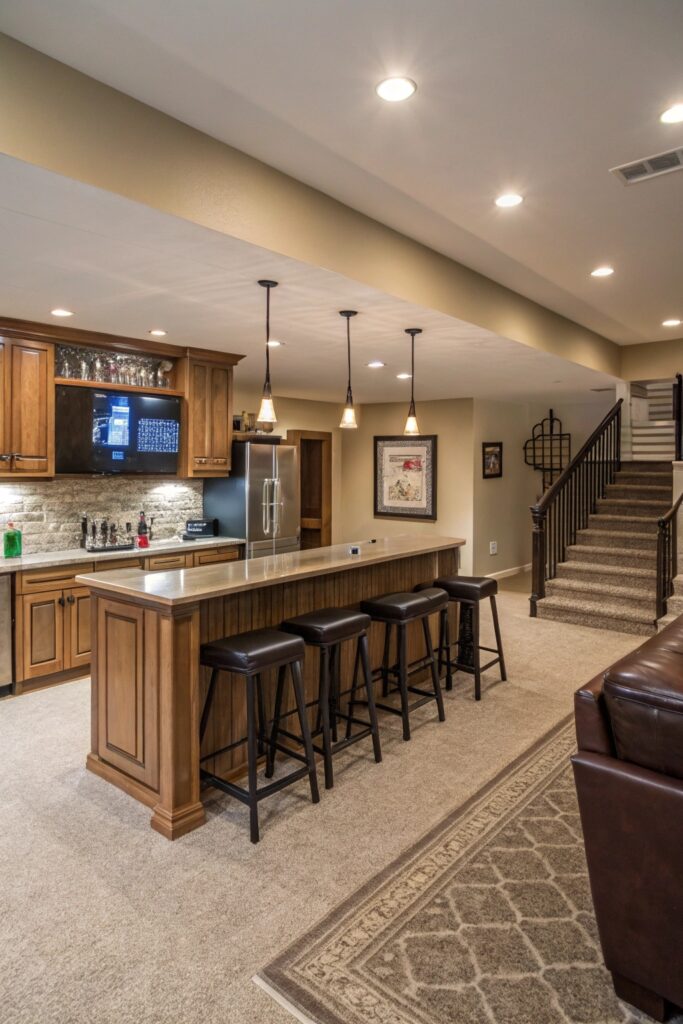
Standard bar height is 42 inches, taller than a standard 36-inch kitchen counter, and stools should be sized to match. Leave at least 12 inches of counter overhang so stools can tuck fully underneath when not in use.
6. Wet Bar with Sink
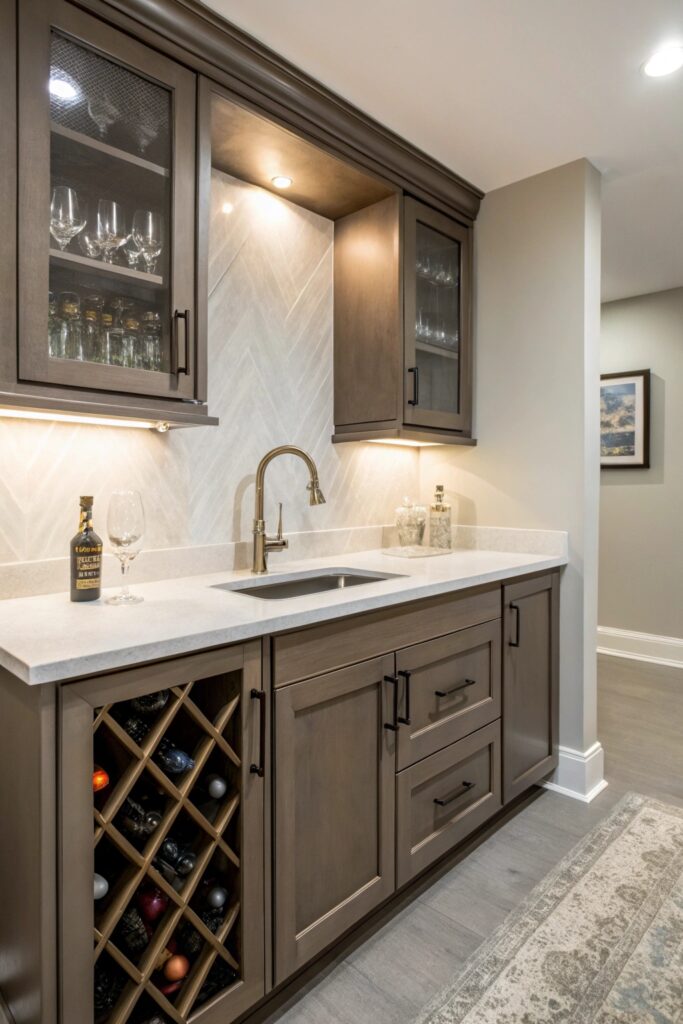
Basement plumbing often sits below the main sewer line, which means drainage may require a sewage ejector pump to lift wastewater up to the main line — a real cost and complexity factor that a bar with just a bar-top setup avoids entirely. Confirm permit requirements before adding new plumbing, since most jurisdictions require one for this kind of work.
7. Glass & Mirror Accents
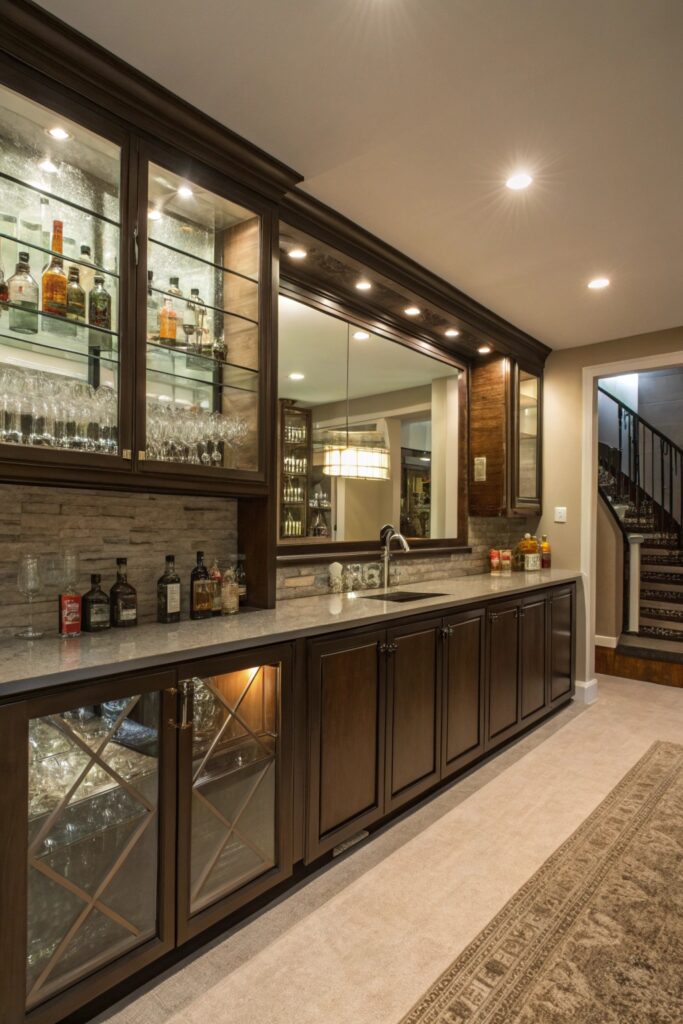
A mirrored backsplash reflects whatever light exists in a naturally windowless basement, making the space read brighter without adding fixtures. Open glass shelving holding bottles should use tempered glass rated for the actual load — standard glass can fail under sustained weight in a way tempered glass won’t.
8. Cozy Fireplace Bar
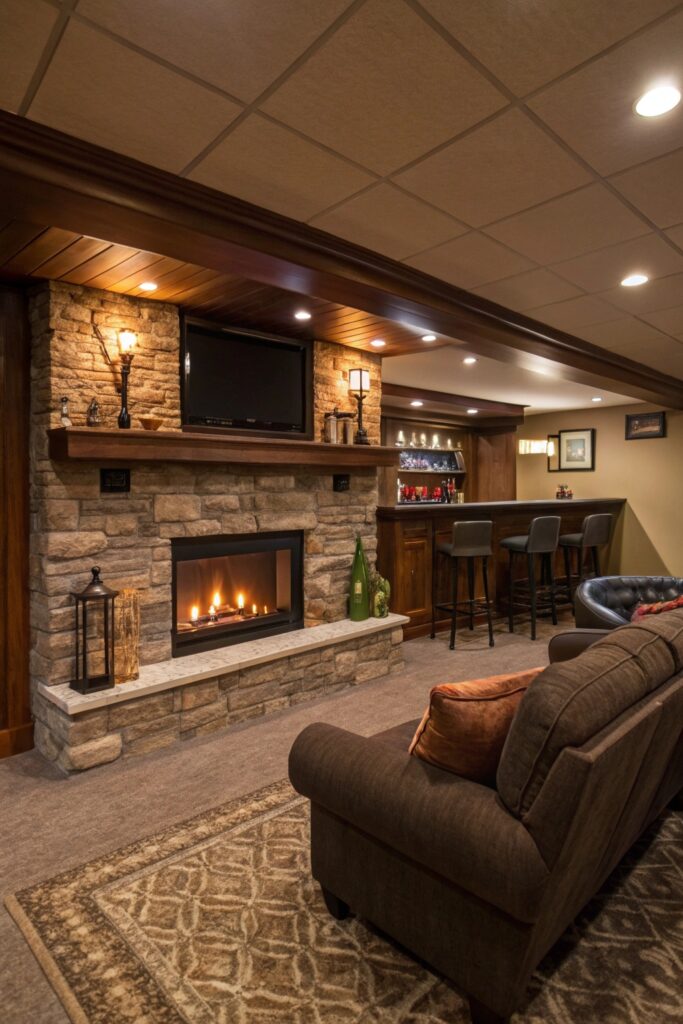
An electric fireplace insert avoids the venting requirements a gas unit would need, which matters specifically in a basement where running a vent to an exterior wall is often impractical. Keep the manufacturer’s specified clearance from combustible materials regardless of which type you choose.
9. Game & Sports-Themed Bar
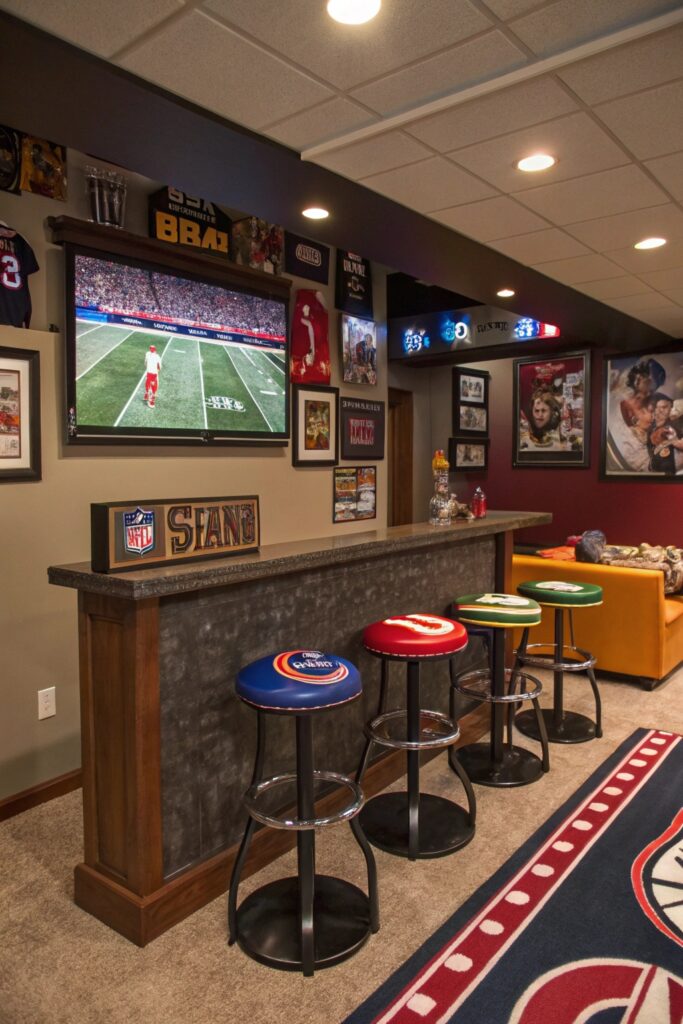
Mount the TV so its center sits around 42 to 48 inches from the floor for a room where guests are mostly seated, rather than the higher placement typical of a standing viewing area.
10. Wine Cellar Integration
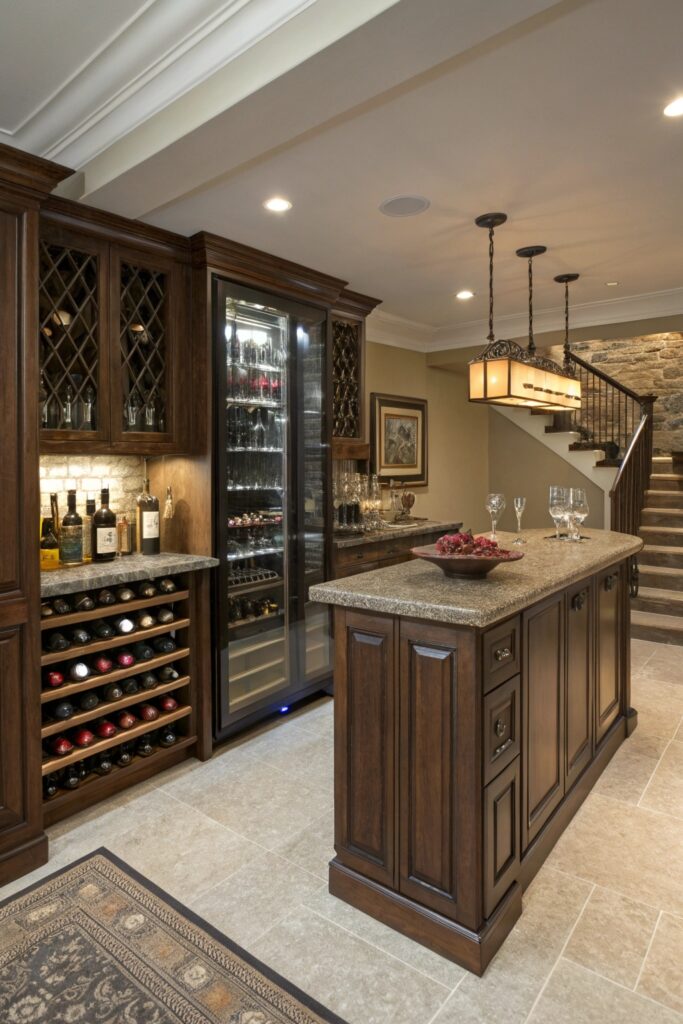
Wine keeps best at 55 to 58°F with 60 to 70 percent humidity — conditions many basements naturally approach, though a dedicated cooling unit keeps it consistent through seasonal swings. A UV-protected glass door on a wine display case blocks the light exposure that degrades wine over time.
11. Neon & LED Lighting
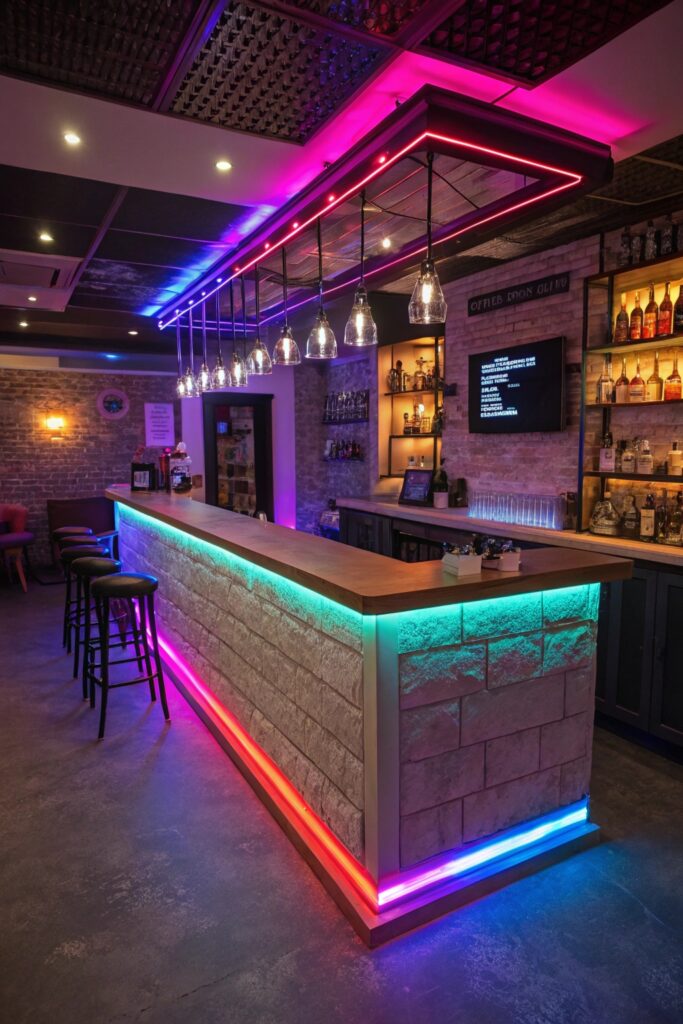
Dimmable LED strips on a separate switch or smart control let you shift the room’s brightness between an active party and a quieter evening without needing multiple fixture types.
12. Pool Table Combo
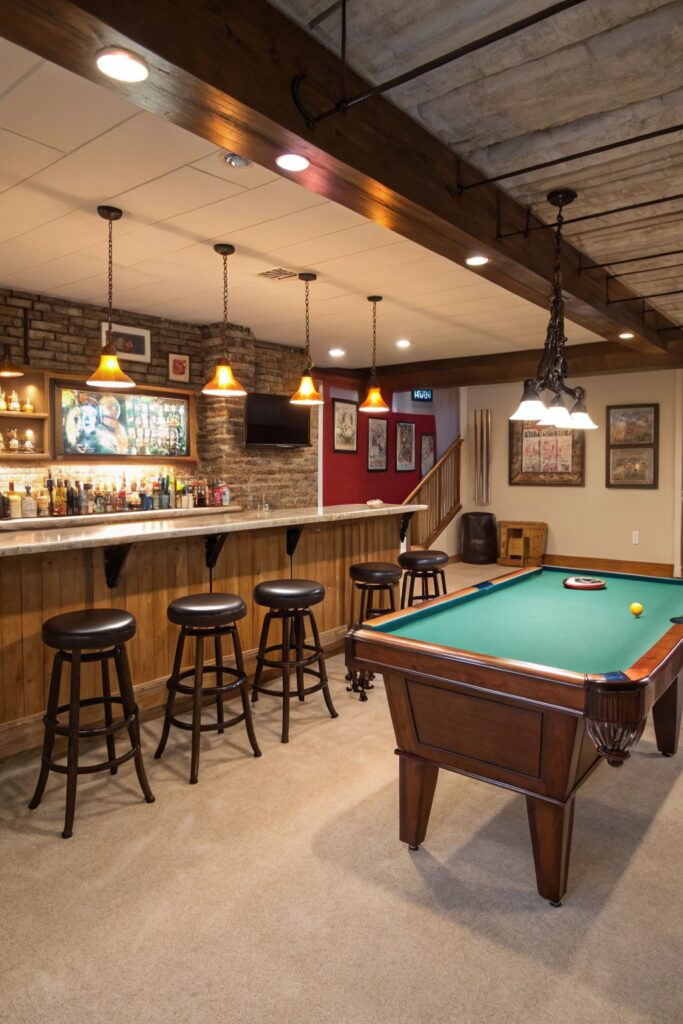
A standard 8-foot table needs at least 5 feet of clearance on all sides for a cue to extend fully, which means a room roughly 18 by 14 feet at minimum — floor space, not ceiling height, is usually the limiting factor for fitting a table into a basement.
13. Indoor/Outdoor Feel
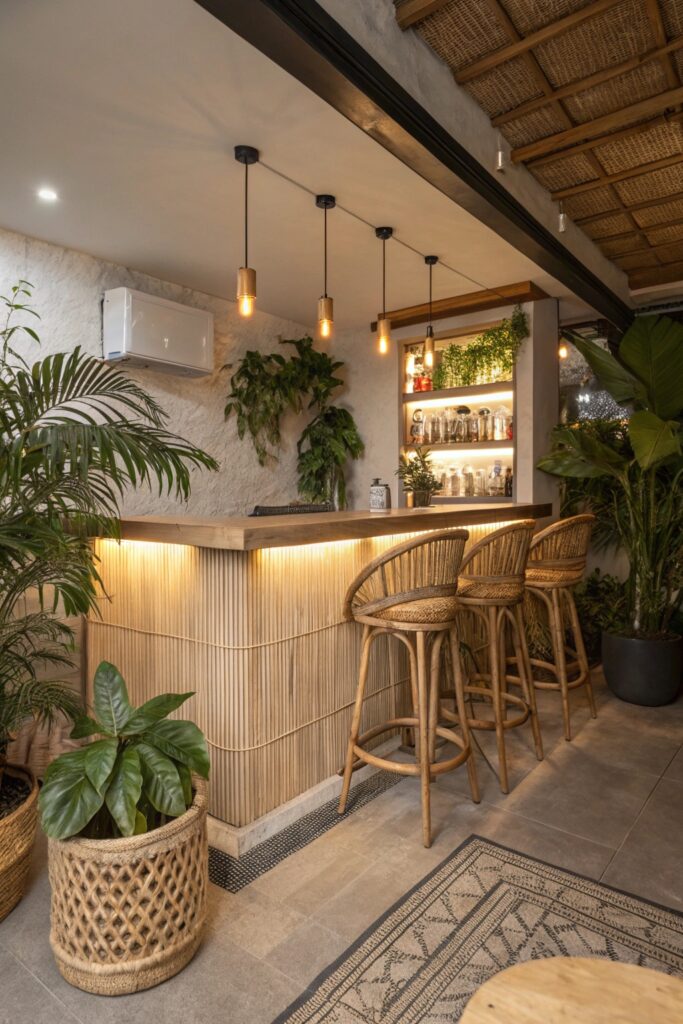
A walkout basement with sliding doors to a patio extends this feel outward; without that access, artificial turf flooring or large-scale nature-themed art can approximate the effect without structural changes.
14. Hidden Storage & Shelving
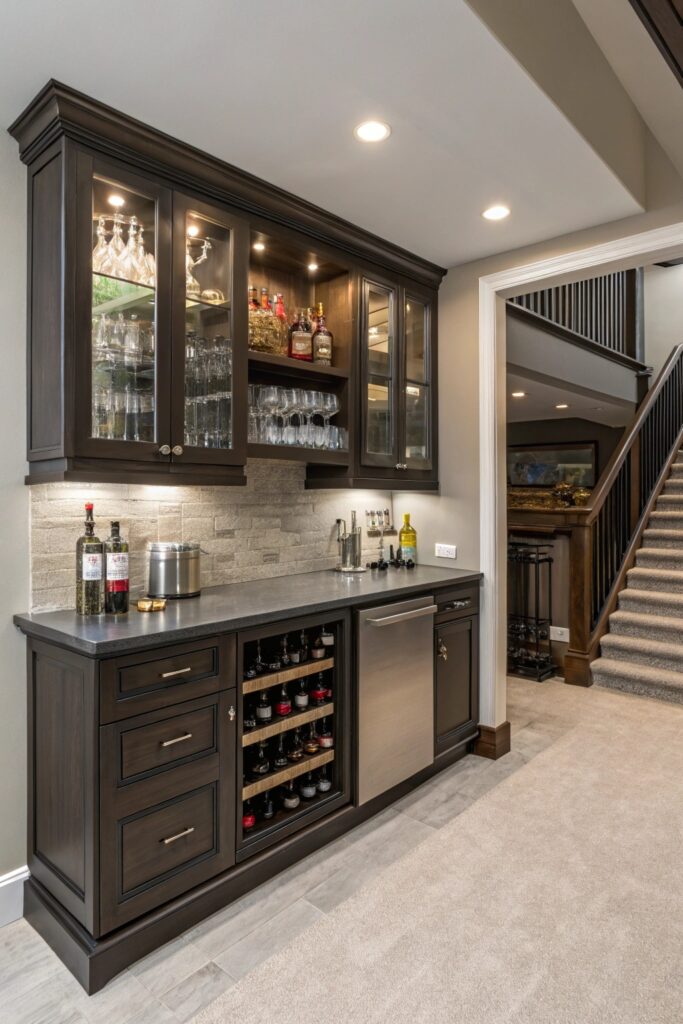
Pull-out wine racks and dedicated appliance garages for smaller bar tools keep counters clear, which matters more in a bar area than a kitchen since bar counters double as both prep and serving space during use.
15. Multi-Zone Entertainment
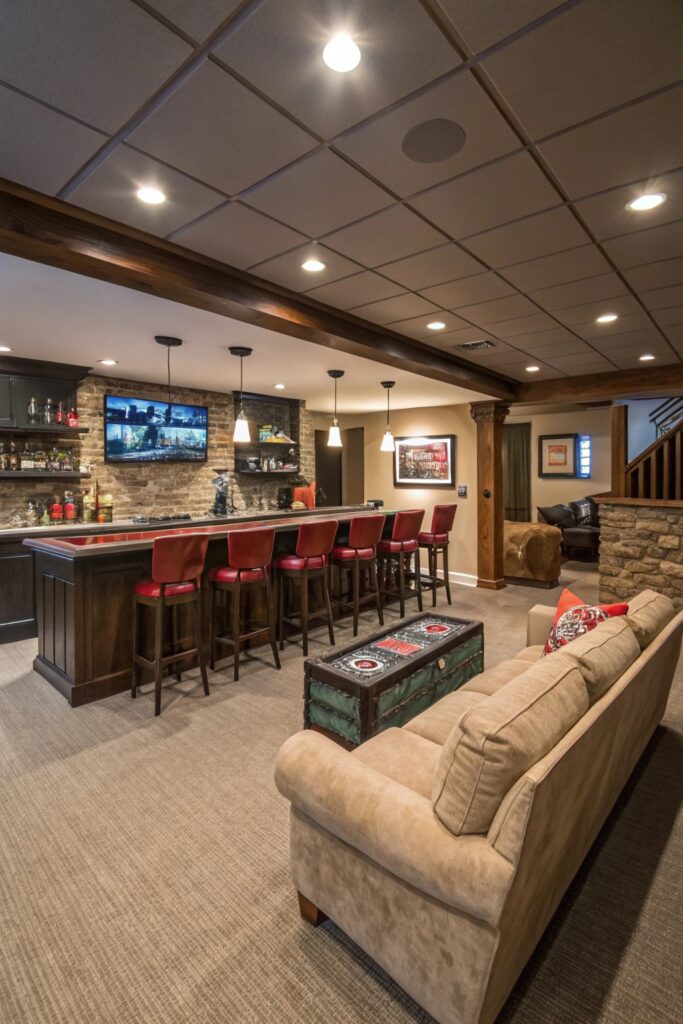
Separate lighting circuits for the bar, lounge, and game areas let you dim one zone for a movie while keeping the bar area brighter, which a single shared circuit can’t achieve.
Ventilation and Egress Considerations
A basement bar used for regular gatherings benefits from a dedicated exhaust fan or improved HVAC circulation, since basements often have weaker natural airflow than upstairs rooms, and a room full of guests generates noticeable heat and humidity over an evening.
If the space will regularly host guests, confirm the basement meets your local egress requirements — a code-compliant window or door large enough for emergency exit — since some jurisdictions treat a finished basement entertainment space differently than unfinished storage.
What This Project Costs
A basic bar setup with a pre-built counter, stools, and lighting typically costs $1,500 to $4,000.
A fuller build with custom cabinetry, a wet bar sink requiring new plumbing, and a wine cooling unit runs considerably higher, often $10,000 to $30,000 or more depending on the scope of construction and whether structural or plumbing work is involved.
Moisture Control Matters More Than Any Single Design Choice
Basements run more humid than the rest of a house, and that humidity affects wood furniture, exposed wine storage, and electronics differently than it would upstairs. A dehumidifier running consistently — not just during obviously damp weather — protects wood bar tops from warping and keeps a wine collection at stable humidity. This is worth addressing before finalizing material choices, since a rustic wood bar or open wine display both depend on humidity staying in a reasonable range to hold up long-term.