
Green is a notably versatile base color that pairs with both warm and cool palettes more easily than many other bold colors, but getting the undertone matching right across different elements — paint, fabric, wallpaper — is the real technical skill running through most of these ideas. The details below cover both the styling direction and these material specifics for each.
Below are 11 ways to bring green into a living room, with the specifics for each.
1. Forest Green Accent Wall
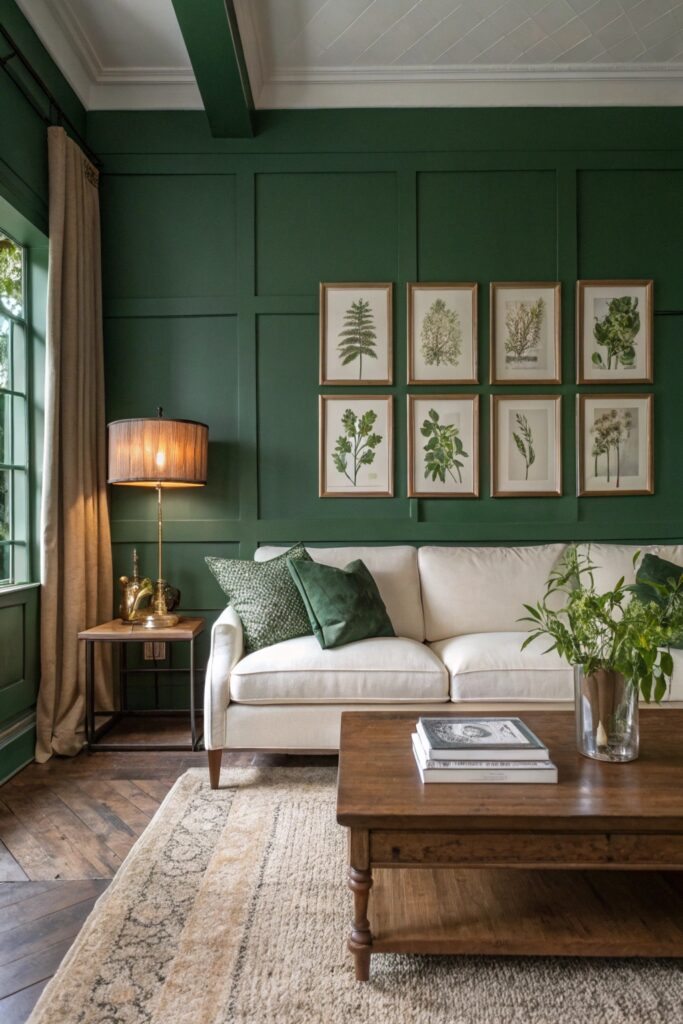
A deep forest green sits at a low light reflectance value, similar to navy or charcoal, so layering in additional lamp or accent lighting helps keep the room from feeling underlit once the wall goes up.
2. Sage Green Sofa as the Room’s Focal Point
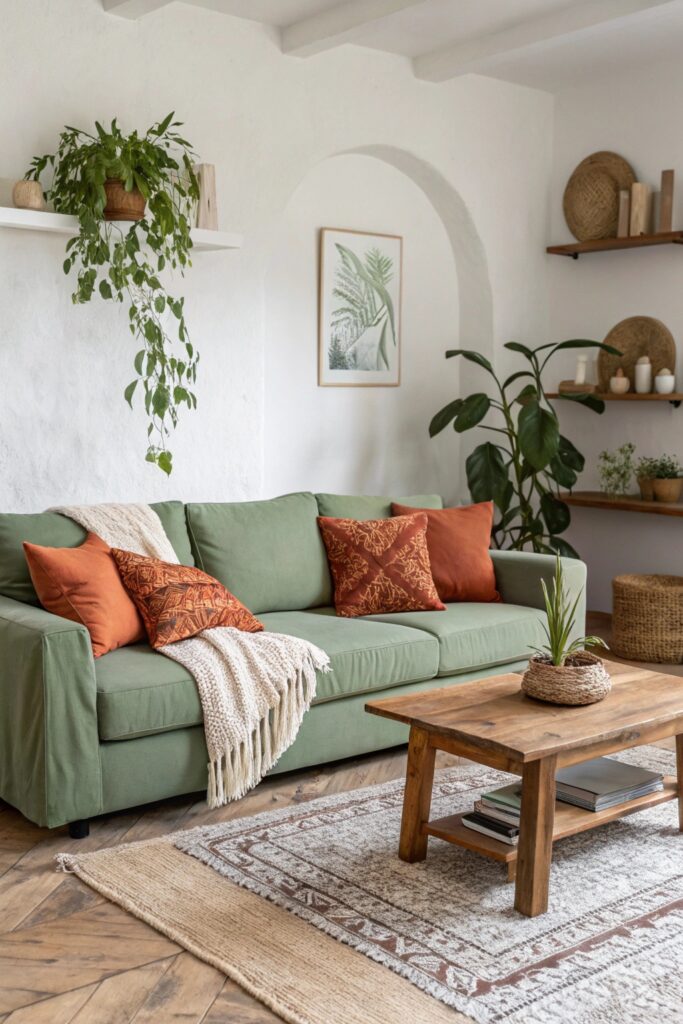
The same sage green reads noticeably differently across fabric types — a nubby bouclé catches light differently than a smooth linen or velvet, even in the identical color. Ordering actual fabric swatches, rather than judging from a paint chip alone, matters more for a large upholstered piece than it would for a smaller accent.
3. Botanical Green Wallpaper Feature Wall
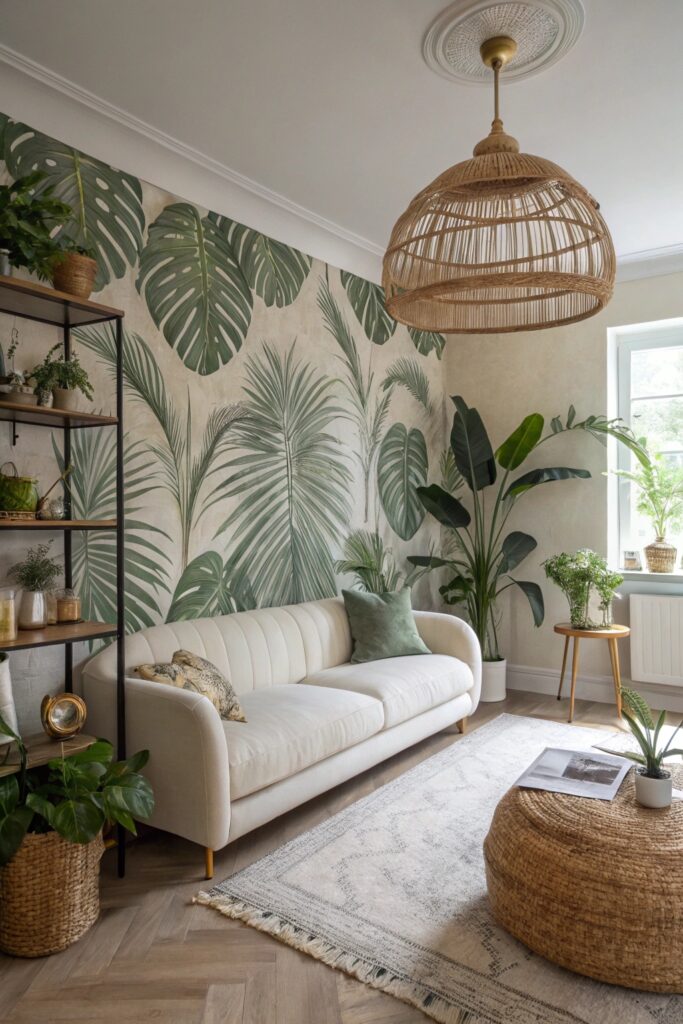
Order roughly 10 to 15 percent more wallpaper than your exact wall measurements suggest, since matching a large-scale botanical print at the seams creates waste a smaller or non-repeating pattern wouldn’t.
4. Green and Gold Color Palette
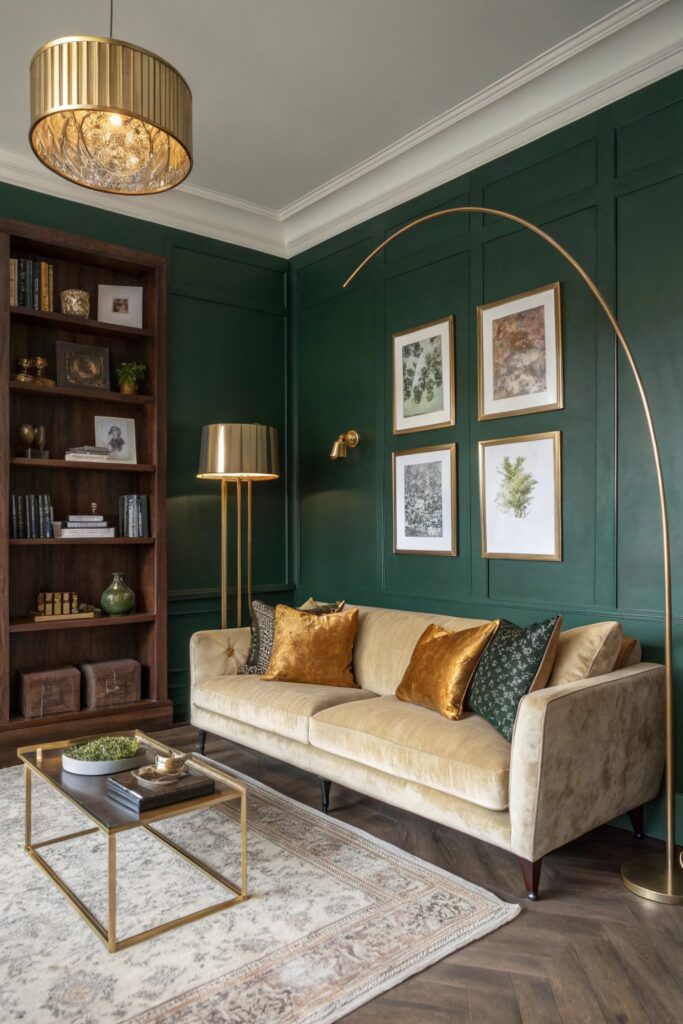
Keeping gold accents to roughly 10 percent of the room’s visual elements — a mirror frame, a lamp base — lets the metallic read as an intentional accent against the green rather than competing with it for attention.
5. Sage Green Painted Woodwork and Trims
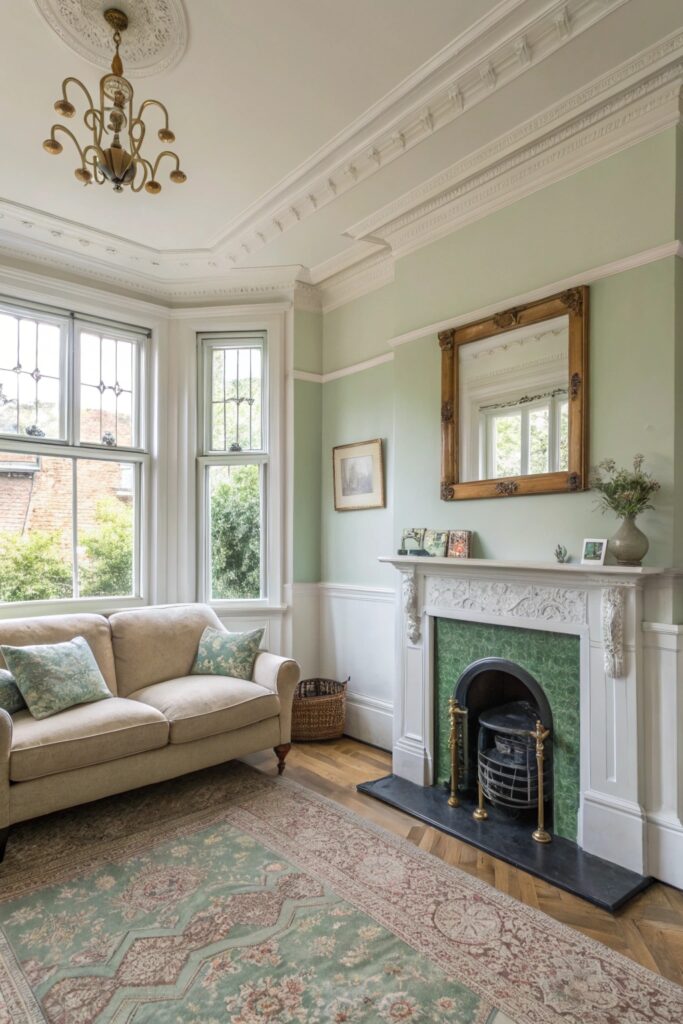
Trim typically gets a higher sheen than walls for durability, and it’s worth confirming the same paint color reads consistently between a flatter wall finish and a glossier trim finish, since sheen alone can shift how a color appears even when the underlying pigment is identical.
6. Indoor Jungle Living Room
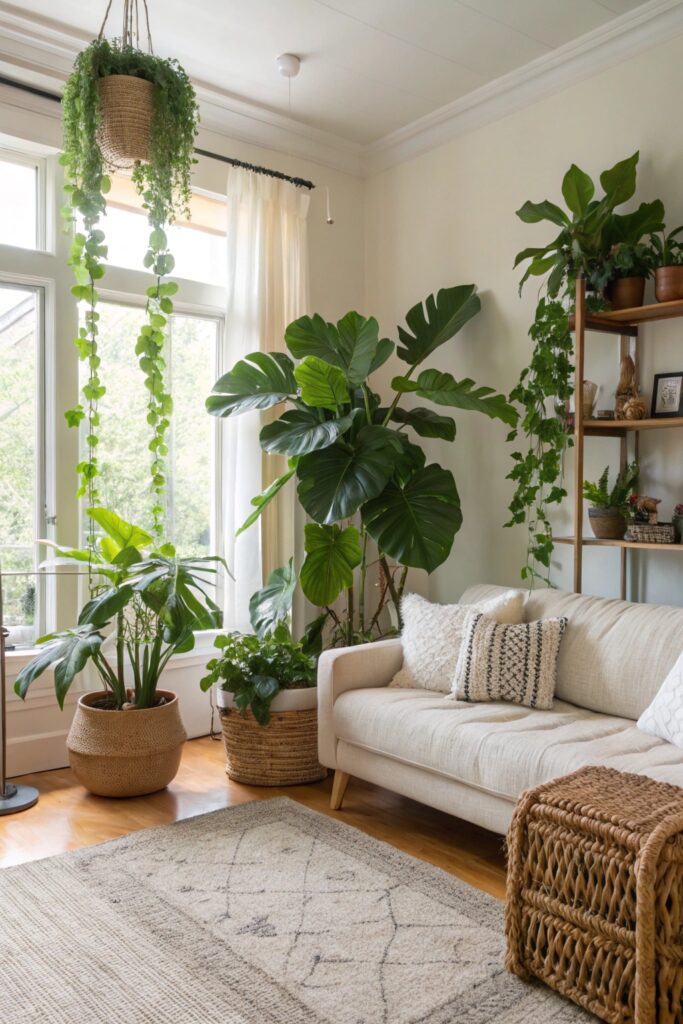
Grouping tropical plants together actually raises the local humidity around them through their own transpiration, which benefits humidity-loving species more than spreading the same plants singly around the room would.
7. Dark Green Velvet Curtains
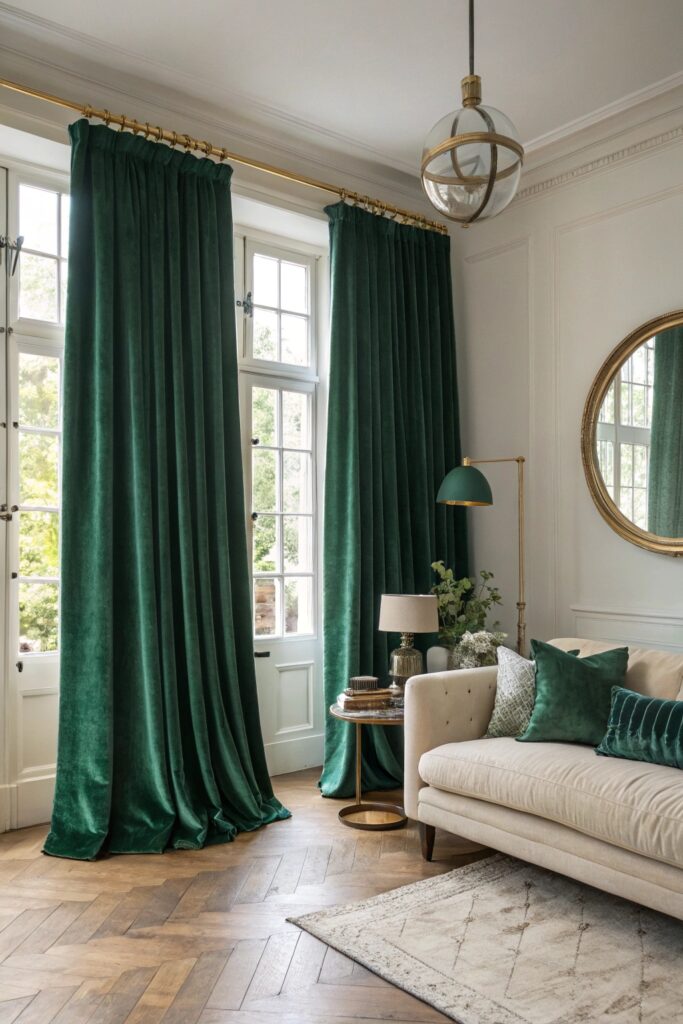
Velvet is considerably heavier than standard curtain fabric, so the rod and mounting hardware need a weight rating to match — a lightweight standard rod can sag or pull loose from the wall under velvet’s added weight over time.
8. Green and Terracotta Living Room Palette
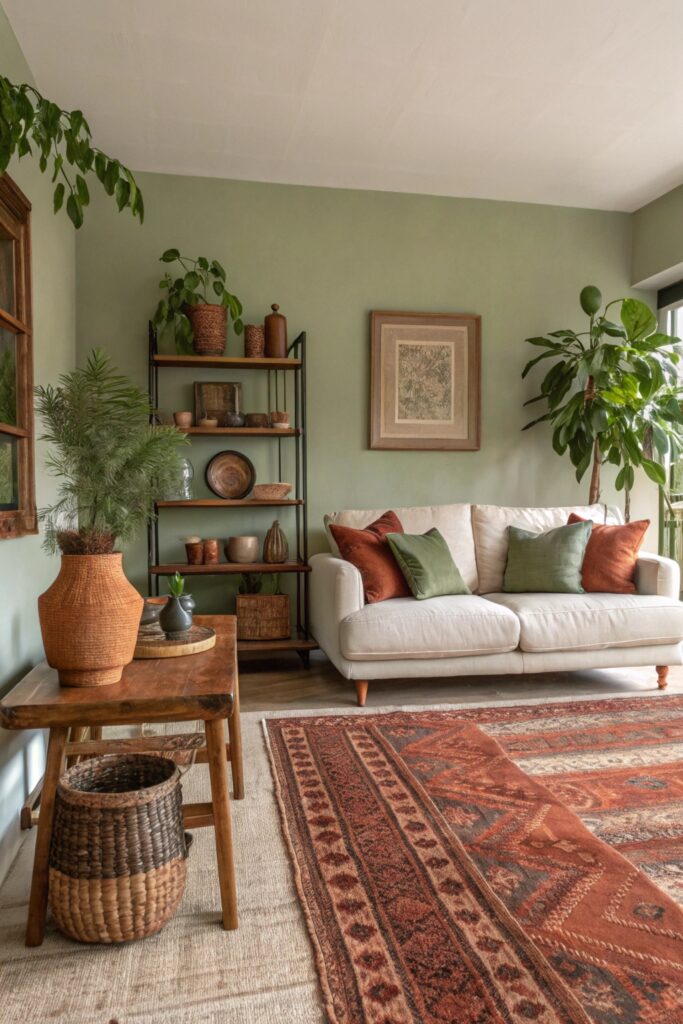
A green with a warm undertone pairs more naturally with terracotta’s warmth than a cool-leaning green does, which can create a subtle clash rather than the intended harmony between the two colors.
9. Emerald Green Statement Chair
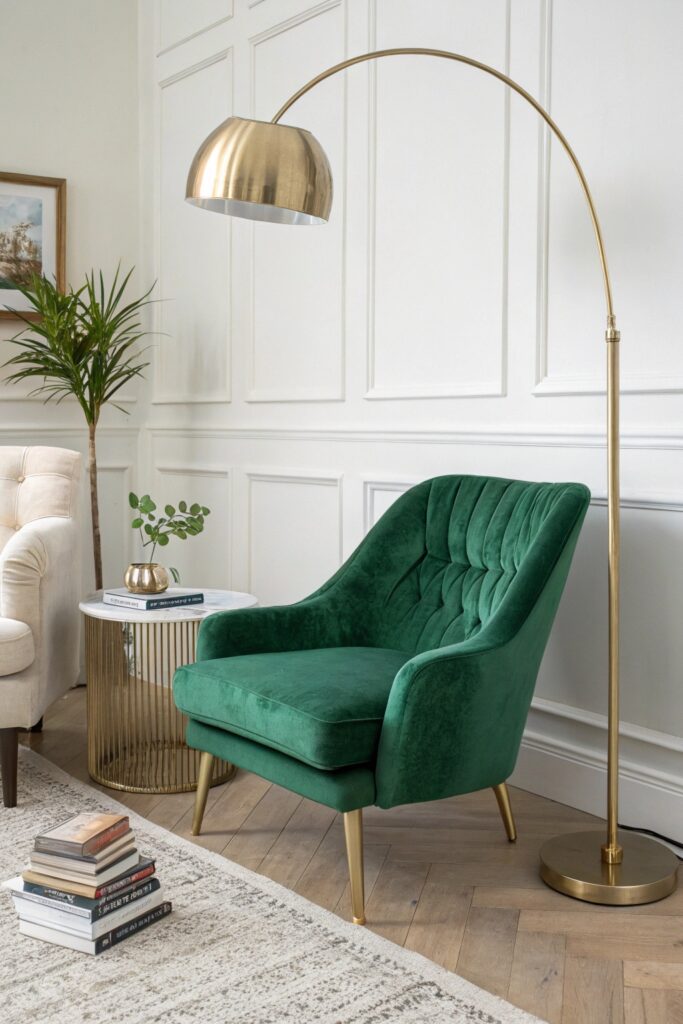
Saturated jewel tones like emerald show sun fading more visibly than muted or neutral colors, so positioning a statement piece in this color away from direct window exposure helps it hold its color longer.
10. Green Tiled Fireplace Surround
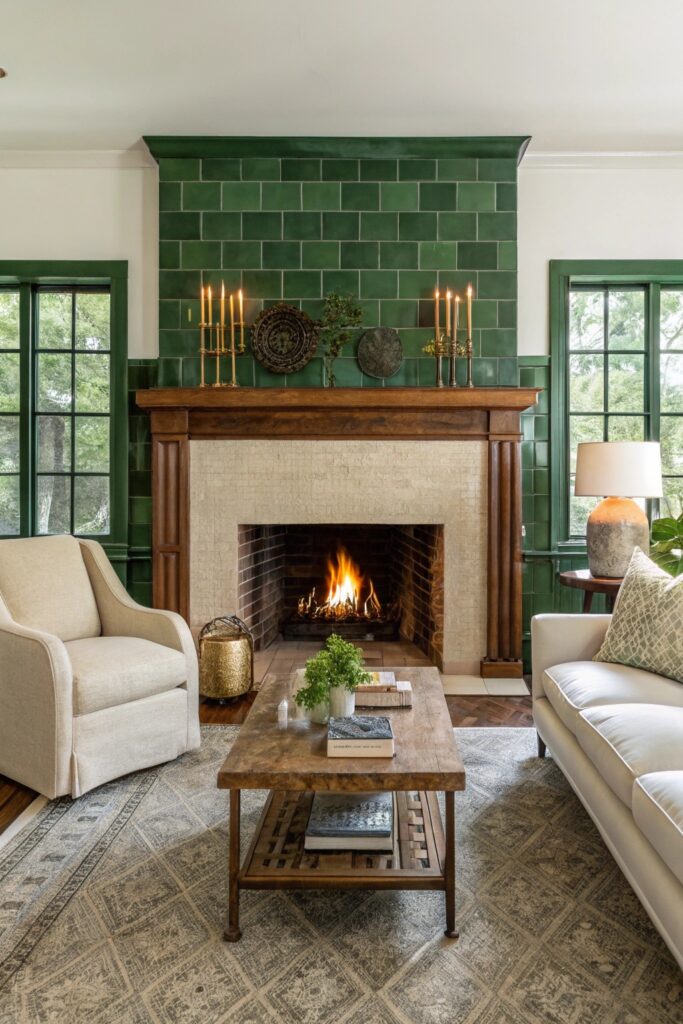
Tile used near an actual firebox needs to be rated for heat exposure specifically, and the grout in this application should be a heat-tolerant formulation as well — not every decorative tile is safe at this proximity to real heat.
11. Layered Green Textiles and Cushion Styling
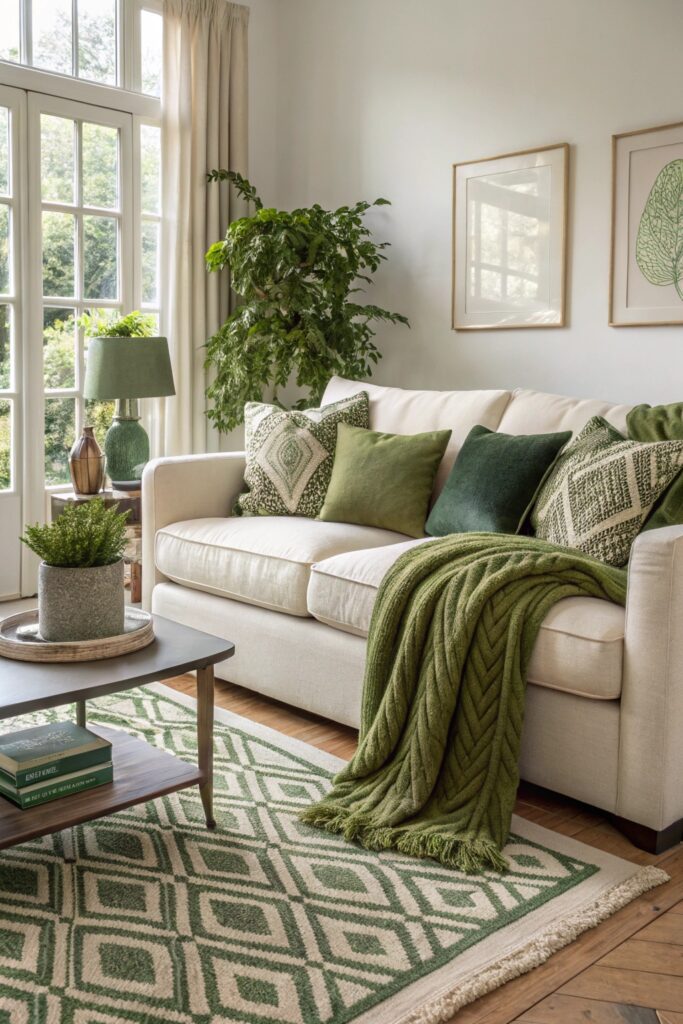
Mixing several different greens works best when they share the same undertone — all warm-leaning or all cool-leaning — rather than combining a cool sage with a warm olive, which tends to clash rather than layer harmoniously the way people expect shades of the same color family to.
Testing Green Against Your Room’s Fixed Elements
Flooring, existing woodwork, and any built-in cabinetry are fixed elements that a new green paint or fabric choice needs to work with rather than fight against — a cool sage can clash with warm honey-toned hardwood in a way that’s hard to see on a paint chip alone but becomes obvious once it’s on the wall.
Bringing an actual sample of your flooring or existing wood tone with you when selecting paint or fabric, rather than relying on memory, helps catch these mismatches before committing to a full room’s worth of a color.
What a Green Living Room Refresh Costs
A cosmetic update using paint, new cushions, and a few accent pieces typically costs $300 to $800 depending on material quality.
Adding a new sofa, custom wallpaper, or a tiled fireplace surround runs considerably higher, often $2,000 to $6,000 or more depending on the specific pieces and finishes chosen.
How Natural Light Affects Green Specifically
Green shifts more noticeably between warm and cool light sources than many other colors, since it sits at a point on the color wheel where small changes in lighting temperature can push it either toward blue-green or yellow-green. A room with strong afternoon sun will show a different version of the same green than one lit primarily by cooler morning light or artificial bulbs in the evening.
This is part of why testing a sample across a full day, rather than under a single lighting condition, matters more with green than it might with a more stable neutral tone.
Starting with a single, lower-commitment element — a throw pillow, a small plant grouping, a piece of art — before moving to a full accent wall or new sofa lets you live with the color and confirm it works with your existing room before making a larger investment.
A green living room, done with attention to undertone and lighting, tends to feel calm and grounded in a way that many bold colors don’t quite achieve, which is part of why this color has held up as a popular choice across so many different design eras rather than reading as a passing trend.
Whichever shade and approach you land on, giving the room time to feel finished — living with it for a few weeks before adding more — often reveals whether it actually needs another layer of green or whether the balance you’ve already struck is the right stopping point.
This kind of patience tends to produce a more considered result than trying to finalize every green element at once.
Final Thoughts
Undertone consistency is what separates a green living room that feels cohesive from one where the individual pieces, however nice on their own, don’t quite work together. Testing paint, fabric, and wallpaper samples side by side in the room’s actual lighting before committing catches undertone mismatches that are easy to miss when shopping for each element separately.
Because green ranges so widely from cool sage to warm olive to deep forest, it’s worth treating it less like a single color decision and more like choosing a specific undertone family to stay consistent within across every green element in the room.