
Japandi combines two design traditions that both prize restraint, which means the style actually fails when overdone — this isn’t a look built by combining twice as many decorative elements, but by editing carefully from both traditions. The details below cover both the styling direction and these practical specifics for each element.
Below are 10 Japandi living room ideas worth considering, with the specifics for each.
1. A Low-Profile Sofa in Natural Linen
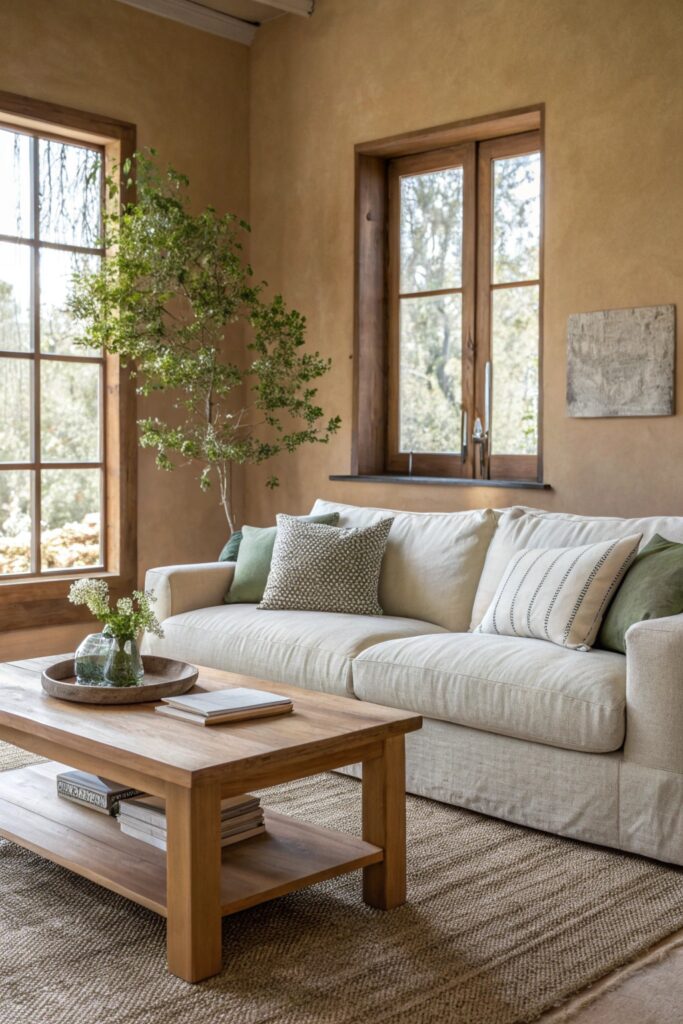
A truly low seat height can be harder for people with mobility limitations to get in and out of, worth weighing against household needs before committing. Linen upholstery also benefits from a stain-resistant treatment or performance blend given regular daily use.
2. Wabi-Sabi Inspired Ceramics and Pottery
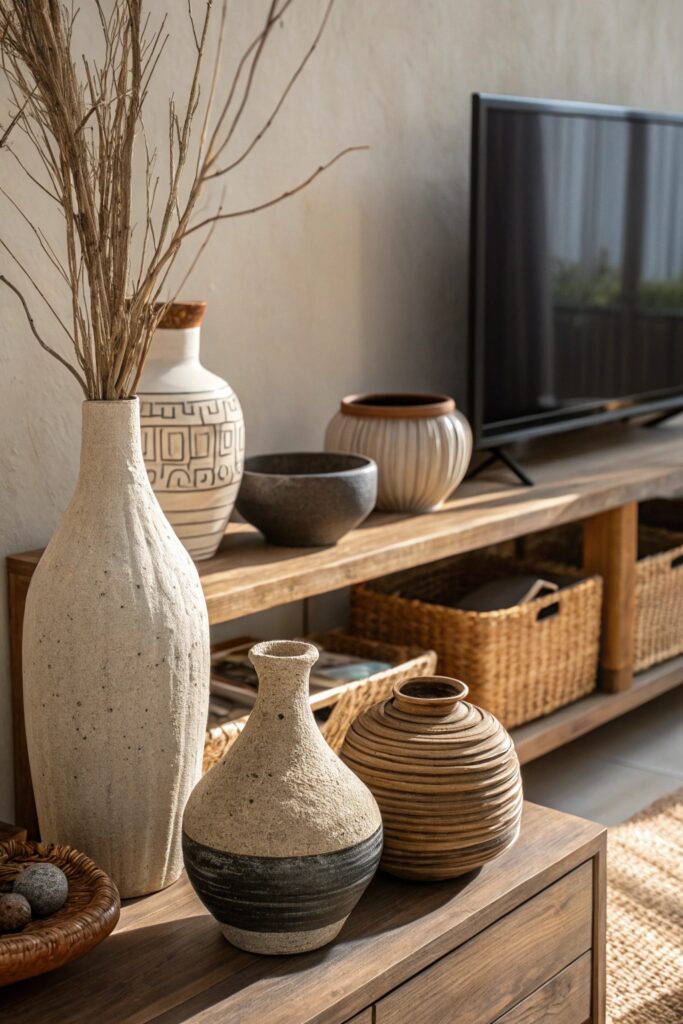
Authentic handmade pieces often have irregular wall thickness from hand-forming, which makes them more fragile than mass-produced ceramics with uniform construction — worth displaying and handling with that in mind rather than assuming standard durability.
3. Shoji-Inspired Sliding Panels or Room Dividers
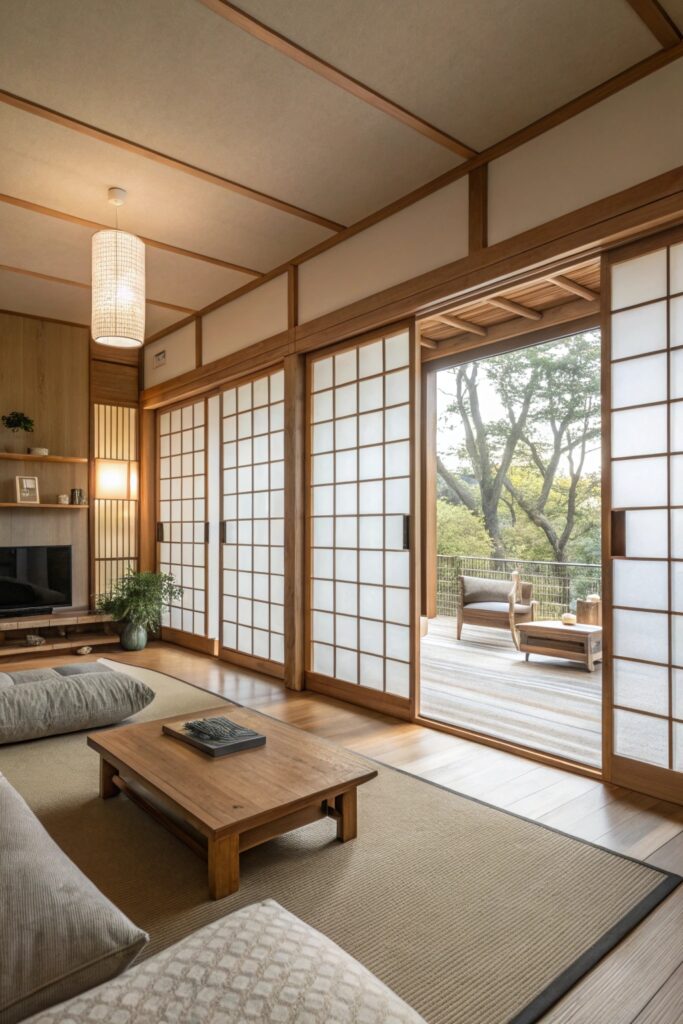
Genuine shoji screens use rice paper, which tears easily and isn’t practical for a high-traffic living room — worth confirming whether a “shoji-inspired” piece actually uses this delicate material or a more durable fabric or acrylic substitute before installing it somewhere heavily used.
4. A Neutral Palette With Warm Undertones
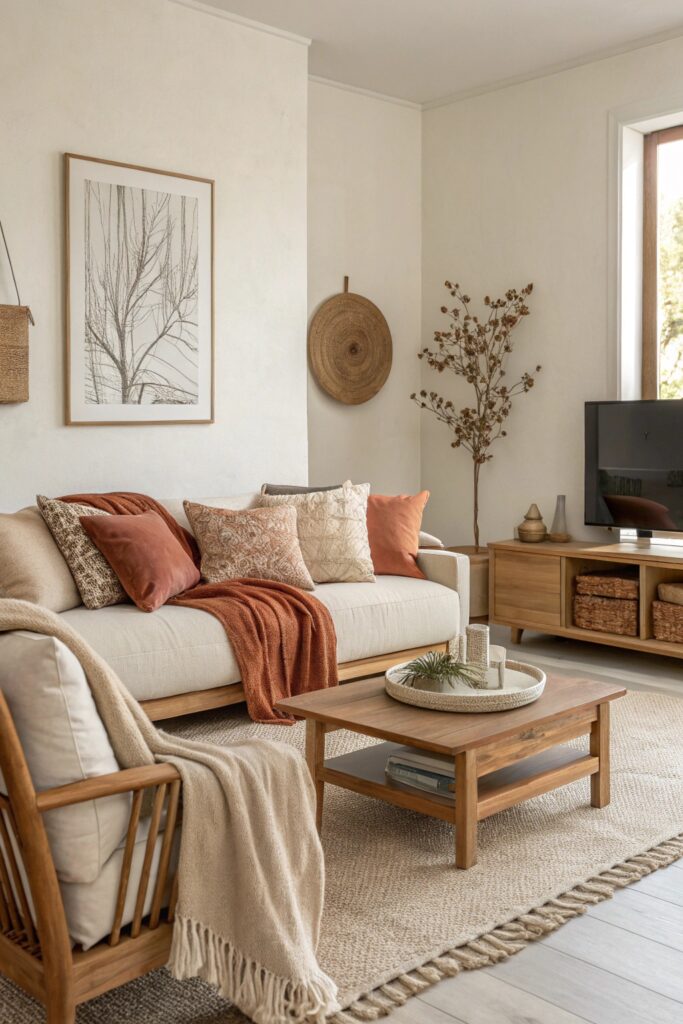
Even neutral beige and greige tones carry distinct undertones, so testing paint and fabric samples together catches a mismatch where one neutral reads warm and another reads cool despite both being labeled simply “neutral.”
5. Natural Wood Elements Throughout
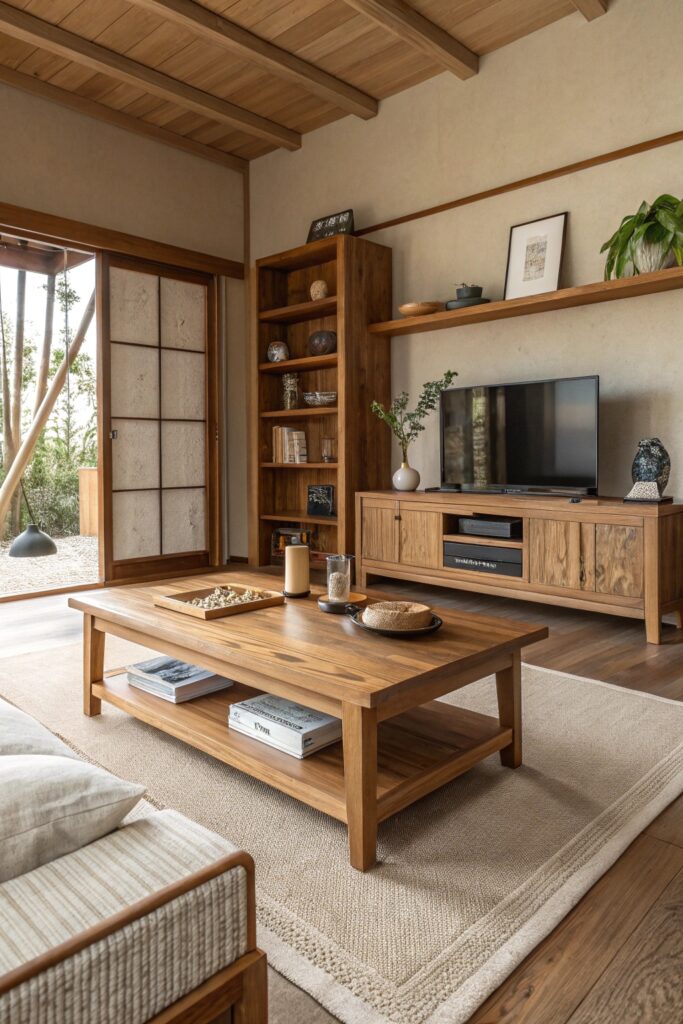
Mixing multiple wood tones works best when the different woods share a similar warmth level — pairing a warm honey oak with a cool gray-toned wood tends to clash rather than layer harmoniously the way this style intends.
6. Intentional Negative Space
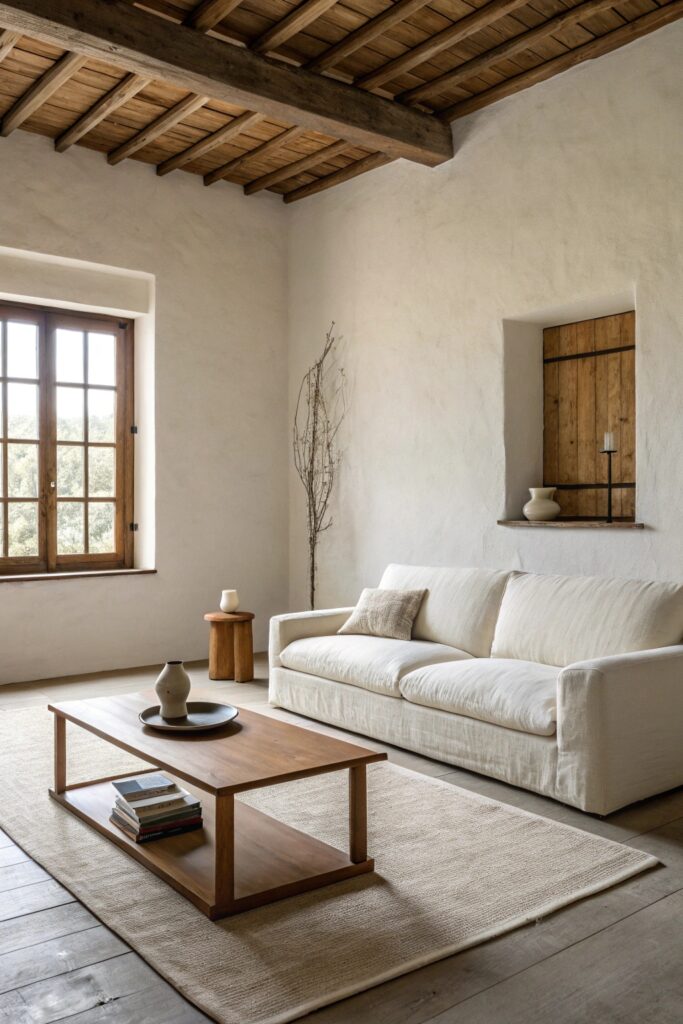
Deliberately empty space serves a real functional purpose beyond aesthetics, giving the eye somewhere to rest and making the room noticeably easier to keep clean than a space filled edge to edge with furniture and objects.
7. Textural Layering With Natural Fibers
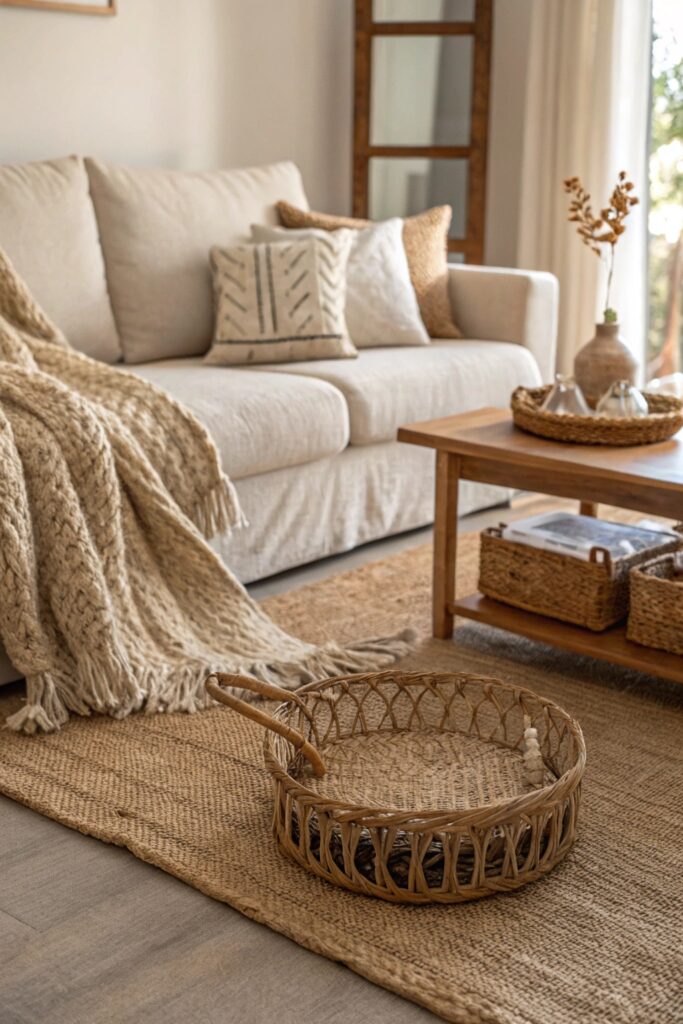
Sealed or treated rattan and jute pieces hold up to regular living room use better than raw, untreated natural fiber, which shows wear and can fray faster under daily contact.
8. Bonsai or Single Statement Plant
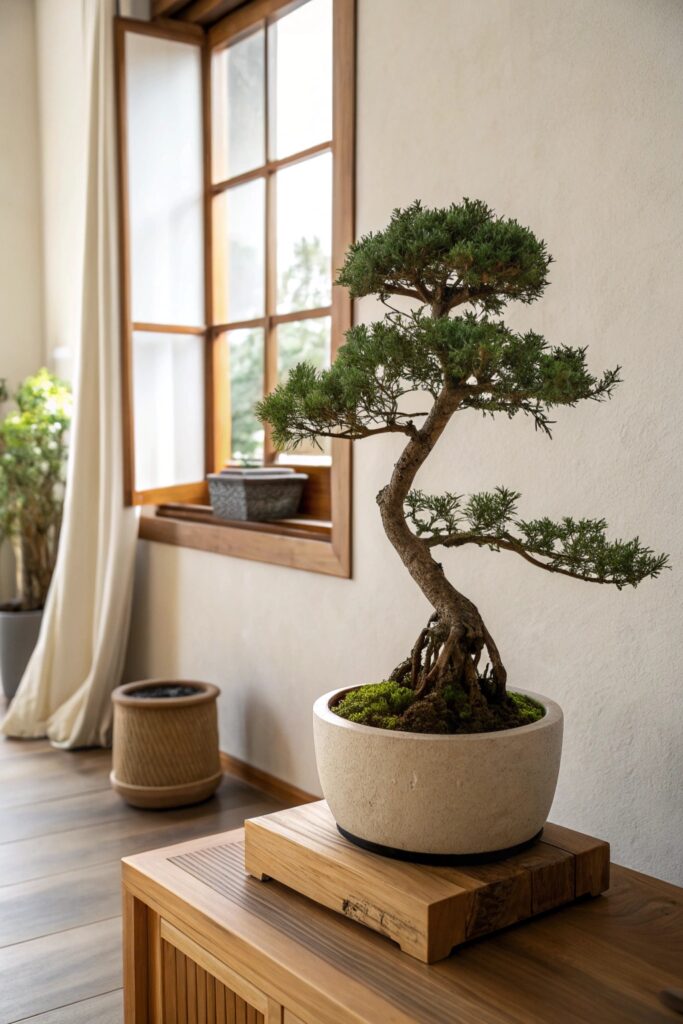
Bonsai requires more specialized care than typical houseplants — regular pruning and specific watering needs — and many varieties actually need periodic time outdoors depending on species, so researching your specific bonsai’s requirements before committing matters more here than with a standard houseplant.
9. Concealed Storage and Clutter-Free Surfaces
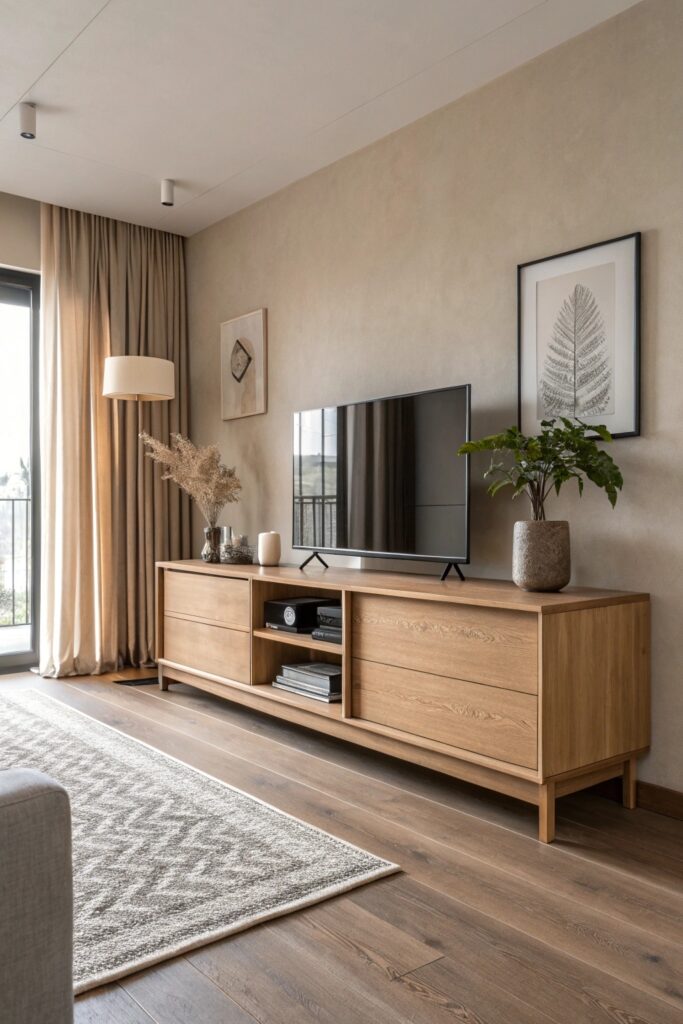
Soft-close hardware on concealed storage holds up to daily use better than standard hinges, and any hidden storage holding heavier items still needs the same weight-rated anchoring as open shelving would.
10. Ambient and Layered Lighting With Paper Lanterns
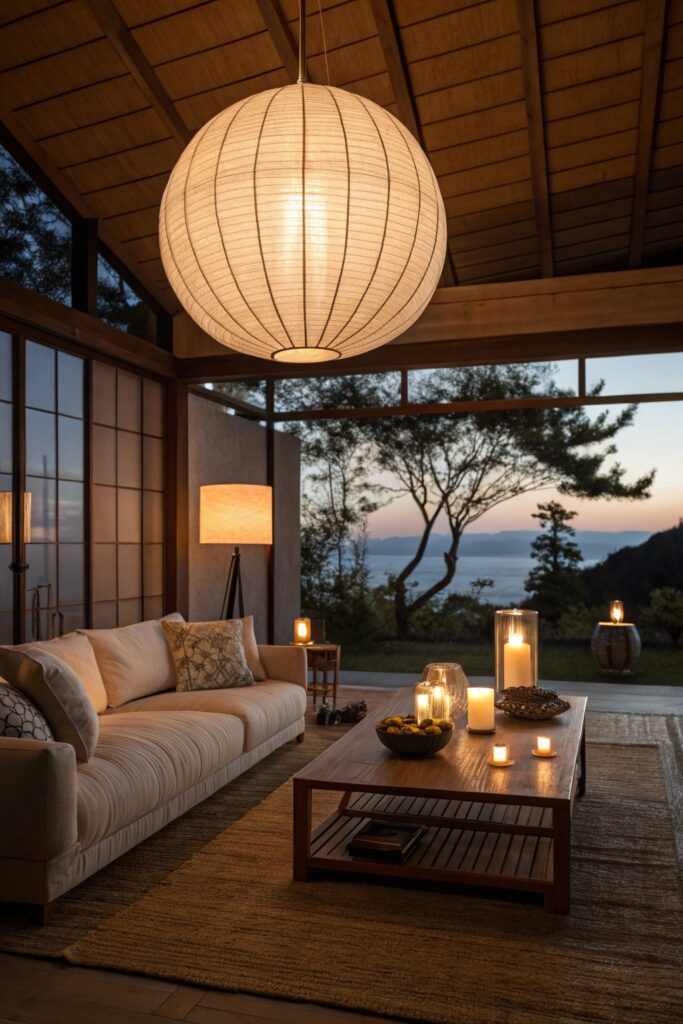
Confirm any paper lantern fixture uses an LED bulb rather than incandescent, since LEDs run considerably cooler and reduce the fire risk that comes with positioning a heat-generating bulb close to paper material.
Balancing Japanese and Scandinavian Influences
The Japanese side of this style tends to show up in asymmetry, natural imperfection, and a reverence for negative space, while the Scandinavian side contributes lighter woods, functional simplicity, and a cozier overall warmth that pure Japanese minimalism doesn’t always emphasize.
Leaning too far toward either tradition can shift the room into a different style entirely — too Japanese and it can feel spare or austere, too Scandinavian and it loses the deliberate asymmetry and imperfection that gives Japandi its distinct character.
What a Japandi Living Room Costs
A cosmetic update using paint, a few ceramic pieces, and new textiles typically costs $300 to $900 depending on material quality.
A fuller refresh including a new sofa, room dividers, and custom lighting runs considerably higher, often $3,000 to $8,000 or more depending on the pieces chosen.
Layering Natural Light Into the Design
Sheer or lightweight linen curtains let daylight filter through softly rather than blocking it entirely, which supports this style’s emphasis on a calm, naturally lit atmosphere over a room that relies mostly on artificial lighting during the day.
Positioning key furniture pieces to take advantage of whatever natural light your room already gets, rather than working against the window placement, tends to require fewer artificial light sources overall and reinforces the room’s intended sense of calm.
Choosing Furniture With Genuine Craftsmanship
This style rewards investing in fewer, better-made pieces rather than filling the room with budget furniture, since Japandi’s pared-back aesthetic leaves individual pieces more visually exposed than a busier, more layered style would.
Checking joinery details, wood quality, and upholstery construction before purchasing matters more here than it might in a maximalist room, where a lower-quality piece can hide among many other visual elements.
Introducing pieces gradually rather than furnishing the entire room at once also fits this style’s underlying philosophy, since taking time to live with each addition helps confirm it actually earns its place rather than filling space for the sake of completeness.
A Japandi living room done well tends to feel calm without feeling empty, which is a harder balance to strike than either pure minimalism or a fully furnished traditional room, since every remaining piece has to work considerably harder to carry the room’s overall warmth and personality.
Getting quotes from at least two or three retailers or craftspeople before committing to larger furniture purchases helps confirm both pricing and quality, since well-made Japandi pieces vary considerably in price depending on the materials and construction methods used.
A room styled this way also tends to age well, since the emphasis on quality materials and timeless proportions over trend-driven decor means it’s less likely to feel dated in a few years the way more maximalist or trend-forward styles sometimes do.
Whichever combination of these ideas resonates most, taking the time to source pieces thoughtfully rather than furnishing the room in a single shopping trip tends to produce a more considered, personal result over the long run.
This restrained, thoughtful approach to furnishing a room is really the heart of what makes Japandi work as a lasting style rather than a passing trend.
Final Thoughts
The most successful Japandi rooms tend to have fewer, better pieces rather than more items chosen to represent both traditions — a single well-made ceramic piece says more than several scattered around the room, and the same principle applies across furniture, lighting, and textiles.
Whichever elements you’re drawn to, resisting the urge to add just one more piece once the room already feels balanced is often the harder discipline in this style than any individual design decision.