
Mid-century modern kitchens have to balance authentically period-accurate details against modern functional expectations — better ventilation, more efficient appliances, current electrical codes — that didn’t exist when this style originated. The details below cover both the design direction and these practical specifics for each element.
Below are 13 mid-century modern kitchen ideas worth considering, with the specifics for each.
1. Flat-Panel Cabinets for a Clean Look
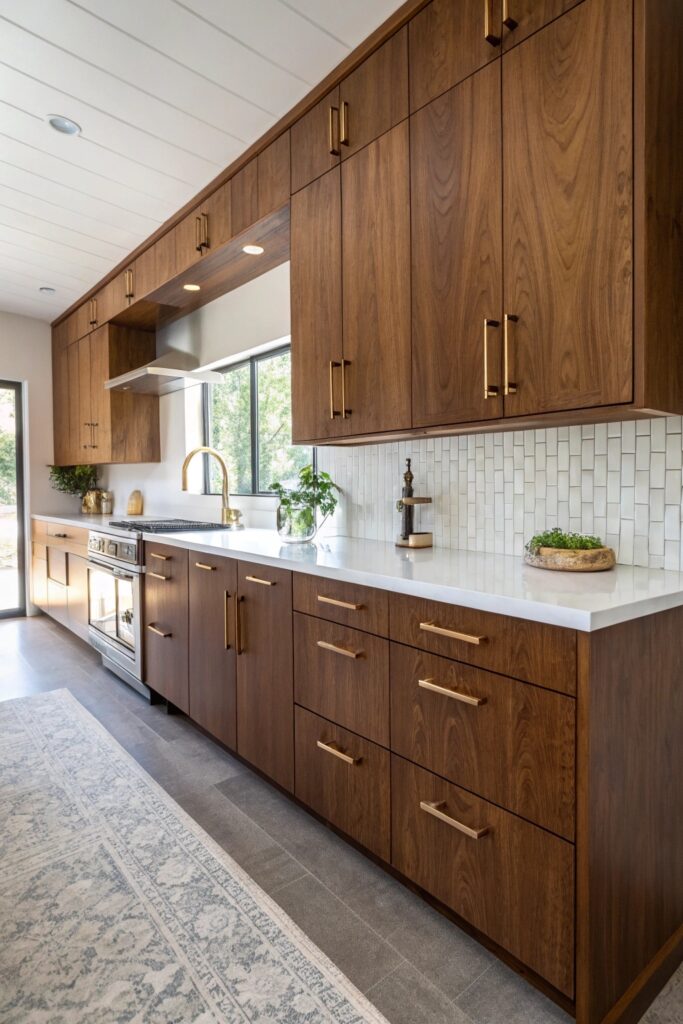
A flat, slab-style door shows fingerprints and smudges more visibly than a raised panel door, given its uninterrupted surface, so a matte or lightly textured finish hides this better than high-gloss in a kitchen that sees daily use.
2. Warm Wood Tones That Add Character
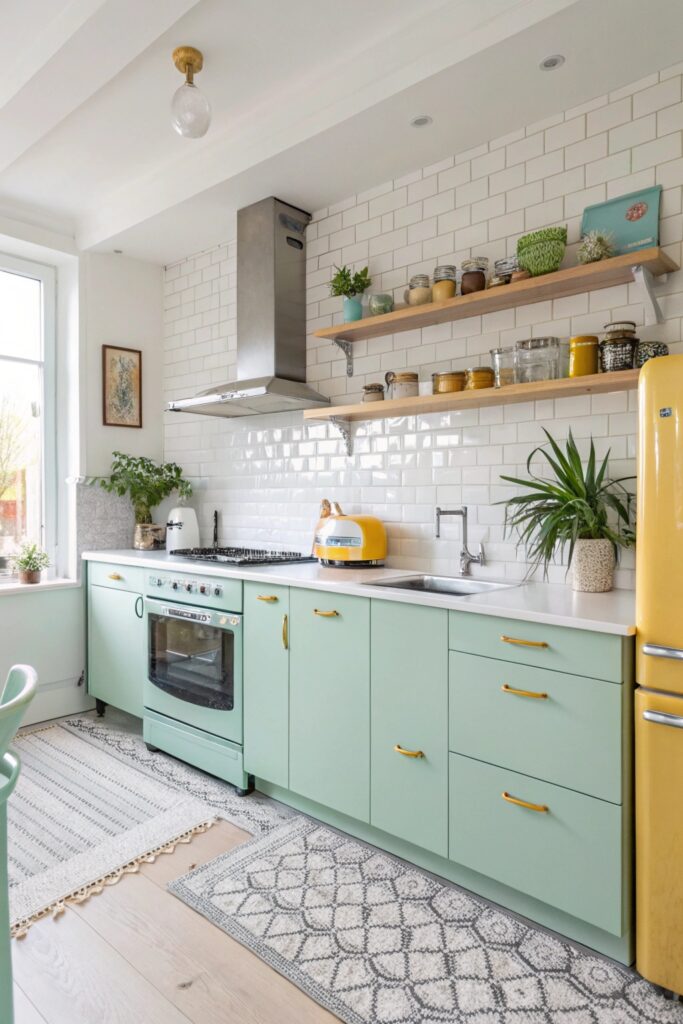
Walnut and teak, the two woods most associated with this era, have distinct undertones from each other despite both reading as warm wood — worth testing samples together before mixing them in the same kitchen to avoid an unintended clash.
3. Bold Backsplashes with Retro Flair
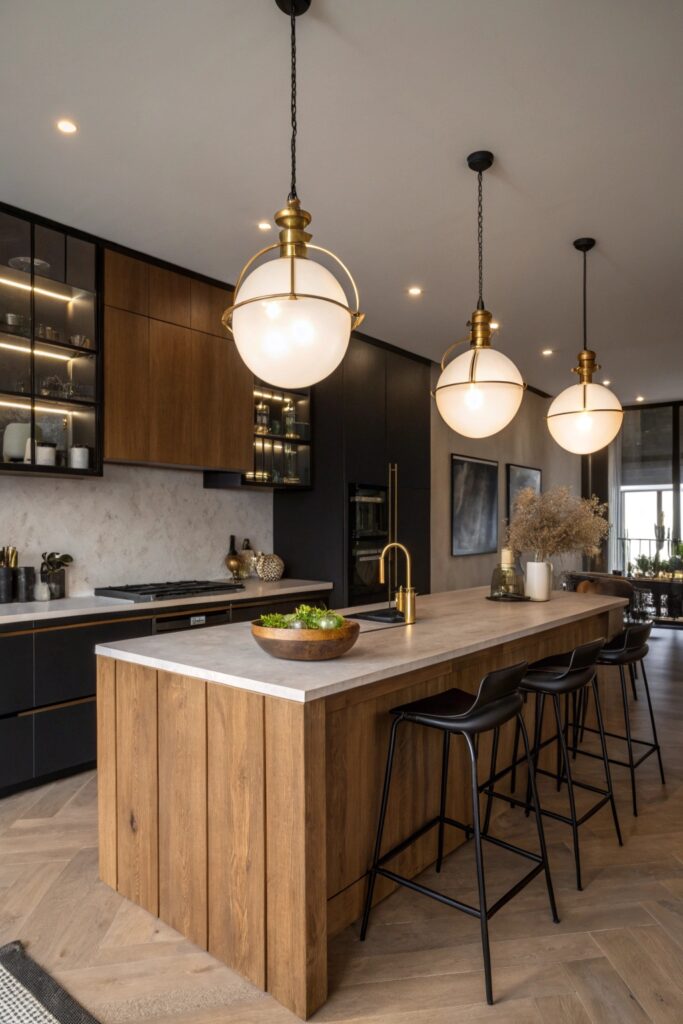
Not every decorative reproduction tile is rated for the durability a kitchen backsplash actually needs, so confirming a specific tile’s intended use before installation matters more than choosing purely based on the retro pattern.
4. Open Shelving for a Light Feel
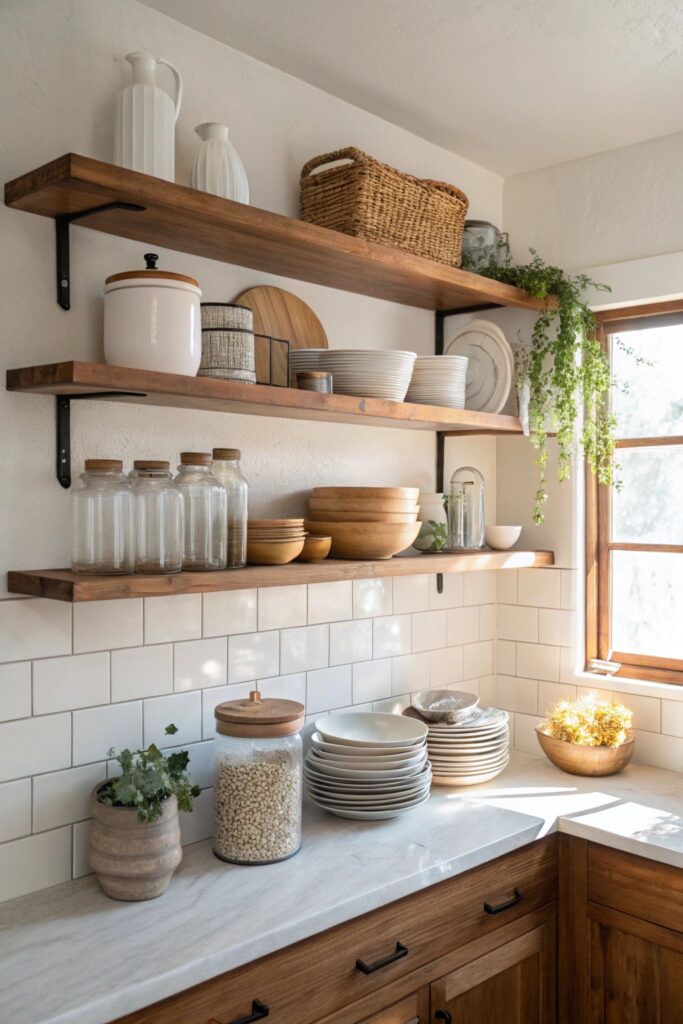
Open shelving needs the same weight-rated anchoring as any application, and its visual lightness works especially well against the clean lines this style already emphasizes elsewhere in the room.
5. Statement Lighting Fixtures
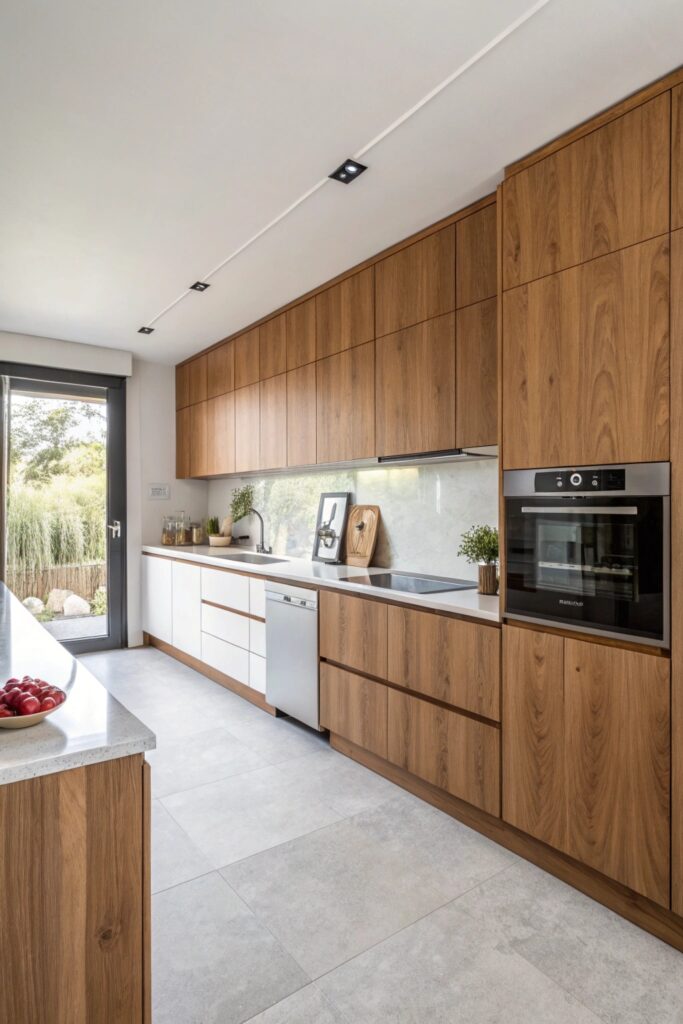
Confirm any vintage reproduction pendant carries current electrical safety certification, since not every manufacturer producing era-styled fixtures meets the same standards as fixtures built for today’s code requirements.
6. Two-Tone Cabinet Designs
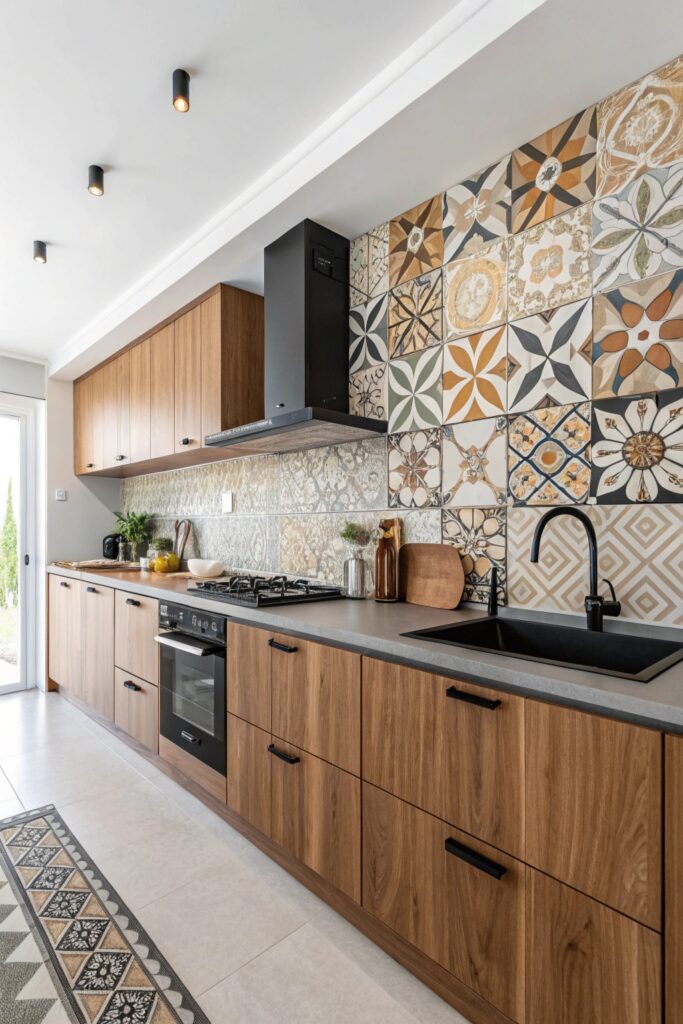
Walnut paired with crisp white was an authentically period-accurate combination for this era, distinct from the sage-and-white or navy-and-white pairings more common in other design styles.
7. Retro Appliances with Modern Function
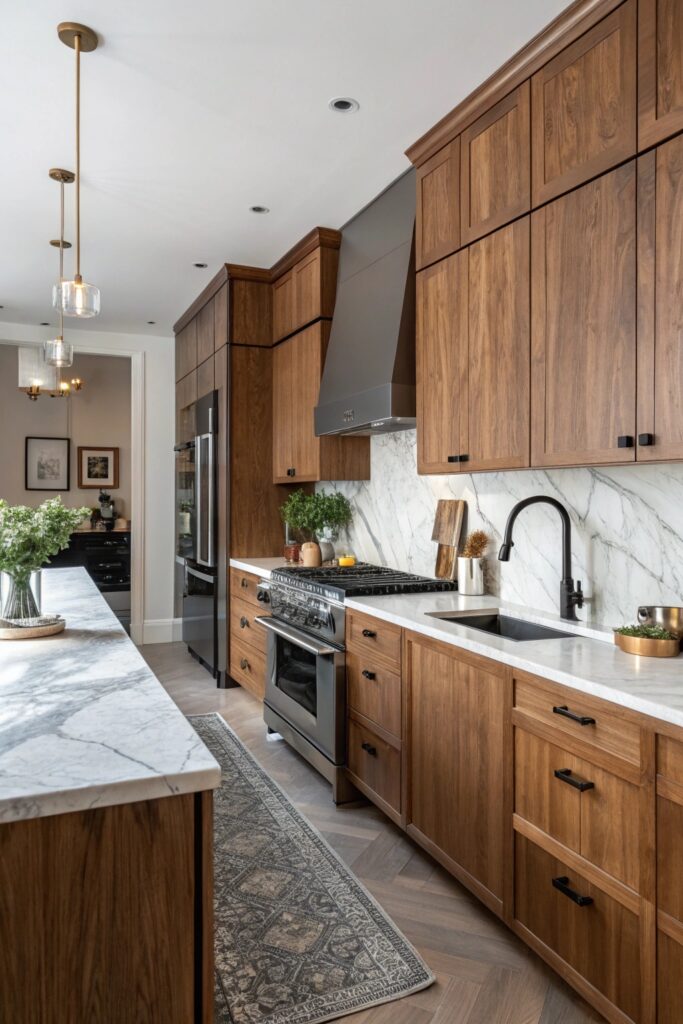
Retro-styled modern appliances are built to current dimensions and functionality despite their vintage look, so confirming actual measurements against your cabinet openings matters if you’re trying to preserve a specific period layout, since these units often differ in size from genuine vintage originals.
8. Minimal Hardware or Hidden Handles
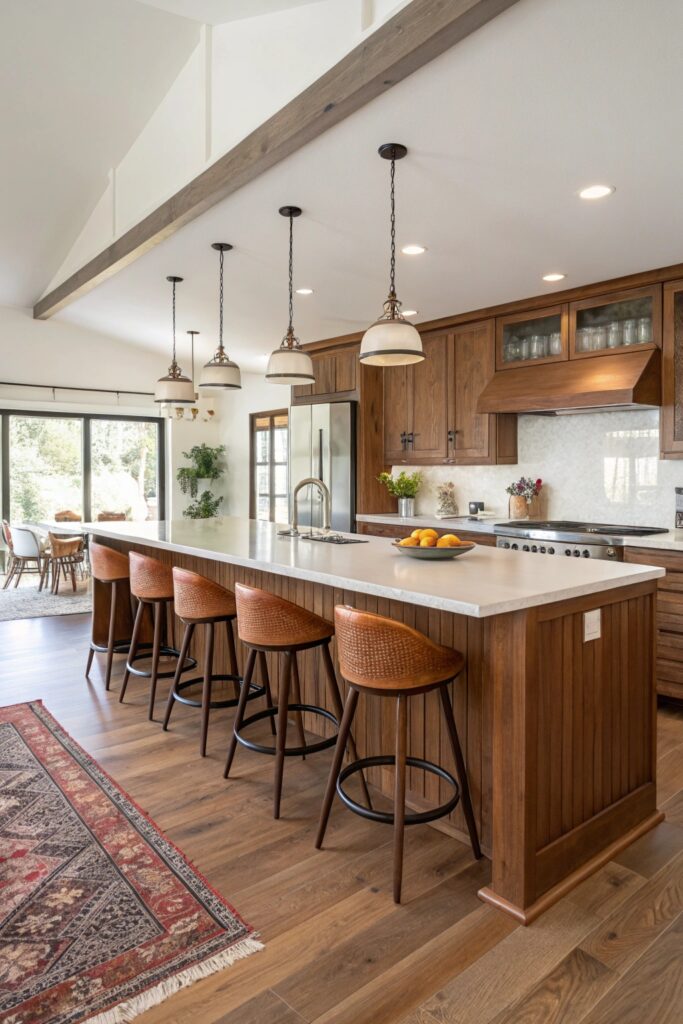
Push-to-open mechanisms need periodic maintenance to keep the latch engaging smoothly, since this hardware wears differently than a traditional pull handle over years of daily use.
9. Functional Kitchen Islands
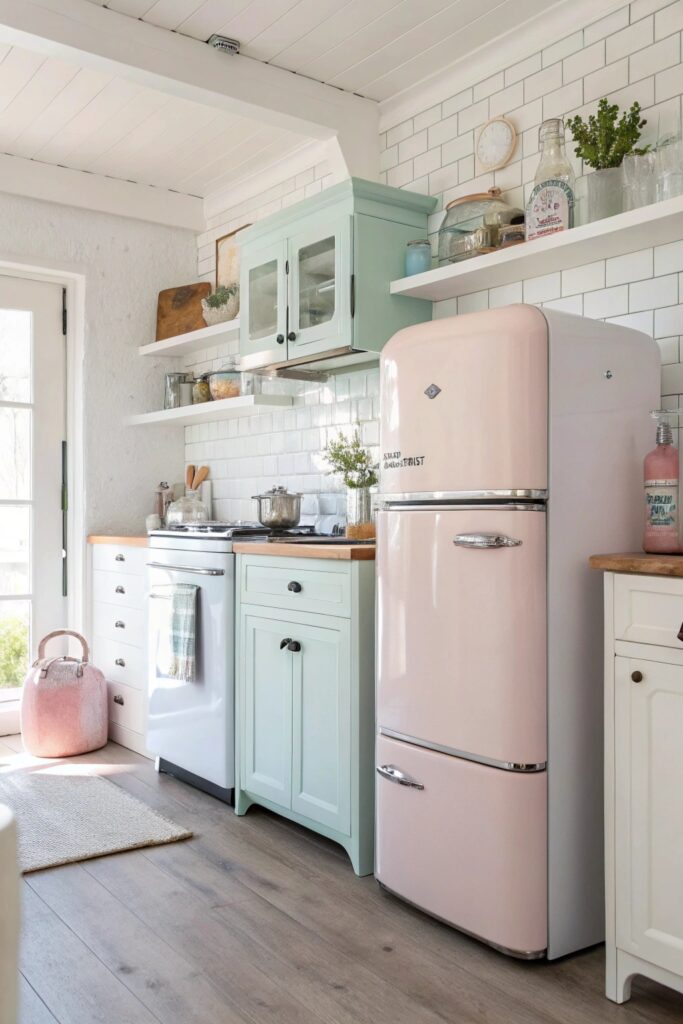
Leave at least 42 to 48 inches of clearance around the island for comfortable movement, the same practical clearance principle that applies to any kitchen layout regardless of style.
10. Neutral Color Palettes with Pops of Color
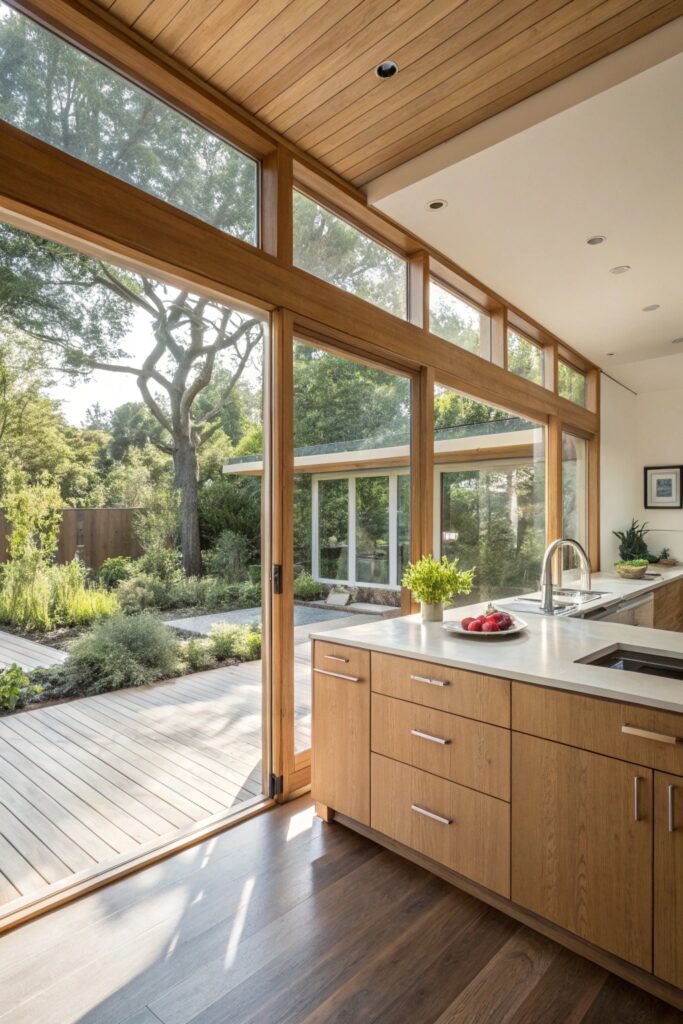
Signature era colors like avocado green or harvest gold read as more sophisticated used as smaller accent pops against a neutral base than as the kitchen’s dominant palette, which can tip into feeling like a literal period recreation rather than a modern nod to the style.
11. Large Windows and Natural Light
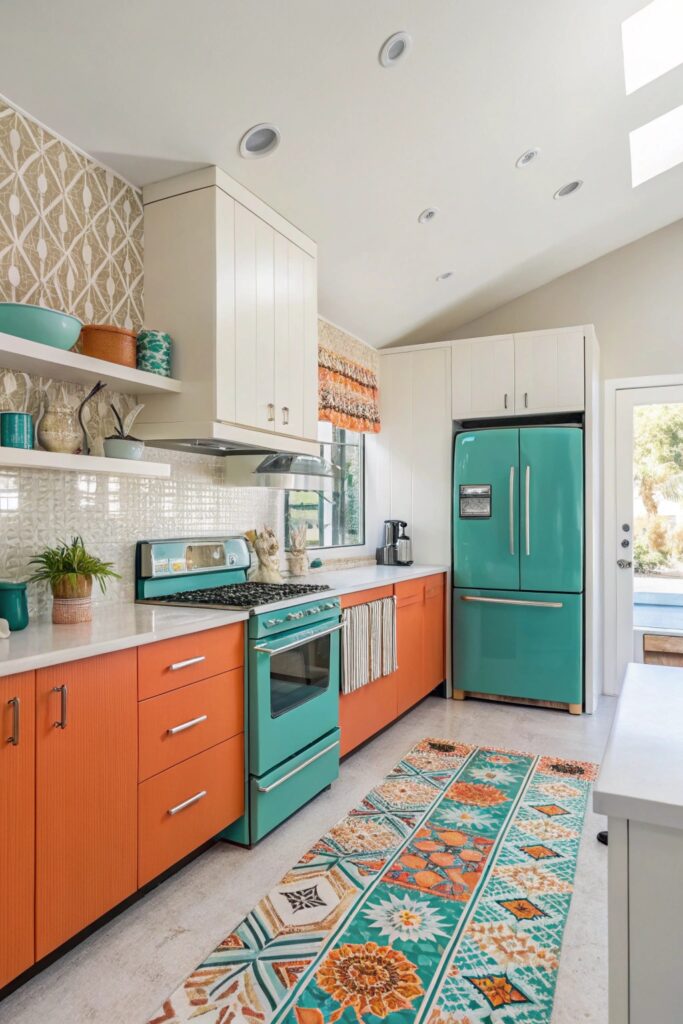
Large windows were a genuine structural feature of original mid-century architecture, not just a decorative choice, so adding new windows to a non-original structure is real construction work requiring permits rather than a simple decor update.
12. Geometric Patterns for Visual Interest
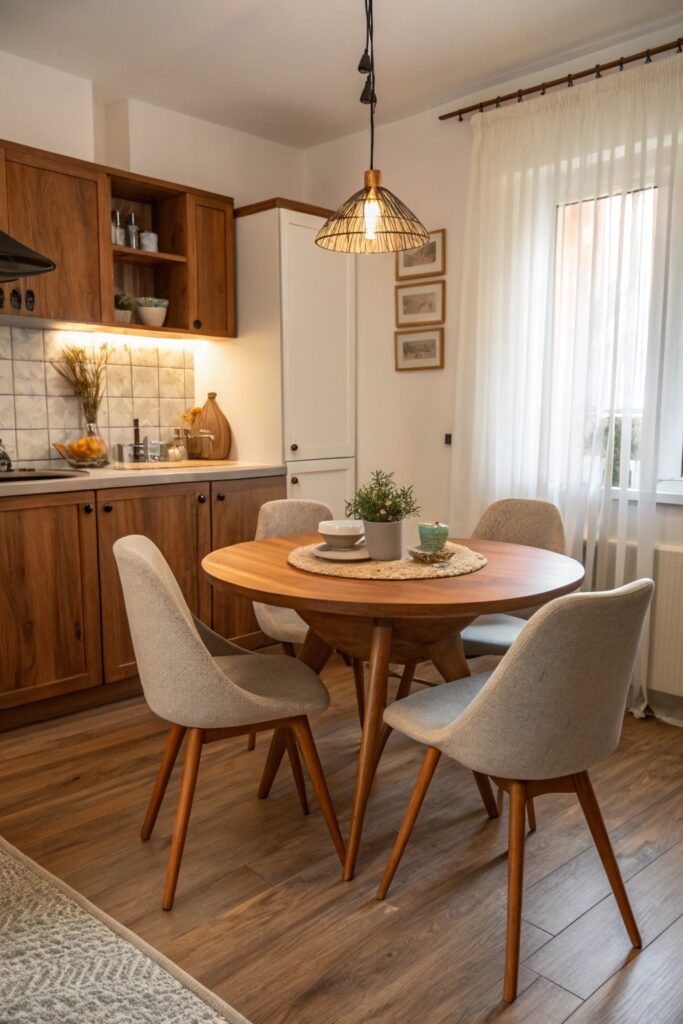
Choosing one dominant geometric pattern rather than layering several competing shapes keeps the look feeling intentional rather than visually busy in a room that already has a lot going on functionally.
13. Indoor Plants for a Fresh Touch
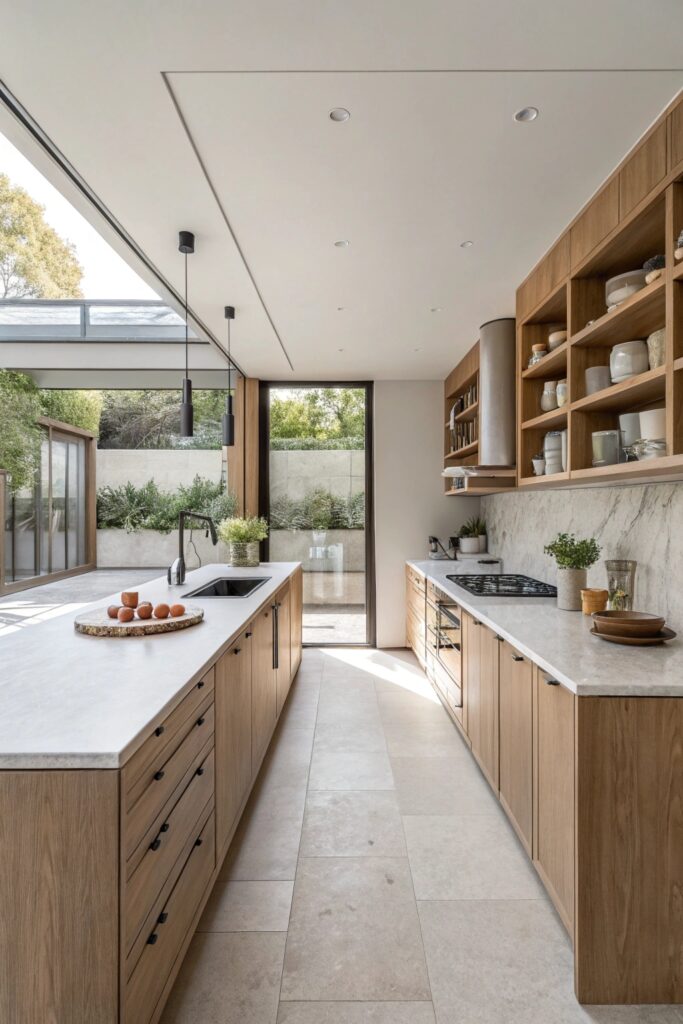
Choosing plants that tolerate a kitchen’s temperature swings and occasional grease exposure near cooking areas holds up better here than delicate varieties suited to a more controlled room.
Sourcing Genuine Vintage Versus Reproduction Pieces
Estate sales, vintage shops, and online marketplaces are worth checking for authentic period pieces like a real teak credenza repurposed as a bar cart or an original Sputnik pendant, though genuine vintage electrical fixtures should be inspected or rewired by an electrician before installation given their age.
Quality reproductions offer more consistent sizing and modern safety certification, which matters more for anything involving electrical wiring or load-bearing hardware than it does for purely decorative pieces.
What a Mid-Century Modern Kitchen Costs
A cosmetic update — hardware, lighting, and a few accent pieces while keeping existing cabinetry — typically costs $500 to $2,000 depending on material quality.
A fuller renovation including new cabinetry, flooring, and appliances runs considerably higher, often $25,000 to $60,000 or more depending on the scope and finishes chosen.
Ventilation Standards Have Changed Since This Era
Original mid-century kitchens often had minimal or no dedicated range ventilation, since building codes and cooking habits at the time didn’t emphasize this the way current standards do, so retrofitting a proper range hood is worth prioritizing even in a design that otherwise stays faithful to the era.
A range hood styled with clean, period-appropriate lines integrates into this aesthetic without requiring a visible break from the overall look, and modern ventilation meaningfully improves daily cooking comfort in a way worth the small styling compromise.
Getting quotes from at least two or three contractors before starting a larger renovation helps confirm both pricing and their familiarity with this specific style, since not every kitchen remodeler has equal experience sourcing period-appropriate materials and hardware.
Flooring choices matter here too — original terrazzo or linoleum in period-appropriate patterns hold up well to modern kitchen use, while a wood-look luxury vinyl plank offers durability advantages over the actual hardwood flooring more commonly seen in original mid-century homes.
A mid-century modern kitchen done thoughtfully tends to hold broad appeal for resale as well, since the style’s clean lines and warm materials have proven considerably more durable in popularity than many more trend-driven kitchen aesthetics that come and go within a few years.
Testing paint colors and material samples together in the kitchen’s actual lighting before finalizing choices matters here just as much as in any other room, since the warm wood tones central to this style can shift noticeably under different bulb temperatures.
Whichever combination of these ideas fits your home, the underlying discipline of this style — clean lines, honest materials, and a genuine connection between form and function — tends to produce a kitchen that feels considered rather than assembled from a checklist of period-correct details.
Conclusion
The most successful mid-century kitchens tend to borrow the era’s signature lines and material choices while quietly upgrading the underlying function — better insulated windows, GFCI-protected outlets, dimmable modern lighting — rather than pursuing a literal, functionally outdated recreation.
Whichever combination of these ideas fits your space, working with materials and appliances built to current standards, styled with an eye toward this era’s clean lines and warm tones, produces a kitchen that looks timeless rather than like a museum piece.