
A stuck spray button on a Delta kitchen faucet is usually caused by one of a few specific issues — mineral buildup, internal debris, or a worn diverter valve — and most cases resolve without needing to replace the entire faucet.
Below are 10 things to check, roughly in order from simplest to most involved, before assuming a full faucet replacement is necessary.
1. Clean Away Mineral Buildup
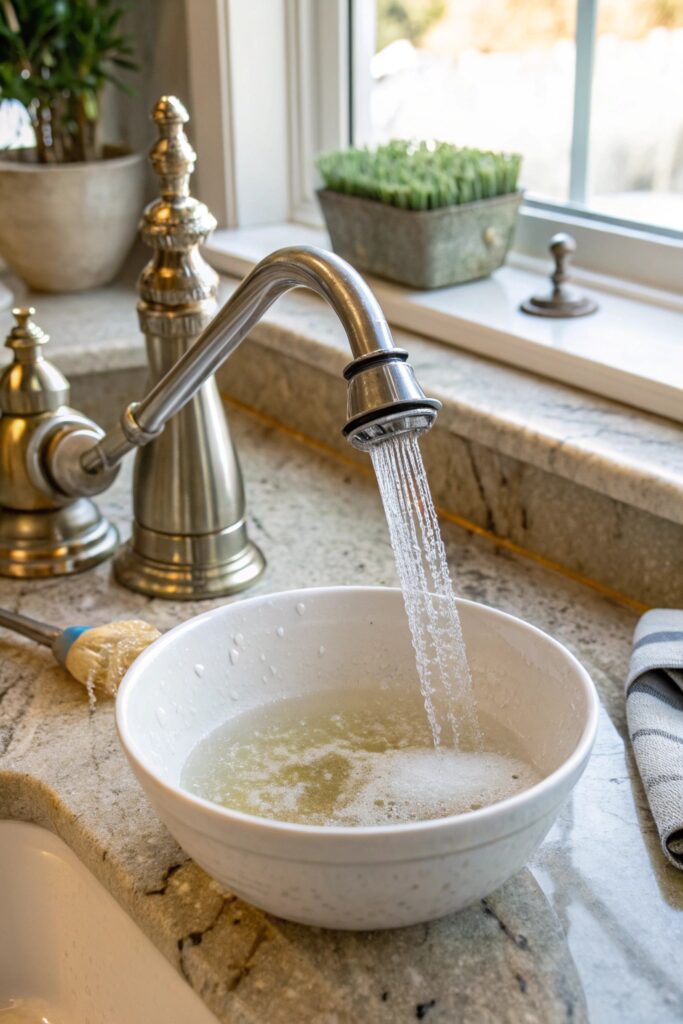
Hard water deposits are the most common reason a spray button sticks, since mineral crust can accumulate directly around the button’s edges and in the small gap it needs to move freely. A vinegar-soaked cloth wrapped around the sprayer head for 15-20 minutes usually dissolves enough buildup to restore movement.
For more stubborn deposits, a soft-bristle toothbrush dipped in white vinegar can work directly into the seam around the button without scratching the finish, which a metal tool or abrasive pad risks doing.
2. Remove and Clean the Diverter
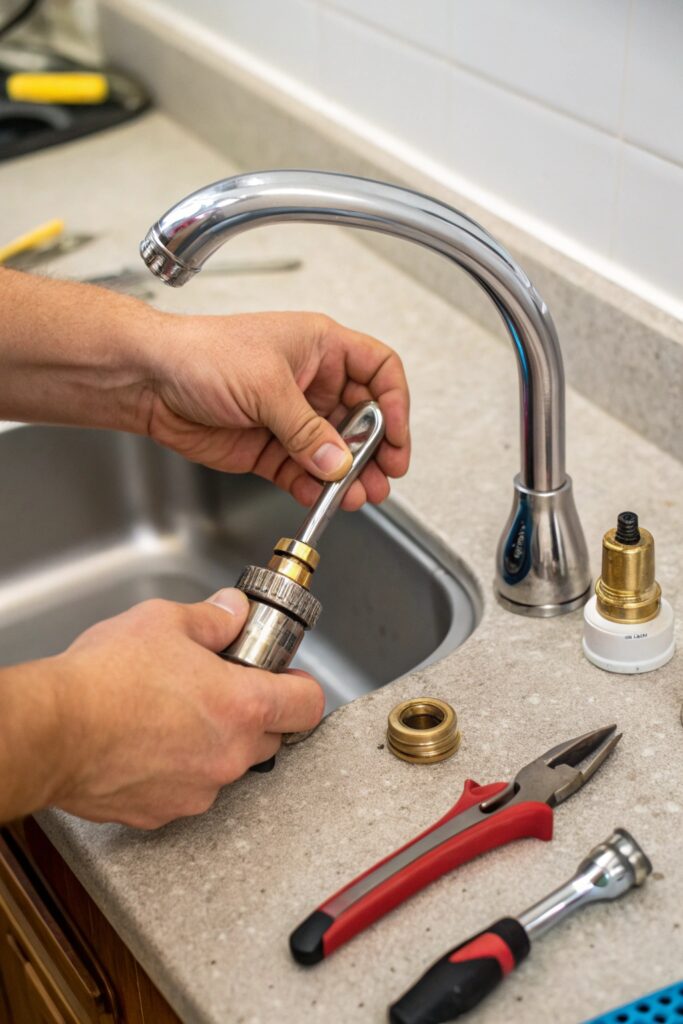
The diverter is the internal valve that redirects water between stream and spray modes, and it sits just behind the button mechanism inside the sprayer head — mineral buildup or debris here often causes a stuck button even after the external surface has been cleaned.
Most Delta pull-down sprayer heads unscrew or pop open with a small tab release (check your specific model number for the exact mechanism), allowing direct access to soak or clean the diverter component separately from the outer housing.
3. Check for Debris Inside the Spray Head
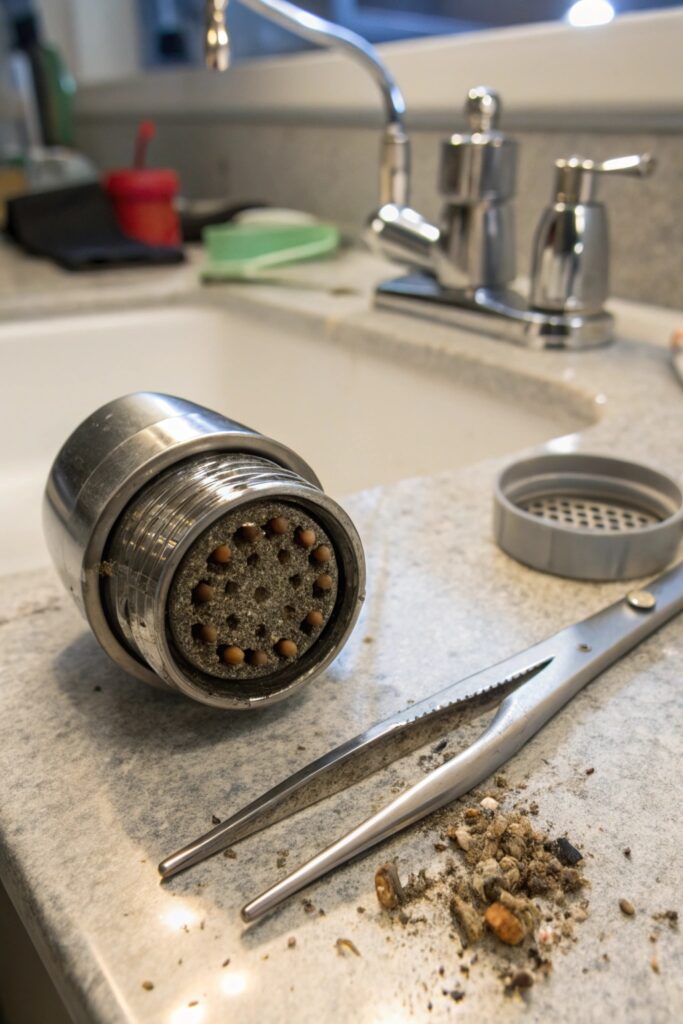
Sediment from municipal water lines or a recent plumbing repair elsewhere in the house can work its way into the sprayer head and physically block the button’s movement, independent of any mineral buildup.
Flush the sprayer head with clean water at moderate pressure after disassembly, and inspect the small internal channels for visible grit before reassembling.
4. Lubricate the Button Mechanism
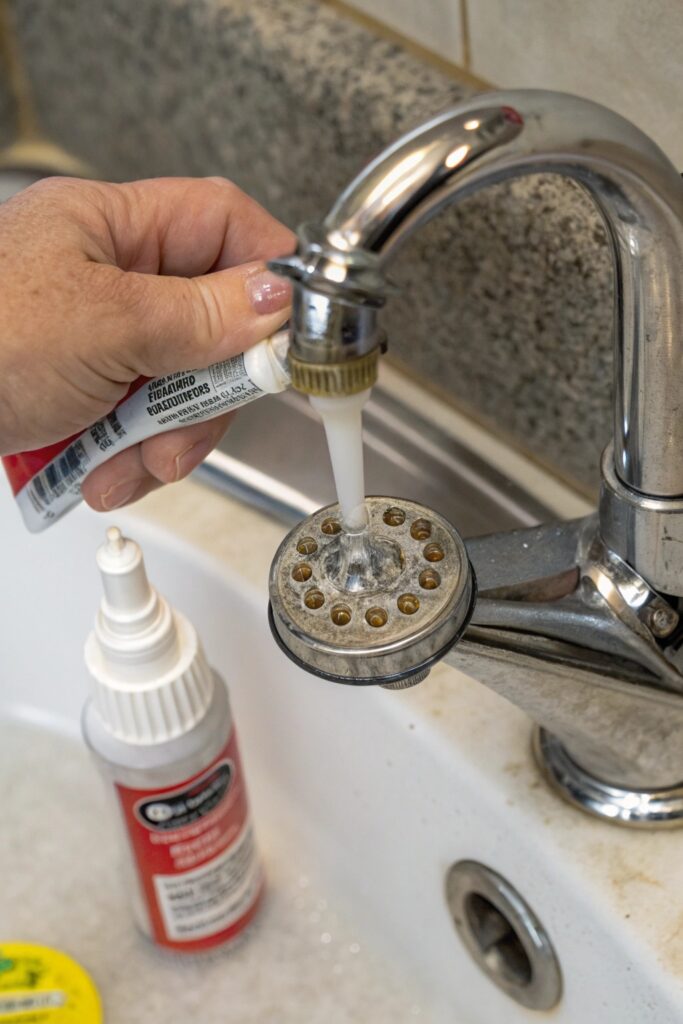
A stuck button that isn’t caused by buildup or debris often just needs lubrication — the internal spring and sliding components can bind up over time from normal wear, especially in faucets that see heavy daily use.
Use a silicone-based lubricant specifically rather than a petroleum-based one, since silicone won’t degrade the rubber seals inside the sprayer head the way some petroleum lubricants can over repeated application.
5. Inspect the Spray Head for Cracks or Warping
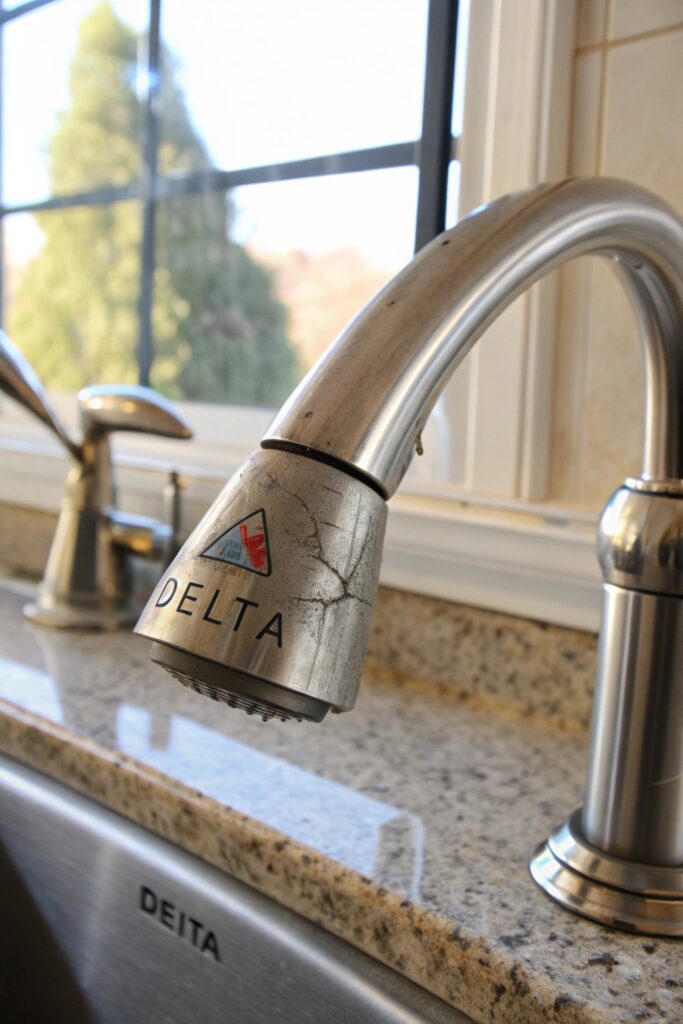
Physical damage to the sprayer head’s housing — from a drop, impact, or simply age-related plastic degradation — can throw off the button’s alignment enough to cause sticking, independent of any internal mechanical issue.
Check the housing seams and the area immediately around the button for visible warping or hairline cracks, which won’t resolve with cleaning or lubrication and instead point toward needing a replacement head.
6. Reset the Diverter by Cycling It Manually
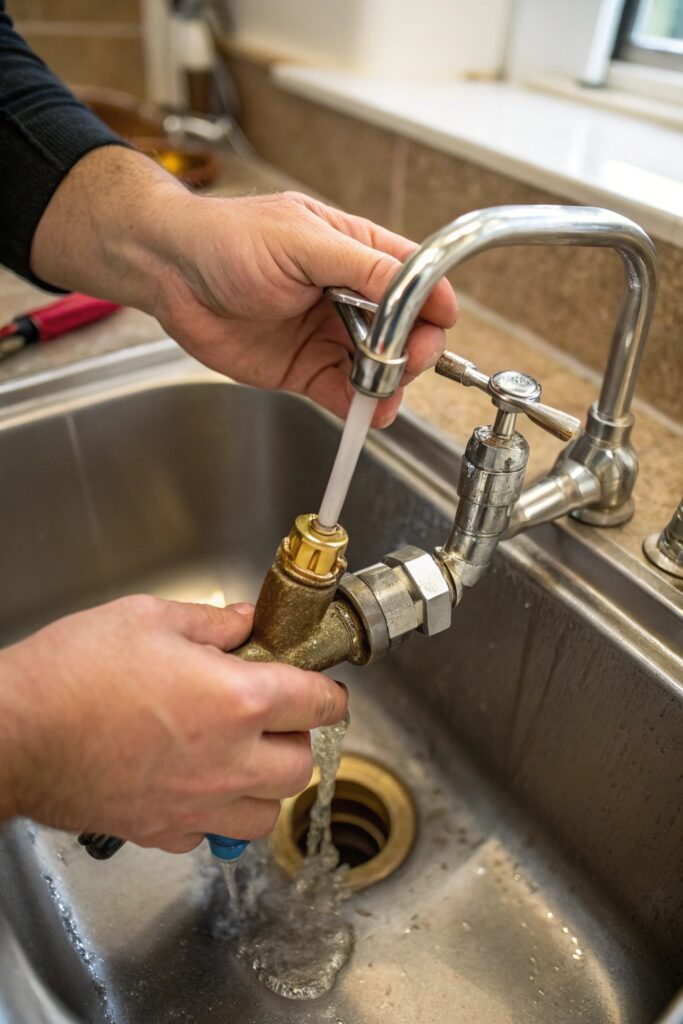
Pressing and releasing the button firmly several times in a row, with the water running, can reset a diverter that’s only mildly stuck rather than fully seized, since this manual cycling helps redistribute any minor internal buildup.
If the button moves at all but sticks partway rather than being fully immobile, this quick reset is worth trying before moving to disassembly, since it resolves a meaningful share of minor cases without any tools.
7. Replace the Diverter Valve
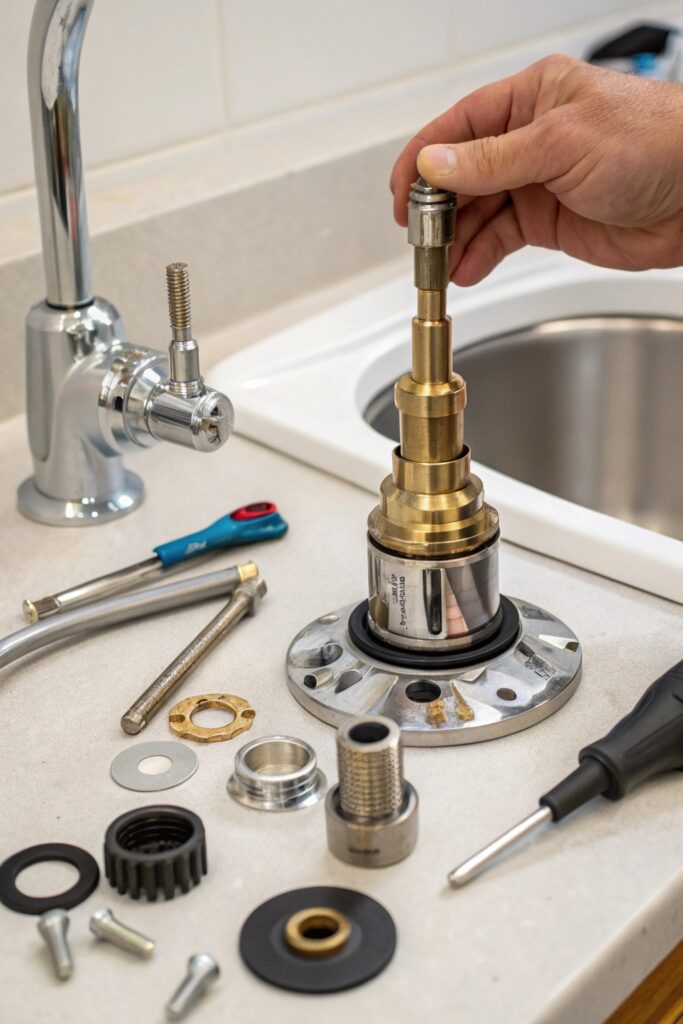
If cleaning and lubrication don’t resolve the issue, the diverter valve itself may be worn out internally — Delta sells replacement diverters specifically for most pull-down faucet models, typically $10-20 depending on the exact part number.
Match the replacement part number exactly to your faucet’s model, printed on the underside of the faucet base or in the original installation manual, since diverter valves aren’t universally interchangeable across different Delta faucet lines.
8. Check the Water Pressure
Unusually high water pressure can affect how the diverter valve engages, in some cases contributing to a button that feels stuck or difficult to press even when the mechanism itself is otherwise functioning normally.
A basic pressure gauge attached to an outdoor spigot ($10-15) confirms whether household pressure sits within Delta’s recommended range, generally 20-80 PSI depending on the specific faucet model.
9. Replace the Entire Spray Head
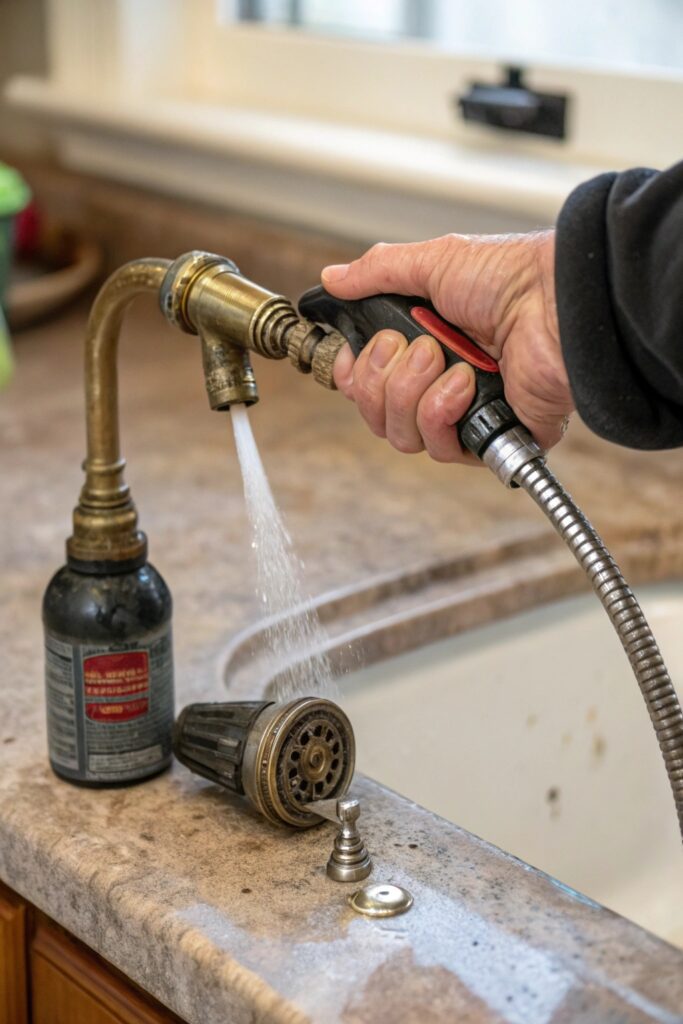
If the diverter replacement doesn’t resolve the issue, or if the sprayer head housing itself is cracked or warped, a full replacement head ($30-60 for most Delta models) is usually more cost-effective than continuing to troubleshoot individual internal components.
Delta’s pull-down and pull-out sprayer heads are generally designed to be a straightforward twist-off, twist-on replacement without needing to redo the faucet’s full installation, since the connection point is standardized within each product line.
10. Contact Delta for Warranty Support

Delta faucets carry a limited lifetime warranty on most residential models covering functional parts, including diverters and sprayer heads, which means a persistent stuck-button issue may be resolved with a free replacement part rather than an out-of-pocket purchase.
Have your faucet’s model number and proof of purchase or installation date ready when contacting Delta’s customer service, since warranty claims typically process faster with that information available upfront.
How to Prevent It From Happening Again
Regular light cleaning — wiping down the sprayer head with a vinegar-dampened cloth roughly once a month — prevents most of the mineral buildup that causes this issue in the first place, especially in hard water areas where deposits form faster than most people expect.
If your home has notably hard water, a whole-house water softener addresses buildup across every fixture rather than just the kitchen faucet, though it’s a larger investment worth considering only if you’re seeing similar mineral issues in multiple places, not just one sprayer head.
Final Thoughts
Cleaning and lubrication resolve the majority of stuck-button cases, since mineral buildup and normal mechanical wear are the most common underlying causes. If those don’t help, a diverter or sprayer head replacement is usually a lower-cost fix than replacing the whole faucet, and Delta’s warranty coverage is worth checking before purchasing a replacement part out of pocket.