
An open floor plan connecting living and dining areas works best when the two zones are treated as one coordinated space rather than two separate rooms that happen to share a floor. The choices below focus on the specific details — rug sizing, sightlines, material continuity — that make that connection read as intentional.
Below are 10 ways to build that connection, with the practical specifics for each.
1. Use a Consistent Color Palette
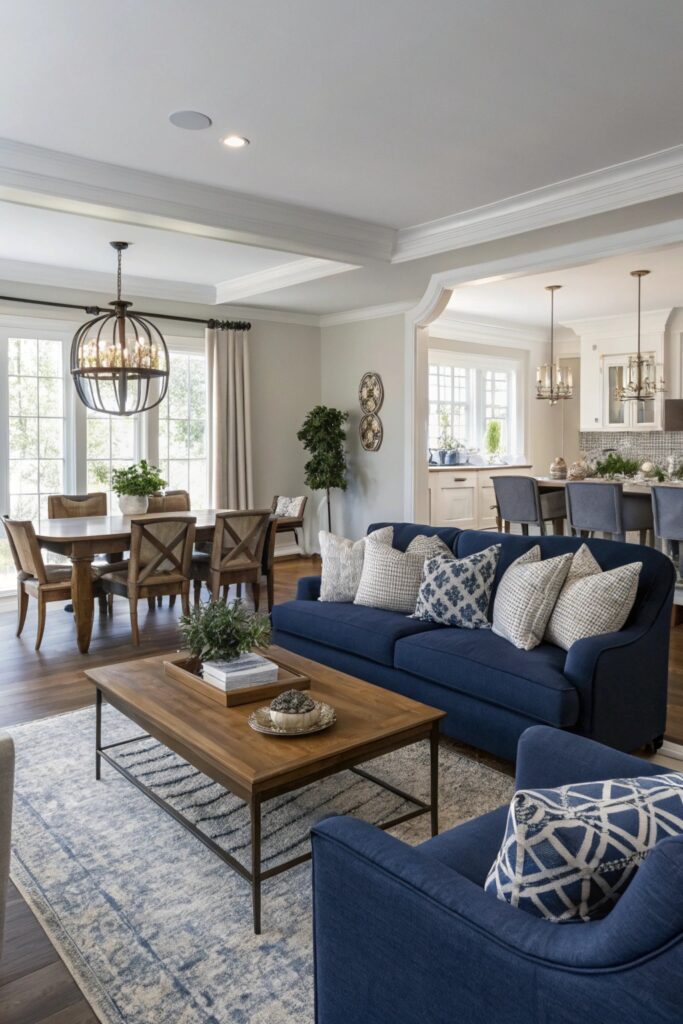
The 60-30-10 rule — a dominant color at 60%, a secondary at 30%, and an accent at 10% — works well applied across both rooms as one system rather than picking separate palettes for each. Using the same wall color throughout, even if furniture differs, does more to visually merge the spaces than any other single choice.
2. Anchor Each Area with Rugs
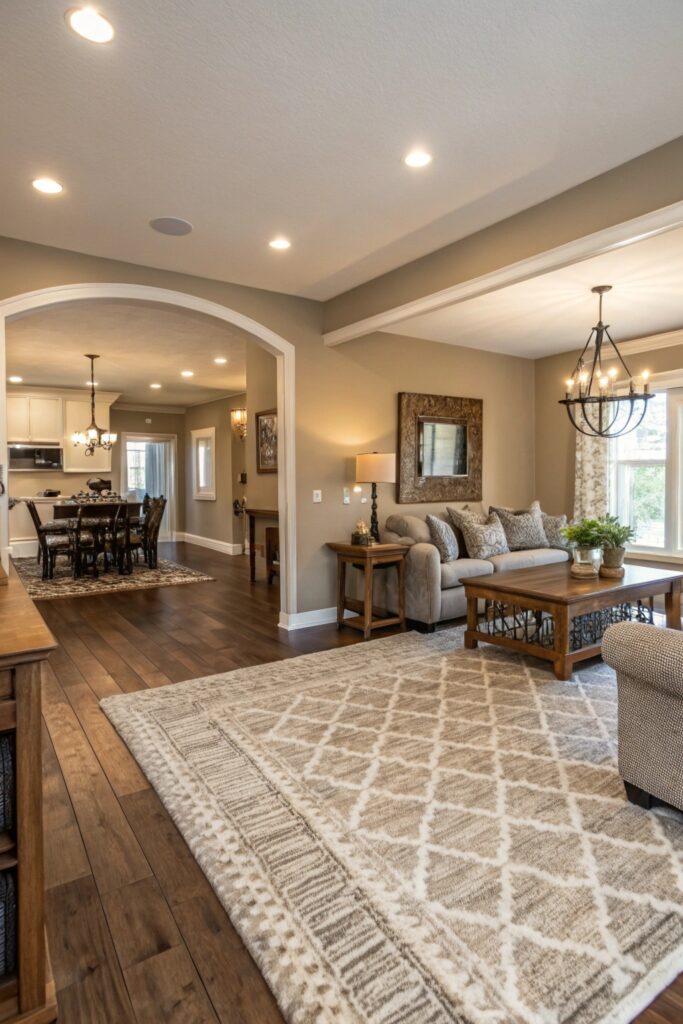
A living room rug should extend at least under the front legs of the sofa and chairs — pulling furniture fully off the rug makes the seating area look disconnected from the floor. For the dining side, leave 24 to 30 inches of rug beyond the table’s edge so chairs stay on it even pulled out.
Two rugs in the same material but different pattern, or the same color family in different textures, read as intentionally paired rather than mismatched.
3. Align Furniture Layouts for Flow
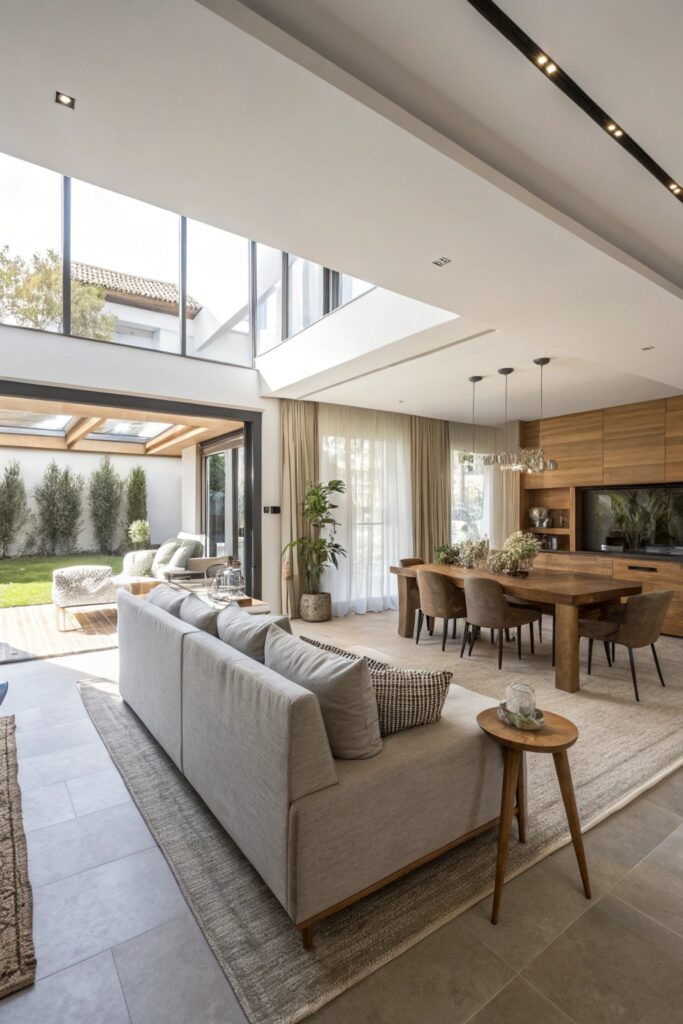
Keep at least 36 inches of clear walking path between the two zones — anything narrower starts to feel like a bottleneck rather than a transition. Orienting the back of a sofa toward the dining area, rather than a bookshelf or console, creates an implied boundary without needing an actual wall.
4. Repeat Materials and Textures
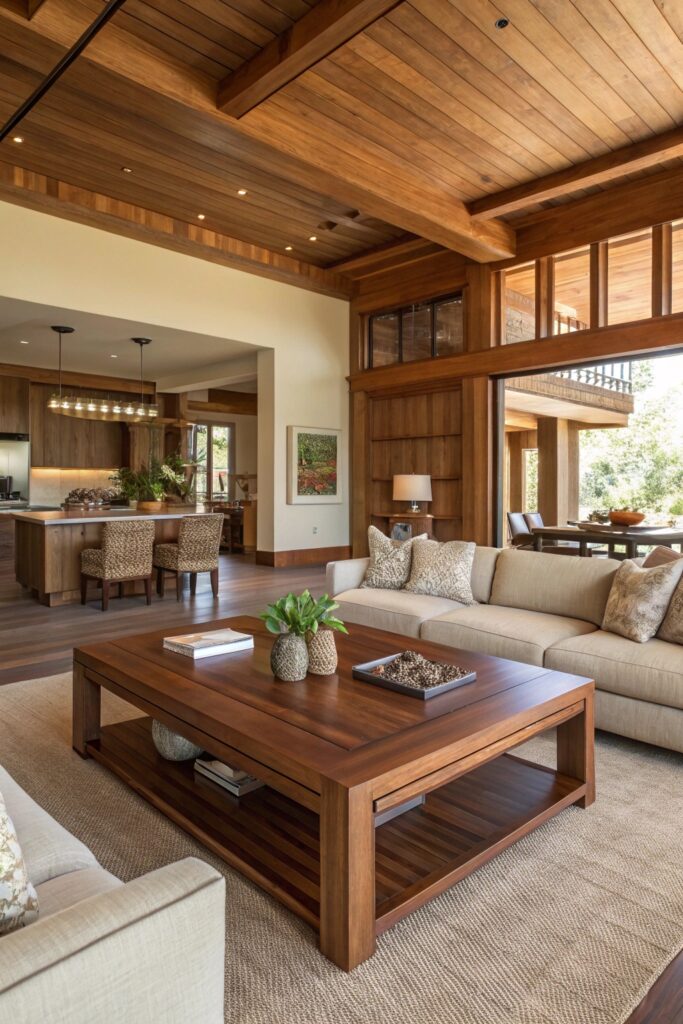
Matching the wood tone between a coffee table and dining table ties the spaces together, though intentional contrast — a light coffee table against a dark dining table — can work too as long as the same wood tone shows up somewhere else in each room, like a media console or sideboard.
5. Install Coordinated Lighting
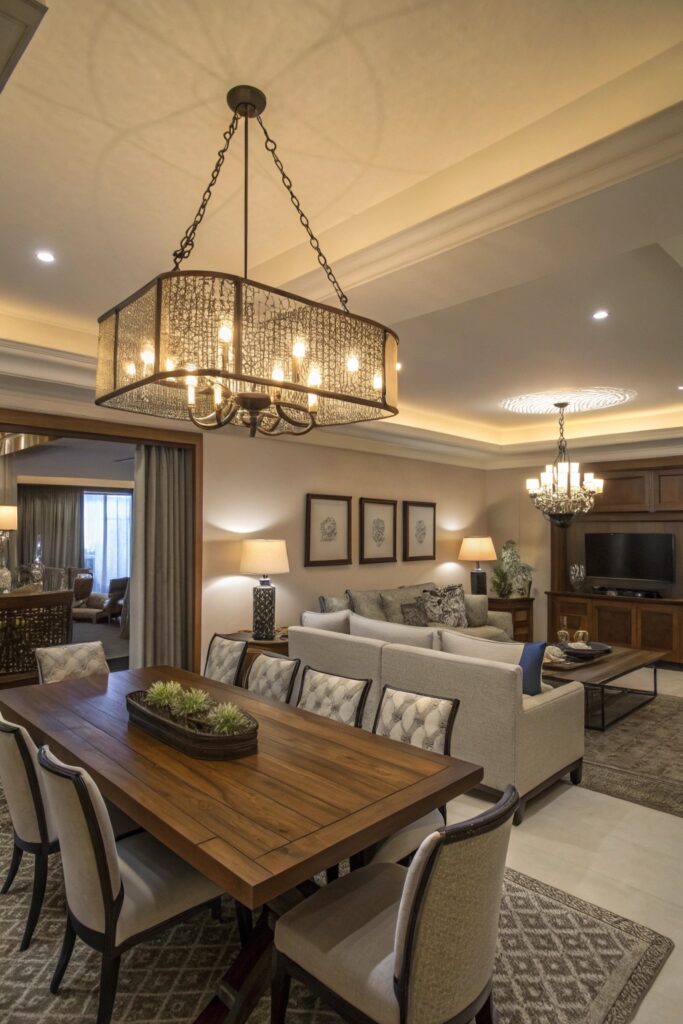
The two zones typically need different fixture types — floor and table lamps for ambient light in the living room, a pendant or chandelier hung 30 to 36 inches above the dining table — but keeping them in the same finish family (all brass, all black) reads as one coordinated plan rather than two separate rooms.
6. Create a Visual Divider
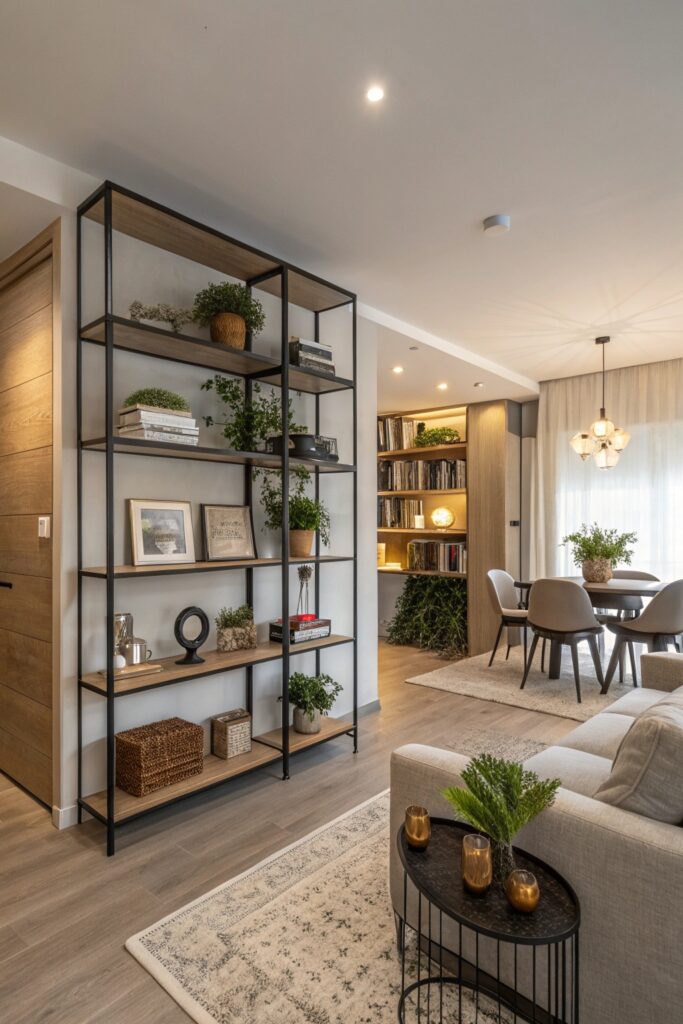
A console table behind the sofa works as a soft divider if it’s sized to roughly two-thirds the sofa’s length — shorter looks like an afterthought, longer overwhelms the sofa. Open shelving units or a half-wall achieve the same separation while still letting light and sightlines pass through.
7. Use Artwork to Bridge Both Spaces
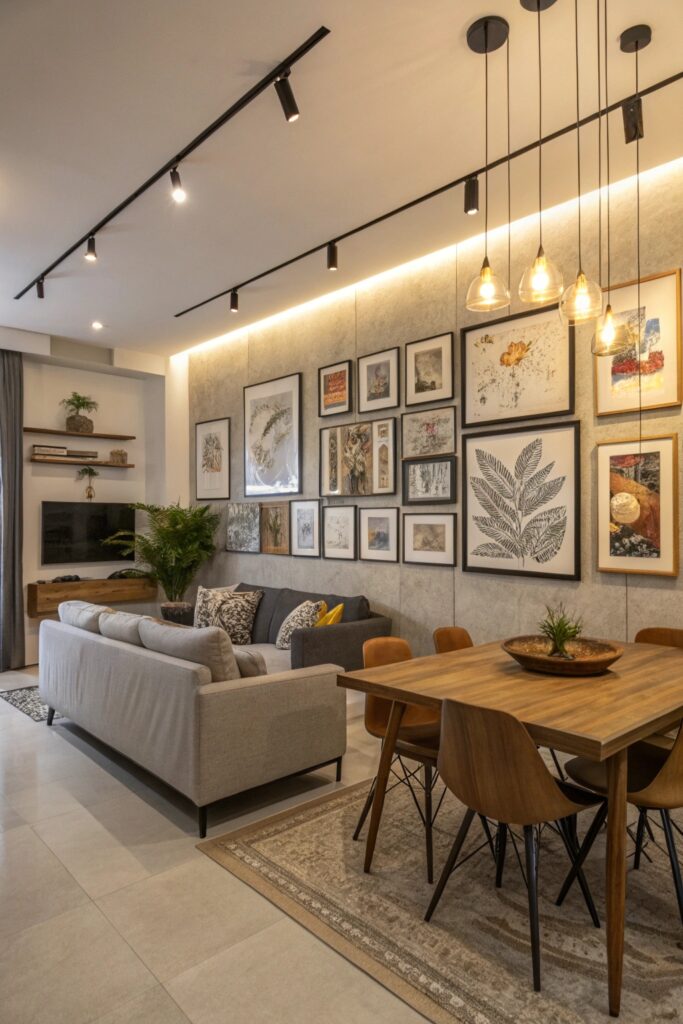
The art in each zone doesn’t need to match, but keeping frame finishes consistent — all black, all natural wood — creates a visual thread between the two even when the subject matter differs completely.
8. Maintain Consistent Flooring
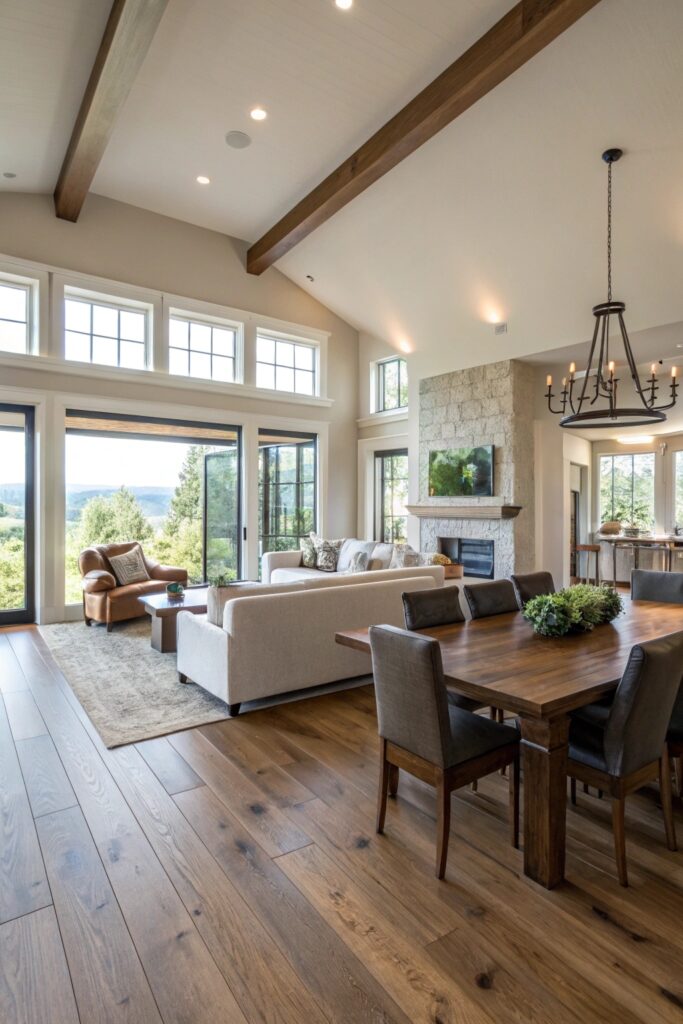
The same flooring material run continuously through both zones is the single biggest factor in whether an open floor plan reads as one space or two. If a material change is unavoidable — carpet in the living room, hard flooring under the dining table — a flush transition strip looks considerably more finished than a raised threshold.
9. Coordinate Furniture Styles
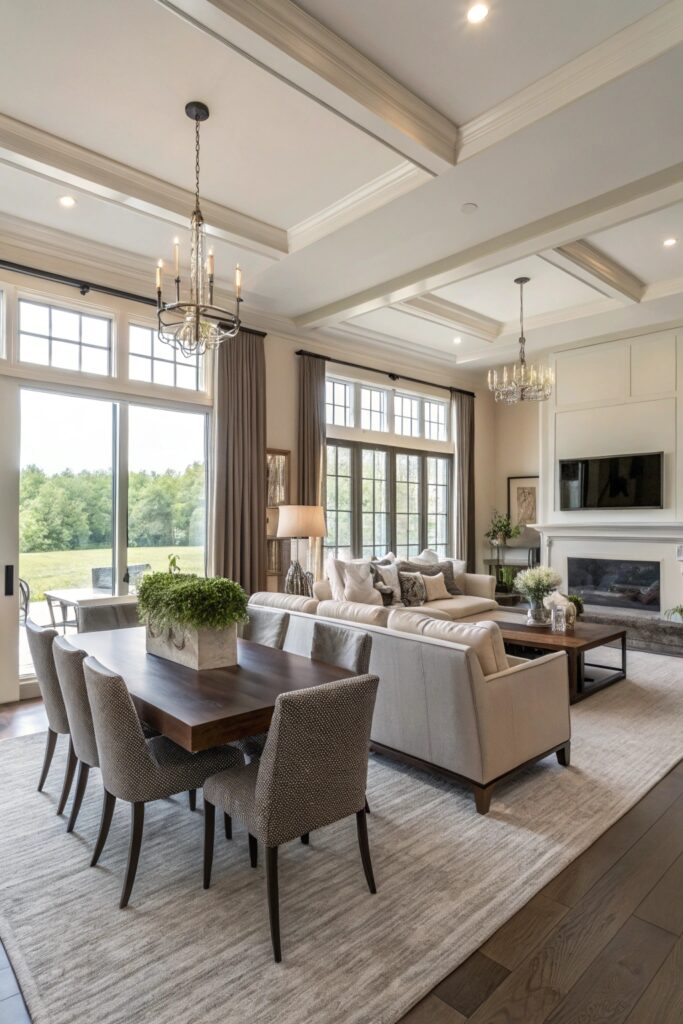
Furniture in both zones doesn’t need to be a matching set, but keeping leg style consistent — tapered mid-century legs throughout, or the same turned wood style — does more to unify mismatched pieces than color coordination alone.
10. Add Plants or Decor That Connect Both Spaces
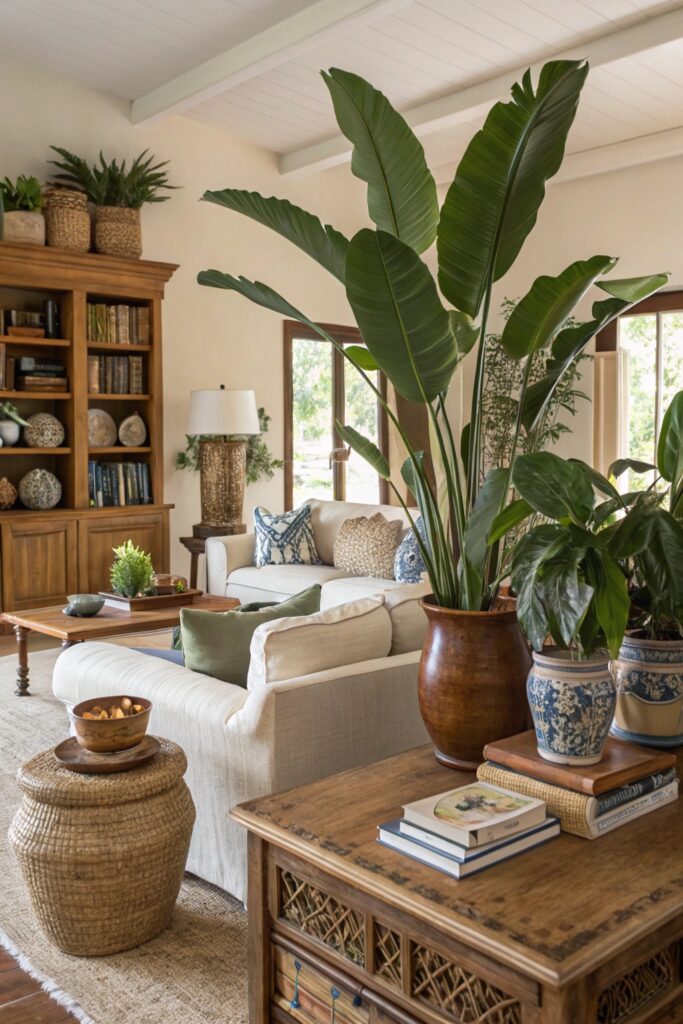
Repeating the same plant variety or a specific decor color at both ends of the space creates a visual echo that pulls the eye from one zone to the other, reinforcing that they’re part of the same room even with different furniture in each.
Scaling Furniture to the Combined Space
Furniture proportioned for a smaller, separate room can look undersized once the walls between two rooms come down, since the eye now measures each piece against the full combined square footage rather than a single enclosed room. A sofa or dining table that felt appropriately sized in a divided layout often benefits from being replaced with a slightly larger piece, or supplemented with an oversized area rug, once the space reads as one continuous room.
A Common Mistake: Matching Everything Too Closely
It’s tempting to buy a matching living-and-dining furniture set to guarantee cohesion, but identical finishes and styles throughout can flatten the space and make it read as a showroom display rather than a lived-in home. A shared color palette and consistent material language do the connecting work — the individual pieces themselves benefit from some variation in shape or era.
What This Refresh Costs
Rugs, artwork, and lighting swaps to unify an existing layout typically run $400 to $1,200 depending on rug size and fixture quality.
A fuller update including new flooring or replacing mismatched furniture runs considerably higher — flooring alone for a combined 300 to 400 square foot space often costs $2,000 to $6,000 depending on material, before factoring in new furniture.
Testing paint or fabric samples under the room’s actual mixed lighting — natural daylight plus whatever fixtures you’re installing — matters more here than in a single-purpose room, since a color that reads consistently under a living room’s warm lamplight might shift under a dining area’s brighter overhead light.
The One Rule That Guides Everything Else
If you only take one principle from this list, it’s maintaining an uninterrupted sightline between the two zones. Standing in the living room, you should be able to see clearly into the dining area without a piece of furniture, a wall, or a change in flooring breaking that view. Most of the choices above — consistent flooring, aligned furniture, coordinated color — exist in service of that one sightline, so when in doubt about a specific decision, ask whether it preserves or interrupts the view between the two spaces.