
A moody dining room depends on getting the fundamentals right — wall color with a low light reflectance value, layered rather than single-source lighting, and enough contrast in texture and sheen to keep a dark room from reading flat. The details below cover the specifics that separate a well-executed moody room from one that just looks dim.
Below are 11 elements to work through, in roughly the order they’re worth tackling if you’re starting from scratch.
1. Embrace Dark Wall Colors
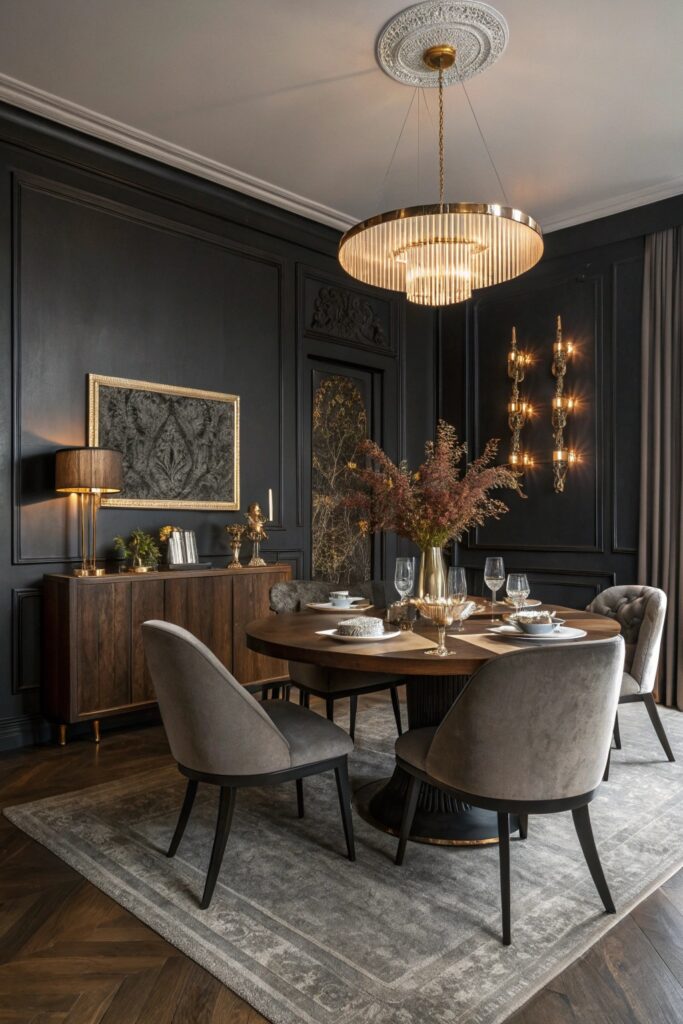
Colors with a light reflectance value (LRV) under 10 — deep greens like Farrow & Ball’s Studio Green, near-black blues, or charcoal — create the enveloping effect this style depends on. A matte or flat finish hides wall imperfections better than eggshell, though it marks more easily, so it’s a trade worth weighing if the room sees heavy traffic.
2. Layer Dramatic Lighting
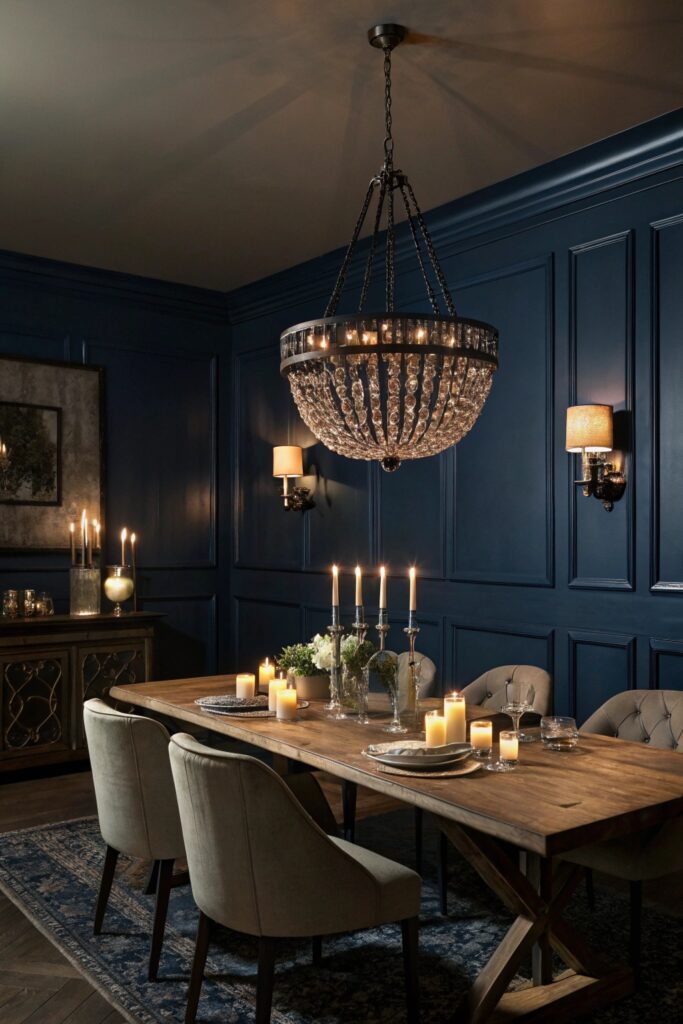
A single overhead chandelier isn’t enough here — pair it with wall sconces at buffet height (around 60 to 66 inches from the floor) or picture lights over artwork. Dimmers on every fixture matter more in a dark room than a light one, since the difference between 100% and 40% brightness changes the whole mood.
Warm bulbs in the 2200K to 2700K range read as candlelight-adjacent, while anything above 3000K starts to fight the room’s dark palette instead of complementing it.
3. Add Rich Wood Furniture
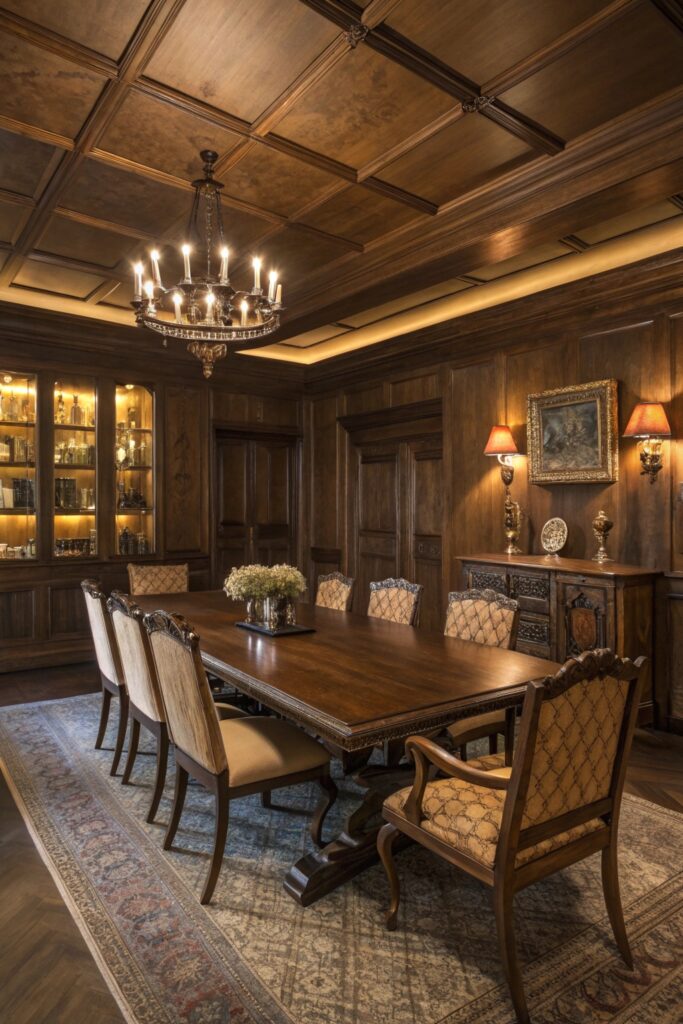
Walnut, mahogany, or ebonized oak all read well against dark walls, but since the wall and furniture won’t contrast much in color, the visual separation has to come from sheen and grain instead — a glossier table finish against matte walls, for instance.
4. Mix Modern and Vintage Pieces
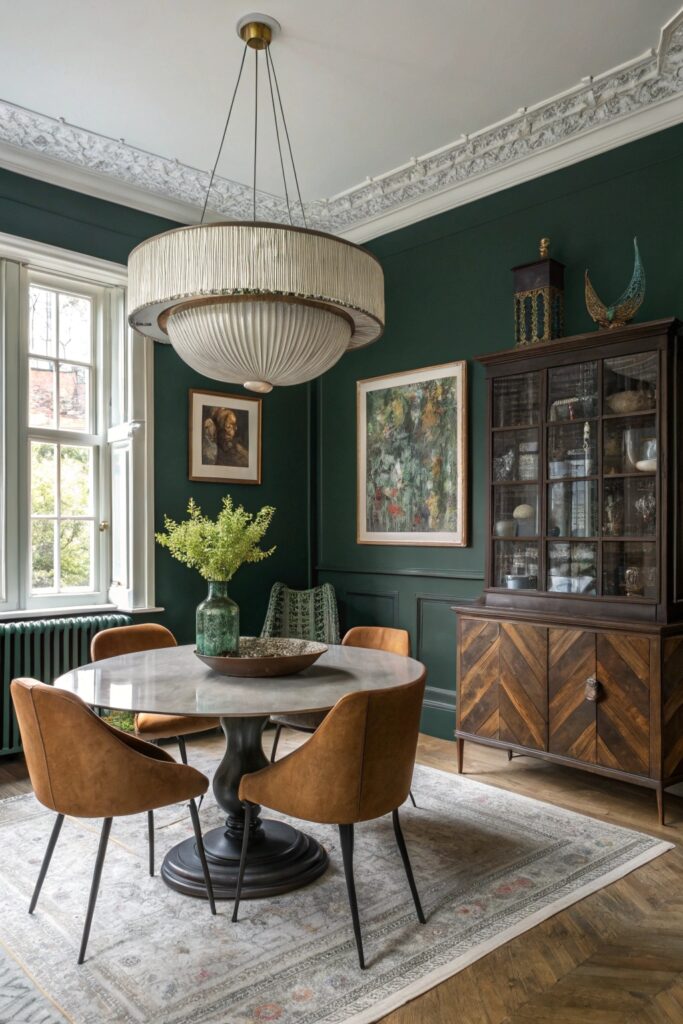
A common approach is anchoring the room with one clearly modern piece — a sculptural light fixture or minimalist chairs — against several vintage or antique pieces, rather than splitting the room evenly, which tends to look more like two different rooms collided.
5. Use Statement Artwork
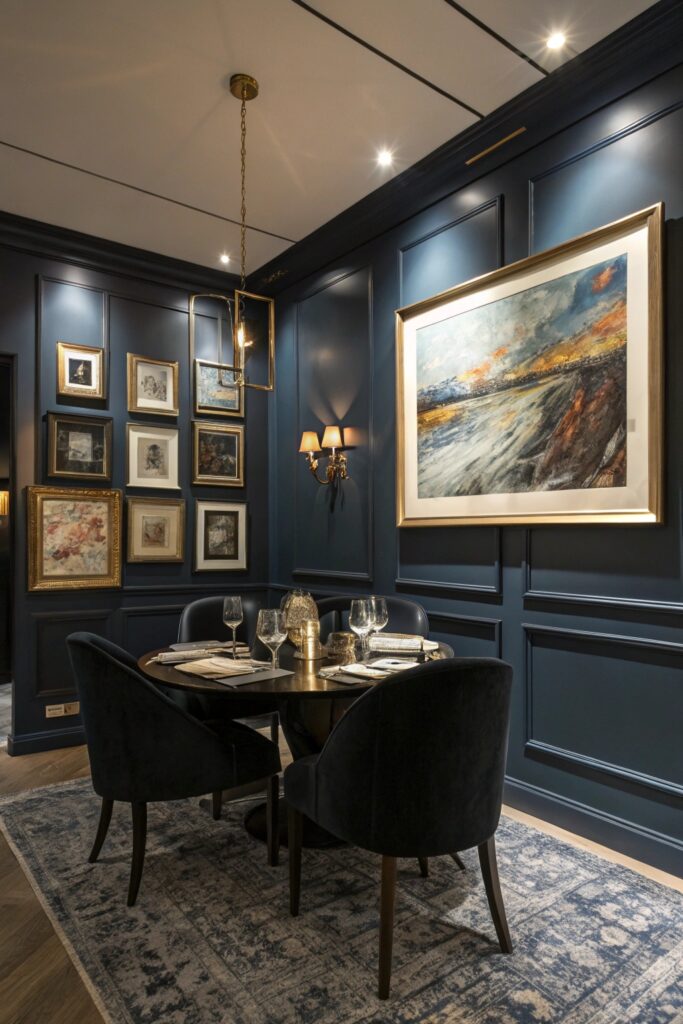
Art hung over a sideboard or buffet looks proportional at roughly two-thirds the width of the furniture below it. A dark frame will nearly disappear against a dark wall, which works if you want the art itself to float; a lighter or metallic frame creates a visible boundary if you want the piece to read as a distinct object.
6. Bring in Luxe Textures
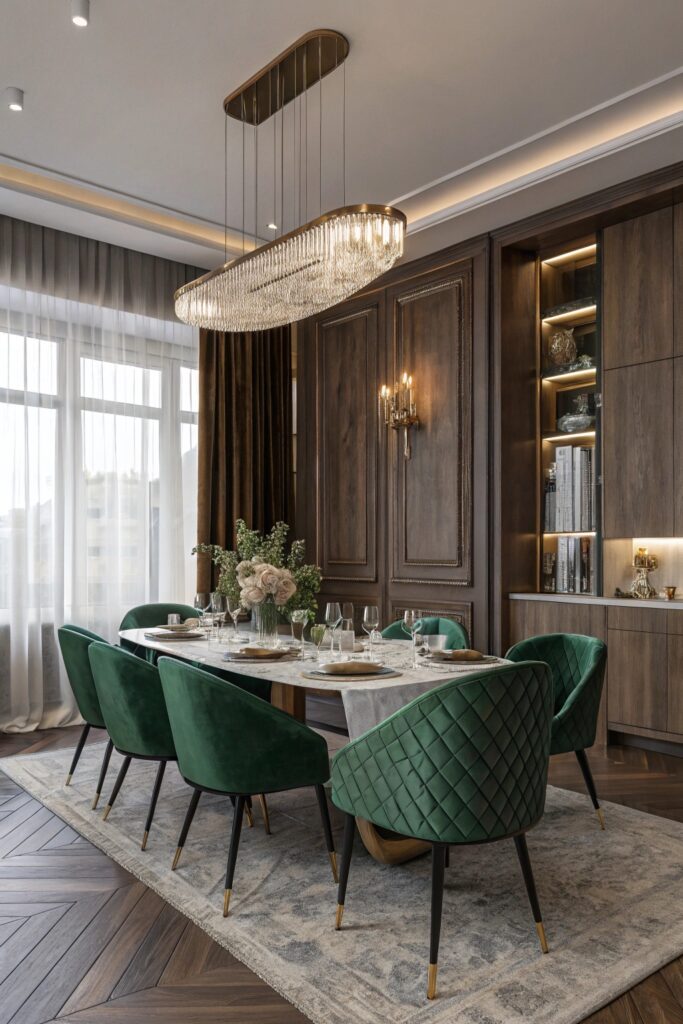
For dining chair upholstery specifically, look for a fabric rated at 15,000 double rubs or higher (a measure of abrasion resistance) if the chairs will see regular use — velvet varies widely in durability, and not every velvet sold for furniture is rated for dining-room wear.
7. Add a Dramatic Rug
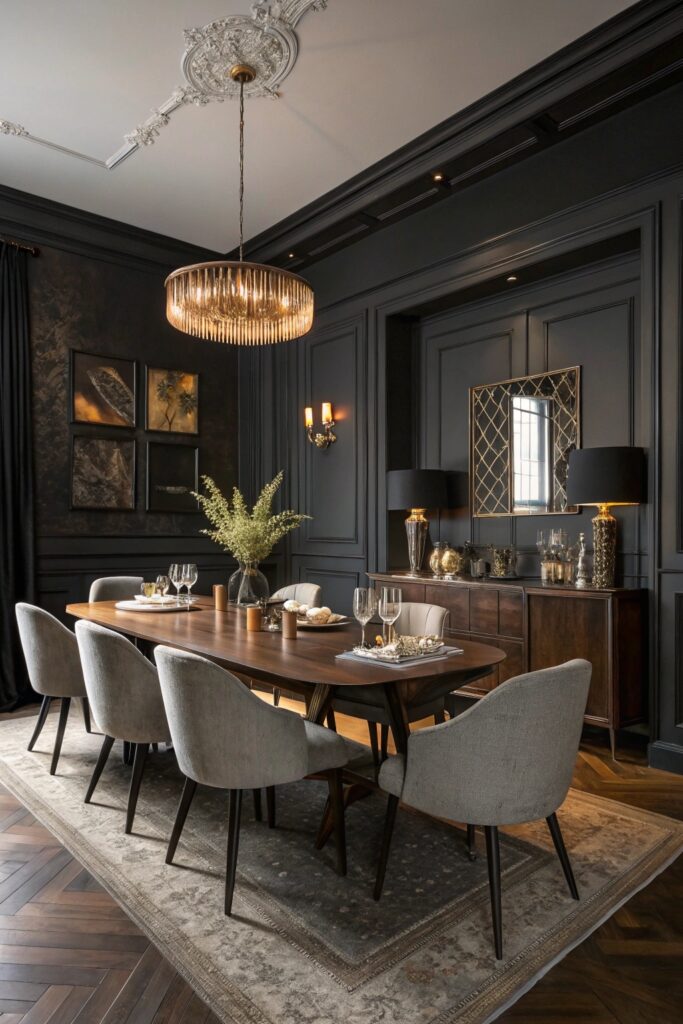
Size the rug so all four legs of every chair stay on it even when pulled out from the table — that typically means 24 to 30 inches of rug beyond the table’s edge on each side. Wool holds color well but isn’t the easiest to clean under a dining table; a performance fiber rug handles crumbs and spills with less fuss.
8. Use Moody Table Styling
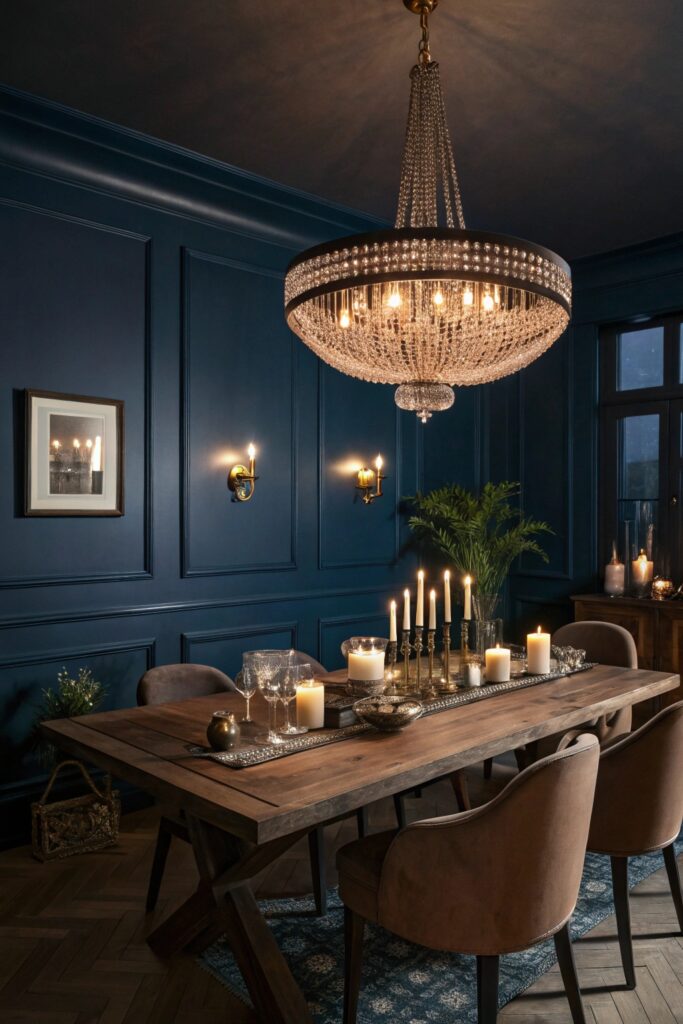
Varying candle heights across a table setting reads more intentional than a uniform row — mix a few taper candles with lower pillar candles rather than matching sets. The same logic applies to place settings: slightly mismatched vintage flatware or glassware suits this style better than a perfectly matched set.
9. Incorporate Metallic Accents
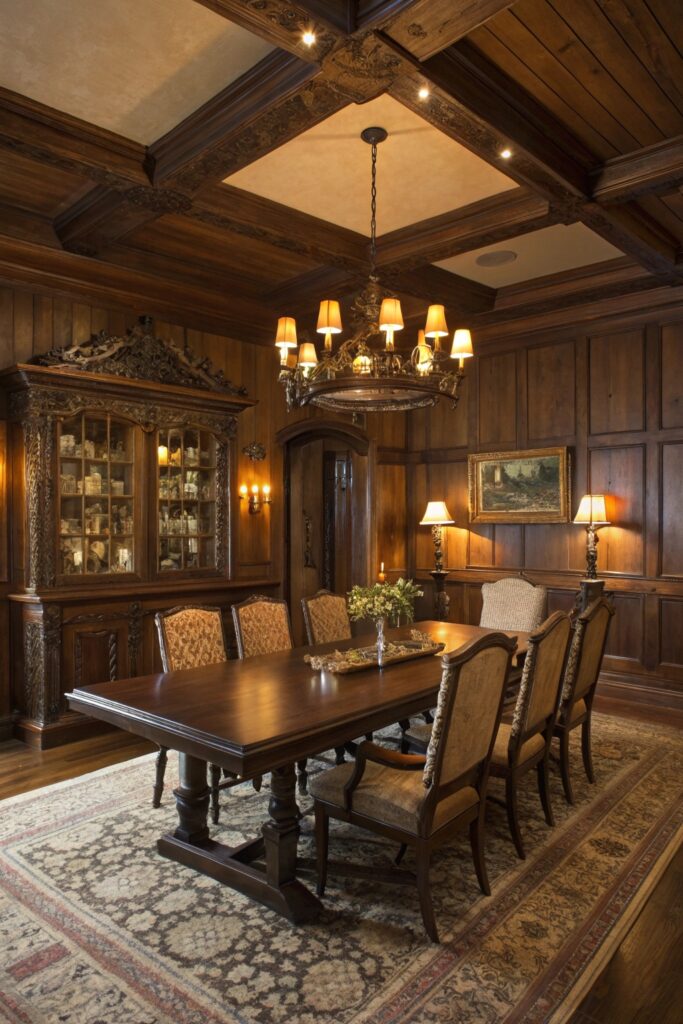
Pick one dominant metal tone — warm (brass, gold) or cool (chrome, nickel) — rather than mixing both throughout the room. Unlacquered or aged brass finishes suit a moody room better than a bright polished chrome, which can look sterile against dark walls.
10. Introduce Dark Curtains
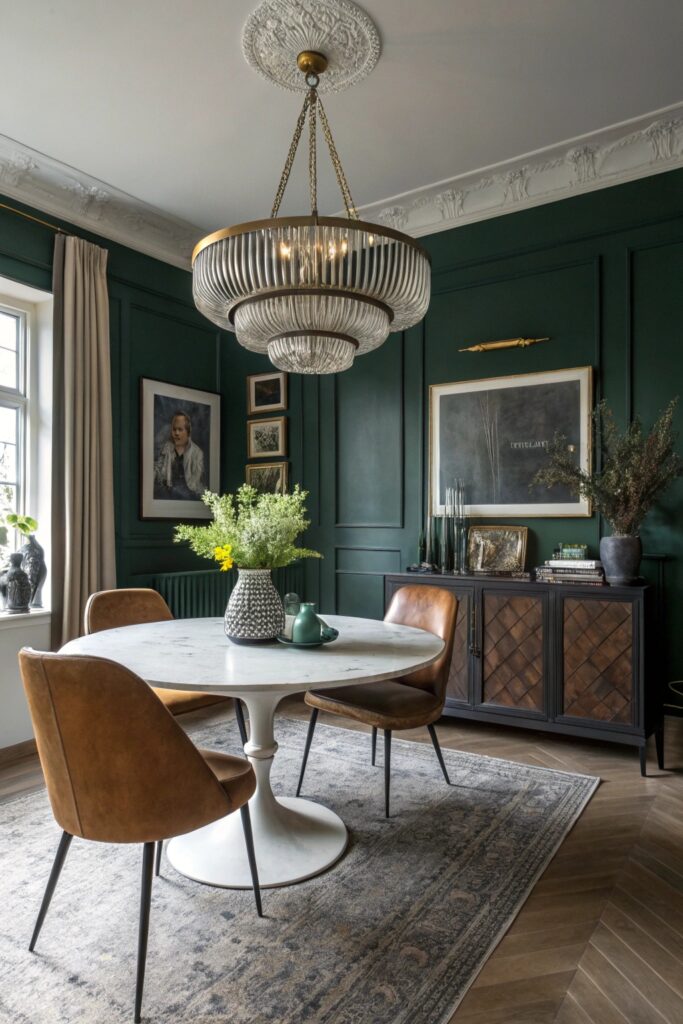
Mounting curtain rods 4 to 6 inches above the window frame, or closer to the ceiling if the room allows it, makes the window and the room feel taller. Velvet drapes add both insulation and light control, which matters if the room already gets limited natural light.
11. Bring in Natural Elements
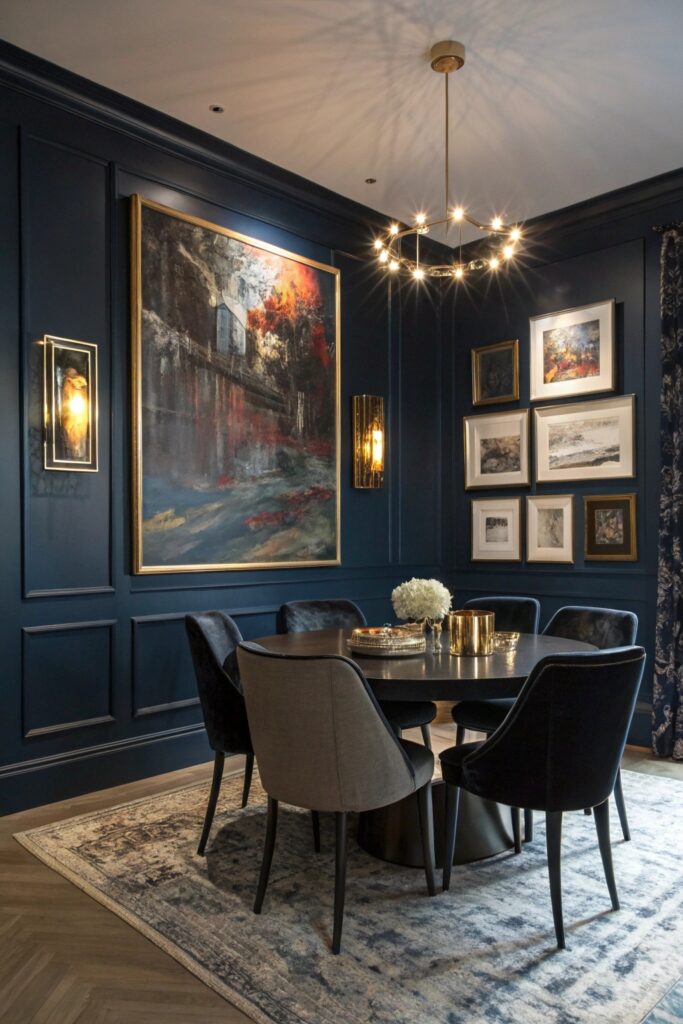
Since moody rooms often have less natural light by design, choose plants that tolerate low light specifically — snake plants, ZZ plants, and pothos all hold up in these conditions, while most flowering plants will struggle.
Using Mirrors to Offset a Dark Palette
A large mirror positioned to reflect a window or light fixture can meaningfully brighten a dark room without changing the color scheme. Placing it directly across from the main light source — rather than at an angle — bounces the most light back into the room, which matters if the dining room has only one window or a single overhead fixture.
What This Makeover Costs
Paint and a few accent changes — new curtains, a rug, updated lighting — typically run $500 to $1,500 depending on room size and fixture quality.
A fuller refresh including new furniture and statement lighting runs considerably higher, often $3,000 to $8,000, with upholstered dining chairs and a quality chandelier usually accounting for the largest share of that budget.
A Common Mistake to Avoid
The most frequent misstep with this style is going dark on every surface at once — walls, floor, furniture, and textiles all in near-black tones — which flattens the room instead of adding depth. Keeping at least one element lighter, whether that’s the ceiling, the floor, or a single piece of furniture, gives the eye somewhere to rest and keeps the dark palette from reading as a void rather than a considered choice.
Lighting Is the Element That Makes or Breaks This Style
Of everything on this list, lighting has the biggest effect on whether a dark dining room reads as intentional and elegant or just underlit. A room with the right wall color but only a single overhead fixture will still feel like a dim version of a normal room. Layering ambient, task, and accent lighting — and putting dimmers on all of it — is what actually creates the atmosphere the other choices are meant to support.