
Modern Easter decor leans on natural materials and a muted palette rather than the bright pastels and literal bunny-and-egg imagery of traditional holiday decorating, which also means most of these pieces can stay useful well beyond the single week of Easter itself.
Below are 12 ways to build that look, with real materials and costs for each.
1. Neutral-Toned Egg Displays
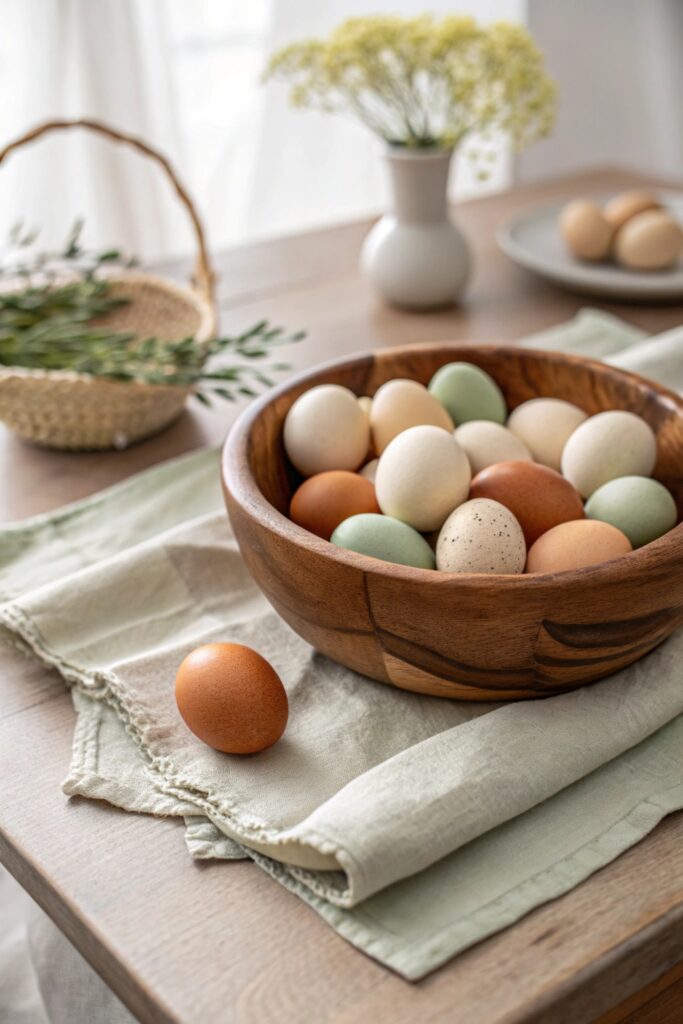
Eggs dyed in muted terracotta, sage, and cream (using natural dyes like onion skin or beet juice, or simply unpainted brown eggs) read considerably more modern than the bright primary colors of traditional Easter egg dye kits. Displayed in a simple wood bowl or ceramic dish, they double as a centerpiece rather than a purely kid-focused craft project.
Natural egg dyes fade faster than synthetic kits, typically within a week, so dye eggs no more than 2-3 days before you plan to display them if you want the muted color at its most vivid.
2. Dried and Faux Florals
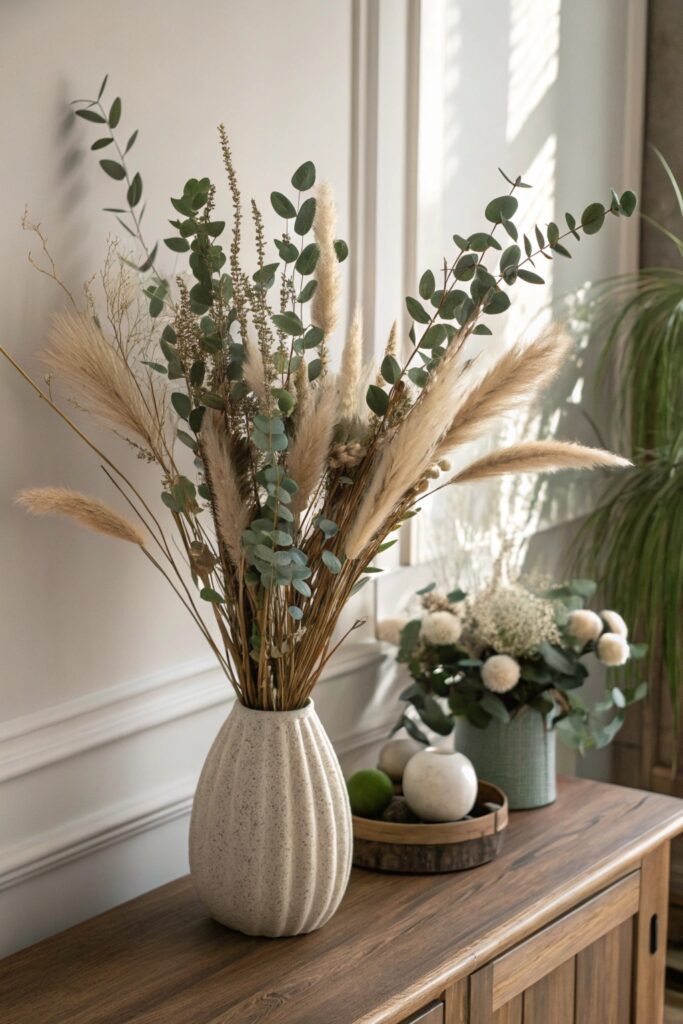
Dried pampas grass, faux magnolia stems, or preserved eucalyptus ($15-25 per bunch) bring spring’s floral association without the maintenance or short lifespan of fresh flowers, and they can be reused well beyond the holiday itself.
Preserved eucalyptus specifically holds its color and shape for 6-12 months if kept out of direct sunlight, making it a genuinely reusable purchase across multiple seasons rather than a single-holiday expense.
3. Minimalist Bunny Silhouettes
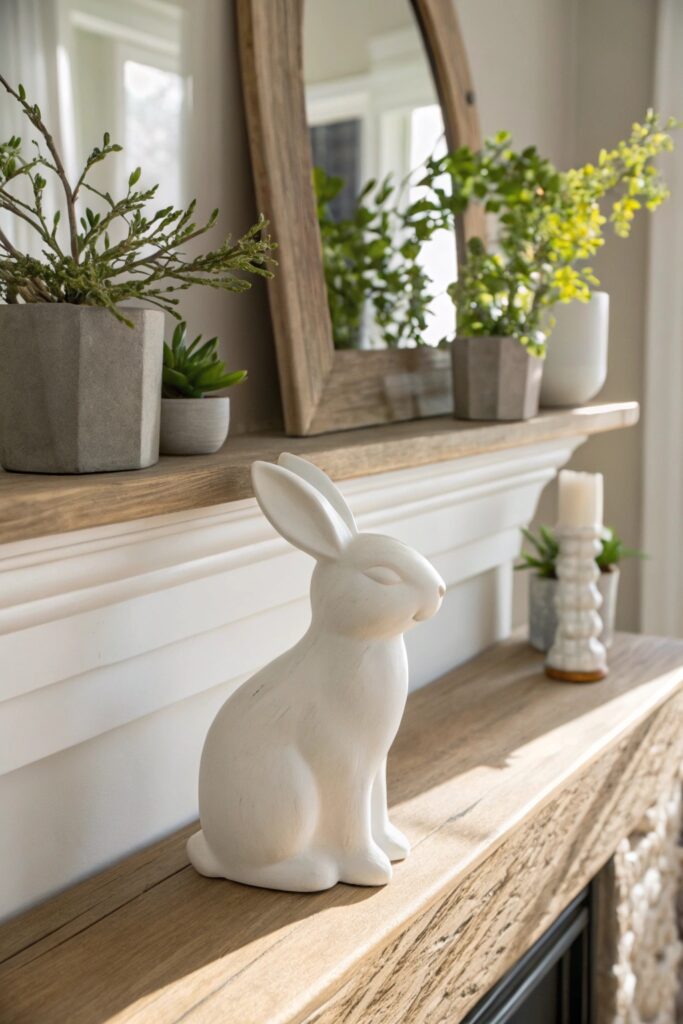
A simple wood or ceramic bunny silhouette ($10-20), rather than a cartoonish plush character, nods to the holiday’s imagery while staying visually consistent with a more restrained, adult-oriented decor scheme.
A pair of bunny silhouettes at different heights on a mantel or shelf reads more considered than a single centered piece, using the same height-variation principle that applies to any styled display.
4. Woven Baskets as Statement Pieces
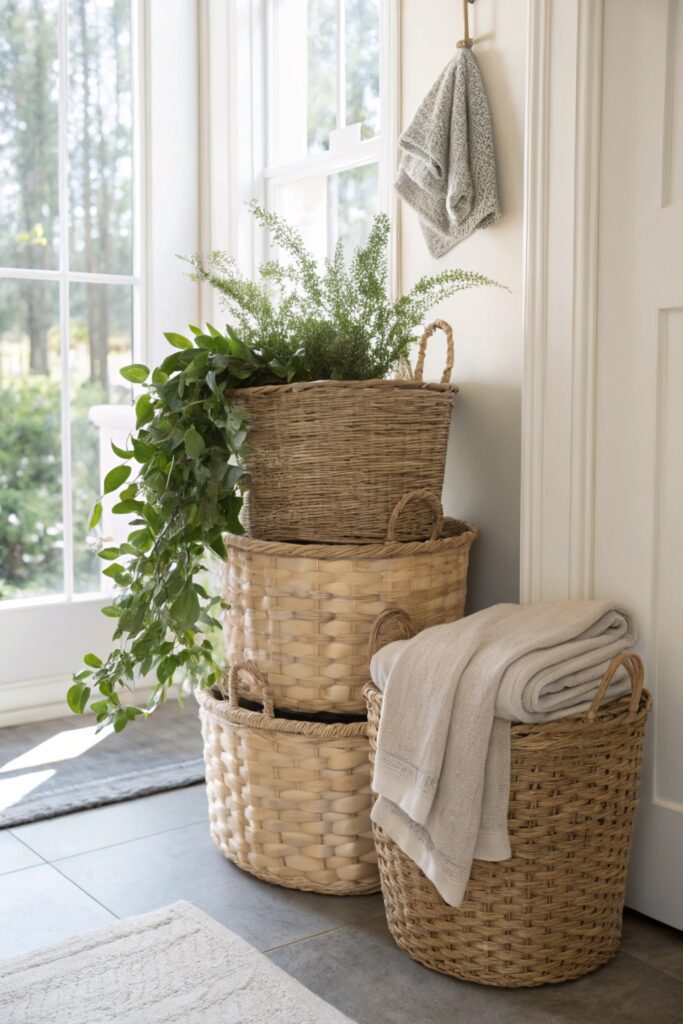
A single large, well-made woven basket ($20-40) works as both practical egg-hunt storage and a standalone decor object the rest of the year, unlike a plastic Easter basket that only serves one purpose for one week annually.
Line a basket with a simple cotton or linen liner if using it for actual egg-hunt storage, which protects the weave from cracked-egg residue and extends the basket’s usable life as decor afterward.
5. Pastel Table Linens
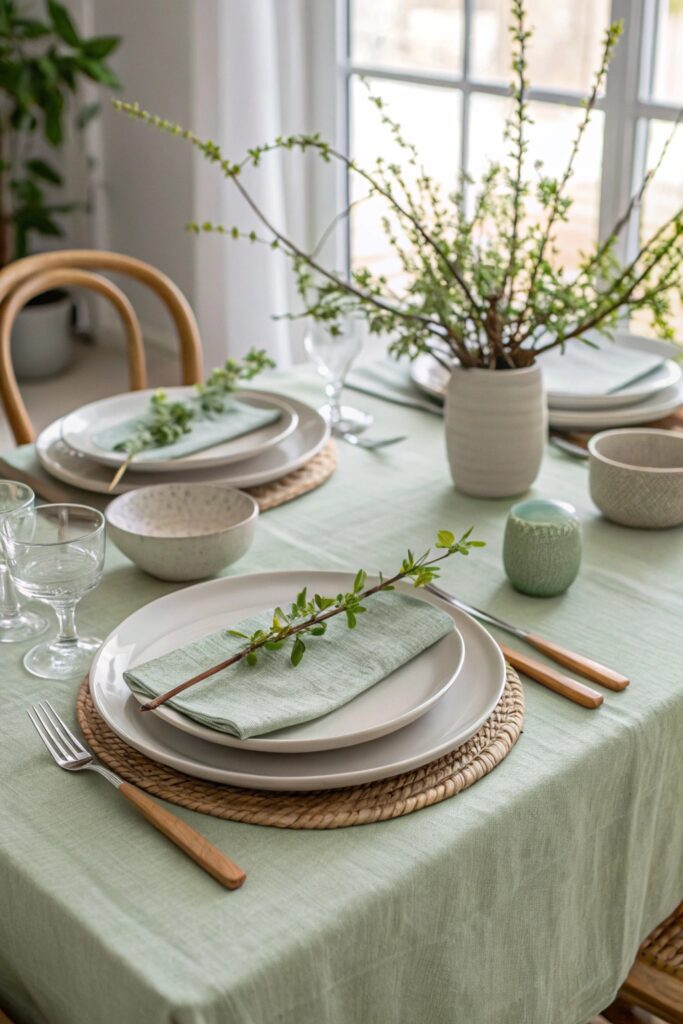
A solid pastel tablecloth or runner in sage, blush, or pale yellow ($20-35) introduces the holiday’s traditional color palette in a single, easily swappable piece rather than committing an entire room to pastel tones.
A pastel runner paired with white or cream dishware lets the runner carry the seasonal color while everything else stays neutral, avoiding the flat look of an entirely matched pastel table.
6. Modern Wreaths with Textural Elements
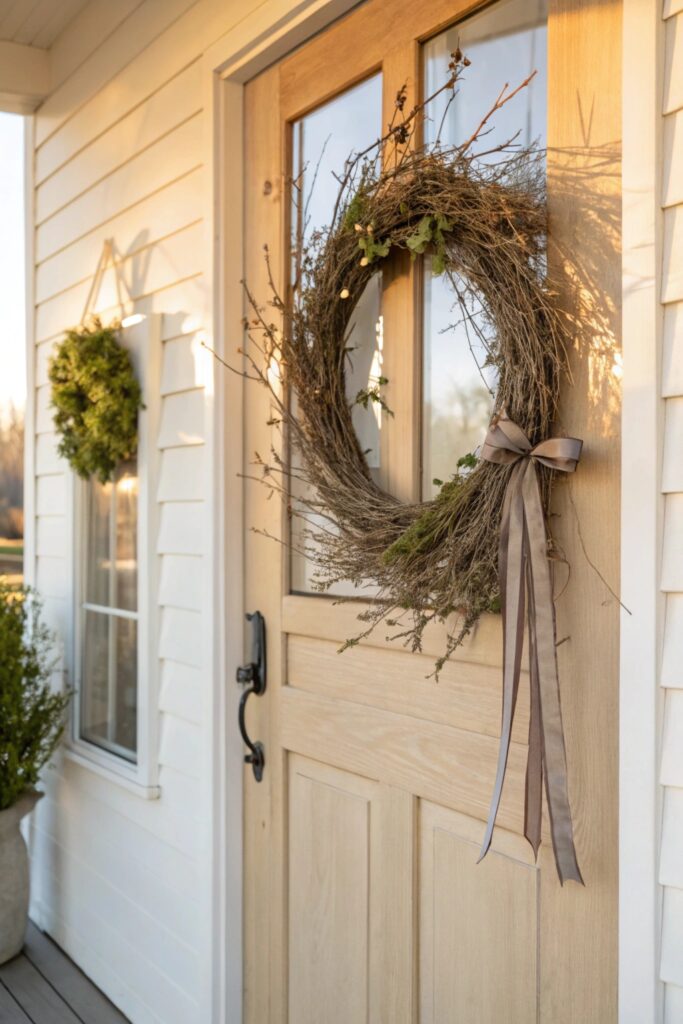
A wreath built from dried grasses, pods, and neutral ribbon (rather than plastic eggs and bright bows) reads as a genuine spring wreath that could stay up well past Easter itself, extending the value of the purchase or DIY project.
If building your own wreath base, a simple grapevine or foam ring ($8-12) takes well to hot glue for attaching dried elements, making this a genuinely approachable weekend project even without prior wreath-making experience.
7. Ceramic and Stoneware Accents
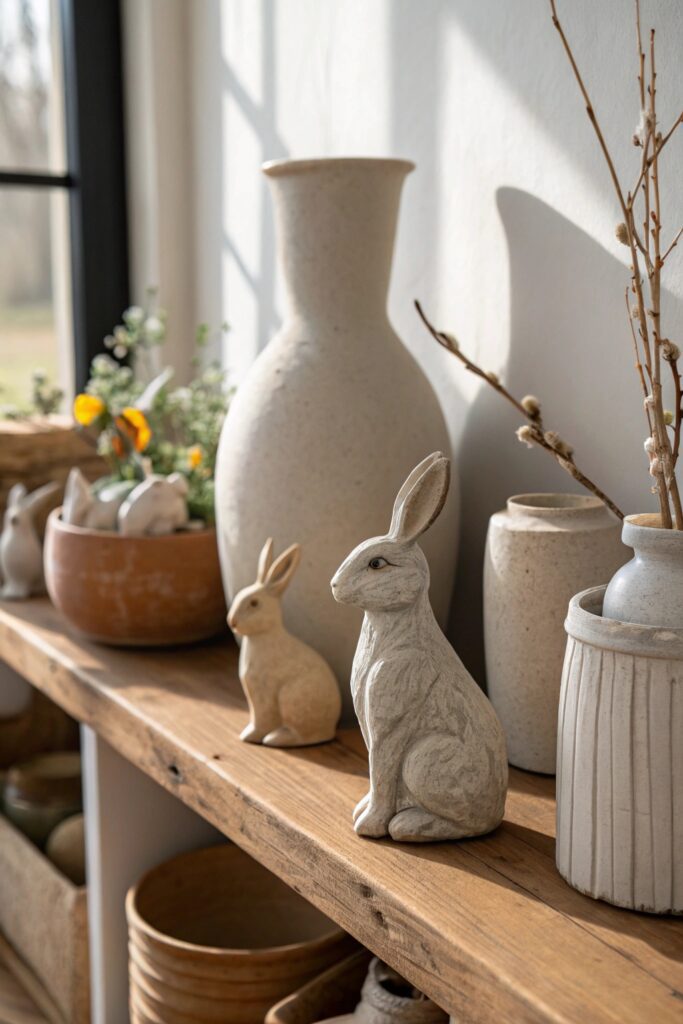
Matte stoneware vases, bowls, and small dishes ($15-30 each) in the same neutral palette as the rest of a modern Easter setup add material variety without introducing new colors or overtly holiday-specific imagery.
Group 2-3 stoneware pieces in the same glaze family rather than mixing several different finishes, which keeps the material variety from reading as mismatched rather than intentionally layered.
8. Botanical Print Artwork
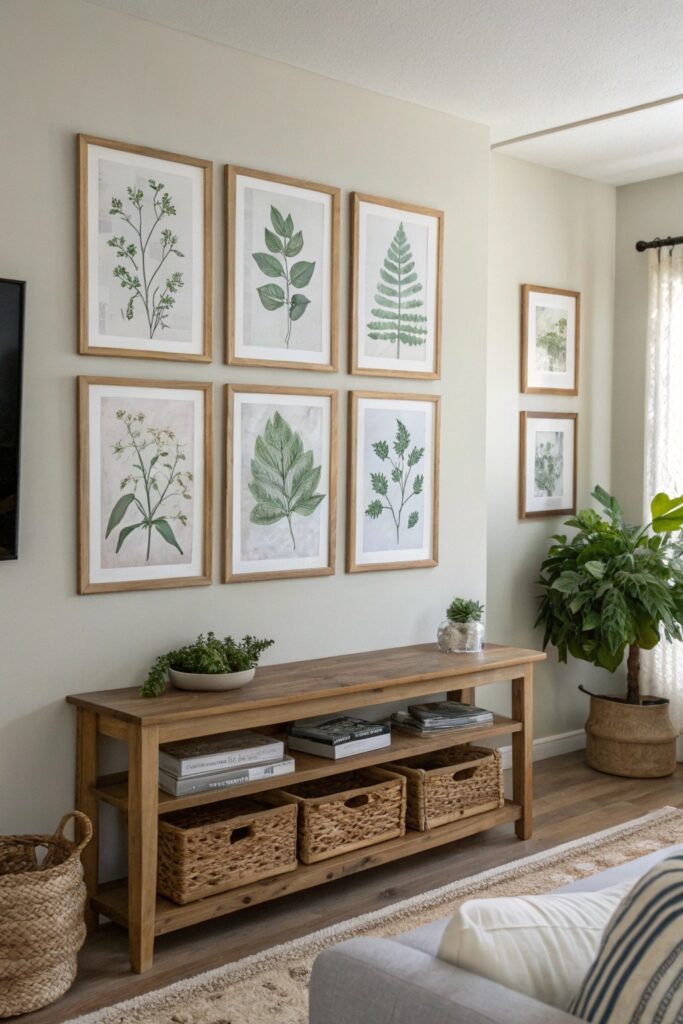
A framed botanical or floral print ($15-30 unframed) leaned on a mantel or shelf brings in spring imagery through art rather than literal holiday decor, which means it can stay up through the whole season rather than just Easter week.
A grouping of 2-3 small botanical prints in matching frames reads as a considered mini gallery rather than a single afterthought piece, and it costs roughly the same as one larger framed print.
9. Natural Wood and Rattan Furniture Accents
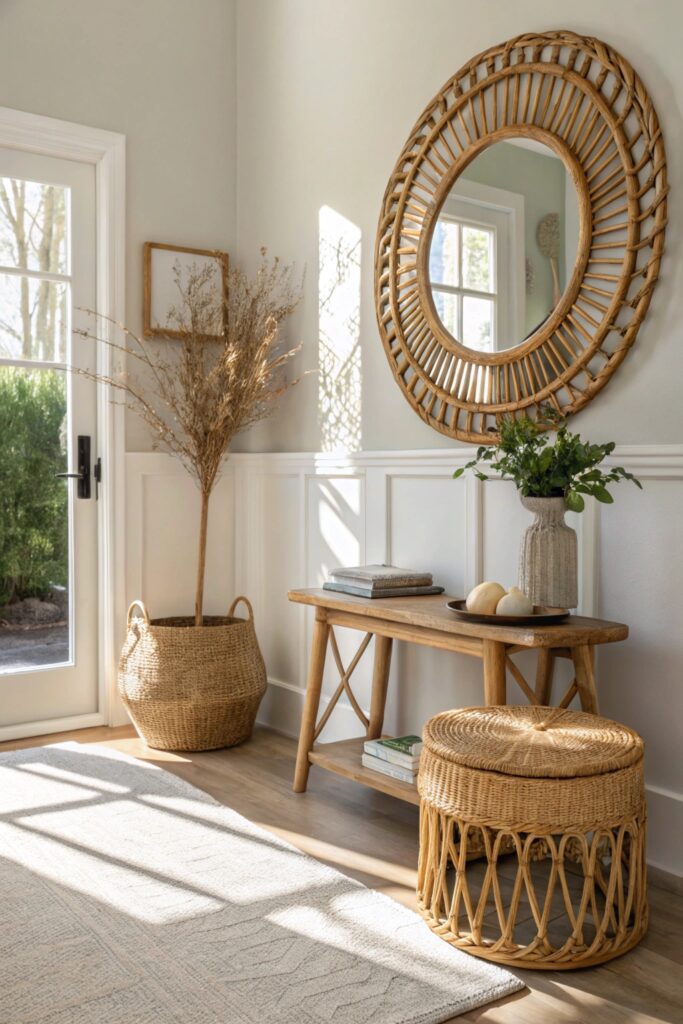
A rattan tray, a wood riser, or a cane-front cabinet piece ties into the same natural-material palette running through the rest of this list, grounding the lighter pastel and floral elements with warmer texture.
Rattan and cane pieces develop a richer patina with age and light exposure, so don’t be deterred by a slightly lighter tone on a new purchase — it will warm up visually over its first year of use.
10. Soft Candlelight and Neutral Candle Holders
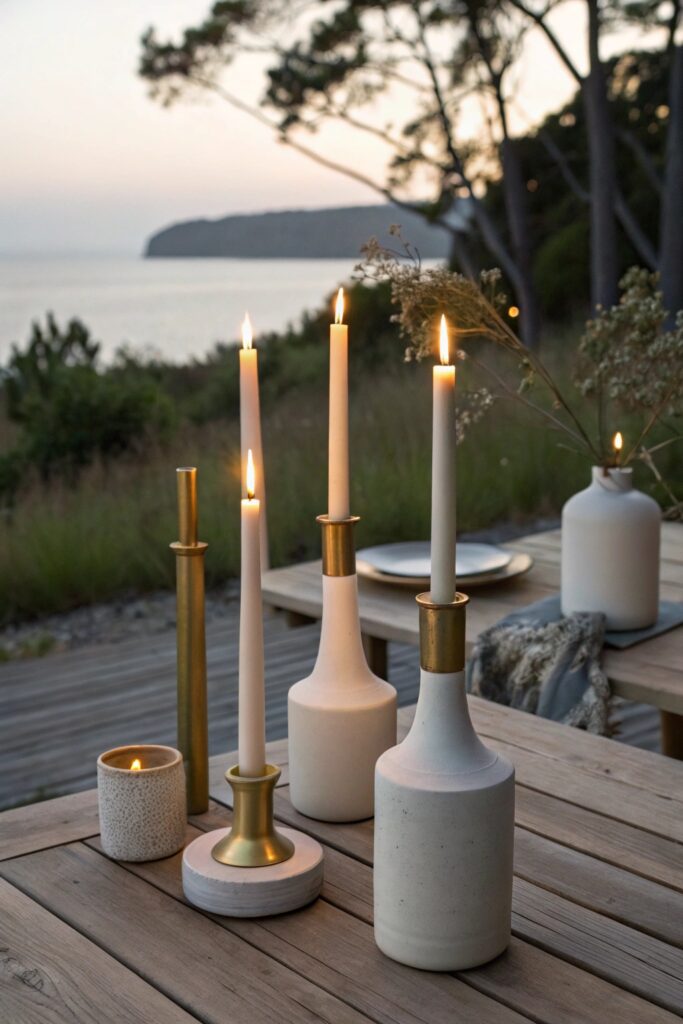
Taper or pillar candles in simple ceramic or wood holders (rather than anything egg or bunny-shaped) add ambiance appropriate to a spring dinner table without leaning into overtly literal holiday imagery.
Beeswax candles specifically burn cleaner and slower than standard paraffin, which matters for a spring table setting used repeatedly throughout the season rather than for a single occasion.
11. Spring Greenery in Simple Vases
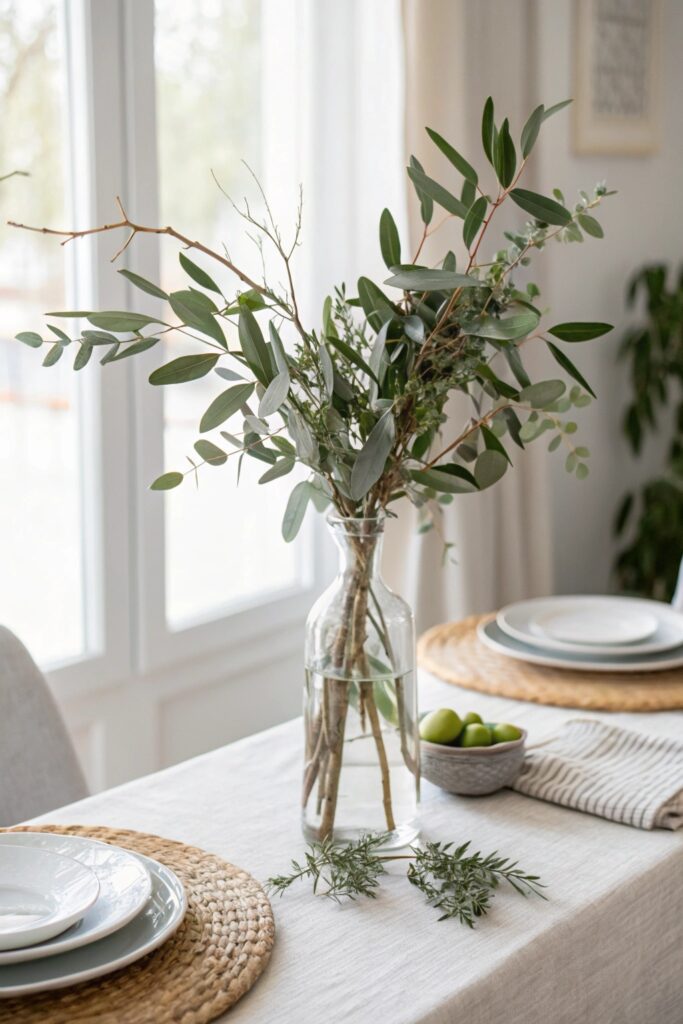
A few stems of tulips, ranunculus, or flowering branches in a plain glass or ceramic vase ($8-15 for flowers) brings genuine seasonal color that reads as spring generally rather than Easter specifically, which extends its usefulness beyond the single holiday.
Trim flower stems at a 45-degree angle and change the water every 2-3 days to extend fresh-cut flowers’ vase life by several days beyond what most people get from a standard grocery store bouquet.
12. Layered Neutral Table Settings
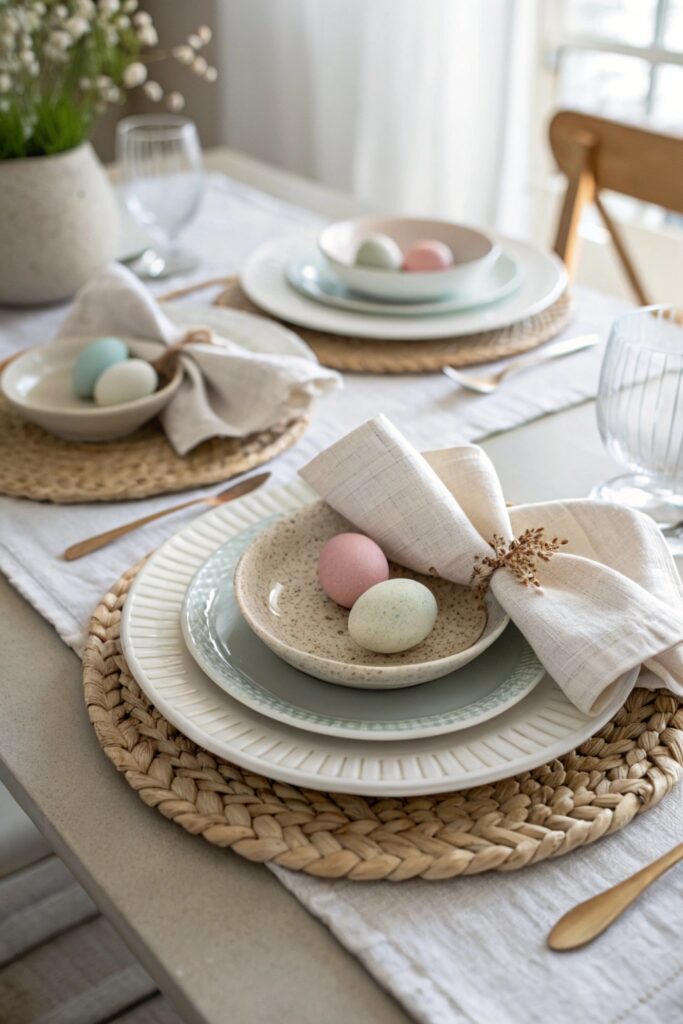
Combining a neutral tablecloth, simple white or cream dishware, and one or two of the elements above (dyed eggs, a small floral arrangement) creates a cohesive table without needing dedicated ‘Easter’ dishware or decor purchased specifically for one holiday.
Keep any centerpiece under 12-14 inches tall if the table will be used for an actual seated meal, since taller arrangements block sightlines across the table in a way that undercuts the point of a shared meal.
Wrapping It Up
The dried florals, ceramic accents, and botanical art are worth prioritizing if you want decor that earns its keep beyond one holiday — all three transition naturally into general spring styling once Easter has passed, unlike more literal holiday-specific pieces.