
Spring styling is really about shifting weight and texture more than swapping out entire rooms — lighter fabrics, more visible surface area, and a few pastel or botanical accents do most of the work. For the cleaning tasks that pair well with this refresh, our guide to spring cleaning and decorating covers the maintenance side in more depth.
Below are 10 styling-focused changes, with real costs and reasoning for each.
1. Swap Heavy Textiles for Lightweight Fabrics
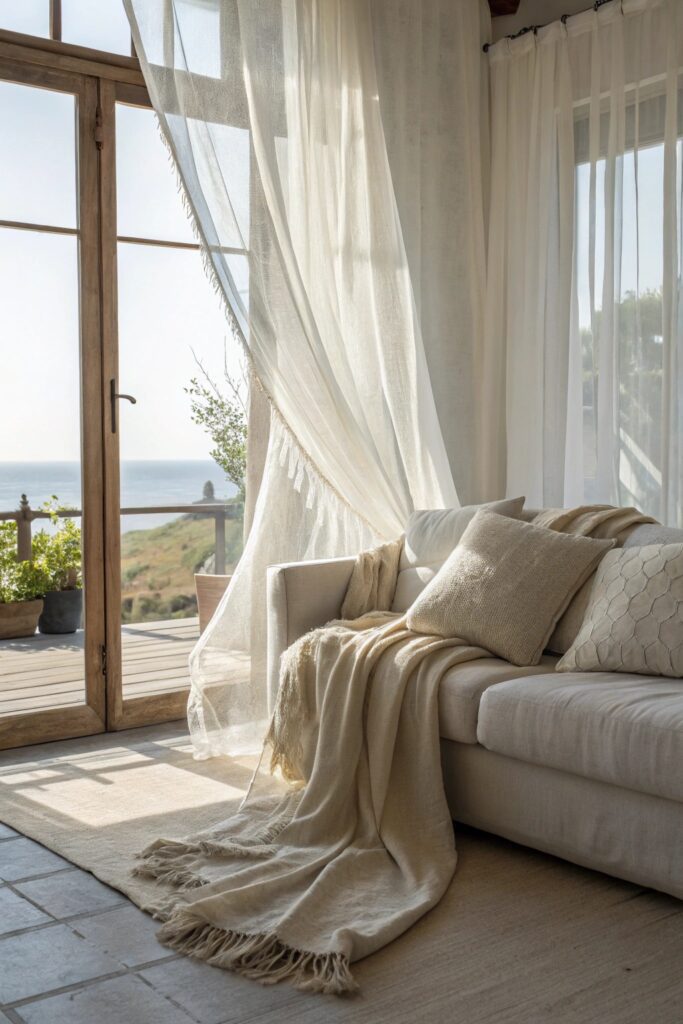
Trading wool or heavy knit throws for linen or lightweight cotton ($20-40 per piece) shifts a room’s tactile feel toward spring without any structural change — the fabric weight alone changes how a space reads, even in the same color palette as winter.
A $30-40 linen throw blanket over a heavier knit one is often enough on its own to shift a whole seating area’s temperature, without needing to touch curtains or upholstery at all.
2. Bring in Fresh Greenery
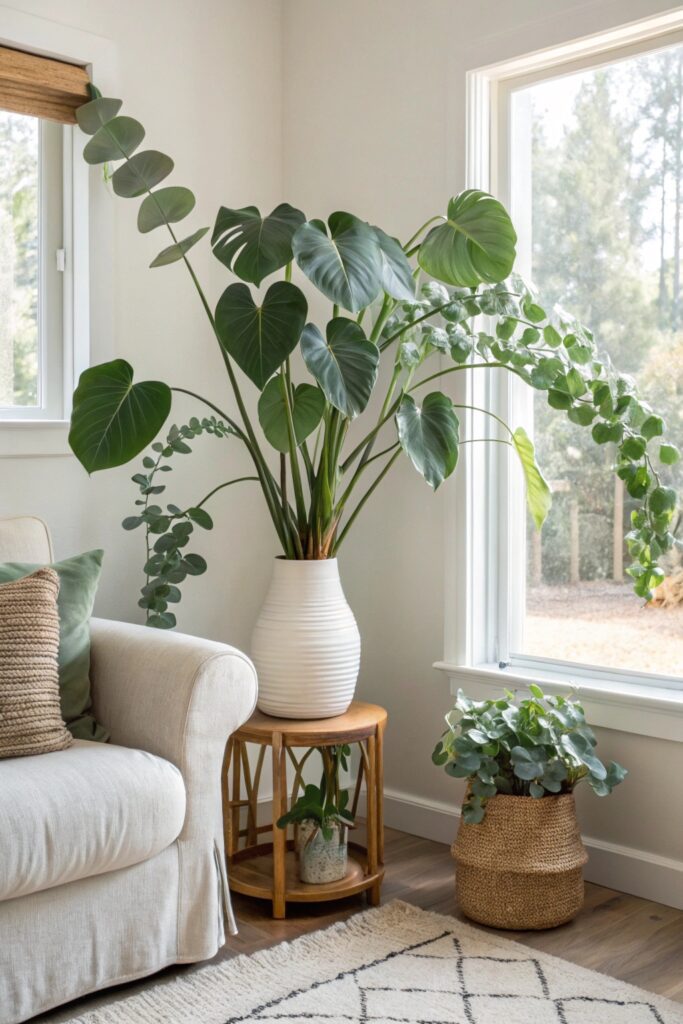
A few new houseplants or a rotating fresh-cut arrangement ($10-25) does more to signal a seasonal shift than almost any other single styling choice, since living greenery reads as inherently tied to spring in a way static decor doesn’t.
Rotating a fresh bouquet weekly (roughly $10-15 per bunch from a grocery store) costs less over a season than one large arrangement and keeps the space looking consistently tended rather than static.
3. Refresh Your Color Palette with Pastels
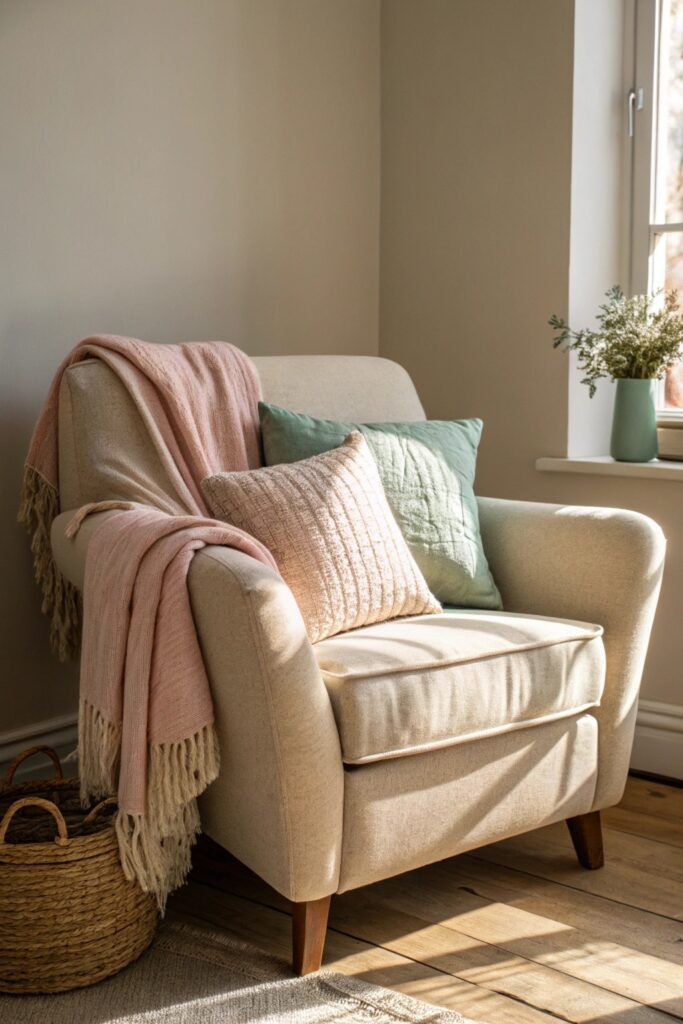
Introducing pastel accents — a sage or blush pillow cover, a pale blue vase — through smaller, swappable items rather than large furniture or wall color keeps this seasonal shift low-cost and reversible once the season changes again.
Test pastel swatches against your existing furniture in natural daylight before committing — a color that reads soft and warm in a paint chip can look washed out once it’s on a small pillow against a larger neutral sofa.
4. Declutter and Simplify Surfaces
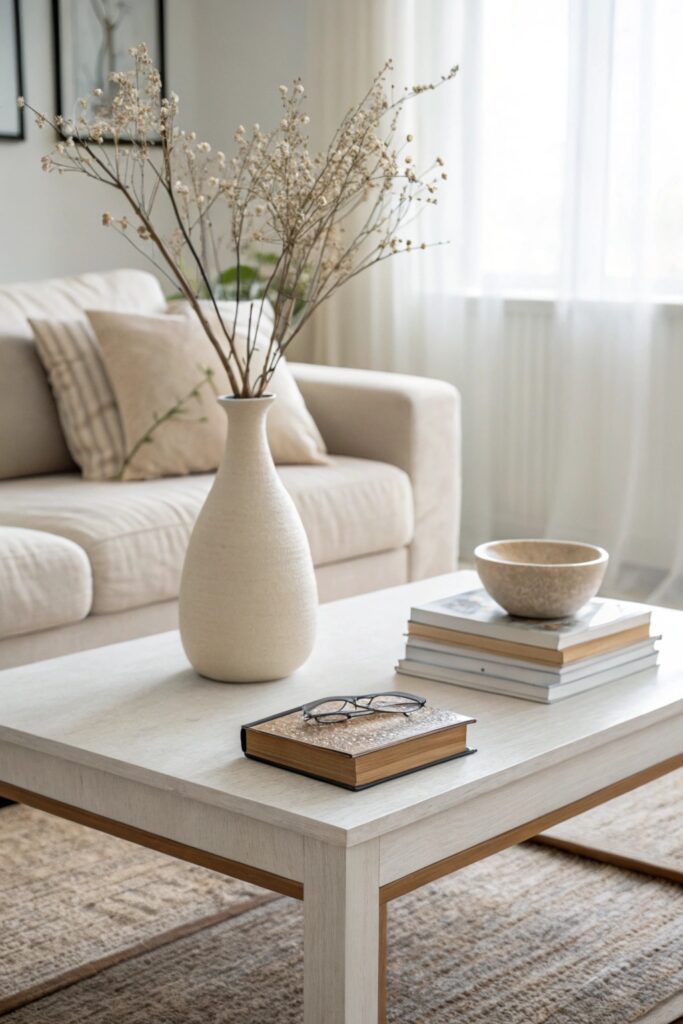
Removing roughly a third of the objects currently on a shelf or console — genuinely, not just rearranging them — creates the visual breathing room that reads as a spring refresh rather than the same winter arrangement with a few new pieces added on top.
A genuinely useful gut-check: if you can’t remember the last time you actually used or looked at an object on a shelf, it’s a strong candidate to be removed rather than just repositioned during a seasonal refresh.
5. Layer in Natural Textures
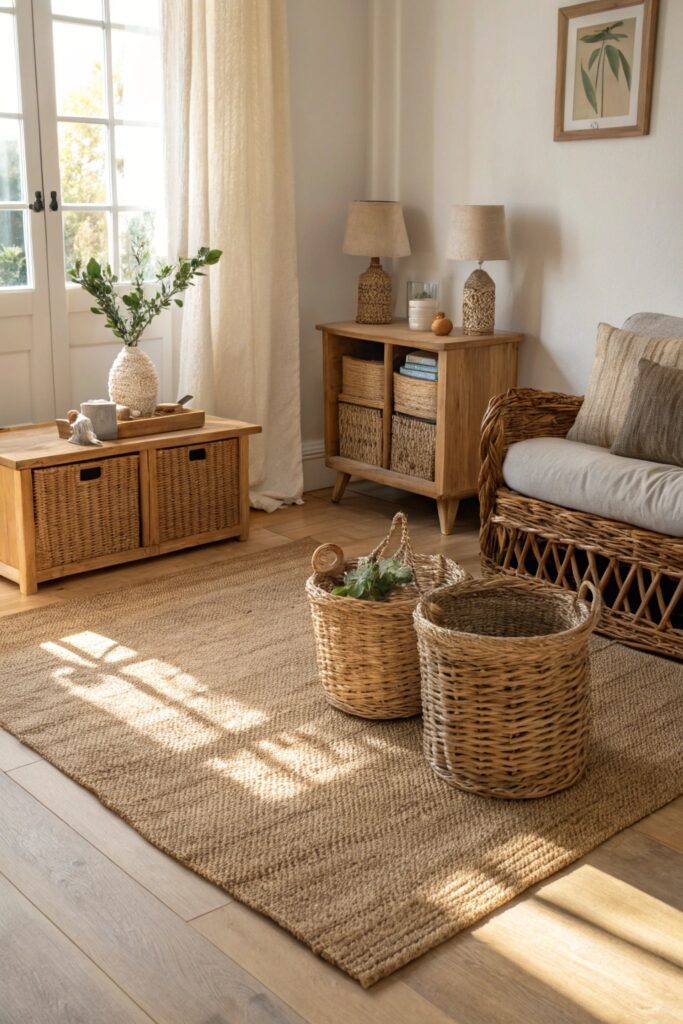
Rattan, jute, and woven textures ($15-40 depending on the piece) bring an organic, warm-weather feel that pairs naturally with spring’s lighter color palette, working well as a basket, a light fixture shade, or a small accent chair.
Jute rope, a rattan tray, or a woven pendant shade all introduce this texture at different price points ($15-40), so there’s a way to add it whether you’re refreshing one shelf or an entire room.
6. Update Your Lighting

Swapping to slightly warmer or brighter bulbs, and cleaning light fixtures that accumulated dust over a closed-window winter, genuinely changes how a room reads even without any other styling change — light quality affects mood more than most people account for when styling.
A warm 2700K bulb swap costs under $10 per bulb and is one of the few changes on this list that affects how a room feels at every hour of the day, not just when you’re actively looking at the new decor.
7. Bring Florals Into Unexpected Spaces
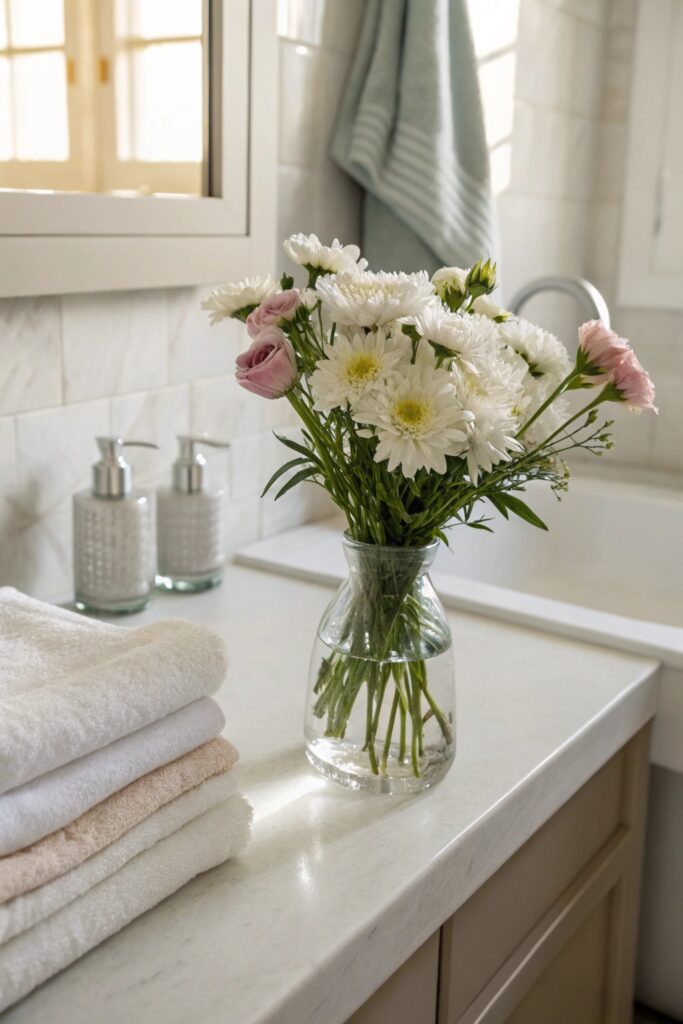
A small vase in a bathroom, on a nightstand, or in a home office extends spring styling beyond the obvious living room and kitchen spots, making the seasonal refresh feel considered throughout the home rather than isolated to one or two rooms.
Grouping three small vases with a single stem each, spread across a bathroom, office, and entry, extends the seasonal refresh into spaces most people only decorate for major holidays.
8. Rotate Your Wall Art
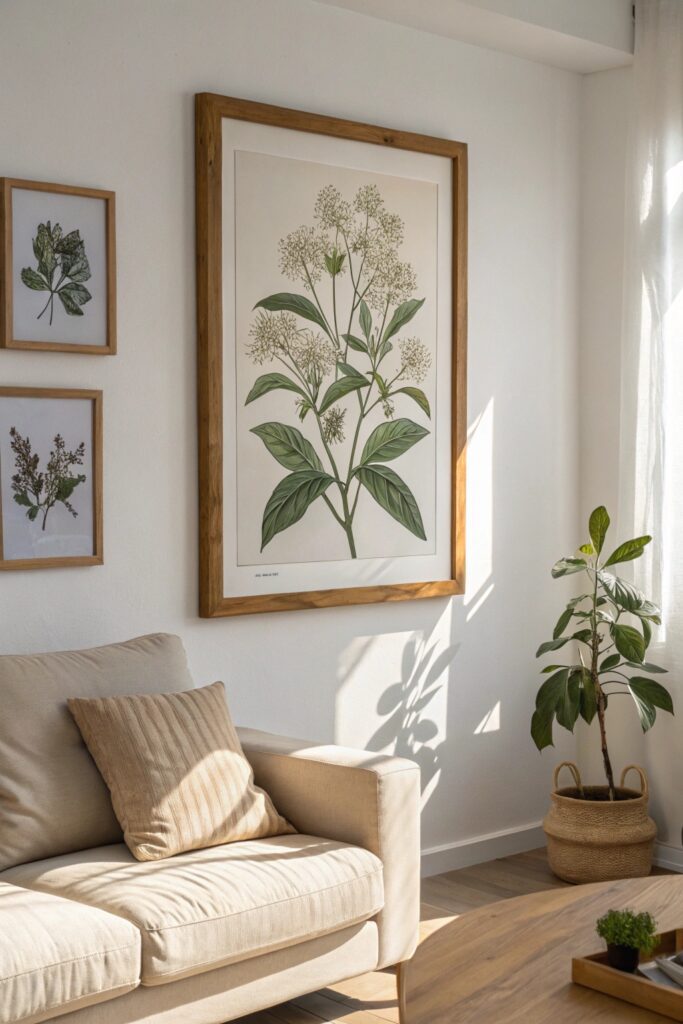
Swapping one or two pieces of art for lighter, more botanical or abstract pieces (rather than replacing an entire gallery wall) refreshes a room’s focal point without the cost of buying entirely new art — many people already own pieces that could rotate seasonally but rarely do.
If you don’t already own art that could rotate seasonally, a set of unframed botanical prints ($10-20 each) in a simple frame you already have is a low-cost way to start building that rotating collection.
9. Introduce Woven and Textured Rugs
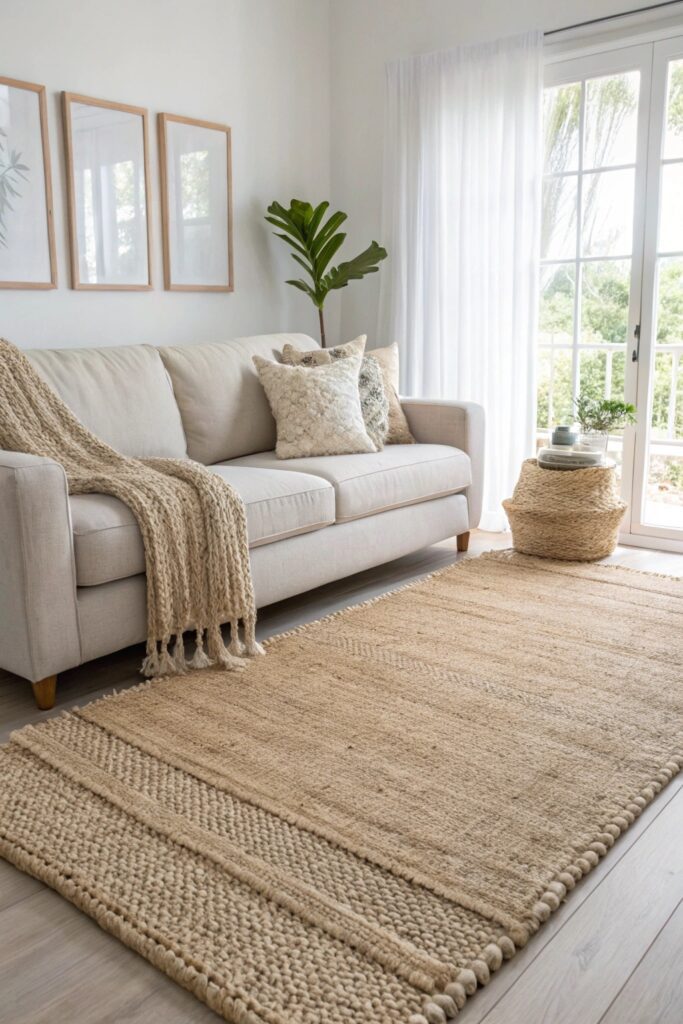
A jute or sisal rug layered over an existing base rug adds the same natural-texture logic as rattan accents, and it works particularly well in spring specifically since these materials read lighter and more breathable than a plush winter rug.
A jute rug runs $20-40 for a small area and can be layered over an existing rug rather than replacing it outright, which keeps this swap reversible if you change your mind later in the season.
10. Style Open Shelving with Seasonal Pieces
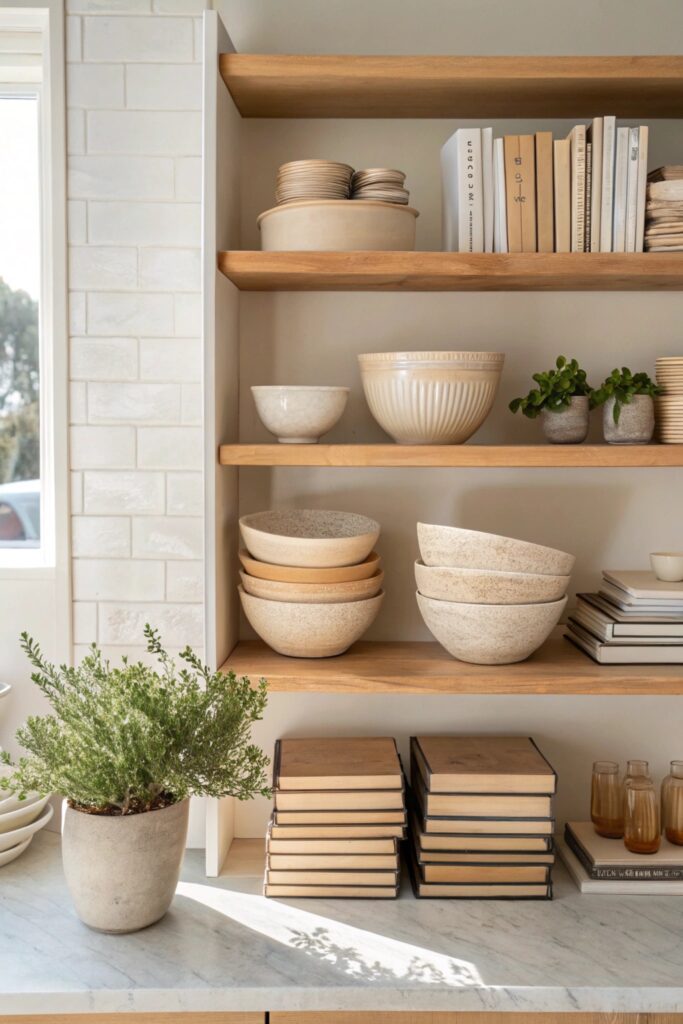
After removing winter-specific objects, restyle open shelving with lighter ceramics, a small plant, and fewer total objects than a winter arrangement — the same negative-space principle that applies to any styled shelf, adjusted for the season’s lighter mood.
Keep the total object count on a shelf odd-numbered and leave at least a third of the surface visibly empty — this is the same negative-space principle that separates a styled shelf from a cluttered one.
Wrapping It Up
Textiles and greenery are worth prioritizing first — both are lower-cost, fully reversible changes that do more to shift a room’s seasonal feel than a full redecorating effort would. Save more involved changes (new rugs, rotating art collections) for once you’ve confirmed the lighter, textile-first approach is the direction you actually want.