
A college apartment living room benefits most from decor that’s genuinely damage-free (for lease compliance), low-cost, and flexible enough to work whether you’re keeping it for one year or several.
Below are 11 ways to build a space that feels put-together on a real student budget, with actual costs and practical notes for each.
1. Shop Secondhand for Big Furniture Pieces
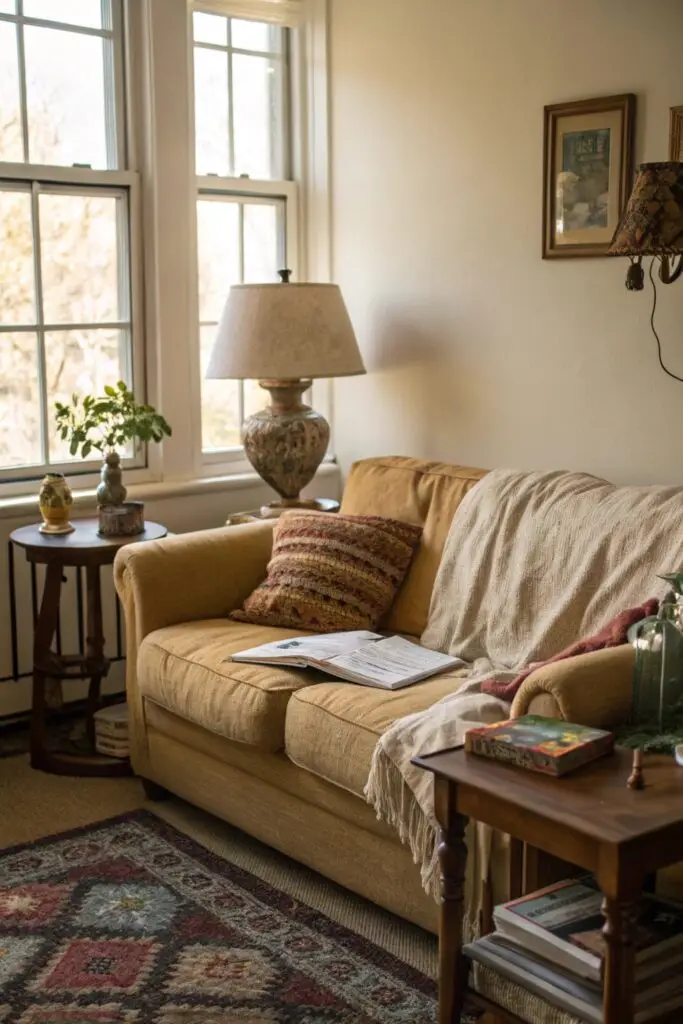
A sofa or accent chair from a thrift store, Facebook Marketplace, or a graduating senior’s move-out sale typically costs a fraction of new furniture ($50-150 versus $400-800+ new) and is genuinely practical for furniture you may not keep long-term.
Check joints, cushion support, and any visible wear carefully before buying secondhand upholstered pieces specifically, since fabric issues are harder and pricier to fix than a simple cosmetic scuff on wood furniture.
2. Use Removable Wallpaper or Peel-and-Stick Decals
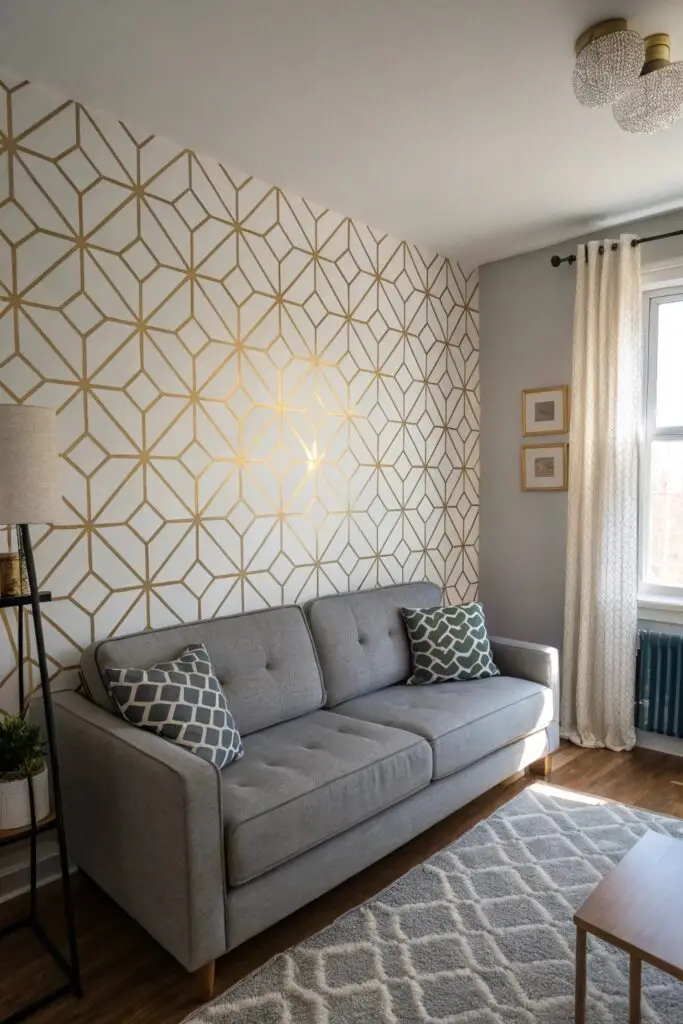
Peel-and-stick wallpaper ($15-35 for enough to cover an accent area) adds color and pattern without violating a typical lease’s no-paint policy, and quality removable options come off cleanly at move-out without damaging the wall underneath.
Test a small section in an inconspicuous spot first to confirm easy removal, since not all peel-and-stick products remove as cleanly as advertised, particularly on textured or older paint.
3. Add String Lights or LED Strips for Ambiance
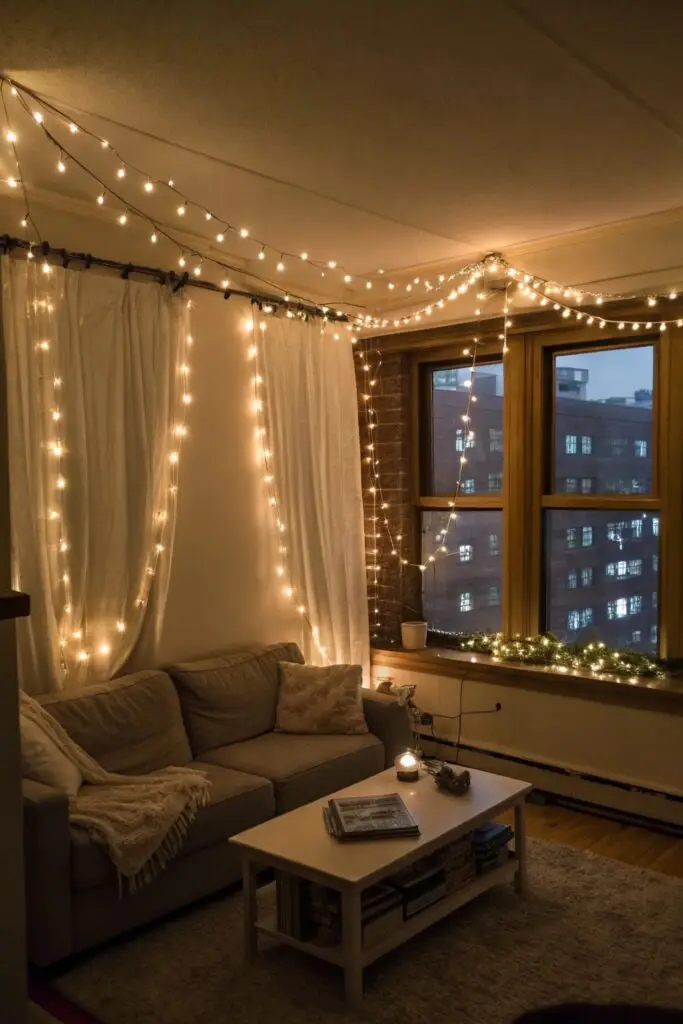
Warm white string lights or LED strips ($10-20) add ambient lighting beyond a typical apartment’s often harsh overhead fixture, and battery or USB-powered options avoid needing an outlet in an inconvenient spot.
Choose warm-toned lights (2700-3000K) rather than cool white, which reads considerably more like ambient mood lighting and less like leftover holiday decor.
4. Create a Gallery Wall With Free or Cheap Prints
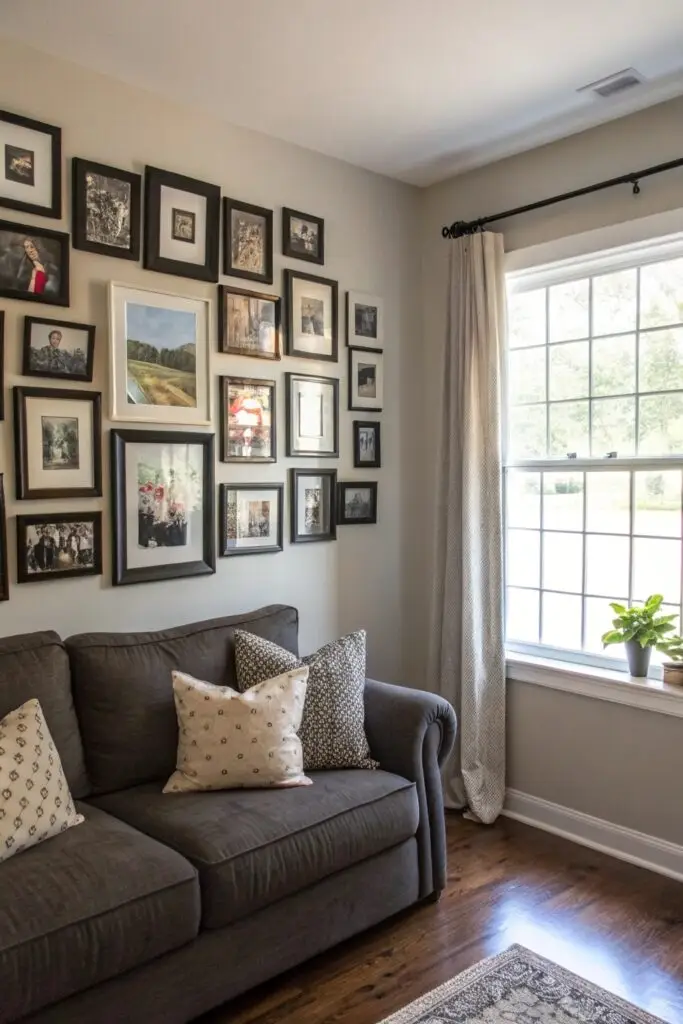
Free printable art (widely available online), postcards, or inexpensive poster prints ($5-15 each) filled into simple frames create a personalized gallery wall for considerably less than purchased framed art.
Command strips rather than nails keep this fully damage-free and reversible, which matters for a rental where wall damage can affect a security deposit.
5. Use a Storage Ottoman as a Coffee Table
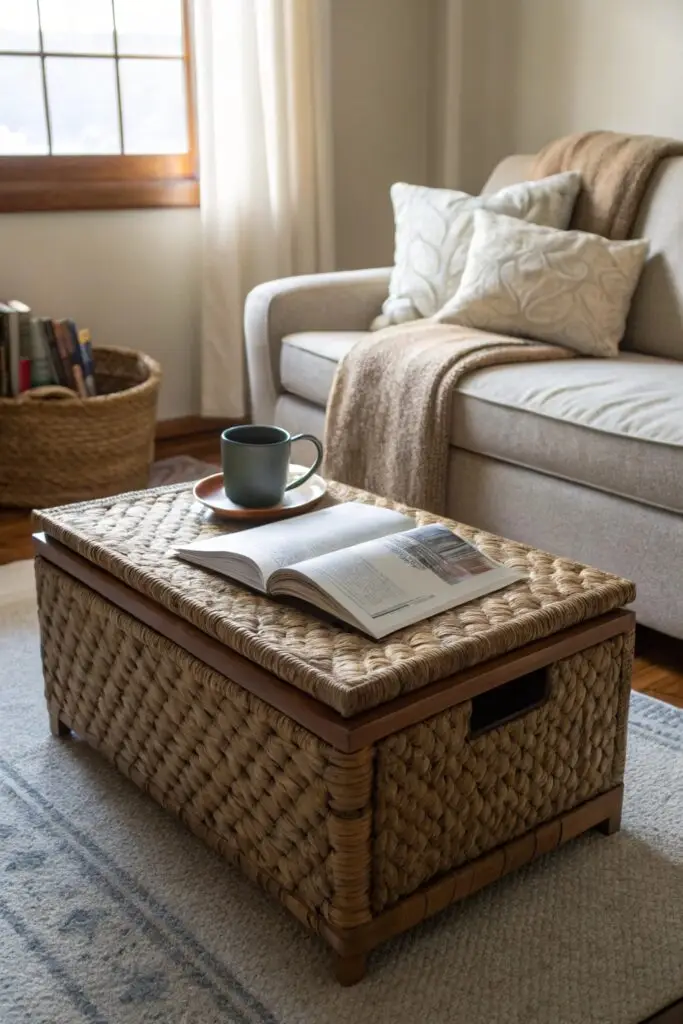
A storage ottoman ($40-80) functions as a coffee table, extra seating, and hidden storage all in one piece, which is a genuinely practical multi-use solution for the limited square footage most college apartments offer.
Choose one with a sturdy, flat top surface specifically if you want it to double reliably as an actual coffee table rather than just soft seating.
6. Add Faux Plants for Low-Maintenance Greenery
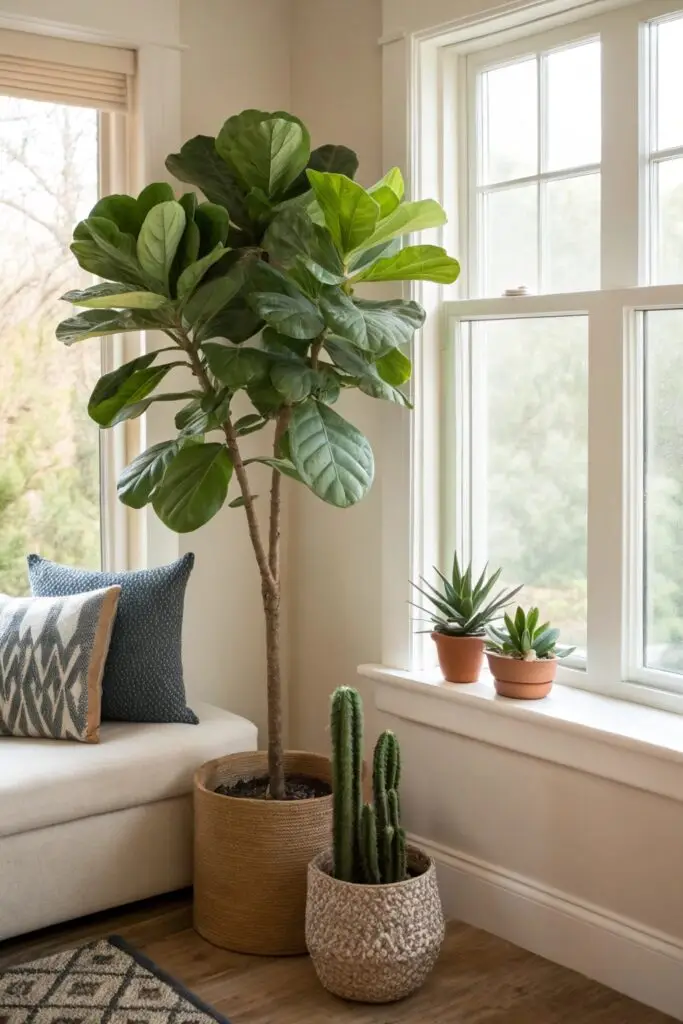
Quality faux plants ($15-40 depending on size) add life to a space without the watering schedule or light requirements real plants need, which matters for a genuinely busy student schedule or apartments with limited natural light.
Modern faux plants have improved enough in realism that a mid-range option, viewed from normal living-room distance, reads convincingly real in most cases.
7. Layer Rugs to Hide Dorm-Style Flooring
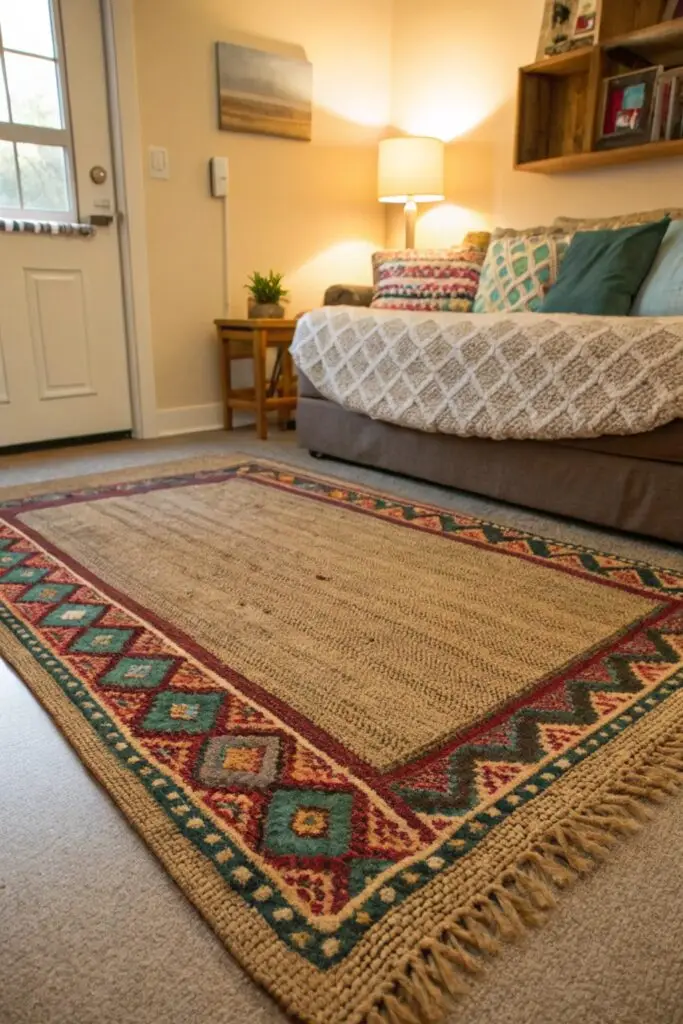
A rug ($30-60 for a reasonably sized option) covers typically bare or dated apartment flooring, adding warmth and color while also helping define a seating area within an open studio or shared living space.
Layering a smaller textured rug over a larger flat-weave base rug adds visual depth for relatively little additional cost, if budget allows for both.
8. Use Command Hooks and Strips for Damage-Free Decor
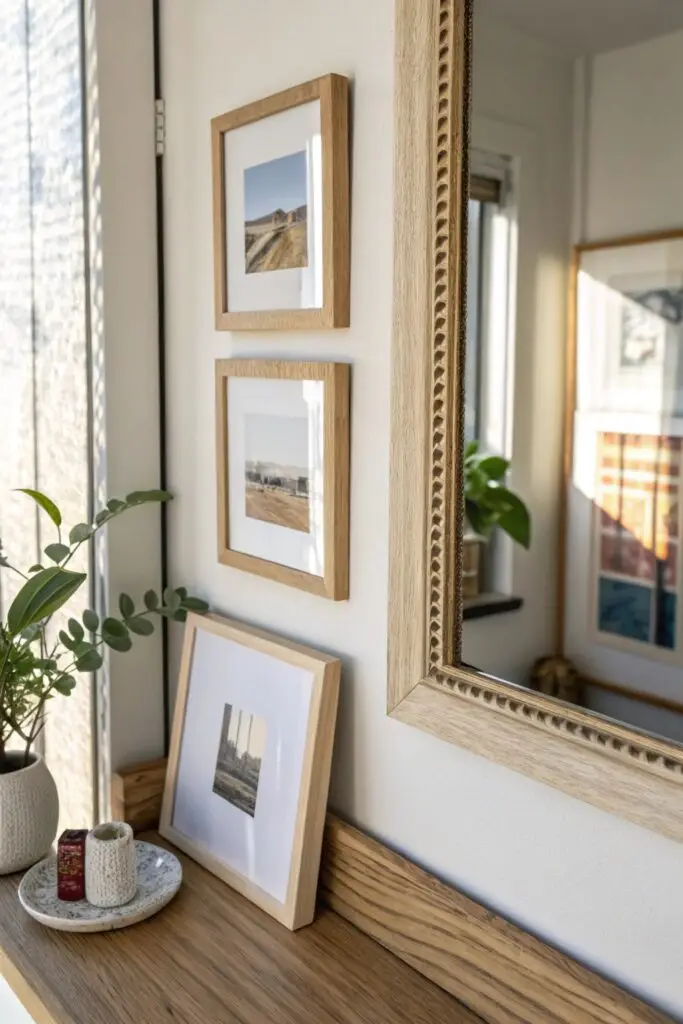
Command hooks and strips ($8-15 for a multi-pack) hang art, mirrors, and light string without nails, which is essential for most college leases that prohibit wall damage and matters directly for security deposit return.
Check the specific weight rating on each strip size before hanging anything heavier than lightweight decor — using an undersized strip for a heavier item is the most common reason command products fail.
9. Repurpose Crates or Cinder Blocks for Shelving
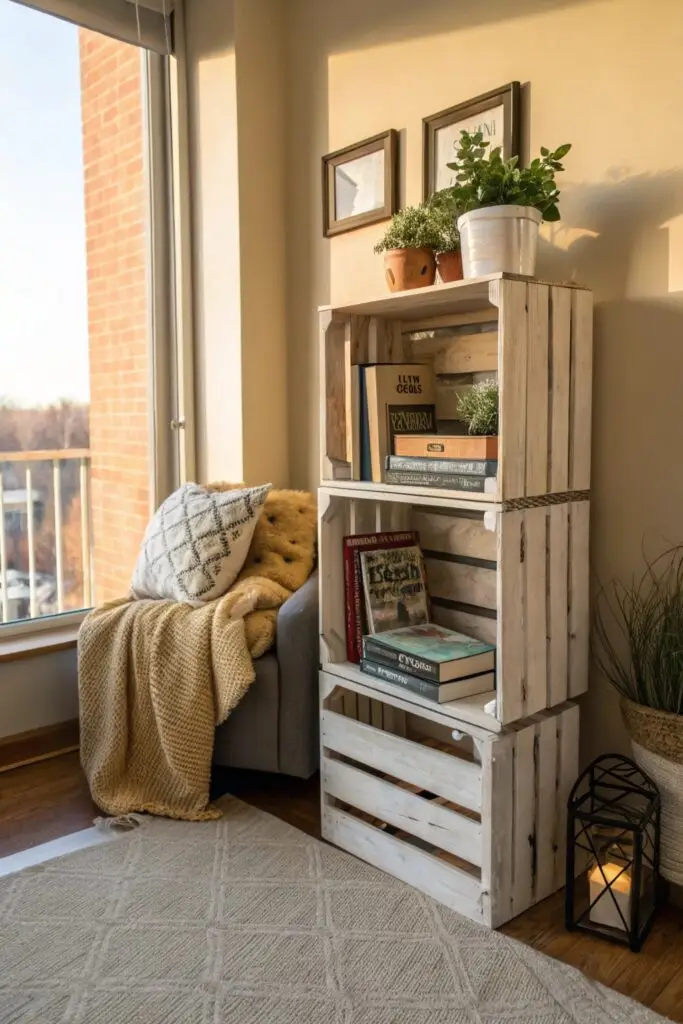
Wooden crates or cinder blocks with wood plank shelving (materials often under $30 total) create a genuinely sturdy, industrial-look storage and display shelf for a fraction of purchased furniture cost.
This is also fully modular — the same crates or blocks can be reconfigured into a different shelf shape or height as your space or storage needs change throughout the year.
10. Add Throw Pillows and Blankets for Instant Coziness
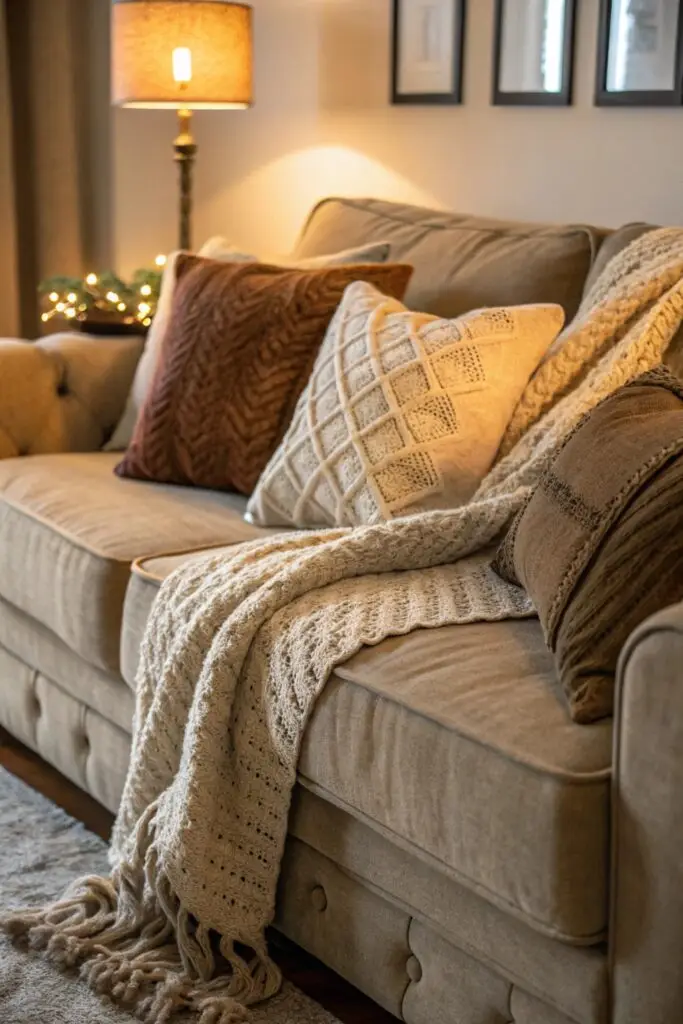
A few pillow covers and a throw blanket ($10-20 each) instantly make a secondhand or basic sofa feel more considered and comfortable, and pillow covers specifically are an easy, low-cost way to refresh the look seasonally.
Coordinate 2-3 colors or patterns rather than one of everything, which reads as more intentional even with a modest total item count.
11. Use a Room Divider or Curtain for Zoning
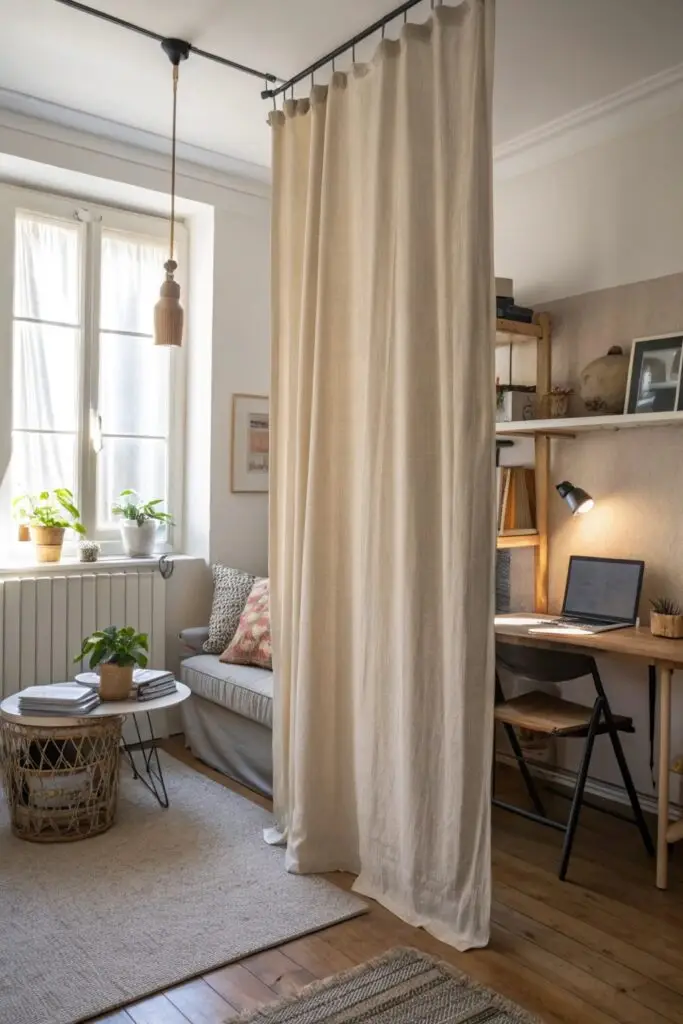
A folding screen or a simple curtain on a tension rod ($20-50) can visually divide a studio or open-plan living space into distinct zones (sleeping versus living areas), which is a genuinely useful trick in a smaller shared or studio apartment.
Tension rod curtain setups require no drilling, keeping this option fully compatible with a standard rental lease’s restrictions.
What to Prioritize If You’re Starting From Nothing
If you’re furnishing a college apartment for the very first time on a genuinely limited budget, prioritize seating and a rug first — these two items affect how the whole room feels more than any individual decor purchase, and both are easy to source secondhand for meaningfully less than buying new.
Save the more decorative layers (gallery wall, string lights, throw pillows) for after the functional furniture is settled, since these are the easiest and cheapest pieces to add incrementally throughout the year as your budget allows, rather than needing to be purchased all at once during move-in.
Wrapping It Up
Secondhand furniture and a rug do the most to establish a room’s overall feel and are worth prioritizing first if budget is tight. Command-strip-based decor (art, hooks, lights) is worth layering in next, since it’s fully reversible and won’t put your security deposit at risk.