Sharing a room is great — said no one who’s ever needed five minutes of peace and quiet. Whether you’re splitting a bedroom with a sibling, a roommate, or trying to carve out a home office in your living room, the struggle for personal space is very real.
The good news? You don’t need walls or a renovation budget to fix it. A clever room divider can create privacy, add style, and actually make your space look better than before.
I’ve spent way too long obsessing over this exact problem, and these 12 shared room divider ideas actually work. Let’s get into it.
1. Bookshelf Room Dividers
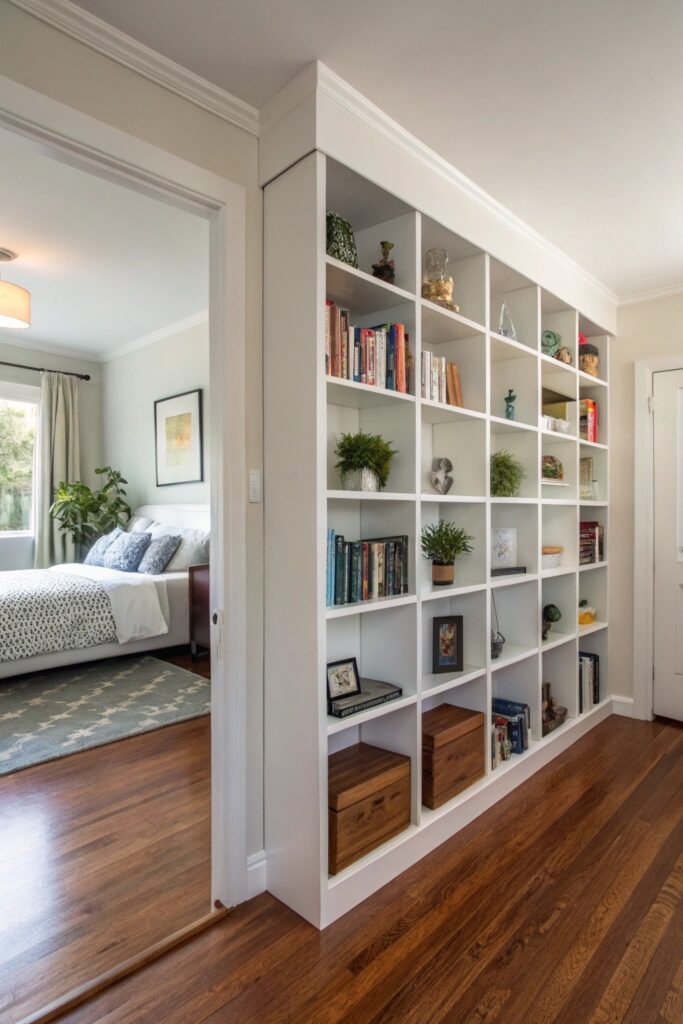
A double-sided bookshelf might be the most hardworking divider you’ll ever own. It splits your space, stores your stuff, and looks intentional — not desperate.
Choose an open-back shelving unit so light still flows between both sides. This keeps the room from feeling chopped up and claustrophobic. IKEA’s KALLAX or similar modular shelves work brilliantly for this.
Style each side to suit the person using that space:
- One side holds books and plants
- The other displays décor or work essentials
The result is two distinct zones that feel curated, not divided. It’s functional and truly attractive — a combination that’s harder to find than you’d think.
2. Curtain Room Dividers
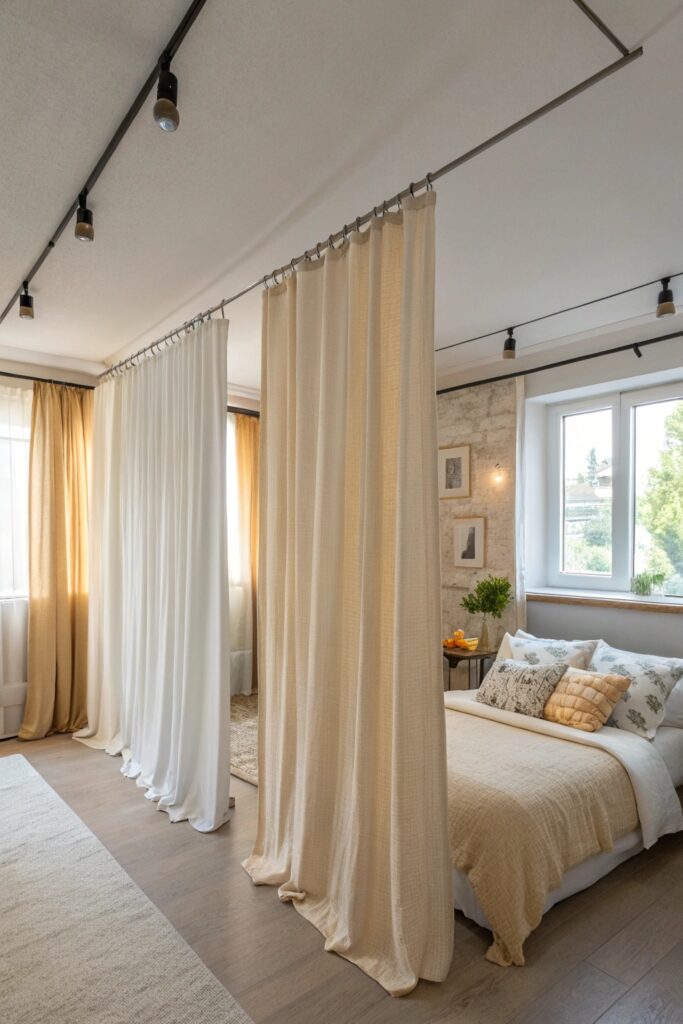
Curtains are the unsung heroes of shared space solutions. A ceiling-mounted curtain track lets you pull a divider across the room whenever you need it and push it aside when you don’t. Total flexibility, zero permanence.
Go for floor-to-ceiling panels to maximize the visual impact. Linen, velvet, or blackout fabric all work well depending on how much light and sound blocking you need.
Best options to consider:
- Linen panels — airy, casual, great for shared bedrooms
- Velvet curtains — rich texture, better sound dampening
- Blackout fabric — ideal when one person sleeps while the other works
FYI, this is also one of the most budget-friendly options on this list, which makes it a total win.
3. Sliding Barn Doors
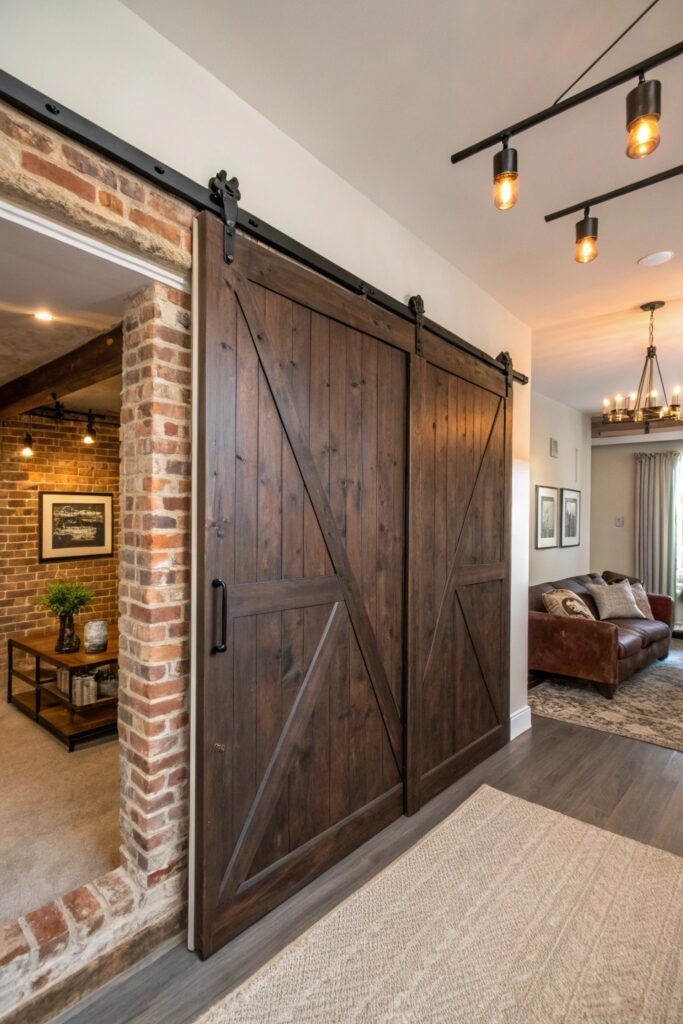
If you want a room divider that actually makes a statement, sliding barn doors are it. They bring character, function, and that farmhouse-meets-modern energy that works in almost any interior style.
You mount them on an overhead track, so they slide smoothly without eating into floor space. That matters a lot in smaller rooms where every square foot counts.
Choose from:
- Solid wood panels for full privacy
- Glass-paneled barn doors for light flow with visual separation
- Frosted glass for the best of both — privacy and brightness
IMO, sliding barn doors give you the most “wow factor” of any divider on this list. They look like a deliberate design choice rather than a privacy fix, which is exactly what you want.
4. Folding Screen Panels
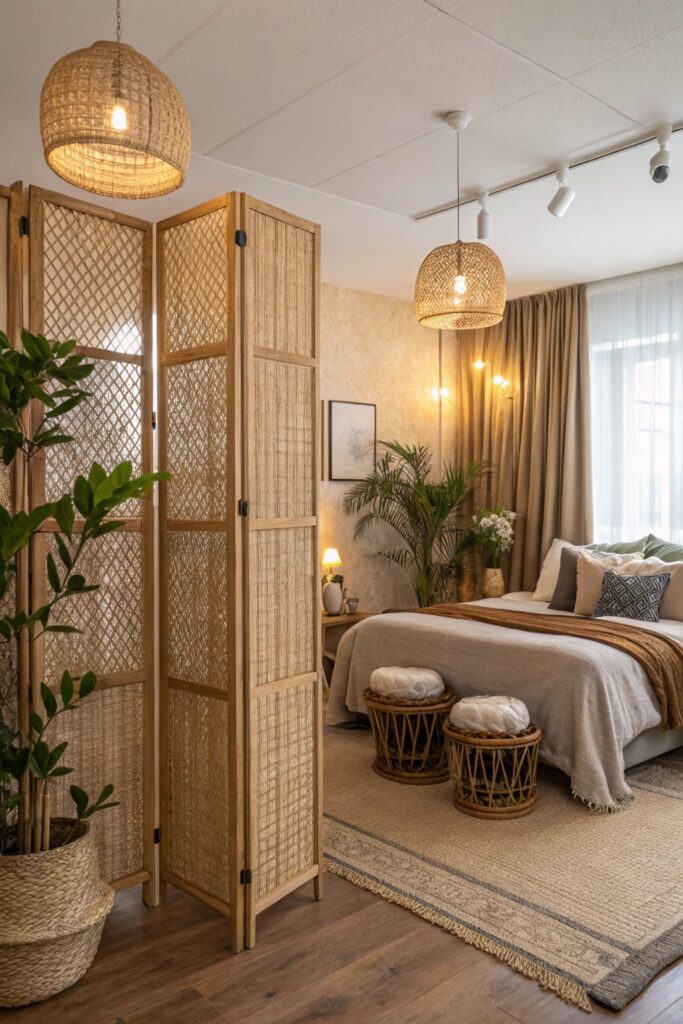
Folding screens have been solving privacy problems for centuries — and they’re still one of the best options out there. Decorative folding panels come in every style imaginable, from rattan and wood to mirrored and lacquered finishes.
The beauty of a folding screen is pure flexibility. You move it, reshape it, fold it away completely. No installation, no commitment, no tools required.
Look for screens that offer:
- At least 4–6 panels for adequate coverage
- Sturdy hinges that hold their position
- A finish that complements your existing décor
They work especially well in studio apartments where you need to separate a sleeping area from a living space quickly and stylishly. Classic for a reason.
5. Macramé or Hanging Fabric Dividers
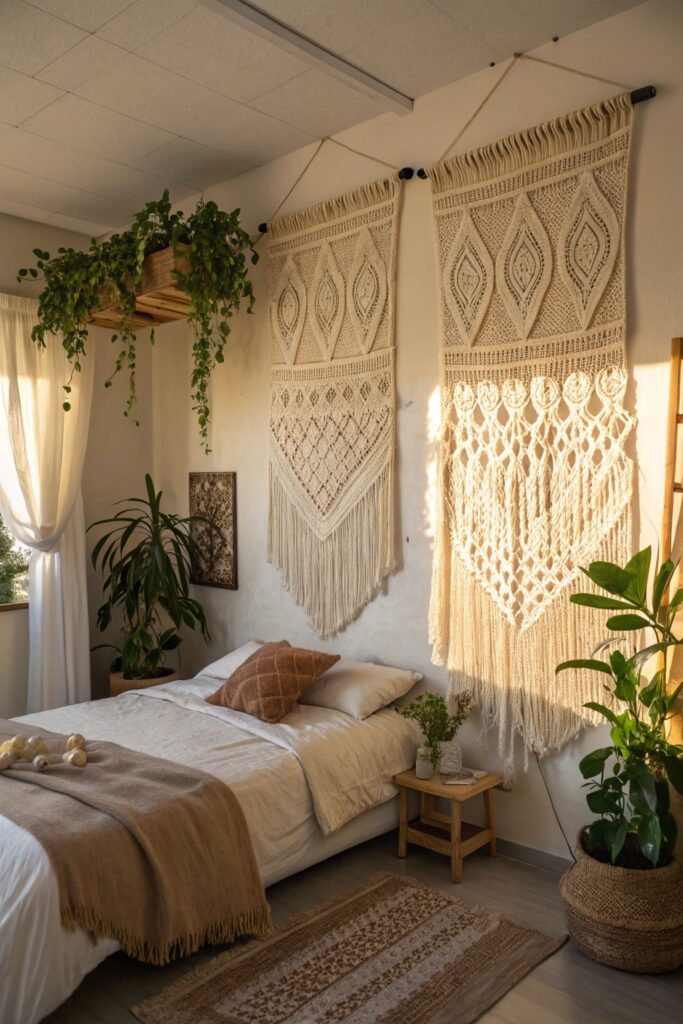
Want privacy with a serious boho personality? Hanging macramé or woven fabric panels create a soft, textural boundary between two spaces without blocking light entirely.
You hang them from a ceiling-mounted rod or a tension wire stretched across the room. The effect is airy and artistic — it feels more like intentional décor than a room divider.
This option works best when:
- Full visual privacy isn’t the primary goal
- You want to add warmth and texture to a neutral room
- The shared space has high ceilings that benefit from vertical interest
Macramé dividers pair beautifully with plants, warm lighting, and natural materials. If your shared room leans bohemian or eclectic, this is your move.
6. Live Plant Walls or Tall Planters
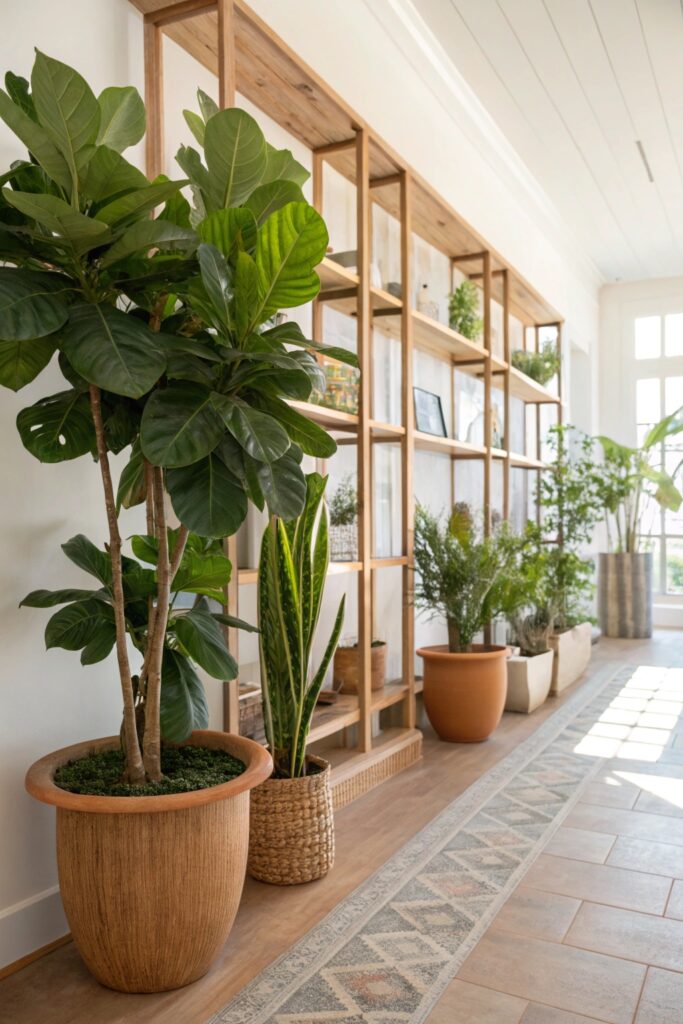
Why build a wall when you can grow one? A row of tall potted plants or a freestanding plant wall creates a natural, living boundary that noticeably improves your air quality too.
Use tall plants like fiddle leaf figs, bamboo, or snake plants in large floor planters. Space them closely enough to create visual separation without completely blocking sightlines.
For a more structured look:
- Use a tiered plant stand to create layers of greenery
- Install a freestanding trellis with climbing plants
- Combine planters with a low shelving unit for a mixed divider
The best part? This divider literally gets better over time as the plants grow. You can’t say that about a curtain. 🙂
7. Glass Partition Walls
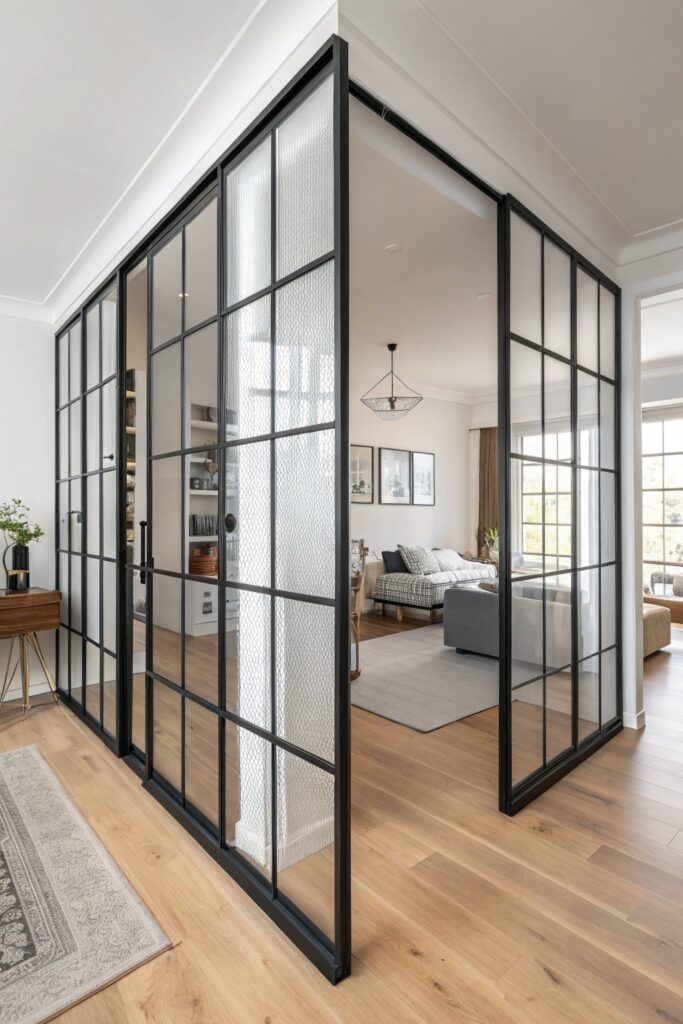
When you need real separation but still want the room to feel open and light-filled, a glass partition wall is the smartest solution. These semi-permanent dividers use framed glass panels to create a distinct visual boundary without sacrificing brightness.
Steel-framed glass partitions — that black grid style you’ve seen everywhere — work particularly well in industrial, modern, and Scandinavian interiors. They look truly architectural.
Key things to know:
- Tempered glass is essential for safety
- Frosted or textured glass adds privacy while still allowing light
- These require some installation but aren’t permanent like full walls
This option costs more than curtains or shelves, but the result looks custom and intentional. Worth every penny if your budget allows.
8. Pegboard Divider Panels
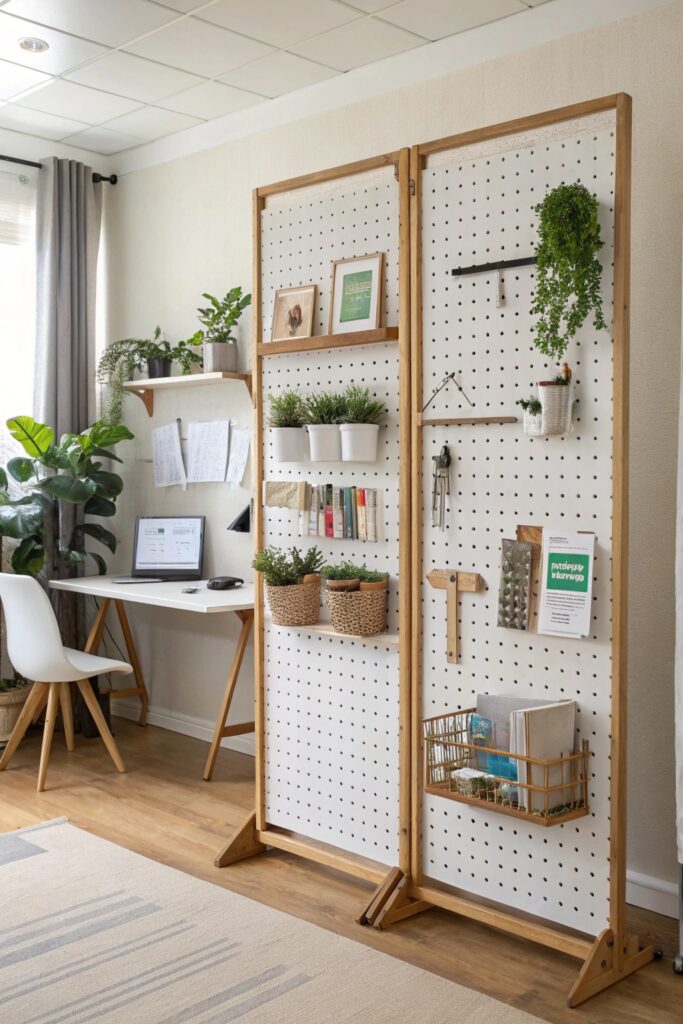
Pegboards aren’t just for garages. A large pegboard panel mounted in a freestanding frame creates a surprisingly effective room divider that also functions as a customizable storage and display wall.
You can hang hooks, shelves, baskets, and organizers on both sides. Each person gets their own functional surface tailored to their needs. It’s a divider and a storage solution in one footprint.
Pegboard works especially well for:
- Shared home offices where each person needs different storage
- Kids’ shared bedrooms with lots of small items to organize
- Creative spaces where tools and supplies need easy access
Paint it in a bold color or keep it natural — either way, it looks deliberate and interesting rather than just practical.
9. Rope or Wooden Bead Curtains
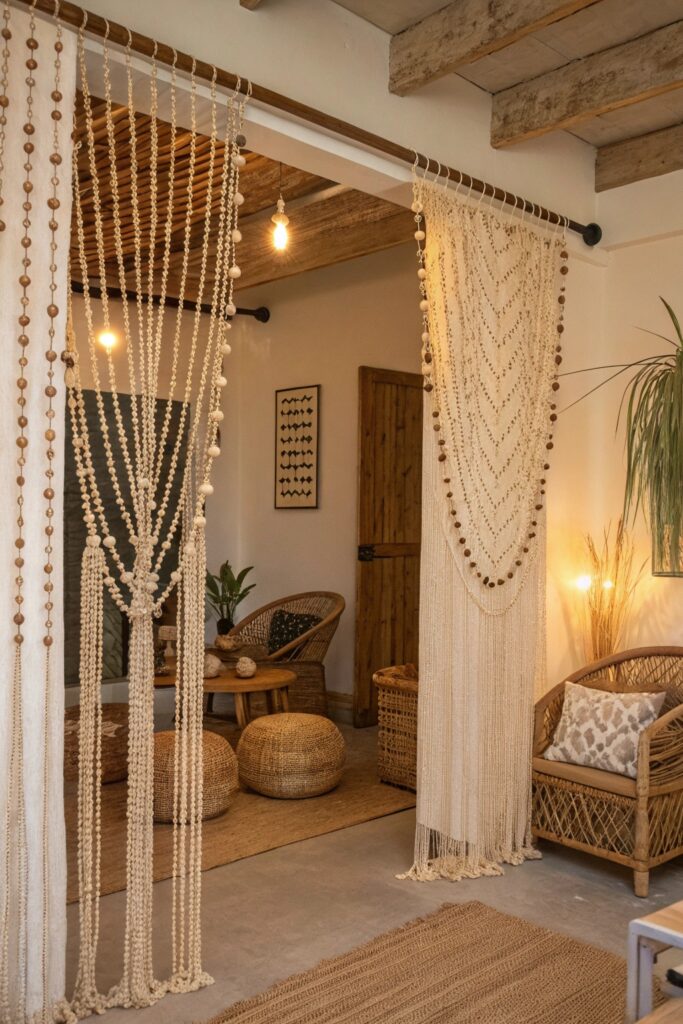
If you grew up in the 70s — or just appreciate that era’s effortless cool — bead curtains are making a proper comeback. Modern versions in wooden beads, sea glass, or knotted rope look truly chic rather than dated.
They don’t offer full visual privacy, but they create a clear psychological boundary between spaces. Sometimes that’s all you really need to make a shared room feel more personal.
These work best in:
- Boho or eclectic interiors where texture is celebrated
- Kids’ rooms as a playful and safe divider option
- Studio apartments where a light, casual separator suits the vibe
Hang them from a simple tension rod and you’ve got an instant divider that costs almost nothing and takes two minutes to install.
10. Wardrobe or Dresser as a Divider
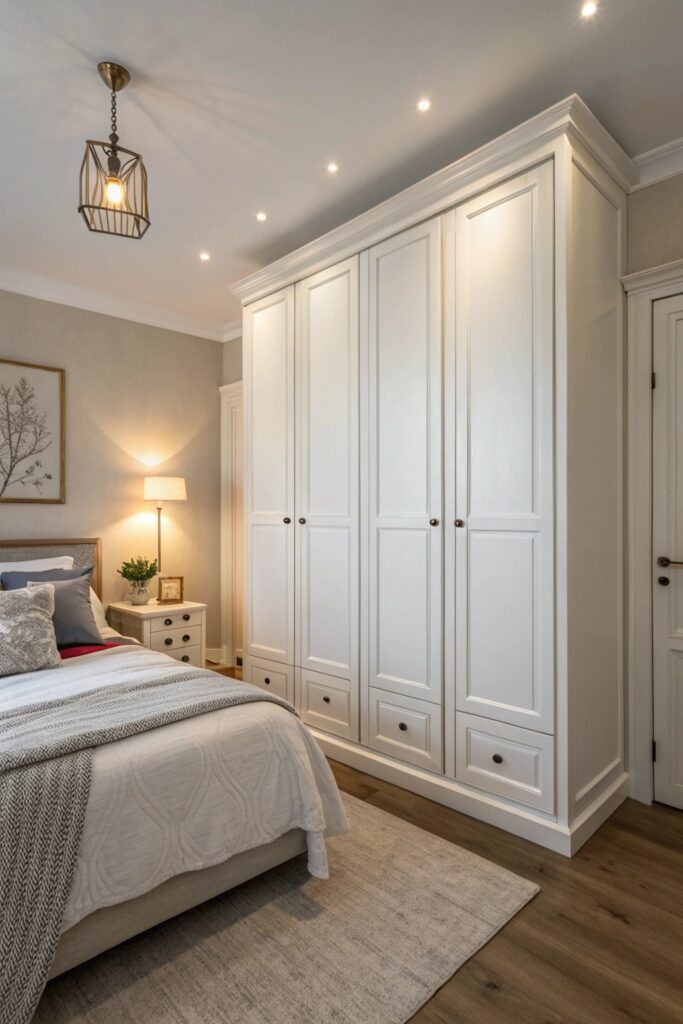
Here’s one most people overlook: placing a wardrobe or tall dresser perpendicular to the wall instantly creates two separate zones. You gain privacy and storage without buying anything extra.
This works brilliantly in shared bedrooms where each person needs their own closet space anyway. Position two wardrobes back-to-back across the center of the room and you’ve essentially built a wall of storage.
Make it work by:
- Choosing matching units for a cohesive, intentional look
- Ensuring the furniture doesn’t exceed ceiling height by more than a foot
- Adding a low shelf or light on top to soften the divide
It’s practical, budget-smart, and solves two problems at once. Honestly, why don’t more people do this?
11. Lattice or Laser-Cut Panels
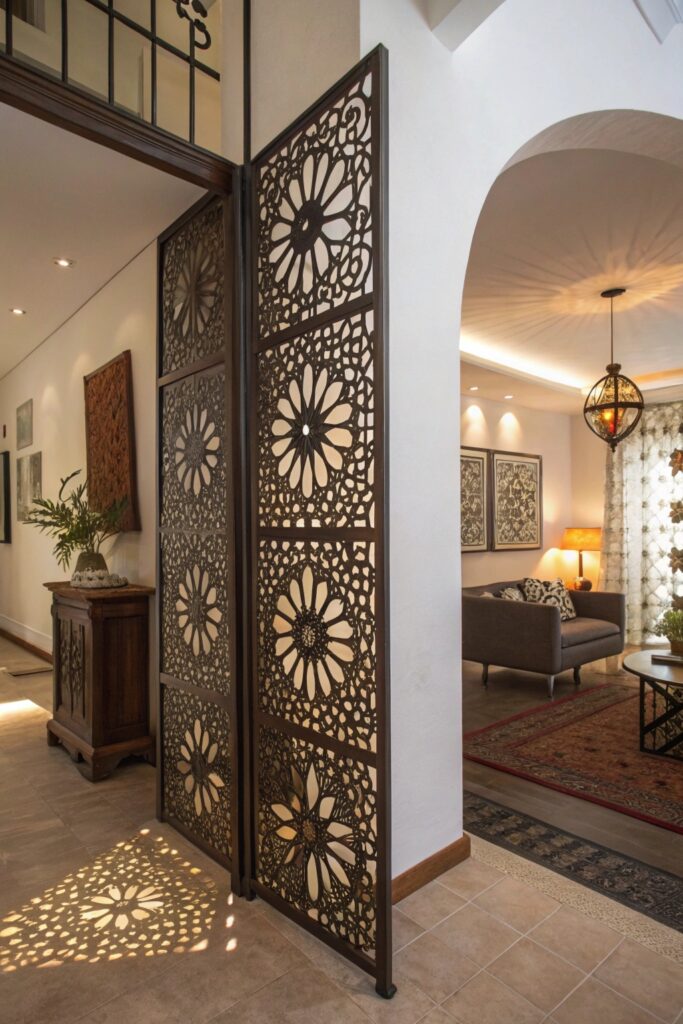
Decorative lattice or laser-cut panels give you privacy with serious visual interest. These freestanding or wall-mounted screens feature intricate geometric or floral cutout patterns that cast beautiful light and shadow across the room.
They’re popular in Moroccan, bohemian, and contemporary interiors — and for good reason. They turn a functional divider into an actual focal point.
Great materials to look for:
- MDF with laser-cut patterns — affordable and widely available
- Metal screens — more durable and dramatic
- Bamboo lattice — natural, lightweight, and eco-friendly
The cutout patterns mean light flows through freely, so you won’t make the room feel smaller. You get visual separation without sacrificing the open feel of the space.
12. Loft Beds with Built-In Lower Privacy Zones
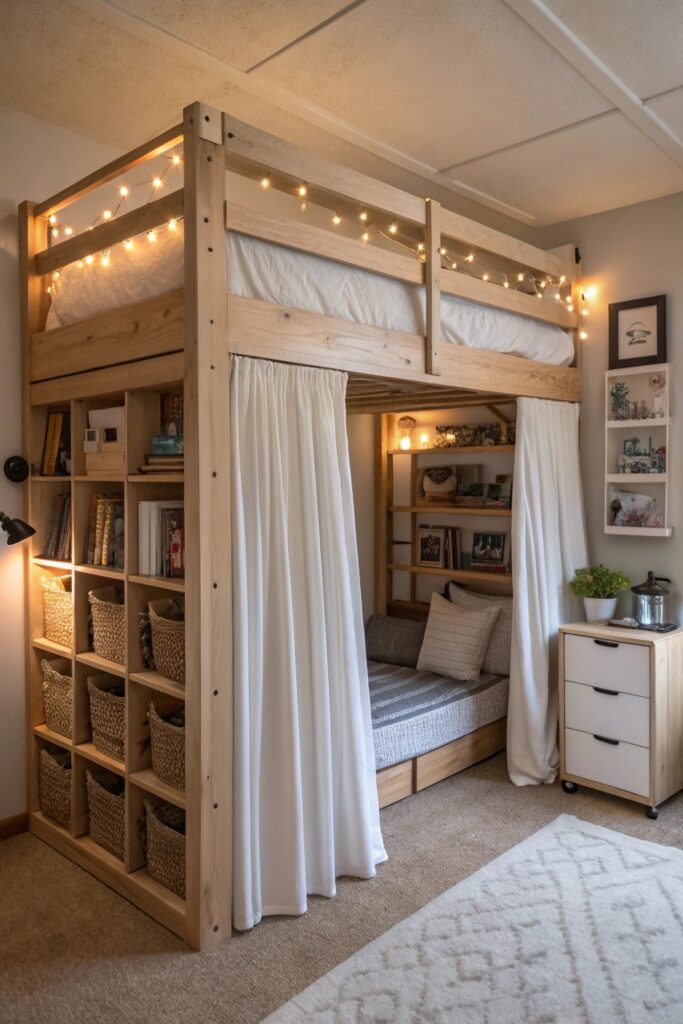
When floor space is tight, think vertical. A loft bed with a curtained or paneled lower section creates two completely separate zones stacked on top of each other — sleeping above, private space below.
The lower section can function as a study nook, reading corner, or simply a personal retreat with a curtain drawn across the front. It’s especially popular in kids’ shared rooms and small studio apartments.
What makes this work:
- Side curtains or sliding panels on the lower section for instant privacy
- Built-in shelving along the sides for storage
- Good task lighting underneath so the lower zone feels inviting, not cave-like
This is the most space-efficient divider solution on the list. If you’re working with a truly small shared room, a loft setup completely changes everything. :/
Finding Your Perfect Divider
Shared spaces don’t have to mean zero privacy. From bookshelf walls to loft beds, there’s a room divider solution for every style, budget, and layout. The key is choosing one that solves your specific problem while actually adding something to the room — not just blocking a corner off awkwardly.
Start by identifying your biggest need: Is it visual privacy? Sound dampening? Storage? Light flow? Once you know what matters most, the right divider becomes obvious.
Pick one idea from this list and commit to it. Your shared room can be functional, stylish, and truly comfortable — all at the same time. You deserve a space that actually works for you.