
The wall above a couch is one of the most visually prominent spots in a living room, and the most successful approaches share a common thread — scale matched appropriately to the couch below, whether that’s one large piece or a considered cluster of smaller ones.
Below are 12 ways to fill that space intentionally, with real costs and practical notes for each.
1. Hang a Large Statement Art Piece
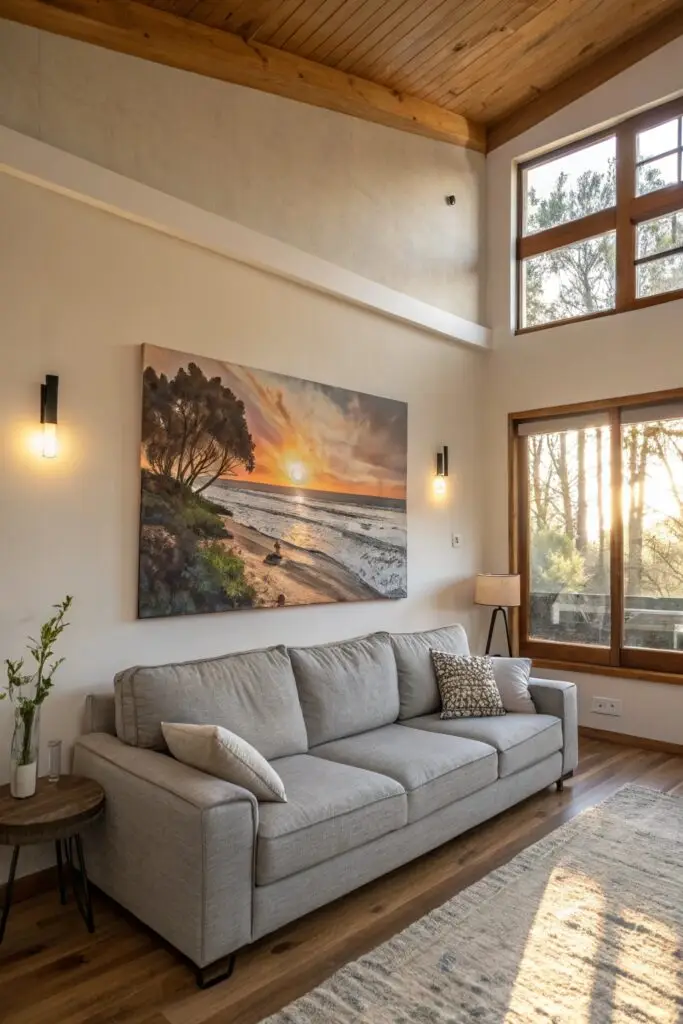
A single large art piece ($60-200 depending on size and print type) anchors the space more effectively than several small pieces, since it gives the eye one clear focal point rather than scattered smaller elements competing for attention.
A general sizing guideline is choosing art roughly two-thirds the width of the couch below it — art that’s noticeably narrower than the sofa tends to look undersized and disconnected from the furniture it’s meant to complement.
2. Build a Curated Gallery Wall
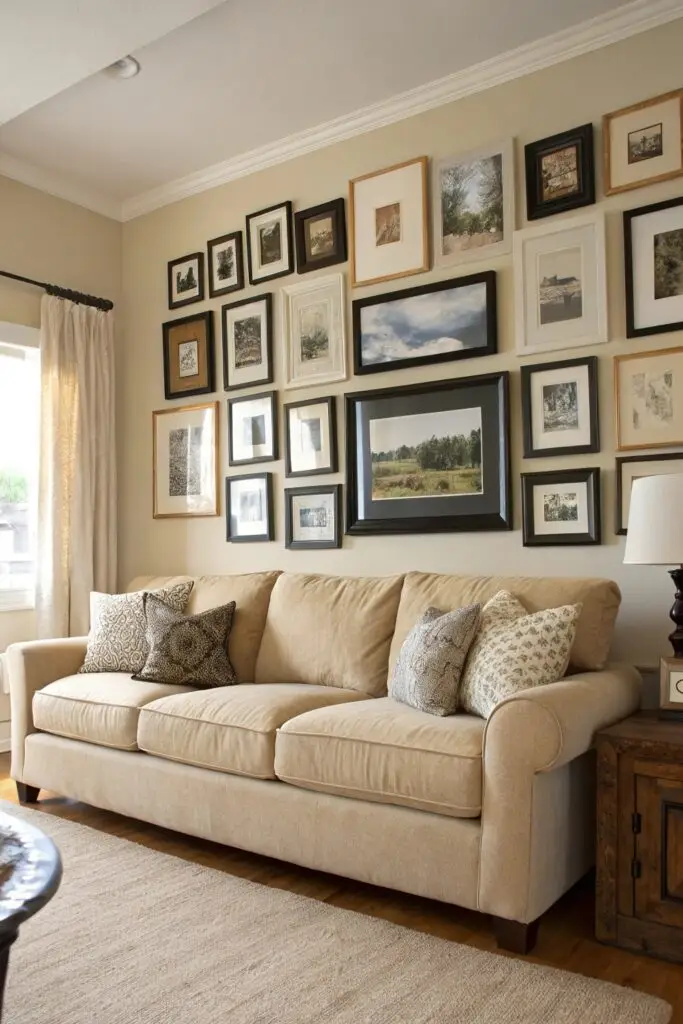
A cluster of 5-9 framed pieces in varying sizes, unified by consistent frame color or a coordinated color palette, fills the same wall space as a single large piece but adds more visual texture and personal curation.
Lay the arrangement out on the floor first before hanging anything, and keep spacing consistent (2-3 inches between frames) — this single step is what separates an intentional gallery wall from one that reads as randomly scattered.
3. Add a Statement Mirror
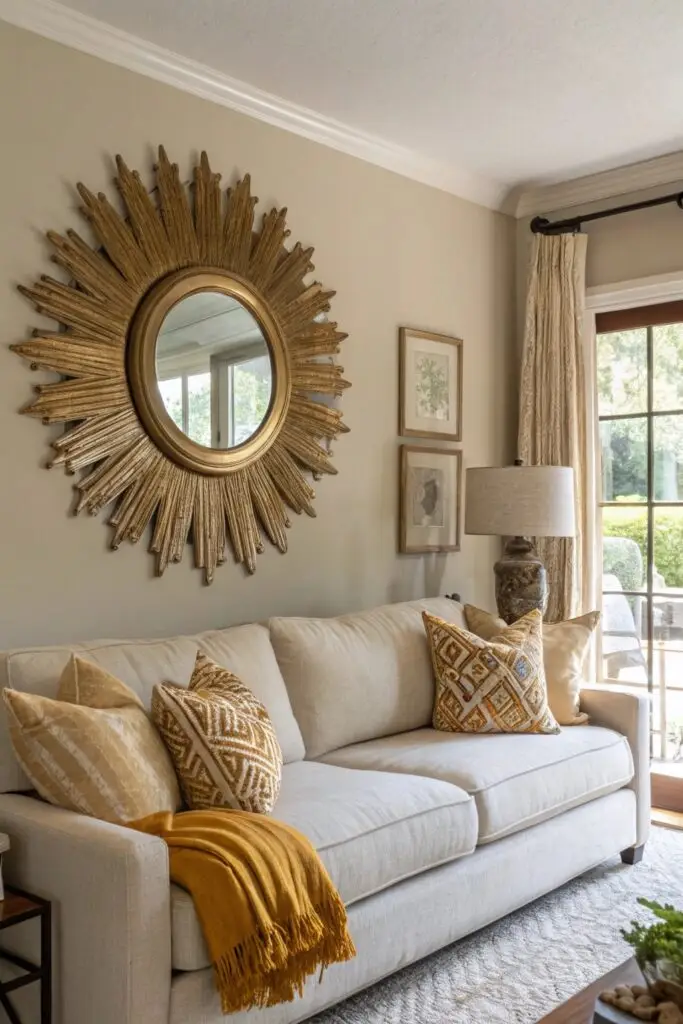
An oversized mirror ($80-200) above the couch reflects light back into the room and adds visual depth, working especially well in rooms with limited natural light or a smaller overall floor plan.
Choose a mirror with a distinctive frame (rather than a plain, unframed style) if it’s serving as the room’s primary above-couch focal point, since a plain mirror alone can read as visually thin compared to framed art of similar size.
4. Install Floating Shelves for Display
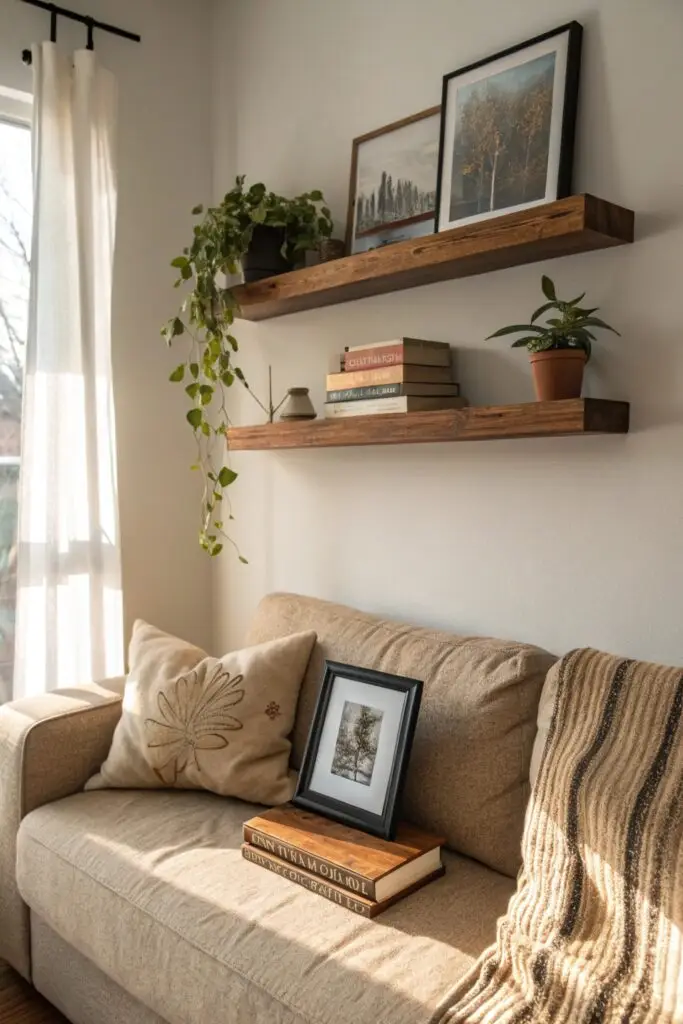
A pair or trio of floating shelves ($20-50 each) above the couch creates a changeable display surface for books, small art, and objects, offering more flexibility than fixed wall art since the arrangement can be restyled seasonally without new holes in the wall.
Keep styling on floating shelves relatively restrained — 3-5 objects per shelf with varied height and some genuine negative space reads more curated than a shelf packed edge to edge.
5. Hang a Woven Tapestry or Textile Piece
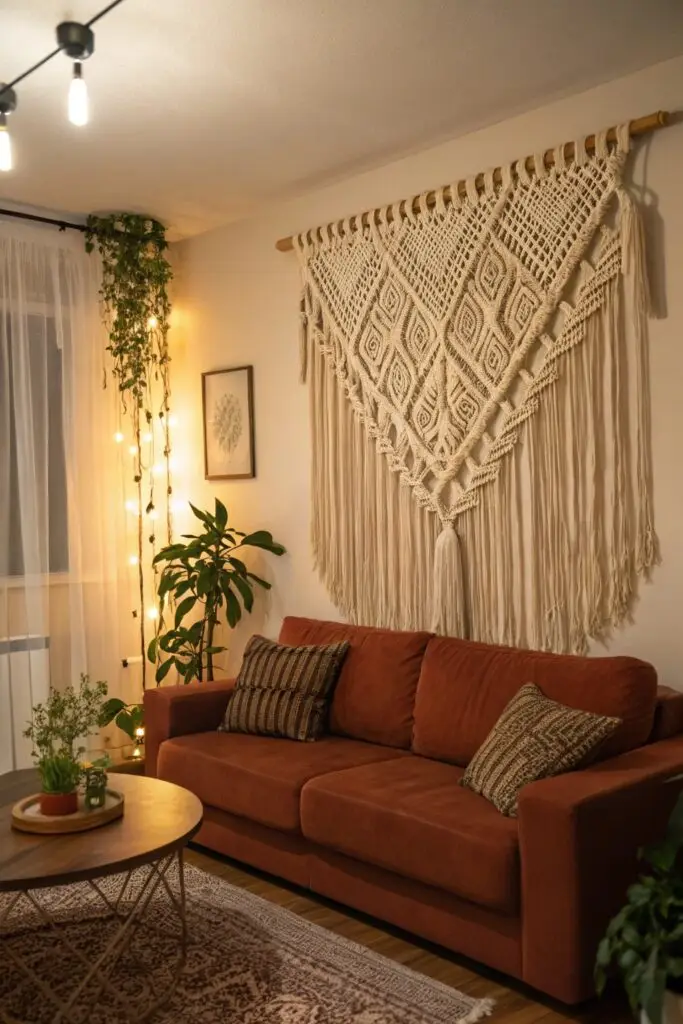
A large woven wall hanging or textile piece ($40-120) adds texture and warmth that flat framed art doesn’t provide, and it’s specifically well-suited to more bohemian, natural, or textured interior styles.
A wood or metal dowel at the top (rather than a frame) keeps the installation simple — most textile pieces designed for wall hanging come with this hardware included or easily sourced separately for a few dollars.
6. Create Symmetry With Matching Wall Sconces
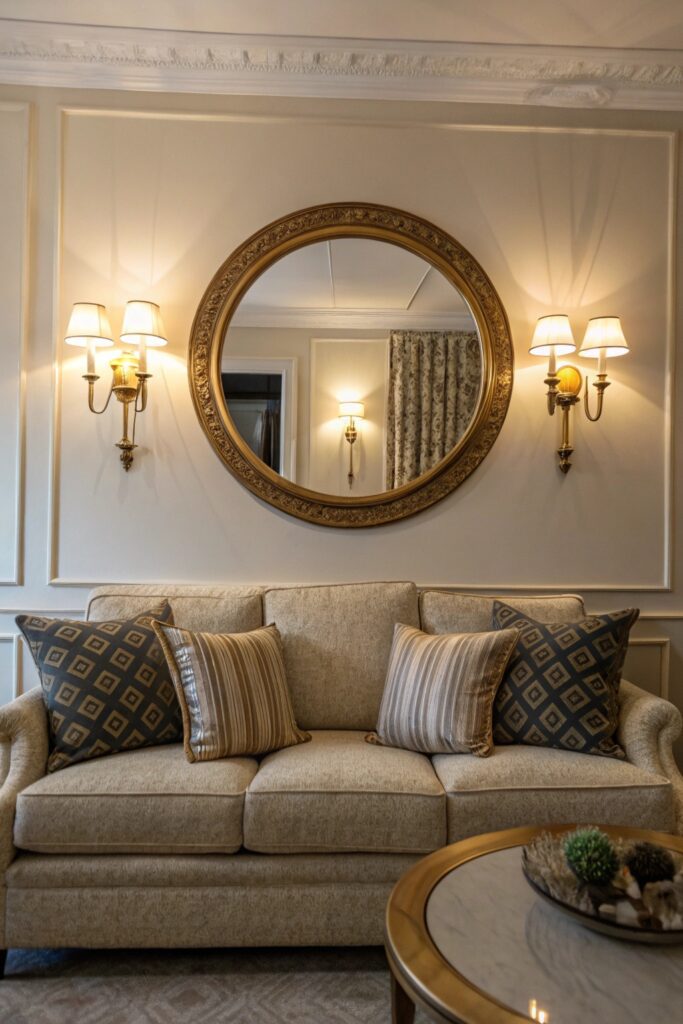
A pair of matching sconces flanking a central piece of art or a mirror adds both function (ambient lighting beyond a single overhead fixture) and the visual balance that symmetrical placement reliably provides.
Hardwired sconces require professional installation in most cases, while plug-in sconce styles ($30-60 each) offer a similar look without the electrical work, running a visible cord that can be dressed with a cord cover for a cleaner finish.
7. Display a Collection of Plates or Ceramics
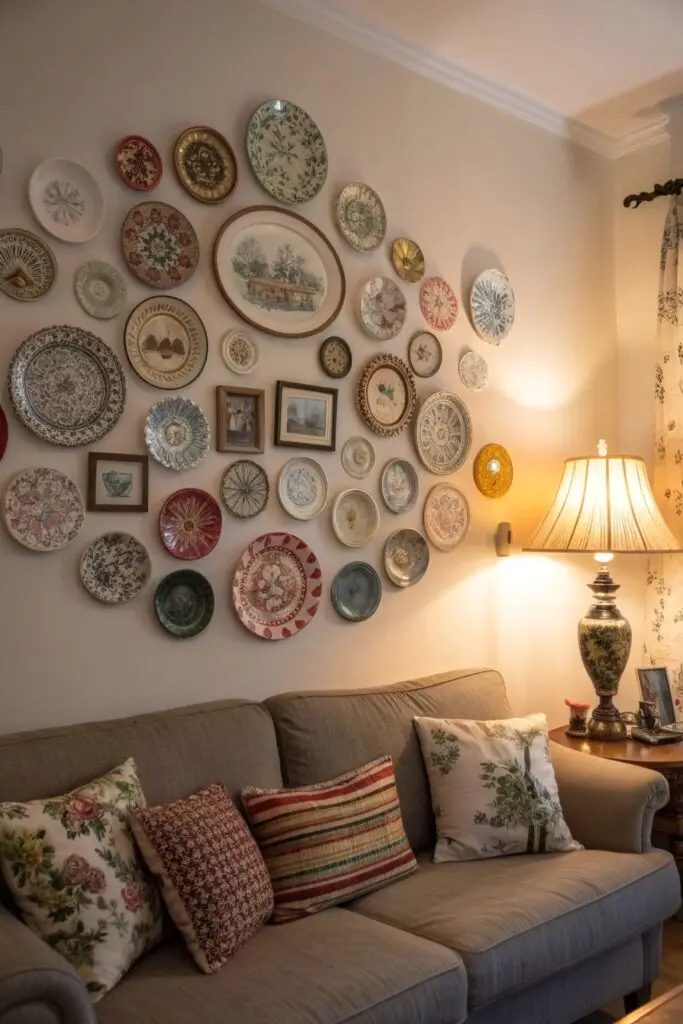
An arranged cluster of decorative plates or ceramic pieces on wall-mounted hangers brings a genuinely collected, personal quality that mass-produced framed art can’t replicate, particularly effective if built from pieces sourced over time rather than purchased as a matched set.
Plate hangers ($3-8 each) are inexpensive and allow easy rearranging as the collection grows, unlike a fixed frame arrangement that’s more disruptive to reconfigure.
8. Add a Large Clock as a Functional Focal Point
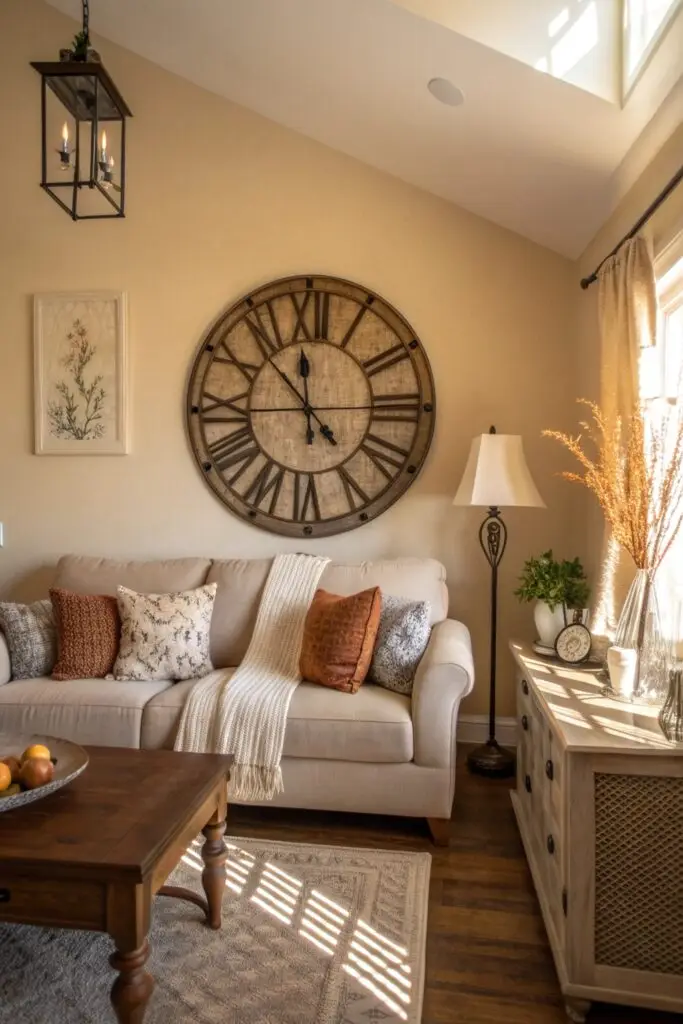
An oversized wall clock ($40-100) serves as genuine functional decor, combining the anchor-point benefit of a large statement piece with actual daily usefulness that purely decorative art doesn’t offer.
Choose a clock face and frame material that complements your existing metal finishes elsewhere in the room (matching black, brass, or wood tones) rather than treating it as an isolated decor choice.
9. Hang Botanical or Framed Plant Prints
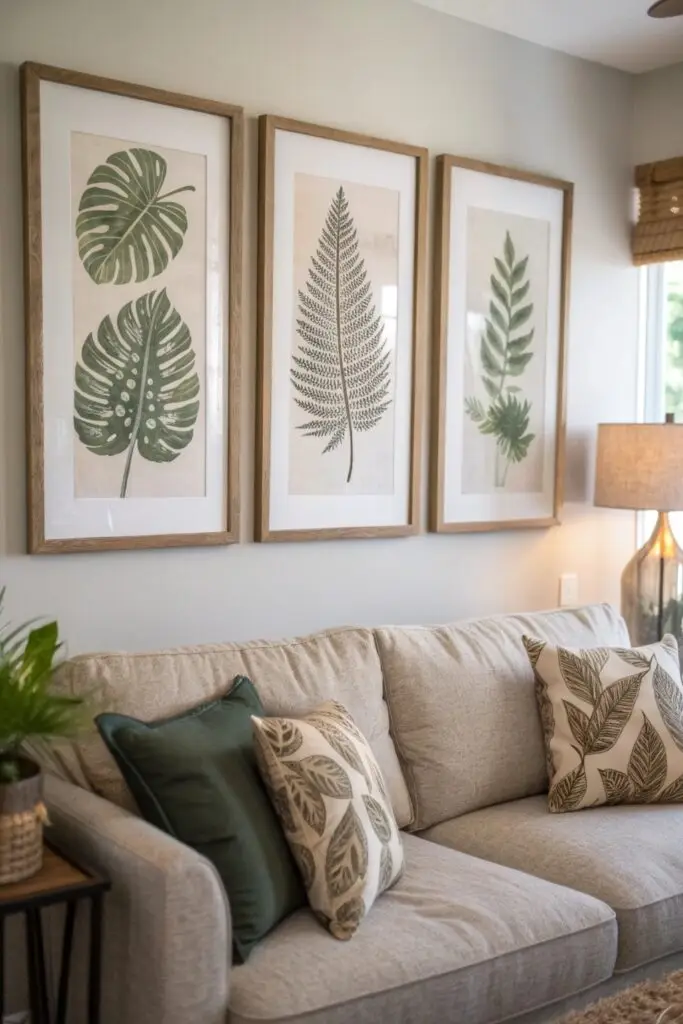
A single large botanical print or a small grouping of 2-3 brings a nature-inspired element into the space without the maintenance of actual plants, working well in rooms that don’t get enough light to support real greenery near the seating area.
Choose prints with a cohesive color palette and consistent frame style if using more than one, which keeps a smaller grouping from reading as visually disconnected pieces rather than an intentional set.
10. Use an Oversized Wall Clock and Art Combo
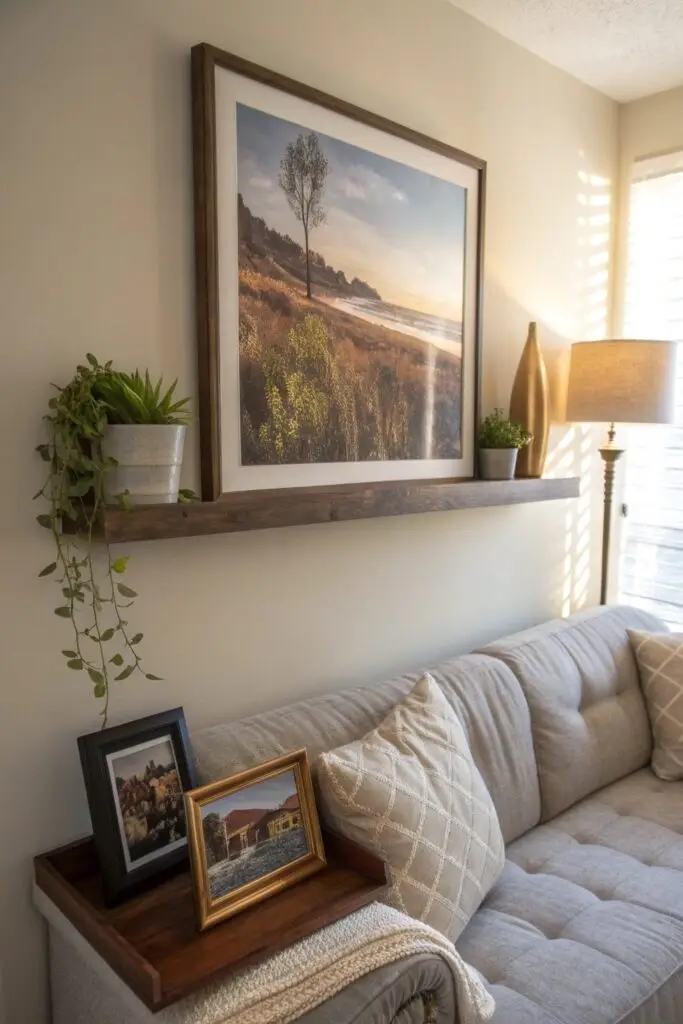
Pairing a large clock with one or two smaller framed pieces on either side creates an asymmetrical but balanced arrangement, offering visual variety beyond a single centered piece while still maintaining the clock’s functional value.
Keep the clock as the visually dominant element in this combination — supporting pieces should be noticeably smaller so the arrangement doesn’t compete for the same visual weight.
11. Add a Neon or LED Sign for Personality
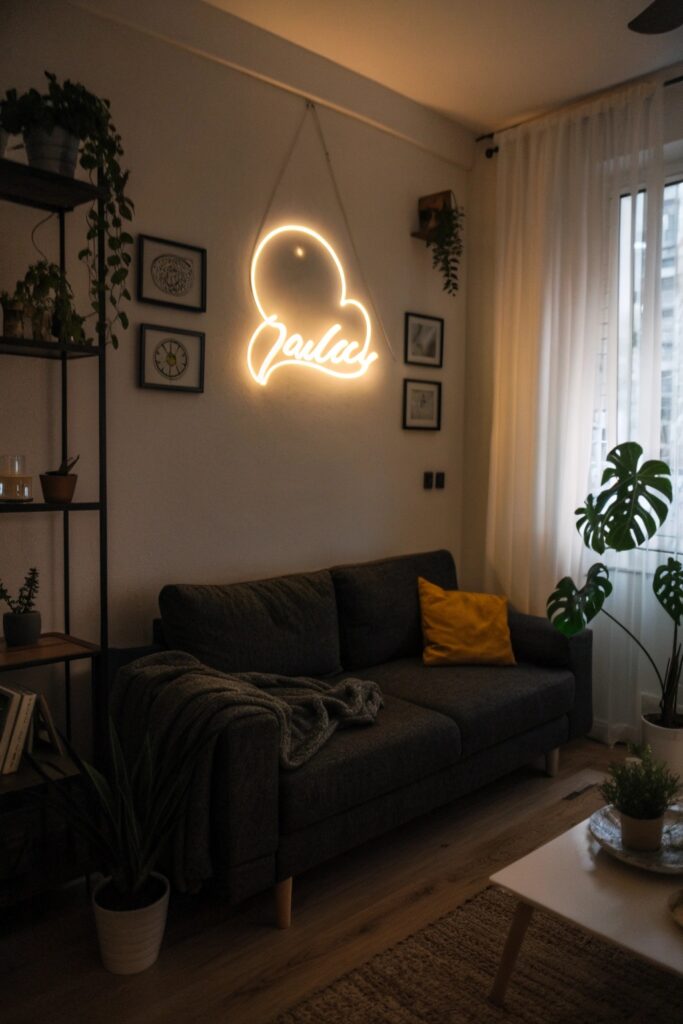
A custom or pre-made LED neon-style sign ($50-150) adds a distinctly personal, playful element that works especially well in more casual, younger-skewing interior styles rather than more traditional or formal living rooms.
Check the sign’s specific mounting requirements and cord length before purchasing, since a cord that’s too short for your outlet placement becomes an installation headache after the sign has already arrived.
12. Layer a Large Rug-Style Wall Hanging
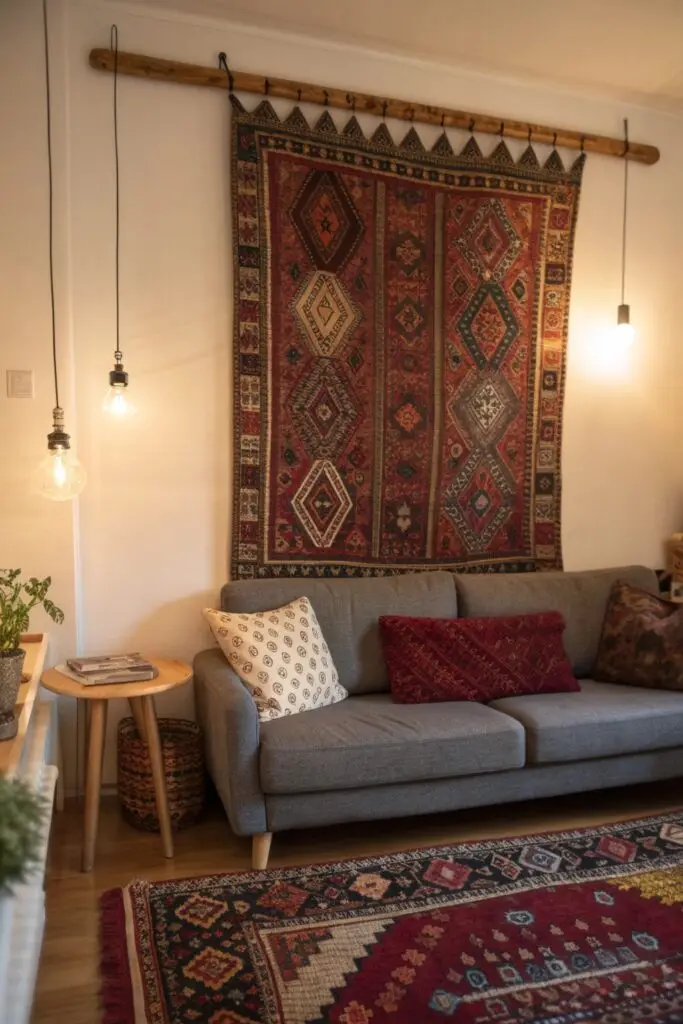
A vintage-style or patterned rug hung as wall art (rather than on the floor) brings bold pattern and rich texture that flat art doesn’t achieve, and it’s a genuinely distinctive choice that reads as more considered than typical framed art.
A simple wall-mounted curtain rod or a rug-hanging clip system (both under $20) handles installation for most rug sizes without needing to sew loops or make permanent modifications to the rug itself.
Wrapping It Up
Scale matters more than any specific style choice — art or decor that’s noticeably narrower than the couch below it reads as undersized regardless of how well-chosen the piece itself is. Start with the roughly two-thirds-width guideline for a single piece, or build a gallery wall that reaches similar total width, before considering more specialized options like tapestries or plate collections.