
Mirrors do genuine functional work in a living room beyond decoration — reflecting light, adding visual depth, and making a space feel larger — which is why they’re one of the most consistently recommended additions across nearly every design style.
Below are 10 ways to use mirrors intentionally, with real costs and practical notes for each.
1. Go Big or Go Home with an Oversized Floor Mirror
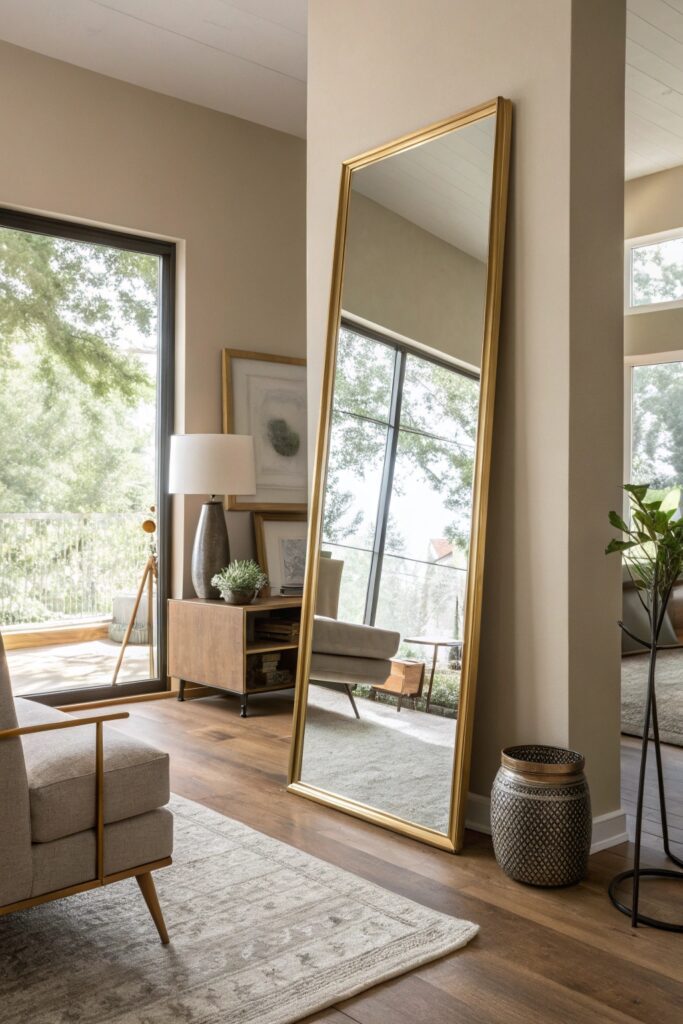
A large leaning floor mirror ($100-300) reflects considerably more light and creates more visual depth than several small mirrors combined, since the reflected surface area matters more than the number of mirrors used.
A leaning mirror also requires no installation, making it a fully flexible option that can be repositioned or moved to a different room without any commitment.
2. Create a Gallery Wall—But Make It Mirrors
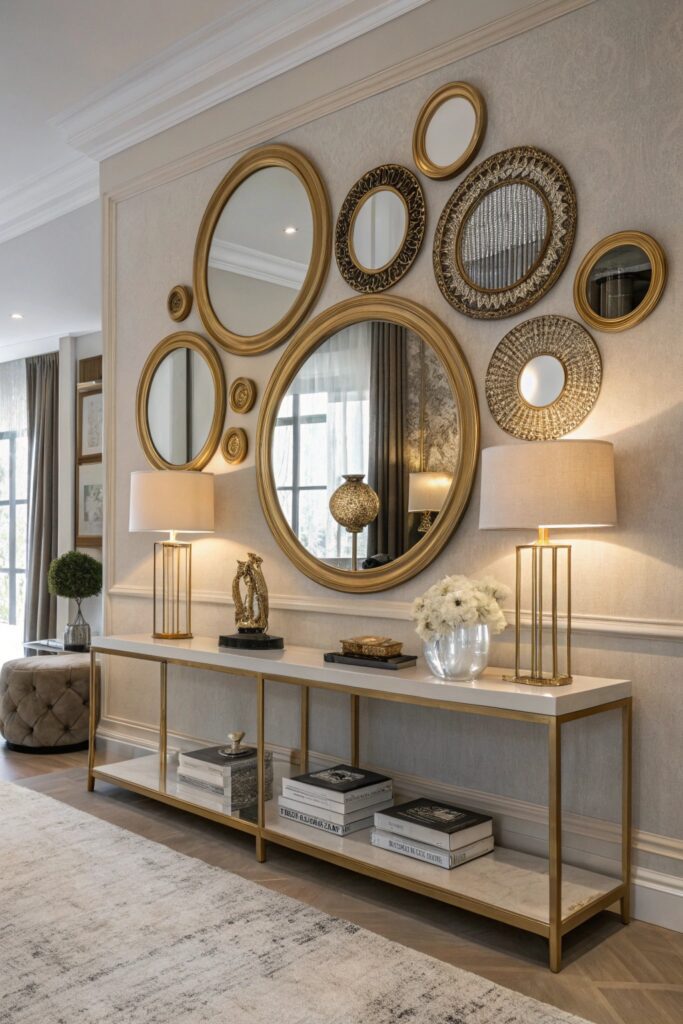
A cluster of small and medium mirrors in varying shapes and frames ($15-40 each) creates the same visual interest as a traditional art gallery wall while adding the functional light-reflecting benefit mirrors provide.
Vary the frame finishes intentionally (mixing a couple of metals or wood tones) for a collected look, rather than using identical frames throughout, which can read as more purchased-as-a-set than personally curated.
3. Use a Round Mirror to Soften Sharp Angles
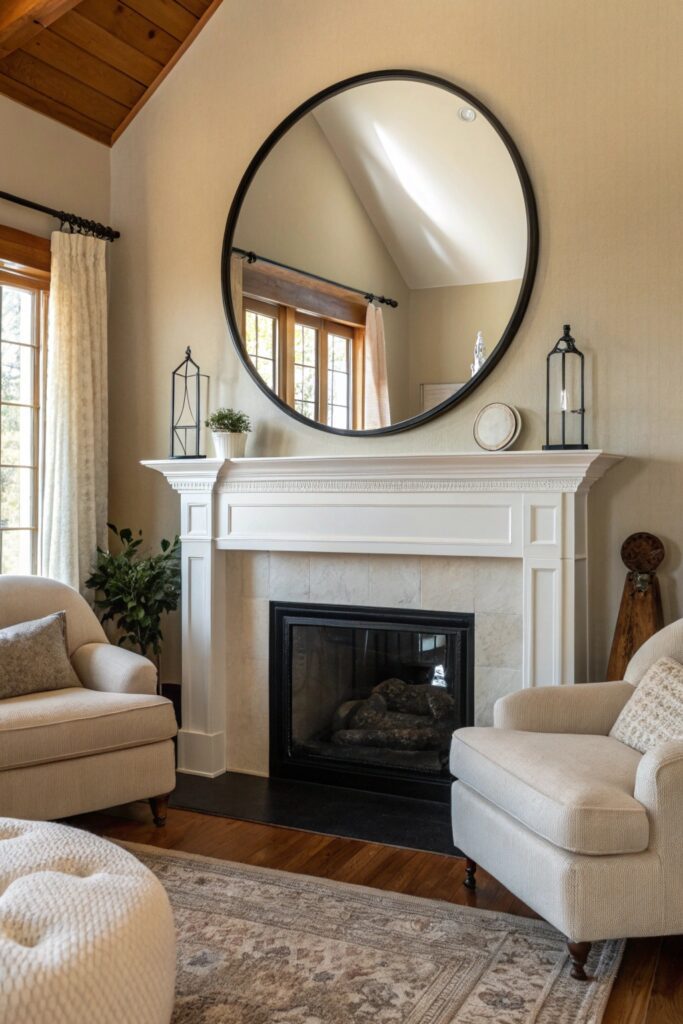
A round mirror ($40-120) introduces a softer geometric shape that balances a room dominated by rectangular furniture and windows, adding visual variety beyond just its reflective function.
This shape works particularly well hung above a rectangular piece of furniture like a console or sofa, where the contrast in geometry creates genuine visual interest rather than simply matching the furniture’s shape.
4. Layer Mirrors Behind Open Shelving
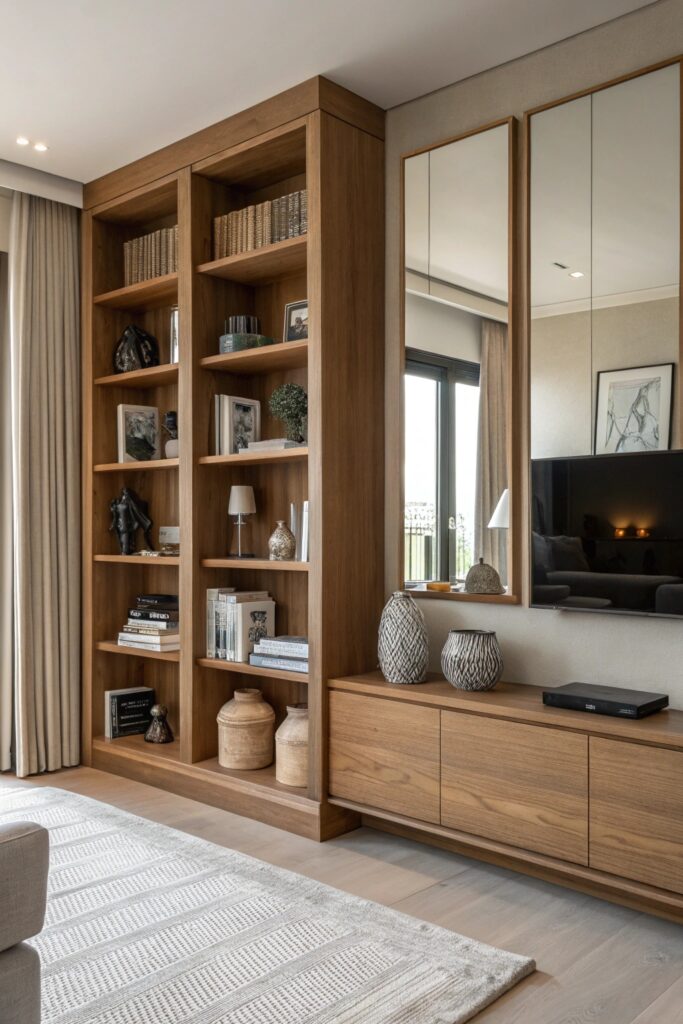
Mounting a mirror on the wall behind open shelving, so it’s partially visible between and around displayed objects, adds depth and light to a shelving display that a solid wall backing doesn’t provide.
This technique also makes a shelving unit’s displayed objects appear more numerous and the shelf itself feel less like a flat wall fixture, adding genuine dimension to the display.
5. Try a Mirrored Console Table
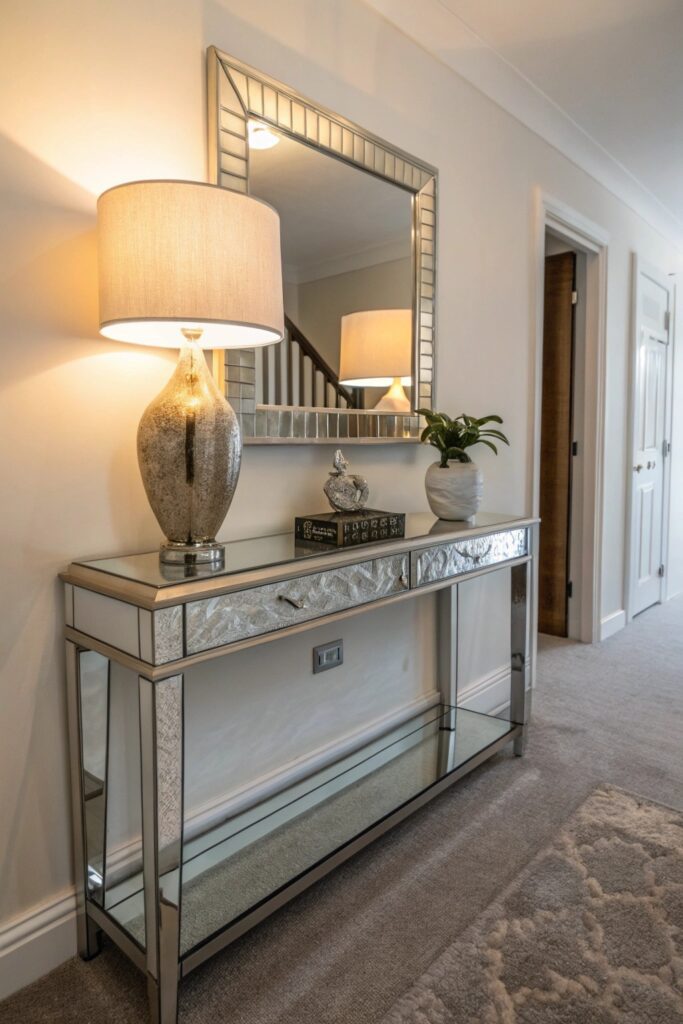
A console table with mirrored panels ($150-350) combines furniture function with the light-reflecting benefit of a wall mirror, working well in an entry or against a living room wall where floor space is limited.
This piece works especially well in a smaller room specifically, since the mirrored surface helps the console visually recede rather than adding perceived bulk to the space.
6. Lean Into Asymmetry with a Sculptural Mirror
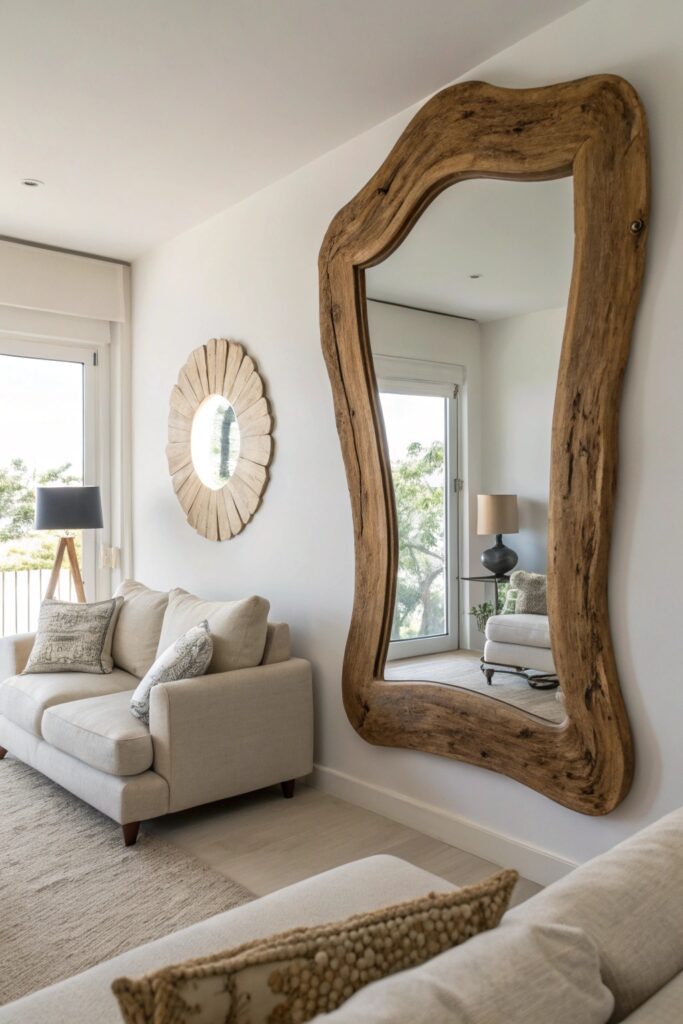
An irregularly shaped or artistically framed mirror ($60-200) serves as a genuine art piece in addition to its reflective function, working as a focal point in a way a standard rectangular or round mirror doesn’t.
This style works particularly well as a single statement piece in a room that’s otherwise kept simpler, letting the mirror’s unusual shape carry the visual interest without competing elements.
7. Mirror Your Media Wall
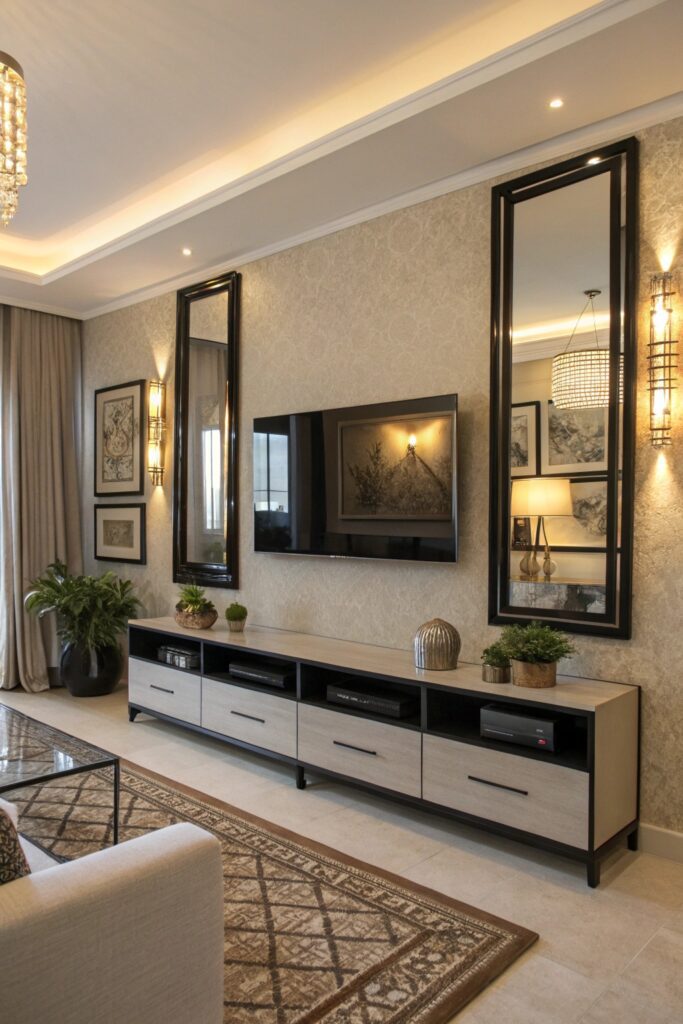
A large mirror positioned to reflect the TV wall (rather than facing it directly, which can create screen glare) adds light and depth to what’s often one of a living room’s more furniture-heavy walls.
Test the specific placement for glare before finalizing, since a mirror facing a screen too directly can actually create more viewing distraction than benefit.
8. Create a Mirrored Accent Wall
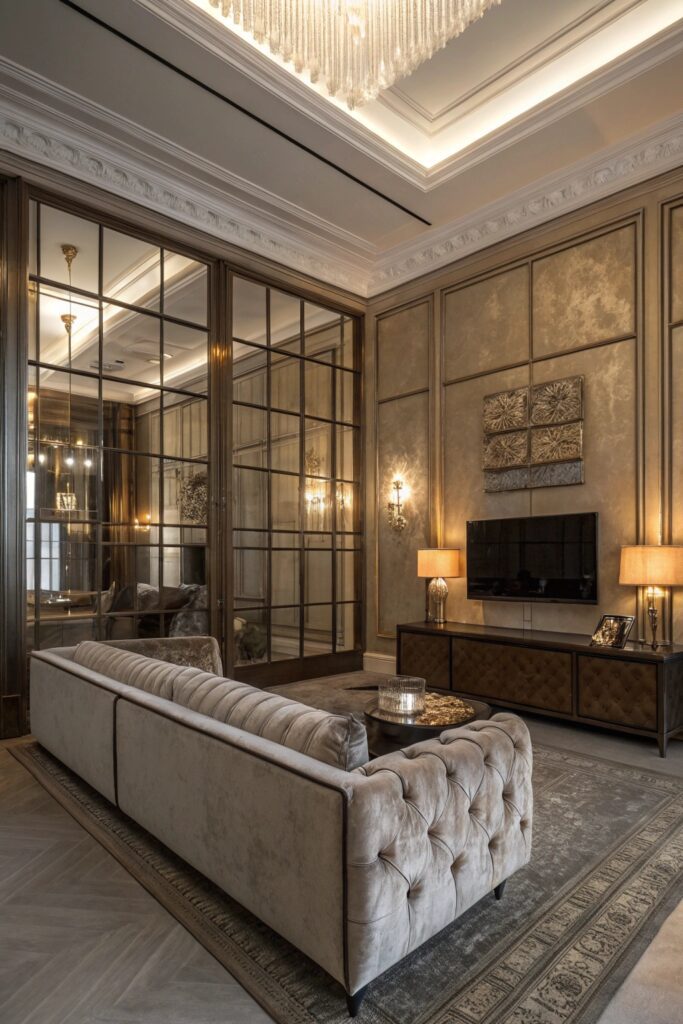
A full wall of mirrored panels ($300-800 depending on size and installation) is a genuine design commitment that dramatically opens up a room’s perceived size, working best in a room where one specific wall could use a bold focal treatment.
This is a more involved and costly option than a single mirror, and it’s worth confirming the wall’s condition can support panel installation before committing to this approach.
9. Use Mirrors to Highlight Architectural Features
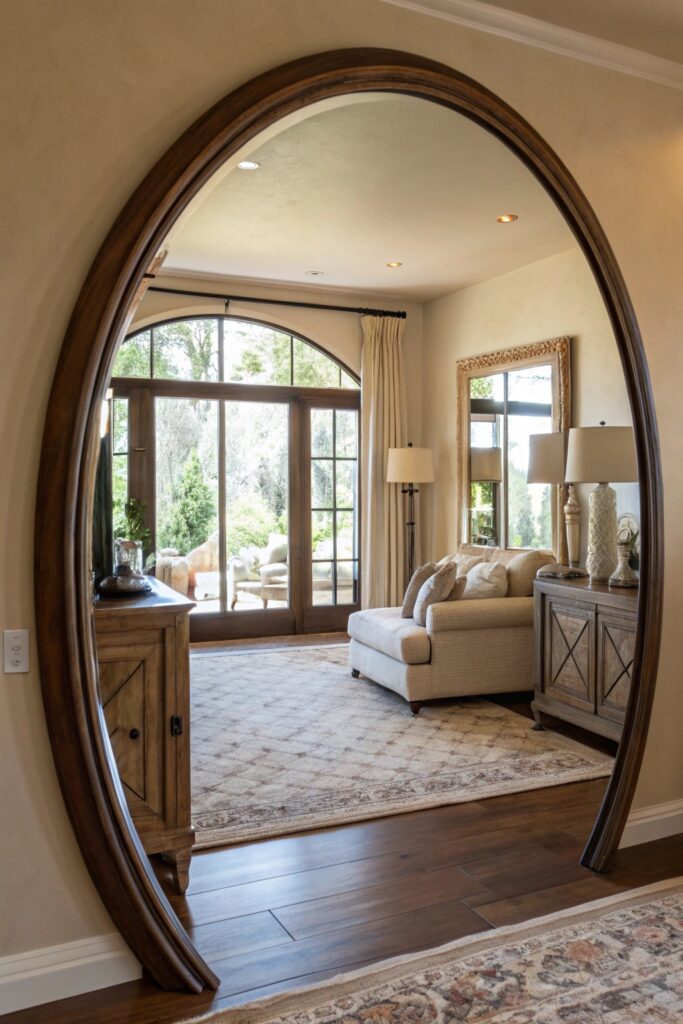
Positioning a mirror near a fireplace, built-in shelving, or another architectural detail draws additional attention to that feature by doubling its visual presence in the room.
This works especially well for features that might otherwise go slightly unnoticed, using the mirror’s reflection to essentially give the room two versions of the same appealing detail.
10. Mix Metals and Finishes for a Curated Look
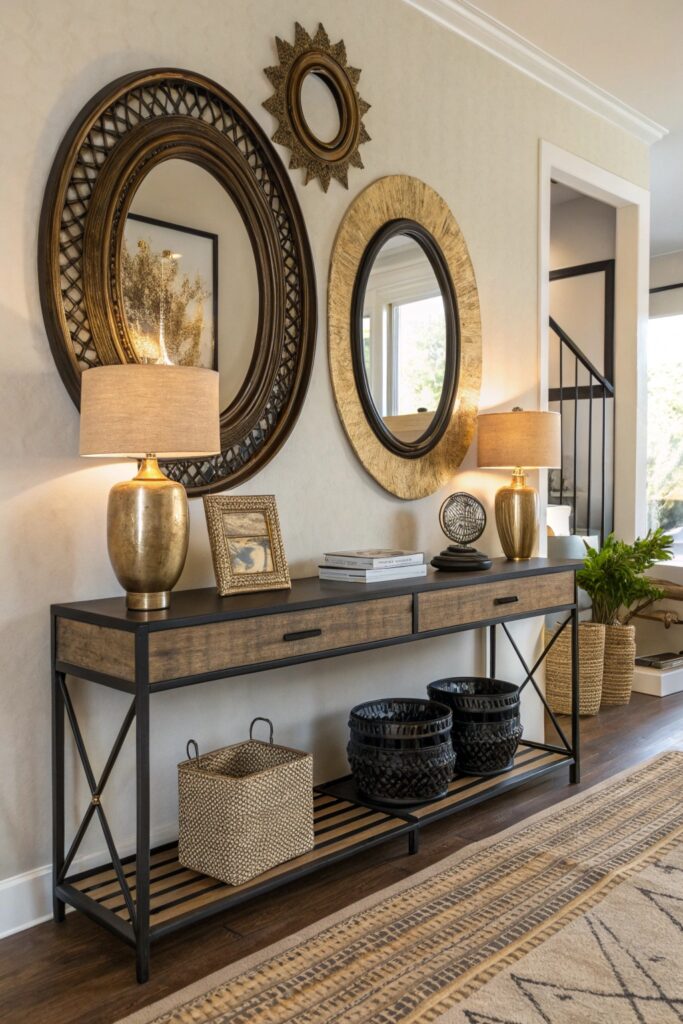
Combining a couple of different mirror frame finishes (brass and black, for instance) across multiple mirrors in the same room reads as more intentionally collected than a fully matched set purchased together.
Keep this mixing deliberate rather than random — two or three coordinated finishes work better than an unplanned mix of every metal tone available.
Placement Mistakes to Avoid
The most common mirror-placement mistake is hanging one where it primarily reflects a blank wall or a cluttered, unphotogenic view — a mirror only adds value when it reflects something worth doubling, whether that’s a window, a piece of art, or an attractive architectural detail.
Height matters just as much as what’s being reflected — a mirror hung too high loses much of its light-bouncing benefit for anyone actually seated in the room, so testing the placement at eye level from typical seating positions before committing to permanent installation is worth the extra step.
Final Thoughts
Scale matters more than any specific placement technique — a single large mirror generally does more visual work than several small ones combined, since the reflected surface area is what drives the light and depth benefits mirrors provide. Position any mirror to reflect a window or light source specifically for the strongest effect, rather than a wall or dark corner.