
An accent chair does real work in a small living room beyond decoration — the right choice adds seating, fills an awkward corner, or introduces color without eating into a room’s already limited floor space. For broader space-saving strategies beyond seating specifically, our guide to small living room hacks covers additional techniques that pair well with these chair choices.
Below are 12 accent chair approaches, with real costs and practical notes for each.
1. Go Small with a Slipper Chair
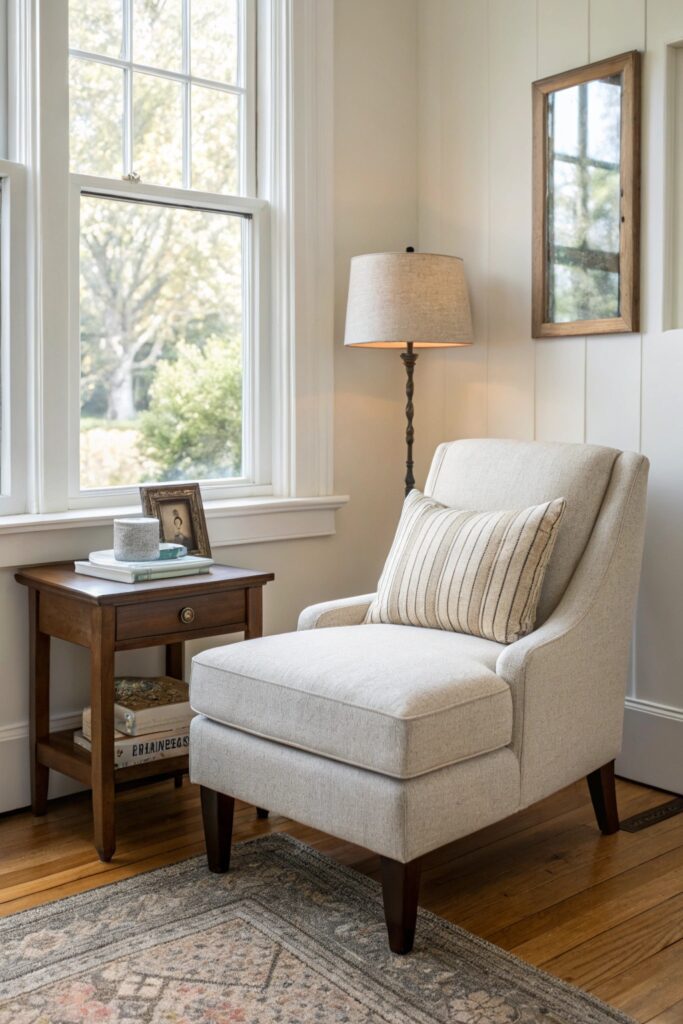
A slipper chair’s low, armless profile ($150-350) takes up meaningfully less visual and physical space than a standard armchair, since the missing arms alone can save several inches of footprint on each side.
This style works especially well in a smaller room where a bulkier chair would compete with existing seating rather than complementing it.
2. Try a Swivel Accent Chair
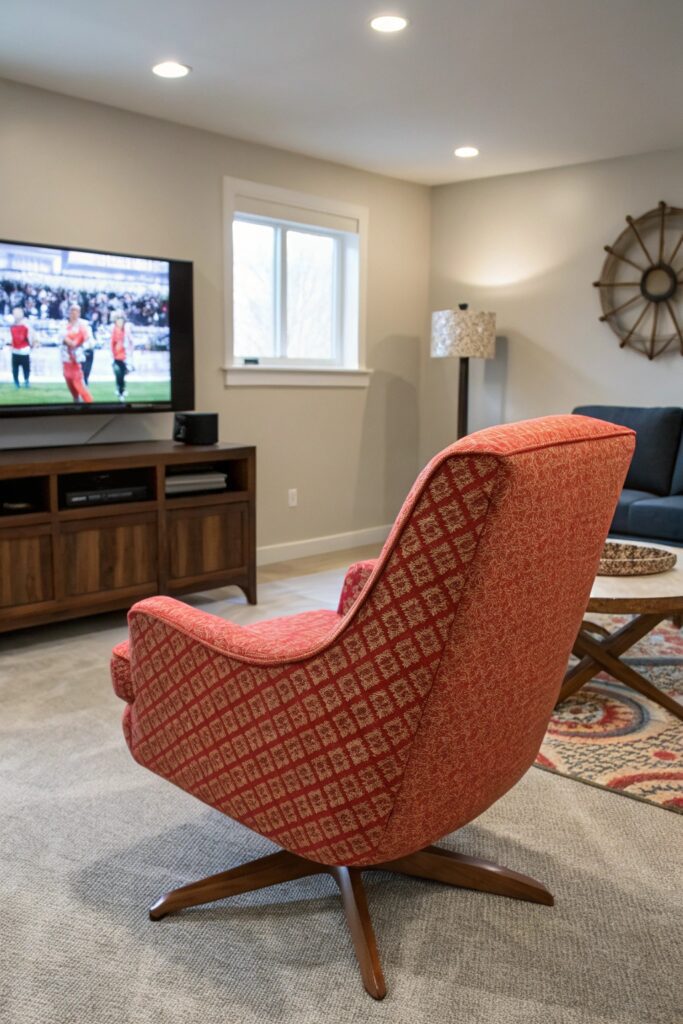
A swivel base ($200-450) lets one chair serve multiple conversation zones without needing to physically move the furniture, which is a genuinely practical advantage in a smaller room where every piece needs to work harder.
This is particularly useful positioned near a corner or between two functional areas, letting the chair pivot to face whichever activity is happening at the moment.
3. Add a Curved Barrel Chair
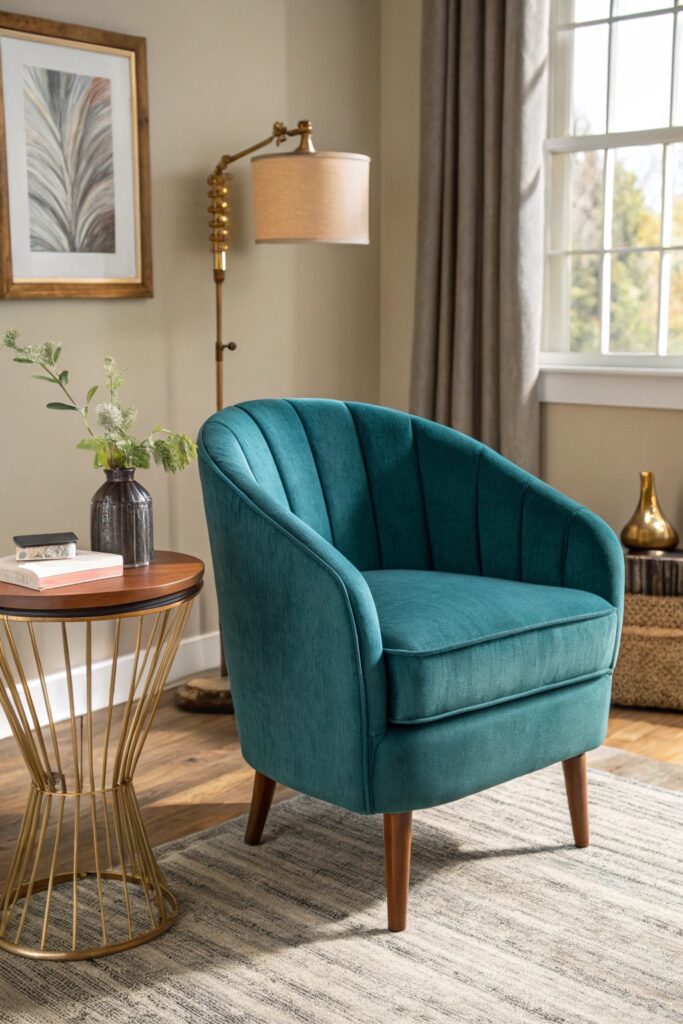
A barrel chair’s rounded silhouette ($200-400) softens a room’s overall geometry and avoids the sharp corners a boxier chair introduces, which matters for traffic flow in a tighter floor plan.
The curved shape also tends to read as less visually heavy than an angular chair of similar actual size, contributing to an overall sense of more open space.
4. Use a Compact Wingback Chair
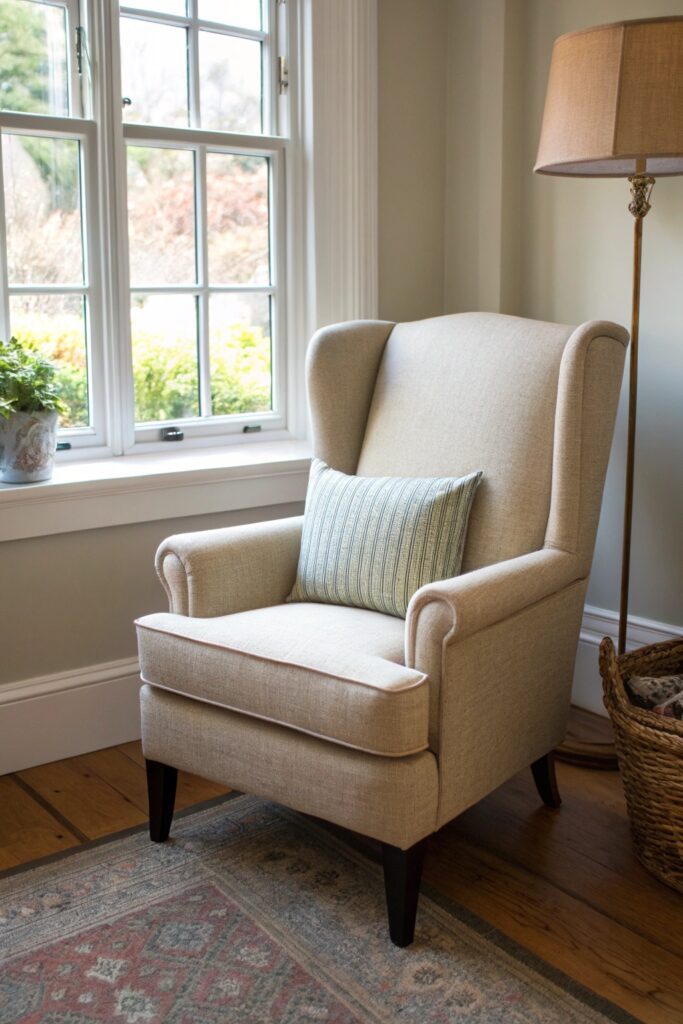
A scaled-down wingback ($250-450) delivers the classic silhouette’s comfort and visual presence without the full-size version’s bulk, which matters since standard wingbacks are often sized for larger rooms.
Check the specific chair’s dimensions carefully before buying, since ‘compact’ wingback styling varies considerably between manufacturers and isn’t a standardized size category.
5. Choose a Chair with Exposed Wood Legs
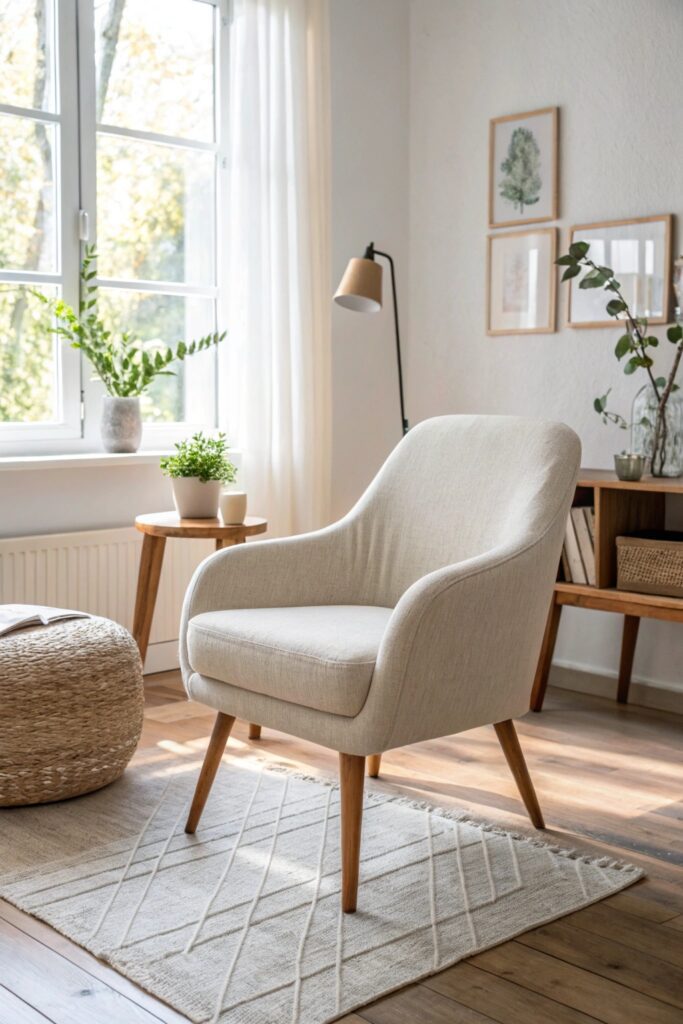
Chairs with visible wood or metal legs (rather than a fully upholstered base to the floor) let light pass underneath, creating a sense of openness that a heavier, grounded silhouette doesn’t provide.
This effect compounds when paired with other leg-forward furniture in the same room, reinforcing an overall airier feel throughout the space.
6. Go Bold with a Statement Print
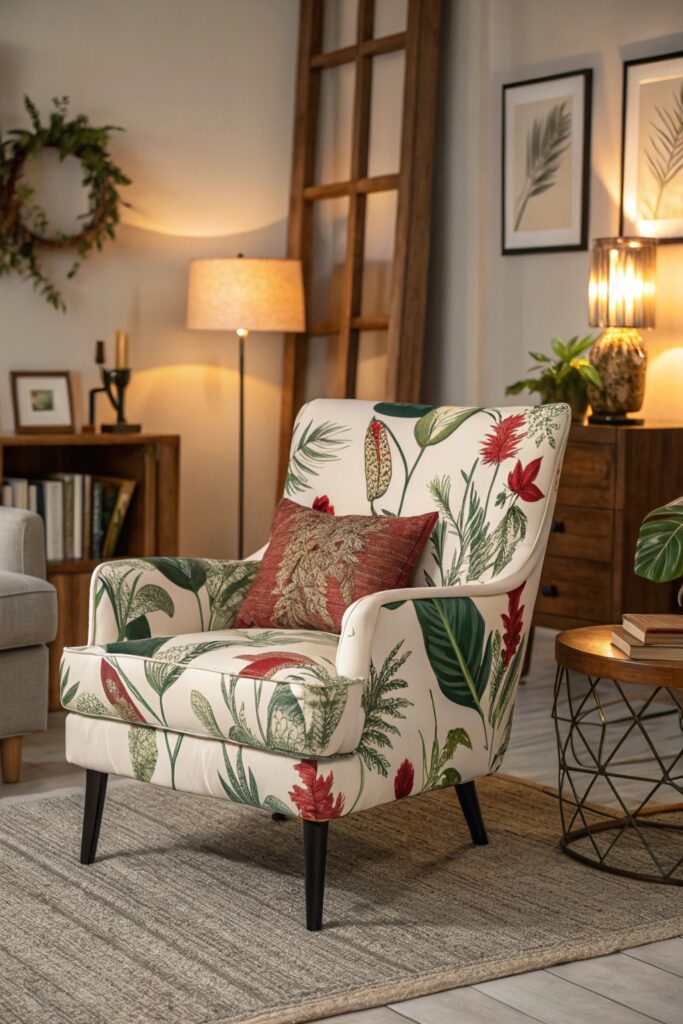
A single patterned or boldly colored chair ($200-400) can serve as a room’s entire focal point, letting everything else stay simpler and more neutral by comparison rather than competing for attention.
This is a lower-commitment way to introduce personality than a patterned sofa or wallpaper, since a single chair is easier to change later if your taste shifts.
7. Pick a Chair with Multi-Functional Storage
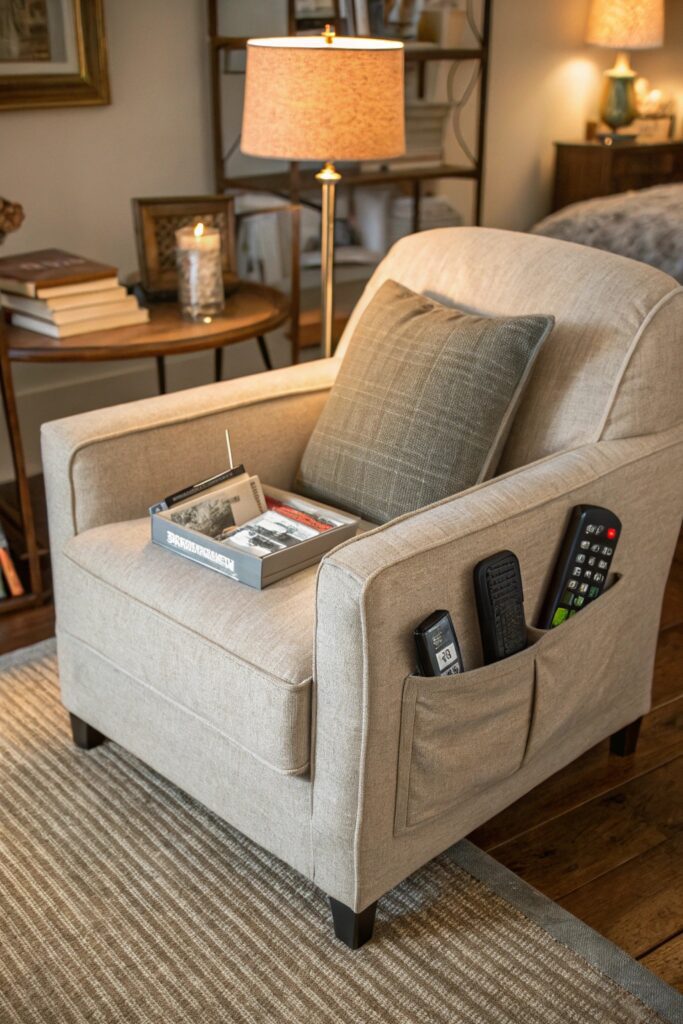
Some accent chair designs include a hidden side pocket or small integrated storage ($180-380), adding genuine function that a purely decorative chair doesn’t offer in a room where storage space is often limited.
This is worth prioritizing specifically if the chair will double as a reading spot, where having a spot for a book or remote within arm’s reach adds real daily value.
8. Layer in a Petite Accent Ottoman
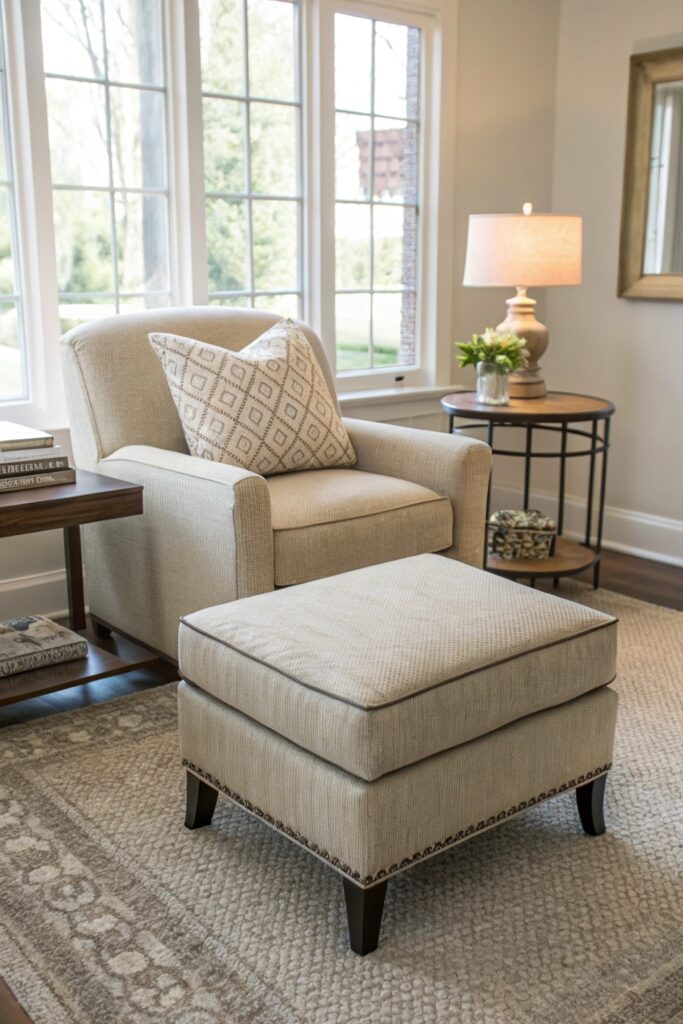
A small ottoman ($60-150) paired with an accent chair adds footrest function without the footprint of a full chair-and-ottoman set designed for a larger room.
Choose an ottoman with a diameter noticeably smaller than the chair itself, which keeps the pairing proportional rather than visually overwhelming the space around it.
9. Try a Cane or Rattan Accent Chair
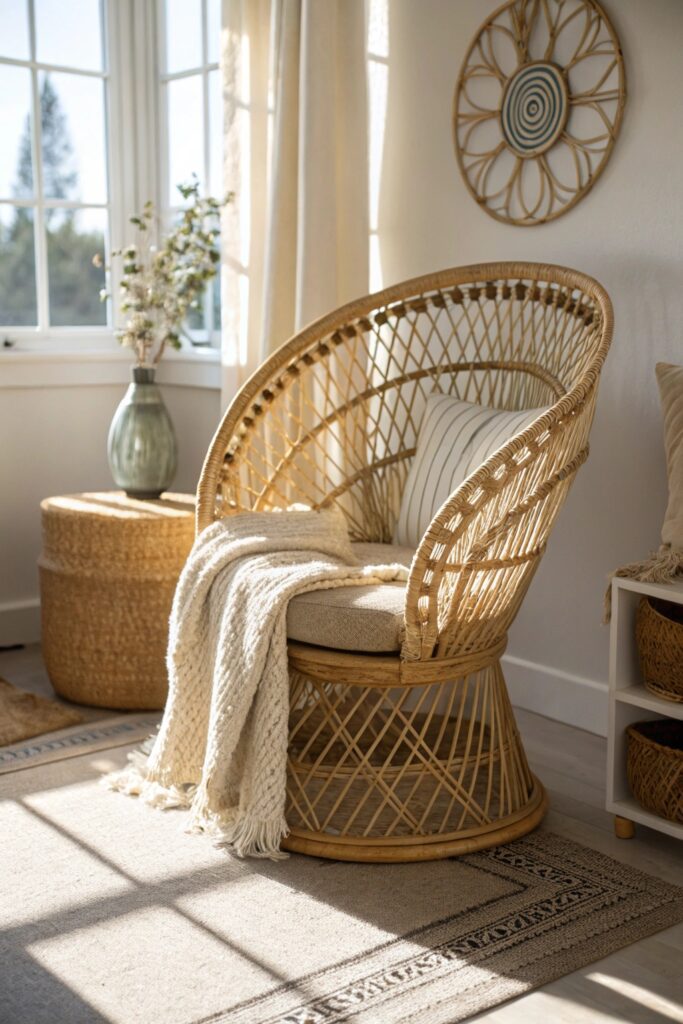
Cane and rattan chairs ($150-350) have an inherently lighter visual weight than fully upholstered pieces, since the open weave lets light and sightlines pass through in a way solid materials don’t.
This style also brings genuine textural variety to a room dominated by upholstered furniture, adding interest without introducing a competing color.
10. Use a Chair-and-a-Half for Flexible Seating
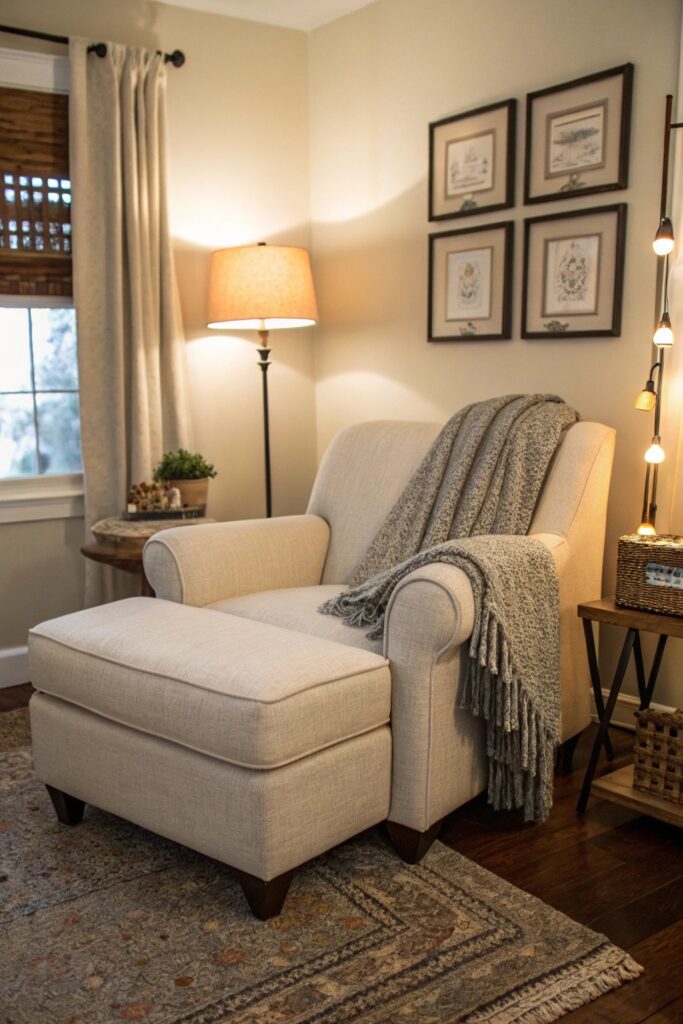
A chair-and-a-half ($300-600) offers more genuine lounging room than a standard chair while still taking up less total floor space than adding a second full chair to the room.
This works well as the room’s primary seating alongside a smaller sofa, offering flexibility for one person to stretch out or two to sit more closely together.
11. Add a Folding or Stackable Accent Chair
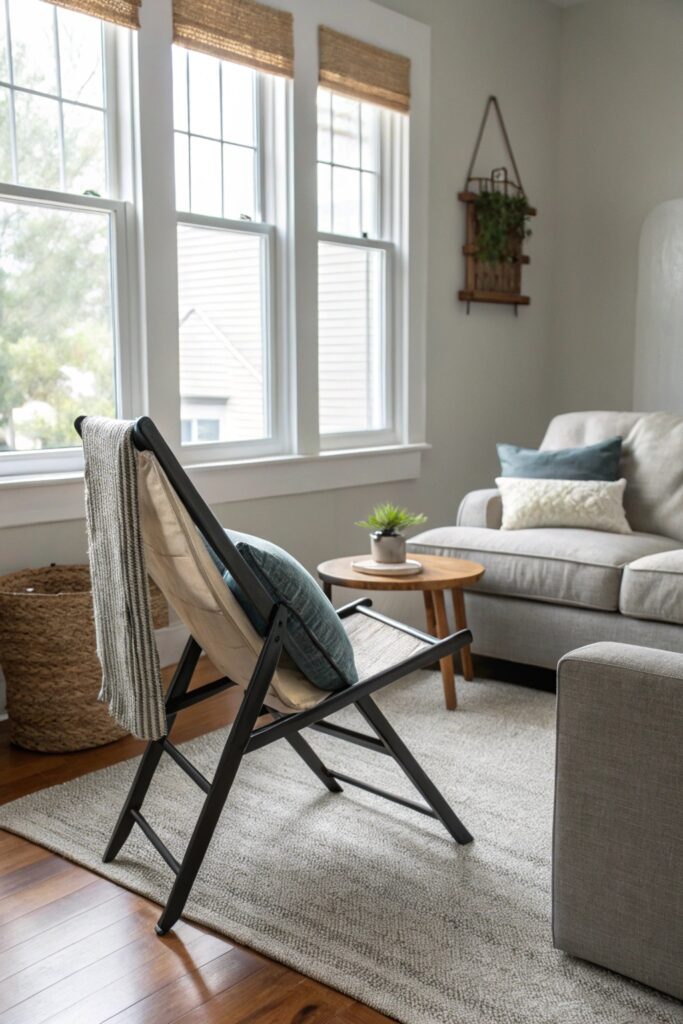
A folding or stackable chair ($60-150) provides genuine flexible seating that can be stored away entirely when not needed, which is a distinct advantage in a room that occasionally hosts more guests than its regular footprint accommodates.
Choose a design sturdy enough for regular use rather than a purely occasional-use folding chair, if it will double as everyday seating rather than only appearing for guests.
12. Match Your Chair to a Corner Nook
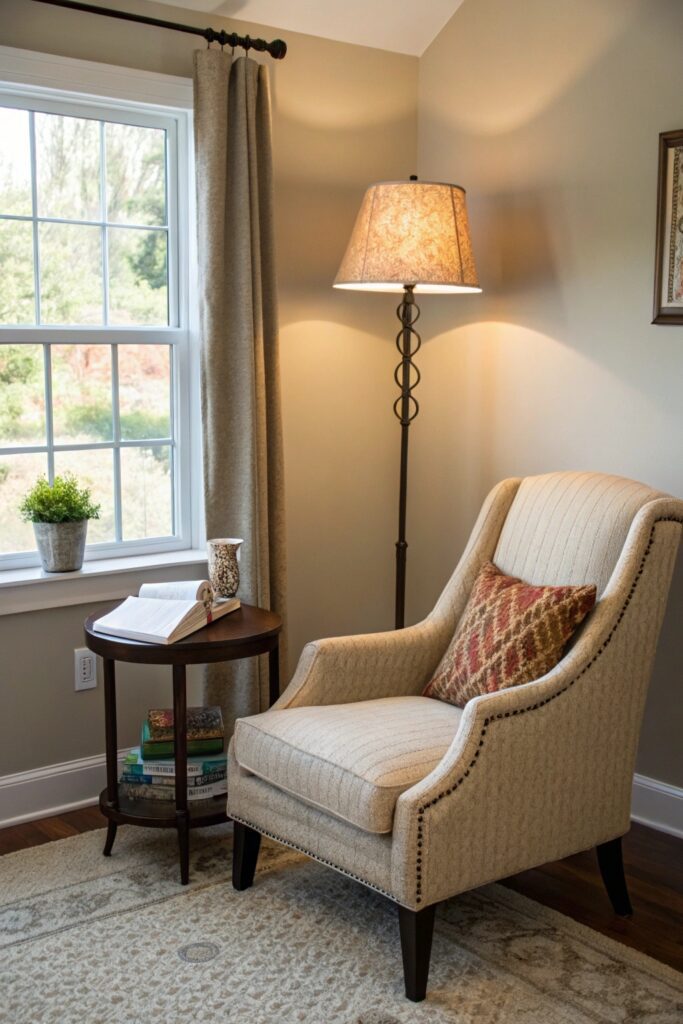
Positioning an accent chair specifically to fit a room’s corner, rather than along a flat wall, uses space that’s often left entirely empty in a smaller floor plan.
A chair sized appropriately for the corner’s actual dimensions — checking clearance in advance — avoids the common mistake of a chair that looks fine in isolation but crowds the space once placed.
Measuring Before You Buy
Measure the actual clearance where the chair will sit, including at least 24-30 inches of walking space in front of it if the chair sits along a natural traffic path, before shopping by style alone.
Bring those measurements with you or keep them handy when shopping online, since accent chair dimensions vary more than most furniture categories — two chairs marketed as similar styles can differ by several inches in depth and width, which matters considerably more in a small room than a larger one.
Final Thoughts
Scale matters more than style here — a chair sized appropriately for your specific room, with visible legs or an armless profile, will read as intentional regardless of which specific style you choose. Measure your actual available space before shopping, since accent chairs vary considerably in footprint even within the same general style category.