You know that feeling when you walk into a room and something just looks expensive — but you can’t quite figure out why? Nine times out of ten, it’s the walls. Specifically, it’s board and batten, and it’s been quietly making ordinary rooms look custom-built for years.
I got obsessed with this technique after spending way too long staring at home design accounts online. The best part? It costs a fraction of what people assume. A few boards, some paint, and a weekend — that’s truly all it takes.
Whether you’re sprucing up a living room, bedroom, or hallway, these 10 board and batten wall ideas will give you that high-end look without the high-end price tag.
1. Classic White Floor-to-Ceiling Board and Batten
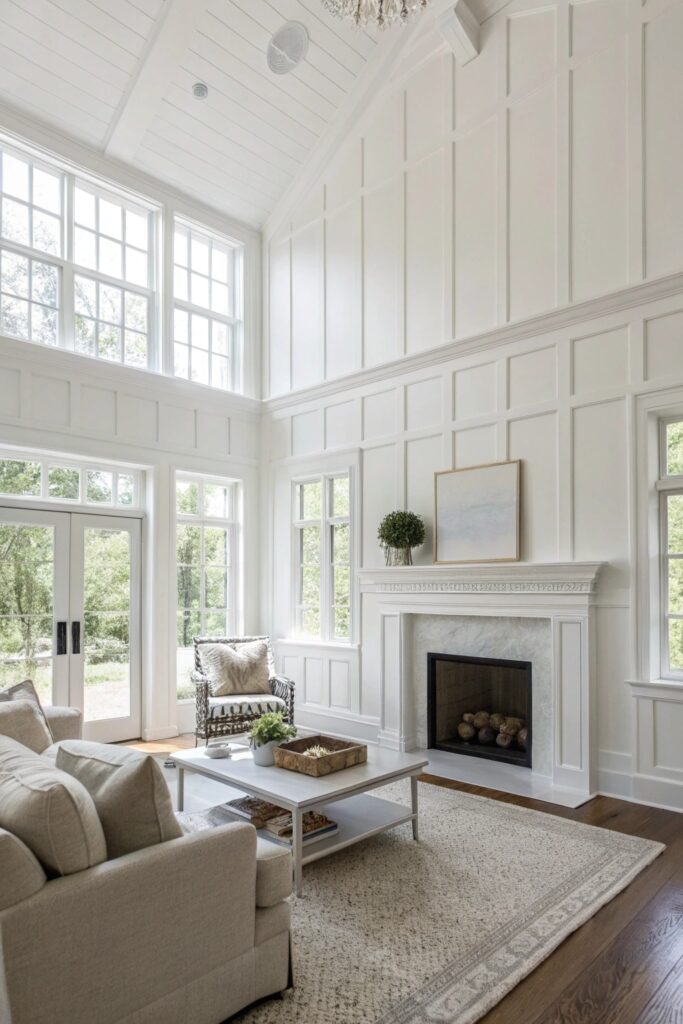
Nothing beats the original. Floor-to-ceiling white board and batten is the idea that started the whole trend, and it still holds up as one of the most impactful wall treatments you can do on a budget.
The crisp white finish makes any room feel taller, cleaner, and more intentional. It works in literally any room — living rooms, hallways, bedrooms, you name it.
Here’s what makes it work:
- Consistent spacing between battens (6–8 inches looks balanced in most rooms)
- Flat or eggshell paint finish keeps it looking polished rather than glossy
- Matching the trim color to the battens ties the whole room together seamlessly
IMO, this is the single best bang-for-your-buck wall upgrade available to any homeowner. If you’re brand new to board and batten, start here.
2. Two-Tone Board and Batten with a Chair Rail
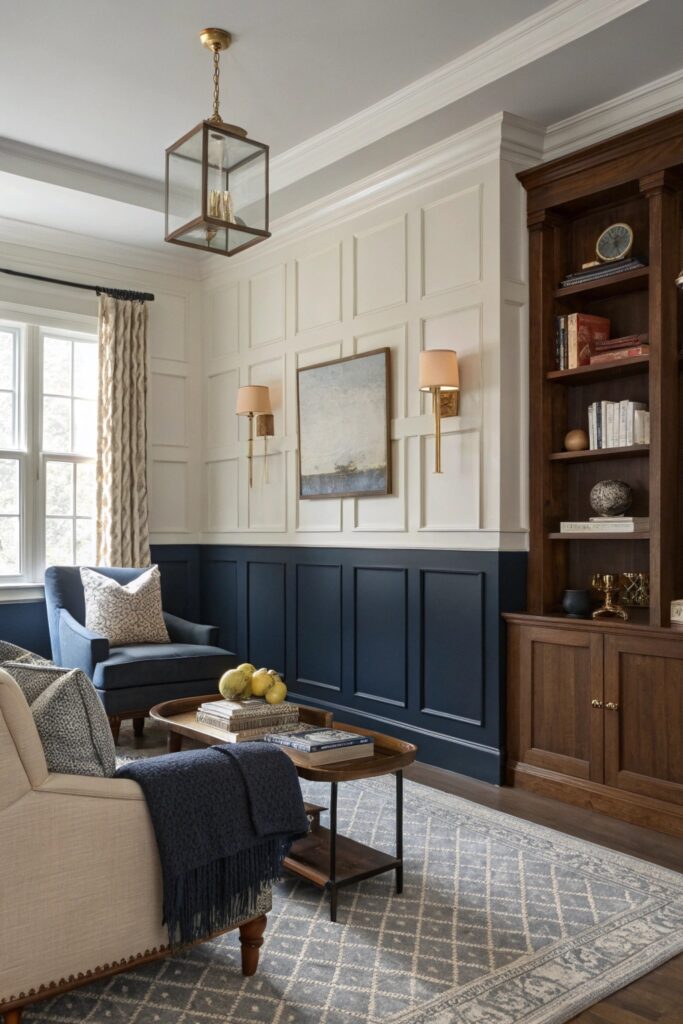
Want to add more visual complexity without spending more money? Two-tone board and batten splits the wall into upper and lower sections, with a chair rail dividing the two colors. It sounds simple, but the effect is truly stunning.
A common approach is painting the lower board and batten panel in a deep, moody tone — navy, forest green, charcoal — while keeping the upper wall a soft neutral. The contrast creates a room that feels both cozy and sophisticated.
Tips for nailing this look:
- Keep the chair rail at one-third wall height for the most balanced proportion
- Use matte paint on the lower section to hide scuffs in high-traffic areas
- Choose colors from the same palette to avoid a jarring contrast
This is one of those ideas where the result looks far more expensive than the actual effort involved.
3. Horizontal Board and Batten for a Modern Twist
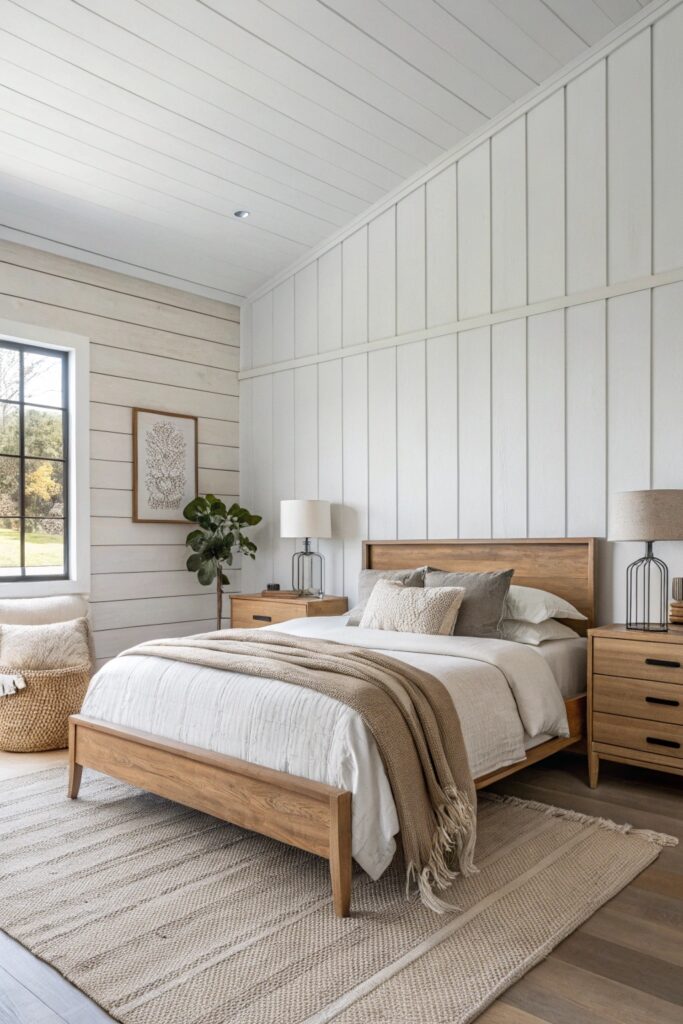
Most people think board and batten means vertical lines — but running the boards horizontally completely changes the energy of a room. It feels more contemporary, almost Scandinavian, and it’s a great way to make a standard room feel custom-designed.
Horizontal board and batten works especially well in bedrooms and home offices where you want a calm, structured backdrop. It draws the eye across the wall rather than upward, which can make narrow rooms feel wider.
What to keep in mind:
- Wider spacing (10–12 inches) suits the horizontal direction better
- Works best on a single feature wall rather than all four walls
- Pair with warm wood tones in furniture to balance the geometric feel
Ever walked into a room and thought, “How did they make this look so intentional?” Horizontal board and batten is usually the answer.
4. Board and Batten Wainscoting in a Dining Room
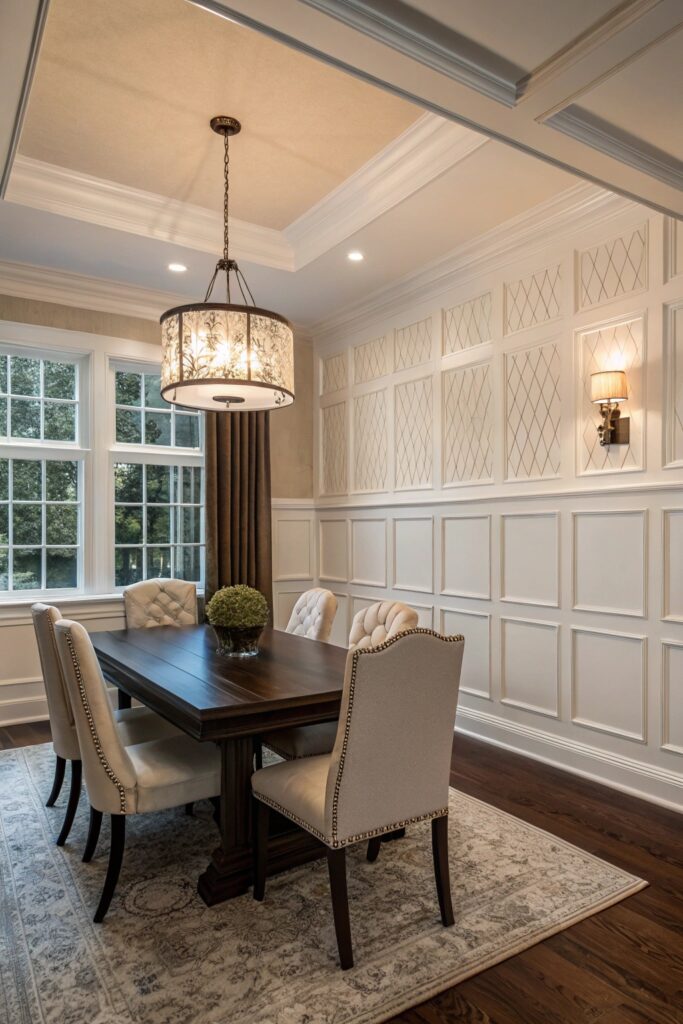
Wainscoting-style board and batten — meaning panels that cover only the lower half of the wall — has been a dining room staple for centuries, and for good reason. It protects walls from chair backs and scuffs while adding serious architectural character.
In a dining room, this treatment pairs beautifully with a statement light fixture and a simple gallery wall above the panels. The lower half becomes a grounded, structured base that makes the whole room feel more formal without being stuffy.
Why this works so well:
- Covers wall damage and scuffs that dining rooms always accumulate
- Creates a natural visual break that makes ceilings feel higher
- Works with both traditional and contemporary dining room furniture
This is the kind of upgrade that makes guests assume you hired a designer. You didn’t. You just used boards and a nail gun. 🙂
5. Board and Batten Accent Wall Behind a Bed
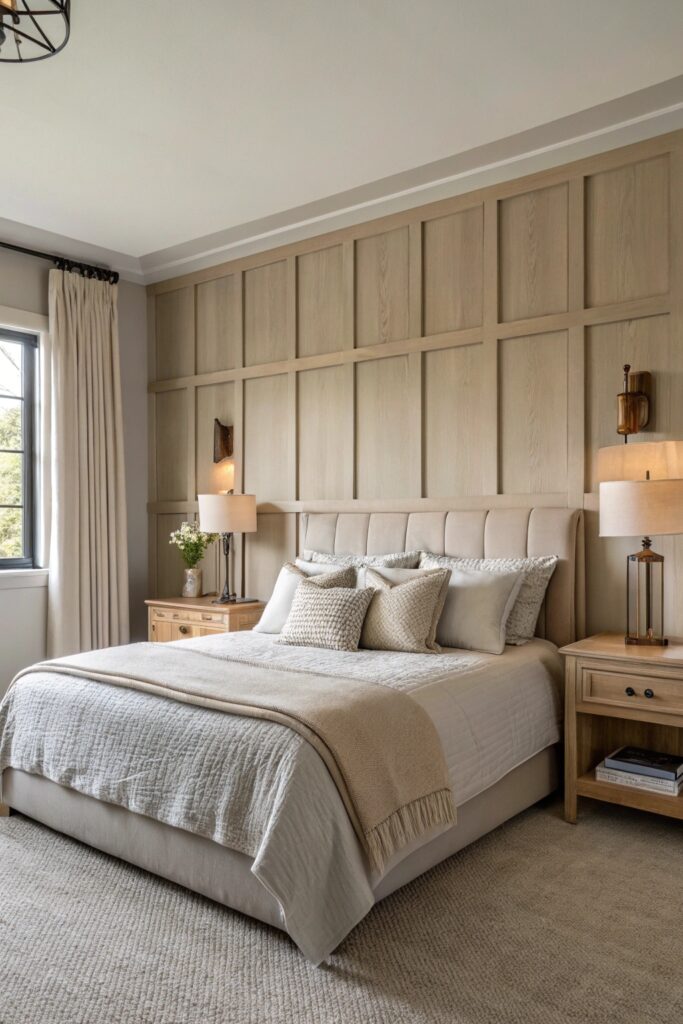
A board and batten accent wall behind the bed is basically a built-in headboard for your entire wall — and it looks far more expensive than a standalone headboard ever could. It anchors the bed, defines the space, and adds texture all at once.
This works especially well in master bedrooms where you want the space to feel intentional and put-together. Pair it with simple bedding and minimal decor and the wall does all the heavy lifting.
Best approaches for a bedroom accent wall:
- Paint the board and batten the same color as the rest of the wall for a subtle, tonal look
- Use wider battens (3–4 inches) for a more substantial, architectural feel
- Add sconce lighting on either side to enhance the feature wall effect
This single change can transform a forgettable bedroom into something that feels intentionally designed.
6. Painted Board and Batten in Bold, Dark Colors
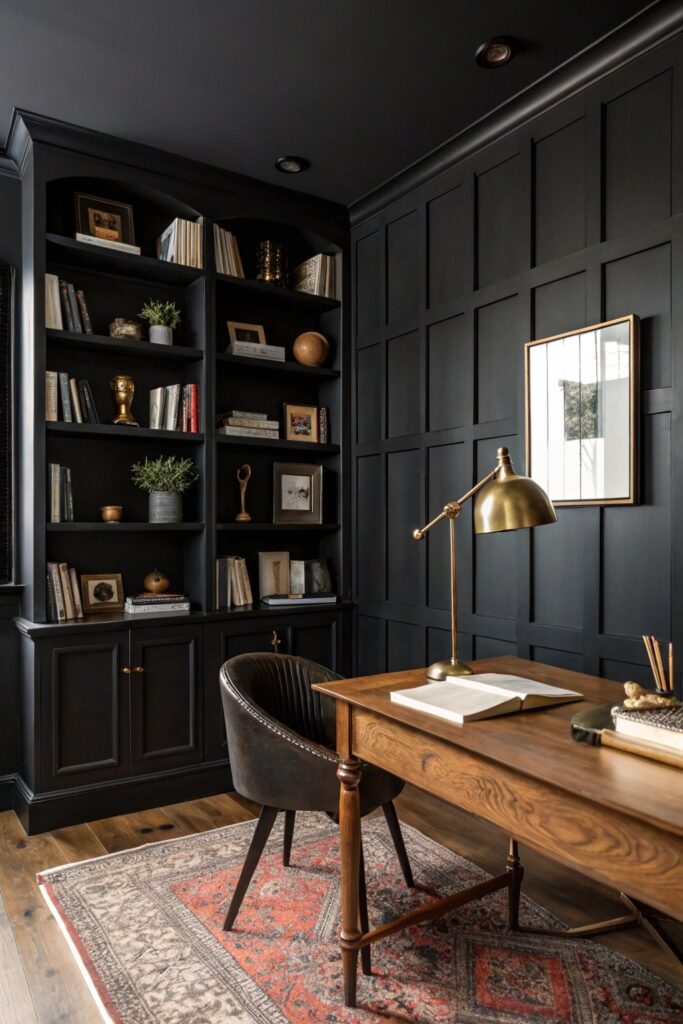
White board and batten is classic, but dark-painted board and batten is where things get really interesting. Deep colors like black, charcoal, slate blue, or hunter green transform the same simple technique into something dramatic and sophisticated.
I tried this in a small home office once, fully expecting it to make the room feel claustrophobic. Instead, it made the space feel cozy, intentional, and honestly pretty cool. Dark walls with board and batten texture create depth that flat paint simply can’t achieve.
Colors that work brilliantly:
- Matte black — bold, graphic, and incredibly chic
- Deep navy — classic and timeless without feeling trendy
- Olive or forest green — earthy and warm, perfect for cozy spaces
- Charcoal gray — versatile and pairs with almost everything
Don’t be afraid of dark walls. They’re almost always a good idea.
7. Board and Batten in a Kids’ Room or Nursery
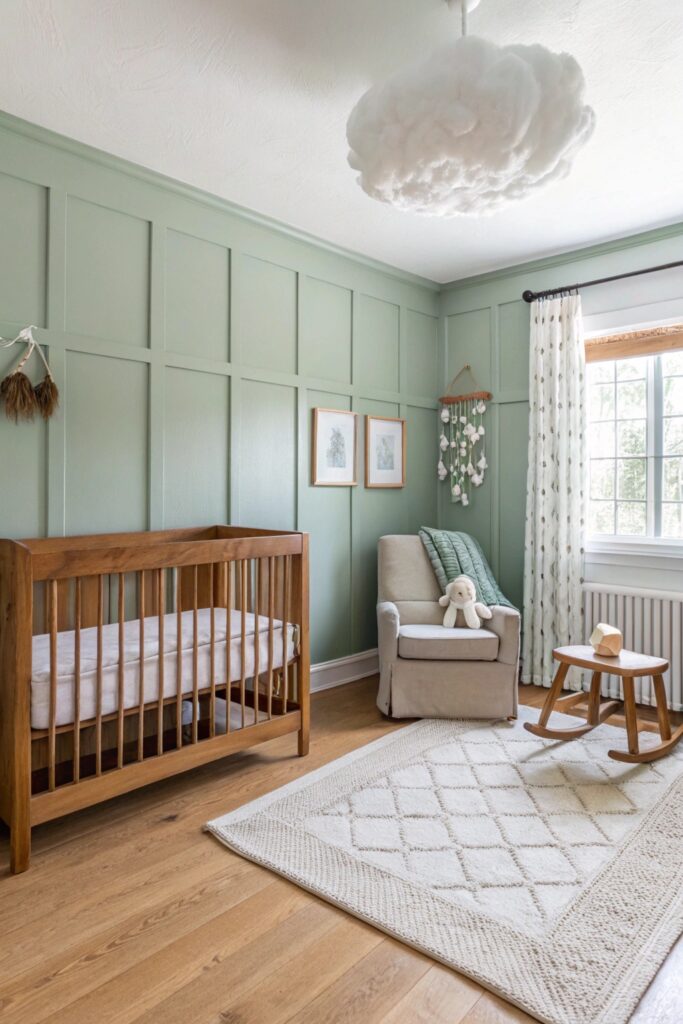
Board and batten isn’t just for grown-up spaces. A painted board and batten wall in a nursery or kids’ room adds charm and structure without locking you into a theme that ages out in three years.
Soft sage green, warm terracotta, or a playful dusty blue on board and batten panels gives a child’s room personality without going full cartoon-character-wallpaper. It grows with the kid, which — trust me — you’ll appreciate later.
Why it works for kids’ spaces:
- Durable and easy to wipe clean — especially important with small children involved
- Looks intentional without relying on trendy decor that needs replacing
- Works as a backdrop for any theme — just change the accessories
FYI — this is one of the most searched board and batten applications right now, and for very good reason.
8. Board and Batten with Wallpaper Above
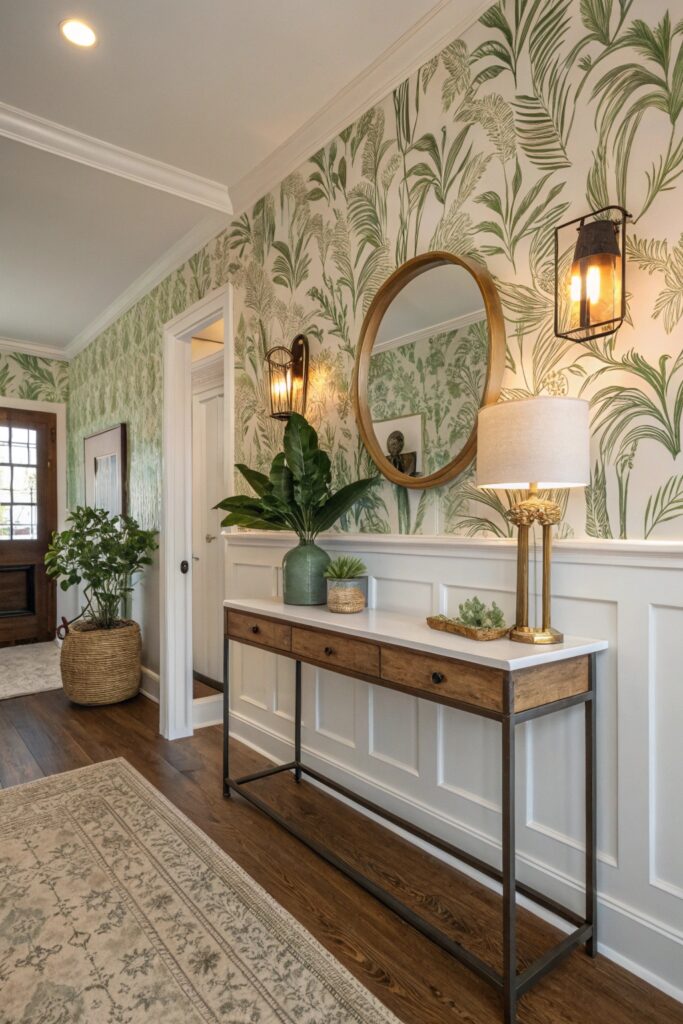
Here’s a combination that consistently stops people in their tracks: board and batten on the lower wall with wallpaper above the chair rail. It sounds like it shouldn’t work, but it absolutely does.
The board and batten grounds the room and adds structure, while the wallpaper above adds pattern, color, or texture that makes the space feel layered and designed. You get two completely different looks working together as one cohesive treatment.
What makes this pairing successful:
- Choose wallpaper that picks up a color from the board and batten paint
- Botanical or geometric patterns work best above structured paneling
- Keep the board and batten color neutral so it doesn’t compete with the wallpaper
This is easily one of the most high-end-looking combinations on this entire list, and it’s still very achievable on a budget.
9. Entryway Board and Batten for an Instant First Impression
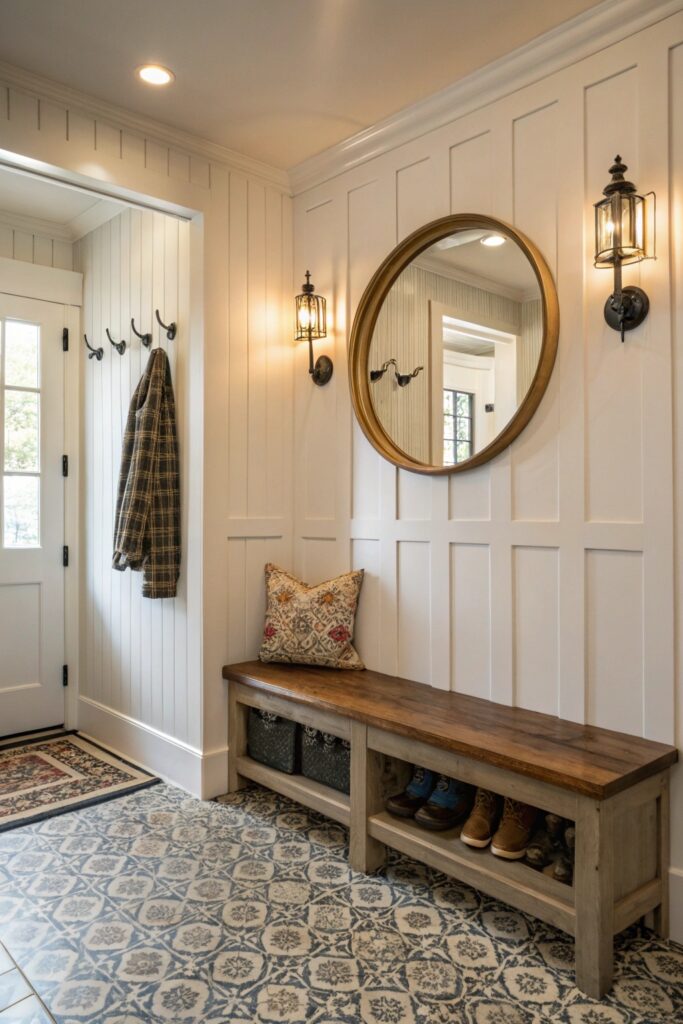
Your entryway is the first thing anyone sees when they walk into your home — so why is it the most neglected space in most houses? Board and batten in an entryway instantly elevates the entire first impression of your home without requiring a full renovation.
Even in a narrow hallway, floor-to-ceiling board and batten makes the space feel finished, architectural, and intentional. Pair it with a statement mirror, hooks for coats, and a small bench and you’ve essentially built a mudroom from scratch.
Key tips for entryway board and batten:
- Satin or semi-gloss paint holds up better in high-traffic entryways
- Keep the color light and welcoming — this isn’t the place for moody drama
- Consistent batten spacing matters more in tight spaces where every detail is visible
First impressions matter. Make yours count.
10. DIY Board and Batten with MDF for Maximum Savings
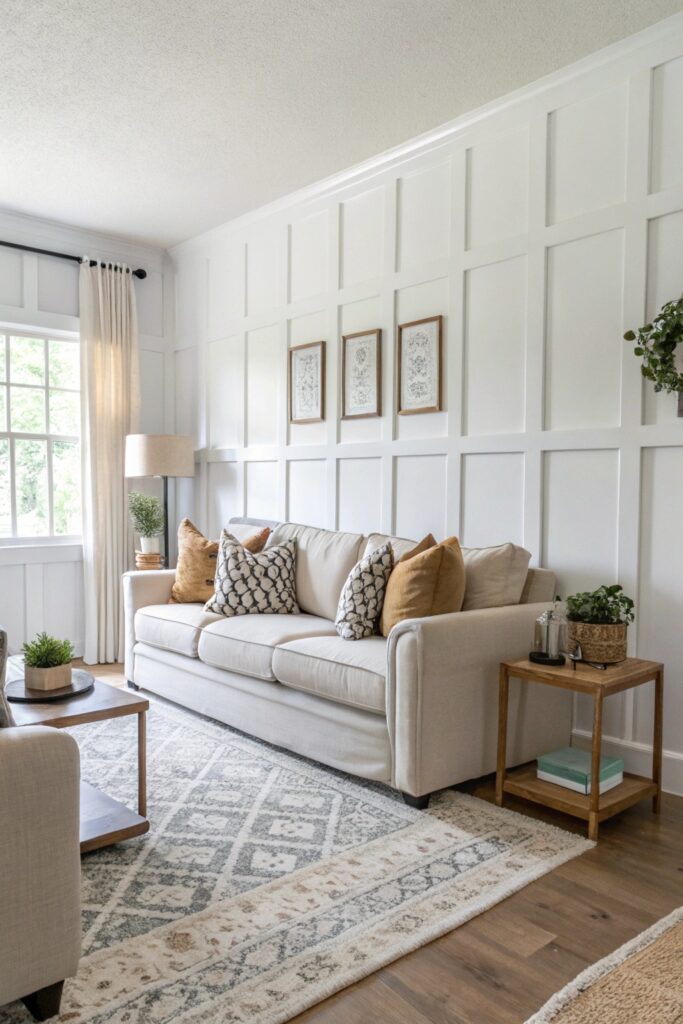
Here’s the honest truth most design blogs won’t tell you: you don’t need expensive lumber for board and batten. MDF (medium-density fiberboard) works just as well for interior walls, costs significantly less, and paints like an absolute dream.
MDF boards are smooth, consistent, and easy to cut — making them ideal for a DIY project even if you’re not particularly handy. A full wall of board and batten using MDF can cost as little as $50–$100 in materials, depending on the size of your wall.
Why MDF is the budget DIYer’s best friend:
- Smooth surface takes paint perfectly — no grain showing through
- Widely available at any home improvement store
- Lightweight and easy to work with compared to solid wood
- Holds nails and adhesive without splitting
The end result looks identical to more expensive wood options. Nobody will ever know. :/
Wrapping It Up
For more architectural wall treatments beyond board and batten, see our broader guide to wall molding ideas.
Board and batten is one of those rare home upgrades where the effort-to-impact ratio is almost unfair. A little time, a modest budget, and some basic tools — and your walls go from builder-grade bland to truly custom-looking overnight.
The best part is there’s no wrong way to do it. Whether you go bold and dark, soft and classic, or somewhere totally unexpected, board and batten adapts to your style and your space.
Pick the idea that spoke to you most, grab some MDF and paint, and get started this weekend. Your walls have been waiting long enough.