
A small living room can genuinely read as larger through smart choices in furniture, color, and light — these are proven, low-cost techniques rather than simply a matter of buying less furniture.
Below are 15 hacks that make a real difference, with practical notes for each.
1. Hang Your Curtains Higher Than the Window
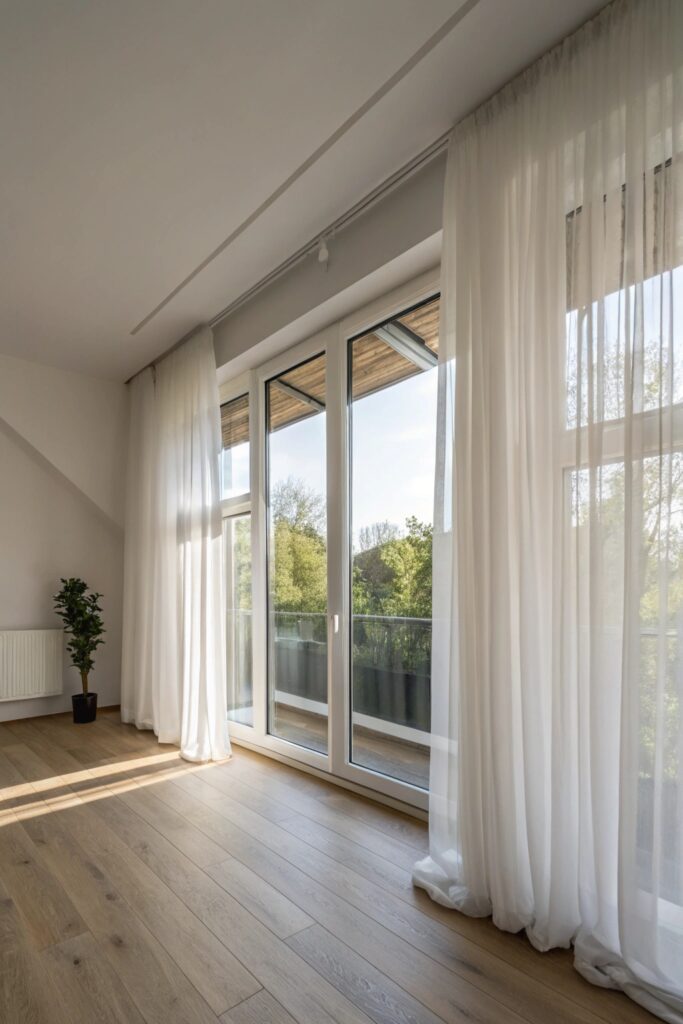
Mounting curtain rods several inches above the actual window frame, and extending them a few inches beyond each side, makes ceilings appear taller and windows appear larger, which is one of the most effective free tricks for a small room.
This costs nothing beyond where you choose to install existing hardware, making it one of the highest-value changes on this entire list relative to effort.
2. Choose Furniture With Visible Legs
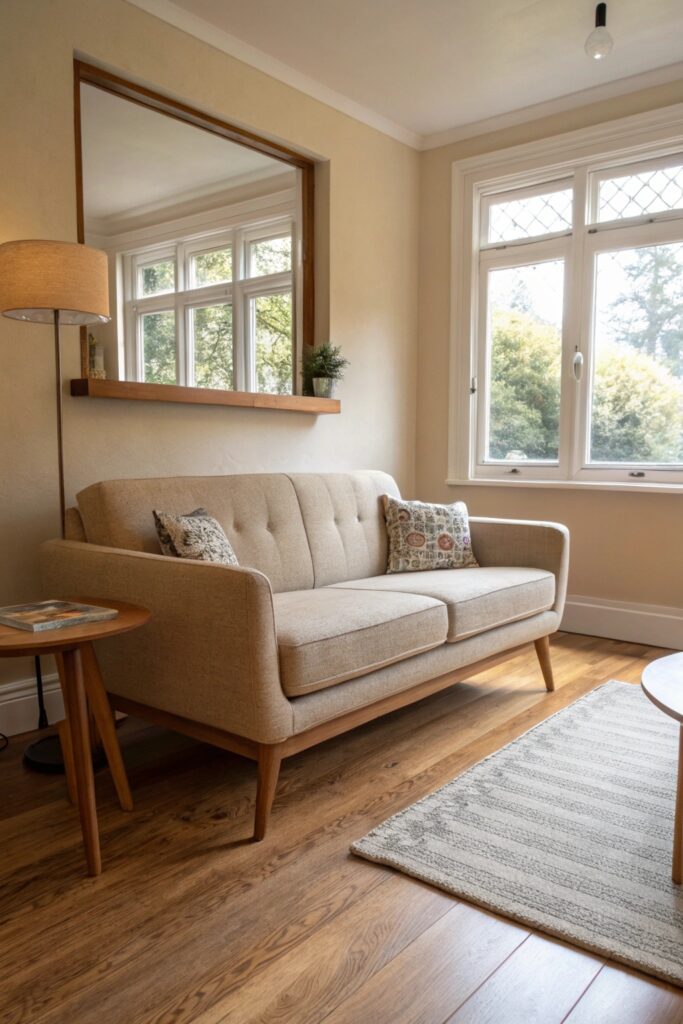
Sofas and chairs raised on visible legs (rather than a solid base that touches the floor) let light pass underneath, which creates a sense of openness that a heavier, grounded furniture silhouette doesn’t provide.
This effect compounds across multiple pieces — a room where every major furniture item has visible legs reads noticeably more spacious than one where even a couple of pieces sit flush to the floor.
3. Go Big on Mirrors, Not Small
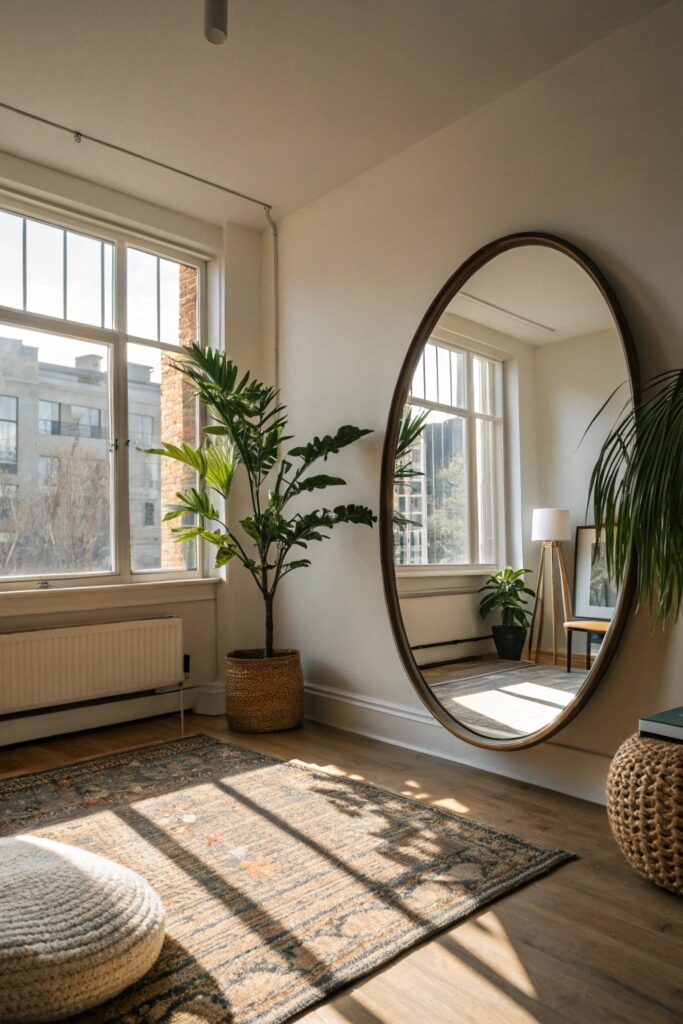
A single large mirror ($60-150) reflects considerably more light and creates more visual depth than several small mirrors combined, since the reflected area itself matters more than the number of mirrors.
Position the mirror to reflect a window or a light source specifically, which maximizes the light-bouncing effect rather than reflecting a wall or dark corner.
4. Stick to a Tight, Cohesive Color Palette
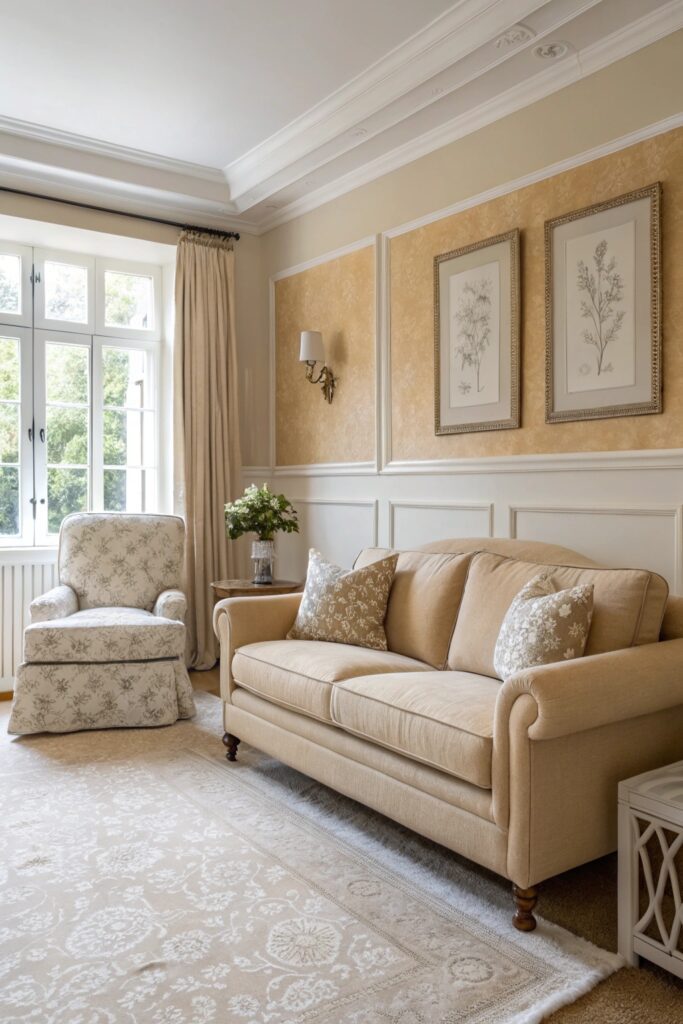
Limiting a room to 2-3 coordinated colors prevents visual busyness that can make a small space feel more cramped, since competing colors and patterns draw the eye in too many directions at once.
This doesn’t mean avoiding color entirely — a small room with one confidently chosen palette often feels more spacious than an all-white room with scattered, mismatched accent colors.
5. Use Multi-Functional Furniture
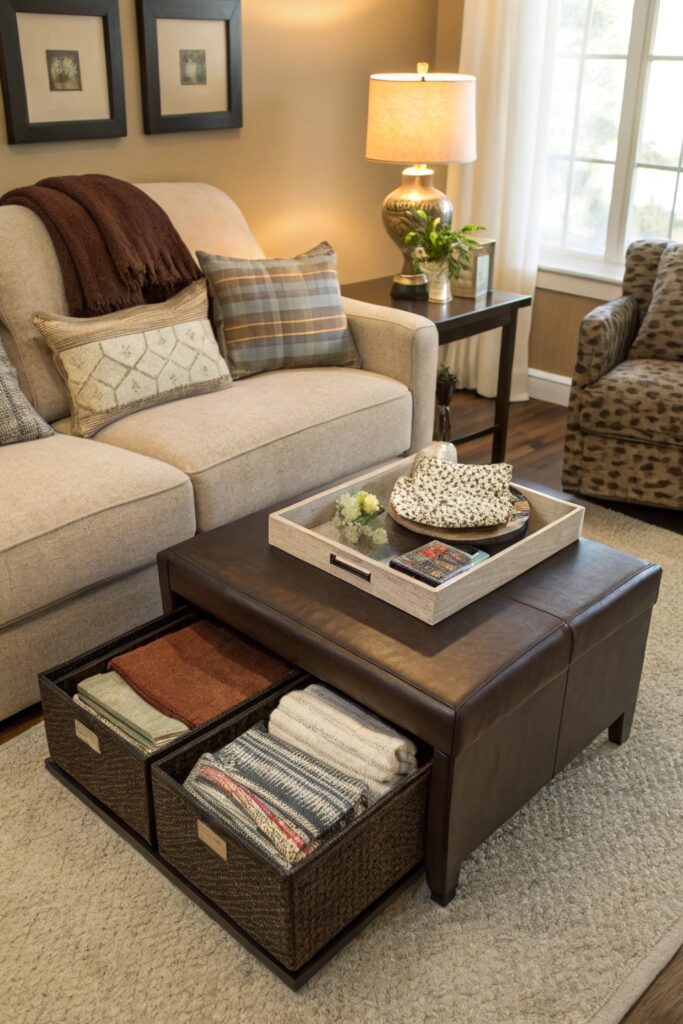
A storage ottoman, a nesting table set, or a sofa bed all serve more than one purpose within the same footprint, which matters considerably more in a small room where every piece needs to earn its space.
Prioritize multi-functional pieces for furniture you already need regardless of size constraints, rather than buying additional items purely for their dual-purpose feature.
6. Float Your Furniture Away From the Walls
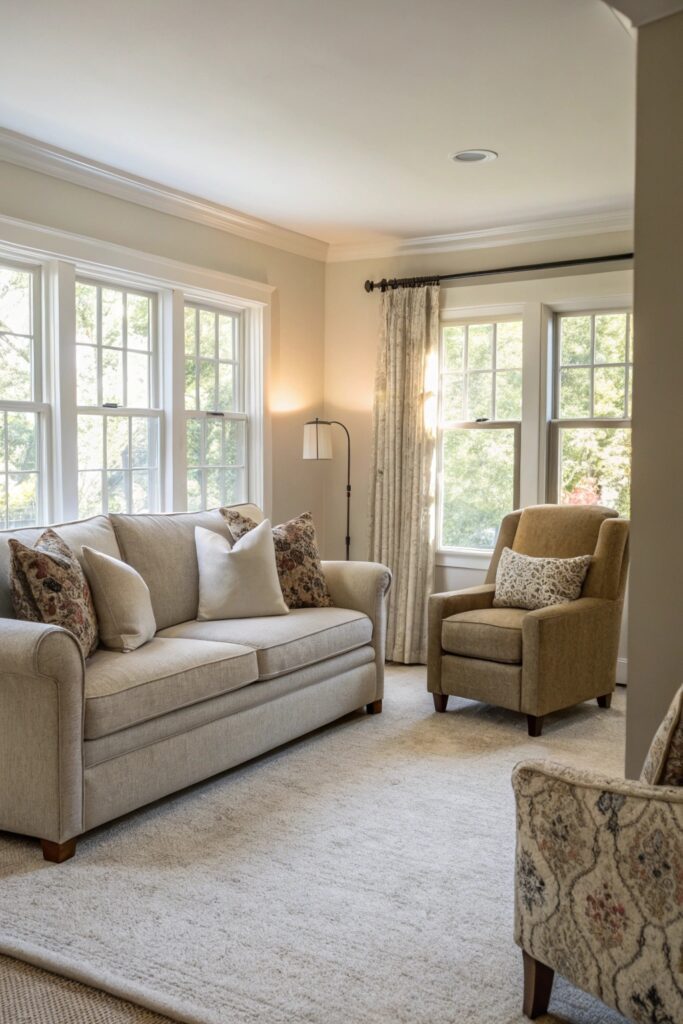
Pulling furniture even a few inches off the wall, rather than pushing everything flush against it, can paradoxically make a room feel larger by creating a sense of intentional arrangement rather than furniture simply lining the perimeter.
This works best combined with adequate walking clearance — the goal is deliberate placement, not filling the newly created gap with additional furniture.
7. Add Vertical Lines and Height
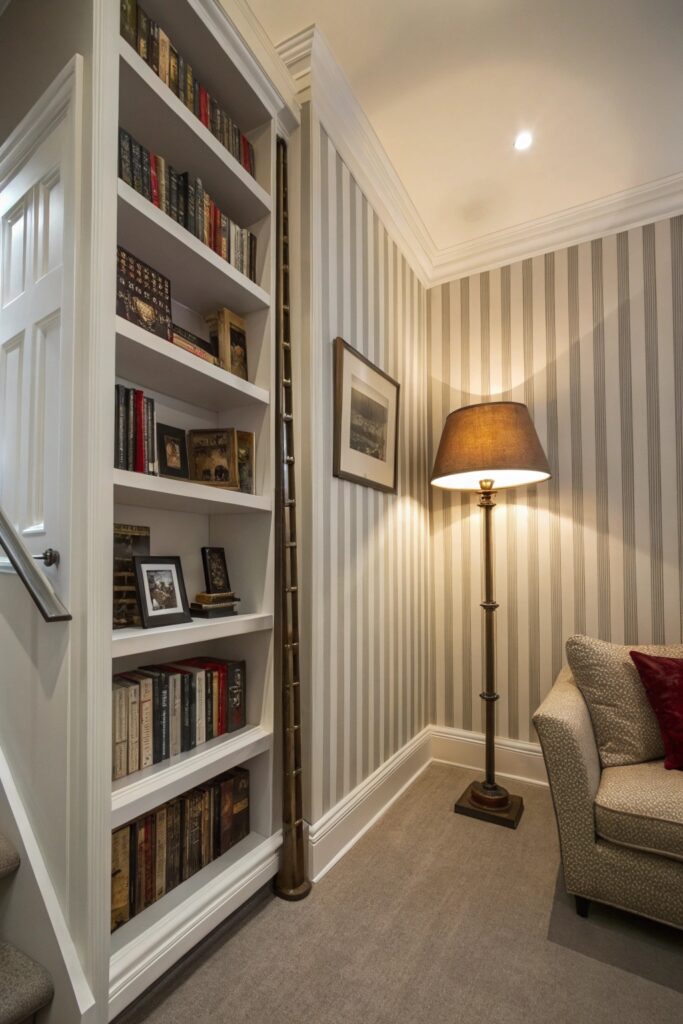
Tall bookshelves, floor-to-ceiling curtains, and vertically striped textiles all draw the eye upward, which makes a room’s ceiling feel higher and the overall space feel taller than its actual dimensions.
This is a genuinely useful trick specifically for rooms with standard or lower ceiling heights, where horizontal furniture and decor can otherwise emphasize a room’s limited floor space.
8. Keep the Rug Proportional and Grounded
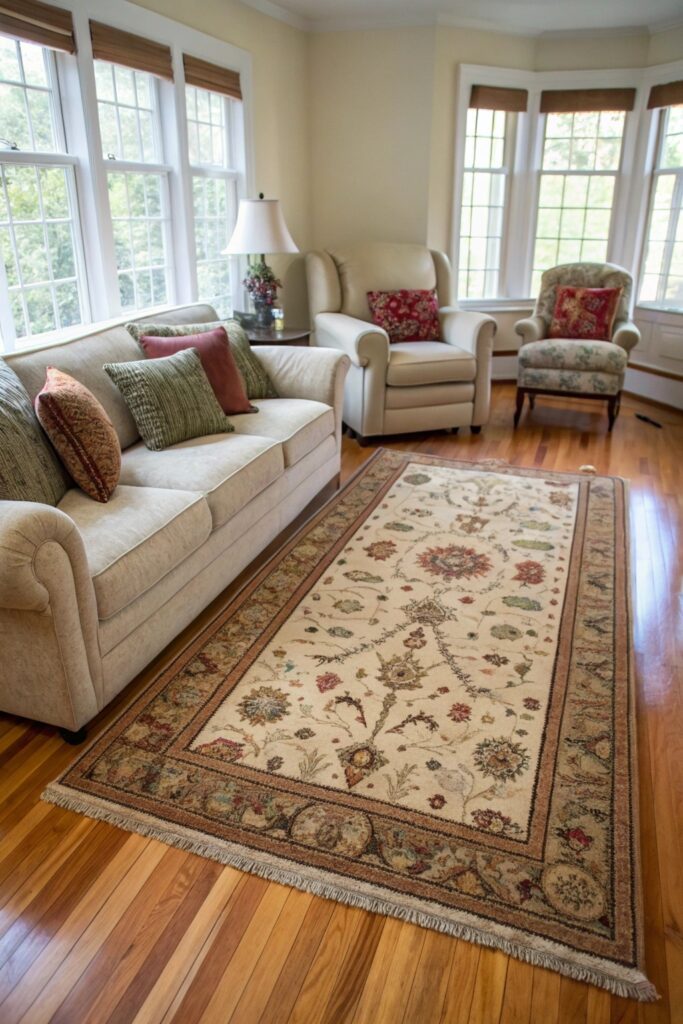
An undersized rug that doesn’t reach at least the front legs of major furniture makes a room look smaller and more disjointed than no rug at all, since it visually breaks up the floor space rather than unifying it.
Size the rug to the seating area’s actual footprint, even if that means a larger rug than initially expected relative to the room’s overall square footage.
9. Maximize Natural Light
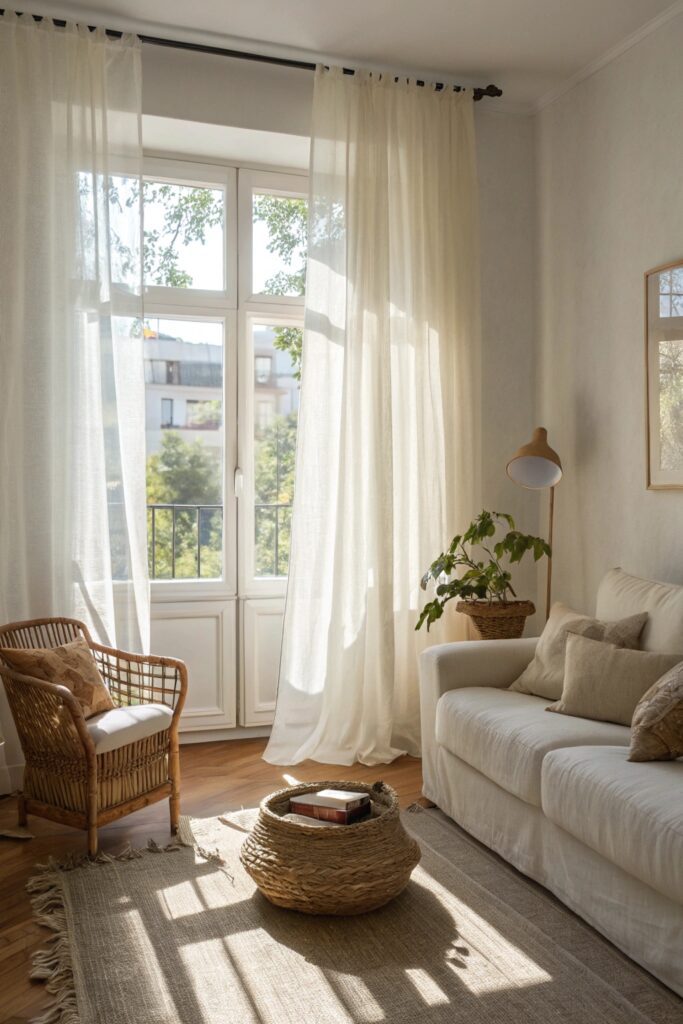
Keeping window treatments minimal or fully open during the day, and avoiding furniture that blocks window access, lets in as much natural light as the room’s windows allow, which directly affects how spacious a room feels.
Sheer curtains specifically let in more light than heavier drapes while still providing some privacy, making them a good default choice for a small room prioritizing brightness.
10. Declutter Ruthlessly (Yes, Really)
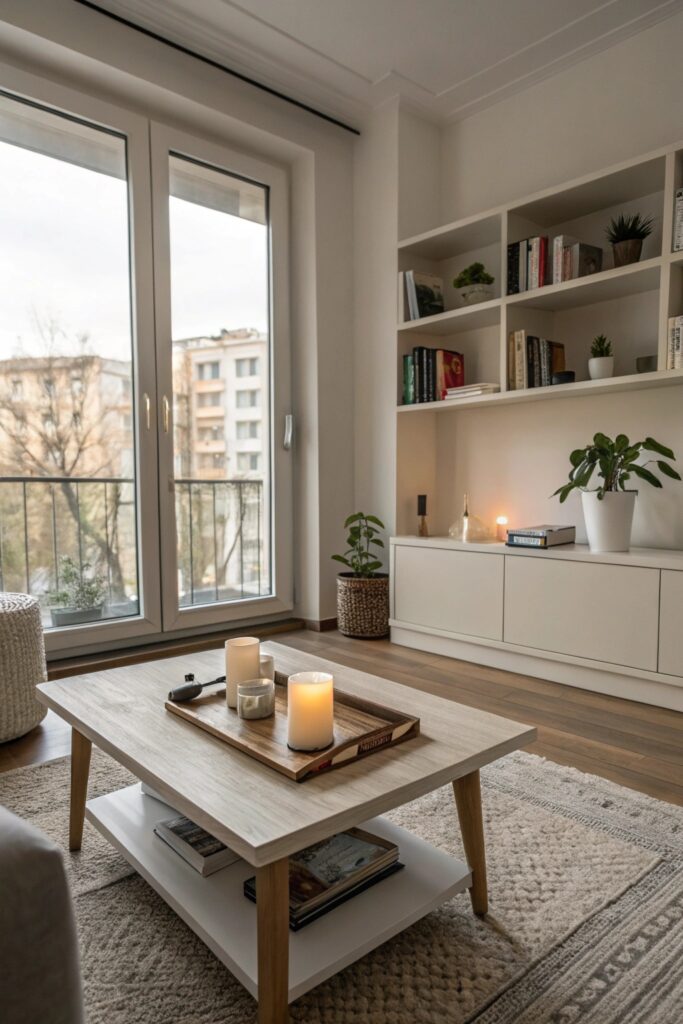
Removing genuinely unnecessary objects does more to make a small room feel larger than almost any purchase or furniture rearrangement, since visual clutter compounds a small space’s limitations more than the square footage itself does.
A regular decluttering habit (rather than a single one-time effort) keeps a small room from gradually reaccumulating the same visual density over time.
11. Use a Monochromatic Furniture Layout
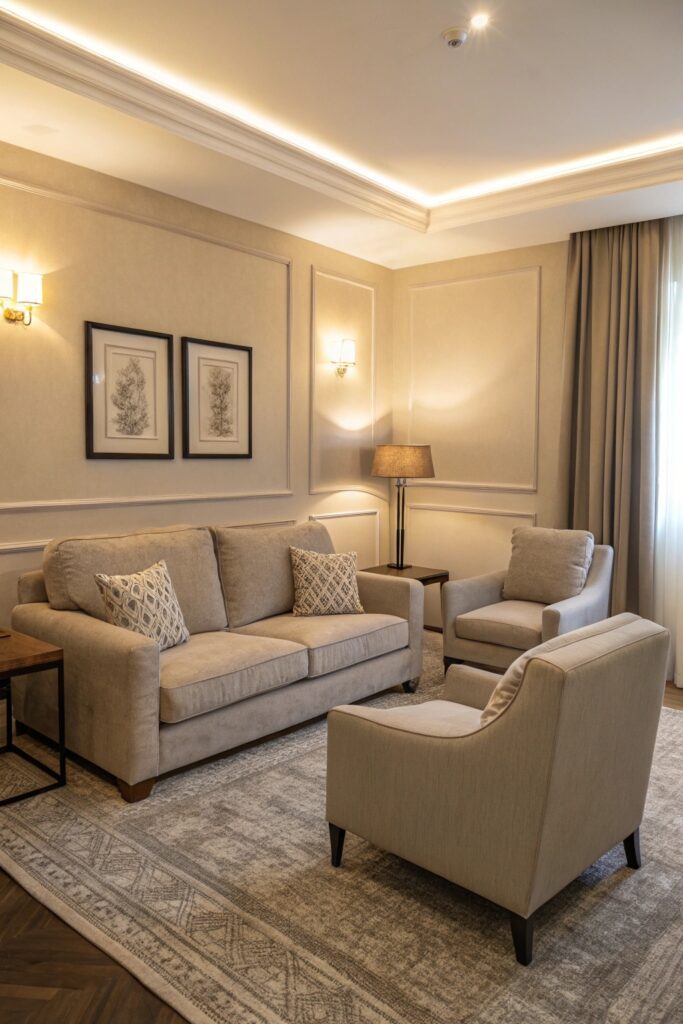
Furniture in varying shades of the same color family (rather than starkly contrasting pieces) creates a more unified, seamless look that reads as more spacious than a room with high-contrast furniture choices.
This doesn’t require perfectly matched furniture — even pieces in the same general tonal family achieve much of this cohesive effect without needing an exactly coordinated set.
12. Install Floating Shelves Instead of Bulky Cabinets
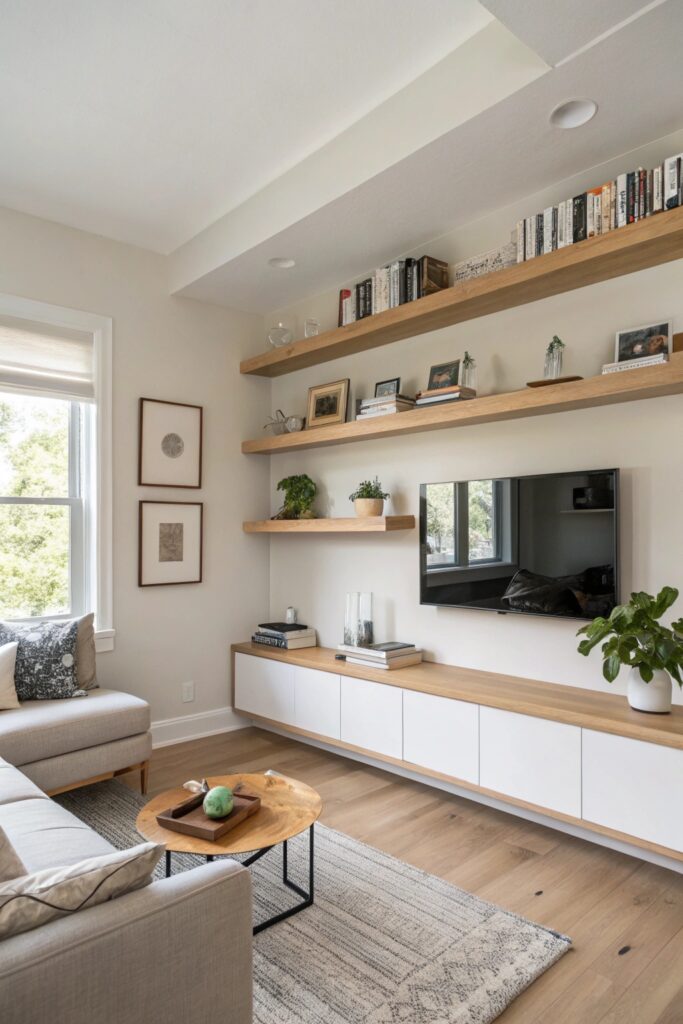
Floating shelves ($15-40 each) provide storage and display space without the visual and physical footprint of a floor-standing cabinet, which matters considerably in a room where floor space is at a genuine premium.
This works especially well combined with keeping shelving lightly styled rather than fully packed, since an overloaded floating shelf can undercut the airy effect it’s meant to provide.
13. Use Light, Reflective Materials Strategically
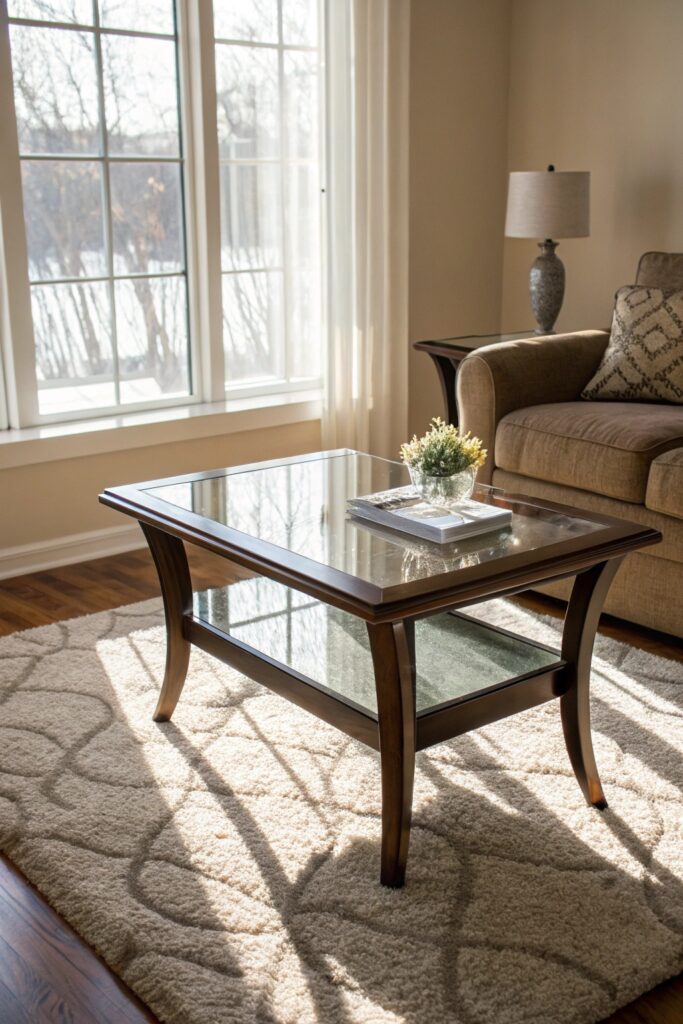
Glass, mirrored surfaces, and light-toned finishes bounce light around a room more effectively than solid, opaque materials, which contributes to an overall sense of openness beyond any single mirror placement.
A glass coffee table specifically is a common and effective application of this principle, since it takes up visual space without the bulk a solid table of the same footprint would add.
14. Create Zones With Furniture Placement, Not Walls
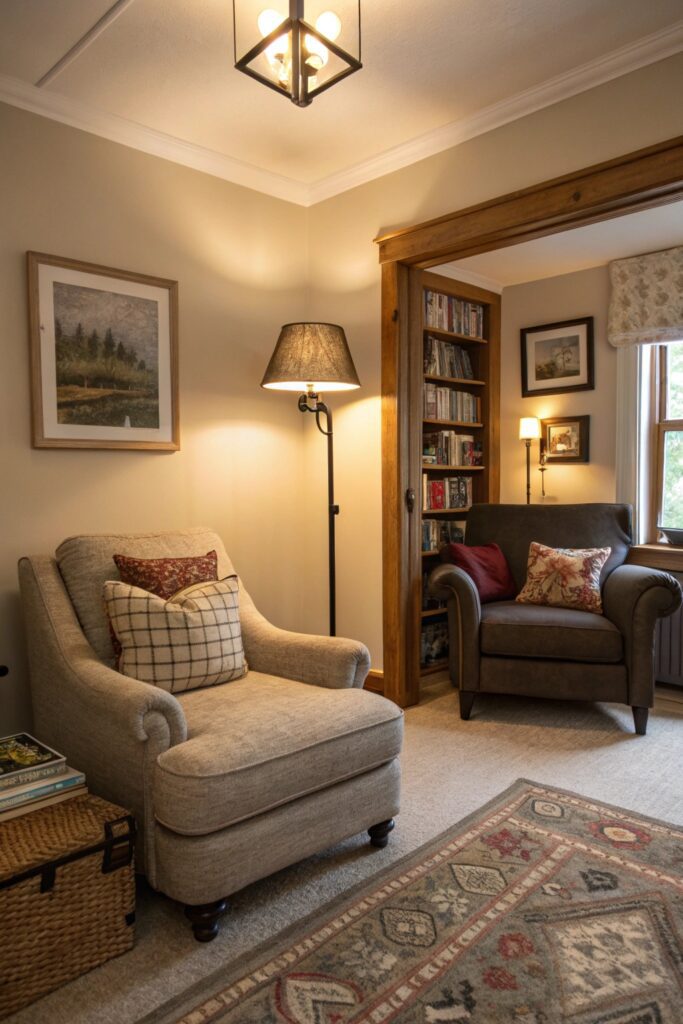
Using a rug or furniture arrangement to define a seating area within an open-plan space achieves functional zoning without the visual and physical barrier a partition wall would create, preserving the room’s overall sense of openness.
This is particularly relevant for studio apartments or open-concept layouts, where physical walls aren’t an option but distinct functional areas are still genuinely useful.
15. Paint Trim and Ceiling the Same Color as Walls
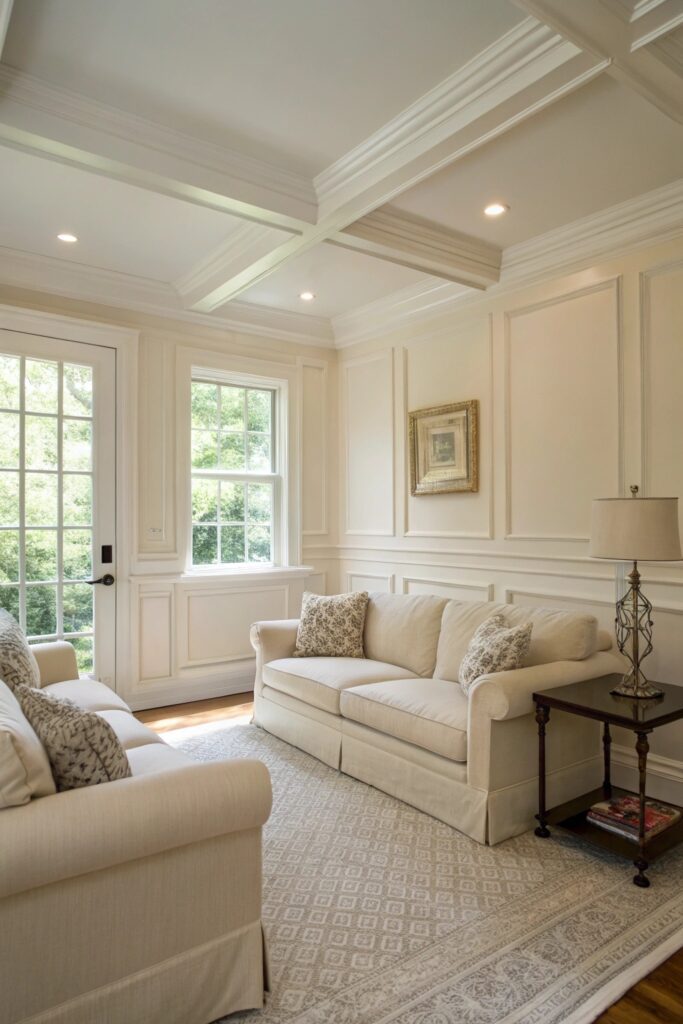
Eliminating the color contrast between walls, trim, and ceiling removes visual breaks that can make a room’s boundaries feel more defined and therefore smaller, creating a more continuous, expansive feel instead.
This monochromatic approach works particularly well in rooms with less-than-ideal trim or ceiling condition, since it visually minimizes those elements rather than drawing attention to them.
Final Thoughts
Decluttering and maximizing natural light matter most if you’re prioritizing only a couple of these changes, since both cost nothing and affect how spacious the entire room feels more than any furniture purchase. Layer in the visual tricks — mirrors, vertical lines, a cohesive palette — once the space itself is genuinely decluttered and well-lit.