
A driveway entrance sets the tone for a home’s entire curb appeal before a visitor even reaches the front door, and the most effective approaches tend to combine structure (defined edges, symmetry) with layered planting rather than relying on any single dramatic element alone.
Below are 11 ways to build a more considered driveway entrance, with real costs and practical notes for each.
Looking for structural and hardscape features — pillars, walls, gates? See our companion guide to driveway entry landscaping ideas for a grand first impression.
1. Add Symmetrical Planters or Trees at the Entrance
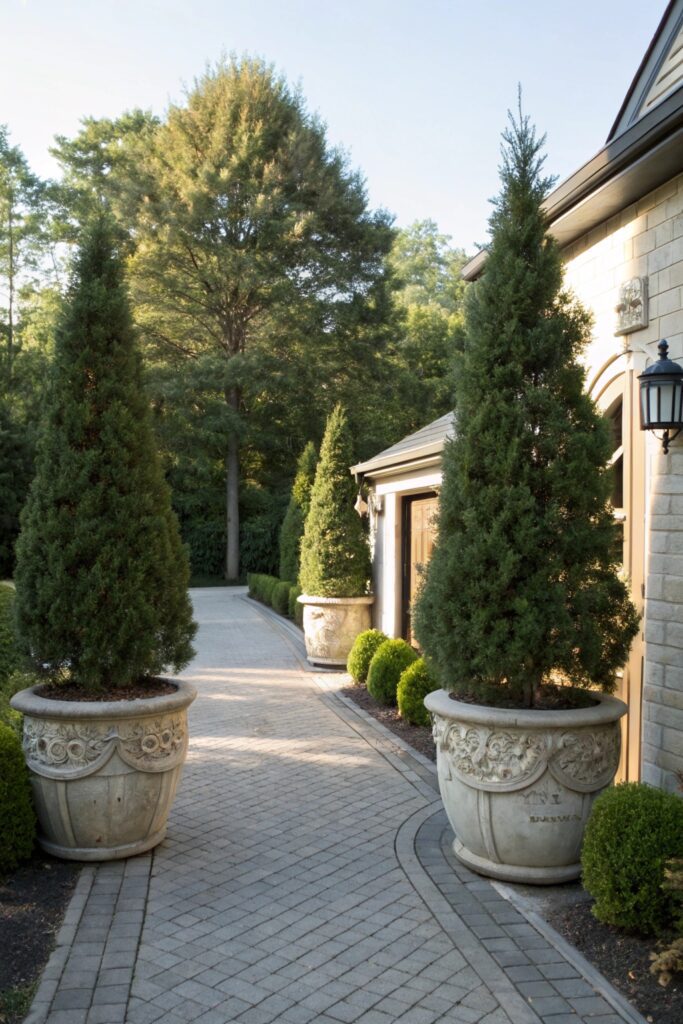
A matched pair of large planters or small ornamental trees flanking the driveway entrance creates an immediate sense of formal arrival, using the same visual-balance principle that works in interior entryway design applied to the exterior approach.
Choose planters or trees with year-round structure (boxwood, dwarf conifers) rather than purely seasonal blooms if you want the symmetrical framing effect to hold consistently through every season rather than only during peak bloom periods.
2. Install Low Landscape Lighting Along the Edges
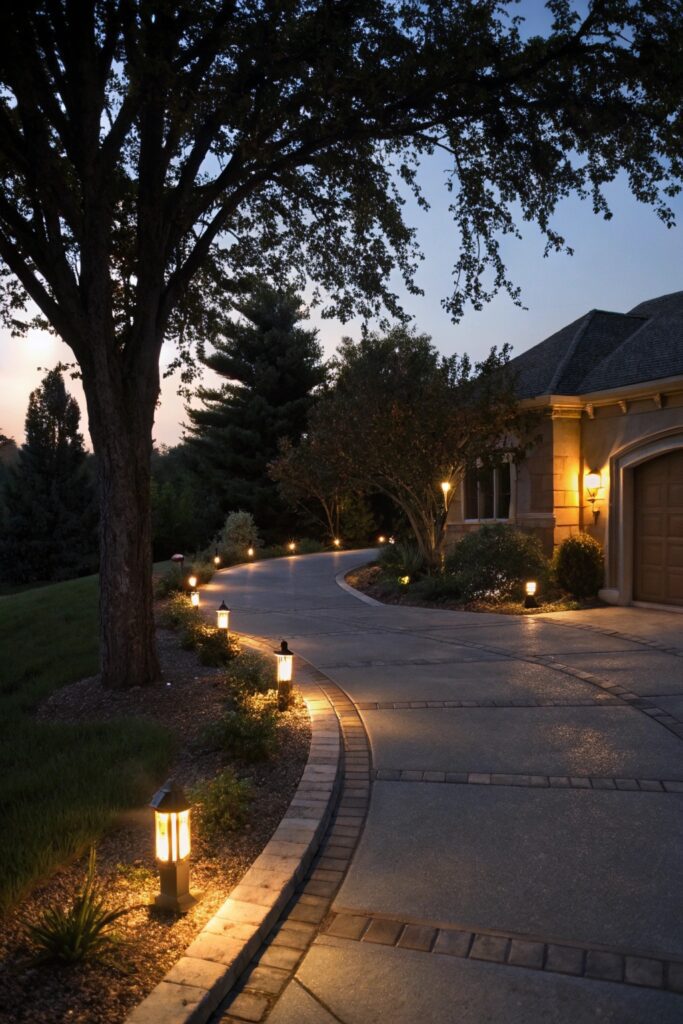
Low-voltage path lights ($15-30 each) installed along the driveway’s edges improve both safety and curb appeal after dark, creating a welcoming, well-defined approach rather than leaving the driveway edge invisible at night.
Solar-powered fixtures avoid the need for running electrical wiring, though hardwired low-voltage systems generally provide more consistent brightness and don’t depend on daily sun exposure to recharge.
3. Define the Entrance With Stone or Brick Edging
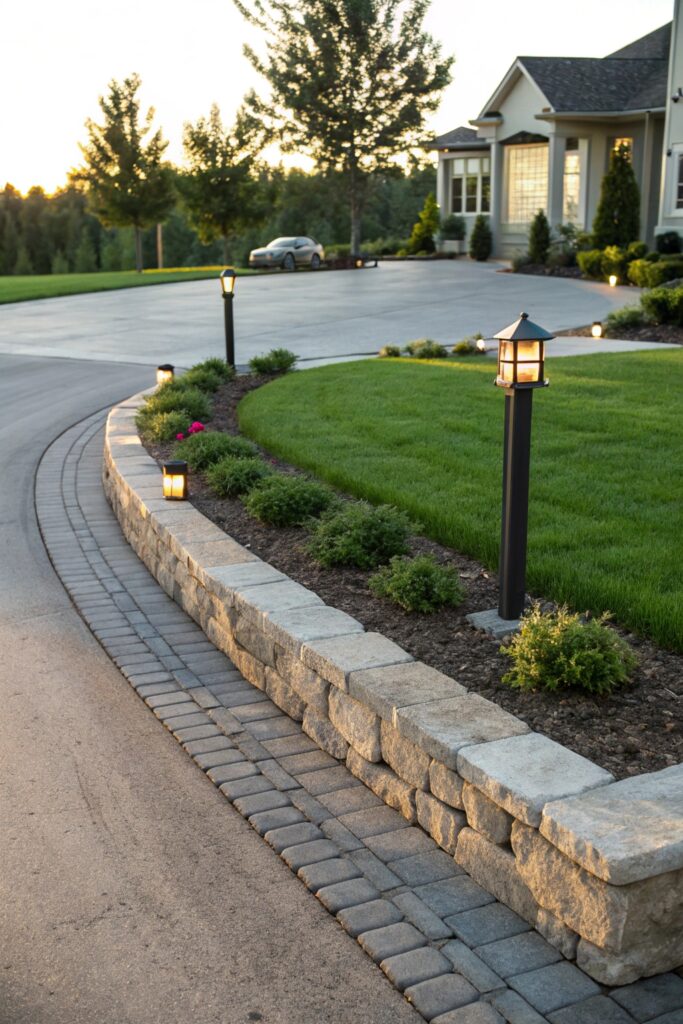
A defined edge in stone, brick, or pavers along the driveway’s border ($8-15 per linear foot installed) creates a clean, finished transition between the driveway surface and surrounding landscaping, which reads as considerably more intentional than an undefined, gradually blending edge.
This edging also serves a genuine practical function, containing mulch or gravel beds and preventing them from spreading onto the driveway surface over time with regular lawn maintenance and weather.
4. Add a Layered Flower Bed on Each Side
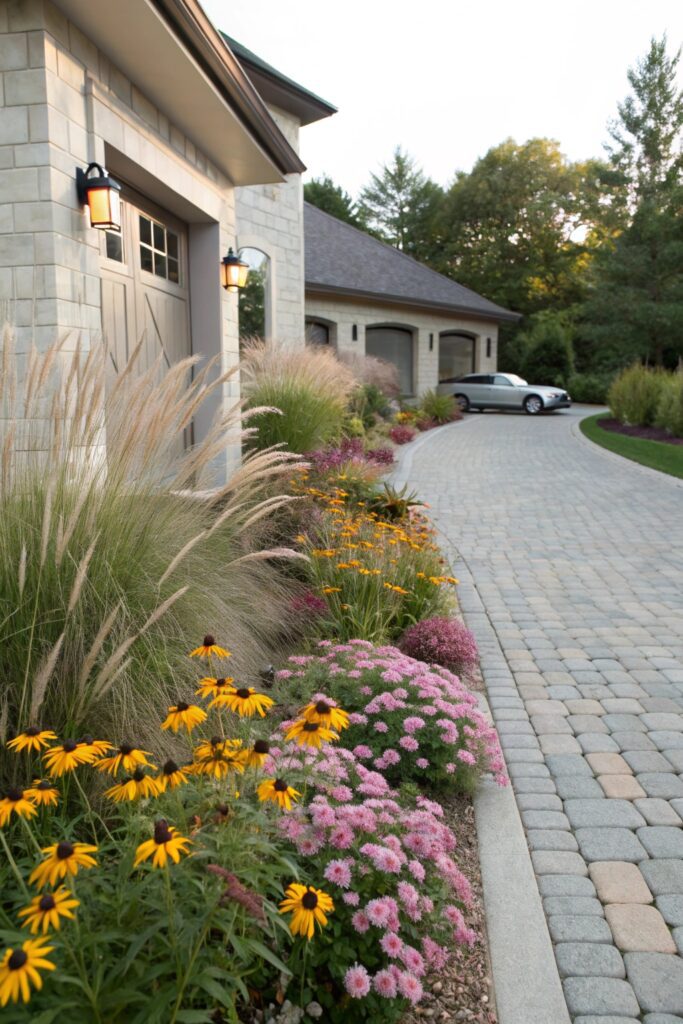
Planting in height tiers — taller shrubs at the back, mid-height perennials in the middle, low groundcover or annuals in front — creates visual depth that a single-height planting can’t achieve, working the same layering principle that applies to interior styled displays.
Choose plants with staggered bloom times within the same bed to maintain visual interest across more of the growing season, rather than a bed that peaks all at once and then goes visually flat for the remaining months.
5. Use a Curved Driveway Design (If You’re Starting From Scratch)
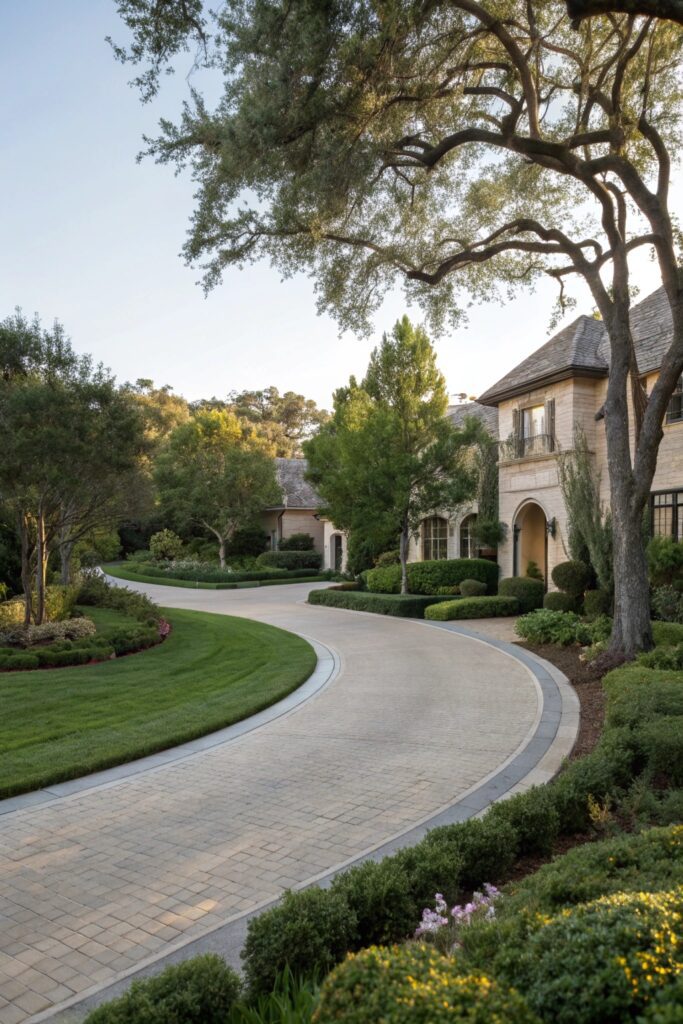
For new construction or a full driveway replacement, a gentle curve rather than a straight line creates a more graceful, considered approach and can also help frame landscaping beds along the curve’s inner edge more naturally than a straight line allows.
This is a significant undertaking ($3,000-8,000+ depending on materials and length) best considered specifically during new construction or a planned full driveway replacement rather than as a standalone landscaping project.
6. Add a Statement Tree Near the Entrance
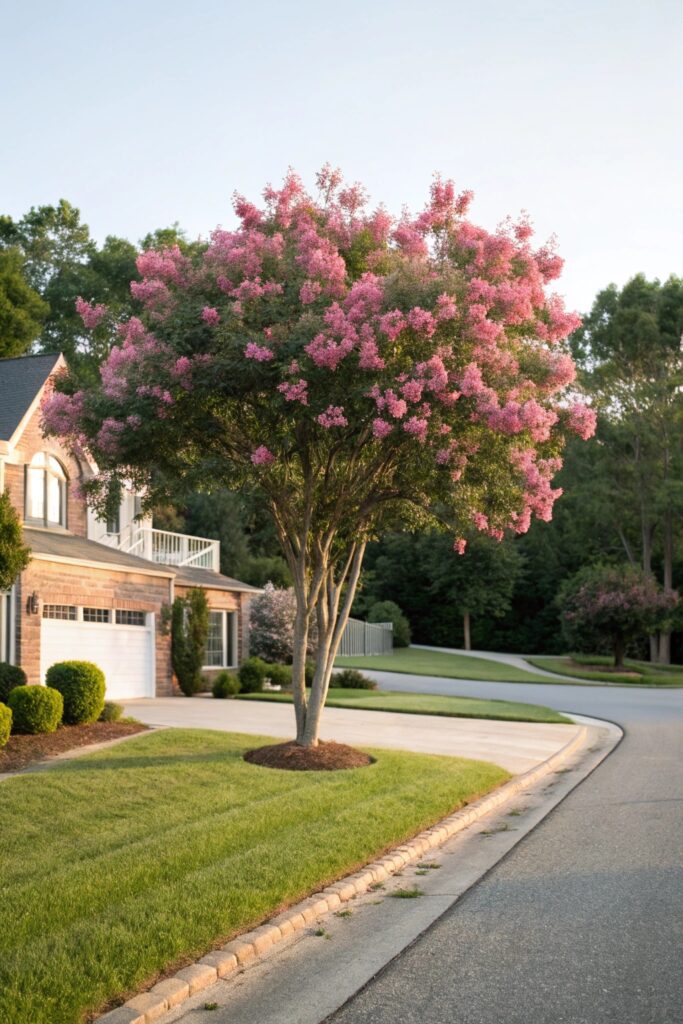
A single well-placed specimen tree (a Japanese maple, a flowering dogwood, or similar) near the driveway entrance creates a genuine focal point and adds mature, established presence that smaller plantings alone can’t provide.
Position the tree with enough setback from the driveway edge to account for its mature root spread and canopy width, which prevents future conflicts with driveway maintenance or vehicle clearance as the tree grows.
7. Incorporate a Mailbox Garden
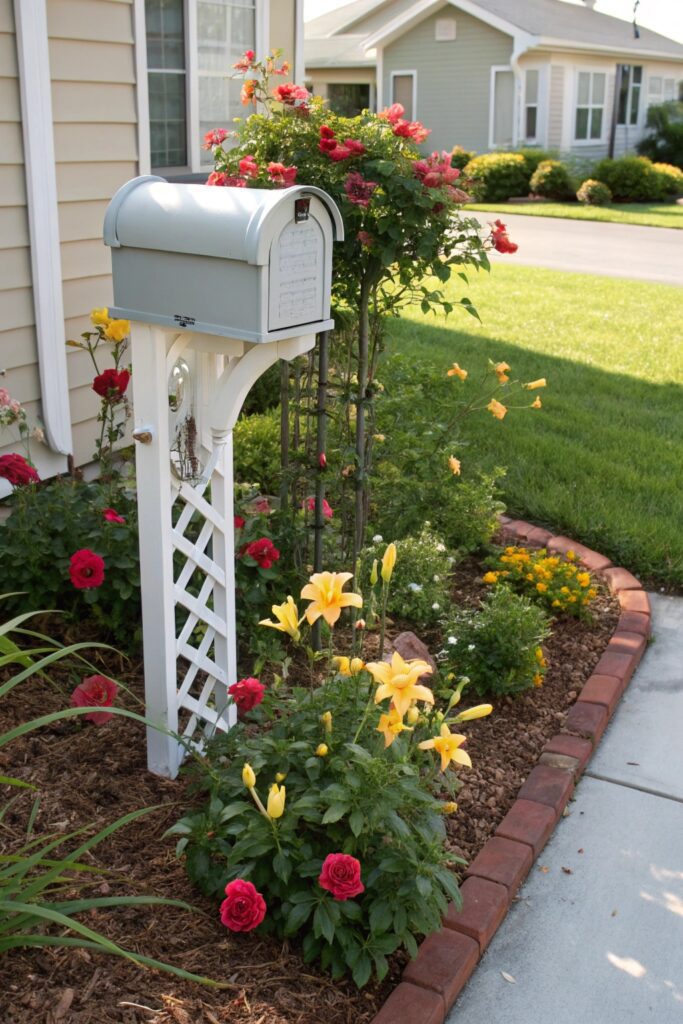
A small, dedicated planting bed surrounding the mailbox post ($50-150 in plants and materials) turns an often-neglected utilitarian object into a genuine landscaping feature, particularly effective if the mailbox sits near the driveway entrance already.
Keep plant selection here lower-maintenance than more prominent beds elsewhere, since mailbox gardens are often somewhat removed from the main house and can be easy to forget about for regular watering and upkeep.
8. Add Decorative Gravel or Mulch Beds
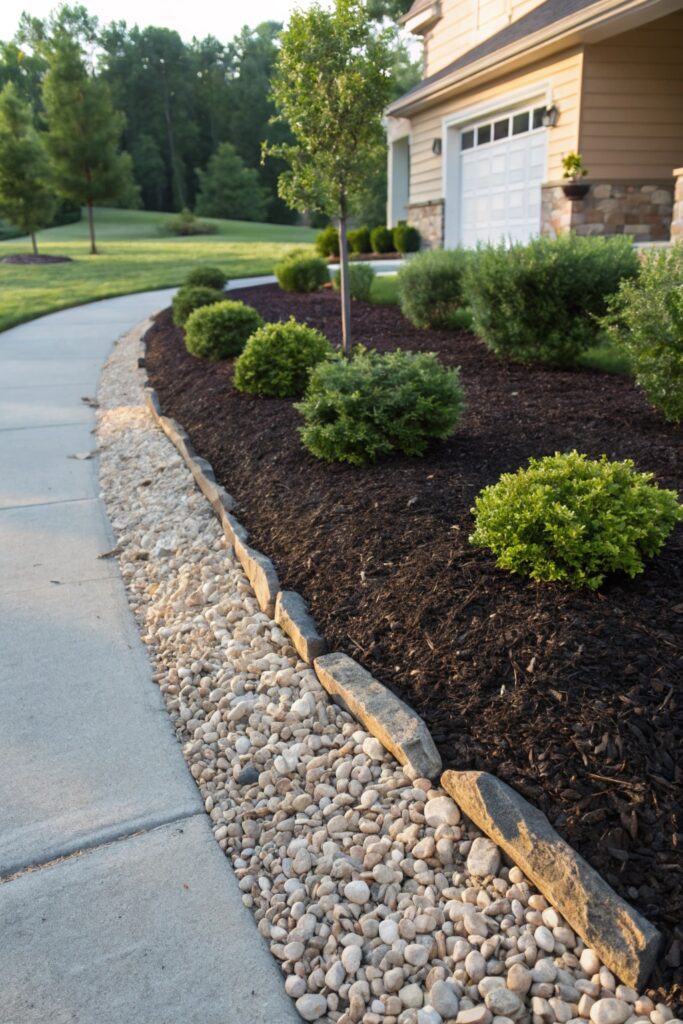
Colored mulch or decorative gravel (river rock, crushed granite) in planting beds along the driveway adds a finished, intentional look while also suppressing weeds and retaining soil moisture for the plants themselves.
Refresh mulch annually and top off gravel as needed, since both materials break down or scatter gradually and a bed that’s due for refreshing reads as less maintained even if the plants themselves are healthy.
9. Use Vertical Elements to Add Height
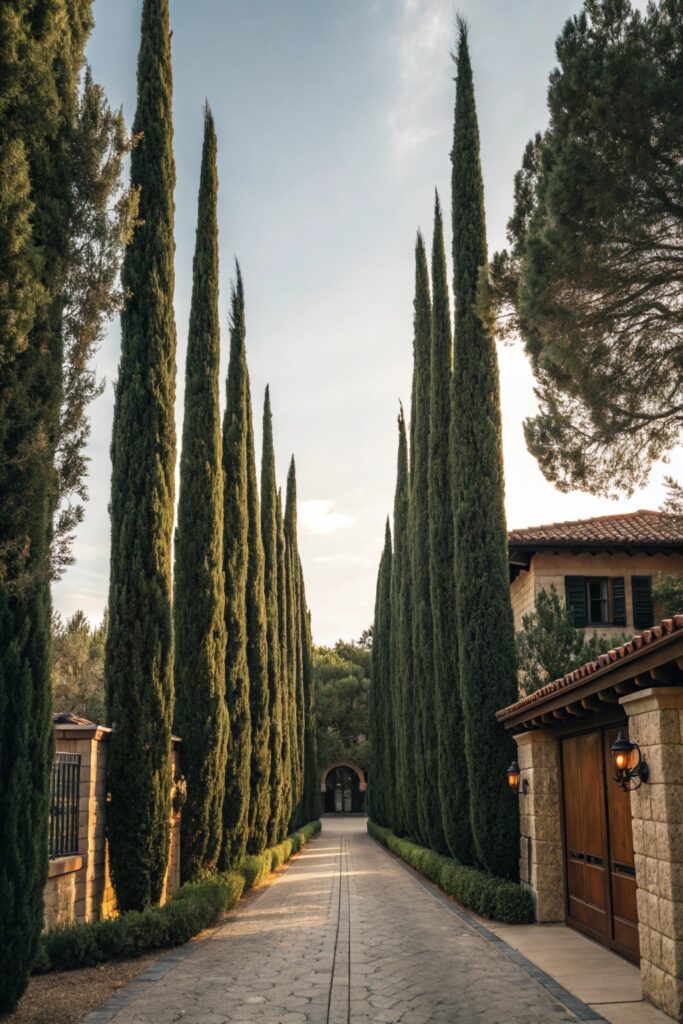
An arbor, trellis, or tall ornamental grass planting introduces vertical interest that keeps a driveway entrance from reading as flat, particularly useful in a landscape that’s otherwise dominated by low groundcover and horizontal driveway pavement.
A simple wood or metal arbor at the driveway’s entrance point ($200-600 depending on material and size) can also support climbing vines over time, adding a living, evolving element to the entrance.
10. Add a Decorative Address Marker or Stone
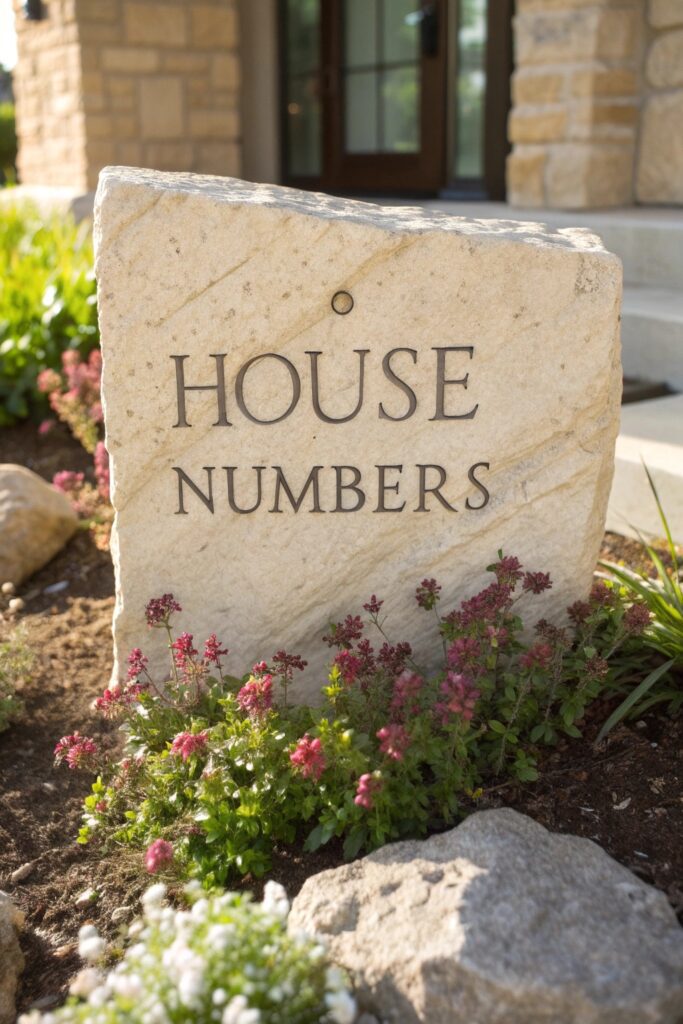
A stone or engraved marker displaying your house number ($100-300 depending on material and customization) adds a genuine finishing touch that’s both decorative and functionally useful for visitors and delivery services locating the property.
Position the marker where it’s clearly visible from the street without requiring drivers to slow significantly or search, which matters as much for practical function as for the decorative effect.
11. Keep Everything Well-Maintained and Trimmed
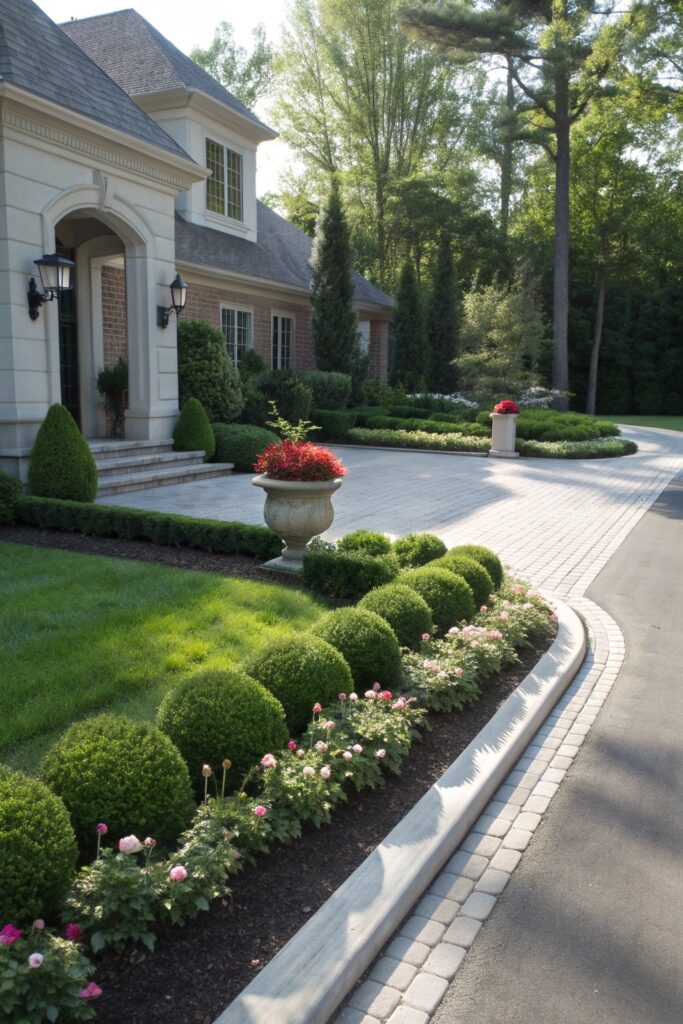
Regular trimming, weeding, and edge maintenance matters more than any individual landscaping choice for how put-together a driveway entrance actually reads, since even a modest, budget-conscious landscaping plan looks considerably better maintained than an elaborate one left to grow unchecked.
Build a simple seasonal maintenance schedule (spring cleanup, summer watering and trimming, fall cleanup, winter dormant pruning) rather than addressing maintenance only when growth becomes visibly overgrown.
Tips for Choosing the Right Plants for Your Driveway Entrance
Prioritize plants rated for your specific USDA hardiness zone and, if applicable, salt tolerance if your driveway sees winter de-icing salt runoff, since salt-sensitive plants near a treated driveway often struggle regardless of how well they’re otherwise cared for. Choose plants with a mature size appropriate to the space available — a shrub that looks proportional at planting can quickly overwhelm a narrow bed once it reaches full size, requiring more aggressive pruning than a properly sized plant would need.
Wrapping It Up
Defined edging and consistent maintenance do more to elevate a driveway entrance’s overall look than any single expensive addition, since both affect how put-together the entire space reads regardless of your specific planting choices. Layer in lighting and a statement tree or symmetrical planters once the foundational structure and maintenance routine are in place.