
A moody, dark color palette needs real attention to layered lighting to avoid tipping from atmospheric into simply gloomy, more so than a lighter bedroom style would require. The details below cover both the design direction and these practical specifics for each idea.
Below are 11 dark cottagecore bedroom ideas worth considering, with the specifics for each.
1. Paint the Walls a Deep Botanical Green
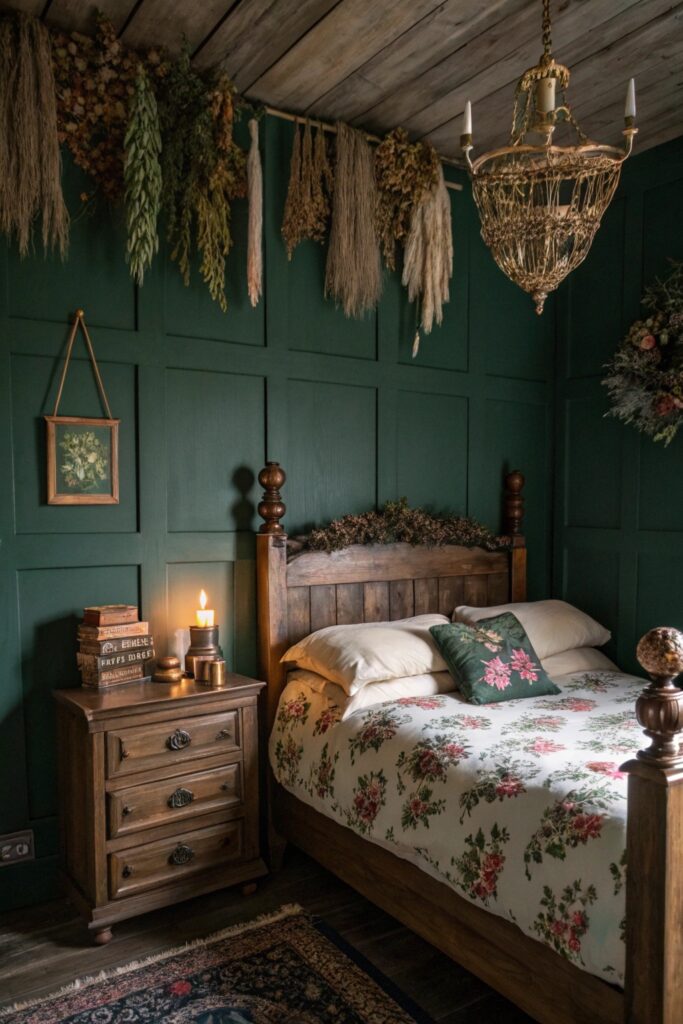
Budget for two to three coats to achieve even, opaque coverage with a saturated dark green, since the underlying wall color or primer often shows through a single coat of this depth of pigment.
2. Layer Dried Botanicals and Herb Bundles
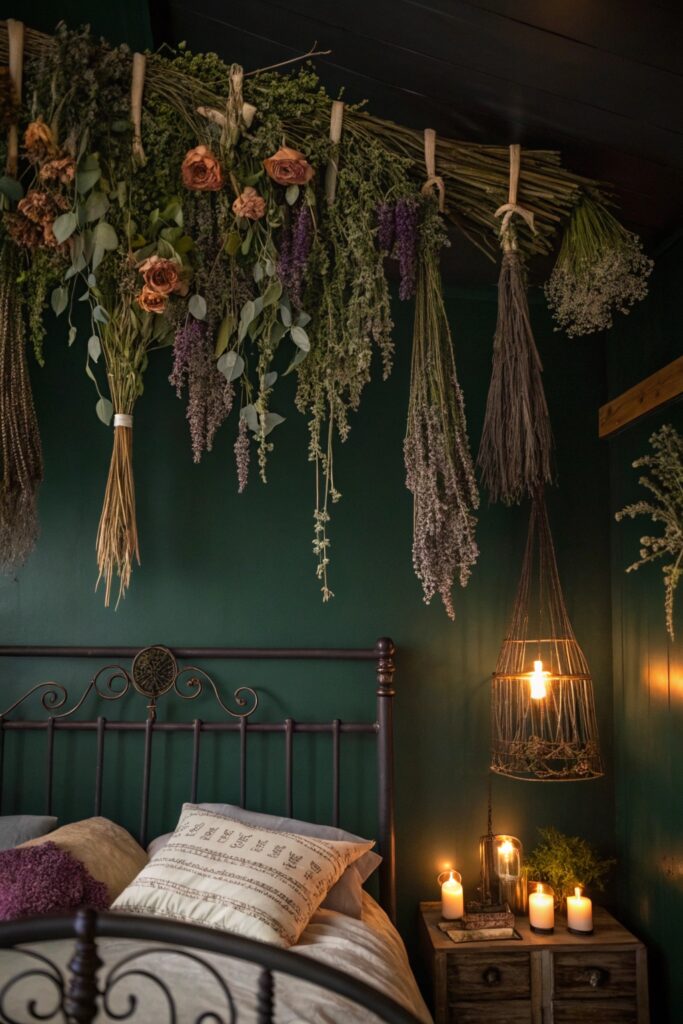
Avoid strongly scented or potentially allergenic dried herb varieties in this specific room, given how much time you spend breathing its air overnight compared to a kitchen or living room application.
3. Choose Dark, Romantic Bedding
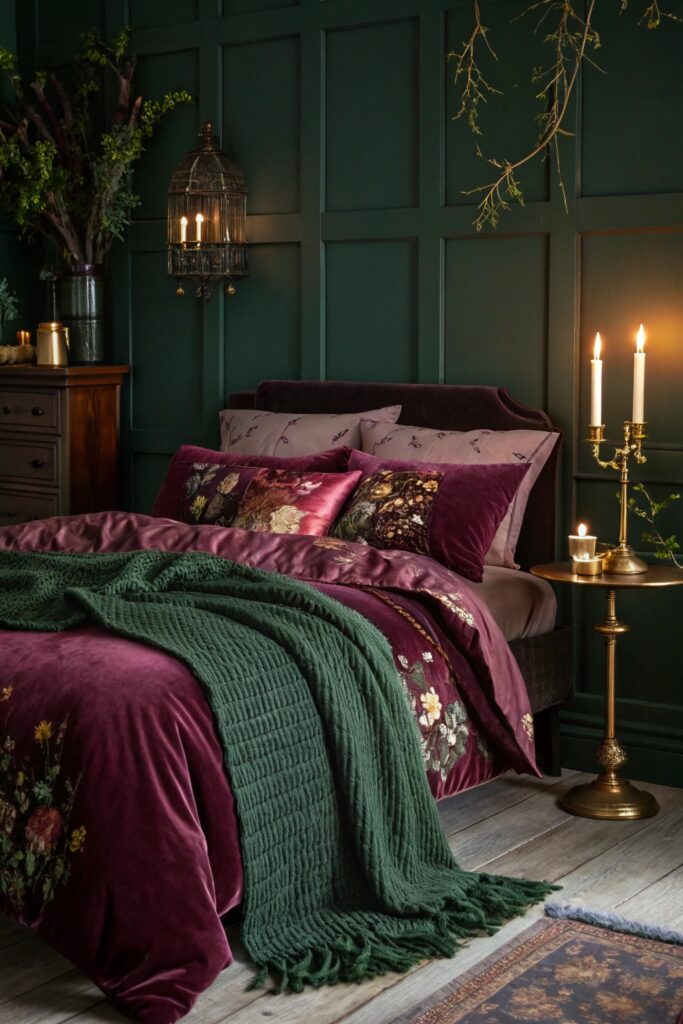
Dark-colored bedding shows lint, pet hair, and dust more visibly than lighter shades, so more frequent washing or lint-rolling matters if you want the look to stay crisp between changes.
4. Fill the Room with Candlelight
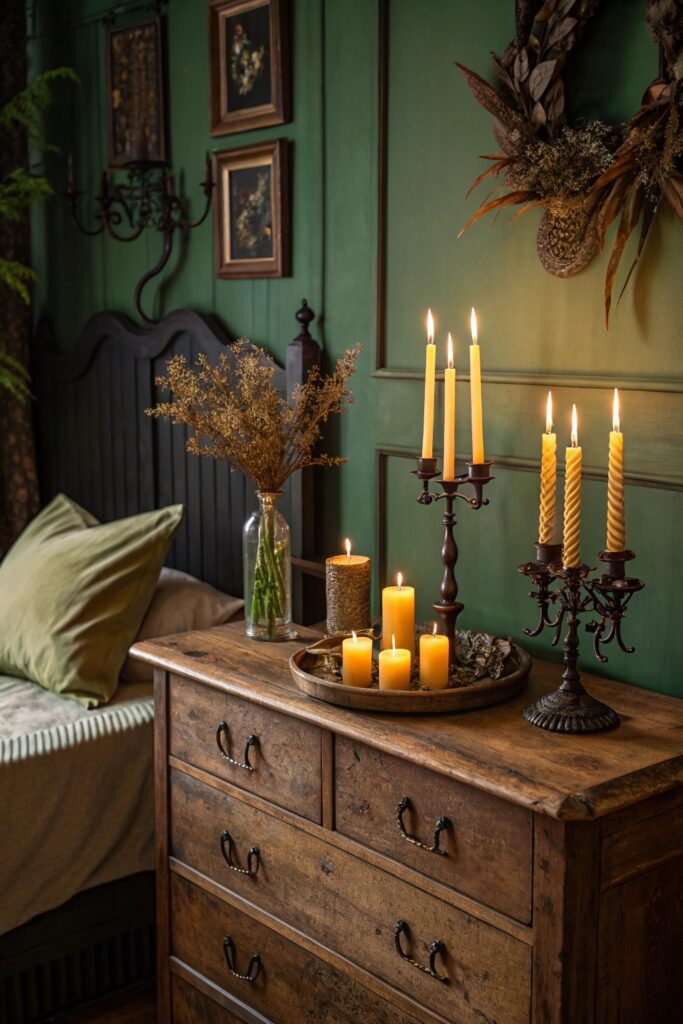
Flameless LED candles are worth strongly considering for this room specifically, given the real fire risk an open flame poses near bedding and curtains in the space where you’re falling asleep.
5. Incorporate Antique and Vintage Furniture
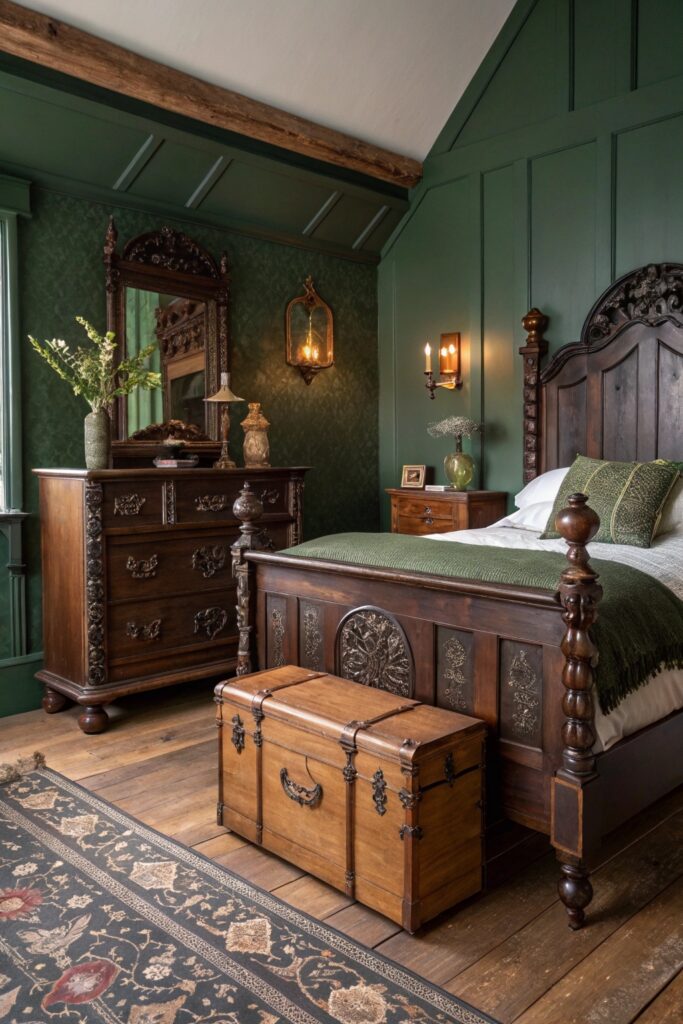
Have any pre-1978 antique piece inspected or refinished with modern, non-toxic products before regular use, since older varnishes and paints can contain lead, a real consideration for a nightstand surface you touch daily.
6. Add Stacked Books and Dark Academia Touches
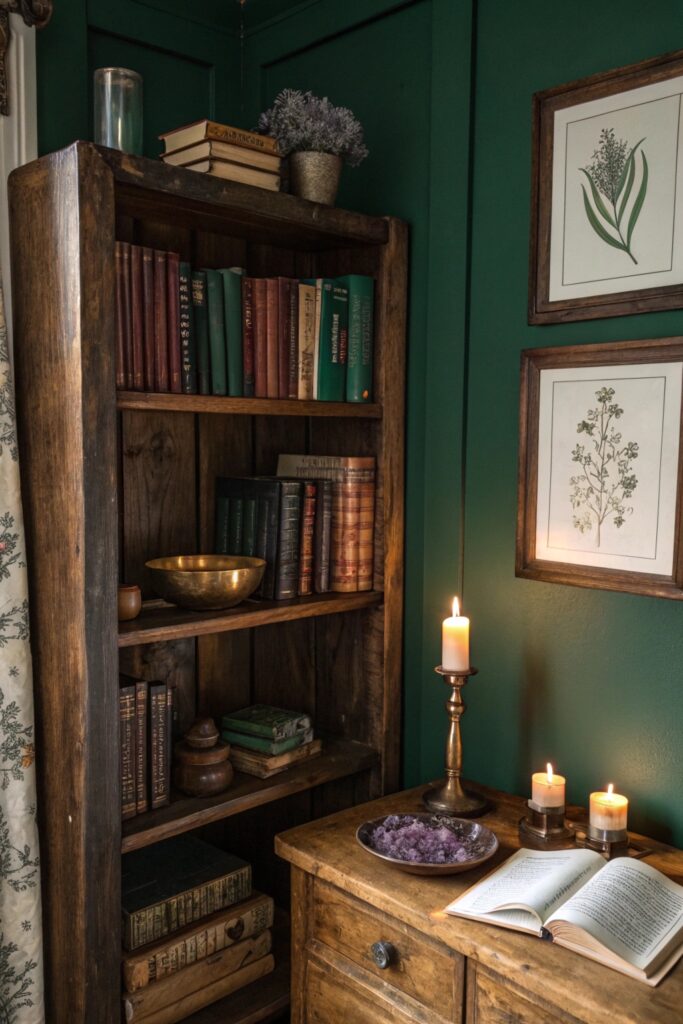
Confirm the surface holding a substantial book stack is actually rated for that concentrated weight, since a delicate side table not built for this load can develop real structural strain over time.
7. Use Dark Floral Wallpaper as an Accent
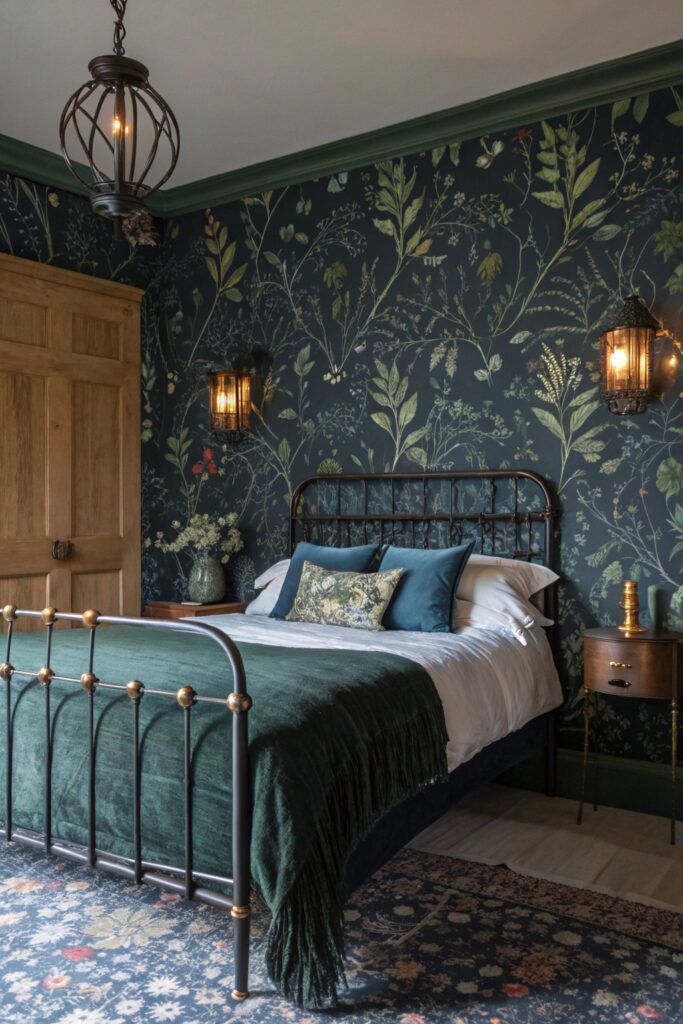
Fine, detailed patterns like dark florals show seam lines more noticeably than bolder prints if installation isn’t precise, worth hiring a professional installer for this specific style.
8. Bring in Earthy Crystals and Natural Objects
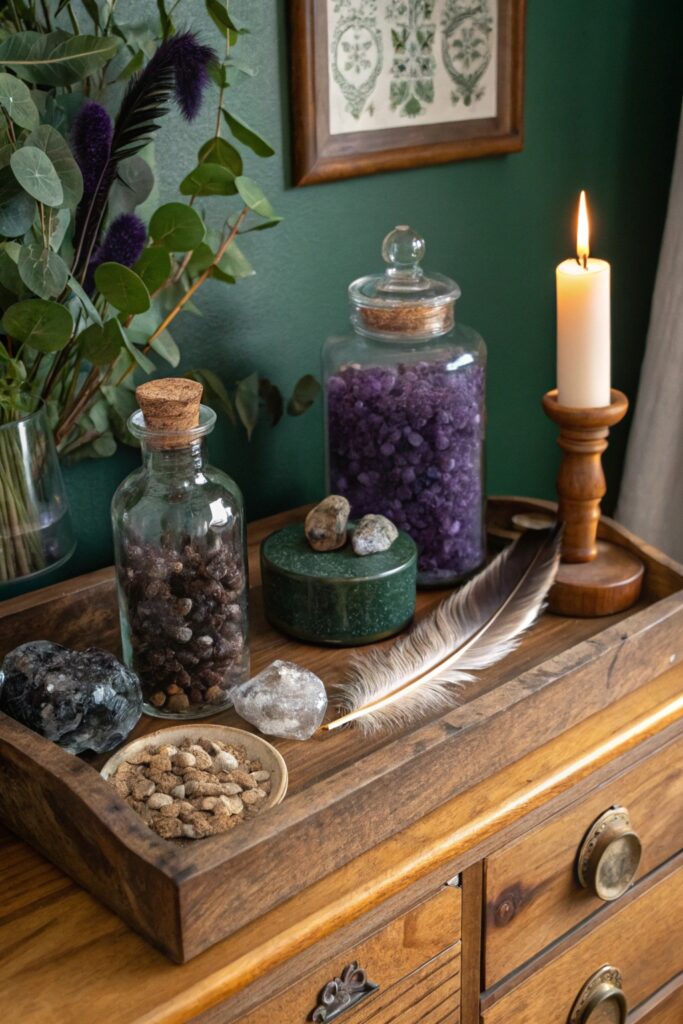
Position fragile or sharp-edged mineral specimens away from the edge of nightstands and surfaces, since these pieces are easy to knock off during nighttime movement in a dimly lit room.
9. Hang Vintage Botanical and Mushroom Art
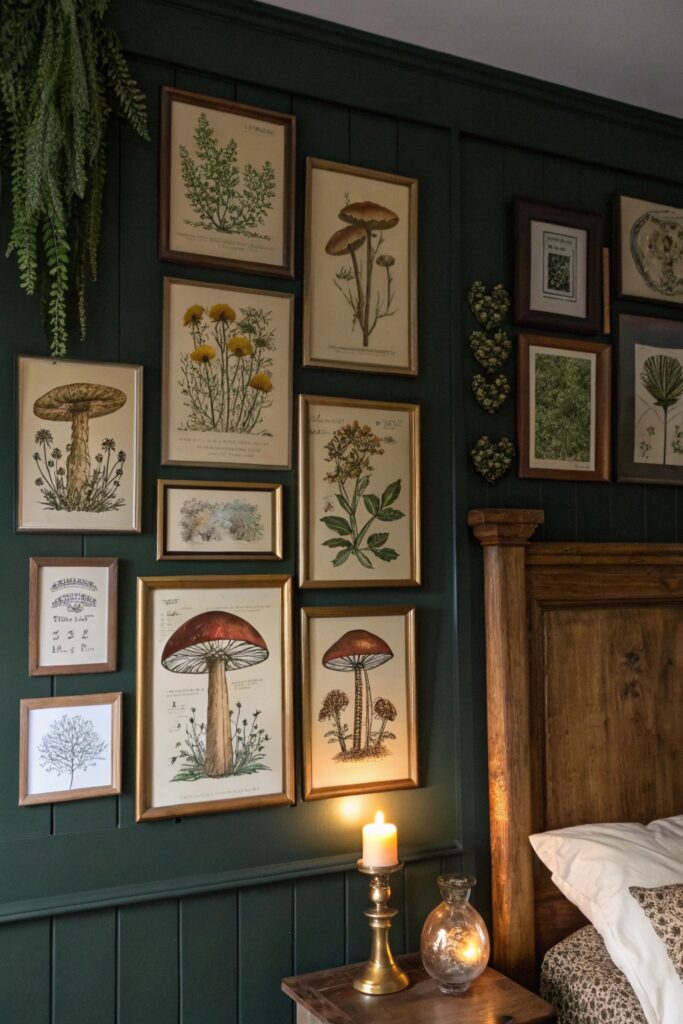
Frame weight determines the anchor hardware needed, so a heavier vintage-style frame requires a more substantial wall anchor than a lightweight print in a simple frame.
10. Install Fairy Lights and Ambient Lighting
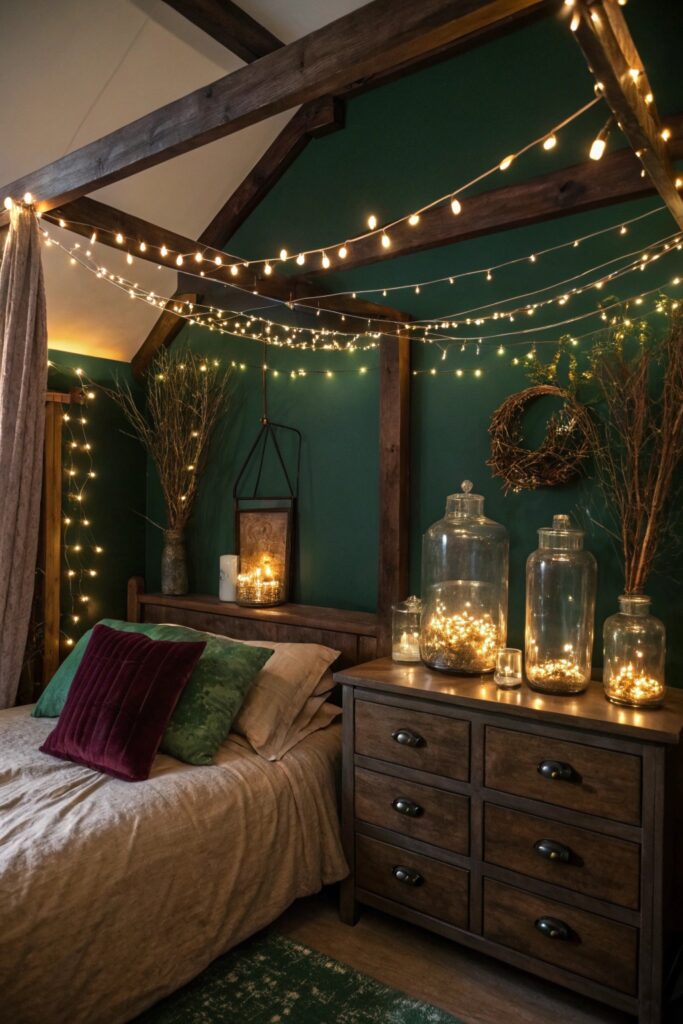
Choose LED strands specifically if the lights will stay on through sleep hours, since they run considerably cooler and use less power for extended overnight use than incandescent versions.
11. Create a Reading Nook with Dark Velvet Cushions
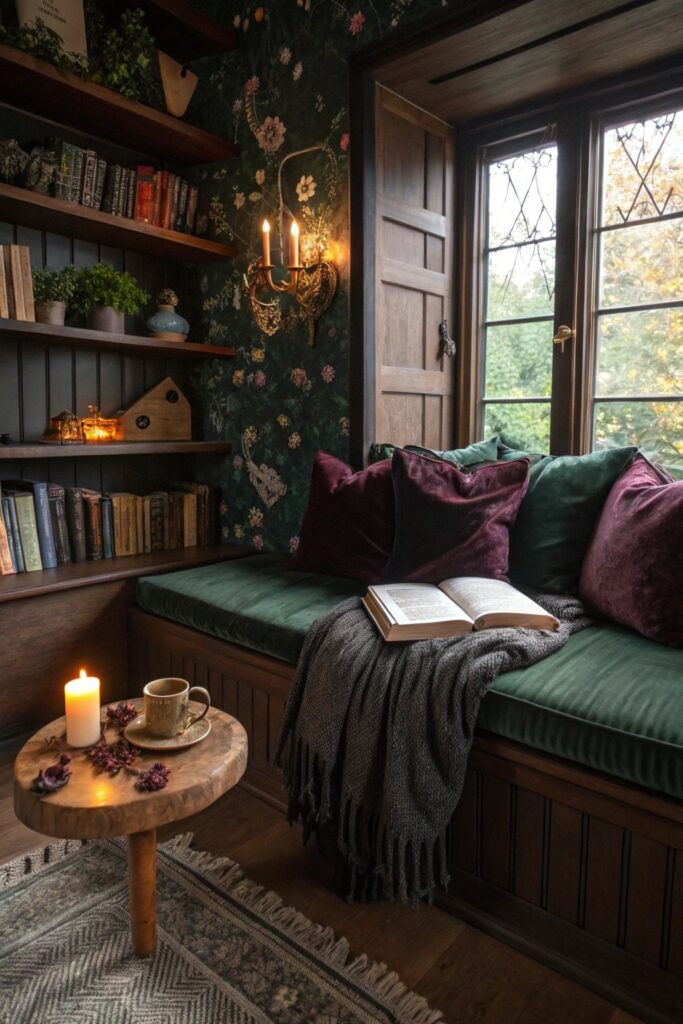
Blot rather than rub any spills on velvet upholstery, since this material shows pile-crushing and watermarks more readily than more resilient fabrics used elsewhere in the room.
Balancing Dark Tones With Texture
A dark color palette relies more heavily on texture variation to keep the room from feeling flat, so mixing materials like velvet, linen, wood, and metal within the same space adds visual depth that color alone can’t provide.
Matte and glossy finishes placed near each other, like a matte wall paired with glossy candlesticks or picture frames, also help catch and reflect the room’s limited light sources in a way that keeps the space feeling dimensional rather than one-note.
What a Dark Cottagecore Bedroom Costs
A cosmetic update using paint, bedding, and a few decor pieces typically costs $300 to $900 depending on material quality.
A fuller refresh including wallpaper, vintage furniture, and layered lighting runs considerably higher, often $2,000 to $5,000 or more depending on the scope.
Testing the Palette Before Committing
A dark color reads very differently once it covers full walls compared to a small paint chip, so painting a large sample section, at least a two-foot square, and living with it for a few days helps confirm the shade actually works in your room’s specific light before painting everything.
Natural light exposure changes throughout the day, so checking the sample in both morning and evening light gives a more complete picture than judging it at a single moment.
Scent as Part of the Atmosphere
Woodsy, herbal, or slightly smoky scents tend to suit this aesthetic better than bright florals or citrus, since the fragrance can reinforce the same moody, forest-adjacent feeling the visual elements are already creating.
A lighter scent than you might use elsewhere in the house is still worth choosing for a bedroom specifically, given the extended time spent in this room compared to a living space you pass through more briefly.
Getting quotes from at least two or three painters or wallpaper installers before starting a larger project helps confirm both pricing and their experience with deep, saturated colors specifically, since achieving even coverage with these shades takes more skill than a standard lighter paint job.
Keeping the Room From Feeling Too Heavy
Leaving a portion of the ceiling and trim a lighter color, rather than painting the entire room including the ceiling in the same dark shade, helps the space retain a sense of height and keeps it from feeling like it’s closing in.
A few strategically placed mirrors also help bounce whatever light is available around the room, softening the overall effect of a predominantly dark palette without requiring you to lighten the walls themselves.
A dark cottagecore bedroom tends to feel most successful when the moody palette is balanced with genuine warmth, through soft textiles, natural materials, and layered light, rather than reading as simply dark for its own sake.
Living with a smaller version of the look first, like updating just the bedding and a few accent pieces before committing to a full wall repaint, gives you a real sense of whether the aesthetic suits your daily life before making the larger investment.
Whichever combination of these ideas resonates most, a dark cottagecore bedroom done thoughtfully offers a truly distinctive alternative to the brighter, more neutral bedroom palettes that dominate most homes, giving your space real personality.
It’s a look worth taking your time with.
The end result is worth the effort.
Final Thoughts
Testing the room’s actual brightness at night with your planned lighting sources — not just how it looks with the overhead light on during the day — confirms the space feels cozy rather than dim once you’re actually using it in the evening.
Whichever combination of these ideas fits your space, layering at least two or three separate light sources tends to matter more to how well this aesthetic works than any single decor choice on this list.